
9TU-M040D industrial lamination processes
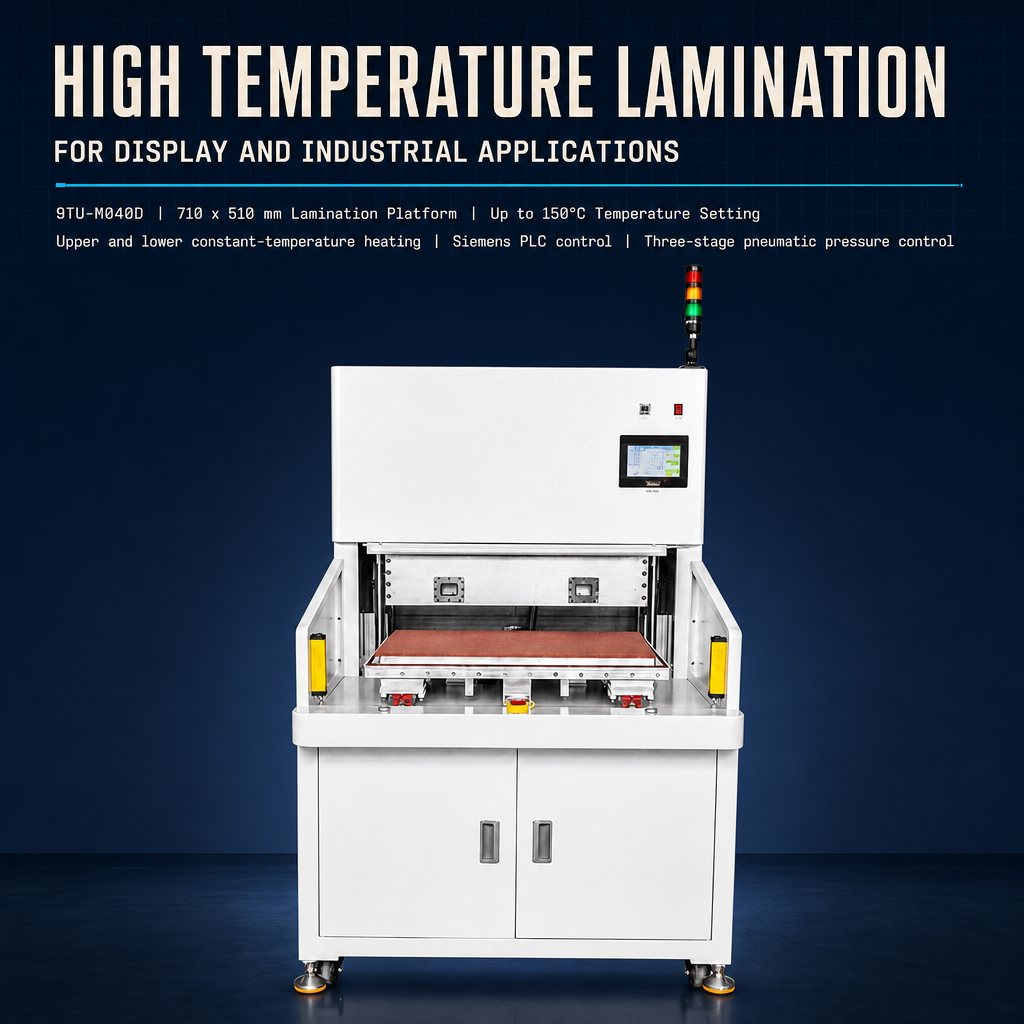
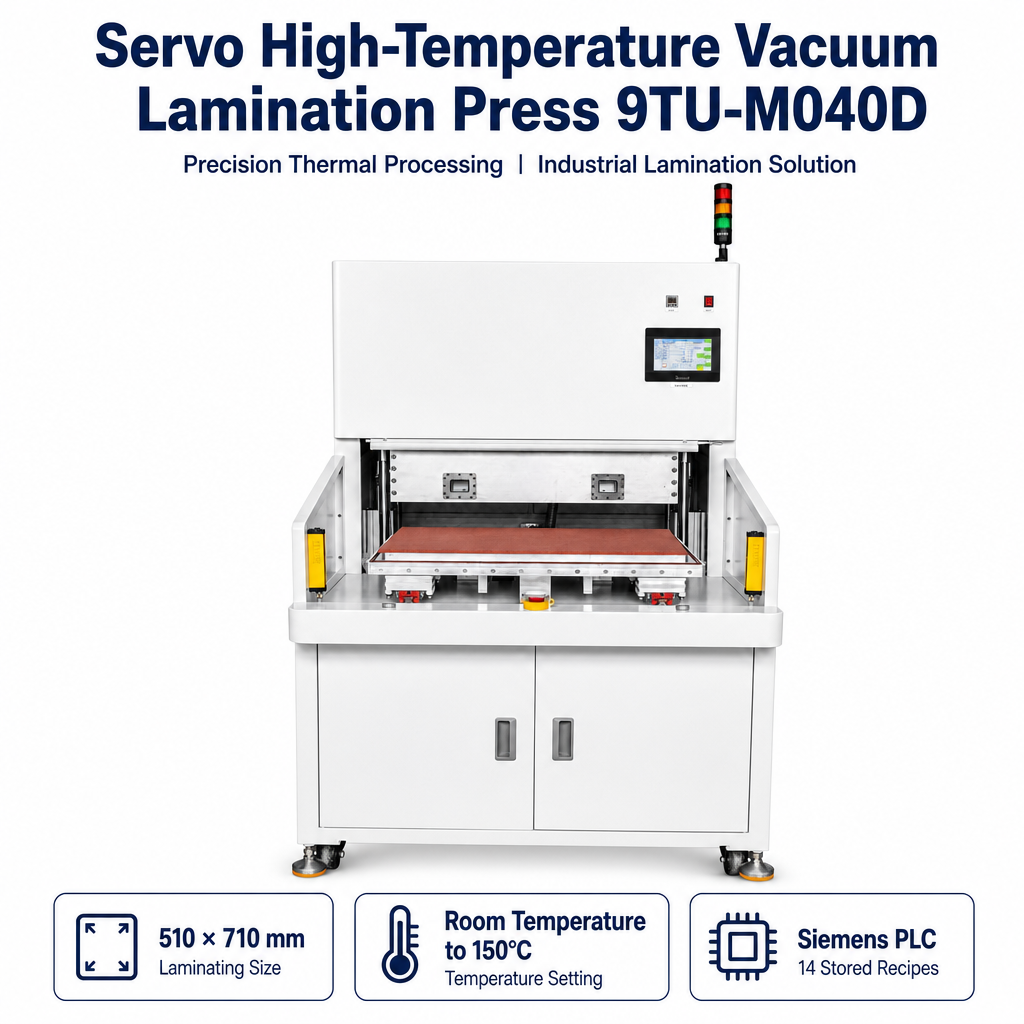
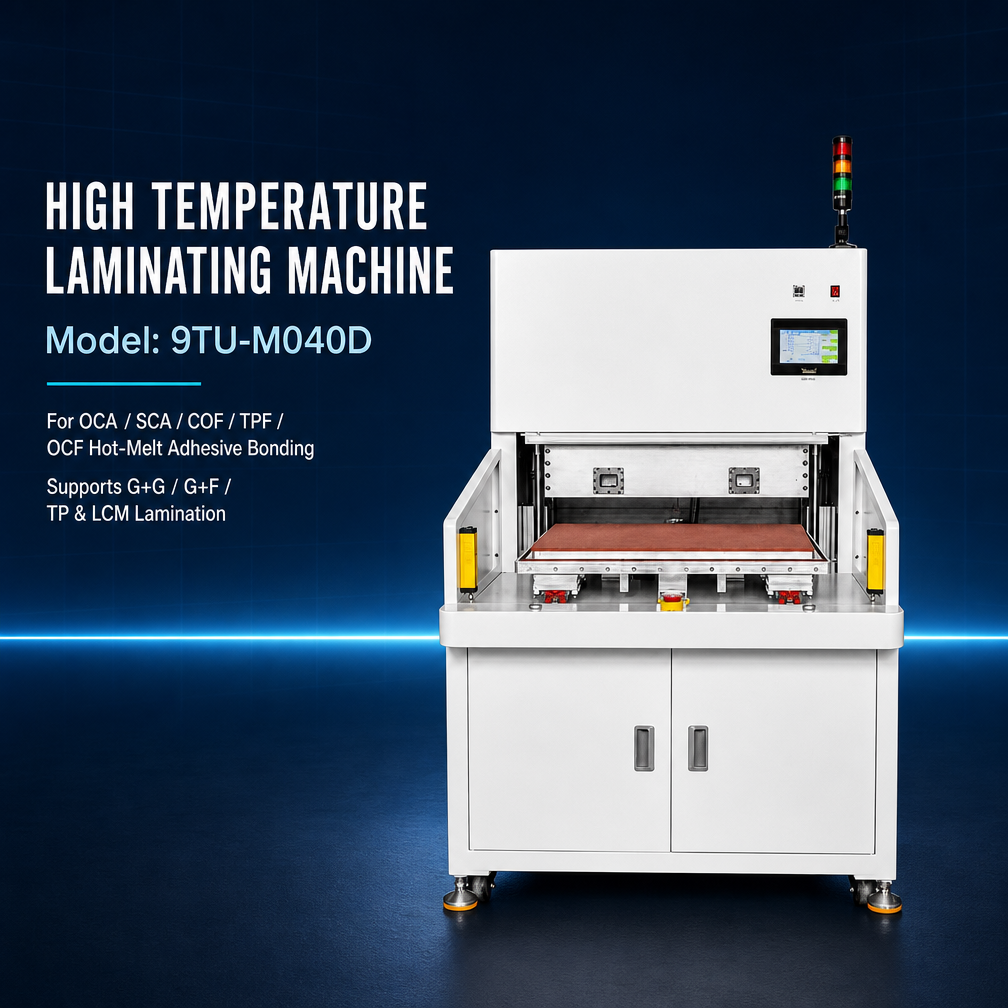
The 9TU-M040D is designed for industrial display lamination processes that require a larger working platform, controlled heating and staged pneumatic pressure.
GET QUOTE NOW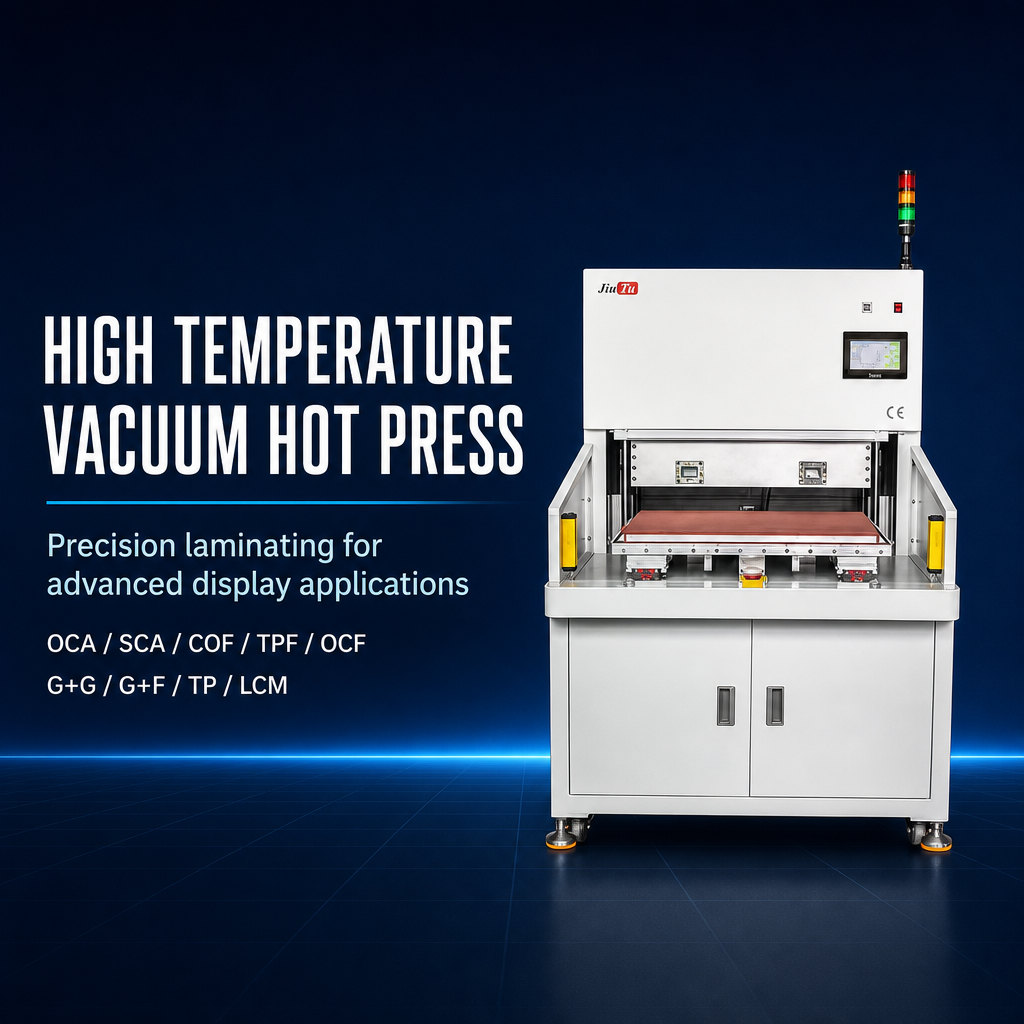
The 9TU-M040D is designed for industrial display lamination processes that require a larger working platform, controlled heating and staged pneumatic pressure.
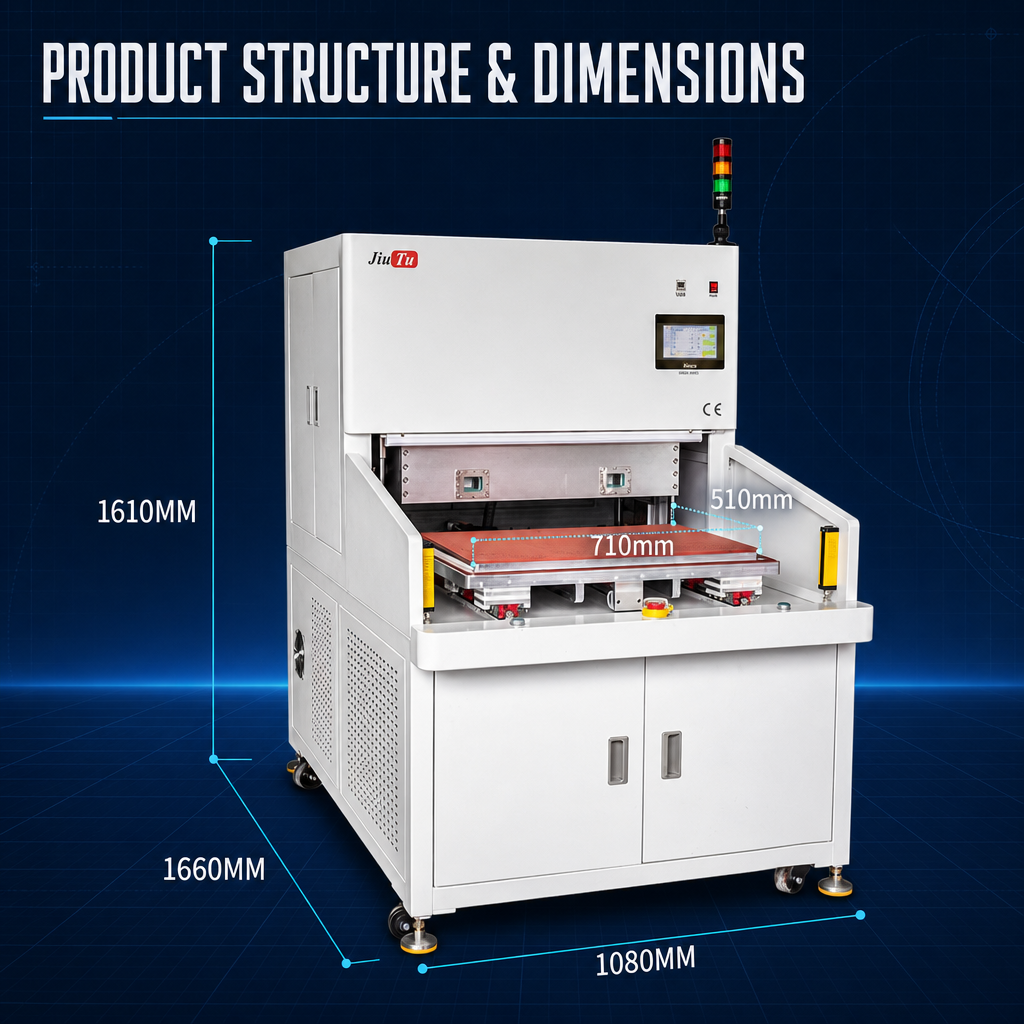
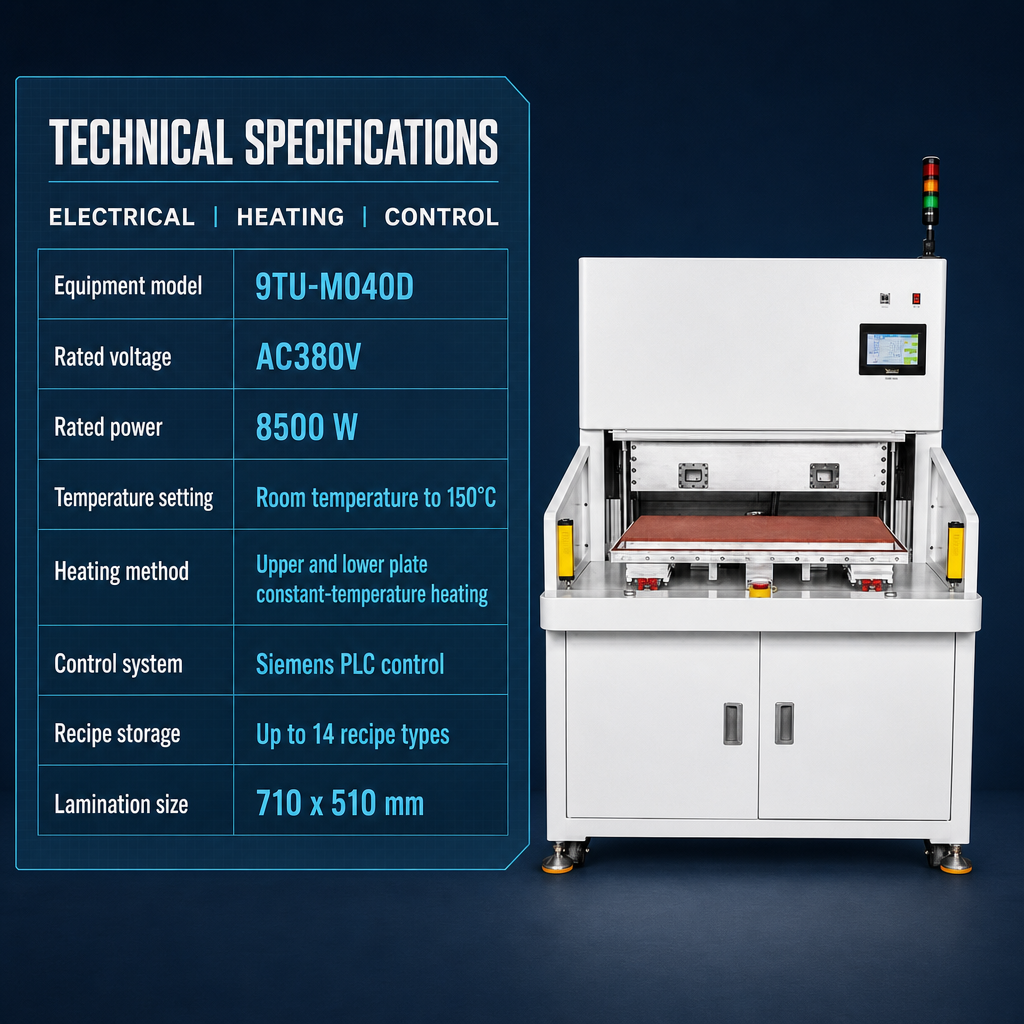
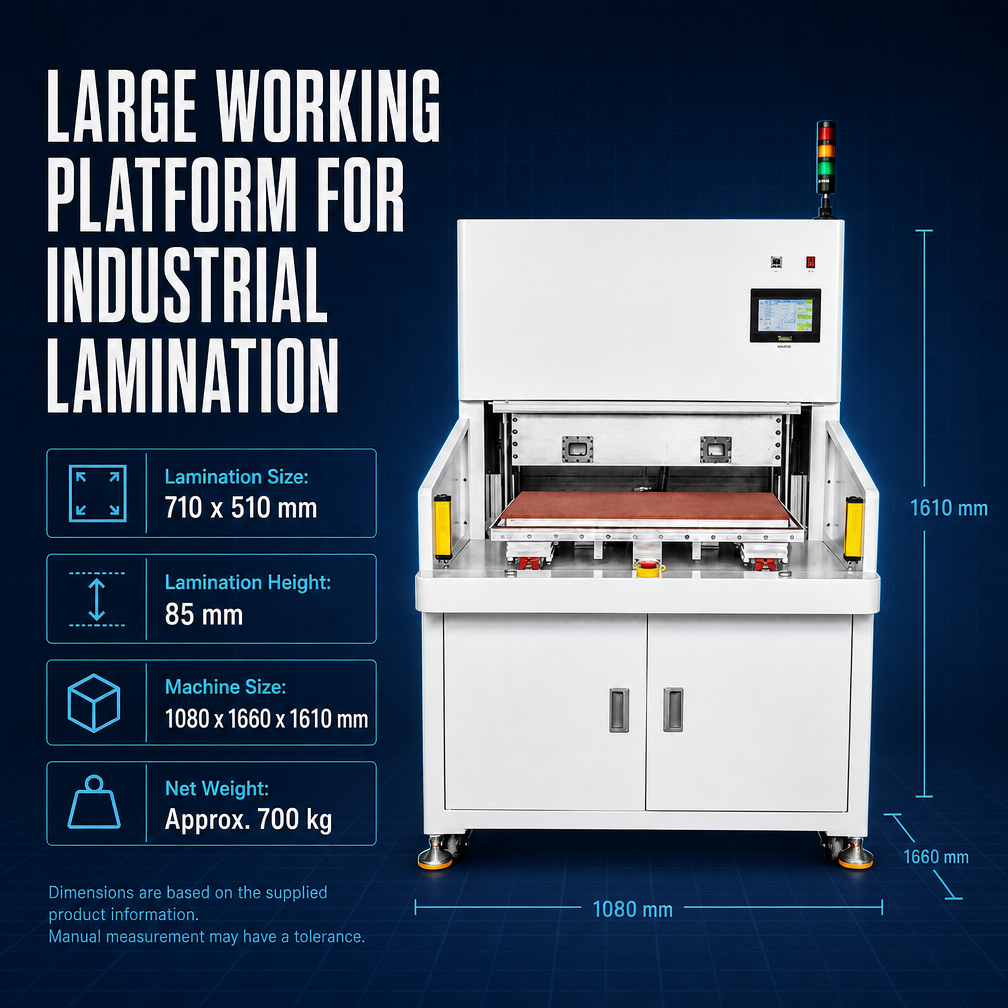
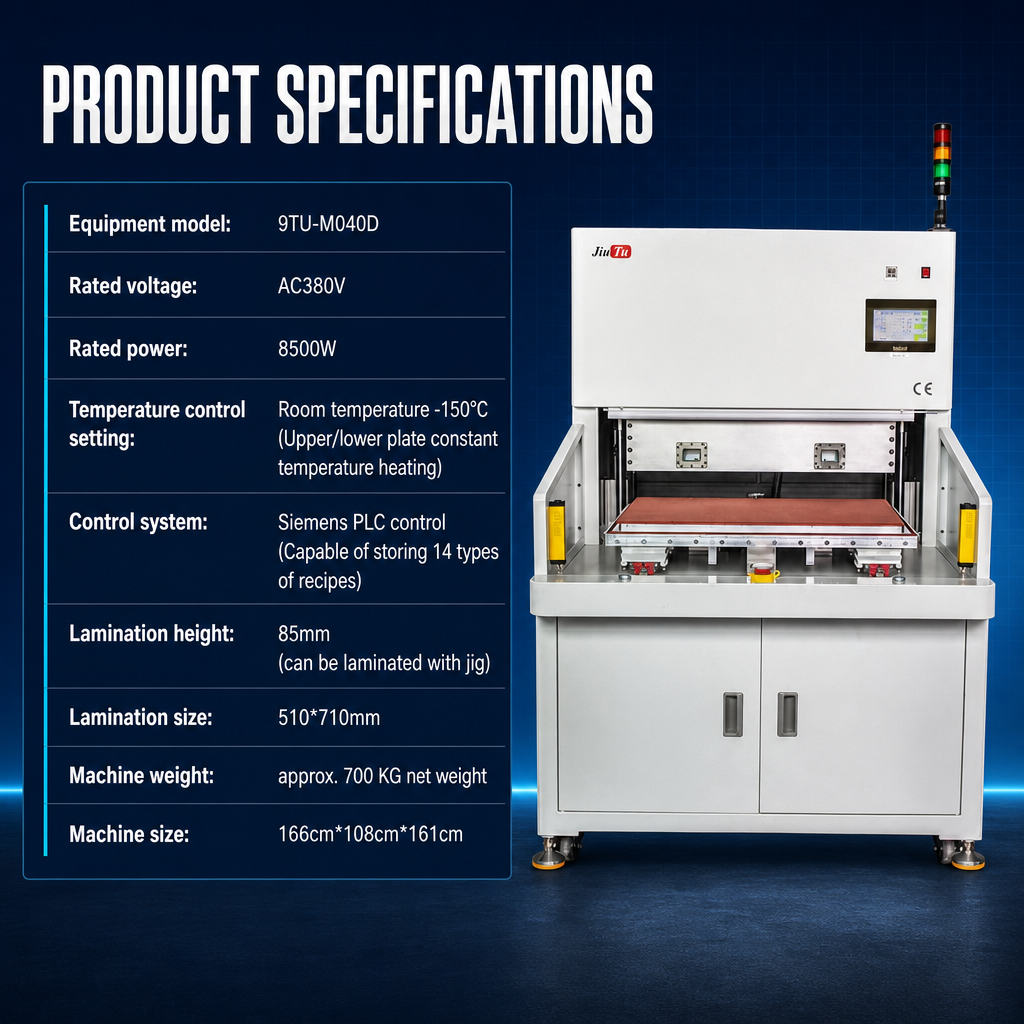
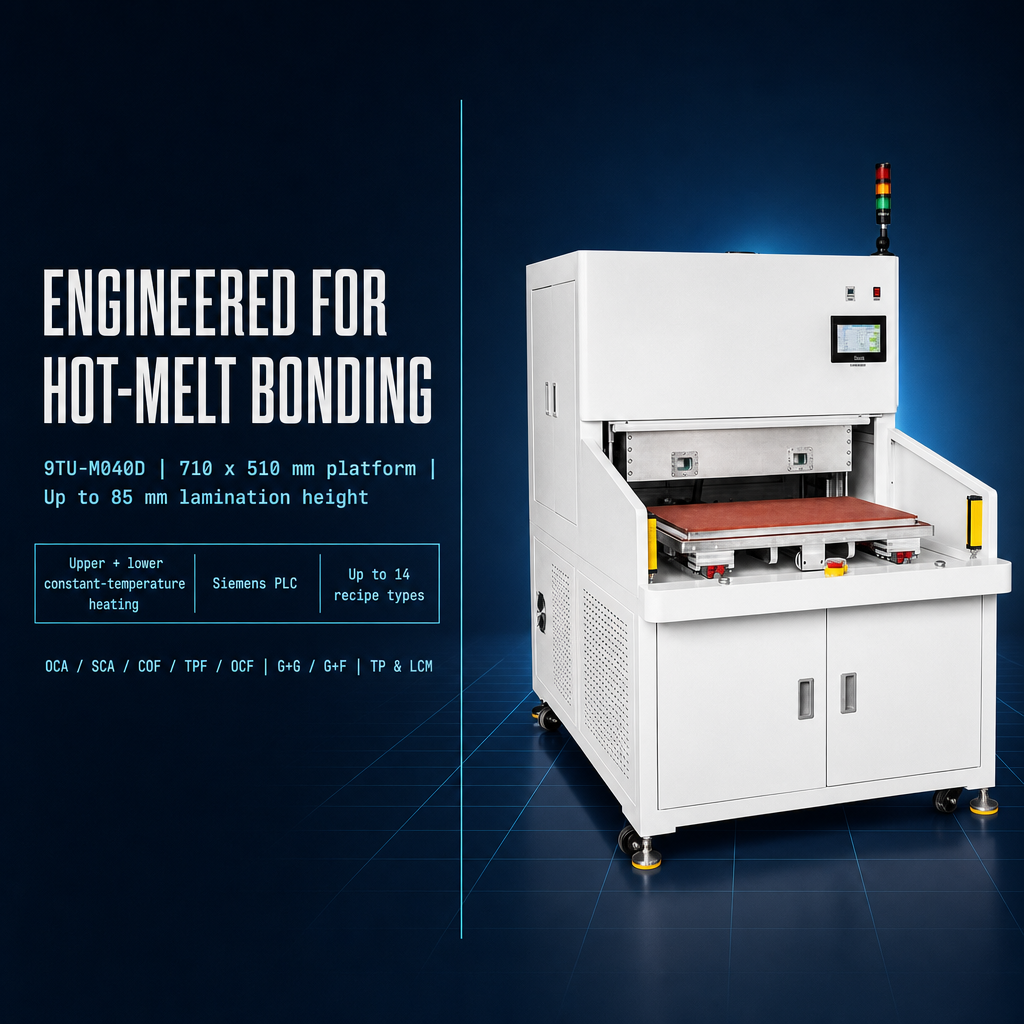
Its 710 × 510 mm platform accommodates display panels, optical stacks and fixtures within the confirmed working area. The 85 mm lamination height allows compatible jigs to be placed between the pressing surfaces for different workpiece structures.
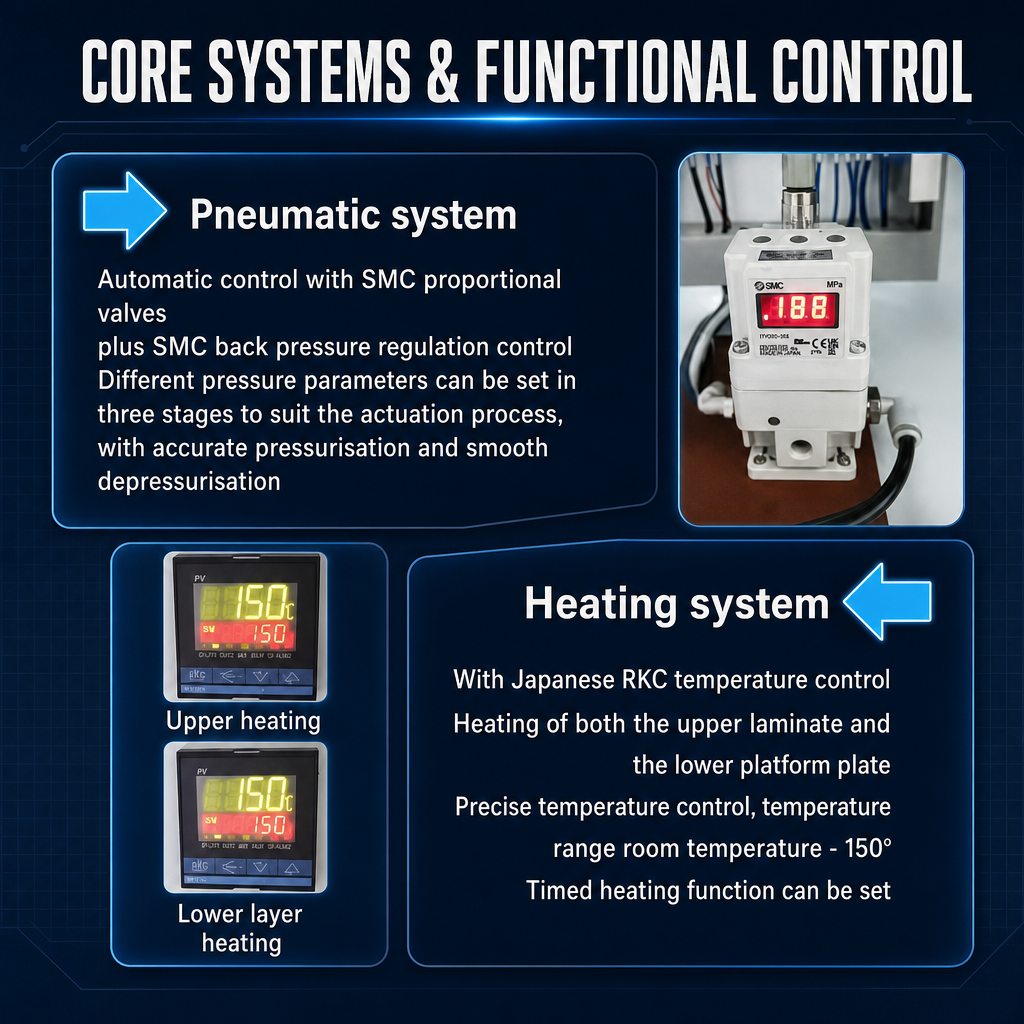
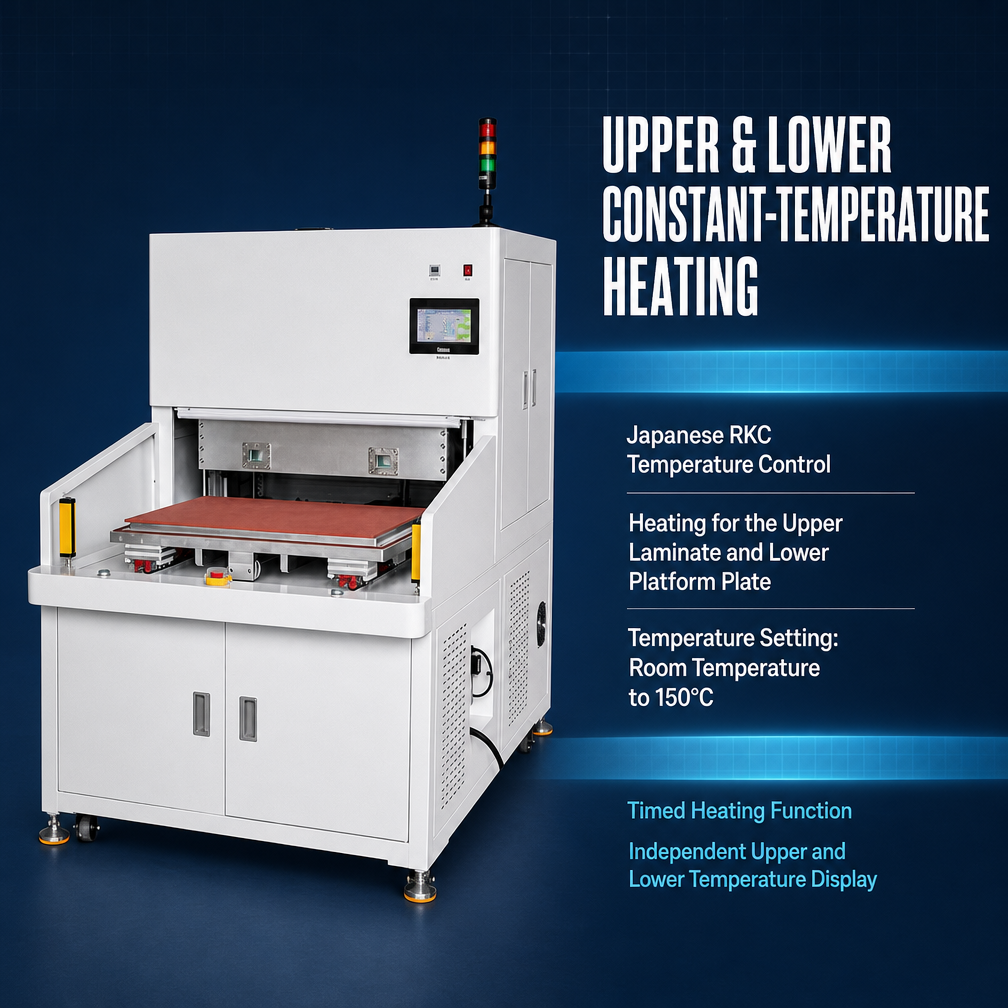
The upper pressing plate and lower platform plate can both be heated from ambient temperature to 150°C. Independent RKC temperature controllers regulate the two heating zones, while a scheduled-heating function can start preheating according to the configured date and time.
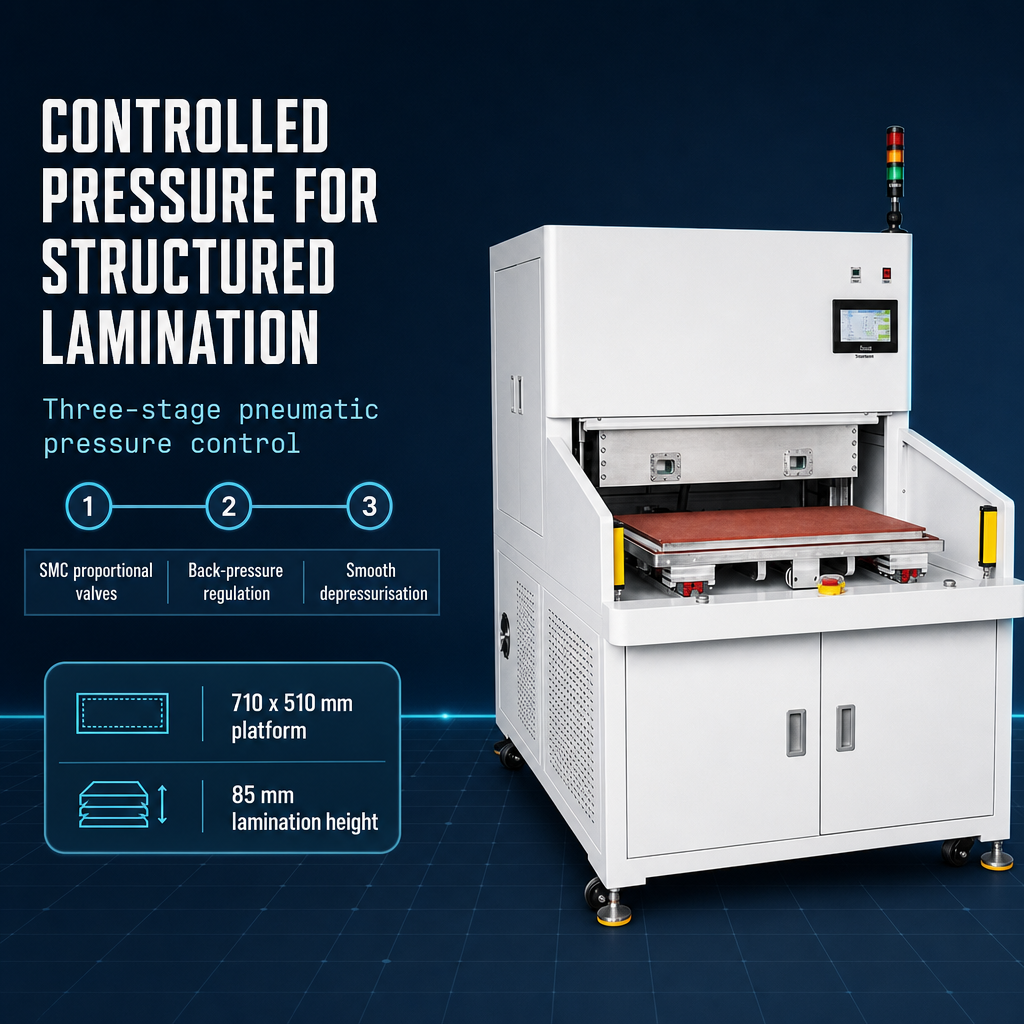
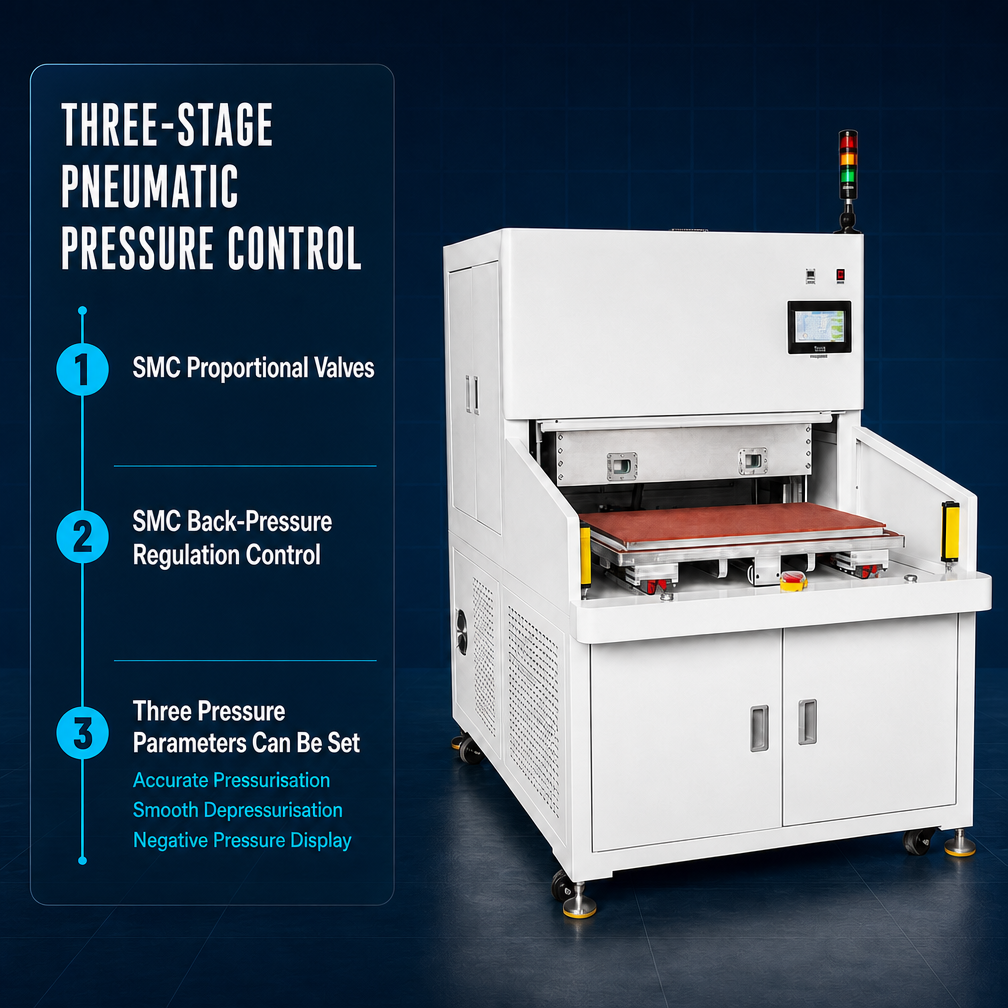
Each production recipe can contain three automatic stages. Pressure, processing time and vacuum state can be configured independently for every stage. SMC proportional-valve and back-pressure regulation components provide controlled pressurization and smoother pressure release.
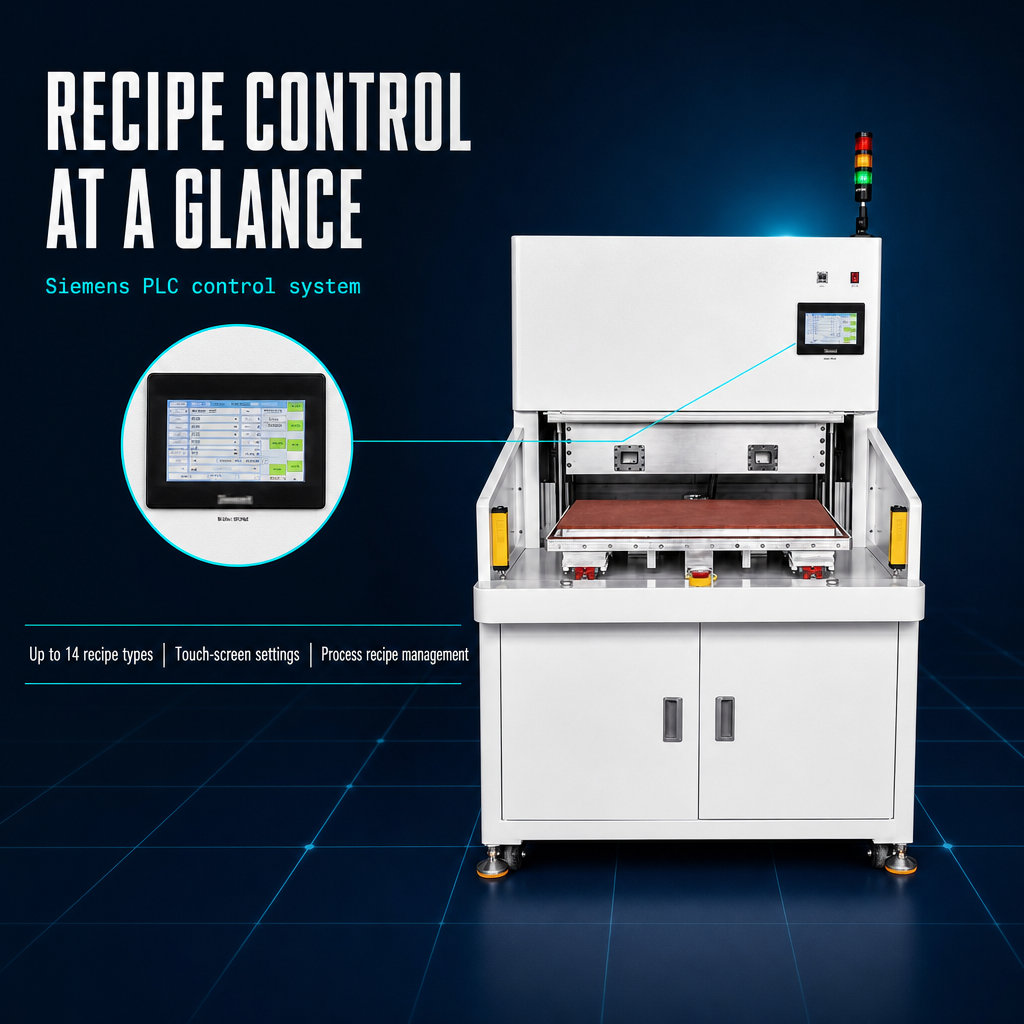
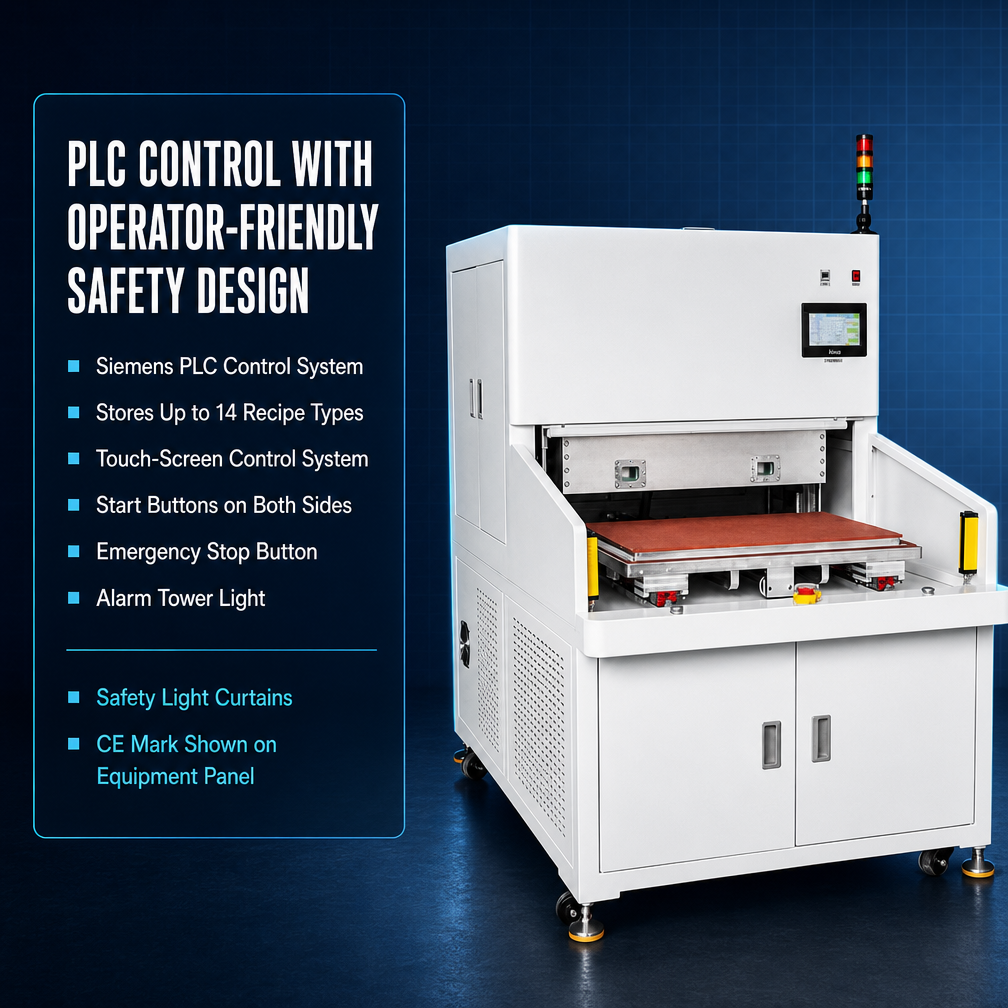
The Siemens PLC and touchscreen store up to 14 recipes. Operators can switch between validated product settings without rebuilding the process from the beginning.
Key Features
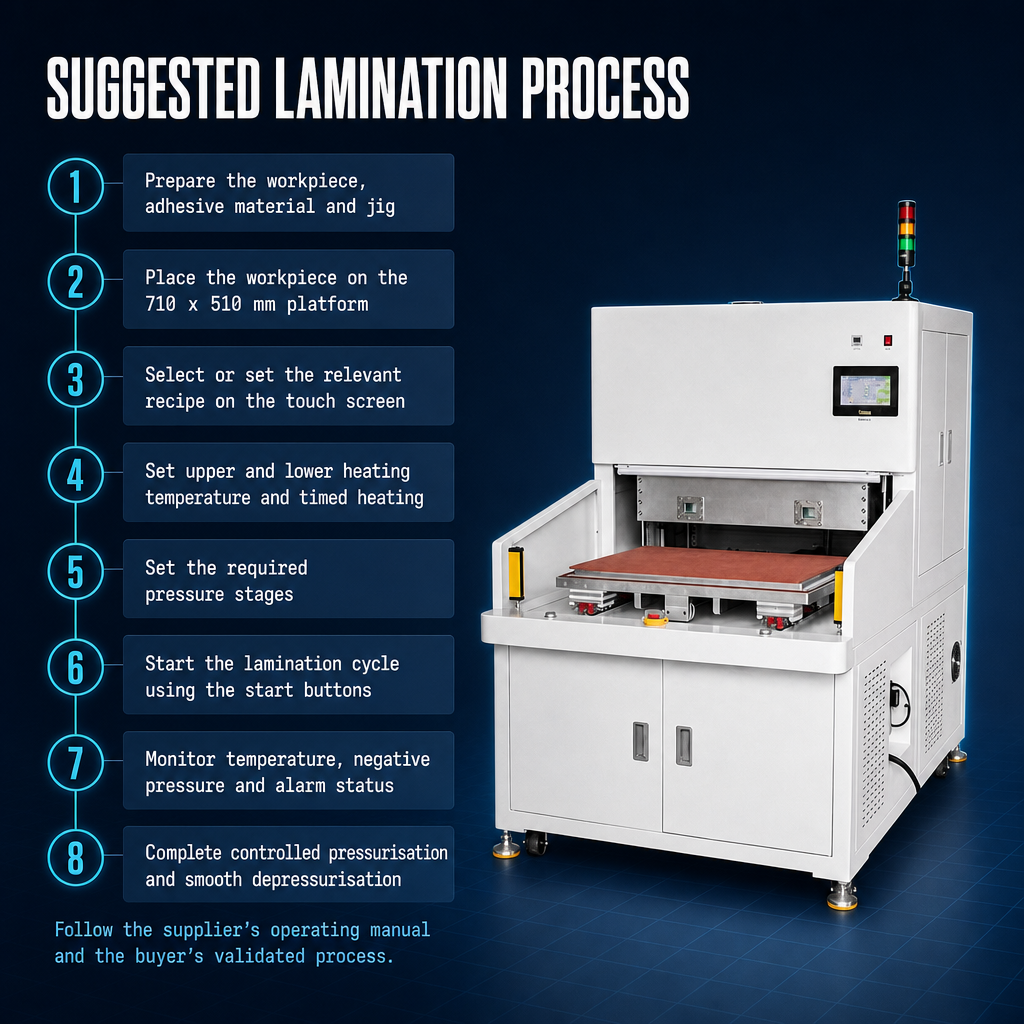
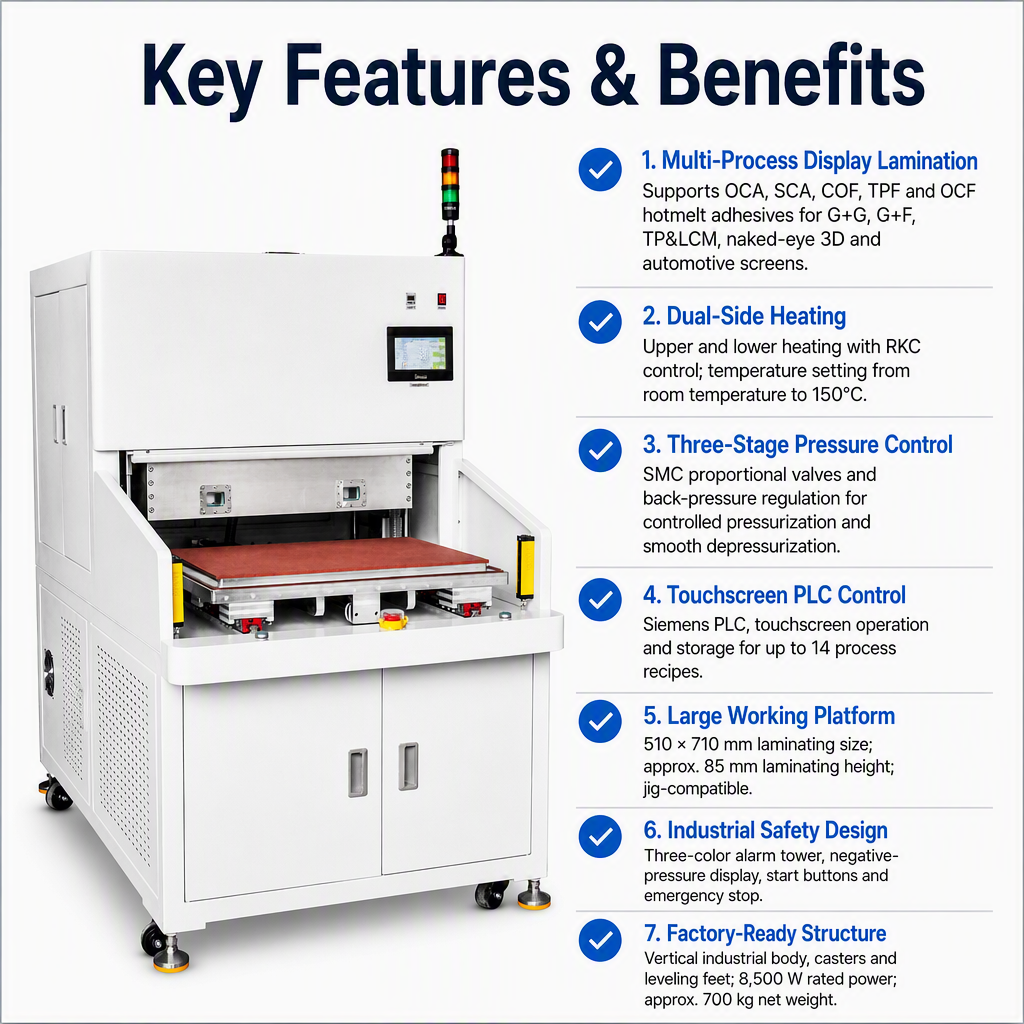
1. 710 × 510 mm Working Platform
The confirmed lamination platform measures 710 × 510 mm.
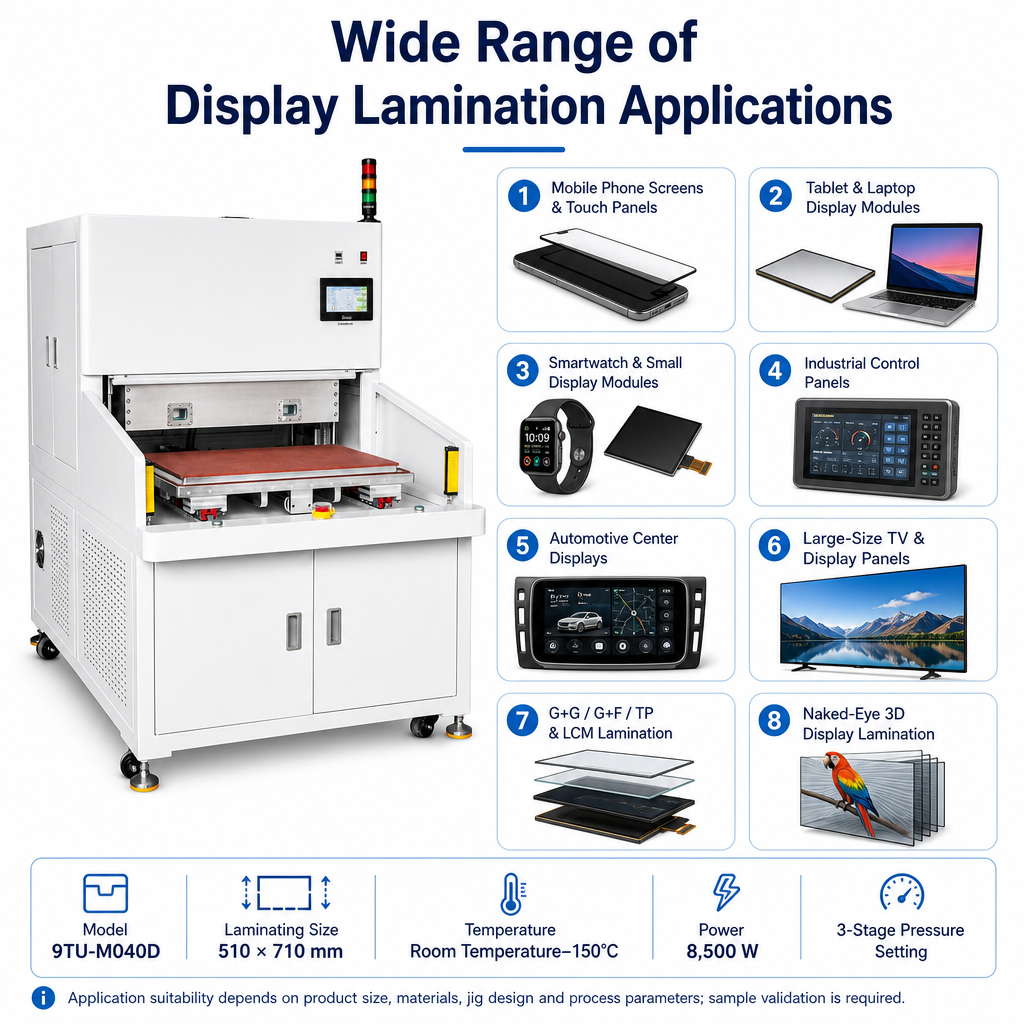
Buyer benefit: The larger platform supports industrial display modules, automotive center displays, control panels and compatible multi-part tooling arrangements.
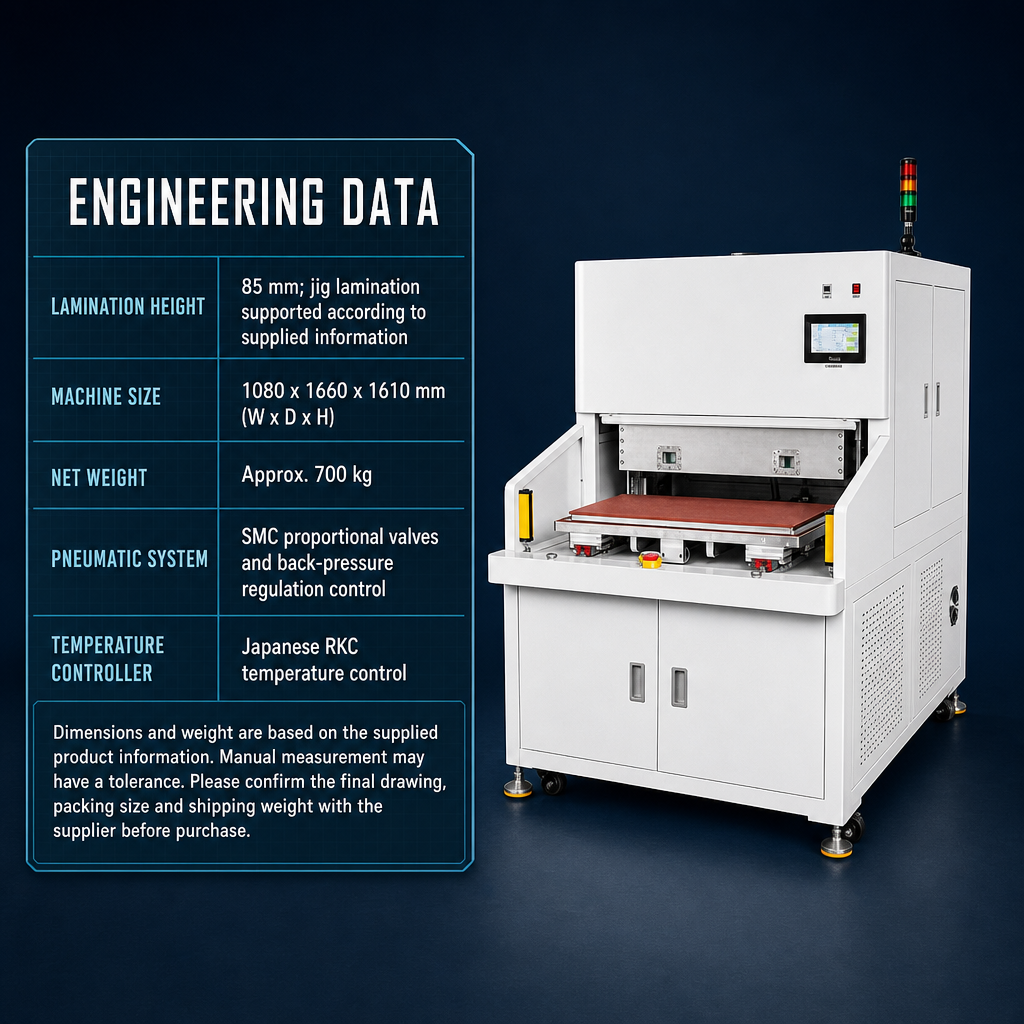
2. 85 mm Lamination Height
The published lamination height is 85 mm, with fixture-assisted processing supported.
Buyer benefit: The available clearance allows the process to incorporate compatible jigs, carriers and layered workpiece structures.
3. Dual-Side Heating to 150°C
Both the upper pressing plate and lower platform plate support constant-temperature heating from ambient temperature to 150°C.
Buyer benefit: Heating from both sides supports more balanced thermal transfer through compatible display and adhesive stacks.
4. Three-Stage Process Control
Each recipe can execute three stages automatically. Every stage can define:
Pressure setting
Processing time
Vacuum on or off
Buyer benefit: One recipe can combine staged loading, dwell and release conditions without requiring the operator to reset the process between stages.
5. Controlled Pneumatic Pressure
The pneumatic system uses SMC proportional valves with SMC back-pressure regulation. The machine requires 4–6 bar compressed air through a stated Ø8 mm connection.
Buyer benefit: Electronic pressure setting supports repeatable stage changes, while controlled decompression reduces abrupt release at the end of the process.
6. Selectable Vacuum Mode
The machine can operate in vacuum mode or non-vacuum mode, and each process stage can define whether vacuum is required.
Buyer benefit: Vacuum can be introduced only where the selected material stack and bonding sequence require it.
7. Fourteen Product Recipes
The Siemens PLC stores recipes numbered 1–14.
Buyer benefit: Frequently used process settings can be saved and recalled for different workpieces, adhesives or tooling sets.
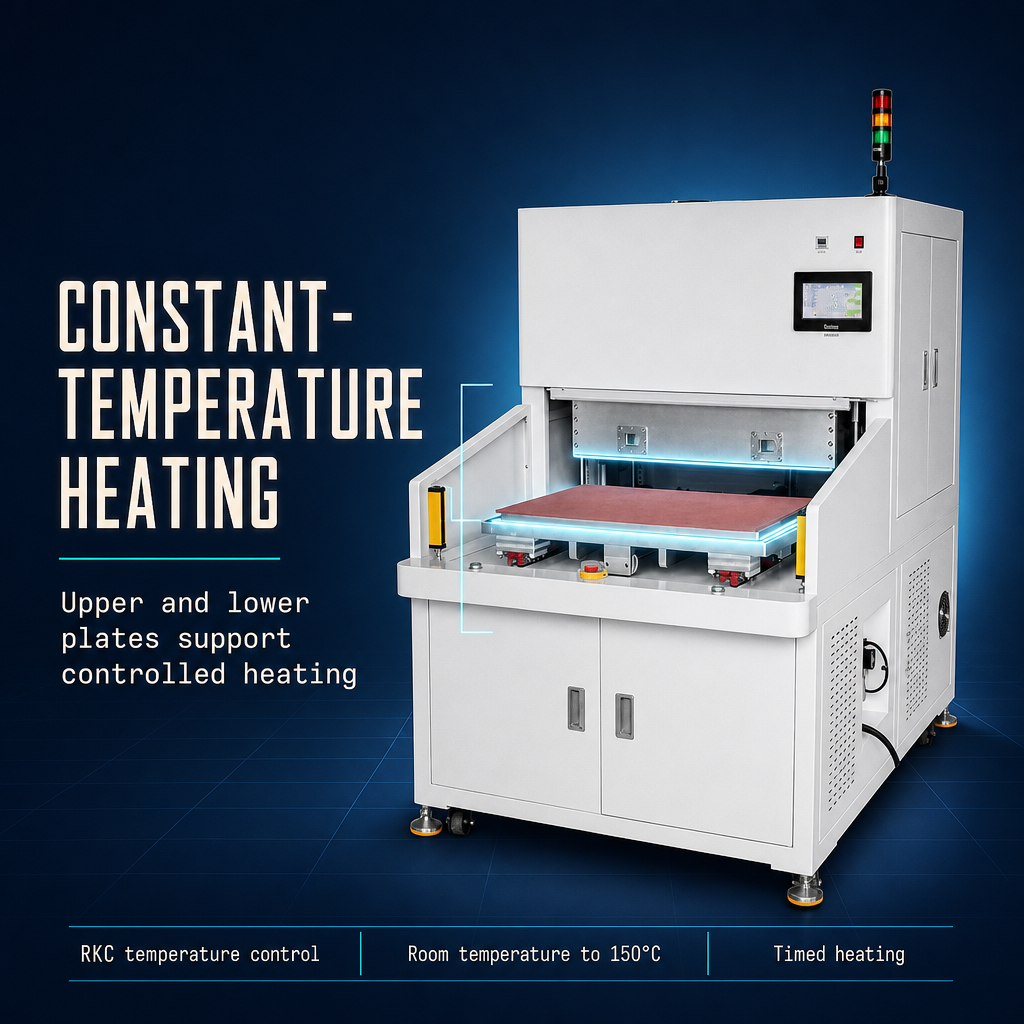
8. Scheduled Preheating
The heating system supports timed startup according to a configured date and time.
Buyer benefit: The machine can reach the required thermal condition before the planned production period, subject to the site’s operating procedure.
9. Touchscreen Process Control
The touchscreen provides access to recipe settings, stage parameters and machine status.
Buyer benefit: Process selection and parameter adjustment are consolidated in one operator interface.
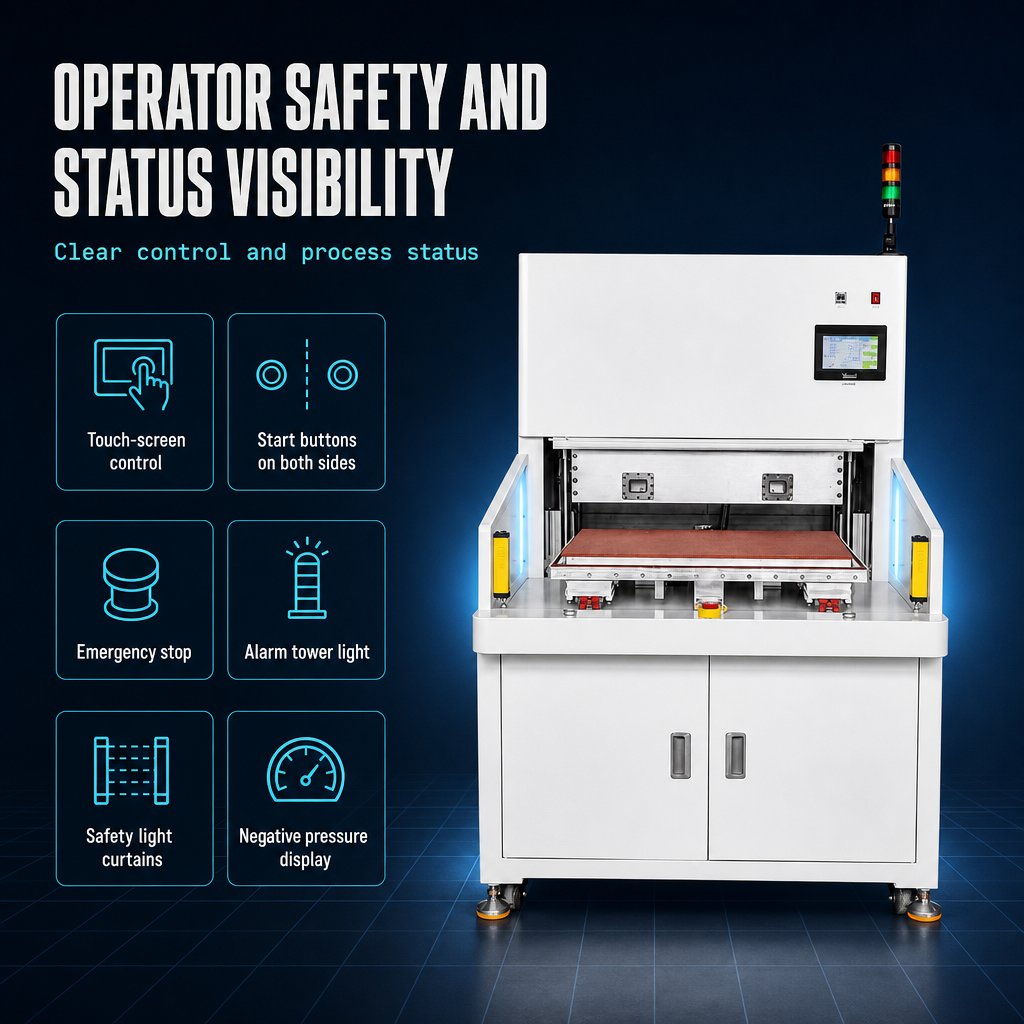
10. Industrial Safety and Status Visibility
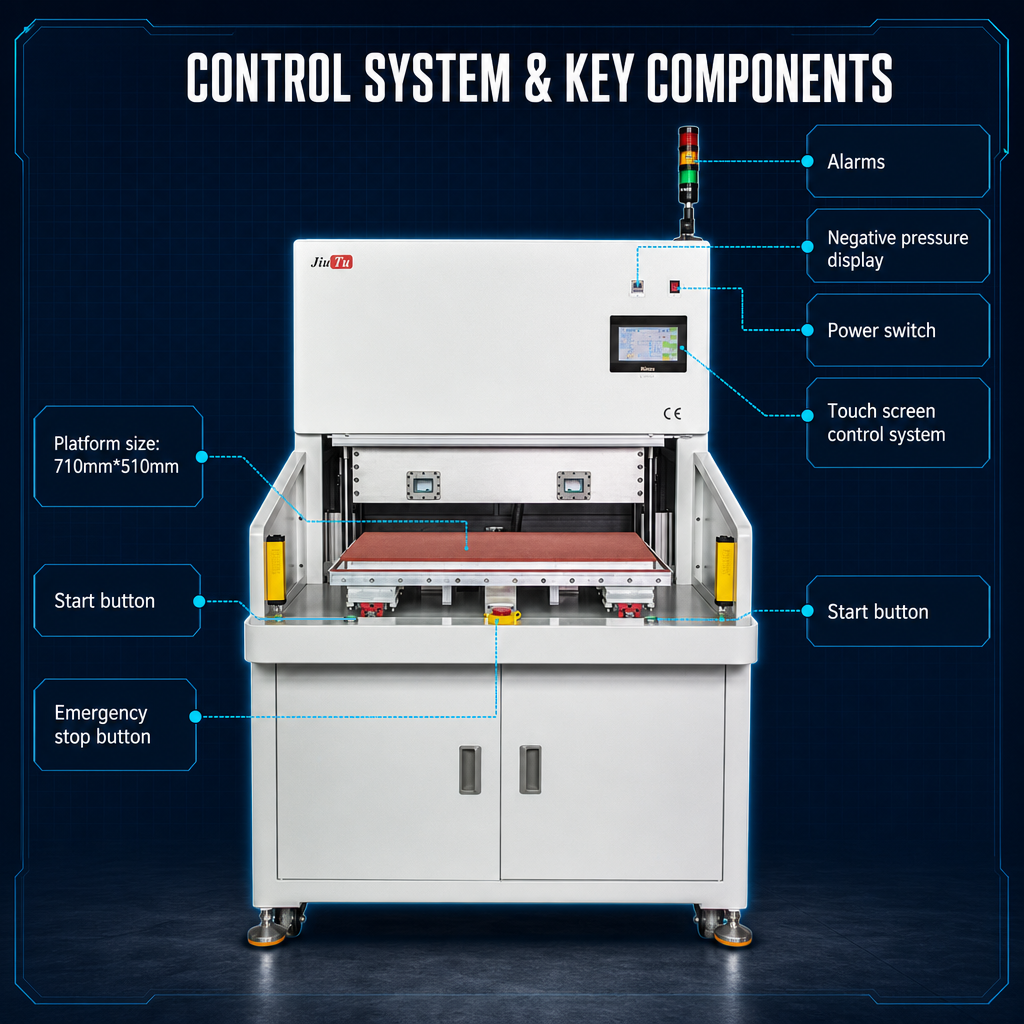
The machine includes:
Safety light curtains
Start buttons on both sides
Emergency-stop control
Three-color alarm tower
Negative-pressure display
Buyer benefit: Operators can view machine status and use clearly separated operating and emergency controls.
11. Factory-Oriented Structure
The machine uses a vertical industrial body with casters and leveling feet. Its published net weight is approximately 700 kg.
Buyer benefit: Casters support controlled repositioning during layout preparation, while leveling feet provide a stable operating base.
Why Choose Us
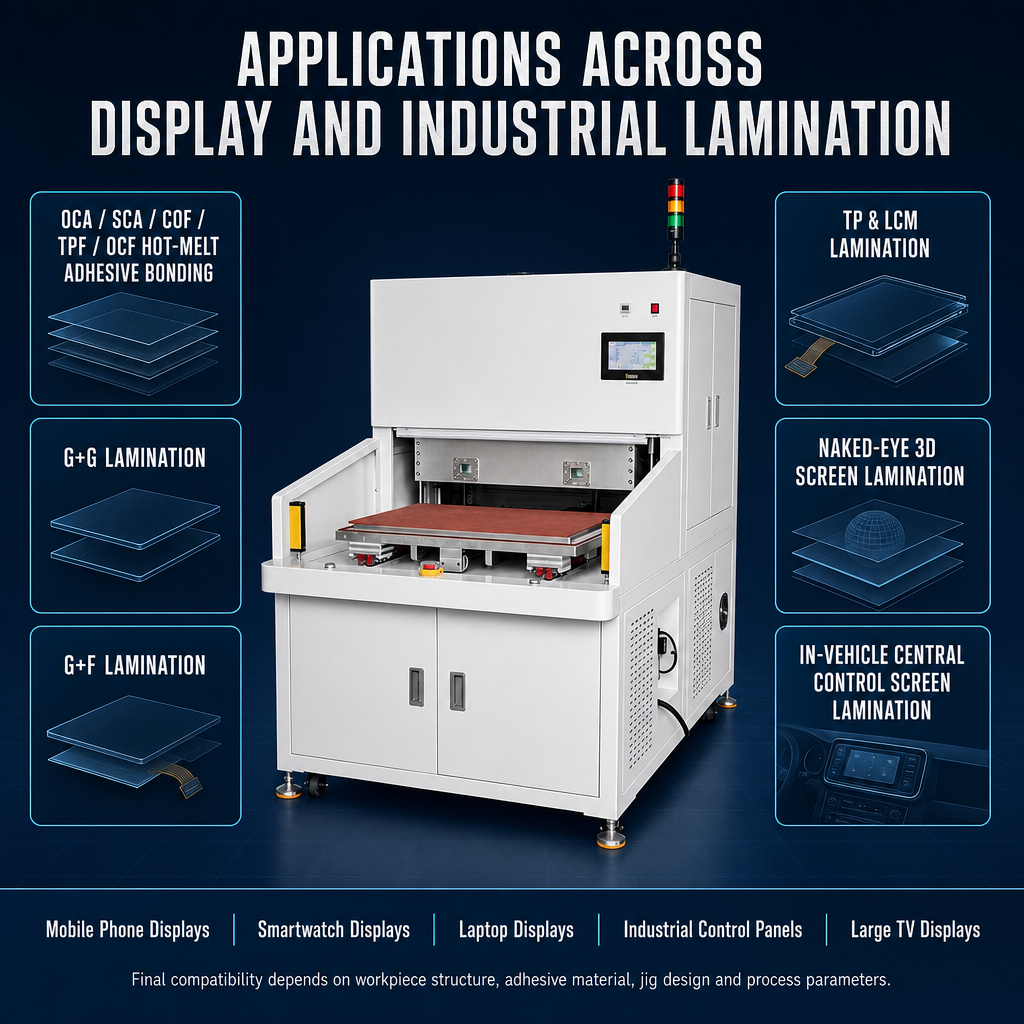
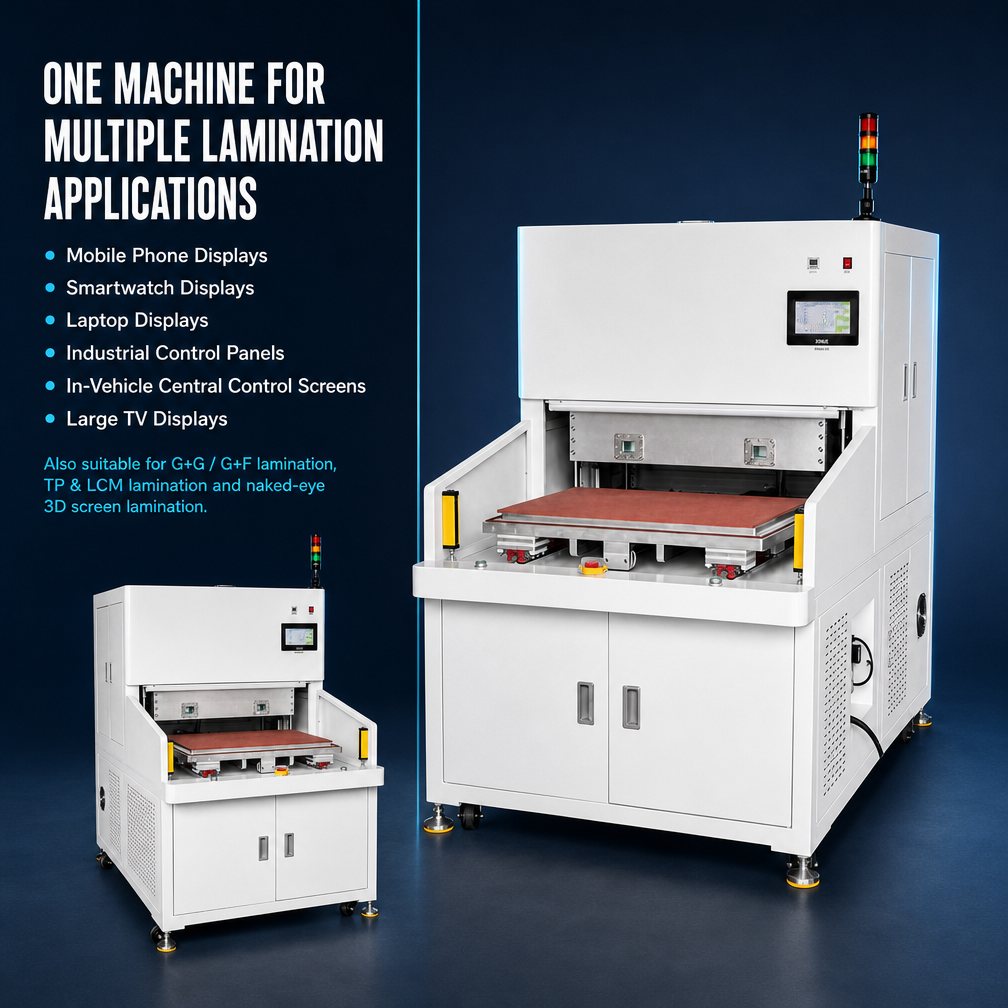
Potential processes shown in the supplied product materials include:
OCA lamination
SCA lamination
COF adhesive processing
TPF adhesive processing
OCF adhesive processing
G+G lamination
G+F lamination
TP and LCM lamination
Naked-eye 3D display lamination
Automotive display lamination
Industrial-control display lamination
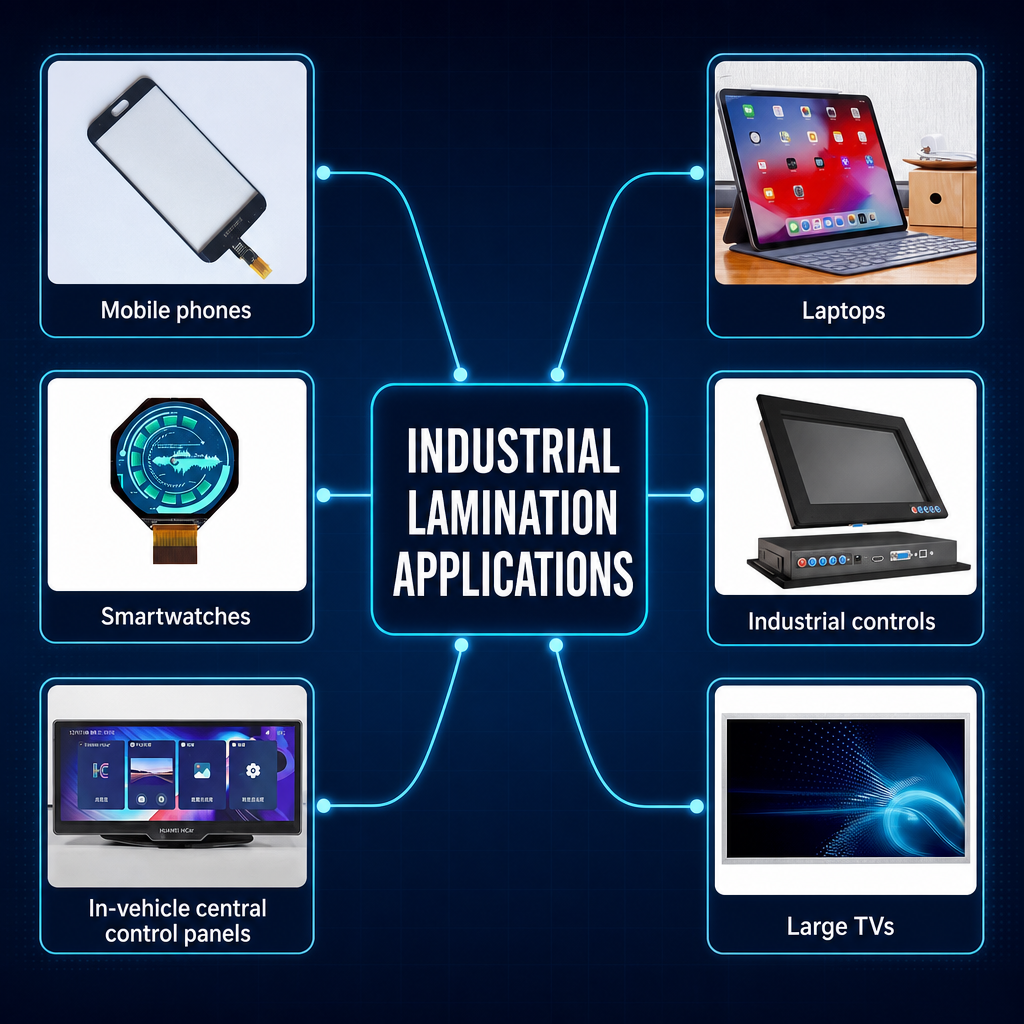
Target Industrial Applications
Industrial Display Modules
-Industrial control panels
-Human-machine interface displays
-Embedded display assemblies
-Commercial equipment displays
Automotive Displays
-Center-control displays
-Multi-screen dashboard assemblies
-In-vehicle information displays
-Curved display structures, subject to tooling review
Computing and Large Displays
-Laptop display modules
-All-in-one display modules
-Large television panels
-Commercial information displays
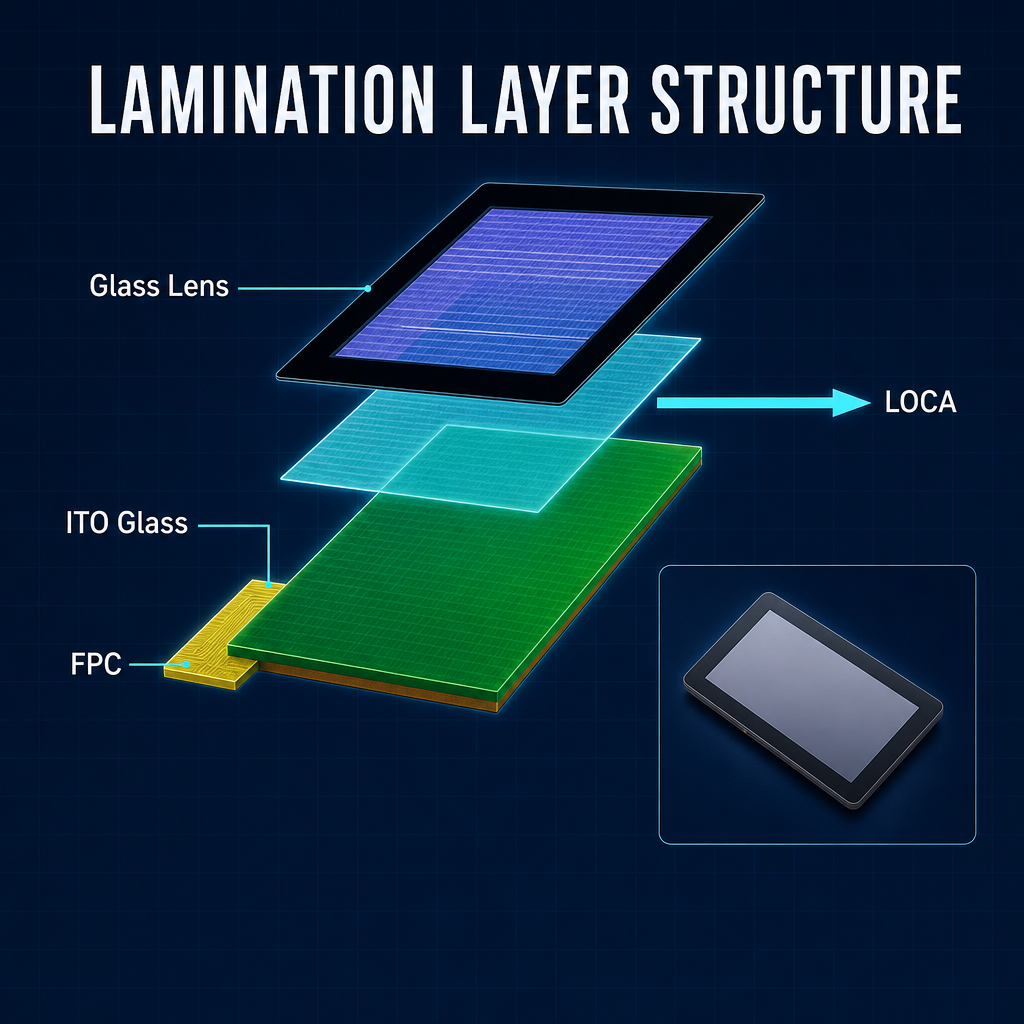
Optical Lamination Structures
-Glass-to-glass structures
-Glass-to-film structures
-Touch-panel and display-module stacks
-Adhesive film and hot-melt material stacks
Information Required for Quotation
Please provide:
Display or workpiece type
Maximum dimensions
Layer structure
Adhesive type
Total stack thickness
Fixture dimensions
Required temperature
Required process pressure
Vacuum requirement
Stage times
Target output
Product drawings
Sample images
Acceptance criteria
Product Documents
Parameters and functional characteristics
Key Features
Product Details
FAQ
Q1. What is the working platform size?
Q2. What is the maximum lamination height?
Q3. What temperature can the machine reach?
Q4. Are the upper and lower plates heated separately?
Q5. How does the three-stage process work?
Q6. How many recipes can be stored?
Q7. Can the machine run without vacuum?
Q8. What is the vacuum level?
Q9. What is the pressure range?
Q10. What air supply is required?
Q11. What electrical supply is required?
Q12. What are the machine dimensions and weight?
Q13. What display processes can be evaluated?
Q14. What safety features are included?
Q15. Is this a servo press?
Q16. What information is needed for a quotation?
Interested in This Product?
Tell us your project details and our team will prepare a customized quotation.
GET QUOTE NOW