
400×400-2T Servo laminating machine specification
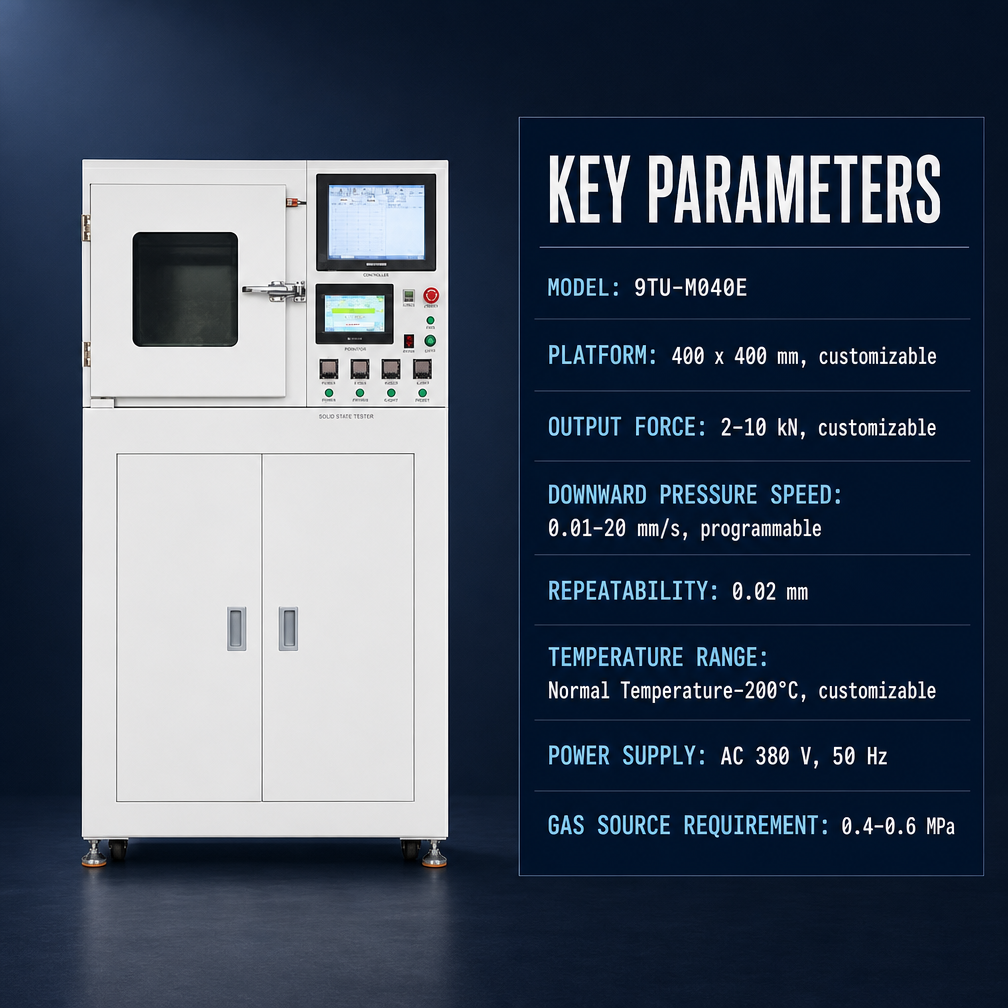
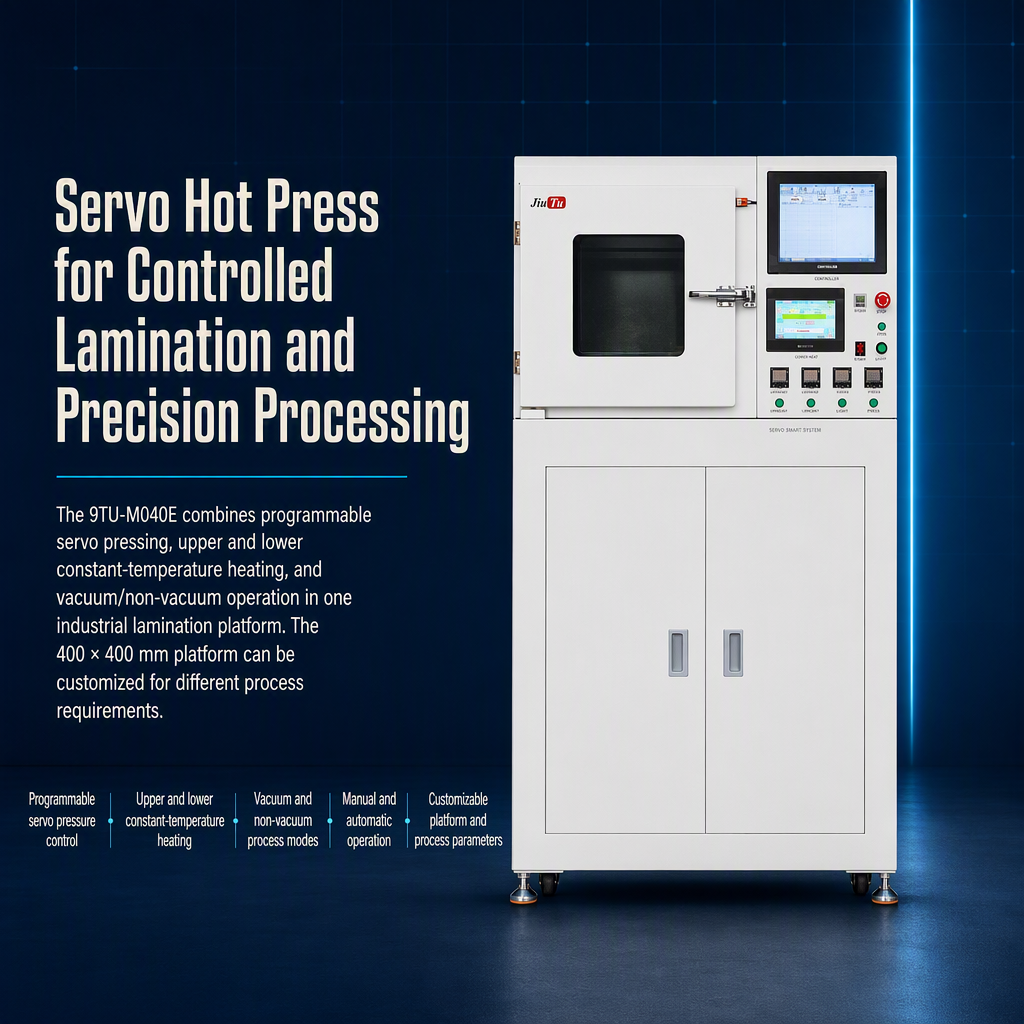
The 9TU-M040E is designed for industrial processes that require coordinated control of pressing force, displacement, temperature, speed, holding time and chamber conditions.
GET QUOTE NOW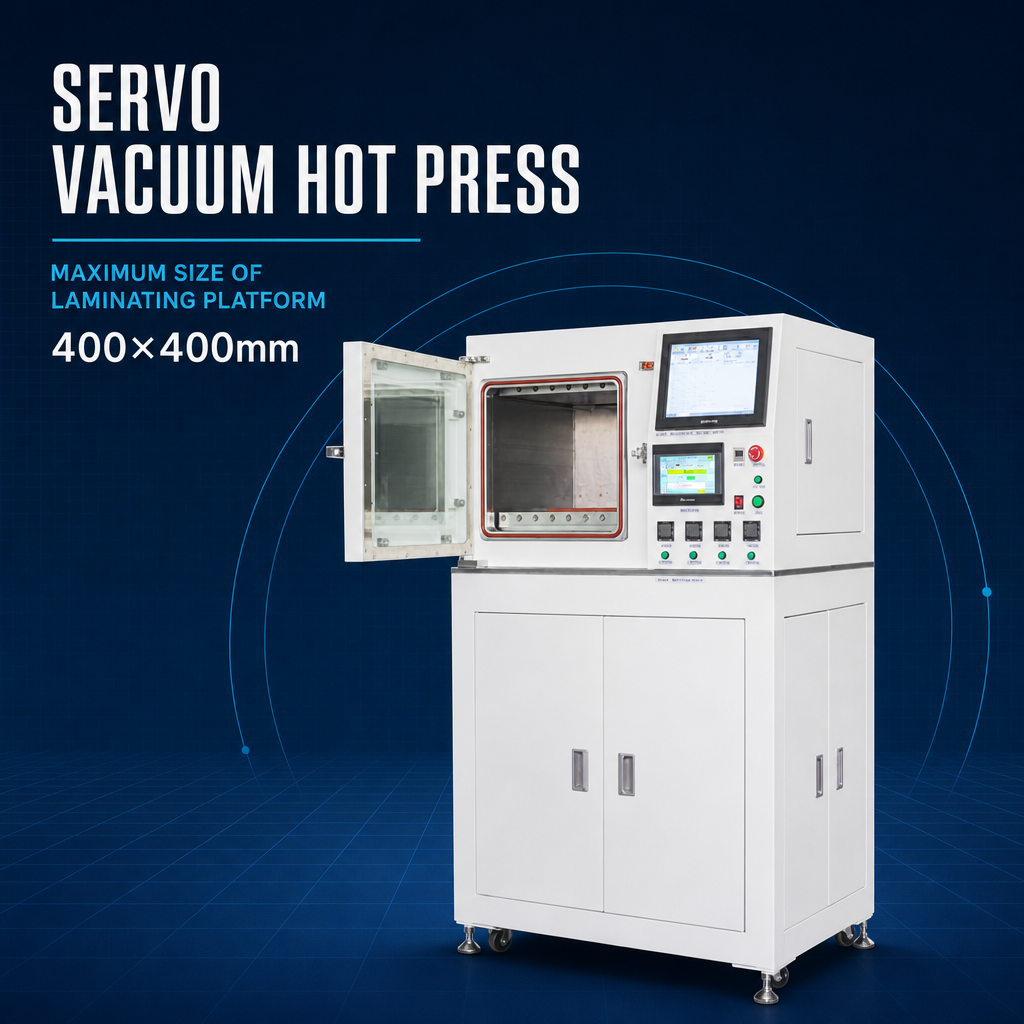
The 9TU-M040E is designed for industrial processes that require coordinated control of pressing force, displacement, temperature, speed, holding time and chamber conditions.
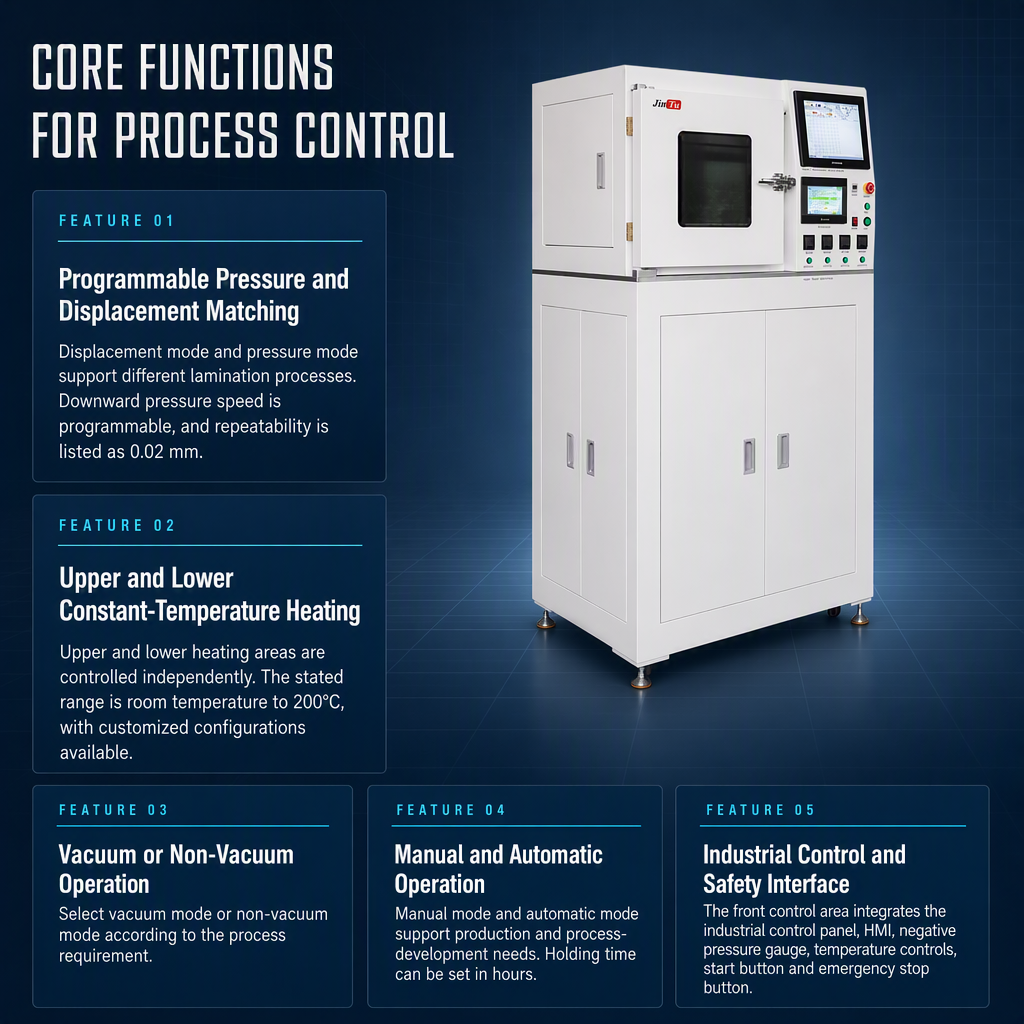
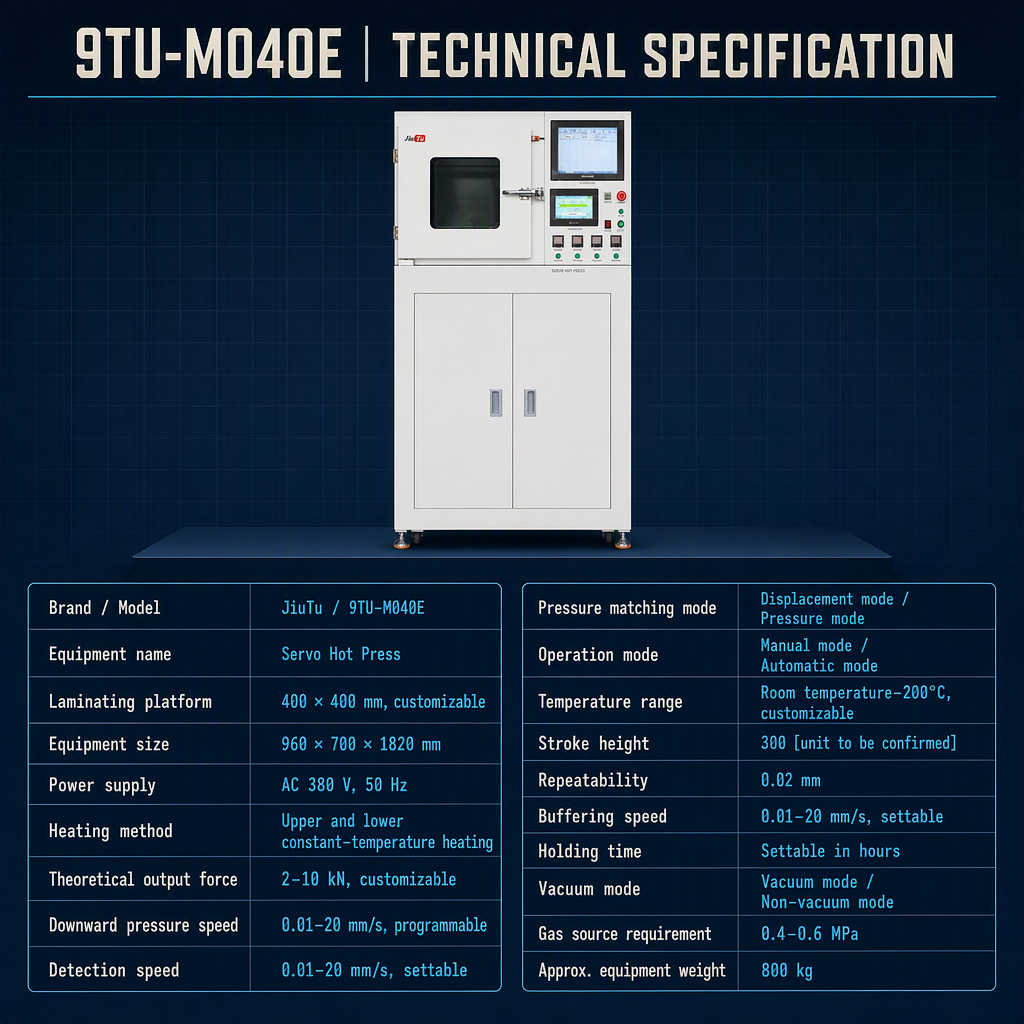
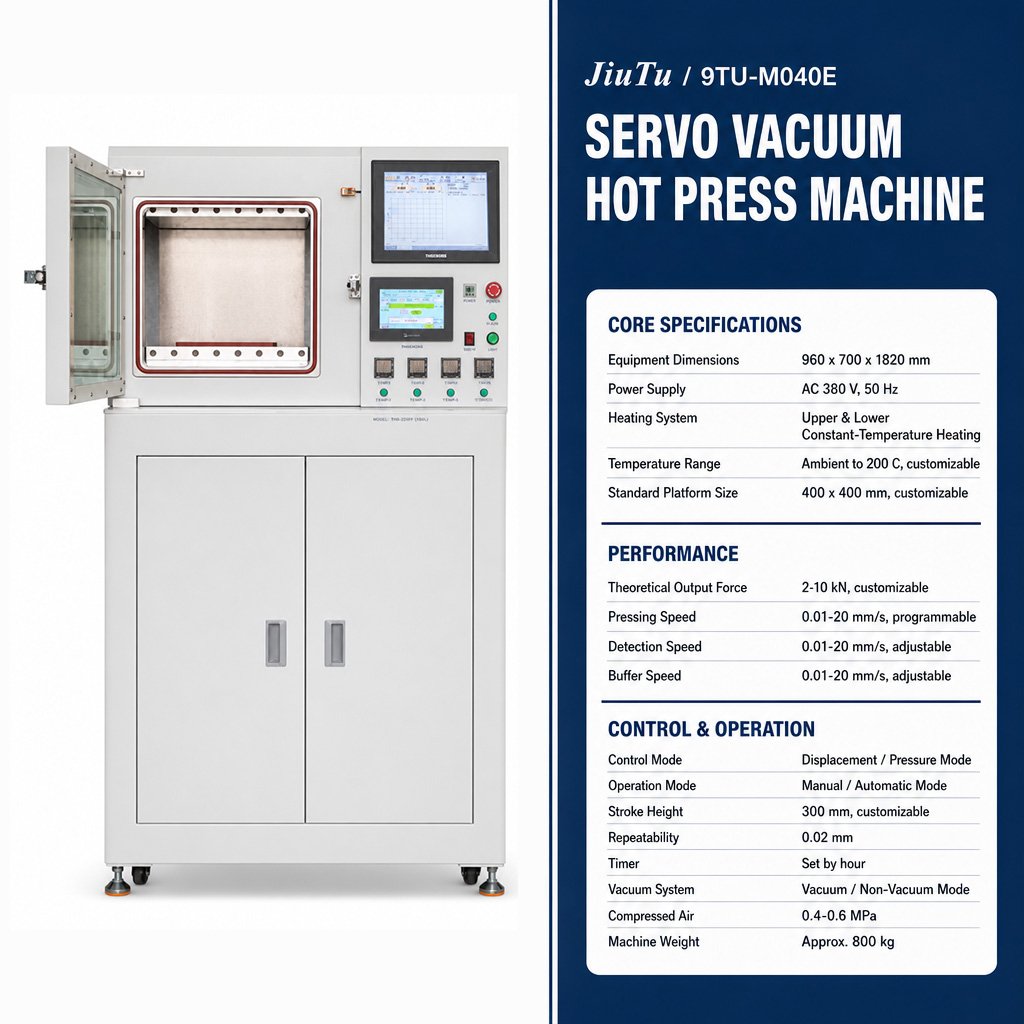
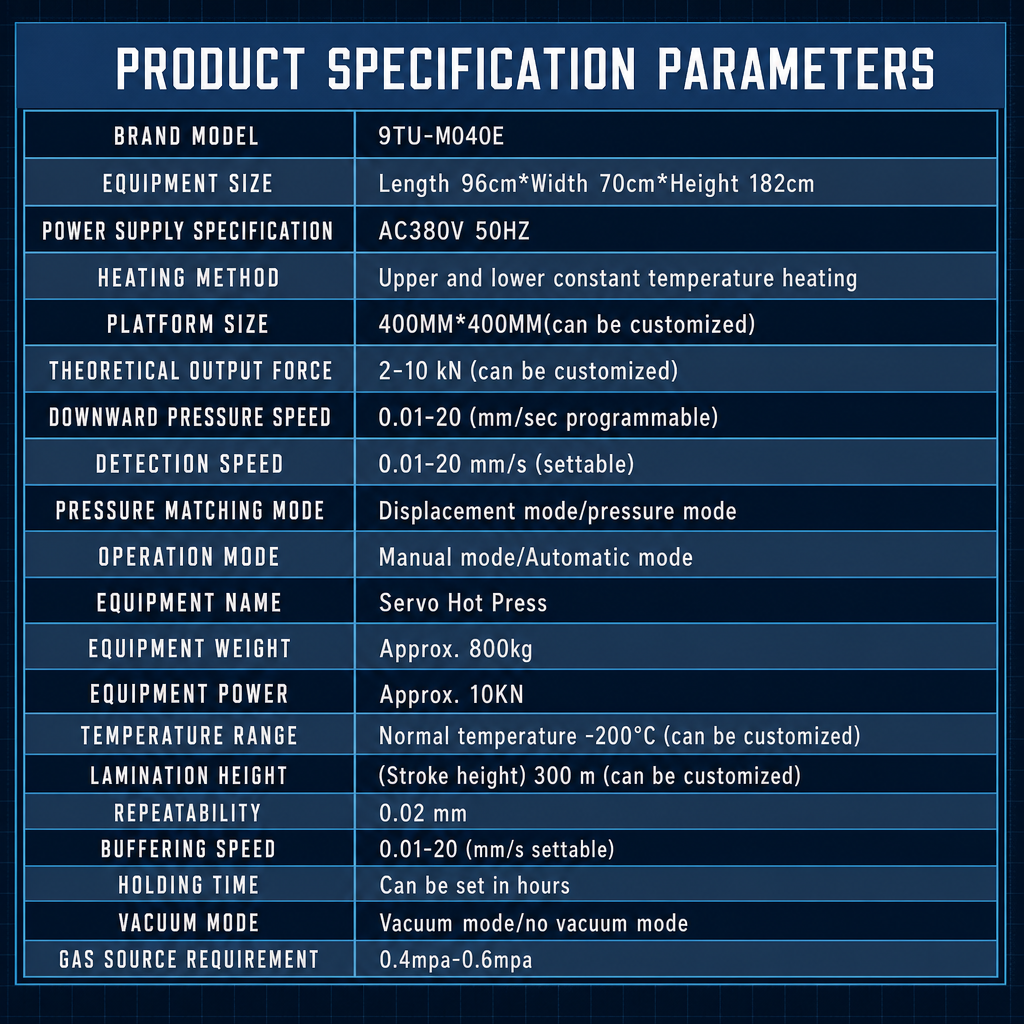
Its servo pressing system provides a configurable theoretical output force of 2–10 kN. Operators can select pressure mode when applied force is the primary process variable or displacement mode when the final pressing position is more important. The stated repeatability is 0.02 mm, while the downward pressing, detection and buffering speeds can each be adjusted from 0.01 to 20 mm/s.
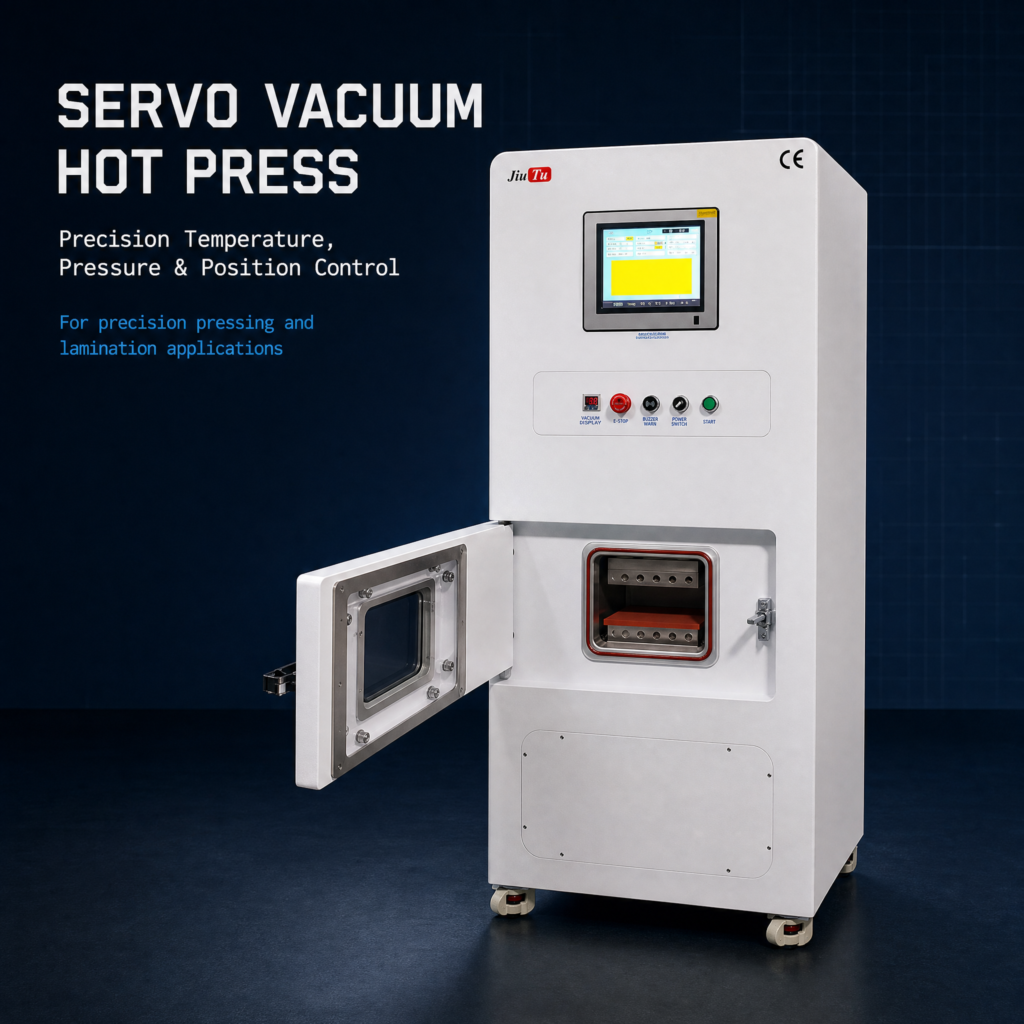
The upper and lower platens use independent constant-temperature heating. The standard published temperature range is ambient to 200°C, with customized thermal configurations available for evaluation. The enclosed chamber supports vacuum or non-vacuum processing according to the material stack and process objective.
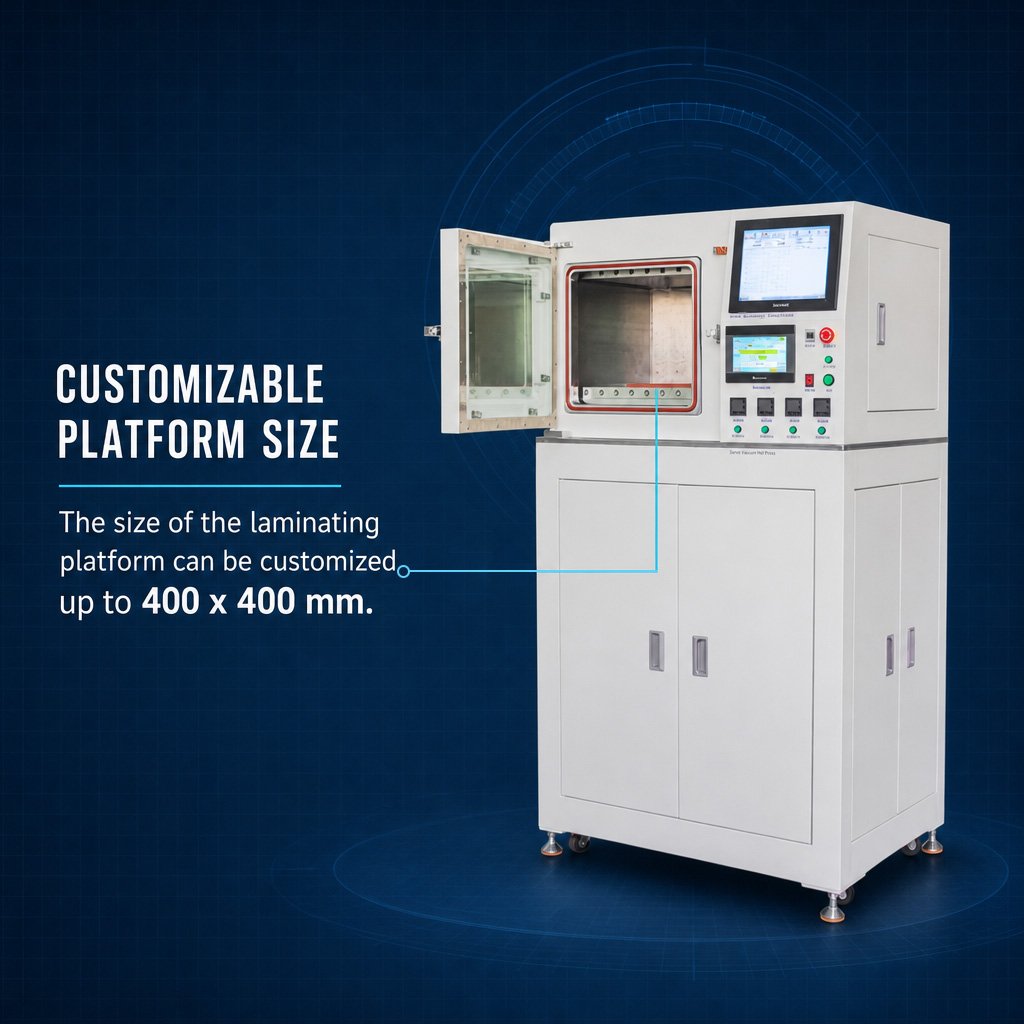
A standard 400 × 400 mm platform provides four times the nominal area of a 200 × 200 mm platform, making the machine suitable for larger samples, panels, layered components and multi-part tooling arrangements. Platform dimensions and selected process parameters can be reviewed for customized projects.
Key Features
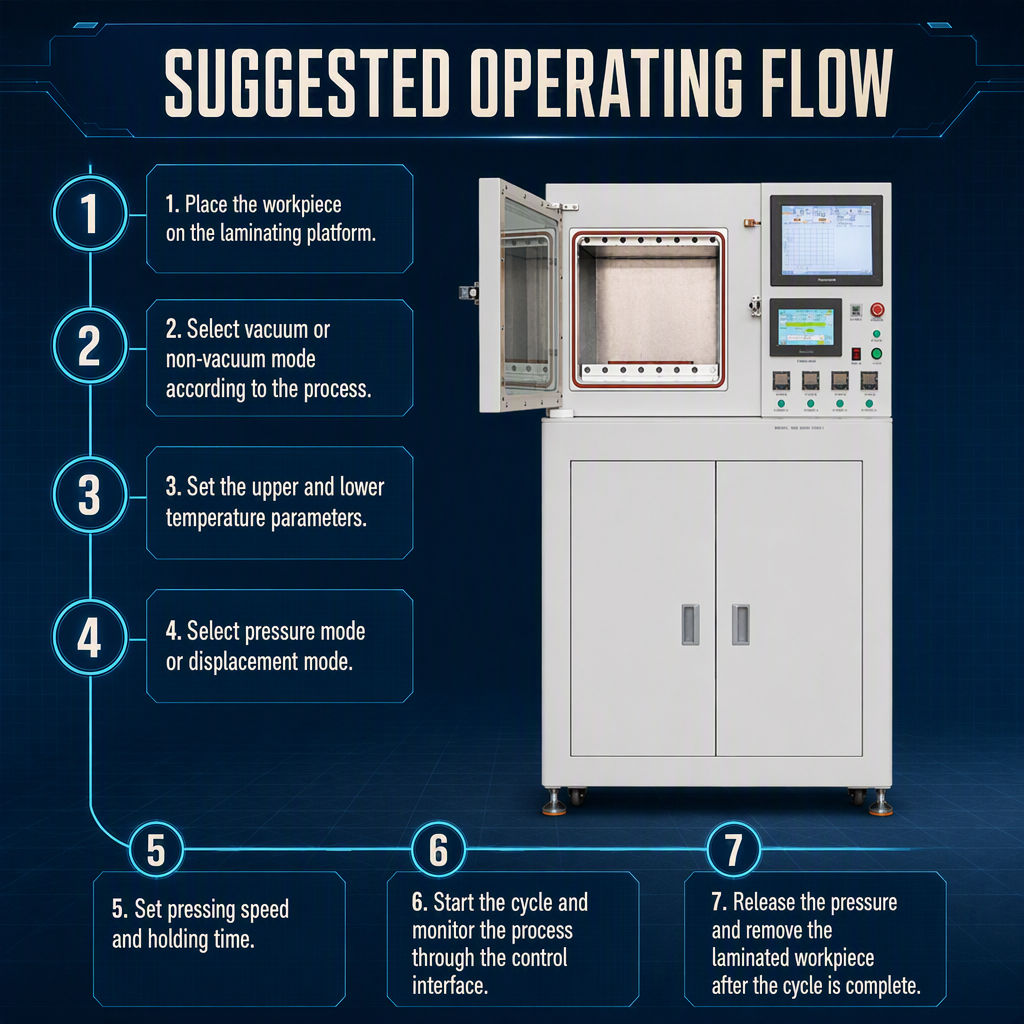
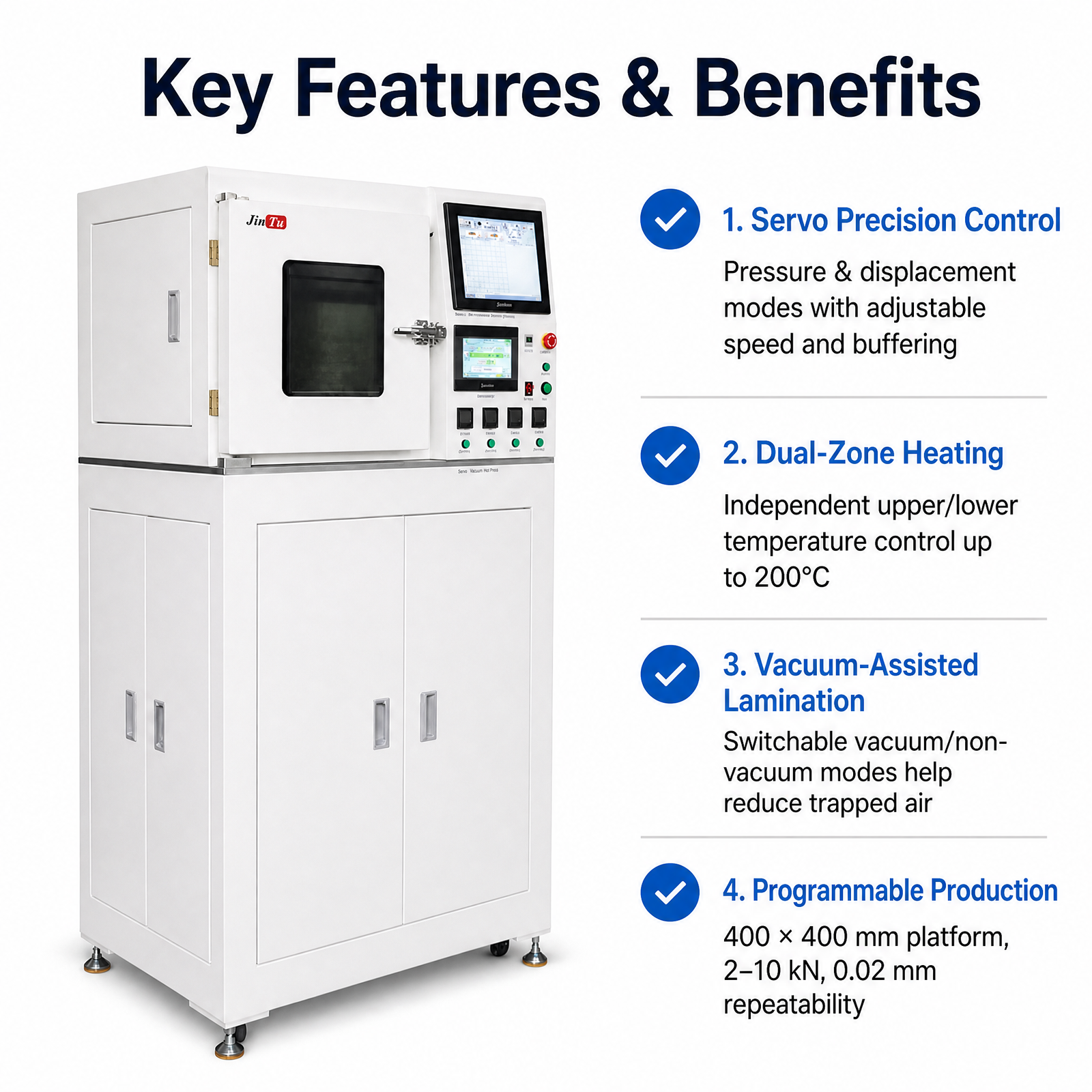
1. 400 × 400 mm Process Platform
The standard maximum platform size is 400 × 400 mm, with customization available according to the workpiece and tooling.
Buyer benefit: The larger working area supports wider material stacks, larger display-related components and multi-part fixtures without moving to a full production line.
2. Configurable 2–10 kN Servo Force
The product images state a configurable theoretical output range of 2–10 kN. The servo system supports controlled pressing with adjustable movement speed and buffering.
Buyer benefit: Force can be matched to delicate optical stacks, electronic assemblies or denser engineered materials within the selected configuration range.
3. Pressure and Displacement Modes
The machine supports both pressure mode and displacement mode.
Buyer benefit: Pressure mode targets the required pressing force, while displacement mode targets the required final position or compression depth.
4. Independent Dual-Platen Heating
Upper and lower heating zones are controlled independently. The standard published range is ambient to 200°C.
Buyer benefit: Independent thermal settings allow the process to be adapted to layered materials with different heat-transfer and bonding requirements.
5. Vacuum or Non-Vacuum Processing
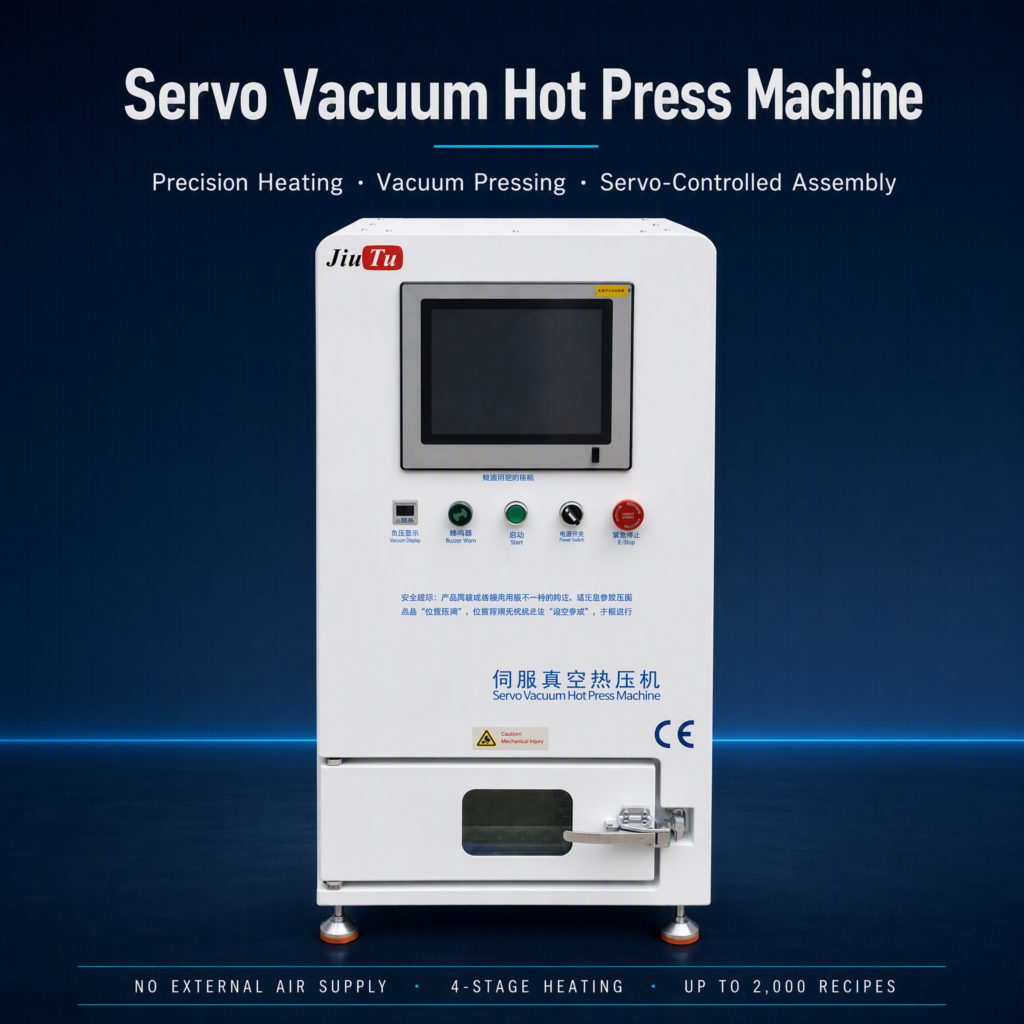
Operators can select vacuum mode or non-vacuum mode from the industrial control interface.
Buyer benefit: Vacuum-assisted processing helps manage trapped air in suitable layered structures, while non-vacuum operation remains available for processes that do not require evacuation.
6. Adjustable Motion Profile
Downward pressing speed, detection speed and buffering speed are each listed as 0.01–20 mm/s and adjustable.
Buyer benefit: Separate motion settings help control approach, material contact and final pressing behavior.
7. Manual and Automatic Operation
Manual mode supports setup and process trials. Automatic mode supports repeat cycles after parameters have been established.
Buyer benefit: One machine can support both process development and standardized operation.
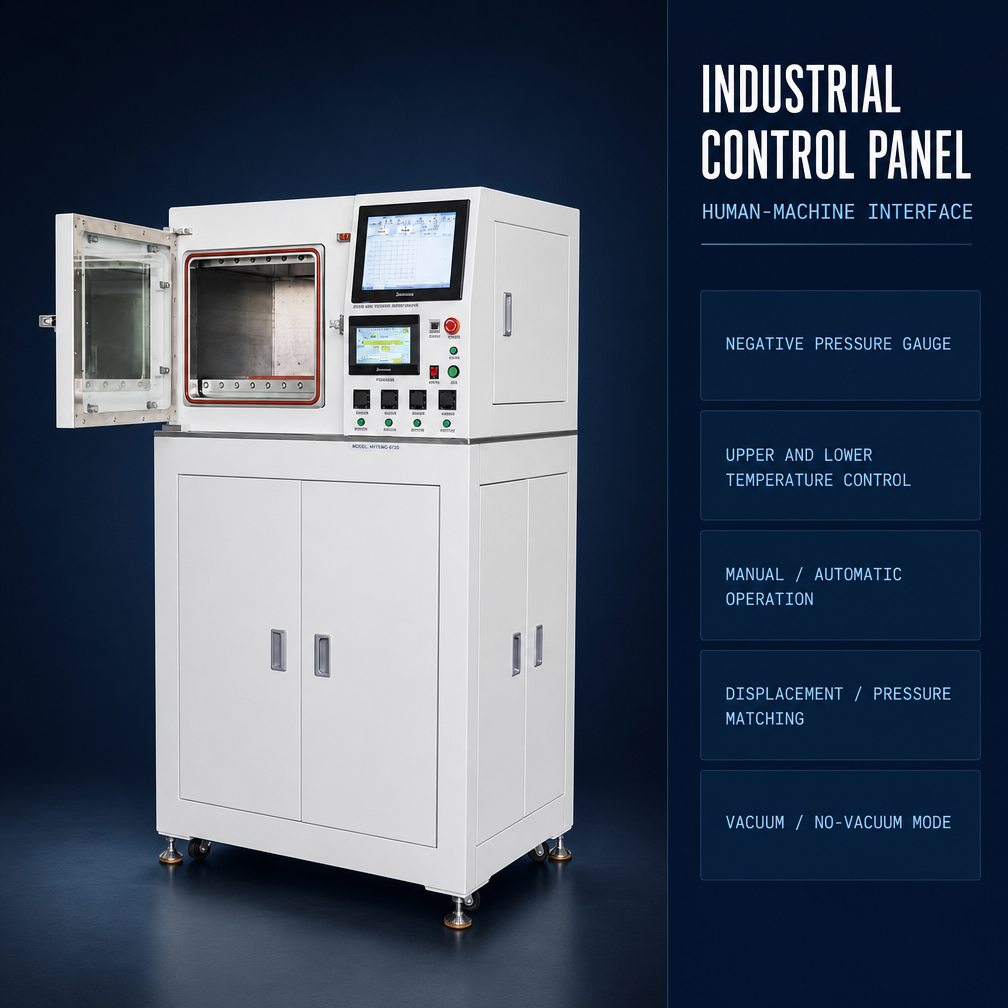
8. Industrial Control Interface
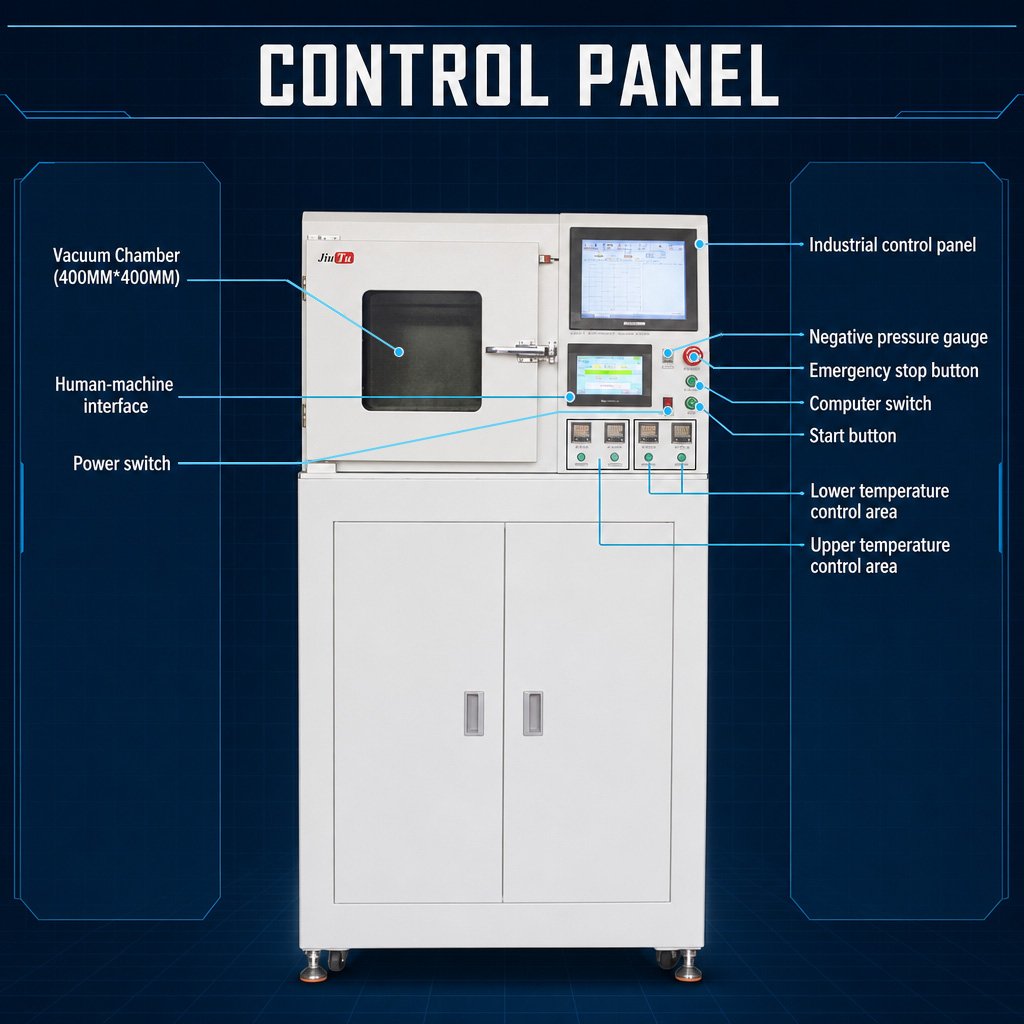
The front panel integrates the industrial control display, human-machine interface, negative-pressure gauge, upper and lower temperature controllers, start controls and emergency stop.
Buyer benefit: Core process variables and machine status are available from one operator station.
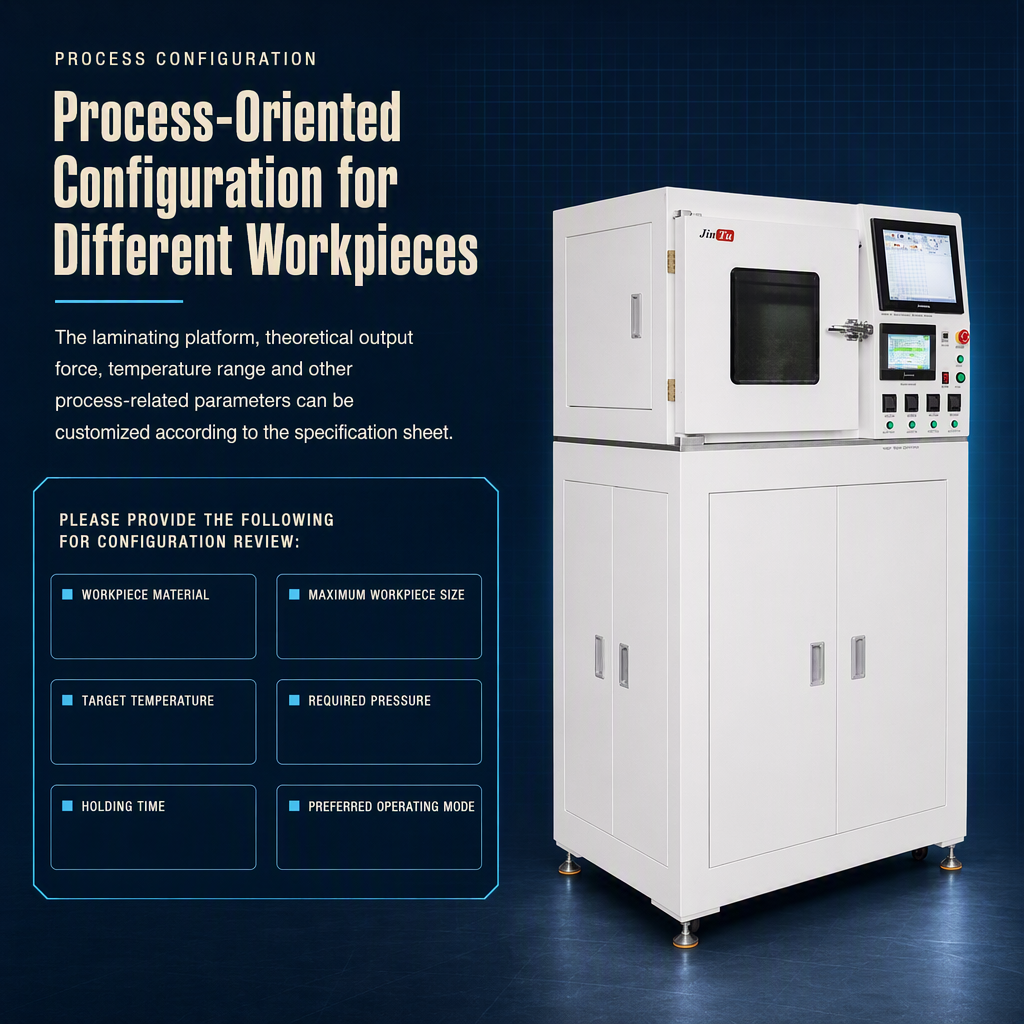
9. Configurable Process Platform
Platform dimensions, theoretical output force, temperature range and related parameters can be reviewed according to the buyer’s specification sheet.
Buyer benefit: The machine can be evaluated around the workpiece rather than forcing every process into one fixed configuration.
Why Choose Us


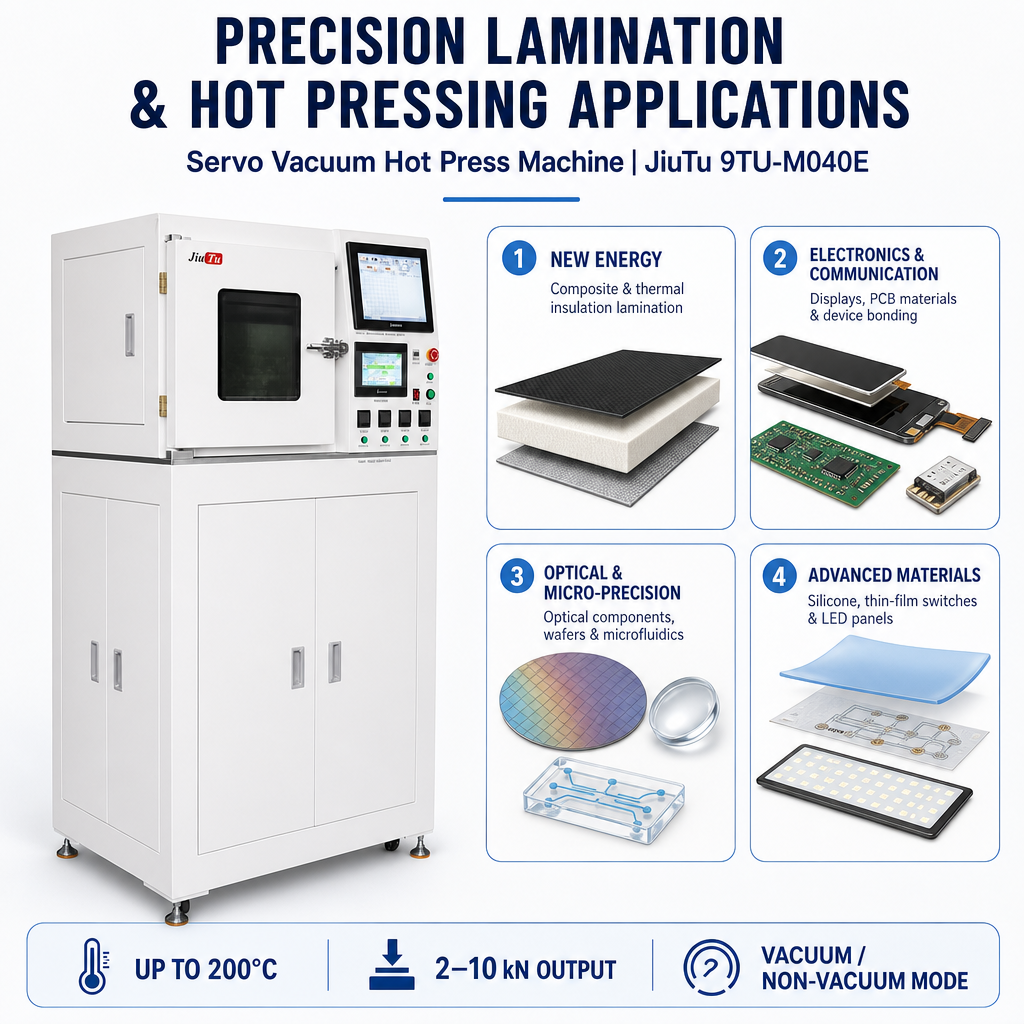
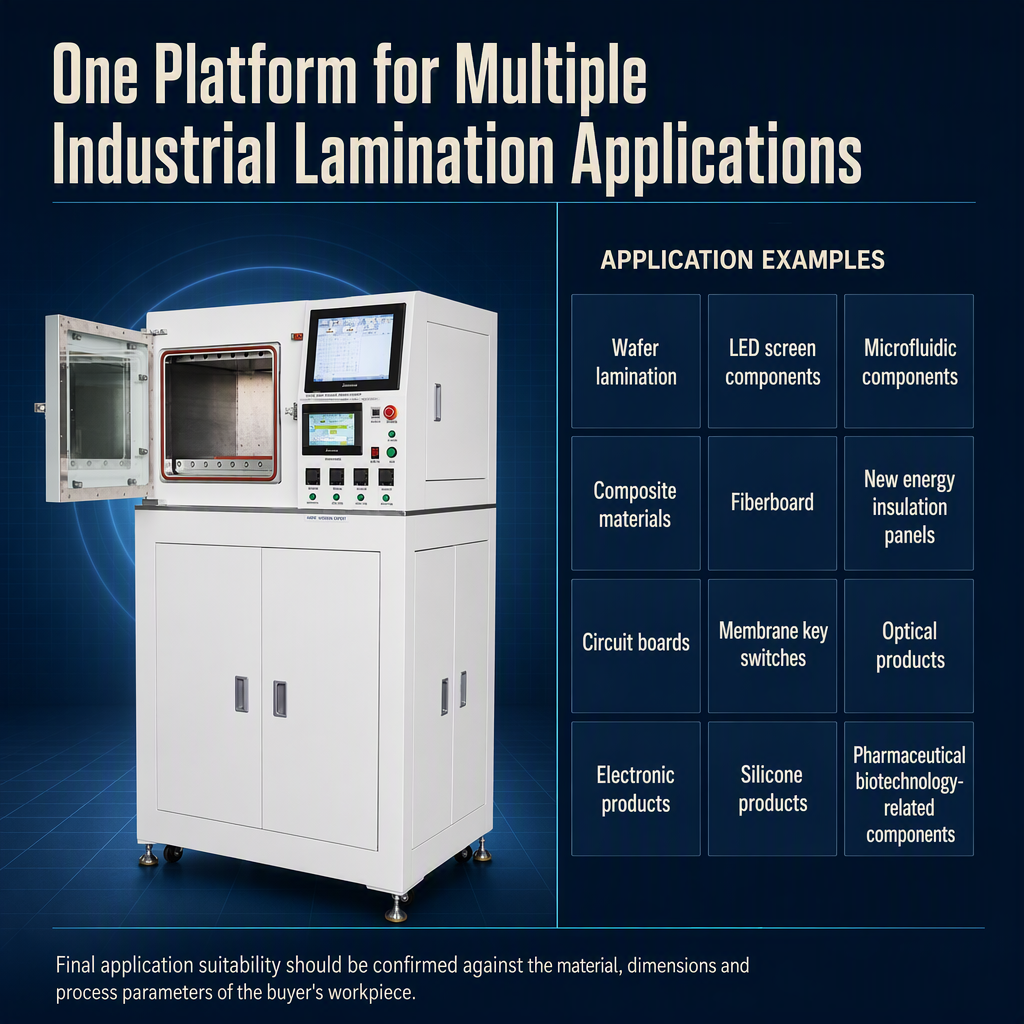
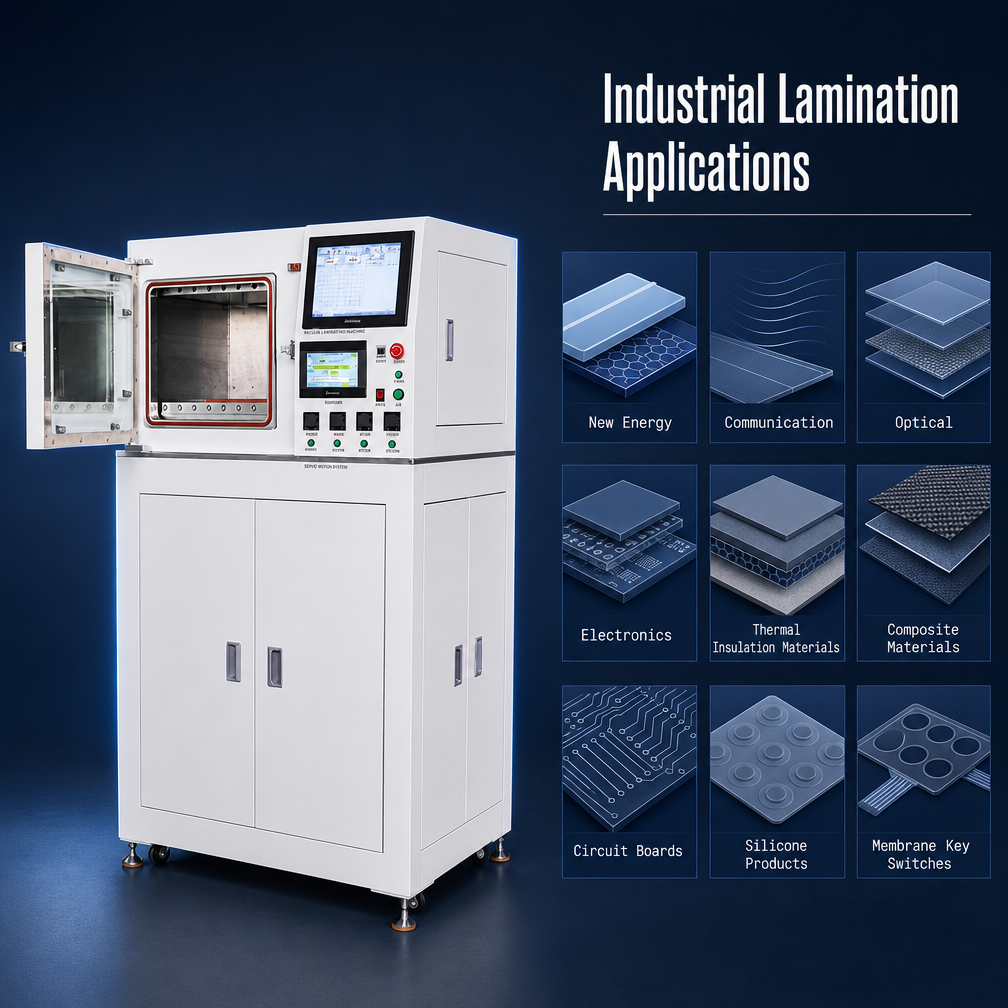
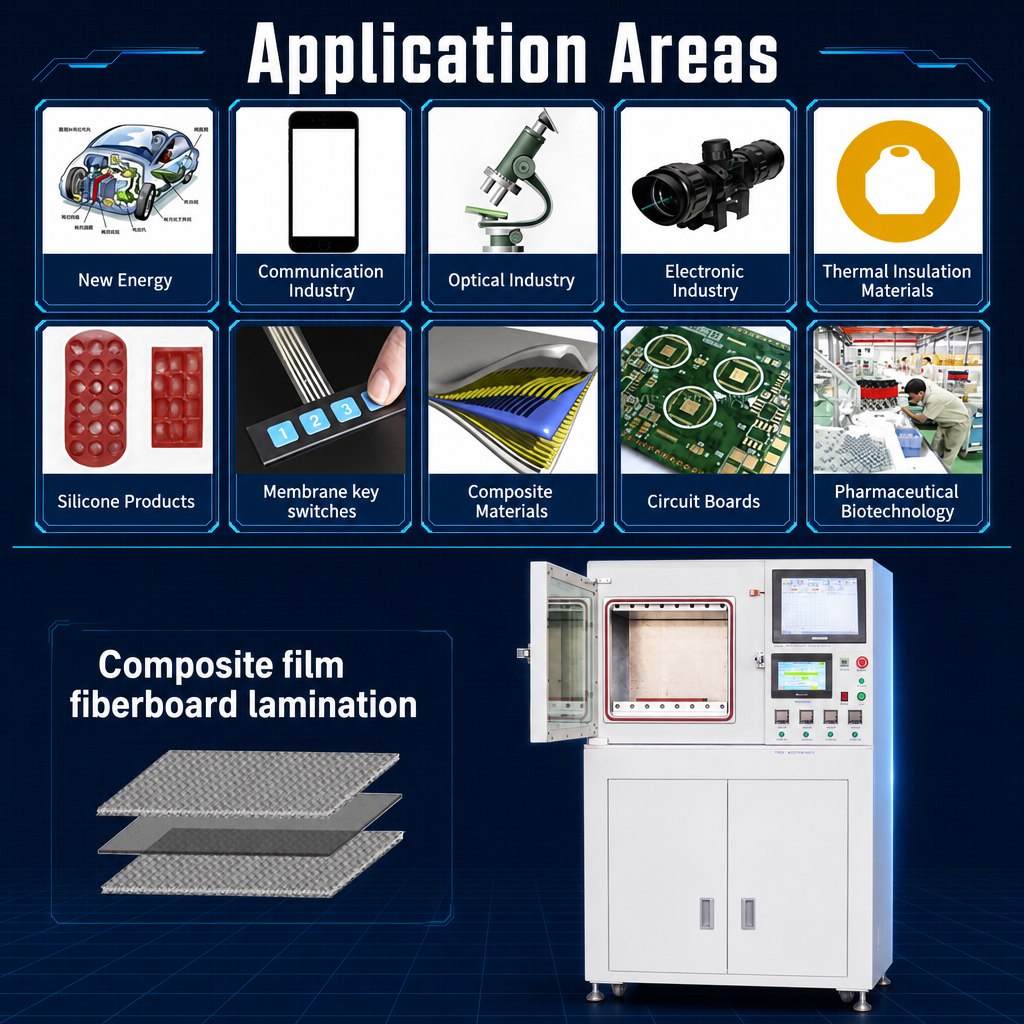
Display and Electronic Materials
-Industrial display components
-LED panel components
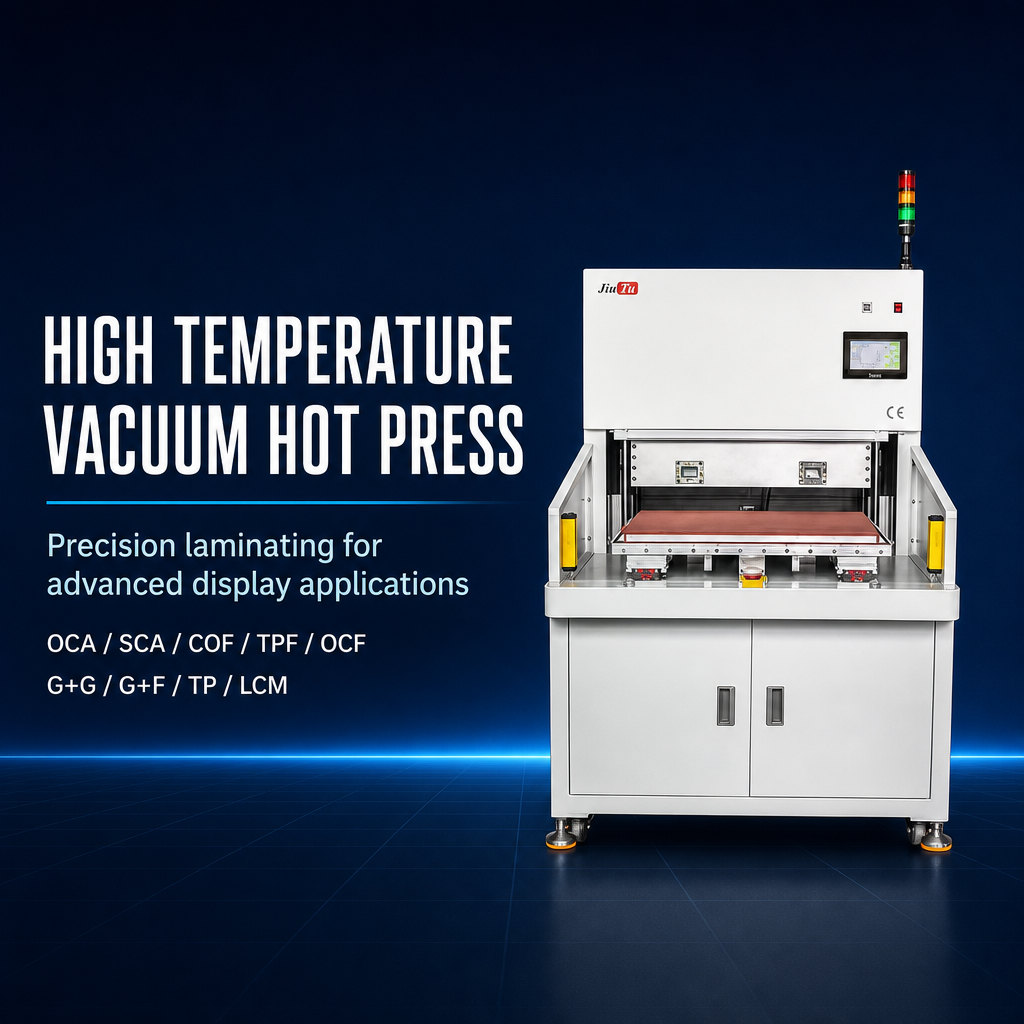
-LCD and LCM material stacks
-Touch-panel structures
-SCA and OCA adhesive stacks
-Circuit-board materials
-Electronic assemblies
-Membrane key switches
Optical and Micro-Precision Products
-Optical components
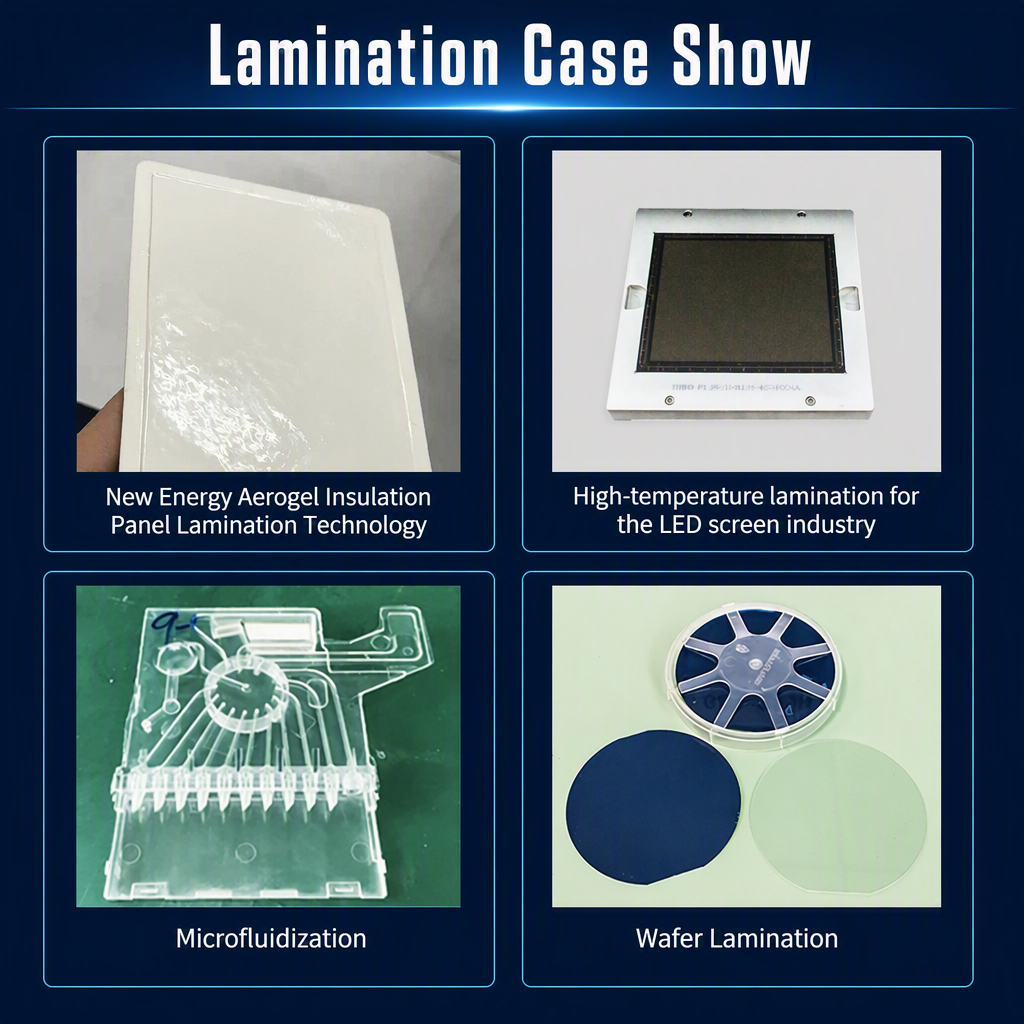
-Wafer lamination
-Microfluidic components
-Precision glass structures
-Thin-film assemblies
New-Energy and Engineered Materials
-Aerogel insulation panels
-Thermal insulation materials
-Composite laminates
-Composite films
-Fiberboard structures
-Silicone components
-Polymer materials
Process Development
-Material bonding trials
-Thermal compression studies
-Vacuum-assisted lamination trials
-Fixture-based pressing
-Pilot production
-Process-window development
Product Documents
400x400-2T Servo laminating machine specification
Key Features
Product Details
FAQ
Q1. What is the standard working platform size?
Q2. What is the pressing-force range?
Q3. What temperature range does the machine support?
Q4. Can the machine operate under vacuum?
Q5. What is the difference between pressure mode and displacement mode?
Q6. What is the stated repeatability?
Q7. Are pressing speeds adjustable?
Q8. Can the upper and lower temperatures be set separately?
Q9. What power supply is required?
Q10. Does the machine require compressed air?
Q11. What are the machine dimensions and weight?
Q12. What materials can be evaluated?
Interested in This Product?
Tell us your project details and our team will prepare a customized quotation.
GET QUOTE NOW