
9TU-M039E electrical and mechanical
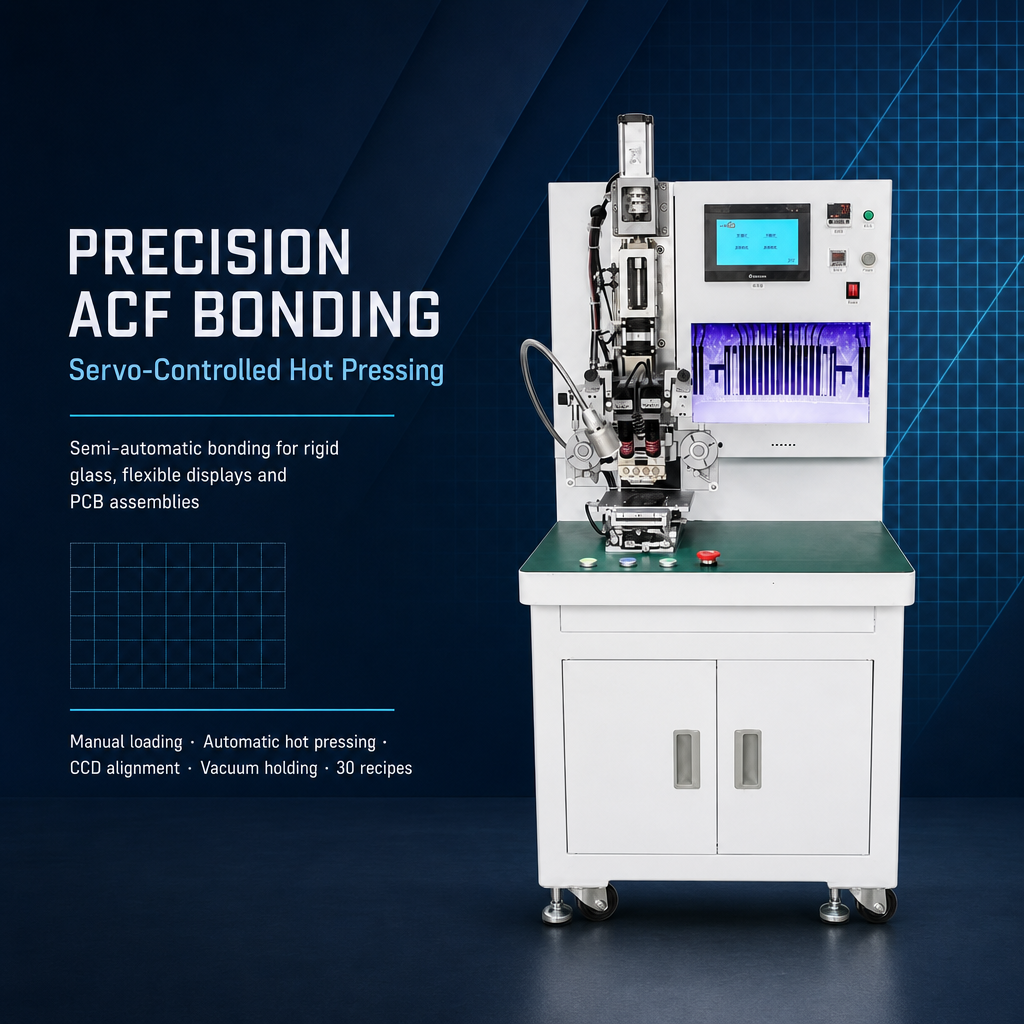
The 9TU-M039E is designed for ACF-based electrical and mechanical interconnection in display modules and electronic assemblies. It applies programmed heat, pressure and dwell time through a tungsten-s...
GET QUOTE NOW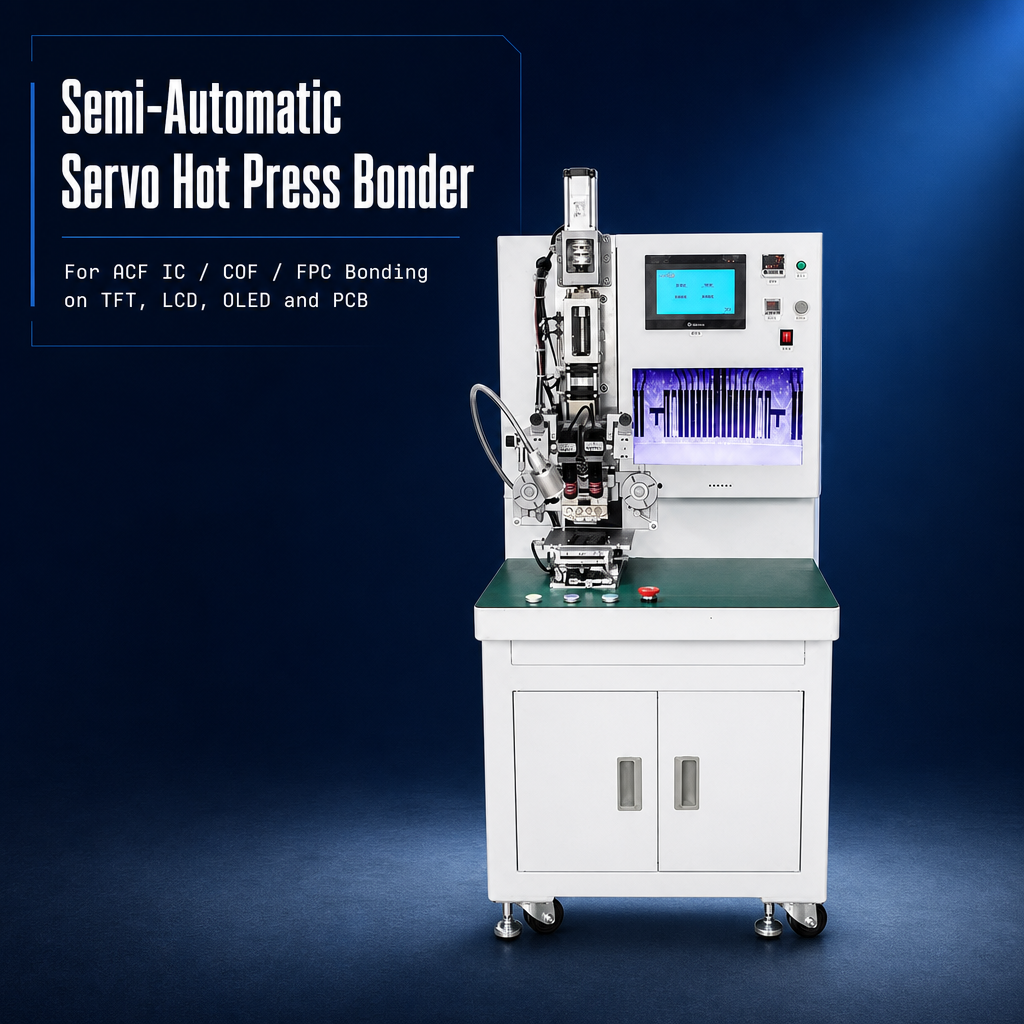
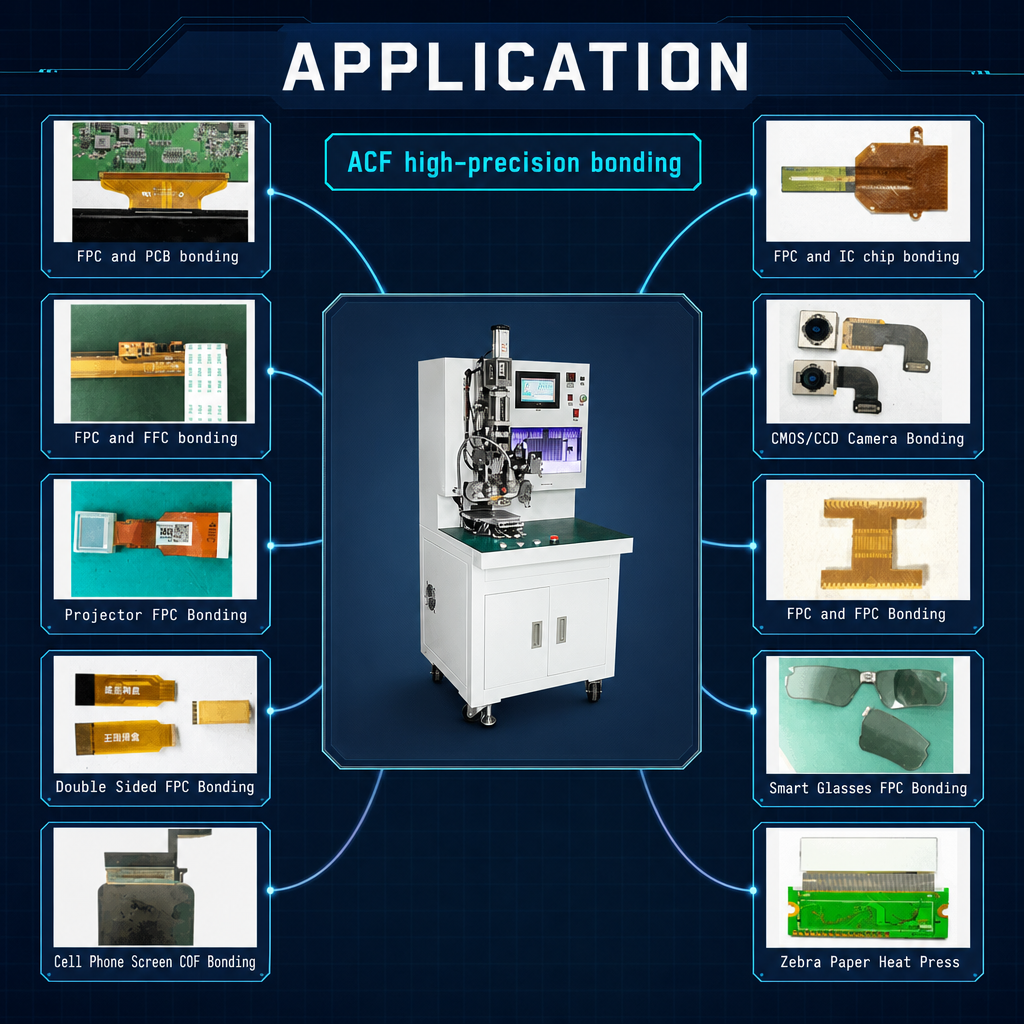
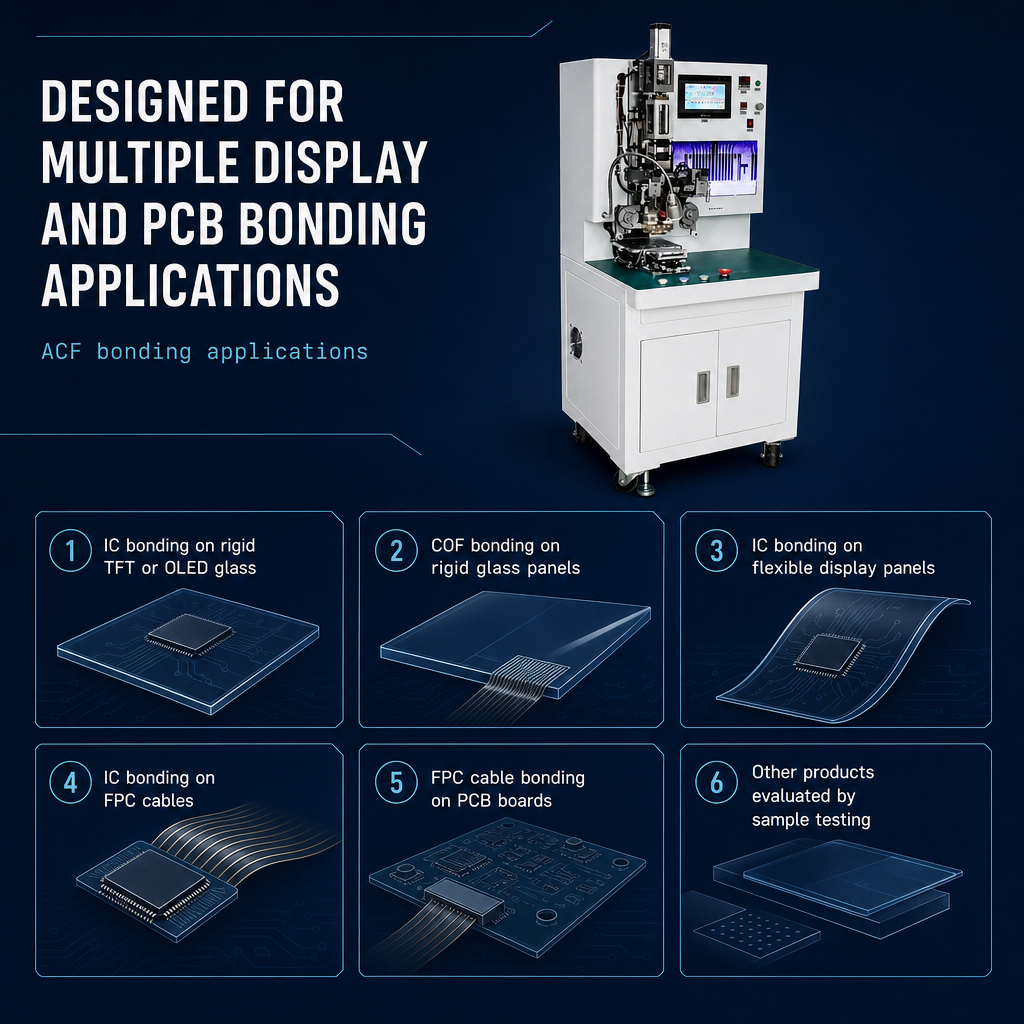
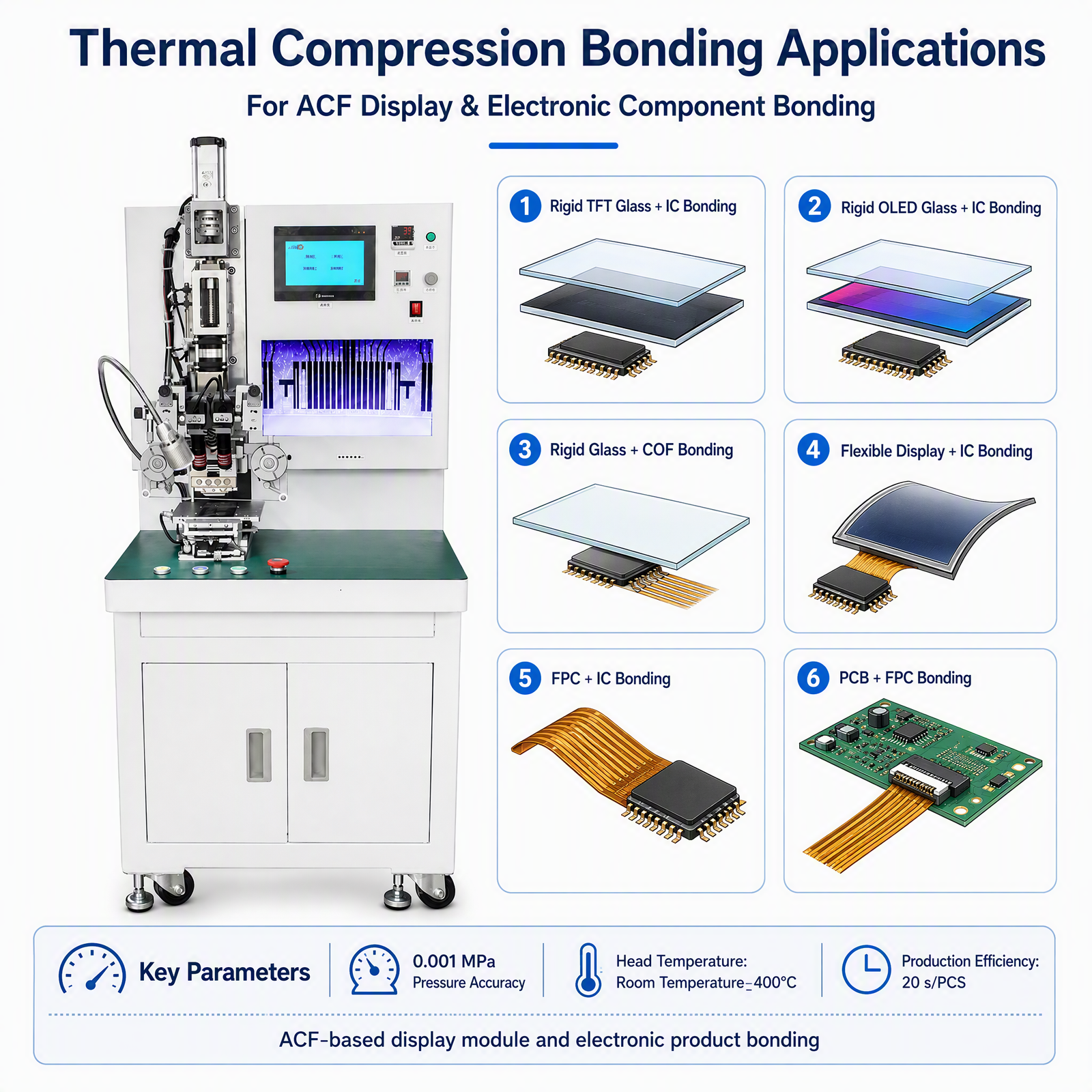
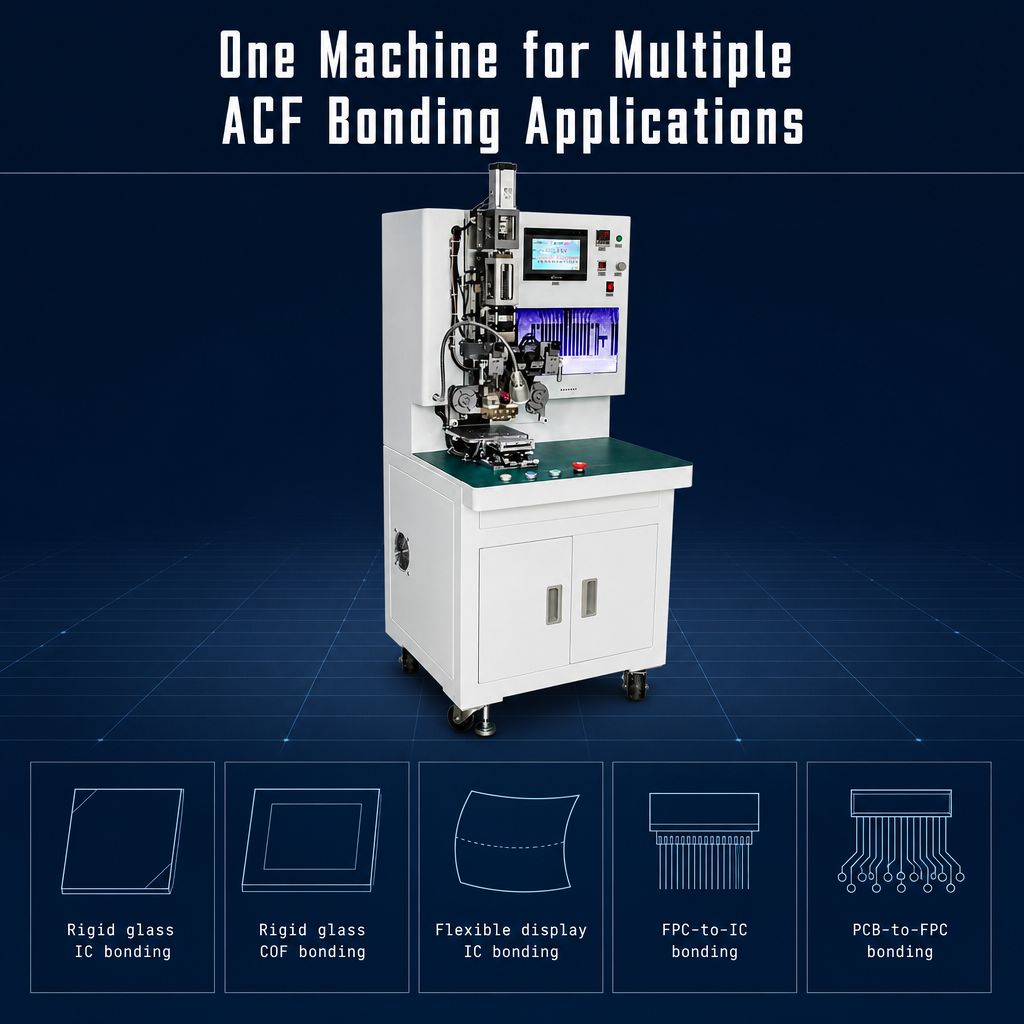
The machine is suitable for process combinations including
Rigid TFT glass to IC
Rigid OLED glass to IC
Rigid glass to COF
Flexible display to IC
FPC to IC
FPC to FFC
FPC to PCB
FPC to FPC
Camera module FPC bonding
Projector FPC bonding
Double-sided FPC bonding
Conductive zebra connector heat pressing
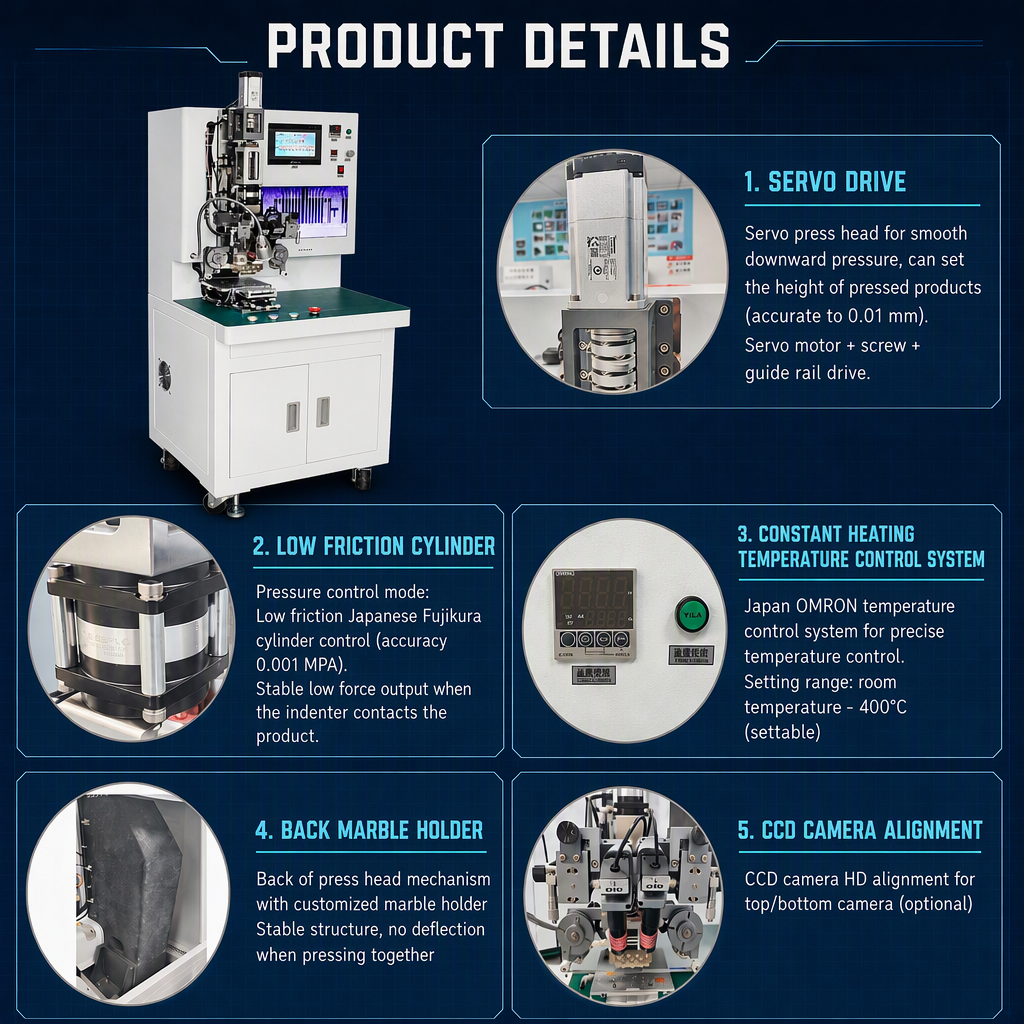
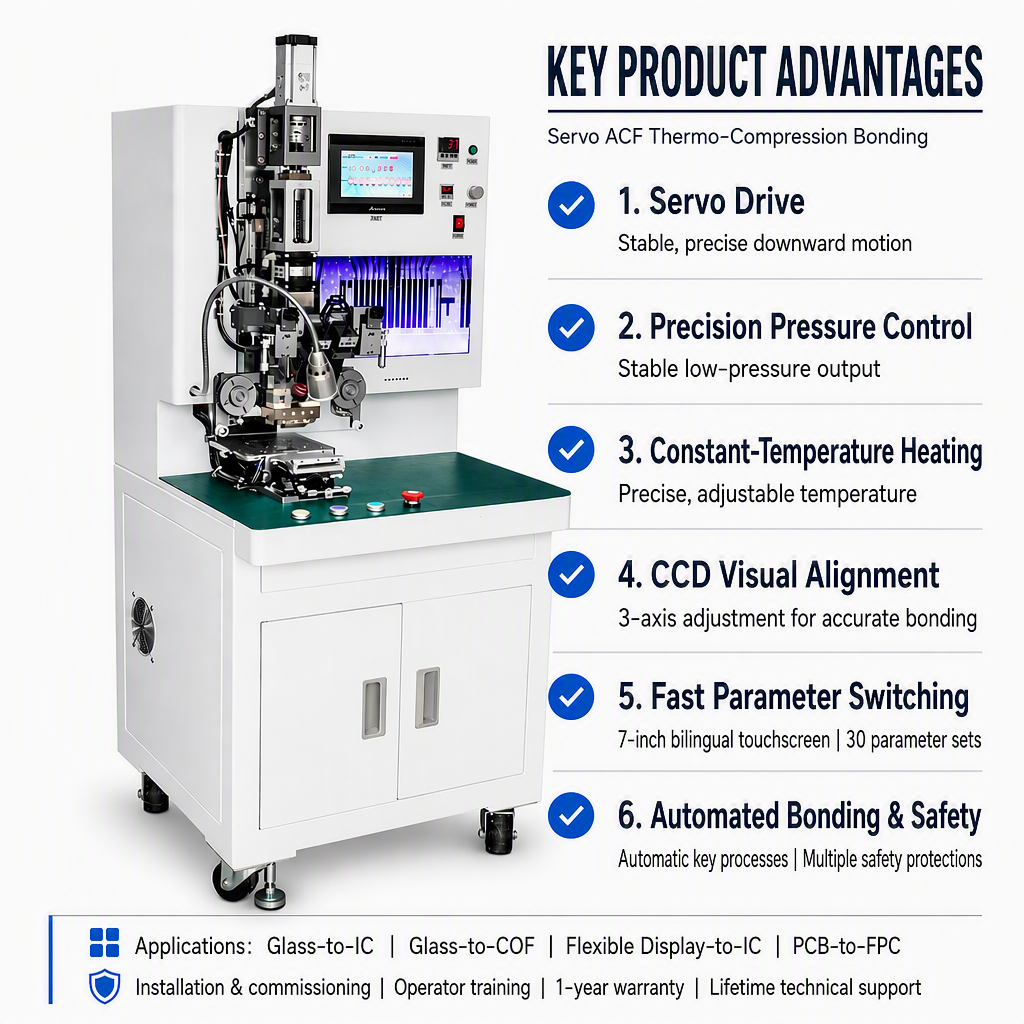
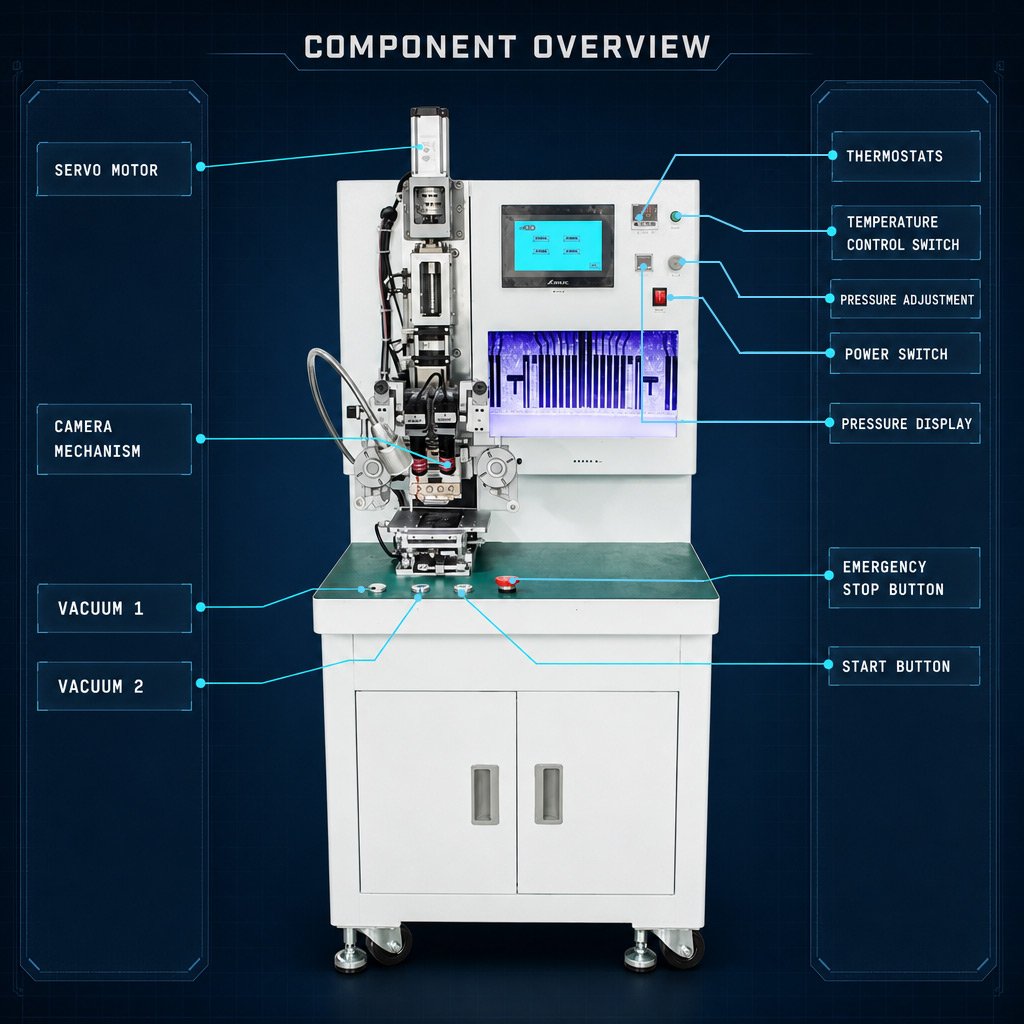
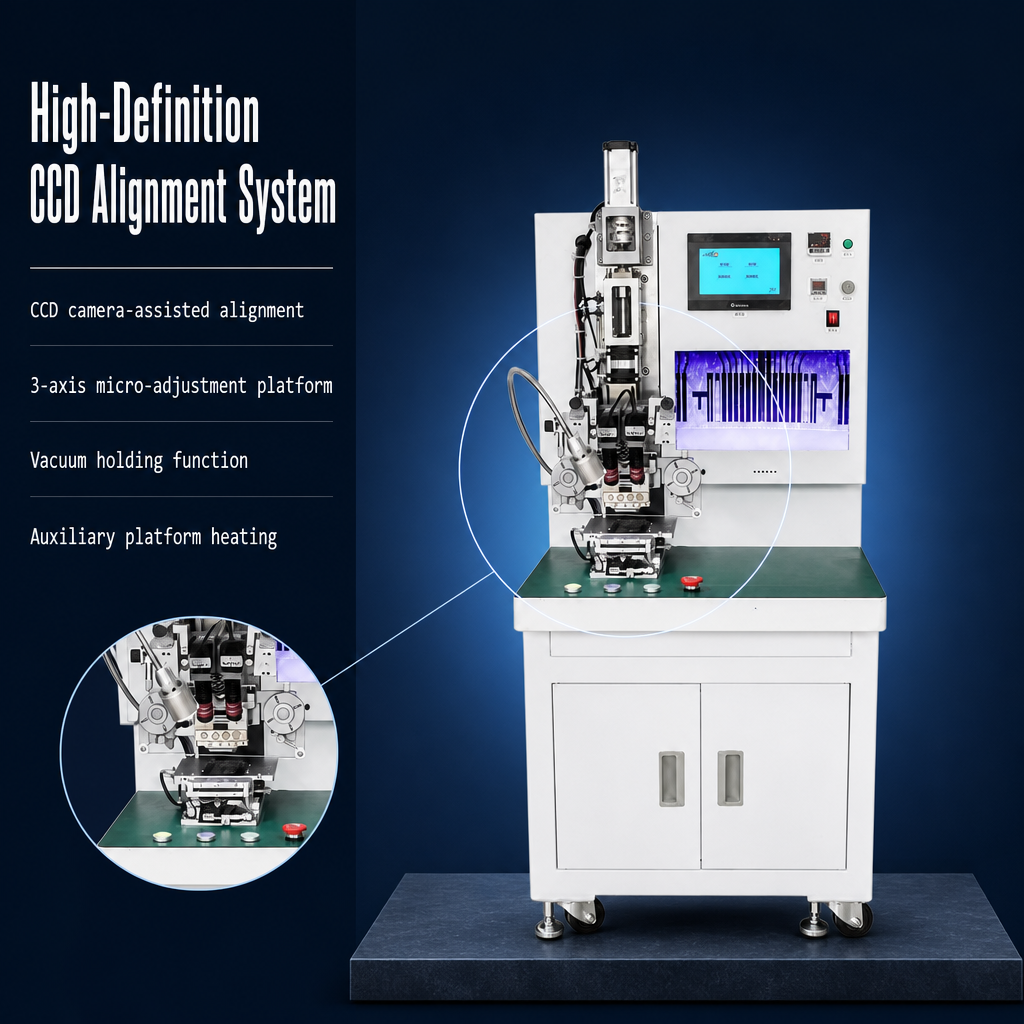
The current product images show a camera-assisted alignment mechanism with a three-axis micro-adjustment platform. Because the detail material also describes camera alignment as an available configuration, the final camera specification should be confirmed for each order.
How ACF Thermo-Compression Bonding Works
Anisotropic Conductive Film contains conductive particles dispersed in an adhesive layer. During bonding, the machine applies controlled temperature, pressure and dwell time to the aligned components. Compression creates electrical conduction through the thickness direction while the adhesive secures the assembly.
The 9TU-M039E controls the main variables required by this process:
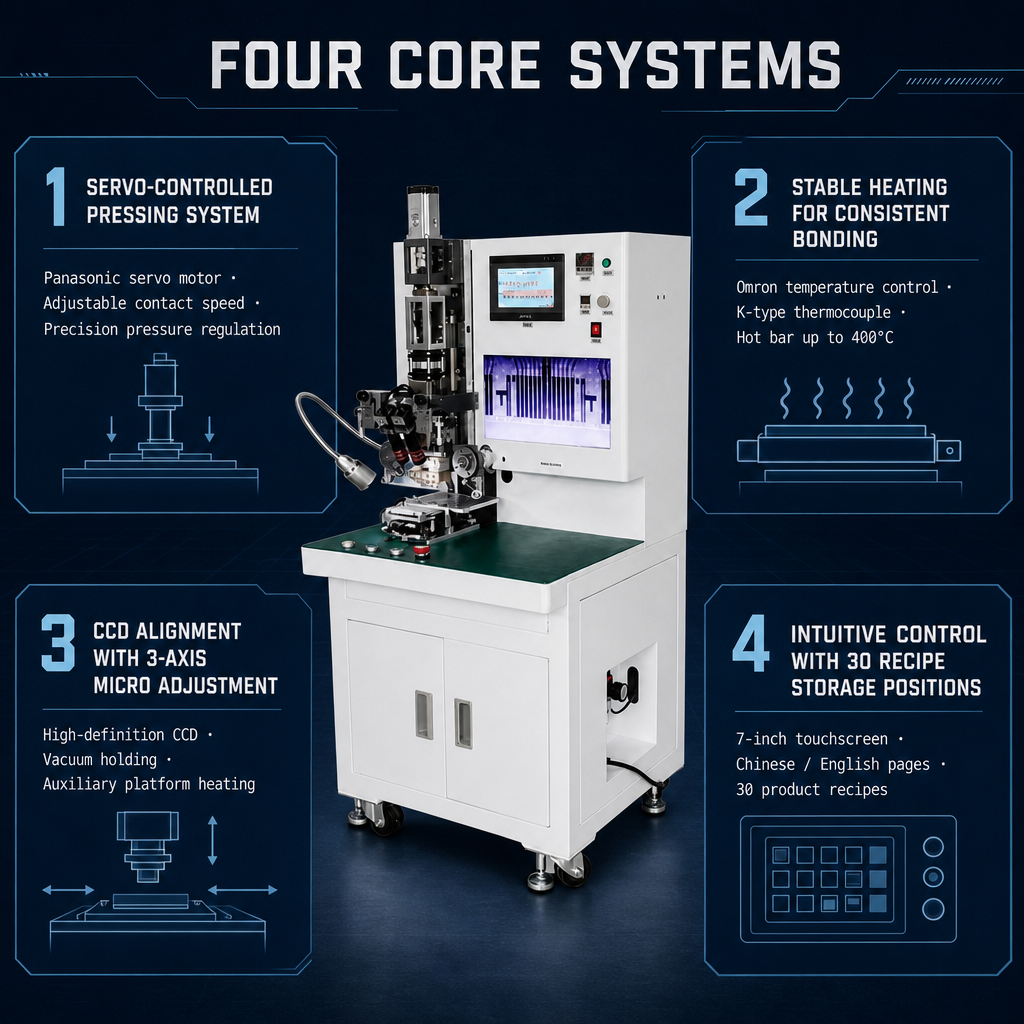
Position: Camera-assisted observation and three-axis micro-adjustment support component registration.
Holding: Built-in vacuum holds the workpiece and flexible circuit during setup.
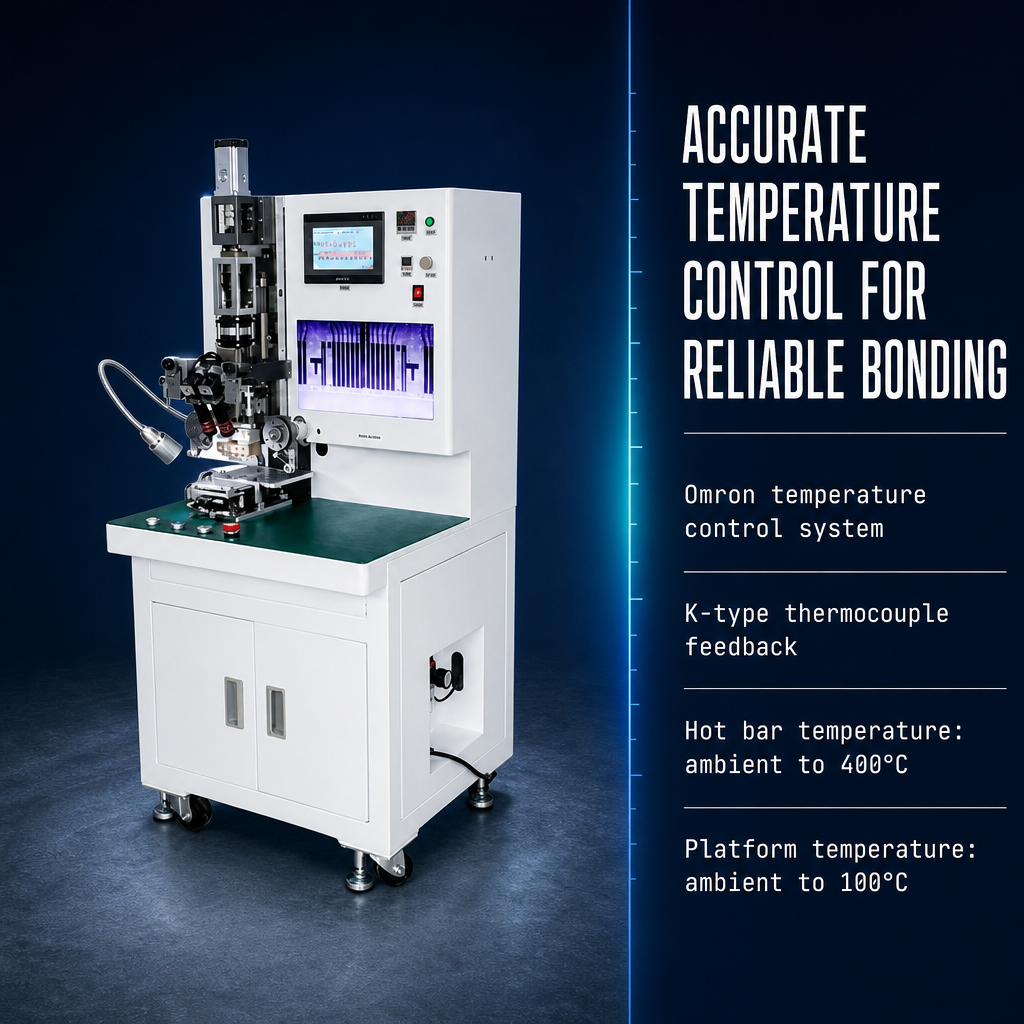
Temperature: Omron temperature control and K-type thermocouple feedback regulate hot-bar heating.
Pressure: SMC precision pressure regulation and a low-friction cylinder control pressing force.
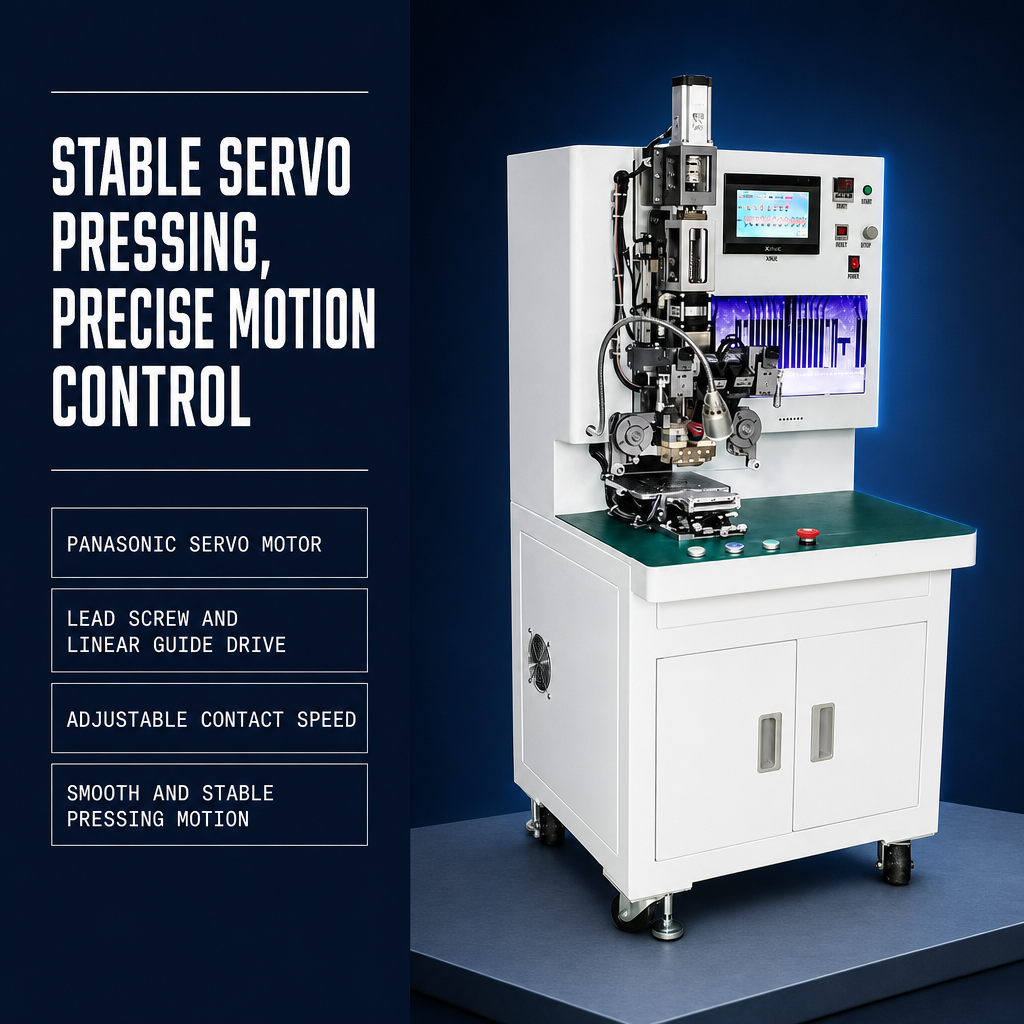
Motion: Panasonic servo drive controls press-head position, contact speed and downward travel.
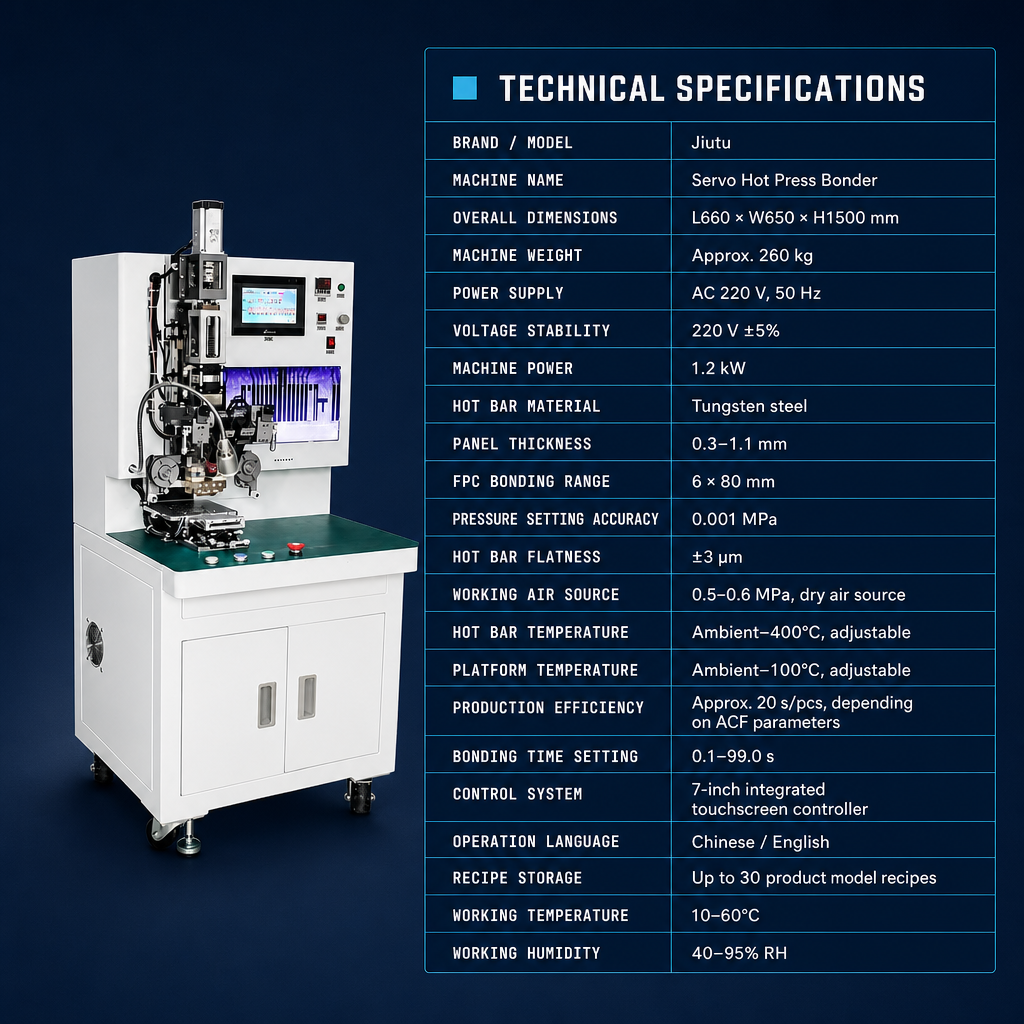
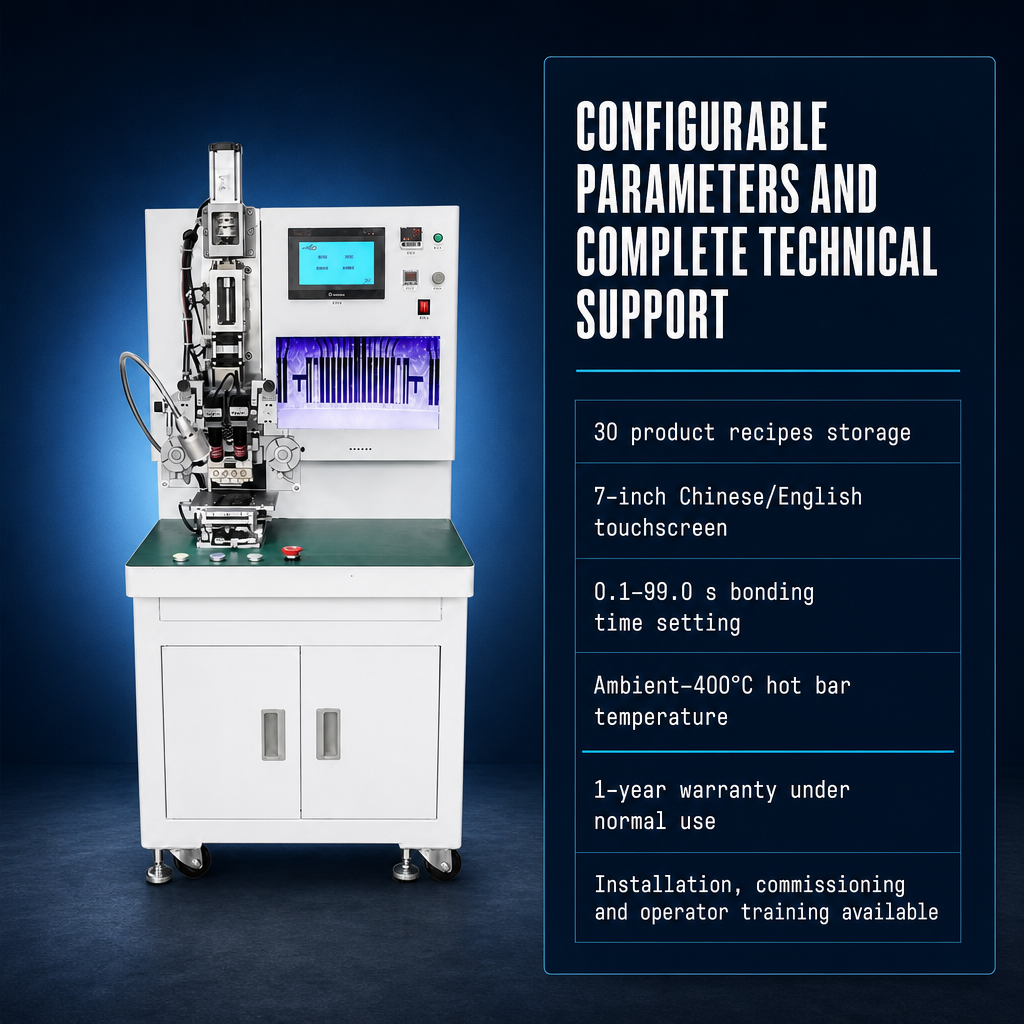
Time: Bonding time can be programmed from 0.1 to 99.0 seconds.
Recipe: Up to 30 product recipes can be stored for repeat production.
Key Features
1. Servo-Controlled Press Head
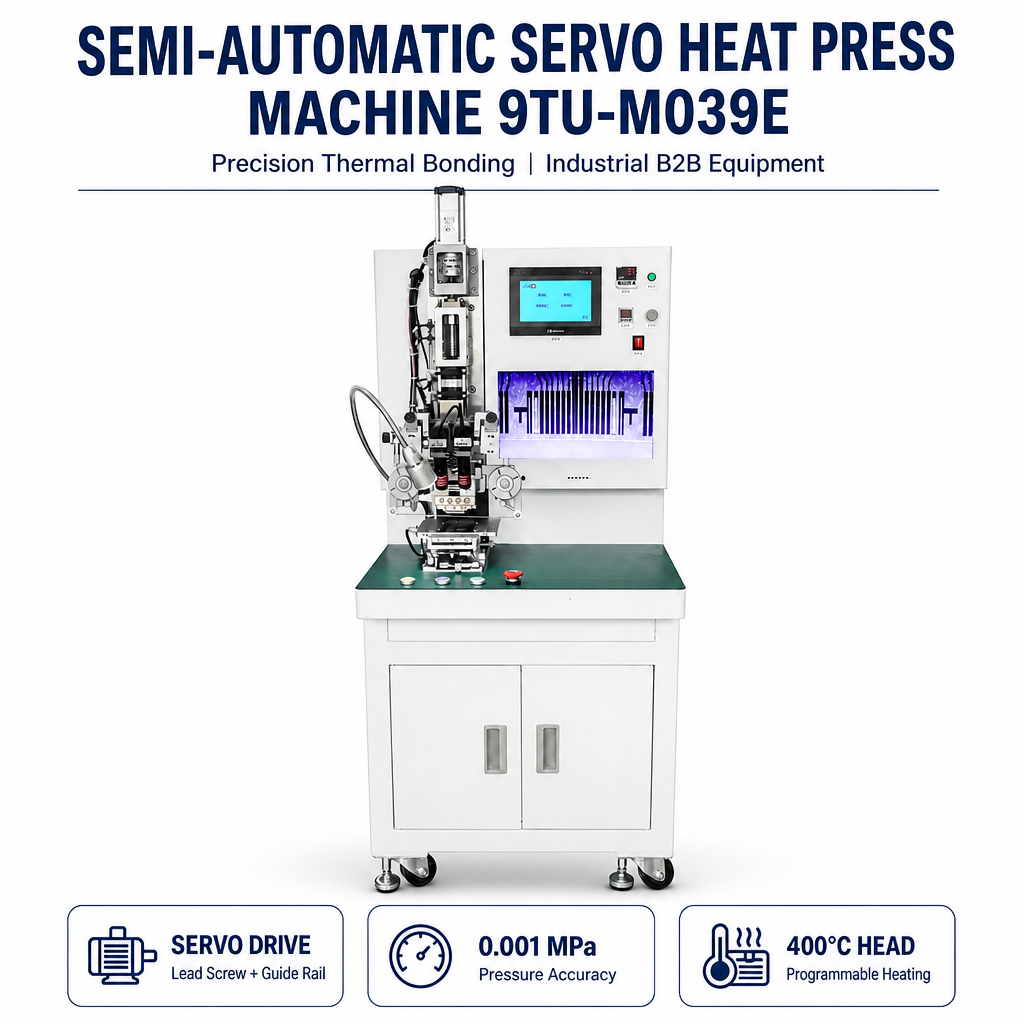
A Panasonic servo motor, lead screw and linear guide drive the hot-press head. Contact speed and pressing position can be adjusted for different stack structures and component heights.
Buyer benefit: Controlled approach and pressing motion help reduce abrupt contact with thin glass, flexible circuits and fine-pitch components.
2. Precision Pressure Regulation
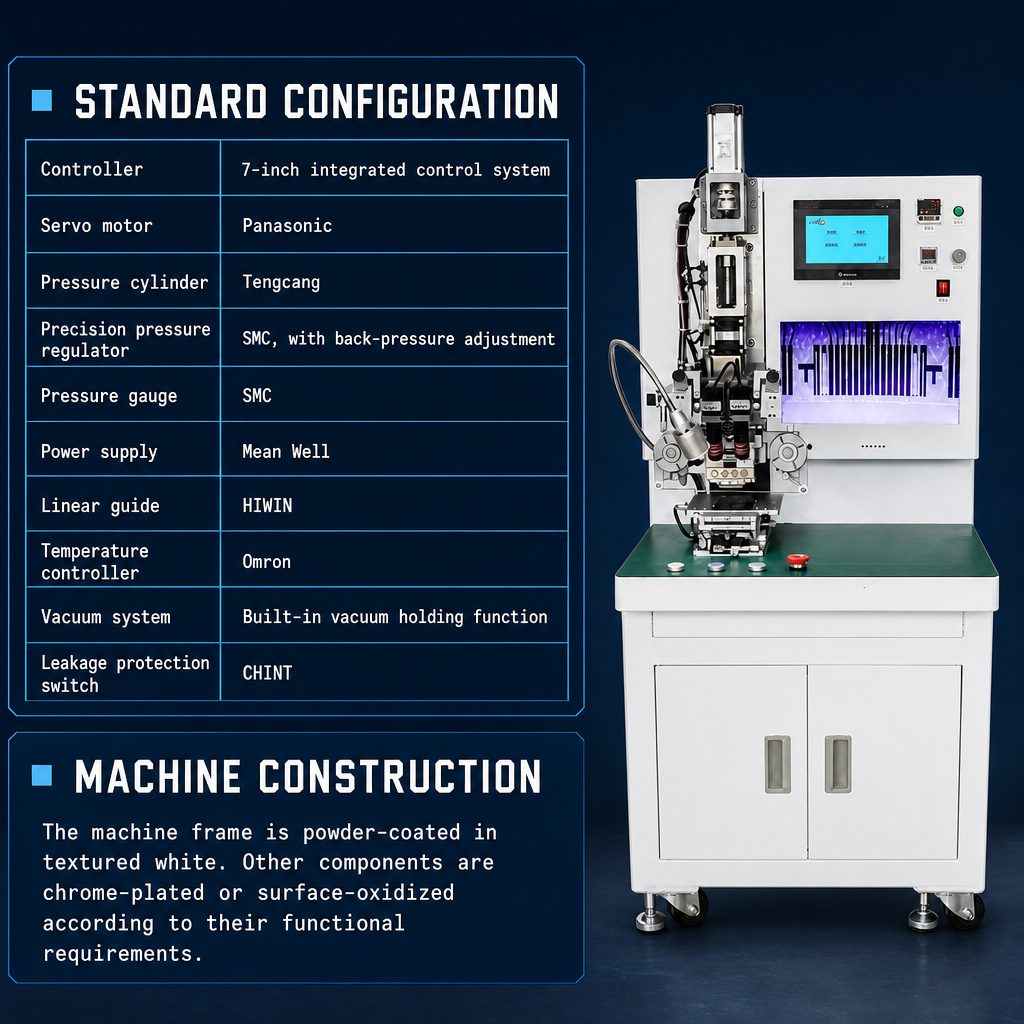
The machine uses an SMC precision pressure regulator with back-pressure adjustment, an SMC pressure gauge and a Fujikura low-friction cylinder. Pressure-setting accuracy is listed as 0.001 MPa.
Buyer benefit: Stable low-pressure output supports process development for products that require controlled compression rather than high-force pressing.
3. Adjustable Hot-Bar Temperature
The tungsten-steel hot bar is controlled by an Omron temperature controller with K-type thermocouple feedback. The specified adjustment range is ambient temperature to 400°C.
Buyer benefit: Process engineers can configure temperature profiles for different ACF materials, component structures and bonding requirements.
4. Vacuum Holding and Three-Axis Adjustment
The work platform includes vacuum holding and a three-axis micro-adjustment mechanism. Product imagery shows camera-assisted top/bottom observation for alignment.
Buyer benefit: The fixture holds flexible circuits and substrates in position while the operator adjusts component registration before pressing.
5. Bilingual Touchscreen and Recipe Storage
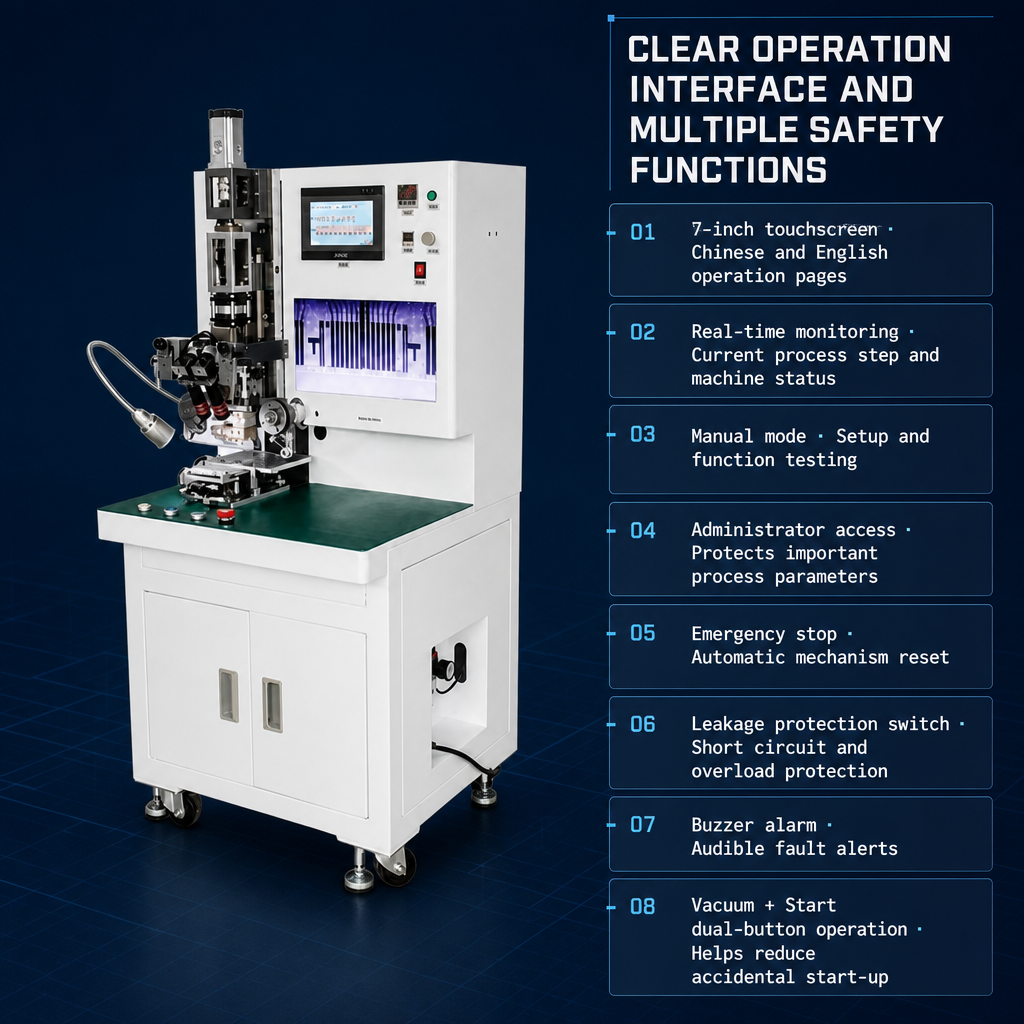
A 7-inch integrated touchscreen provides Chinese and English operation pages, manual mode, automatic mode, parameter setting, real-time status monitoring and administrator access. Up to 30 product recipes can be stored.
Buyer benefit: Stored parameter sets shorten changeover between established products and help standardize temperature, pressing position, speed and dwell time.
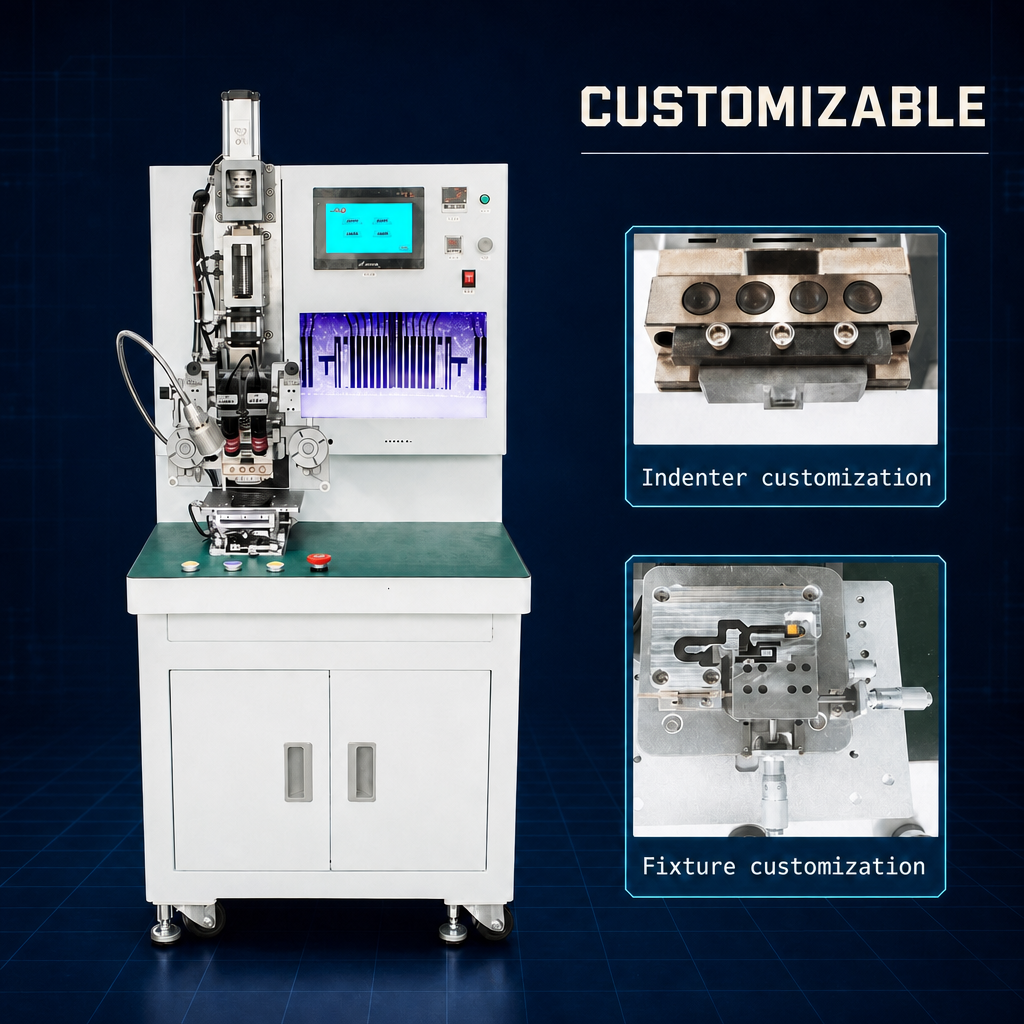
6. Custom Hot Bar and Fixture
The indenter/hot-bar assembly and product fixture can be customized according to sample geometry, bonding width, FPC structure and product support requirements.
Buyer benefit: The machine can be configured around the actual bonding interface rather than forcing different products into one generic fixture.
7. Industrial Safety Controls
The machine includes an emergency-stop button, leakage protection switch, buzzer alarm, administrator parameter protection and dual-button vacuum/start operation.
Buyer benefit: These controls help reduce unintended startup and protect critical process settings during production.
Why Choose Us
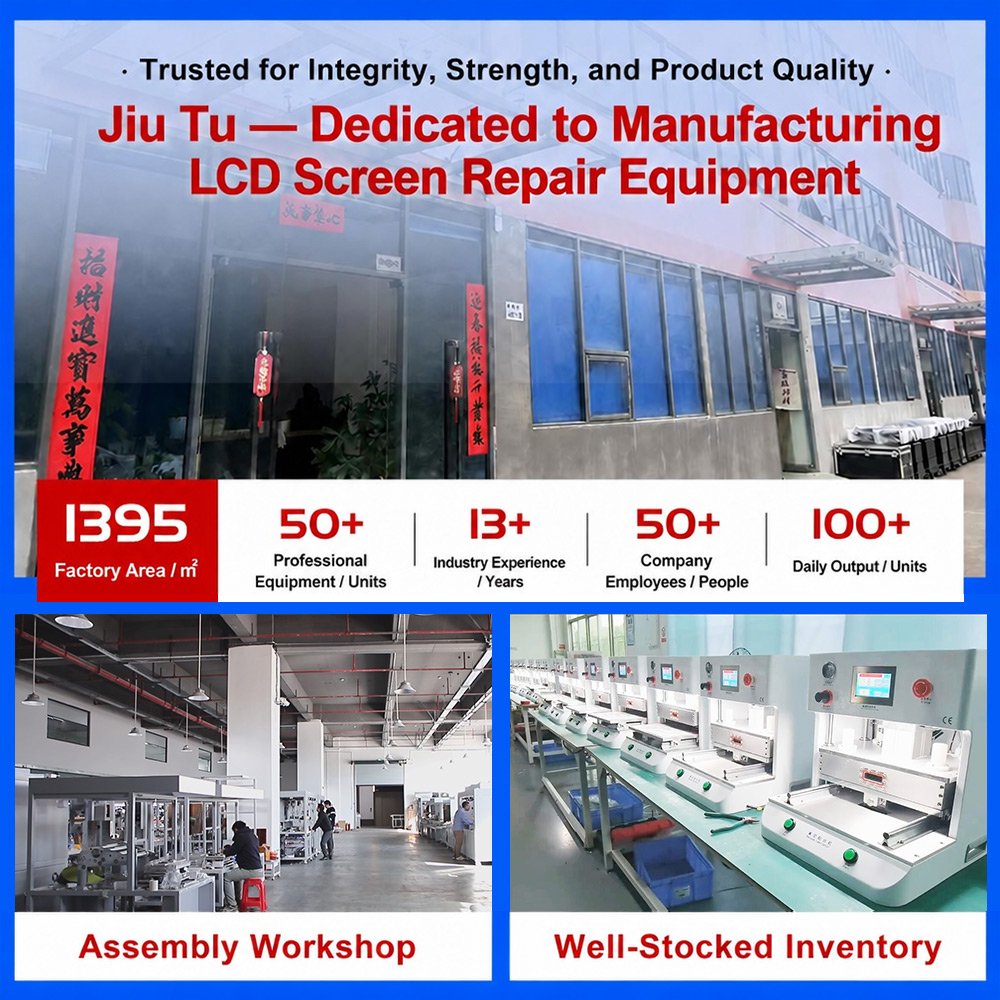
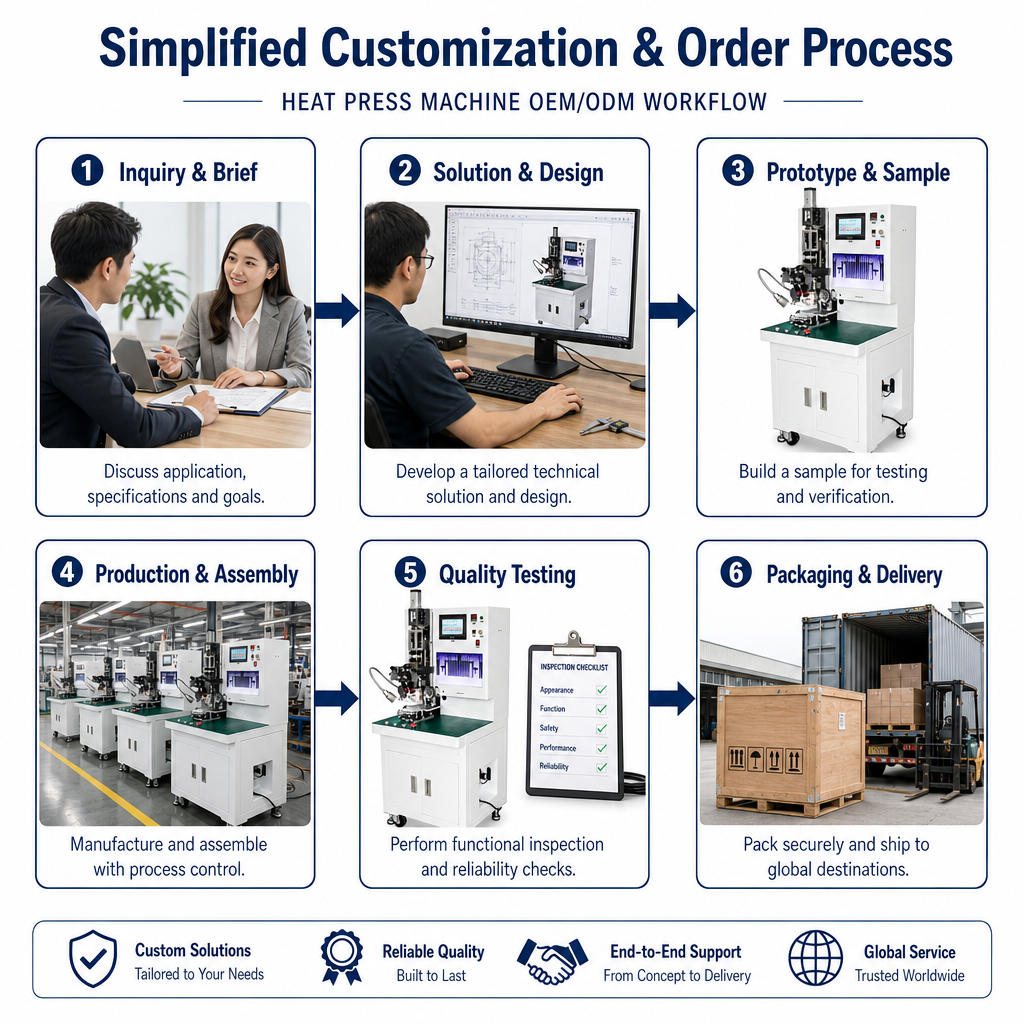

Recommended Buyer Information for Configuration
To evaluate fixture, hot bar and process configuration, provide:
Substrate type and dimensions
FPC/COF/FFC dimensions
Bonding width and electrode pitch
ACF brand and material code
Required bonding temperature
Required pressure or force window
Bonding dwell time
Product drawings or clear sample images
Expected output per shift
Camera alignment requirement
Single-product or multi-product production plan
Product Documents
Servo Bonding Machine User Manual
Key Features
Product Details
FAQ
Q1. What processes is the 9TU-M039E designed for?
Q2. Is this a pulse hot press or a constant-temperature bonder?
Q3. What temperature range does the machine provide?
Q4. How is bonding pressure controlled?
Q5. How many process recipes can be stored?
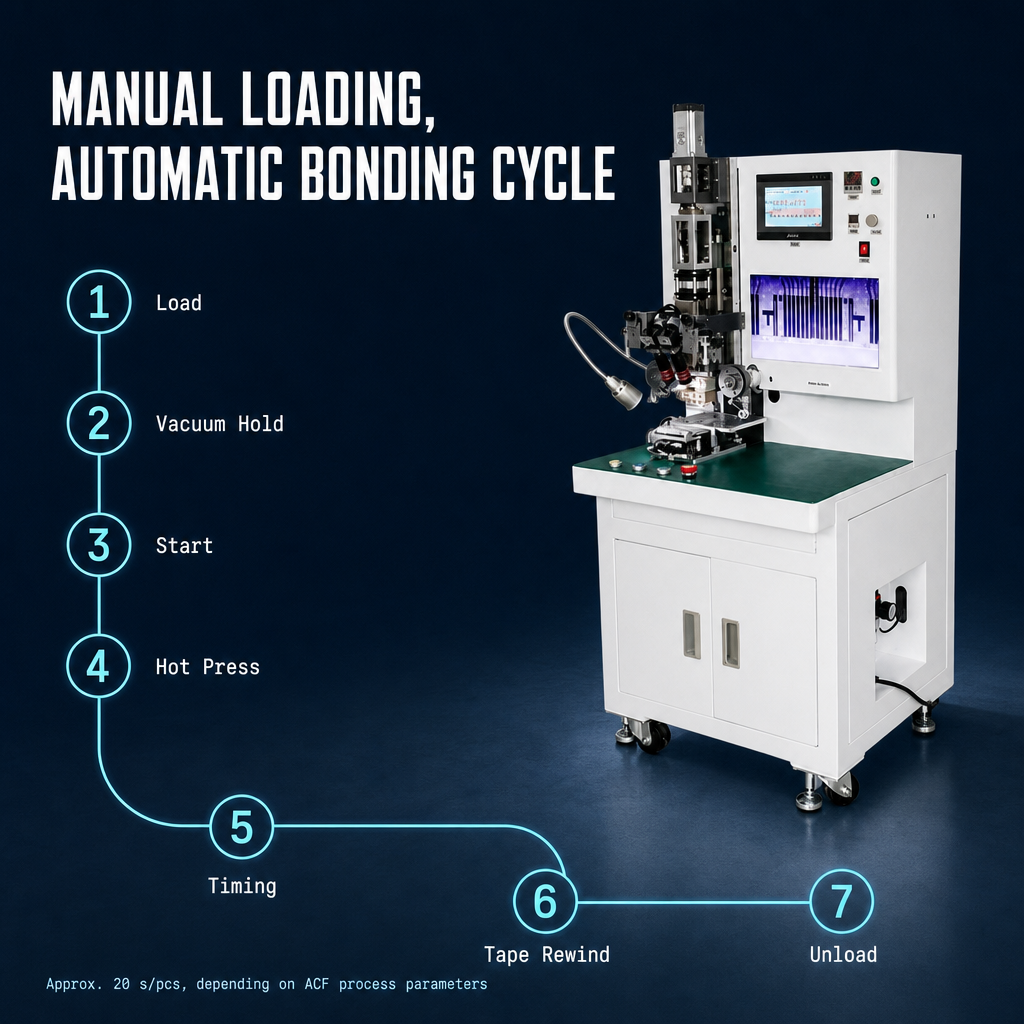
Q6. What is the reference cycle time?
Q7. Can the fixture and hot bar be customized?
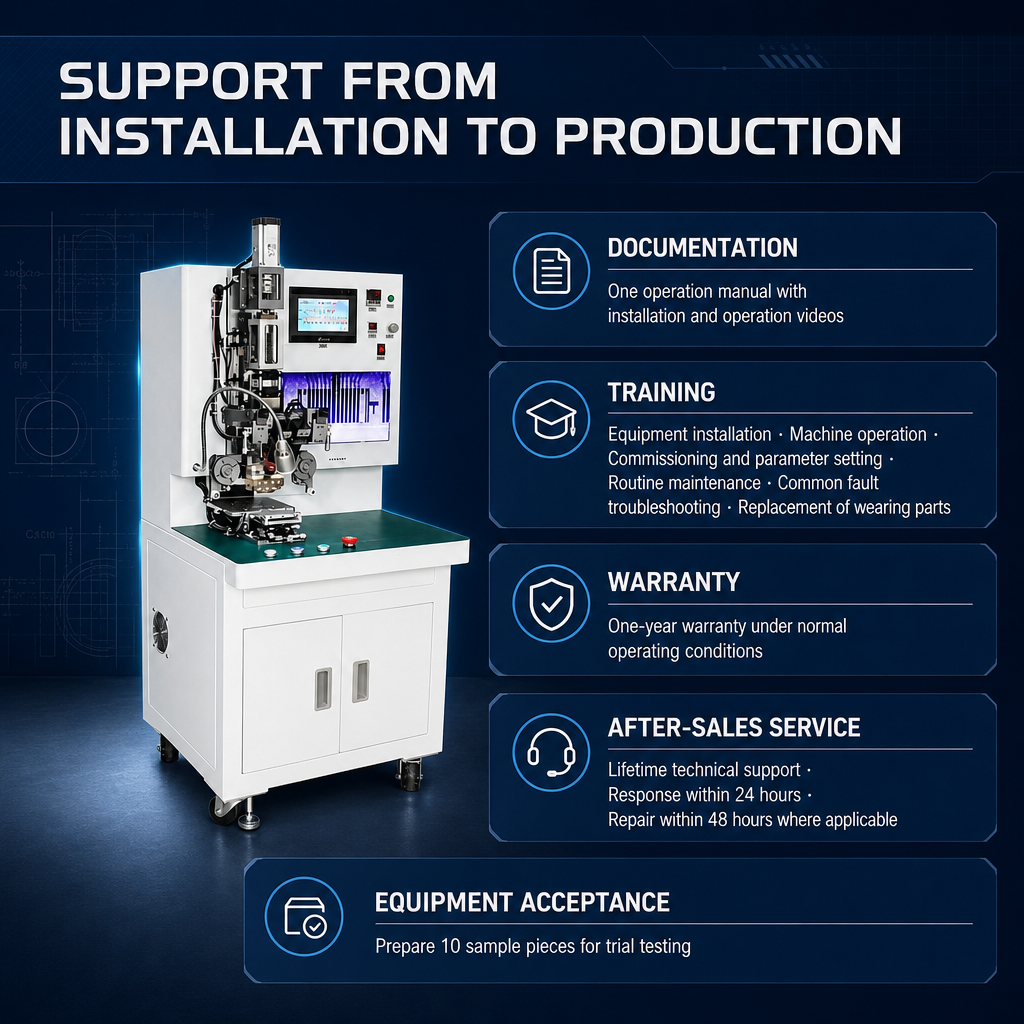
Q8. What documentation is supplied?
Q9. What information is needed before quotation?
Interested in This Product?
Tell us your project details and our team will prepare a customized quotation.
GET QUOTE NOW