
Servo High Temperature Laminator user manual 200×200
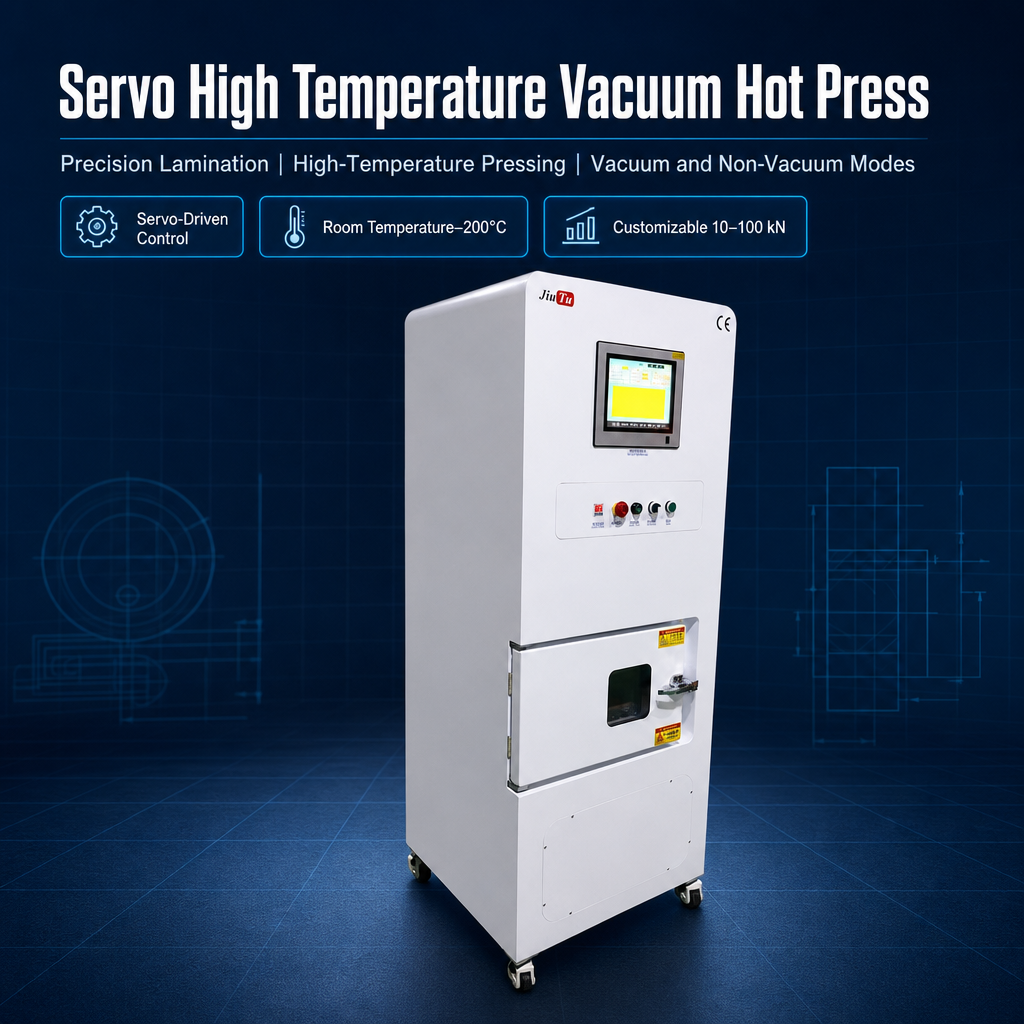
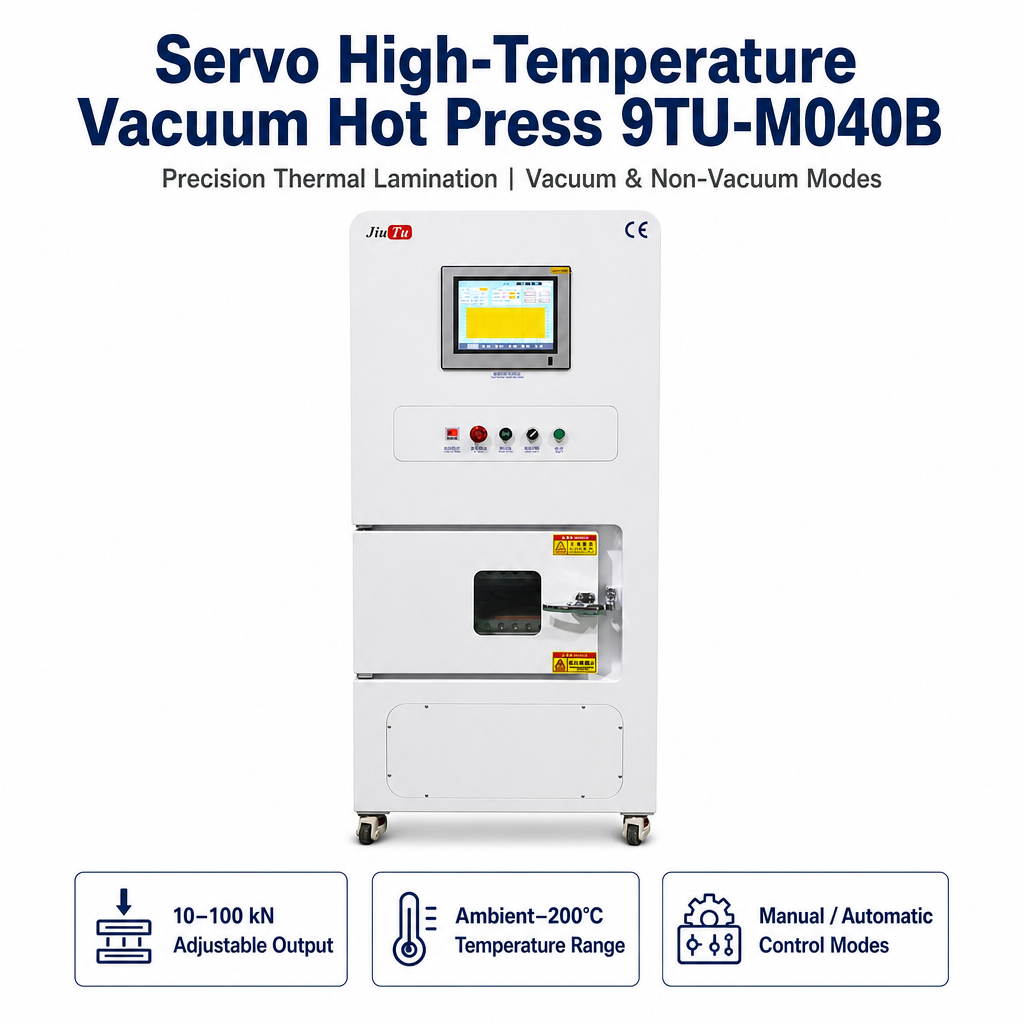
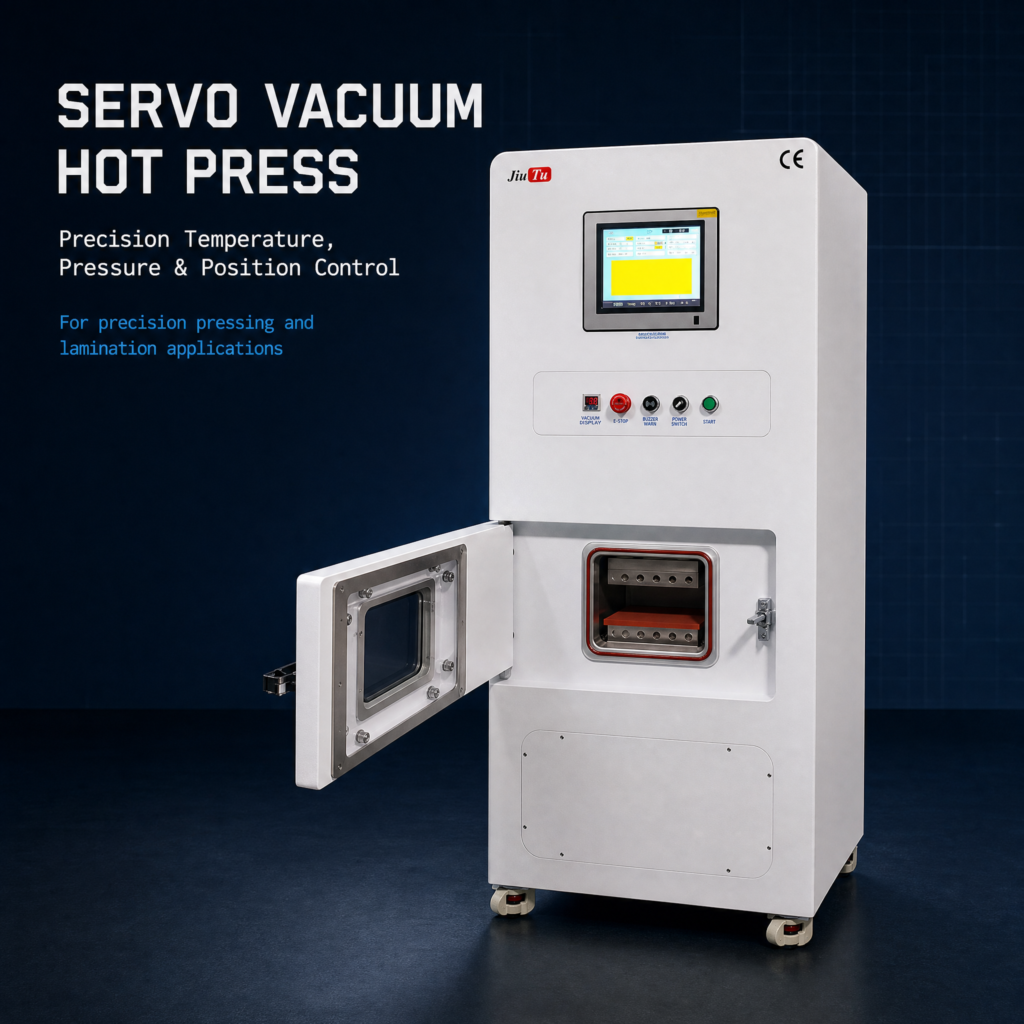
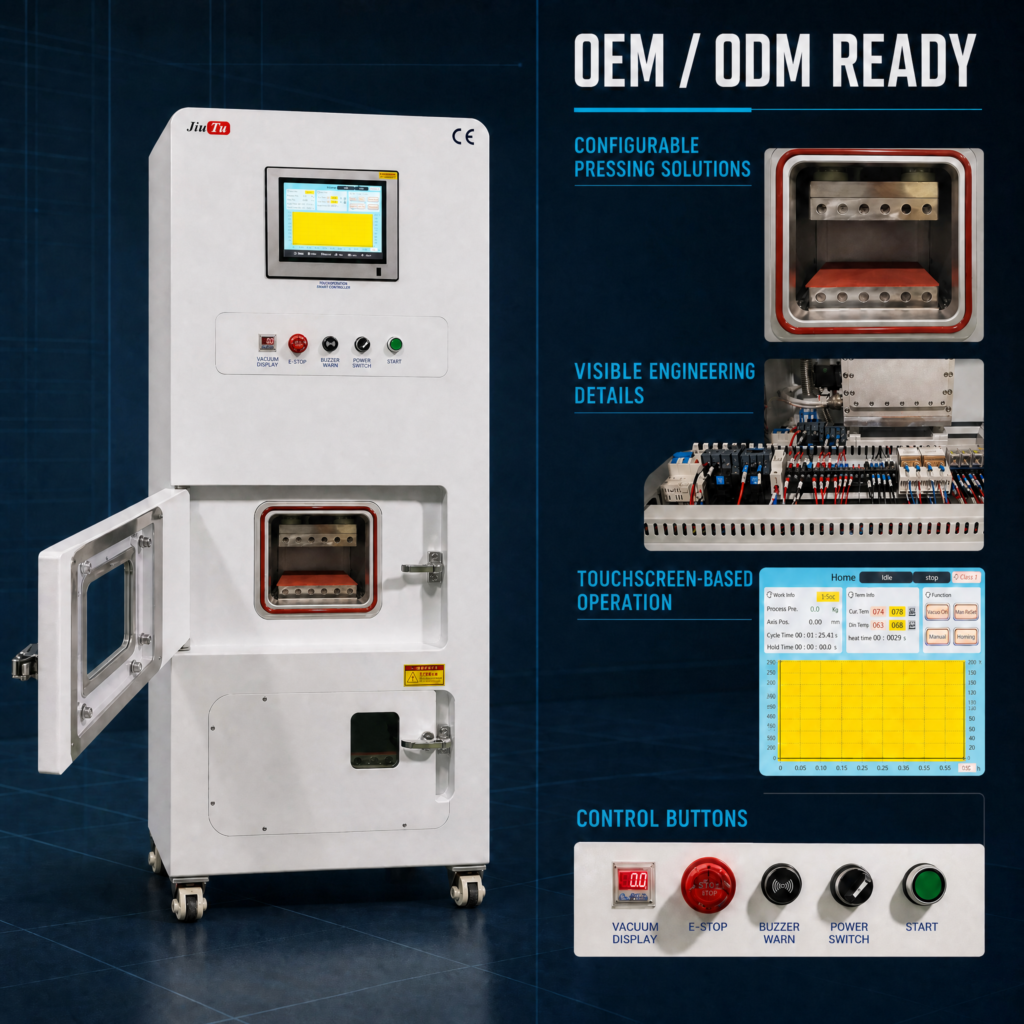
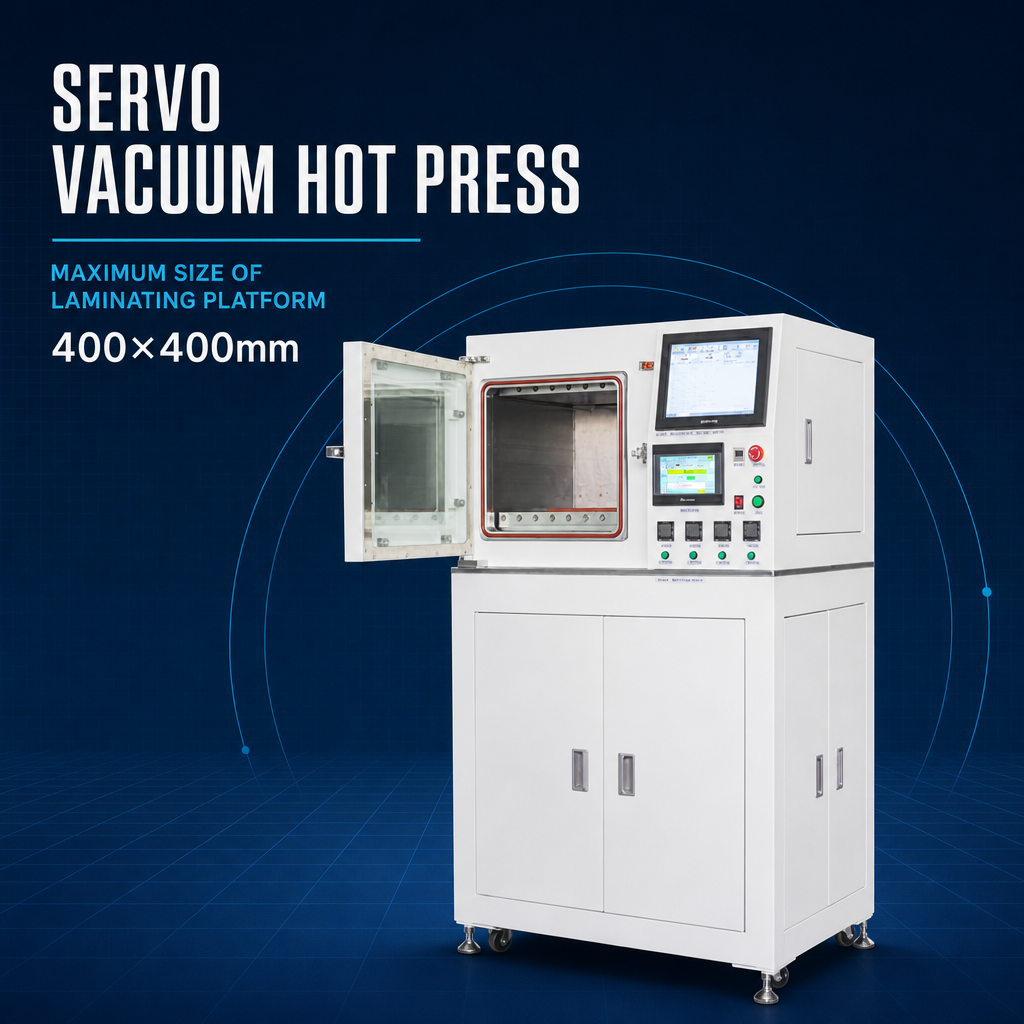
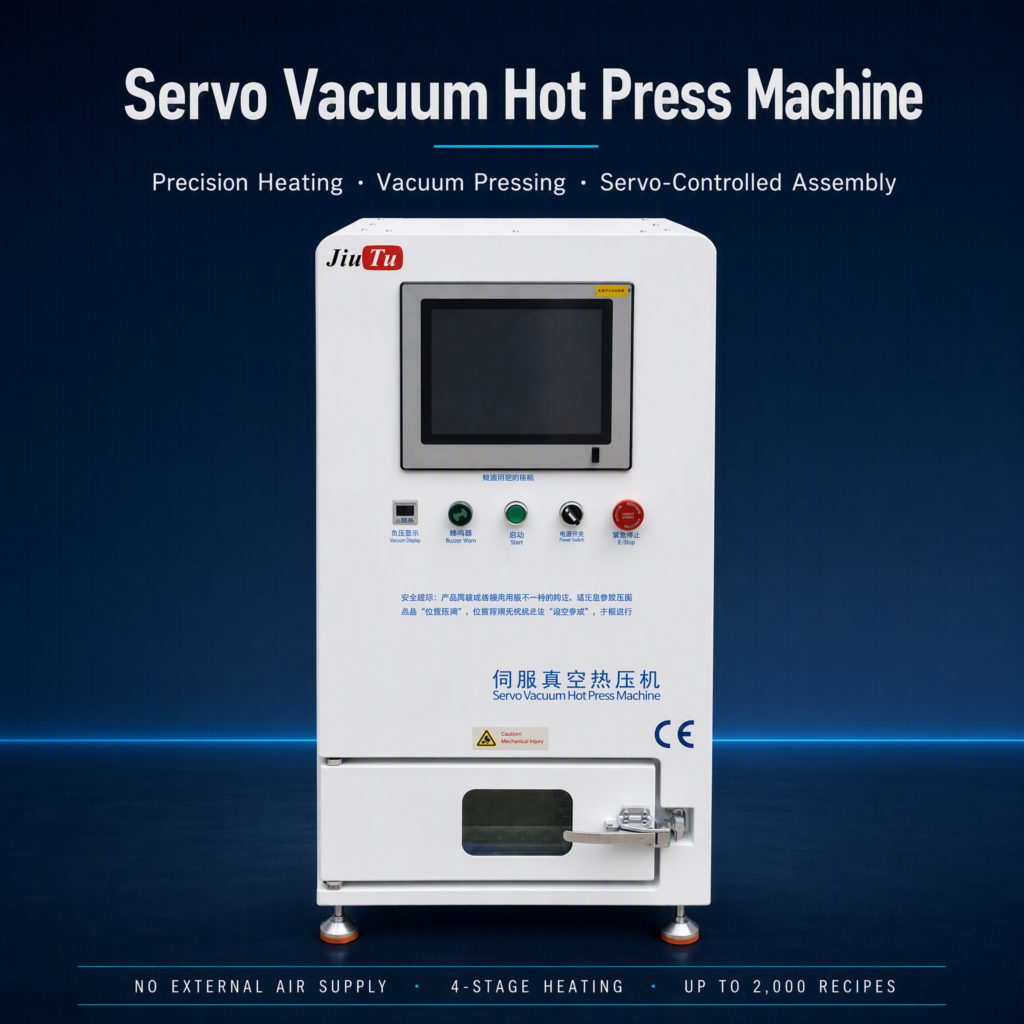
The 9TU-M040B is an industrial servo vacuum hot press for applications requiring coordinated control of temperature, pressure, position, speed, vacuum state and dwell time.
GET QUOTE NOW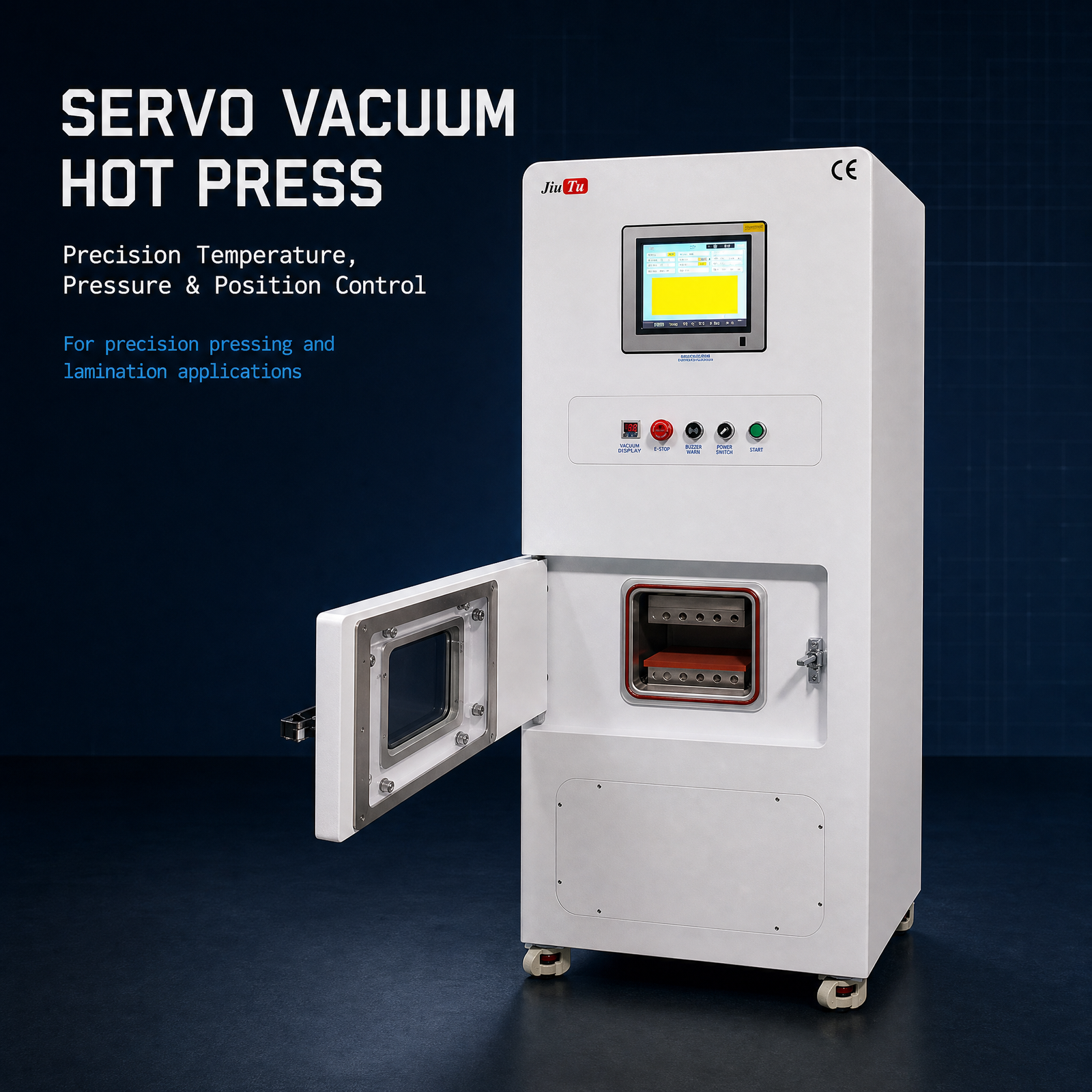
The 9TU-M040B is an industrial servo vacuum hot press for applications requiring coordinated control of temperature, pressure, position, speed, vacuum state and dwell time.
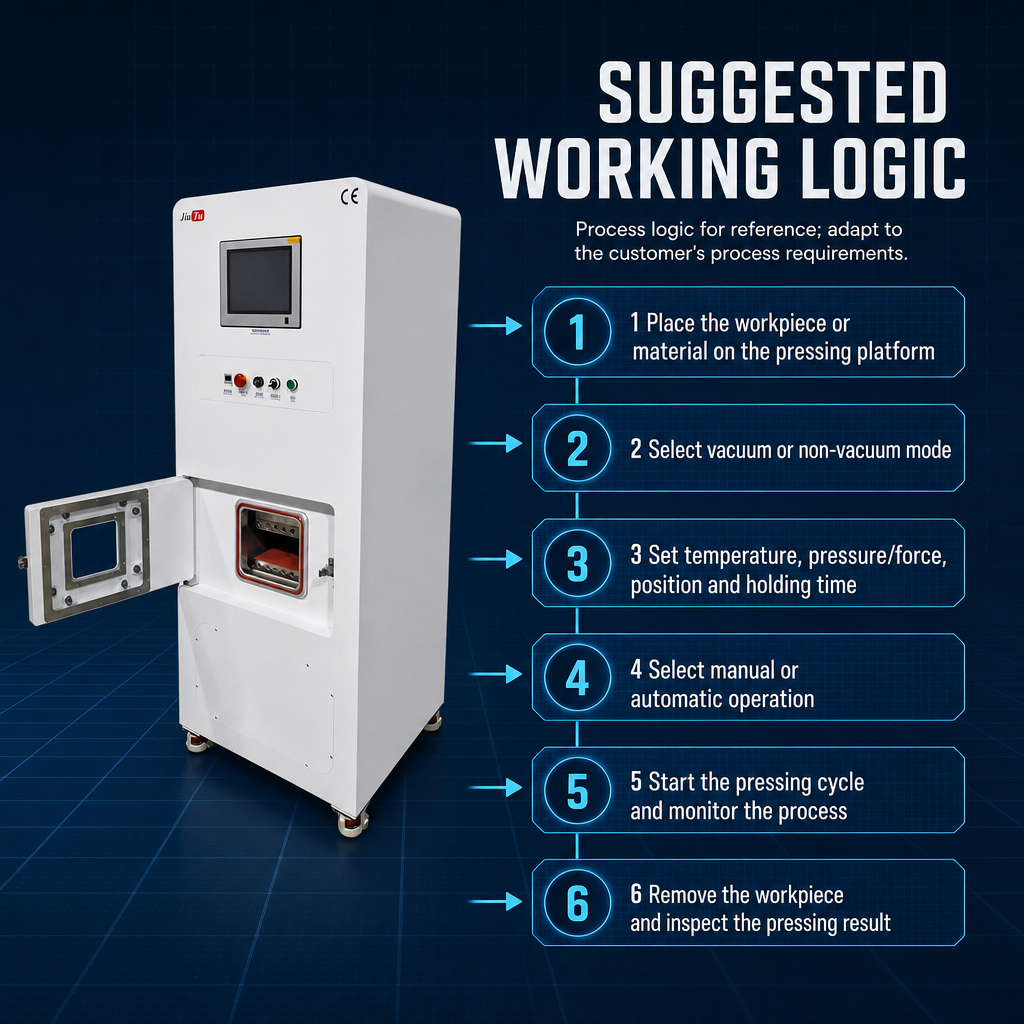
A servo electric pressing mechanism moves the upper platen along the Z-axis. Before a new product or material thickness is processed, the machine can detect the workpiece surface and establish a controlled press-start position. The operator can then select position mode or pressure mode and run the process manually or automatically.
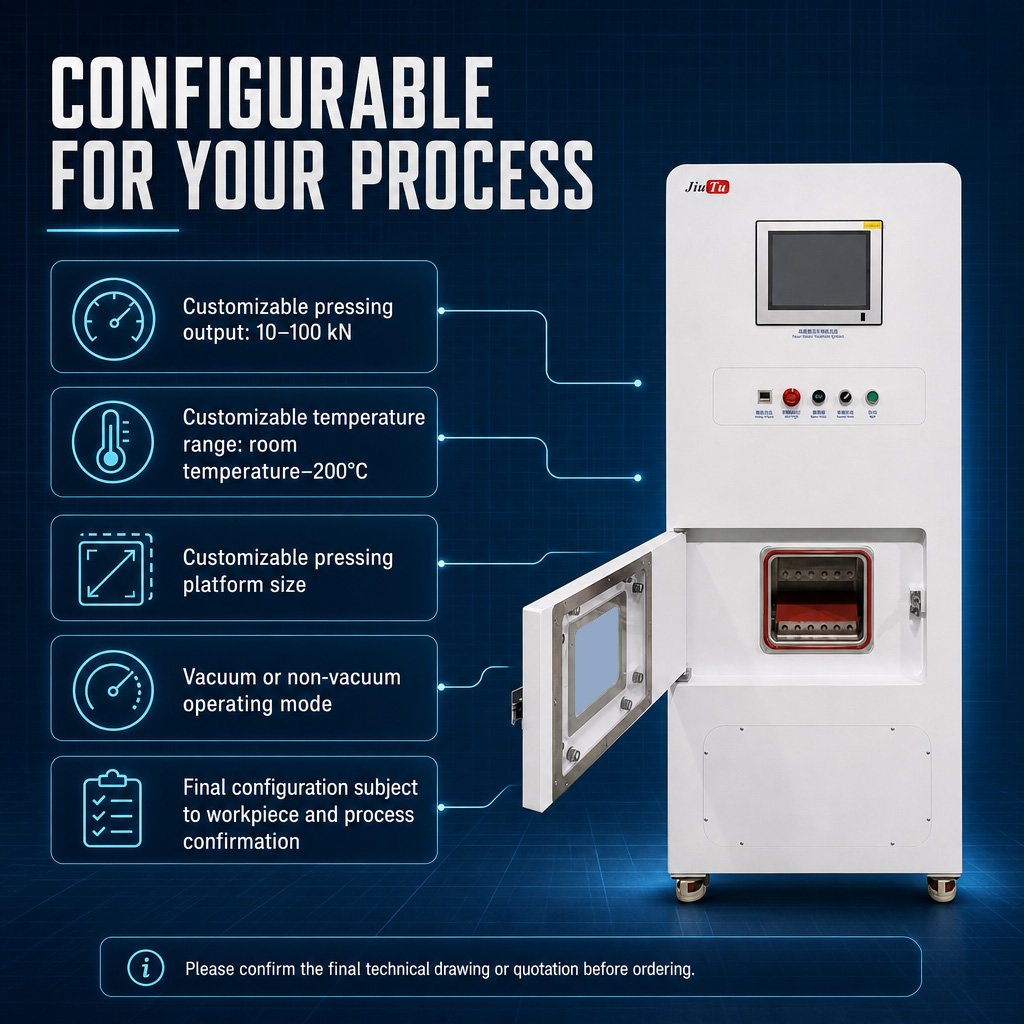
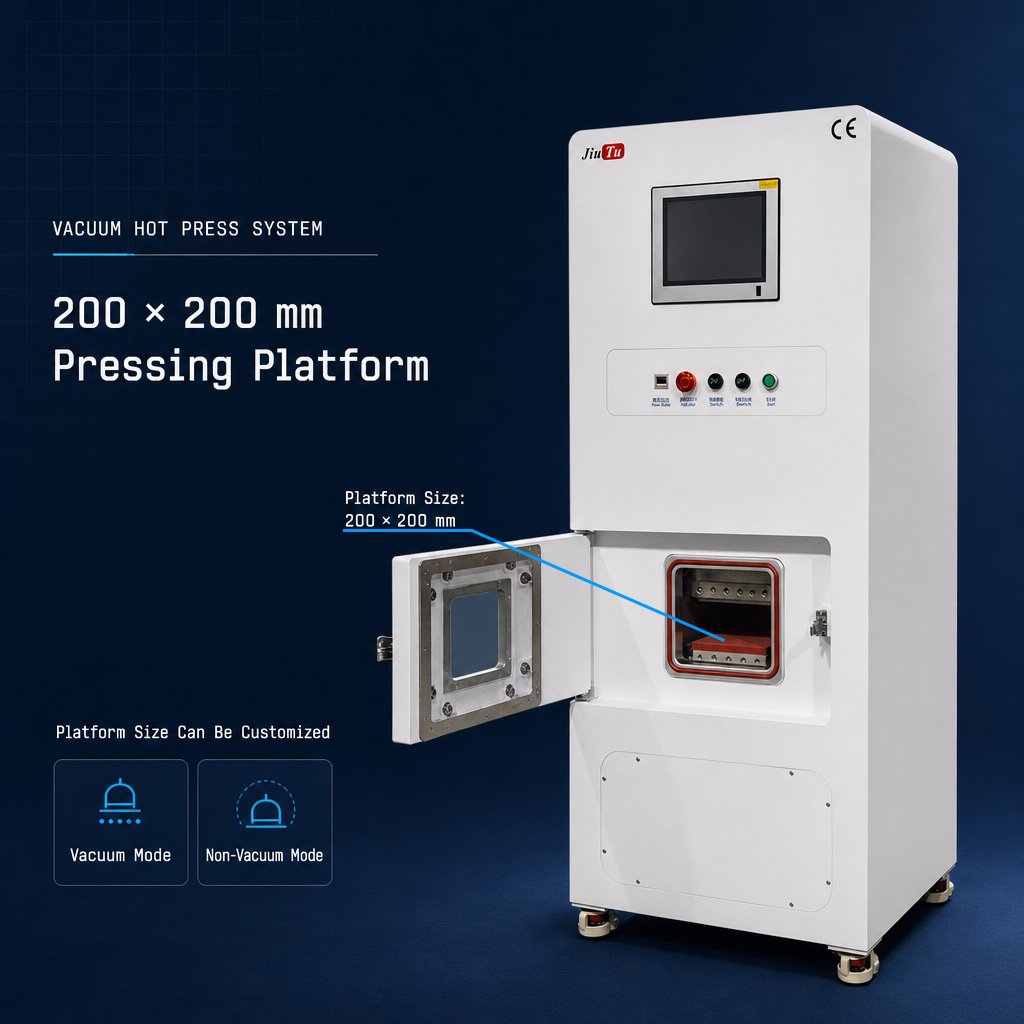
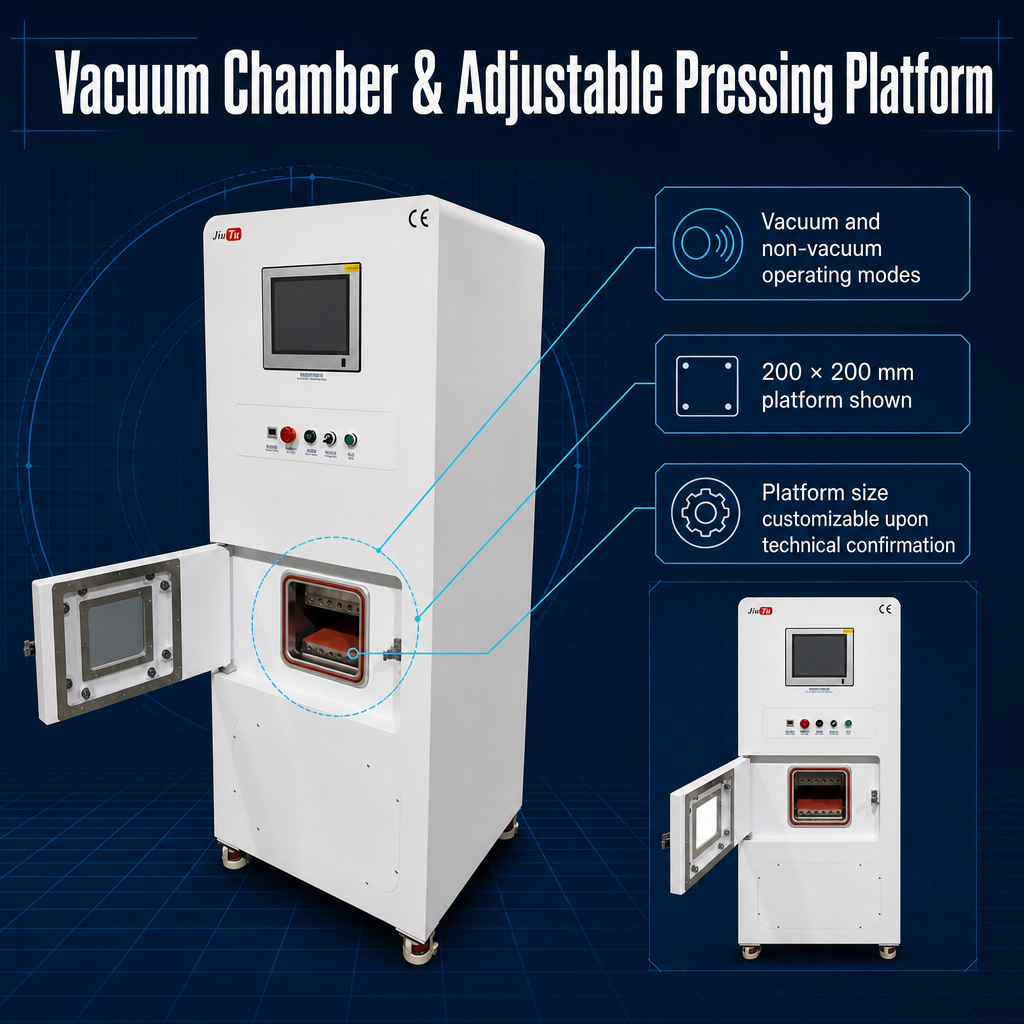
Both upper and lower platens use constant-temperature heating. The closed chamber can operate with or without vacuum, allowing the process route to be selected according to the material stack and bonding objective. A programmable four-stage recipe can assign temperature, pressing position, pressure, holding time and vacuum state to each stage.
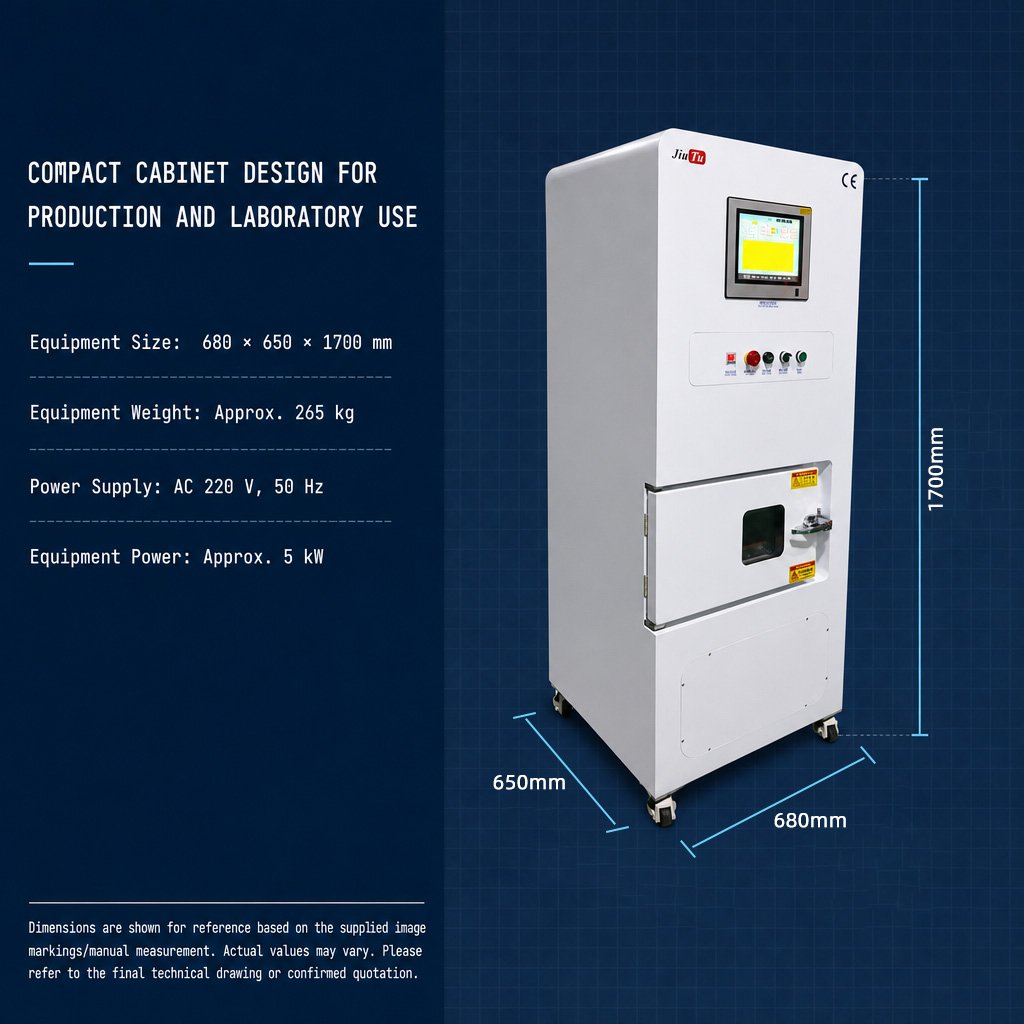
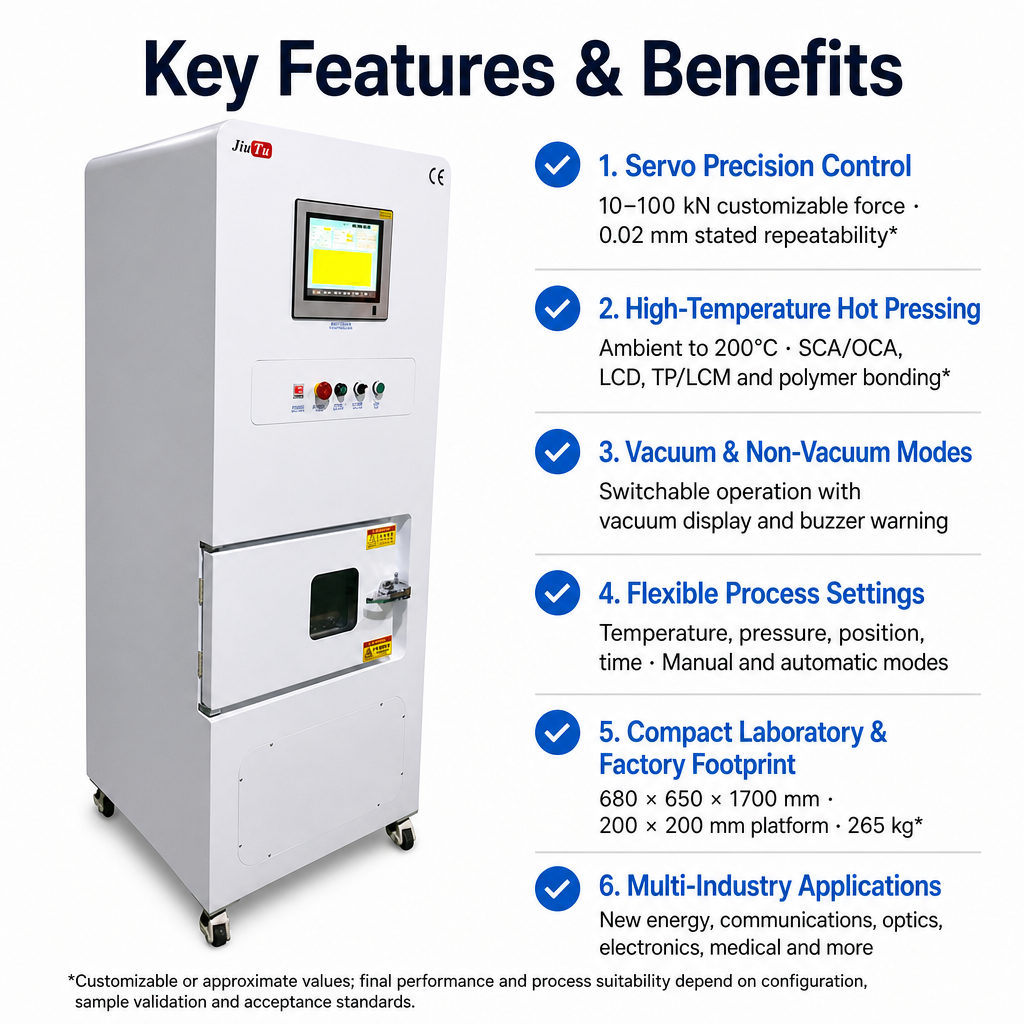
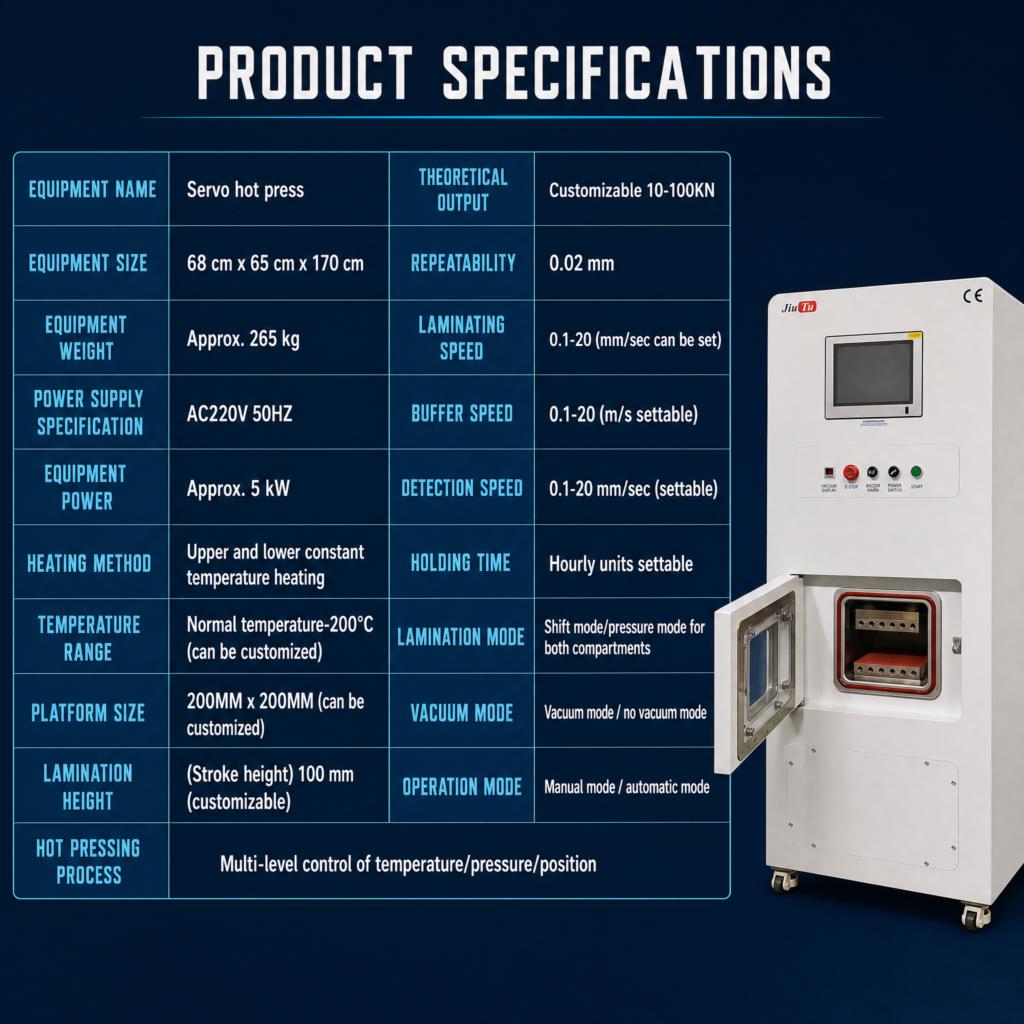
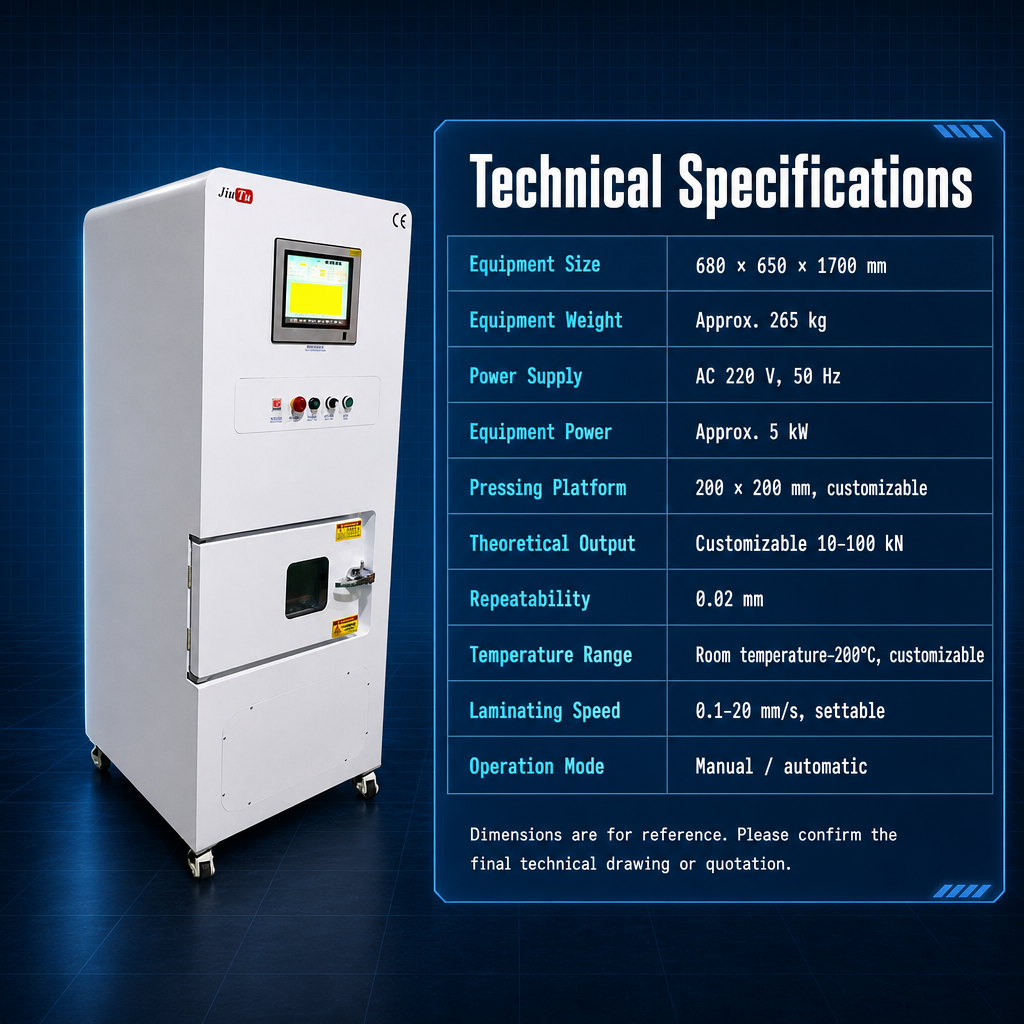
The standard platen measures 200 × 200 mm. The selected product configuration uses an equipment footprint of 680 × 650 × 1700 mm, a customizable force range of 10–100 kN, a customizable stroke of 100 mm and a temperature range from ambient to 200°C.
Key Features
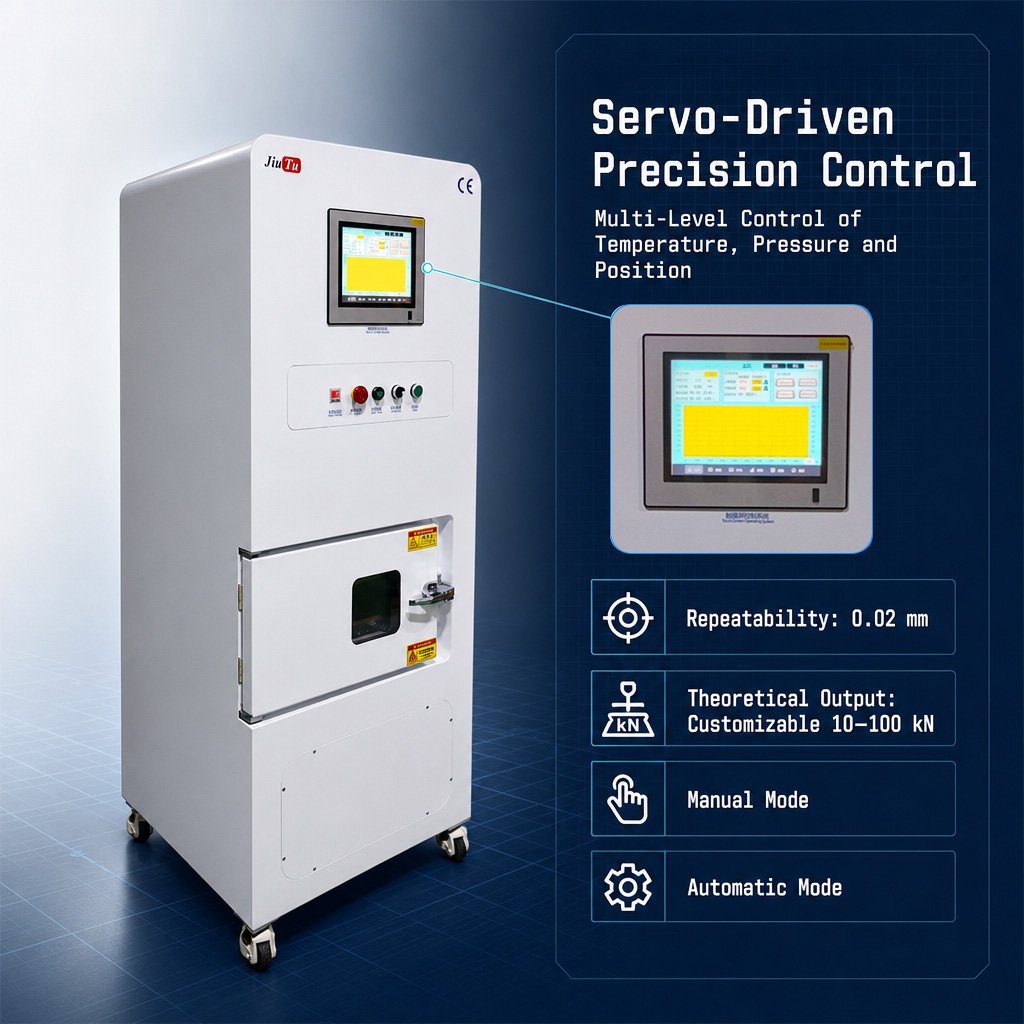
1. Servo-Controlled Force and Position
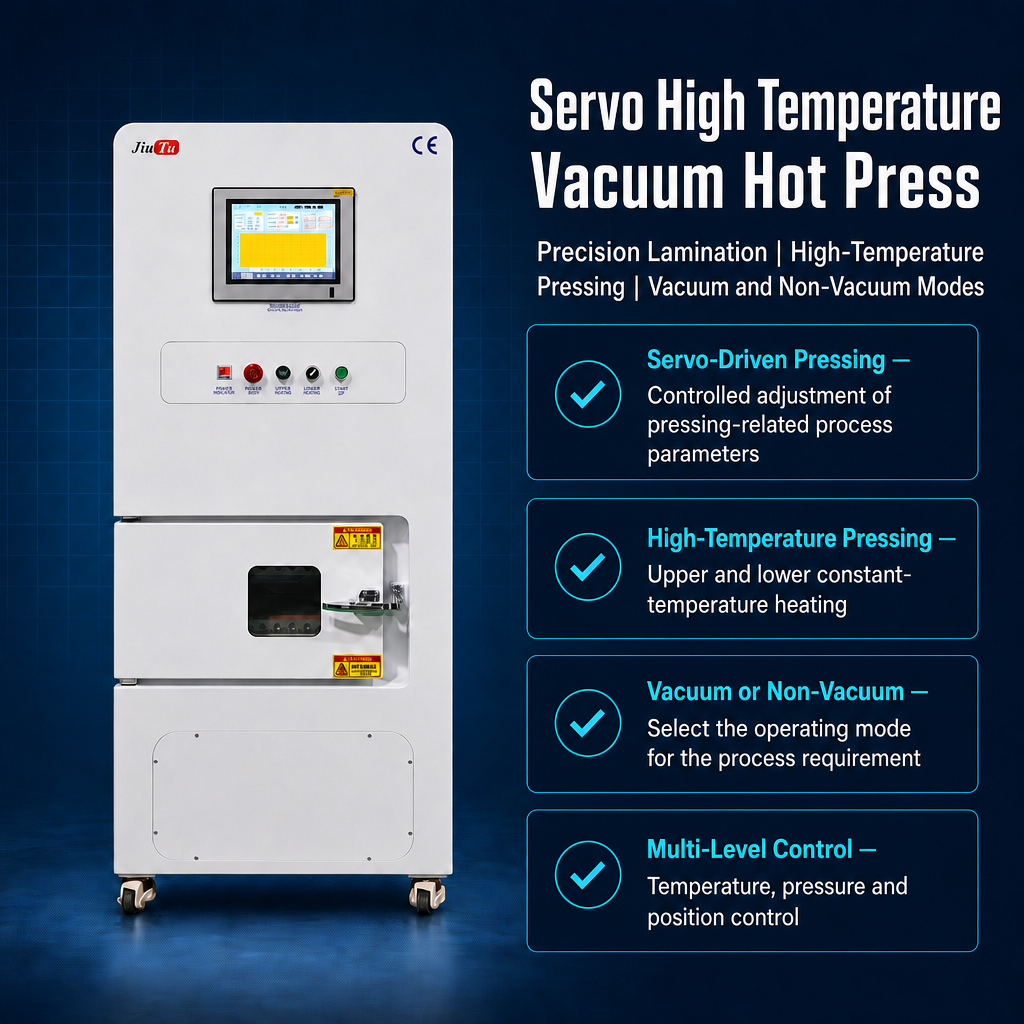
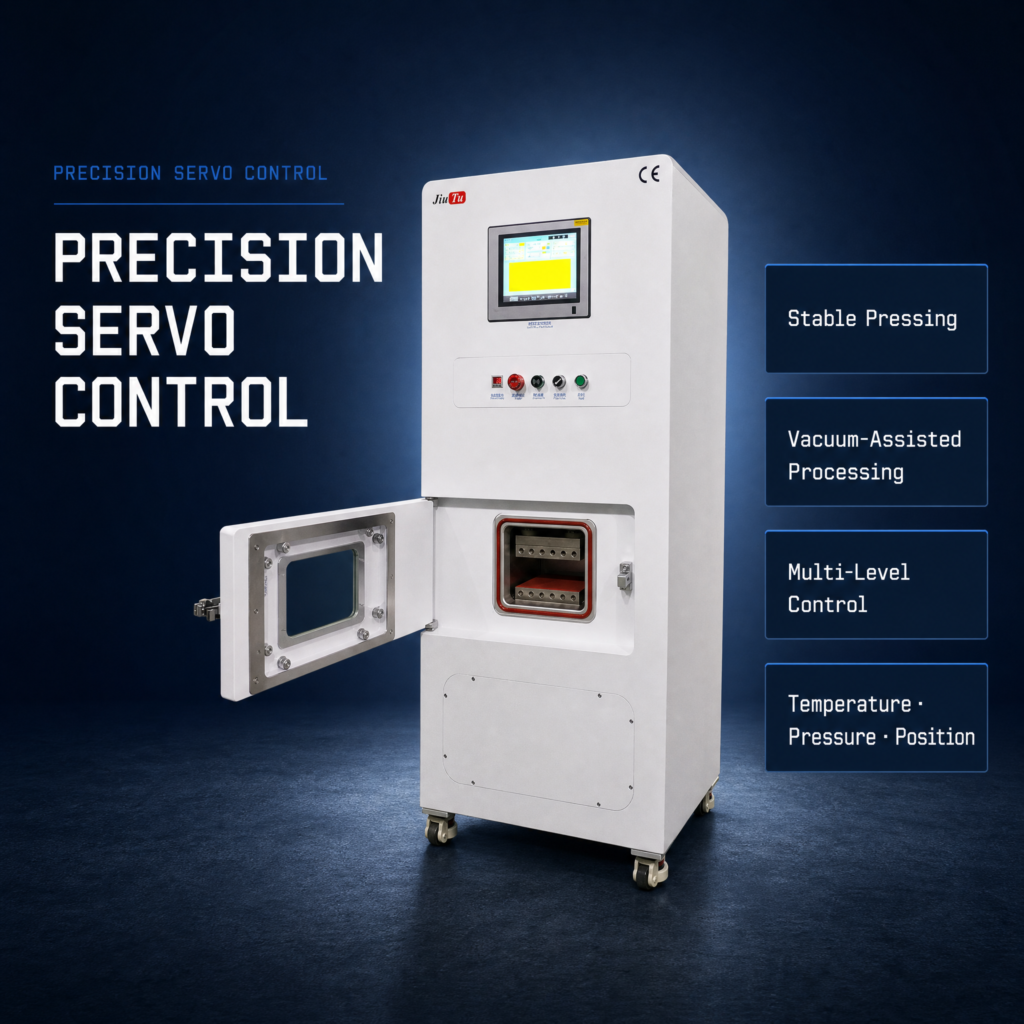
The servo-driven press axis controls approach speed, press-start position, end position and return motion. The machine supports both pressure mode and position mode, enabling process selection based on whether the application prioritizes applied force or final compression position.
Process benefit: Controlled motion supports material stacks that are sensitive to abrupt contact, uneven compression or excessive displacement.
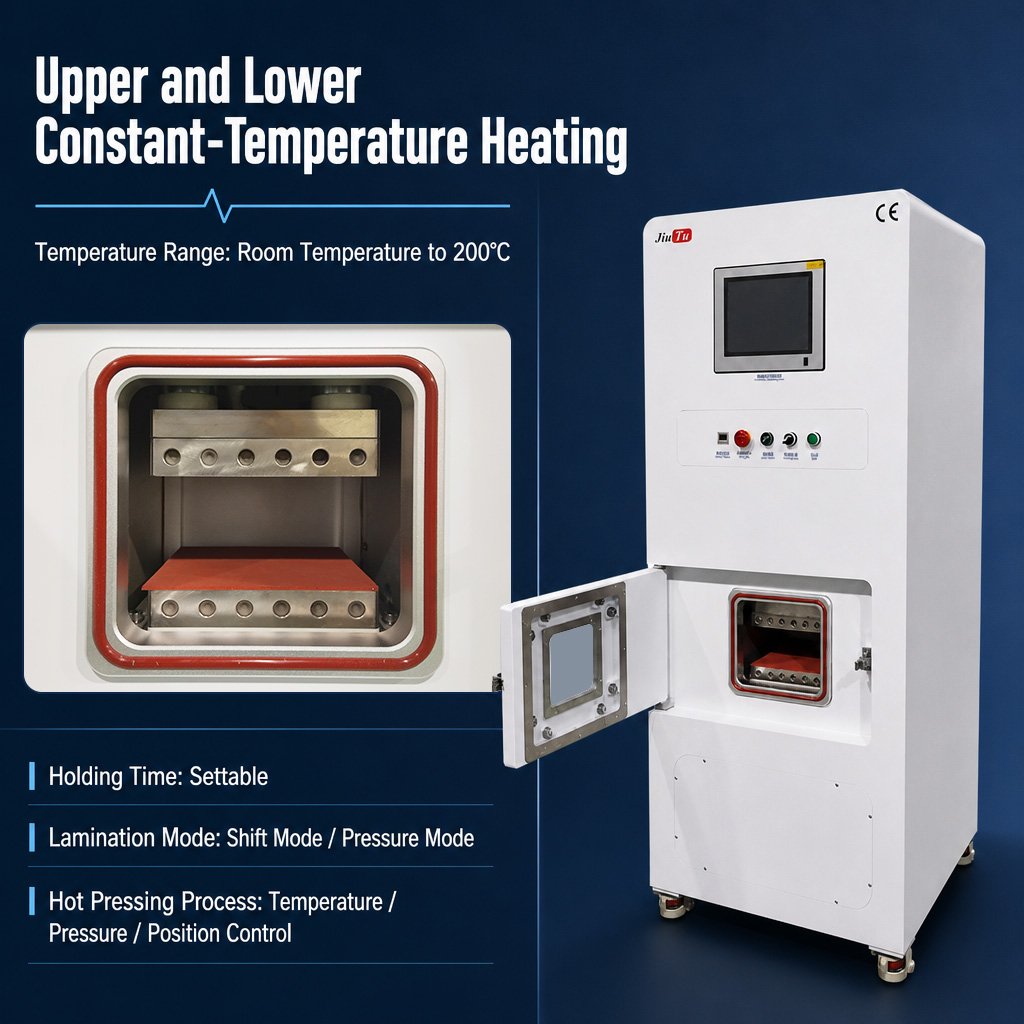
2. Upper and Lower Platen Heating
Both platens can be heated, with temperature settings managed through the touchscreen interface. The selected configuration provides adjustable heating from ambient temperature to 200°C.
Process benefit: Dual-side heating supports more uniform thermal transfer through layered materials than a single heated surface.
3. Vacuum and Non-Vacuum Processing
The chamber can run in vacuum mode or non-vacuum mode. The recipe can also determine whether evacuation occurs before pressing or after initial platen movement.
Process benefit: The process sequence can be adapted to material degassing, interface contact and trapped-air control requirements.
4. Four-Stage Programmable Process
Up to four process stages can be configured. Each stage can include:
Upper platen temperature
Lower platen temperature
Heating time
Pressing position
Target pressure
Holding time
Vacuum state
Process benefit: Multi-stage control supports preheating, progressive compression, final dwell and controlled release within one recipe.
5. Workpiece Position Detection
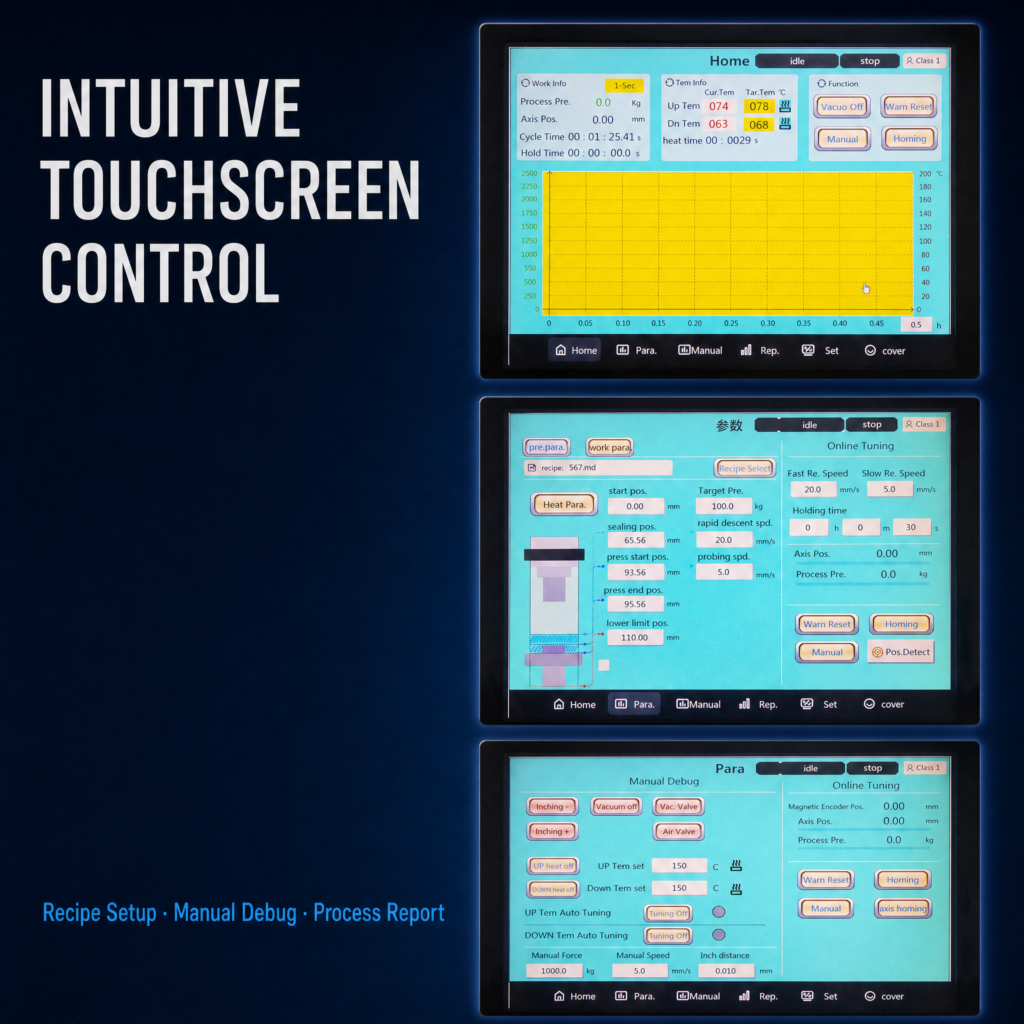
For the first run or when product height changes, the position-detection function identifies the workpiece surface and calculates the press-start position using the configured safety height.
Process benefit: Position detection helps establish a controlled starting point for products with different thicknesses.
6. Process Monitoring and Data Records
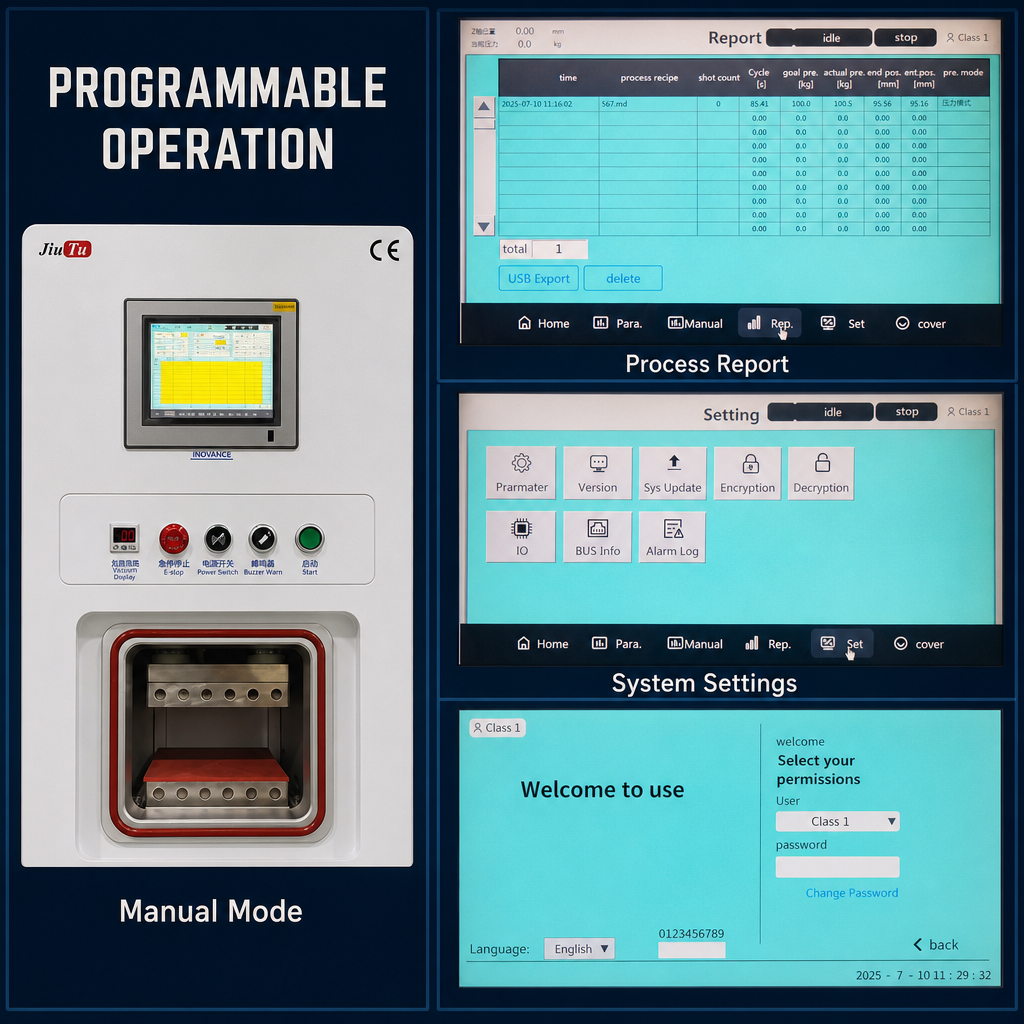
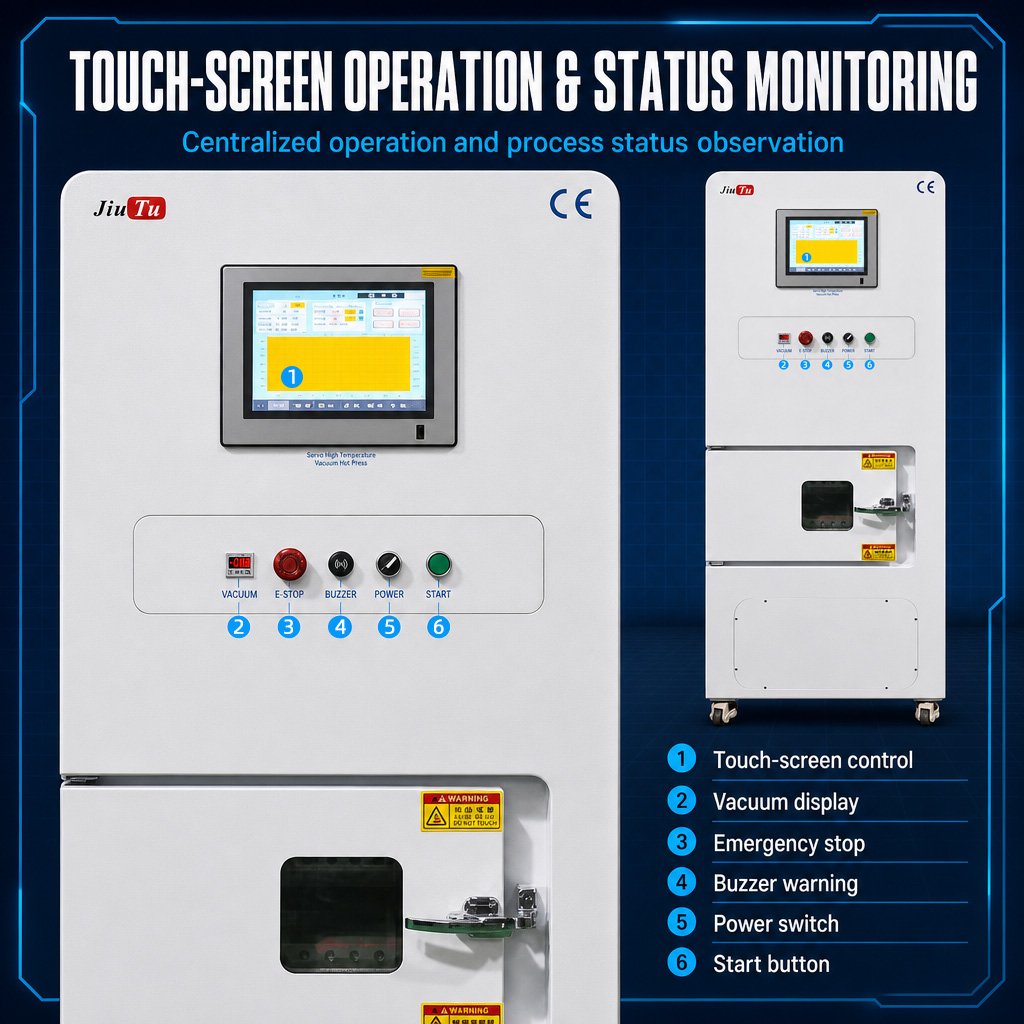
The touchscreen displays current pressure, Z-axis position, upper and lower platen temperatures, cycle time, dwell time and process curves. Production records include target pressure, actual pressure, end position, actual position and pressing mode, with USB export available.
Process benefit: Recorded production data supports process review and recipe comparison.
7. Manual and Automatic Operation
Manual mode supports axis jogging, vacuum control, valve control, platen heating and process setup. Automatic mode runs the selected recipe after loading and safety checks.
Process benefit: Manual operation supports setup and trials; automatic operation supports repeat production after parameters are established.
Why Choose Us
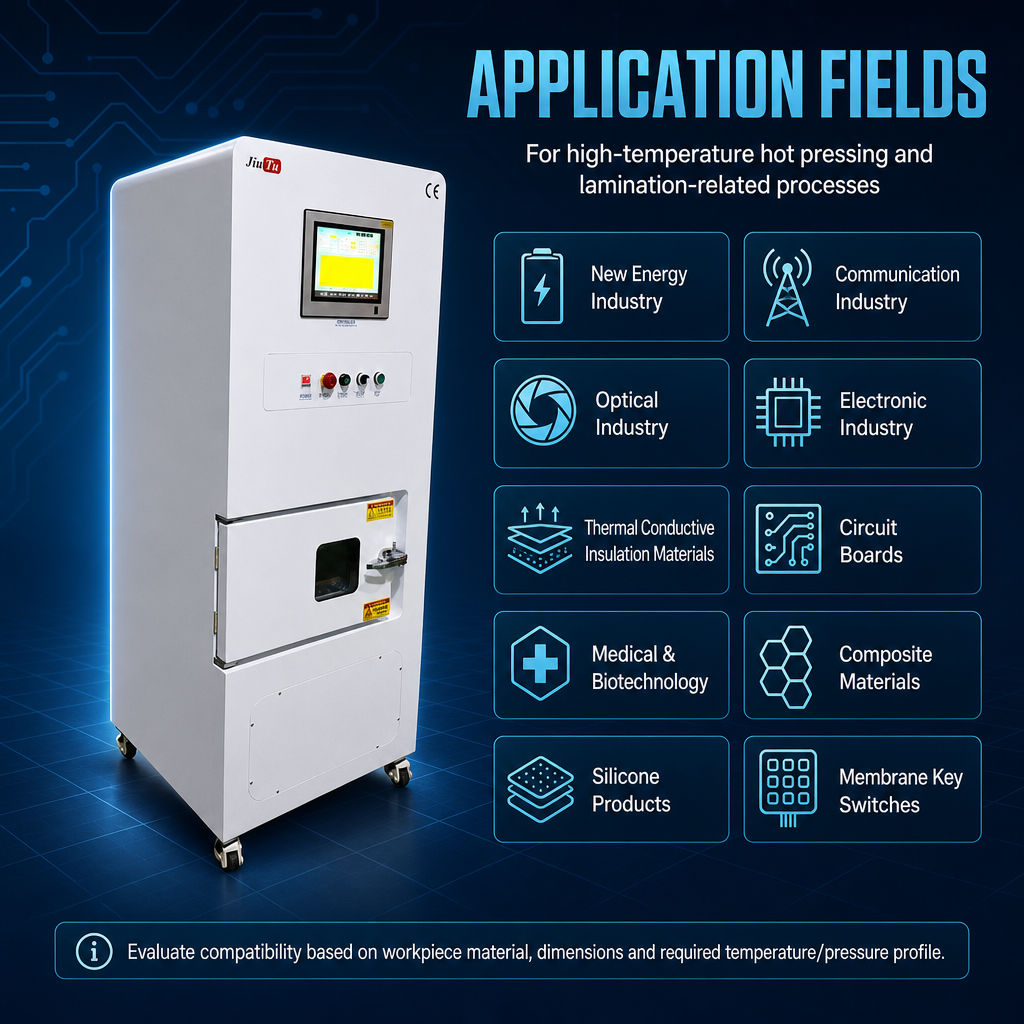
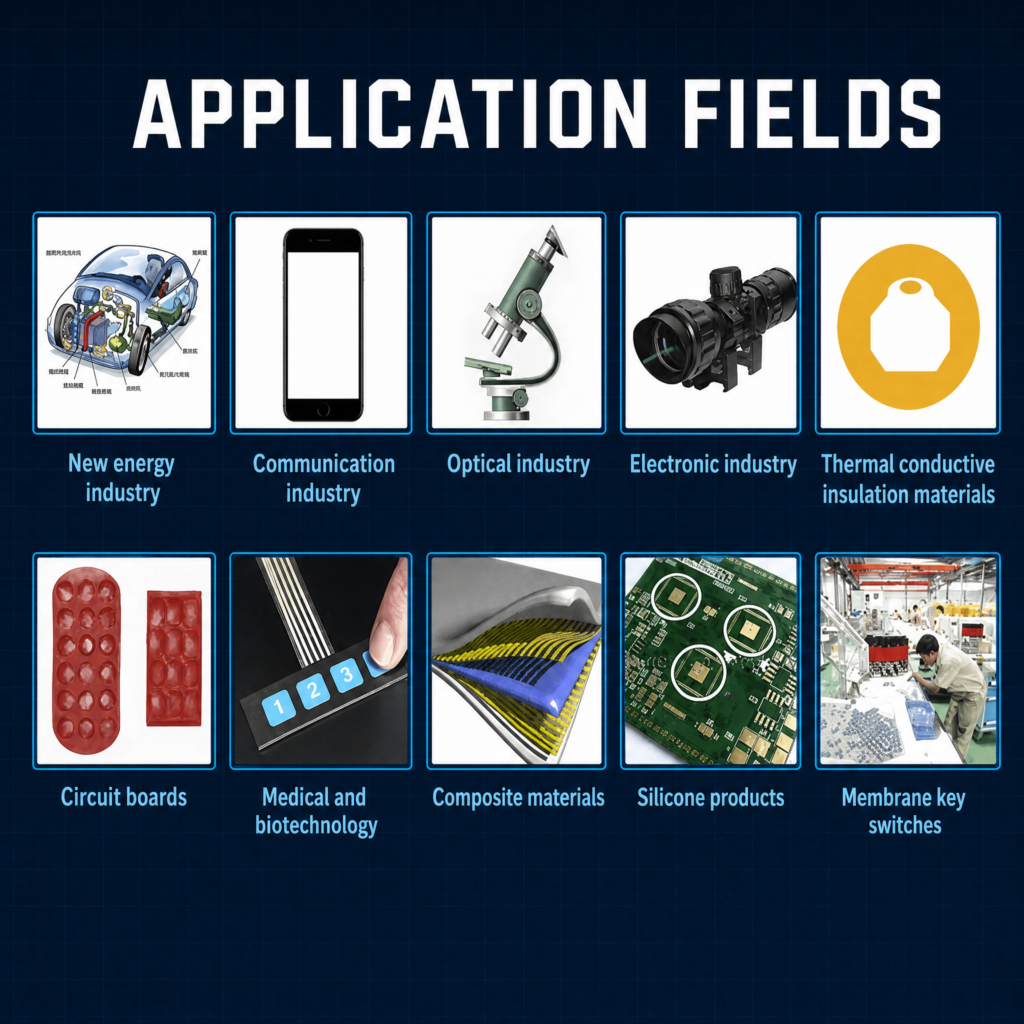
Suitable Materials and Applications
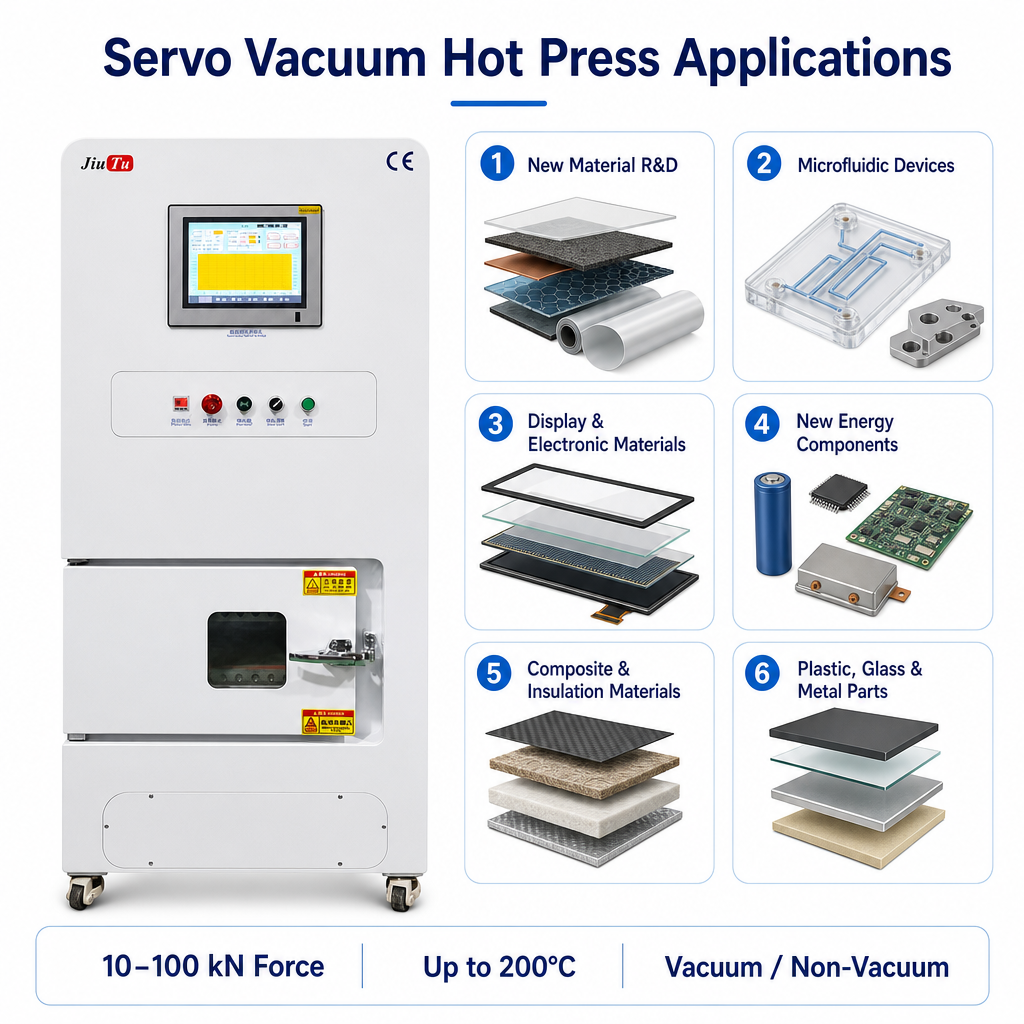
Display and Optical Materials
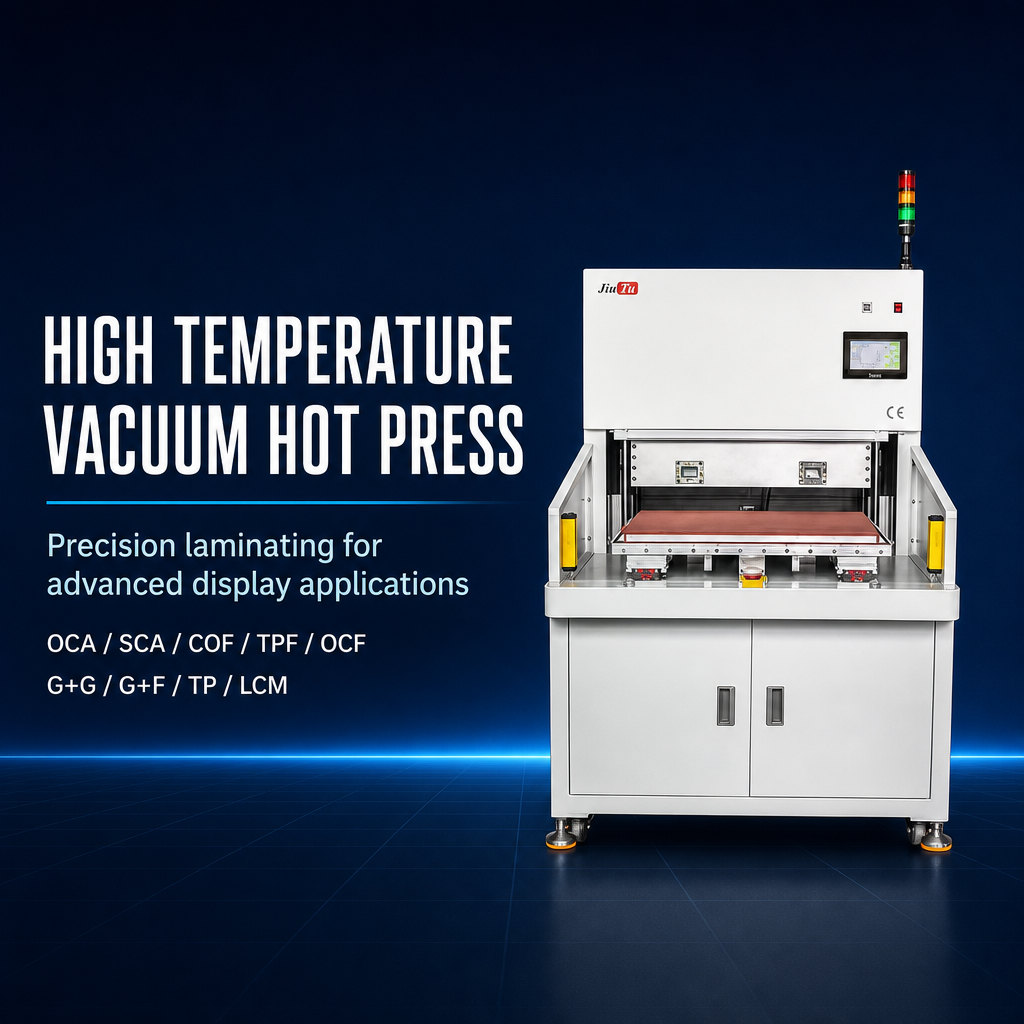
-LCD and LCM material stacks
-Touch-panel layers
-SCA and OCA bonding structures
-Optical polymer materials
-Display frame and functional layer pressing
New-Material Development
-Polymer laminates
-COP, COC, PMMA and PC materials
-Composite films and fiberboard
-Aerogel PET materials
-Thermal conductive and insulation materials
Electronic Components
-Circuit boards
-Electronic plug-in parts
-Membrane key switches
-Silicone components
-Precision plastic, glass and metal parts
Research and Specialized Processing
-Microfluidic devices
-Laboratory process development
-Material consolidation trials
-New-energy components
-Optical assemblies
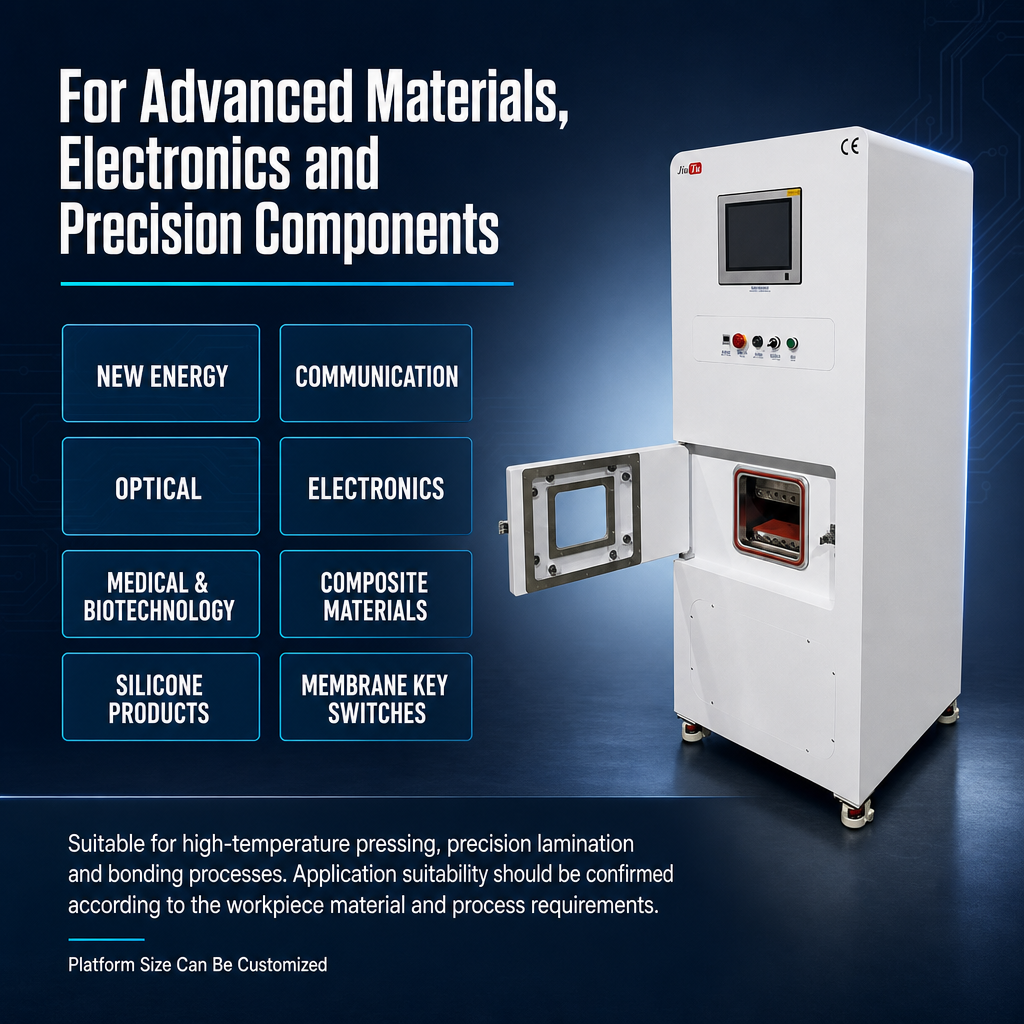
Process compatibility must be evaluated from the material, dimensions, stack thickness, required temperature, pressure profile and acceptance criteria.
Why Choose This Configuration
One Platform for Multiple Process Variables
Vacuum, upper and lower platen temperature, pressure, position, speed and time can be coordinated in one recipe rather than adjusted through separate machines.
Designed for Process Development
Manual setup, surface detection, recipe storage, four-stage programming and process reports support material trials and parameter development.
Suitable for Repeat Production
Once the process window is validated, saved recipes and automatic cycles help standardize machine settings between batches.
Configurable Around the Workpiece
Pressing force, stroke, platform and tooling can be evaluated according to material type, dimensions and process requirements.
Product Documents
Servo High Temperature Laminator user manual 200x200
Key Features
Product Details
FAQ
Q1. What is the standard working area?
Q2. What temperature range does the machine support?
Q3. What pressing force is available?
Q4. Can the machine operate under vacuum?
Q5. Can both platens be heated?
Q6. How many process stages can be programmed?
Q7. Does the machine support pressure and position control?
Q8. What is the stated repeatability?
Q9. Can recipes and production records be exported?
Q10. What materials can be processed?
Q11. Is the machine suitable for laboratories and factories?
Q12. What information is needed for a quotation?
Interested in This Product?
Tell us your project details and our team will prepare a customized quotation.
GET QUOTE NOW