
Servo High Temperature Laminator user manual 200×200
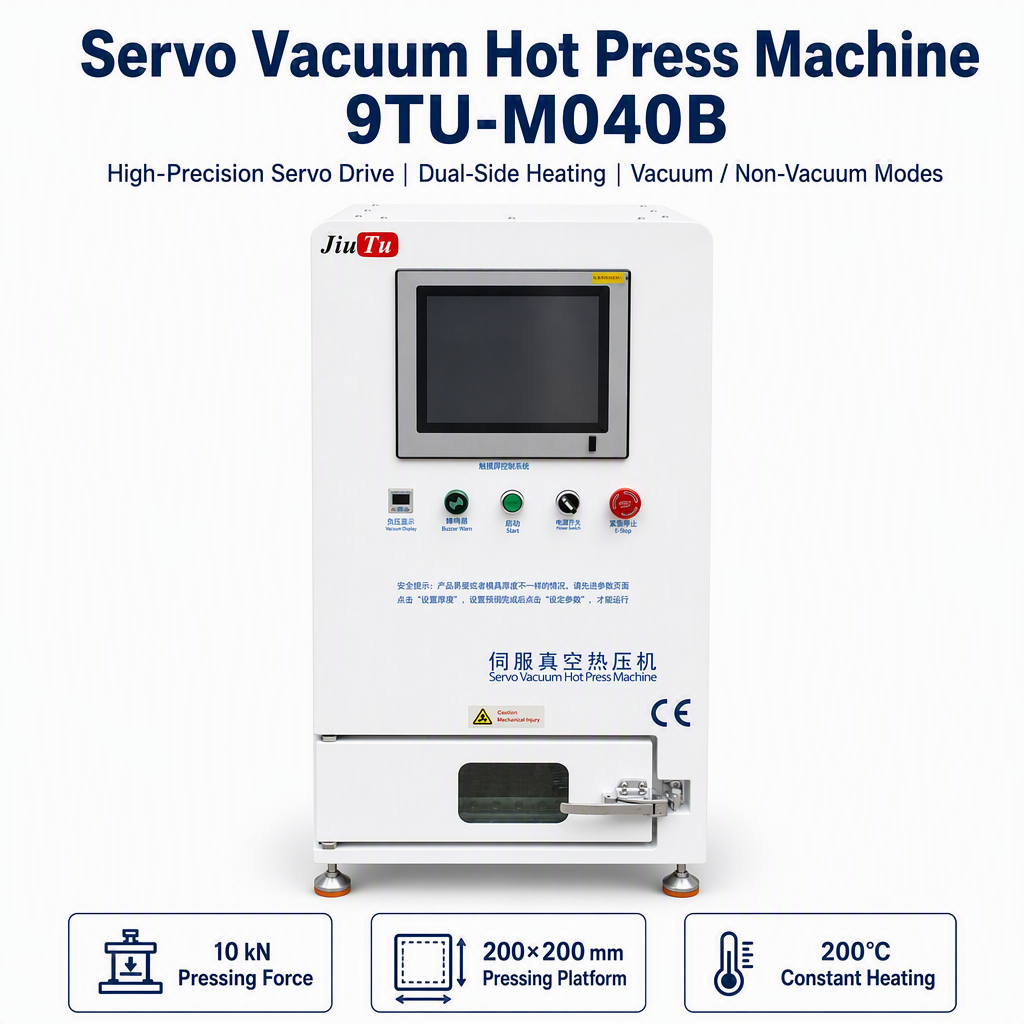
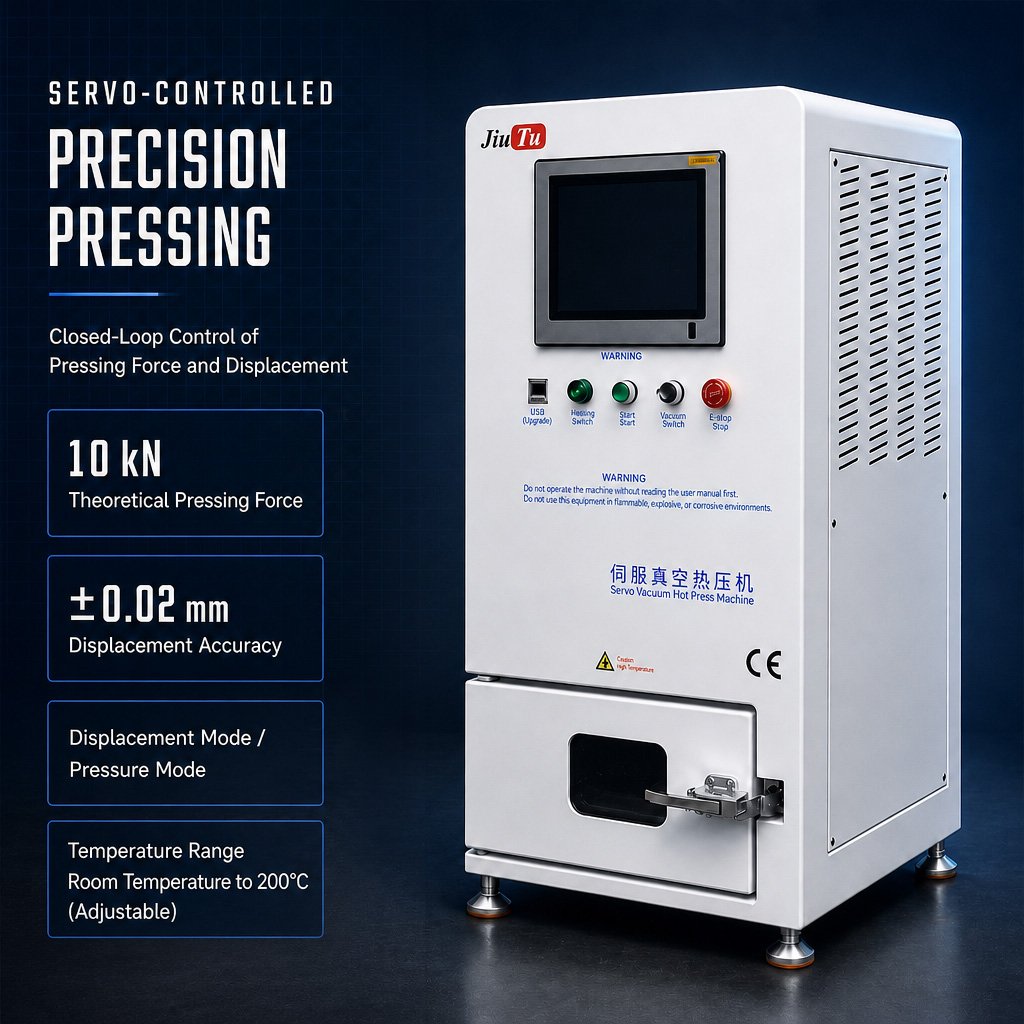
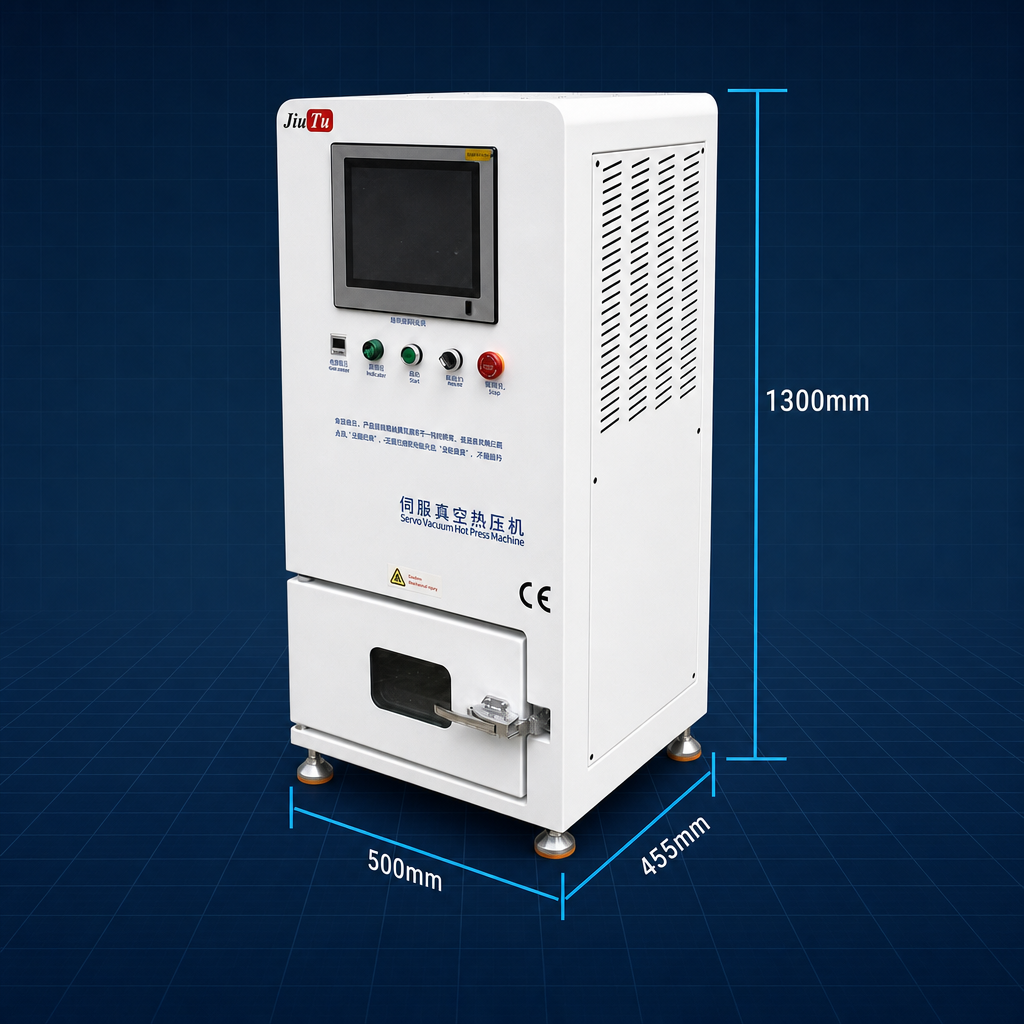
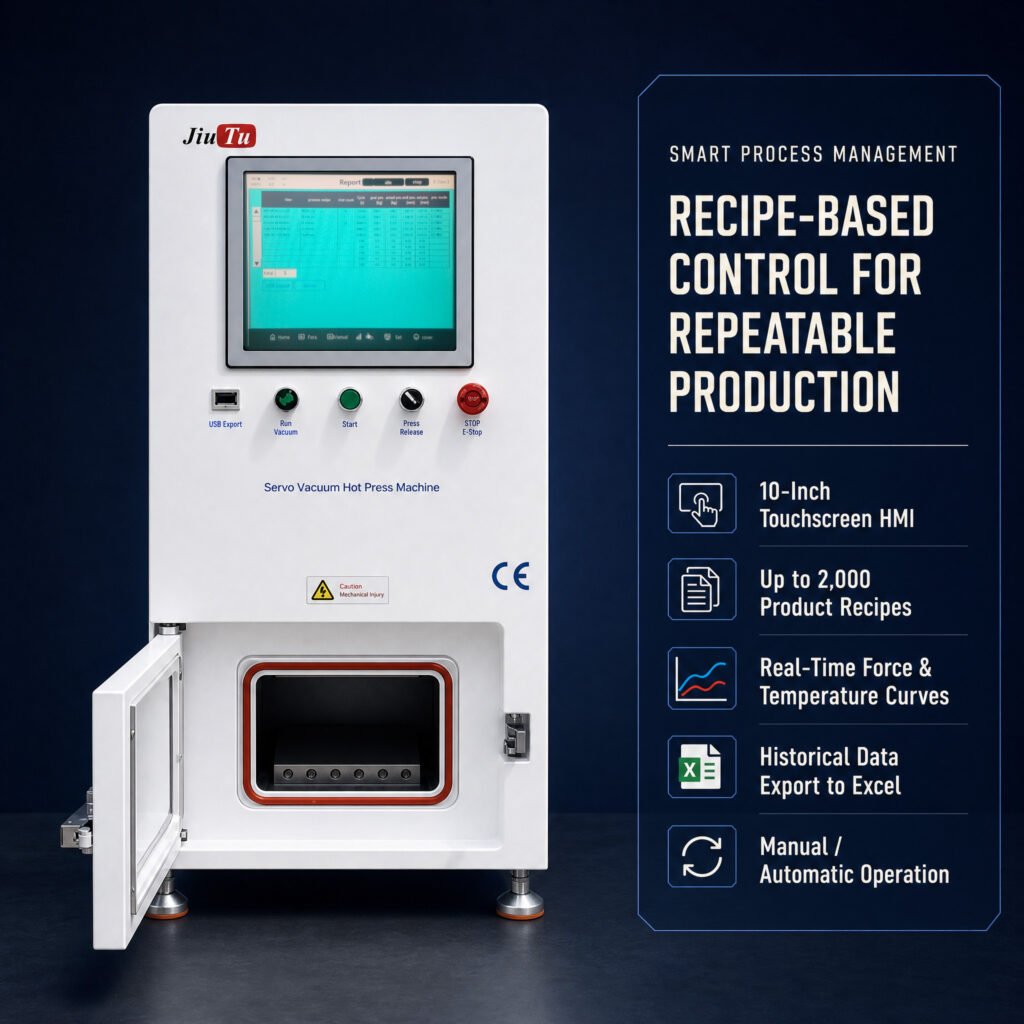
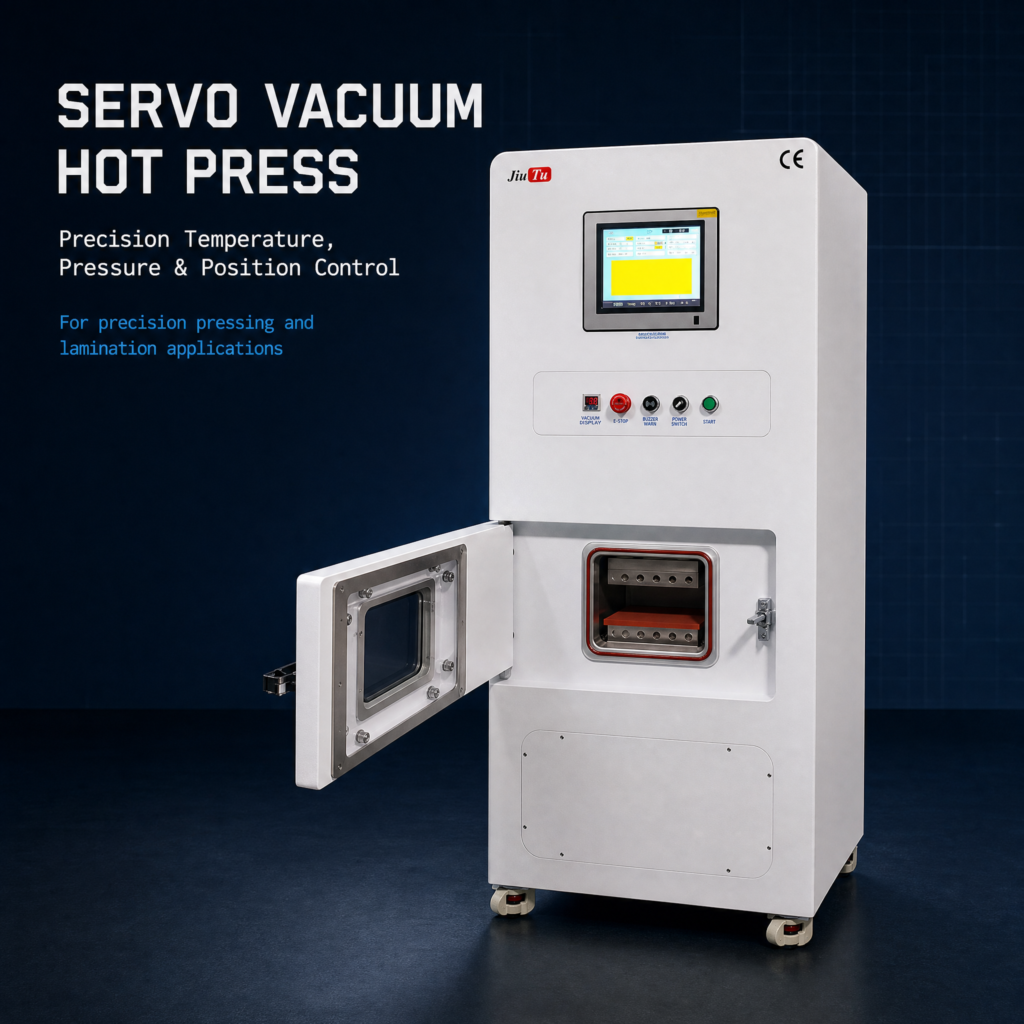
The compact 9TU-M040B is designed for industrial and laboratory applications that require coordinated control of temperature, pressing force, displacement, speed, dwell time and vacuum state.
GET QUOTE NOW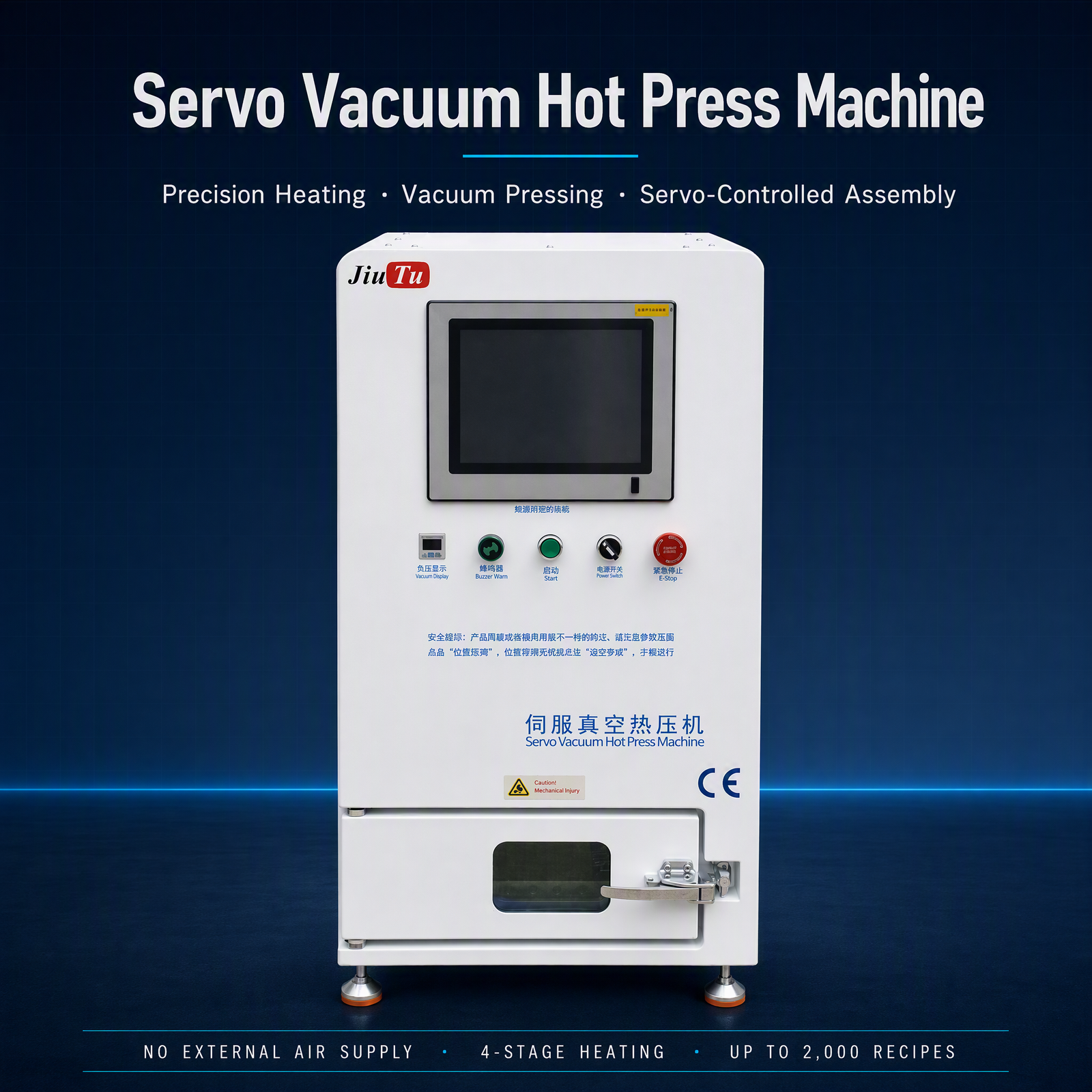
The compact 9TU-M040B is designed for industrial and laboratory applications that require coordinated control of temperature, pressing force, displacement, speed, dwell time and vacuum state.
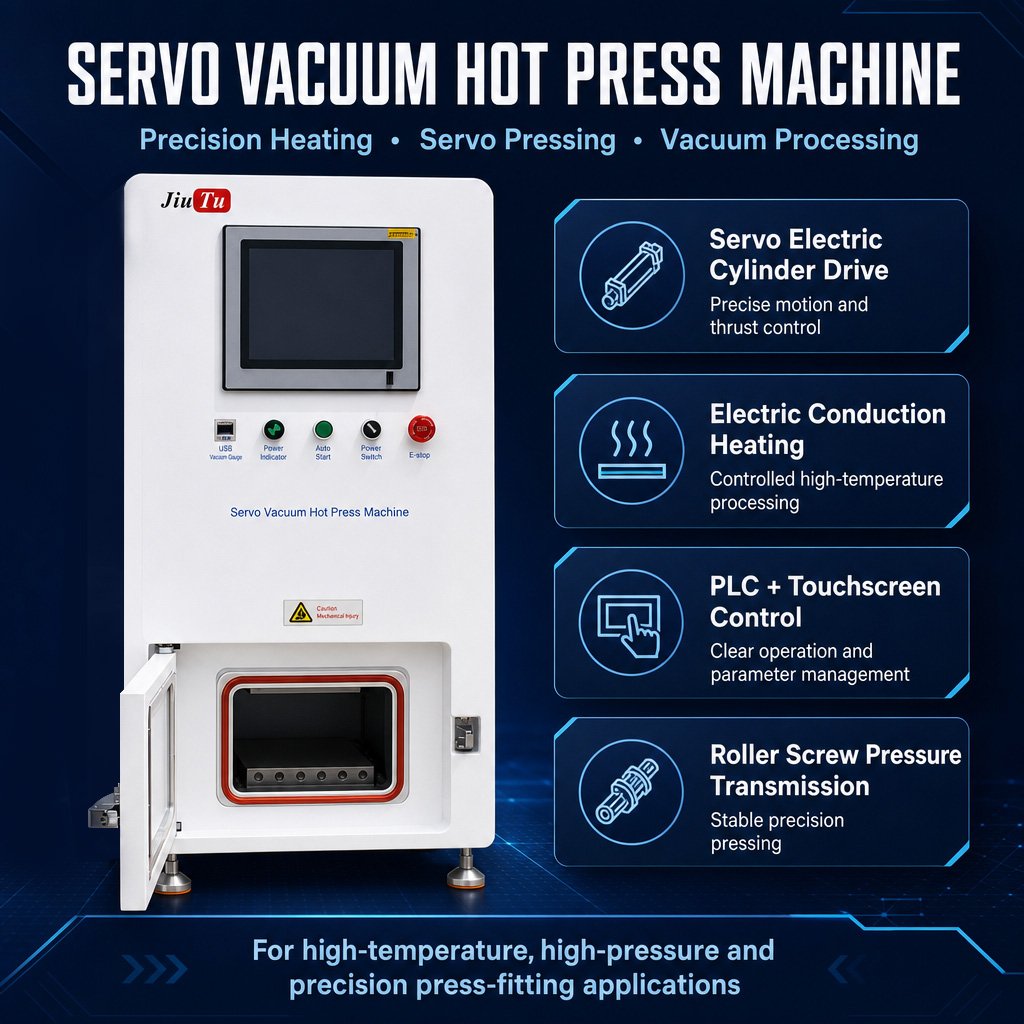
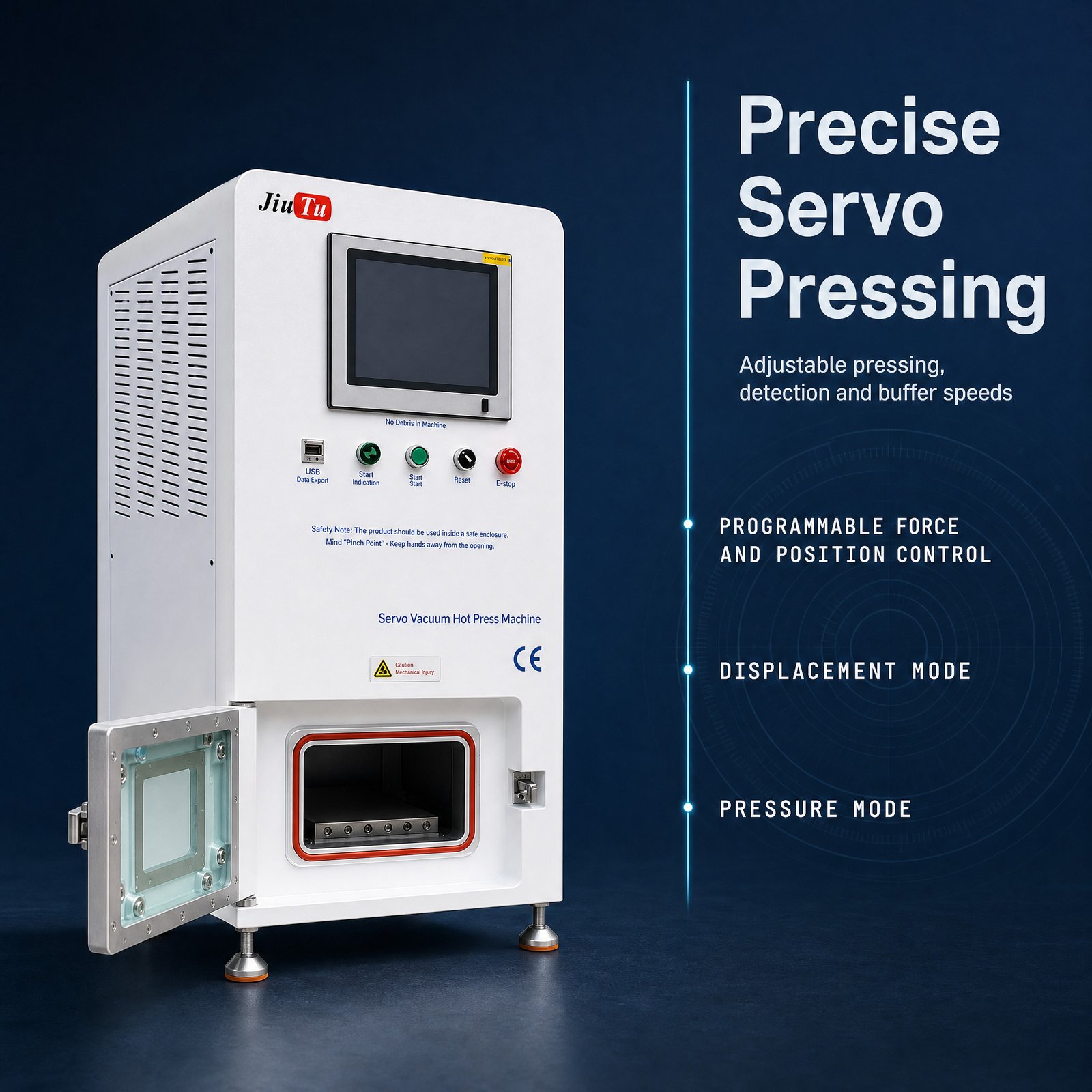
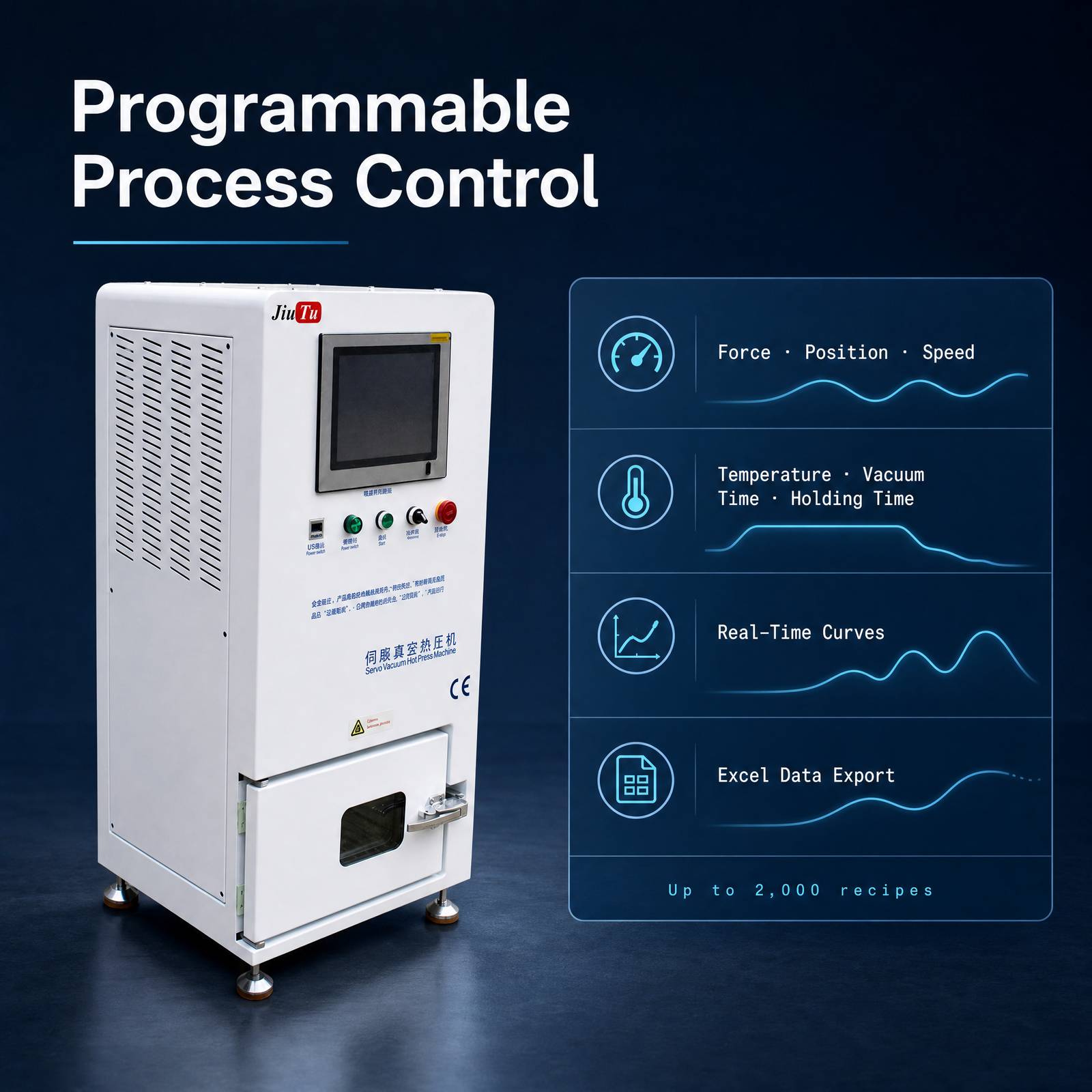
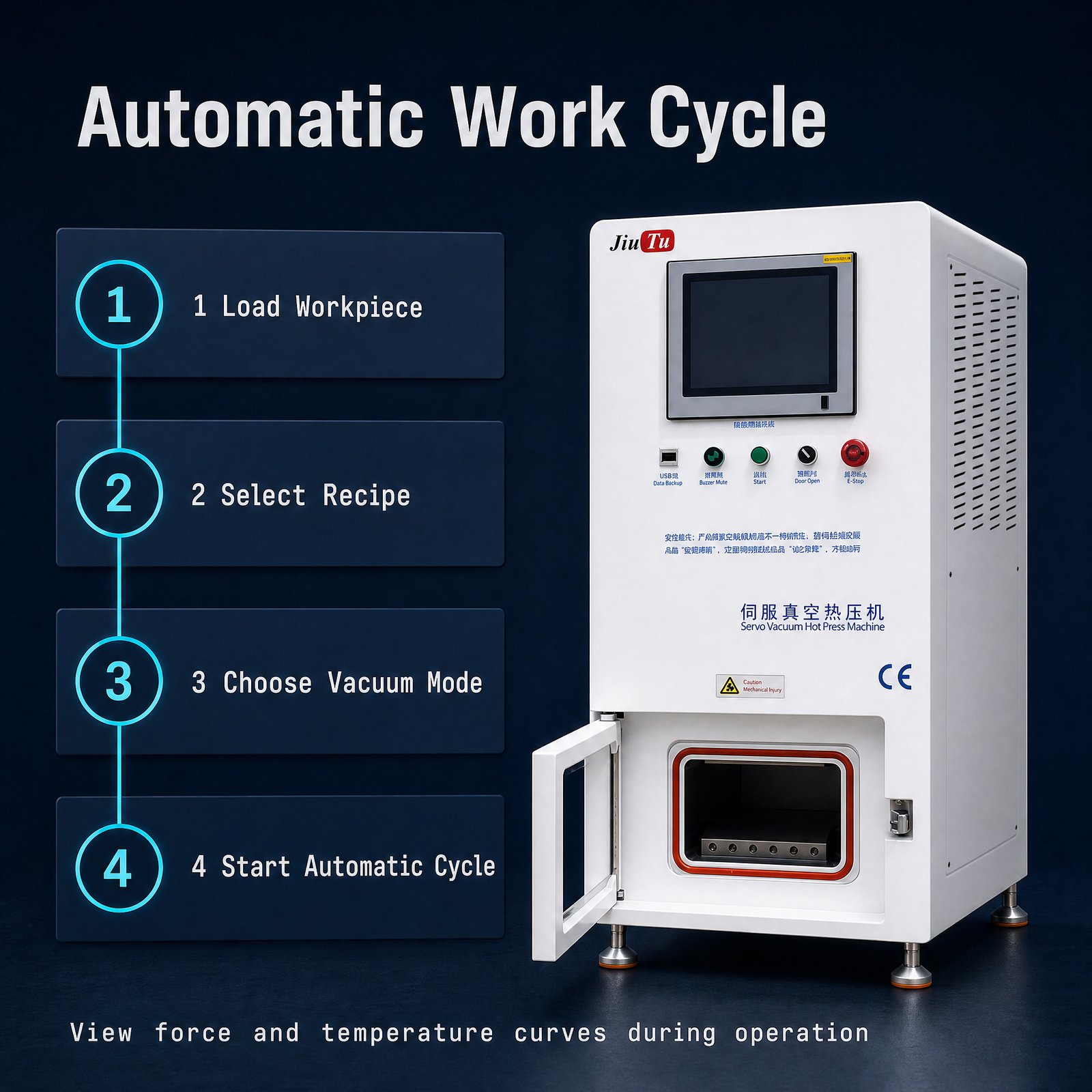
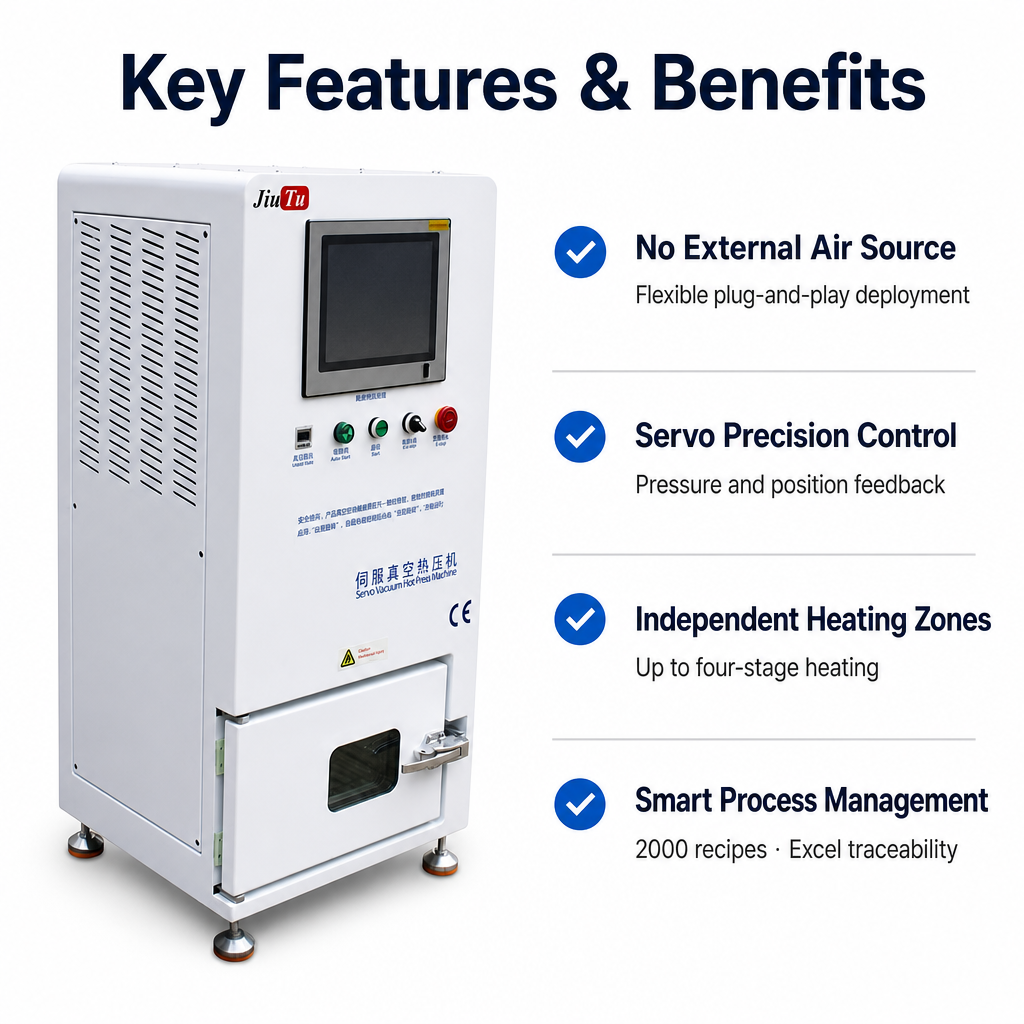
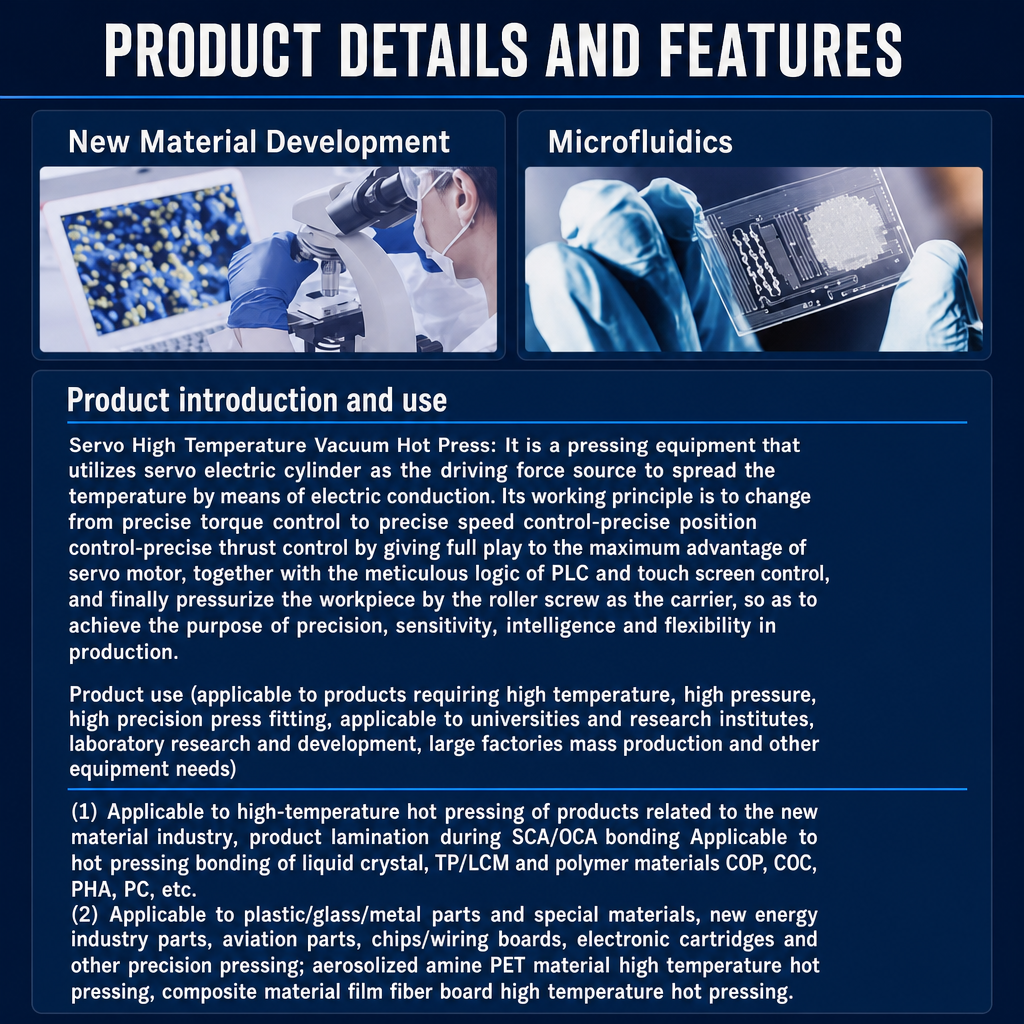
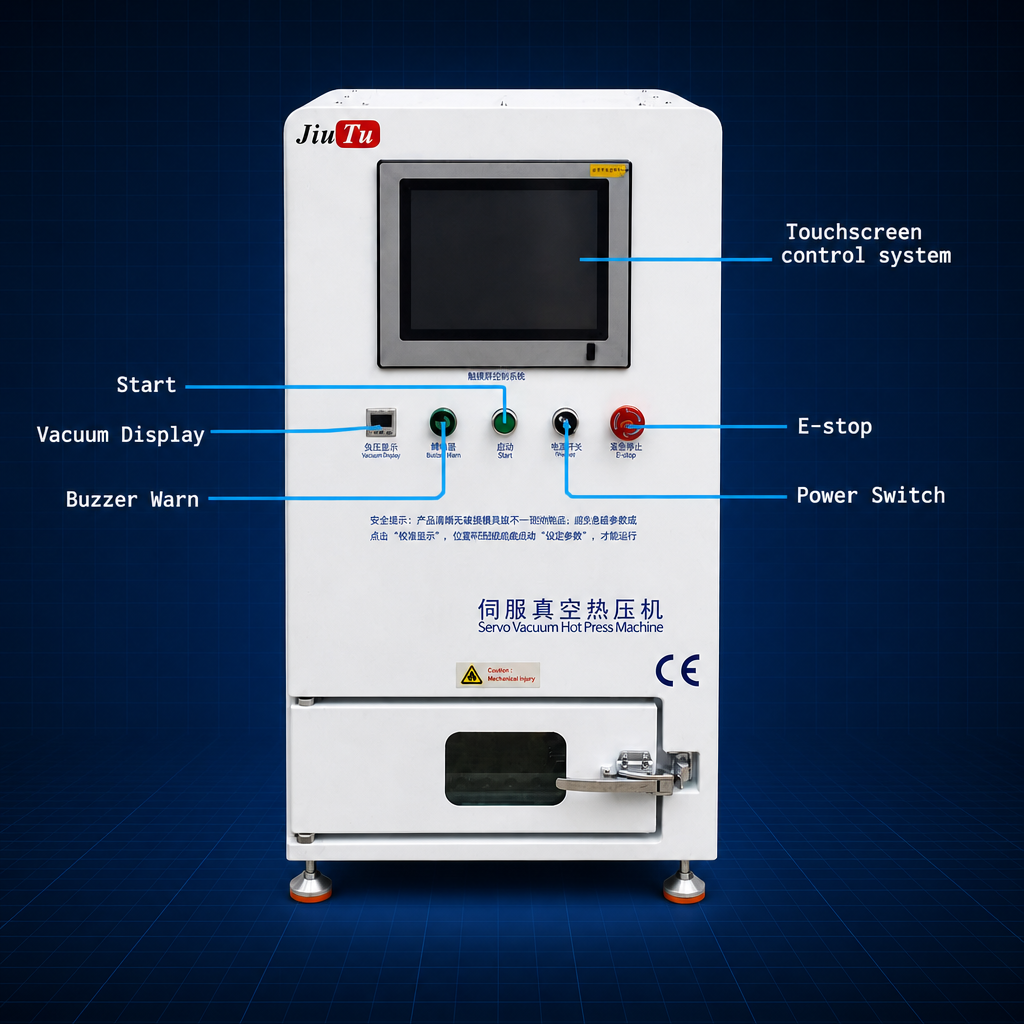
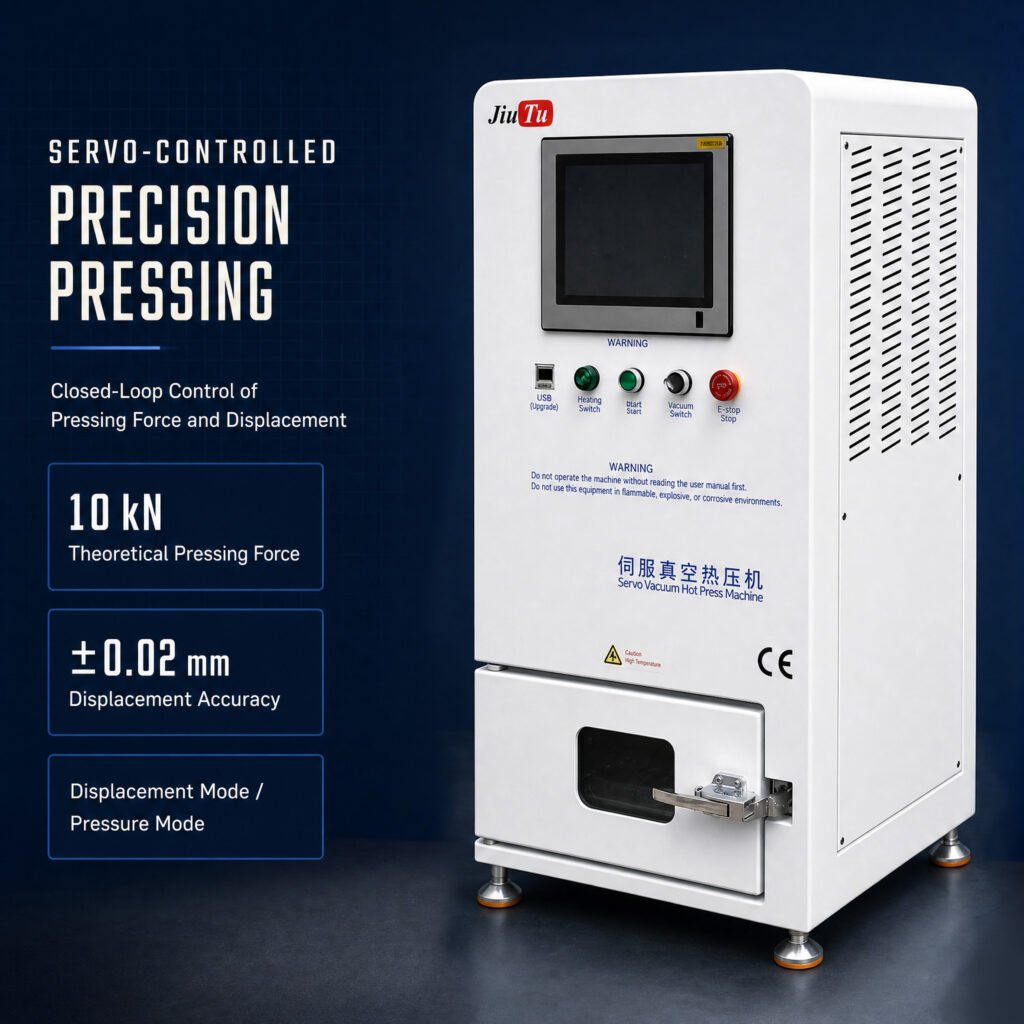
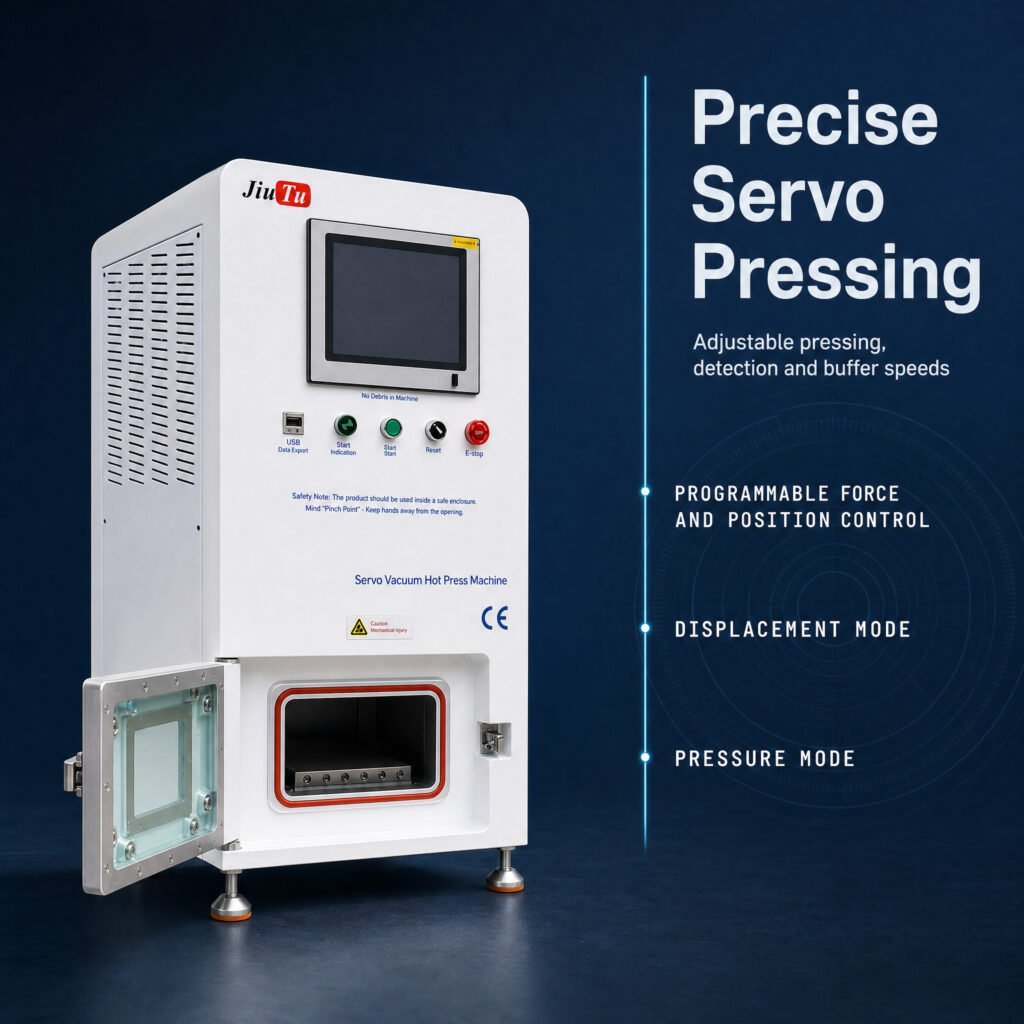
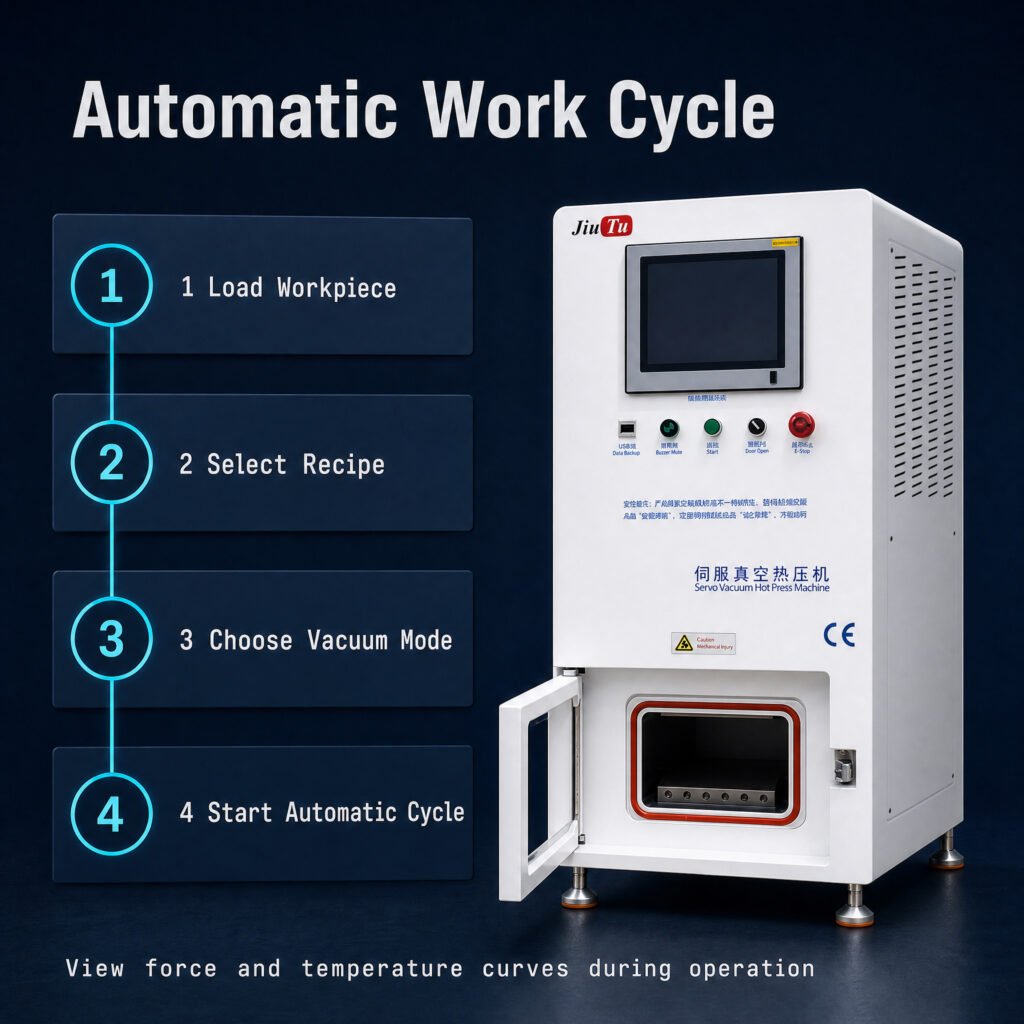
A servo electric cylinder and roller-screw mechanism drive the press axis. Closed-loop feedback controls pressing force and displacement, while the machine can operate in either pressure mode or position mode. Before a new workpiece height is processed, the position-detection routine locates the workpiece surface and establishes a controlled press-start position.
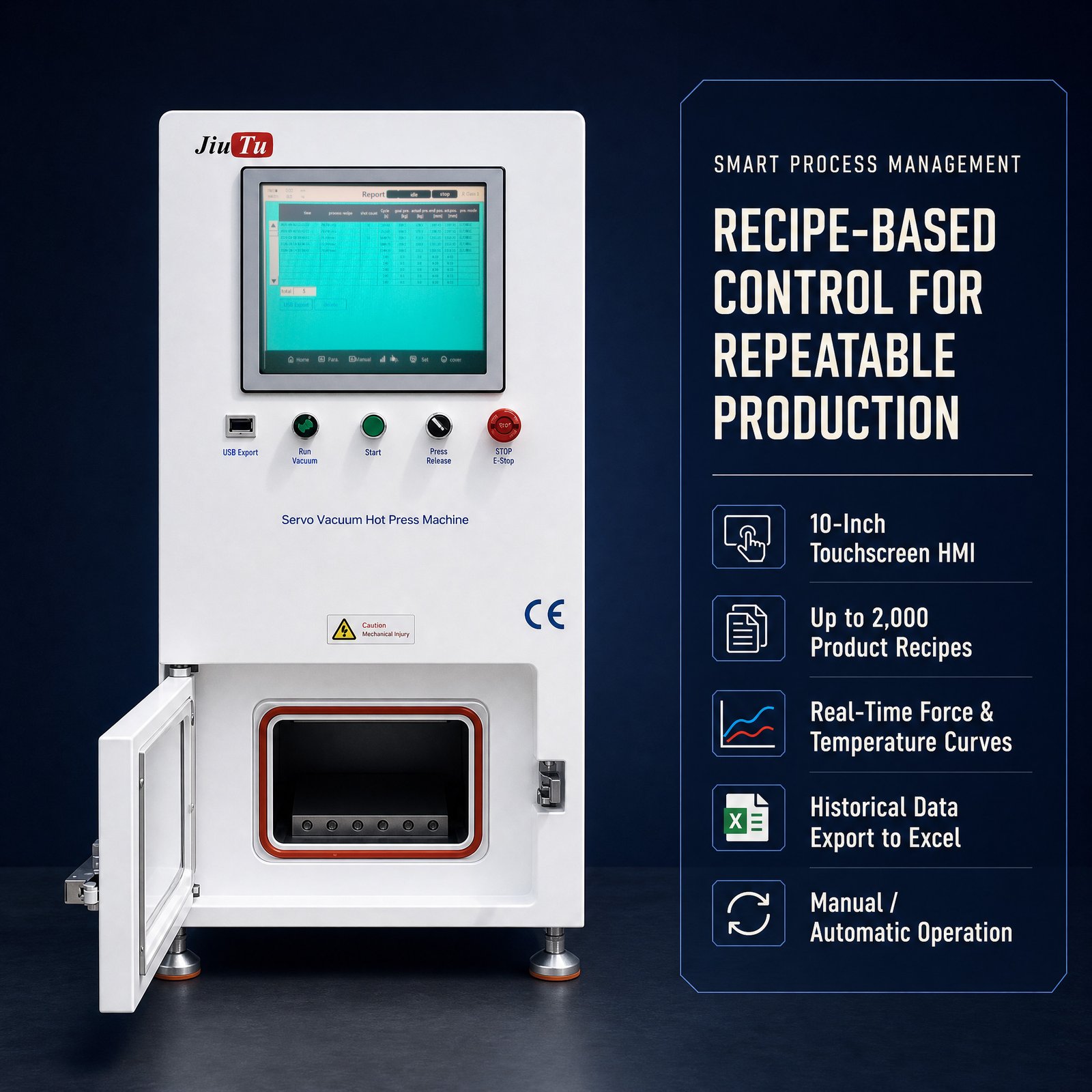
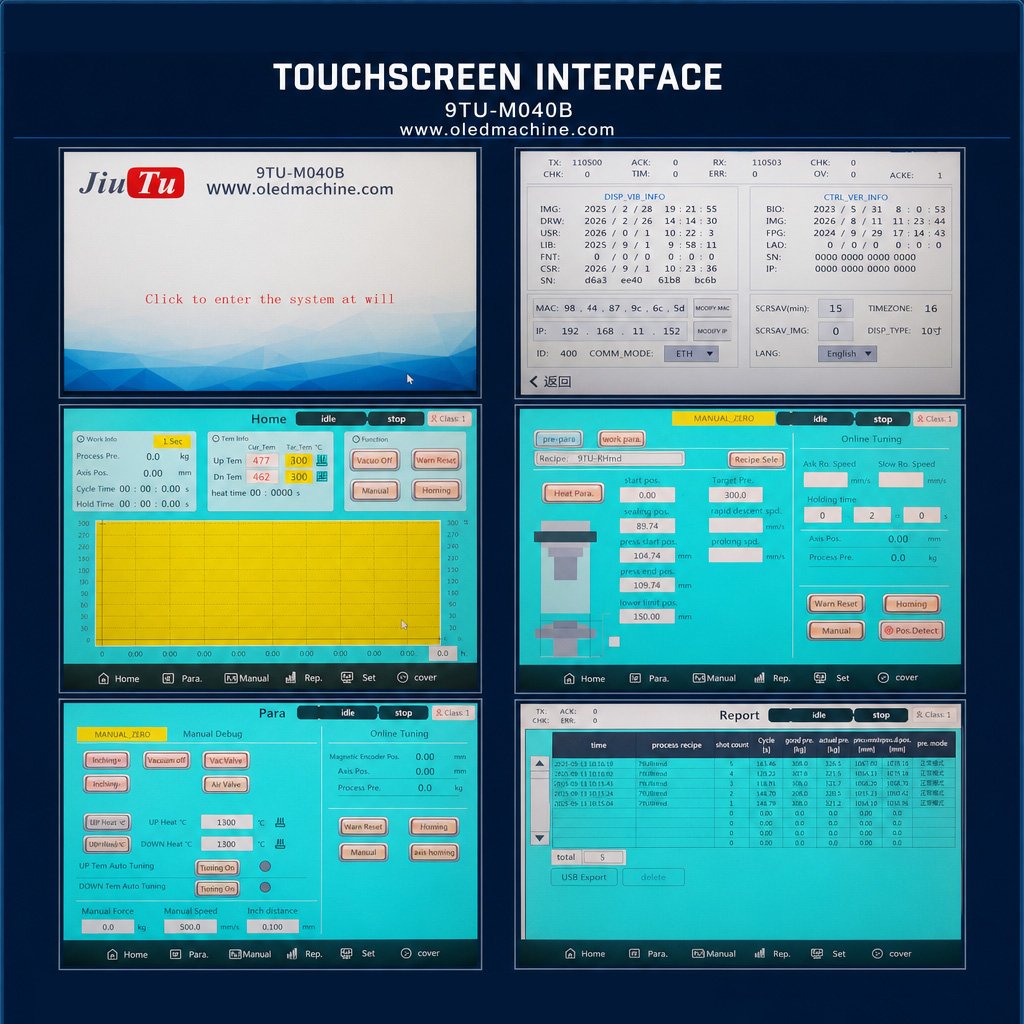
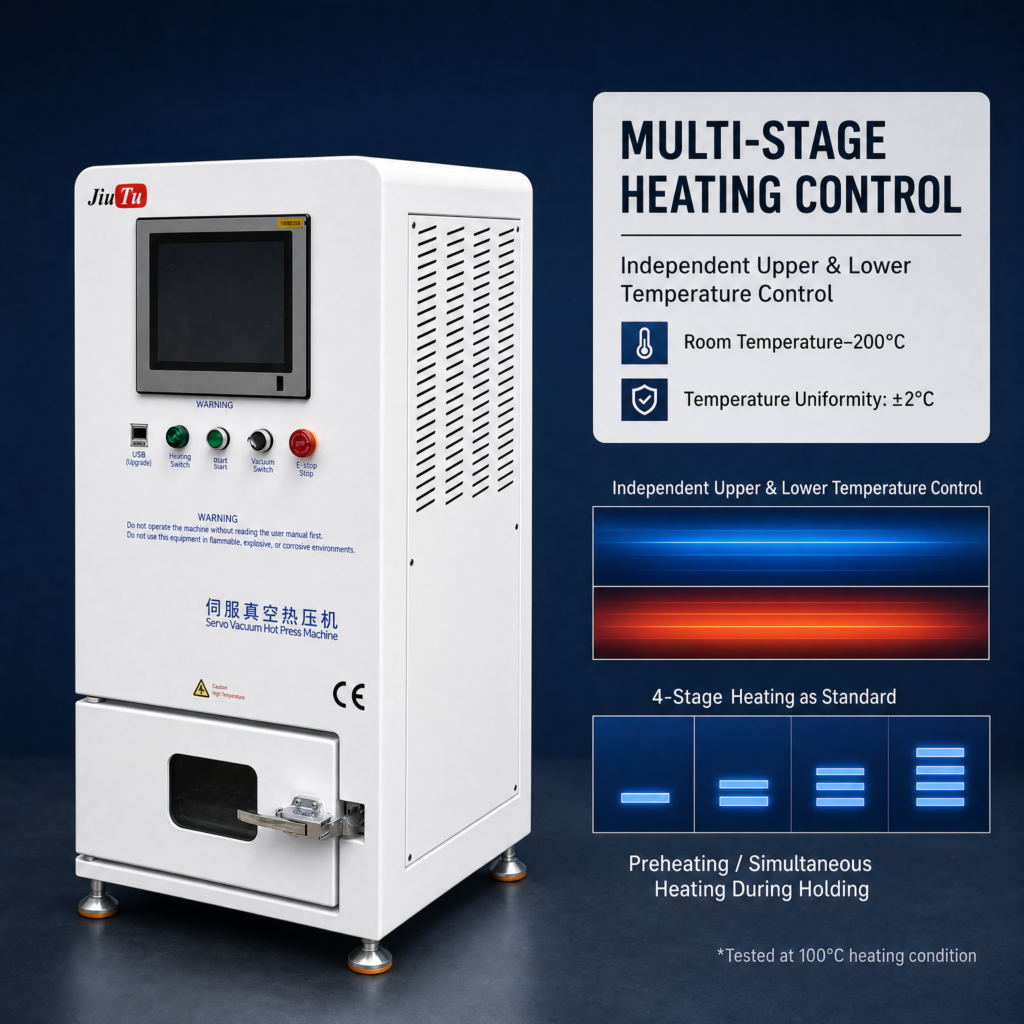
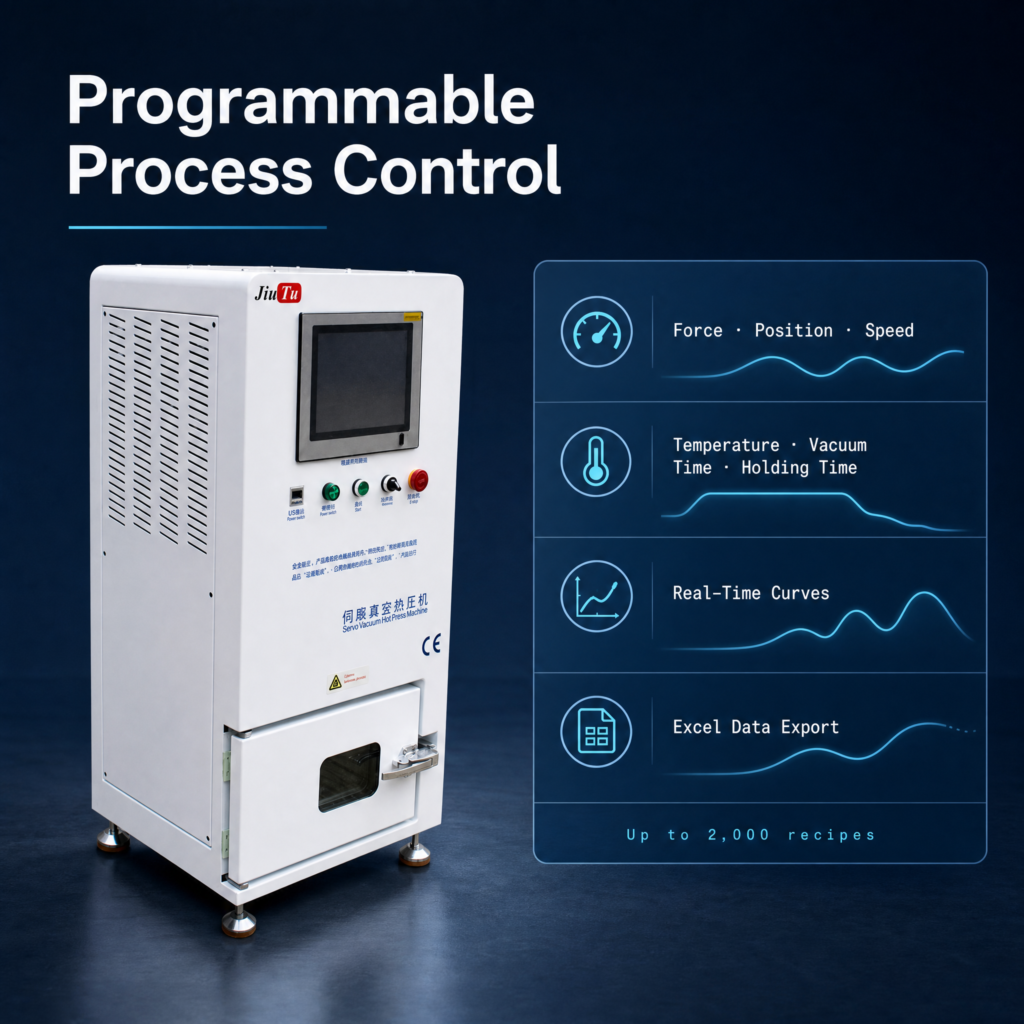
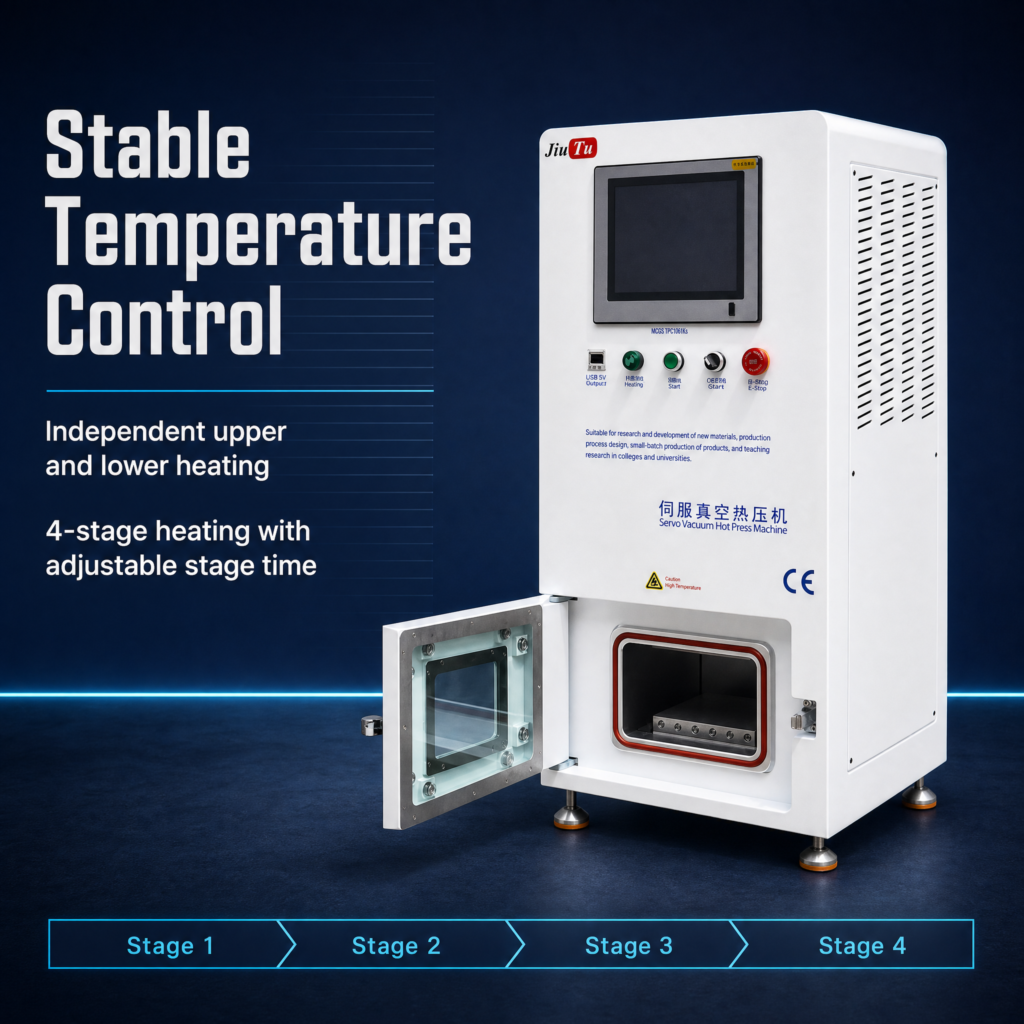
The upper and lower platens have independent constant-temperature heating. A standard four-stage recipe can assign temperature, pressure or position, holding time and vacuum state to each stage. The operator can select vacuum-first or press-first sequencing according to the material stack and process objective.
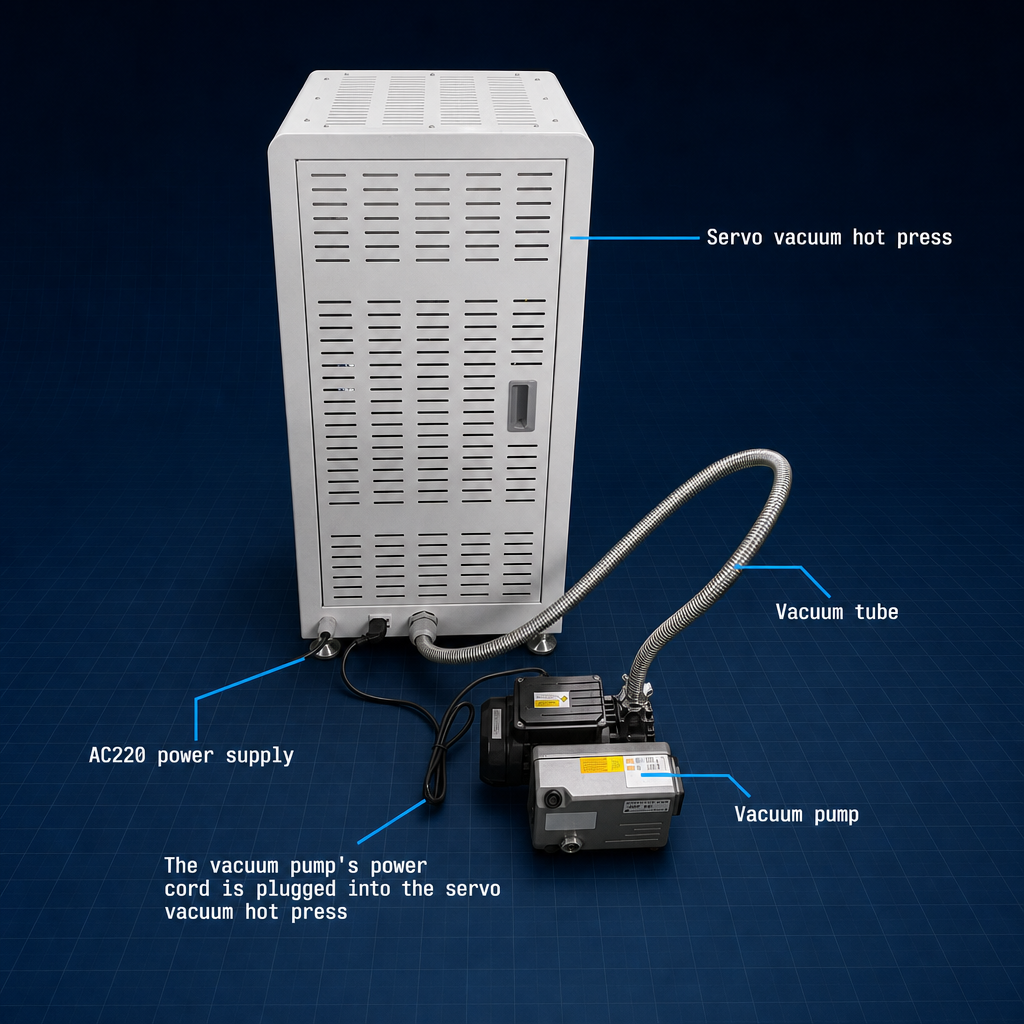
This compact configuration requires electrical power and does not require an external compressed-air source. An external vacuum pump connects to the machine through the supplied vacuum line and receives power through the machine connection shown in the product materials.
Key Features
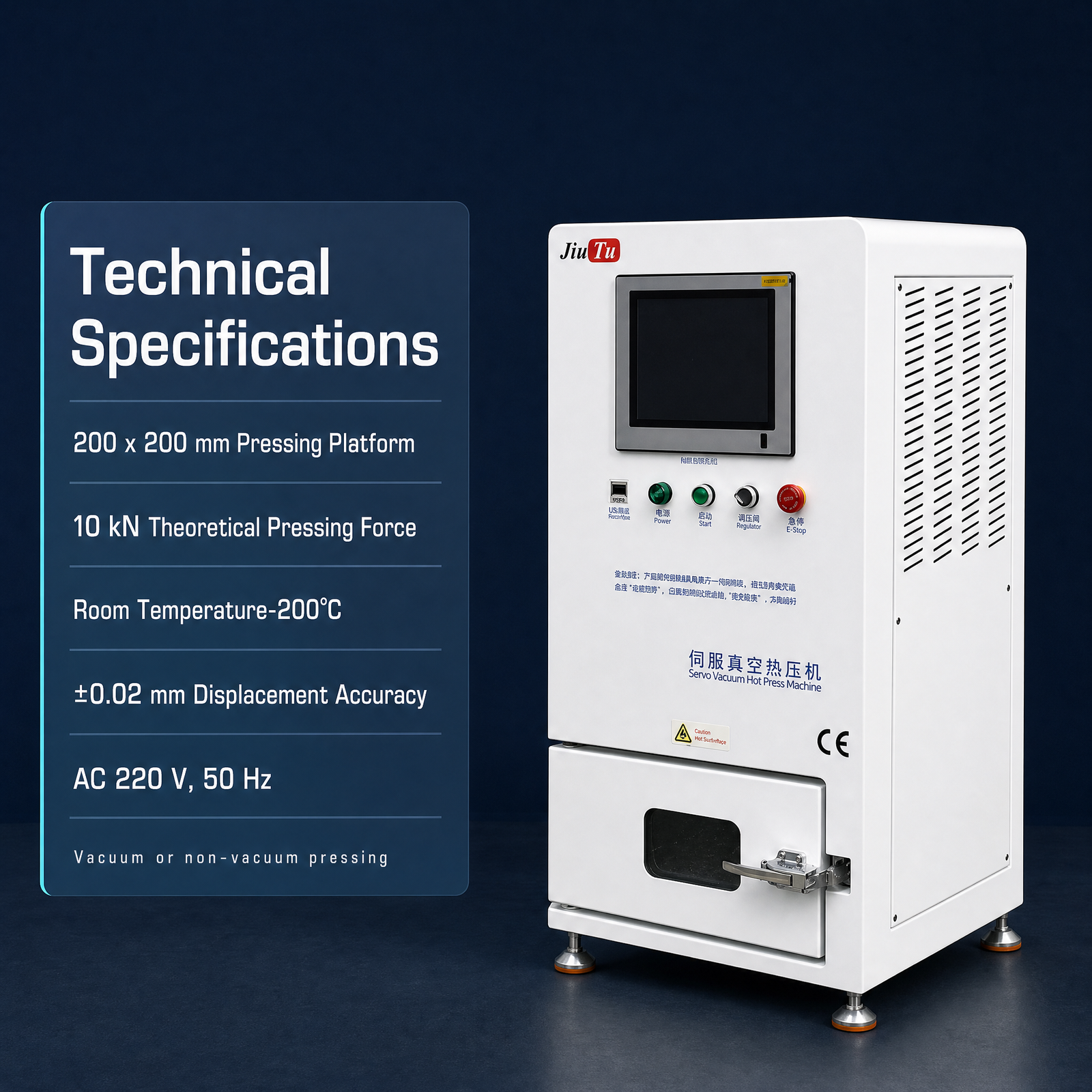
1. 10 kN Servo Precision Pressing
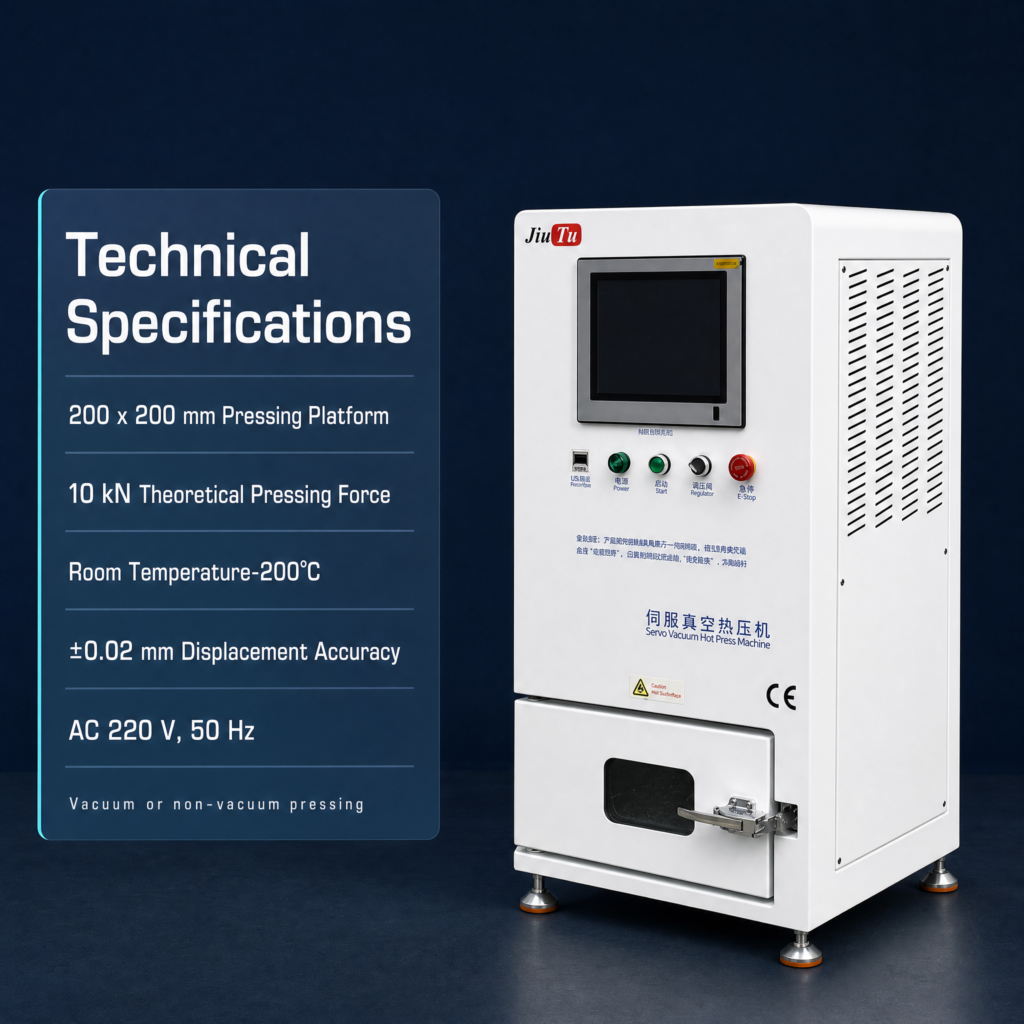
The servo-driven pressing system provides closed-loop control of force and displacement. The published theoretical pressing force is 10 kN, equivalent to the manual’s listed theoretical output of approximately 1000 kg.
Buyer benefit: Pressure-mode and position-mode operation allow the process to be matched to either target force or final compression depth.
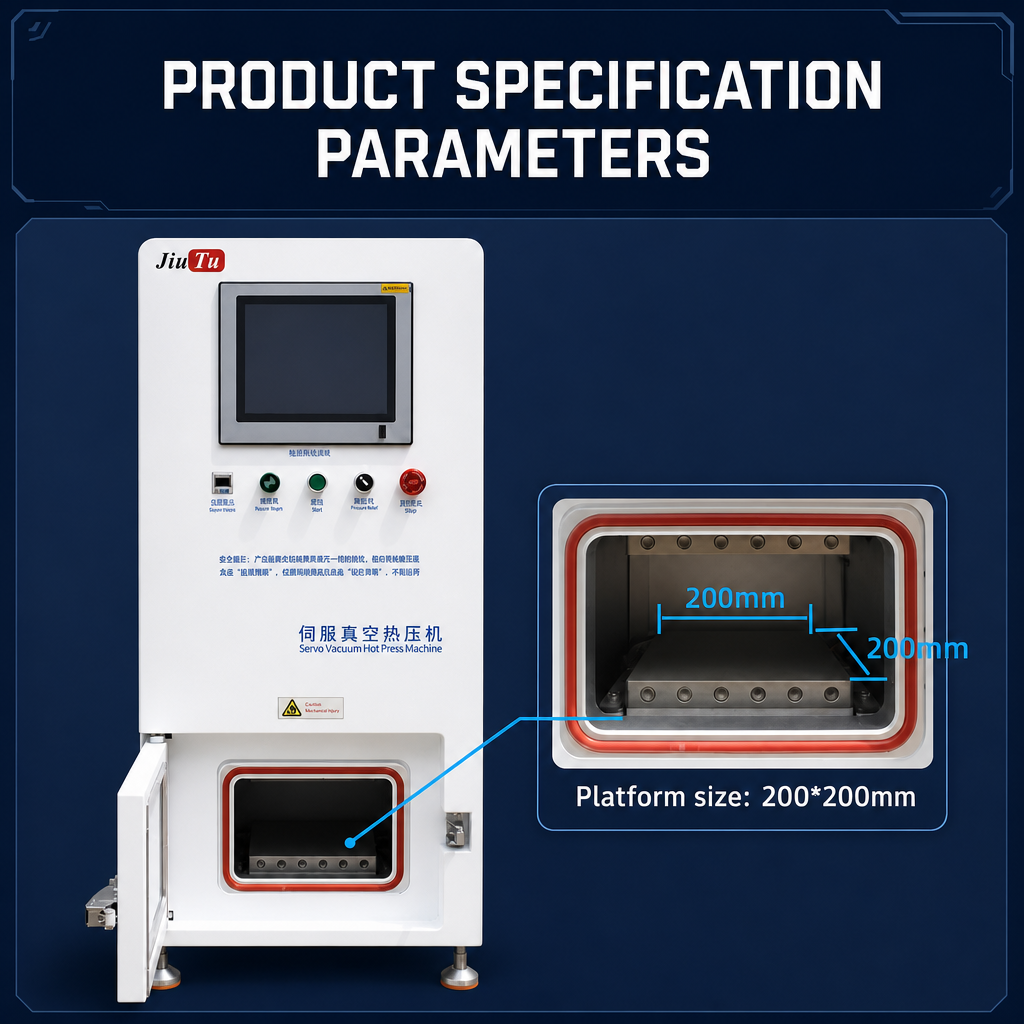
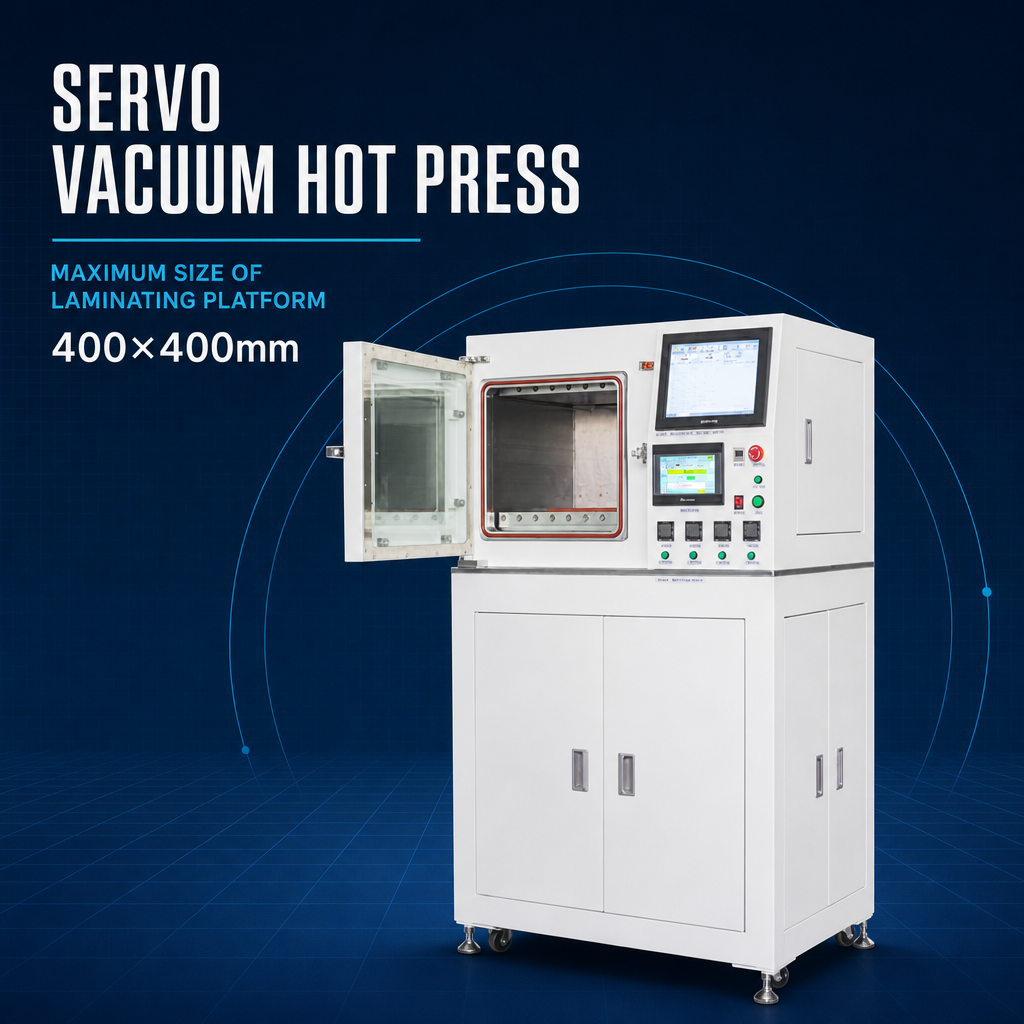
2. 200 × 200 mm Heated Platform
The upper and lower pressing platens each provide a 200 × 200 mm working area.
Buyer benefit: The platform supports samples, layered materials and compact industrial components without using the floor space of a larger press.
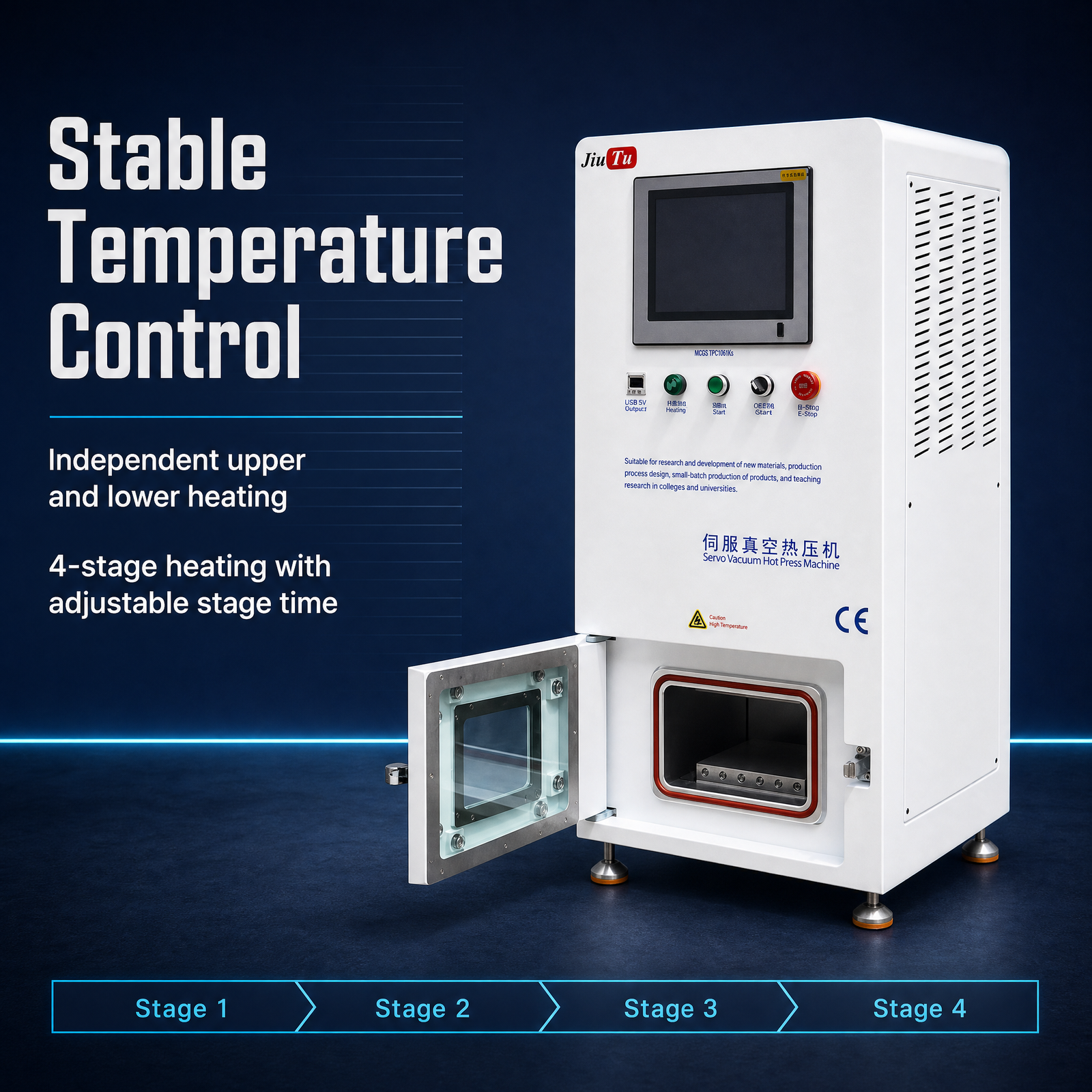
3. Independent Upper and Lower Heating
The two platens are independently temperature-controlled from ambient temperature to 200°C. Product material states temperature uniformity of ±2°C under a 100°C test condition.
Buyer benefit: Independent control supports preheating, balanced thermal transfer and material stacks with different upper and lower temperature requirements.
4. Four-Stage Process Programming
The standard interface provides four programmable stages. Each stage can define:
Upper platen temperature
Lower platen temperature
Heating time
Pressing position
Pressing force
Holding time
Vacuum state
Buyer benefit: One recipe can combine preheating, staged compression, final dwell and release conditions.
5. High-Vacuum Processing
Product material states a vacuum range of −98 to −100 kPa. The process can run with or without vacuum, and evacuation can occur before or after initial pressing movement.
Buyer benefit: Configurable vacuum sequencing supports air removal and interface control for layered materials.
Why Choose Us
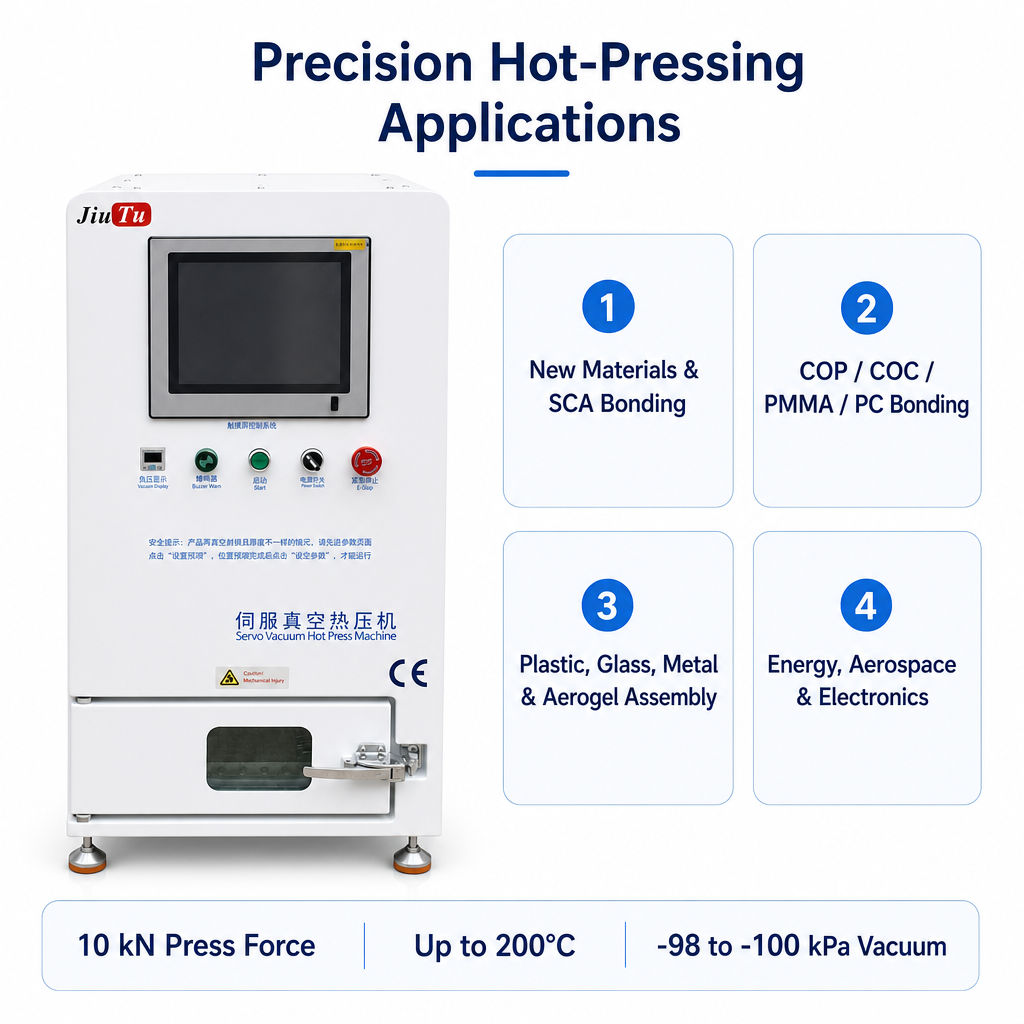
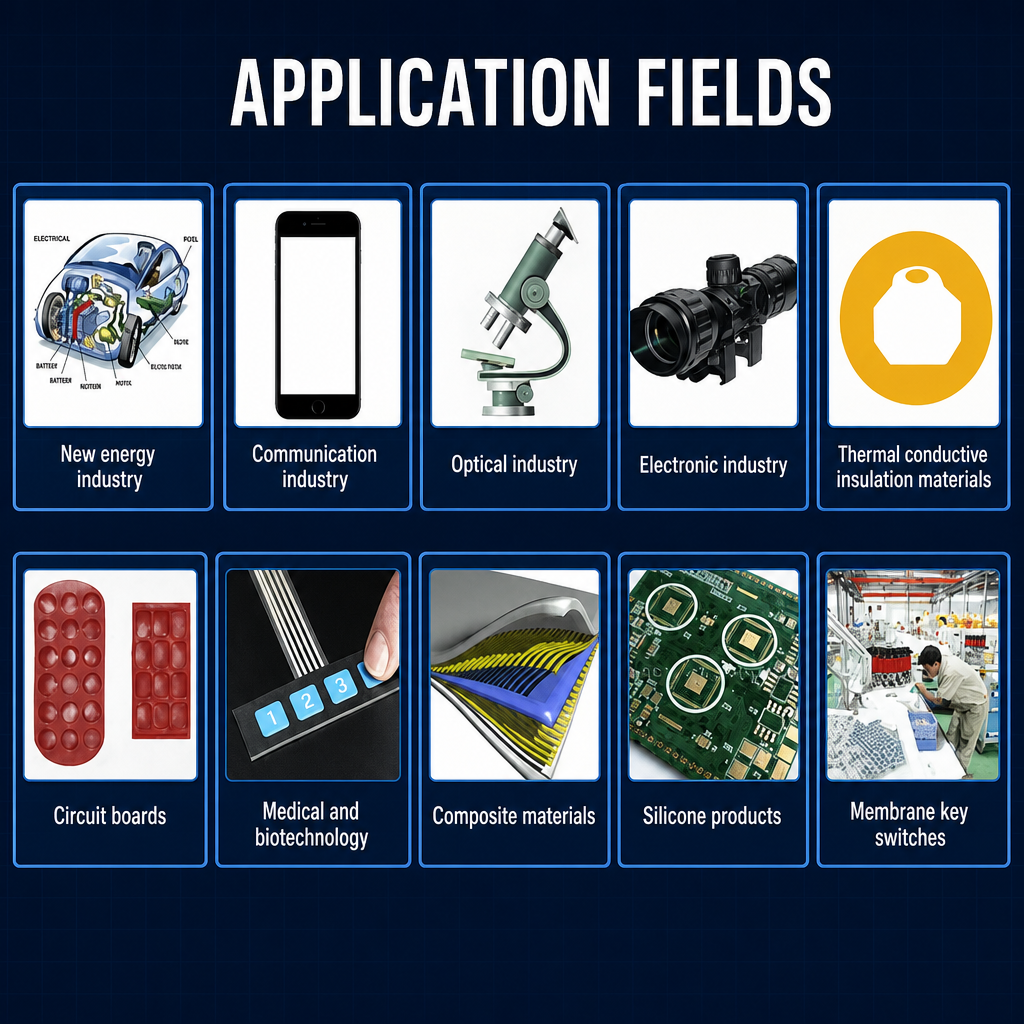
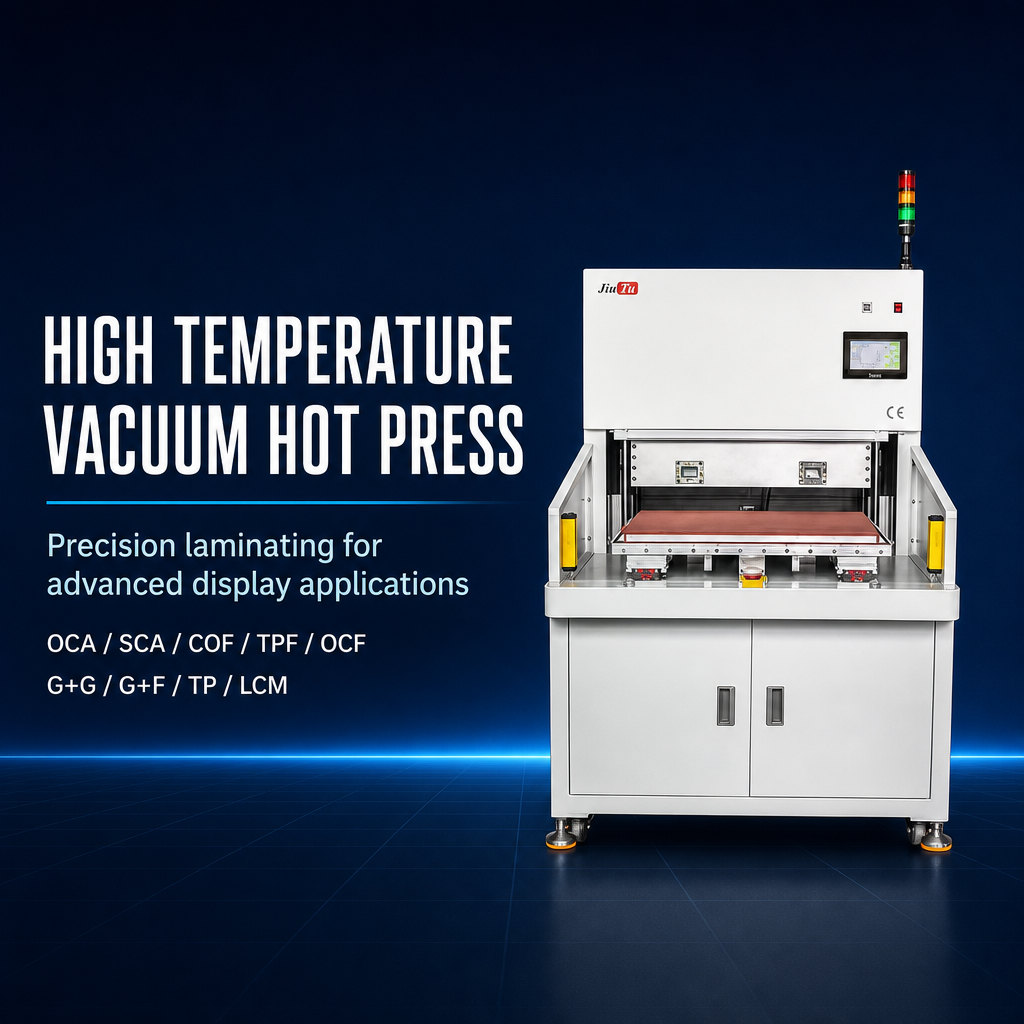
Display and Optical Processing
-LCD and LCM material stacks
-Touch-panel components
-SCA and OCA bonding structures
-Optical polymer lamination
-Display functional-layer pressing
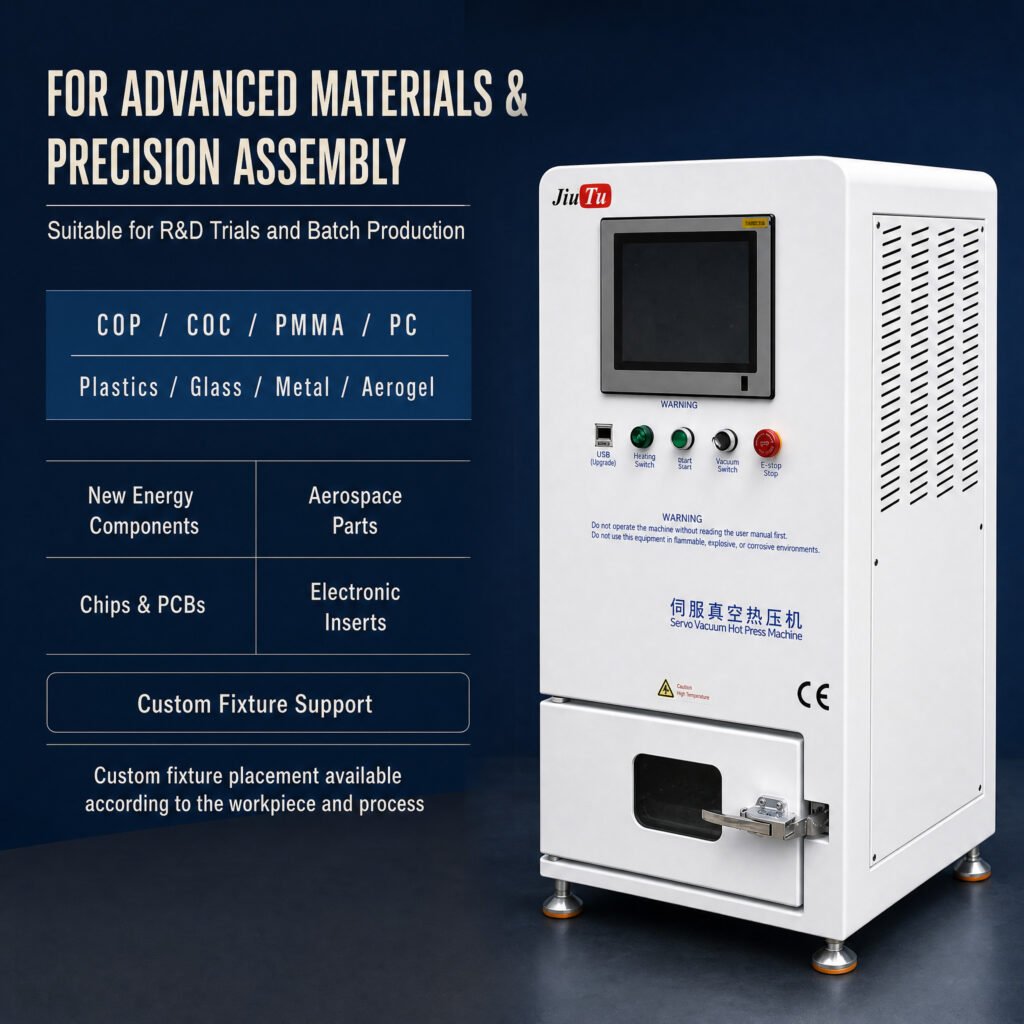
Polymer and New Materials
-COP materials
-COC materials
-PMMA components
-PC components
-Composite films
-Fiberboard laminates
-Aerogel PET structures
-Thermal conductive materials
-Insulation materials
Electronic Components
-Circuit boards
-Chips and electronic assemblies
-Membrane key switches
-Silicone components
-Precision electronic inserts
Laboratory and Specialized Processing
-Microfluidic device bonding
-Material-development trials
-Precision plastic pressing
-Glass-component bonding
-Metal-part press fitting
-New-energy components
-Optical assemblies
Product Documents
Servo High Temperature Laminator user manual 200x200
Key Features
Product Details
FAQ
Q1. What is the working platform size?
Q2. How is this compact version different from the larger configuration?
Q3. What temperature can the platens reach?
Q4. What is the maximum pressing force?
Q5. Does the machine require compressed air?
Q6. What vacuum level is available?
Q7. Can the machine run without vacuum?
Q8. How many process stages are available?
Q9. Does it control both pressure and displacement?
Q10. What is the stated positioning repeatability?
Q11. What materials can be processed?
Q12. What information is needed for a quotation?
Interested in This Product?
Tell us your project details and our team will prepare a customized quotation.
GET QUOTE NOW