
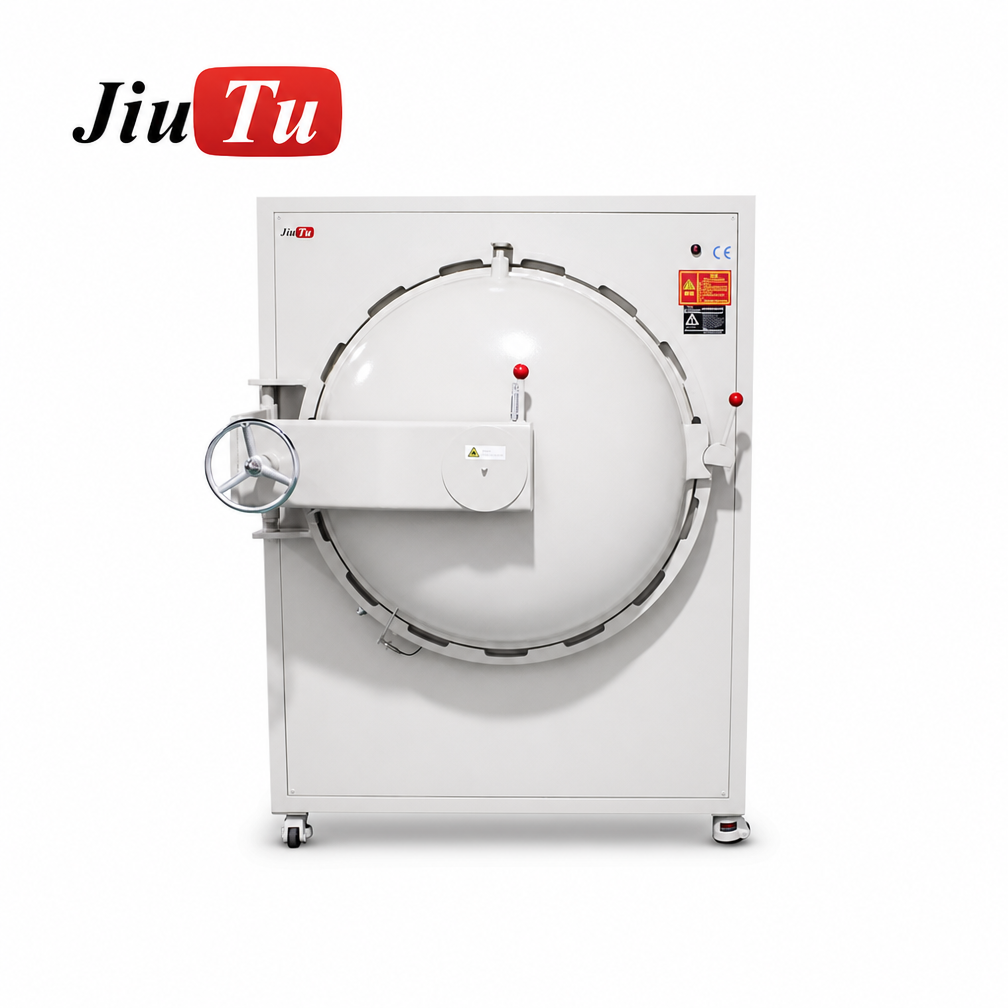
800×1200 Carbon Steel Vacuum Bubble Remover Machine
Built Around Panel Size, Not Batch Count Most debubbling autoclaves are sold on how many small panels they hold per cycle. This one is built around a different question: how large a single panel can y...
GET QUOTE NOW
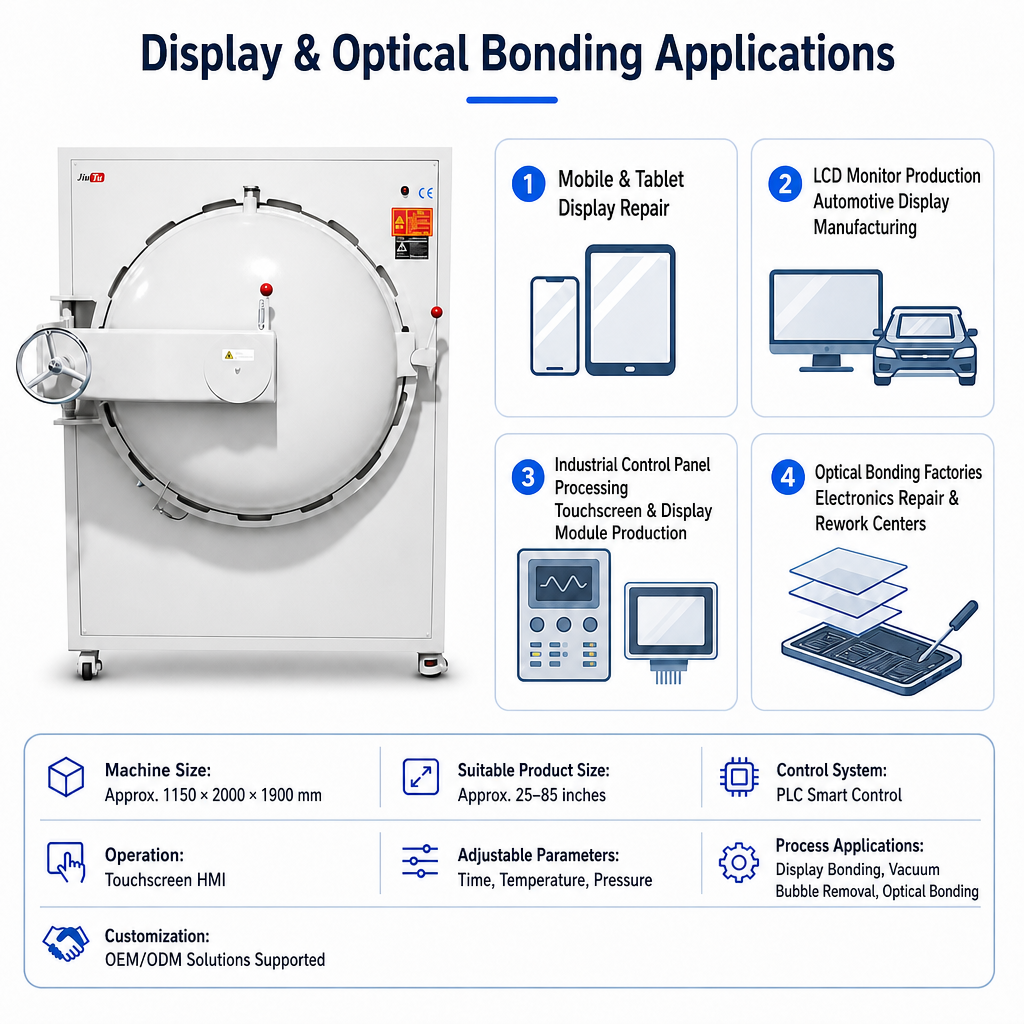
One Chamber, 25 to 85 Inch Panels
Built Around Panel Size, Not Batch Count
Most debubbling autoclaves are sold on how many small panels they hold per cycle. This one is built around a different question: how large a single panel can you fit?
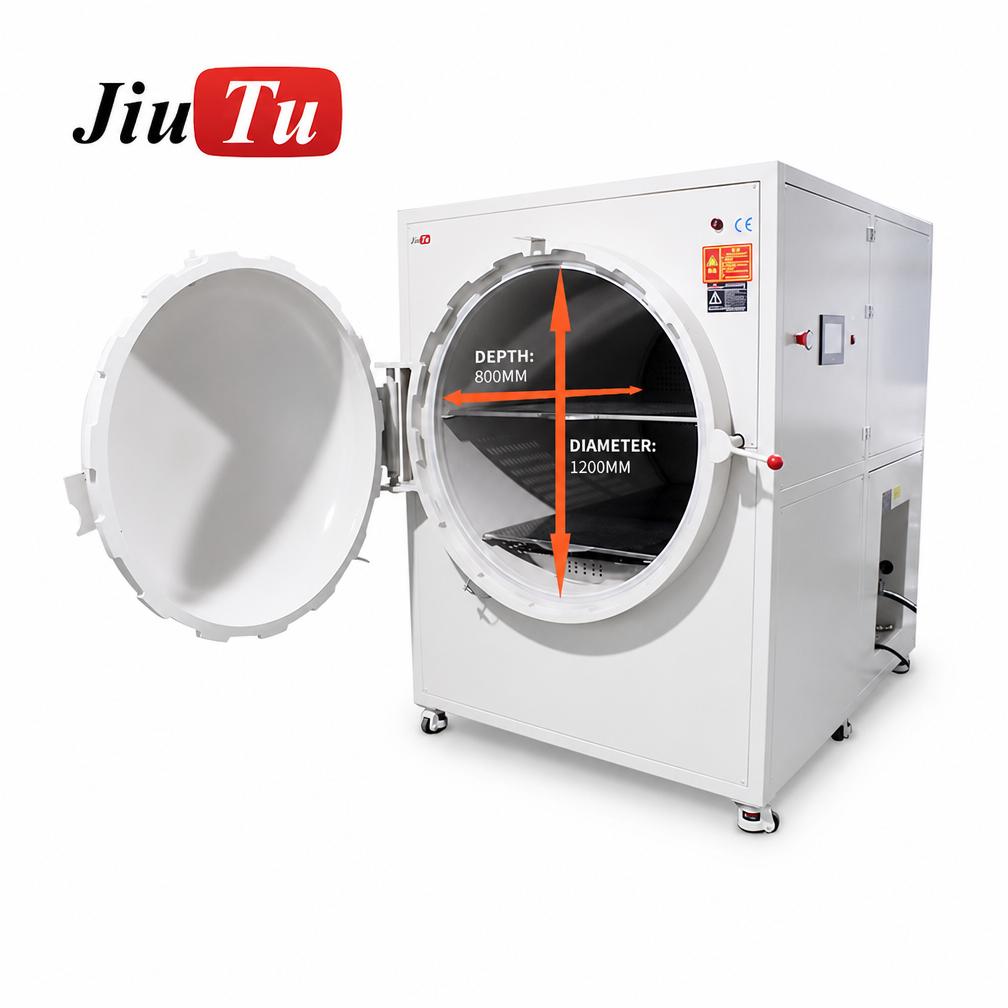
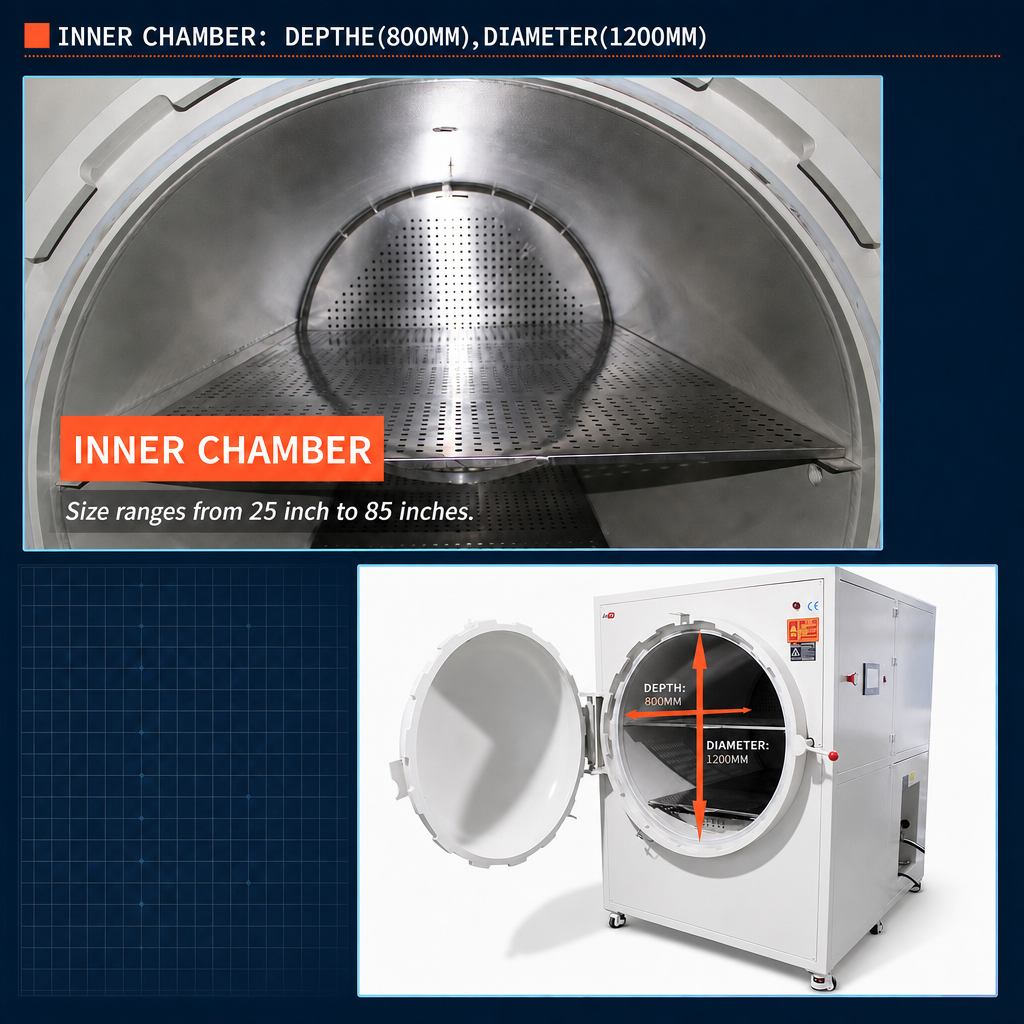
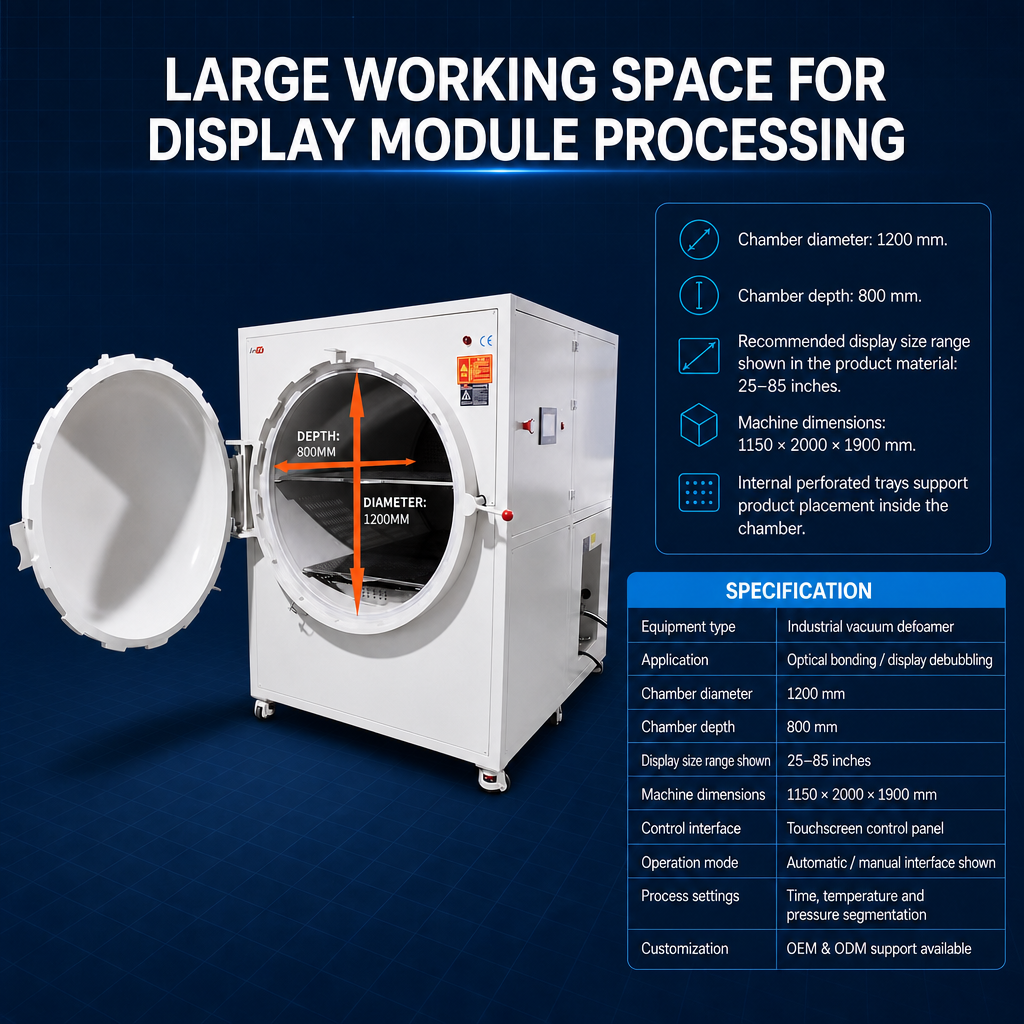
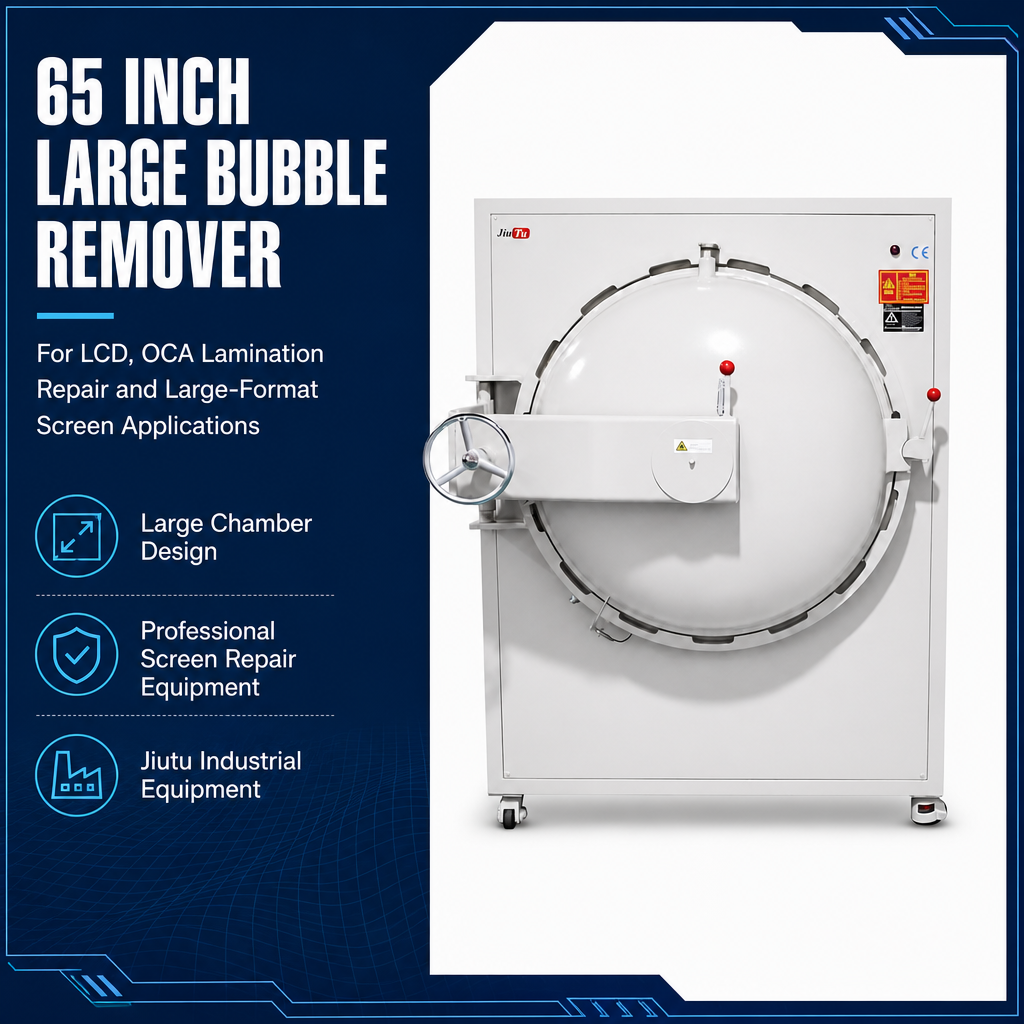
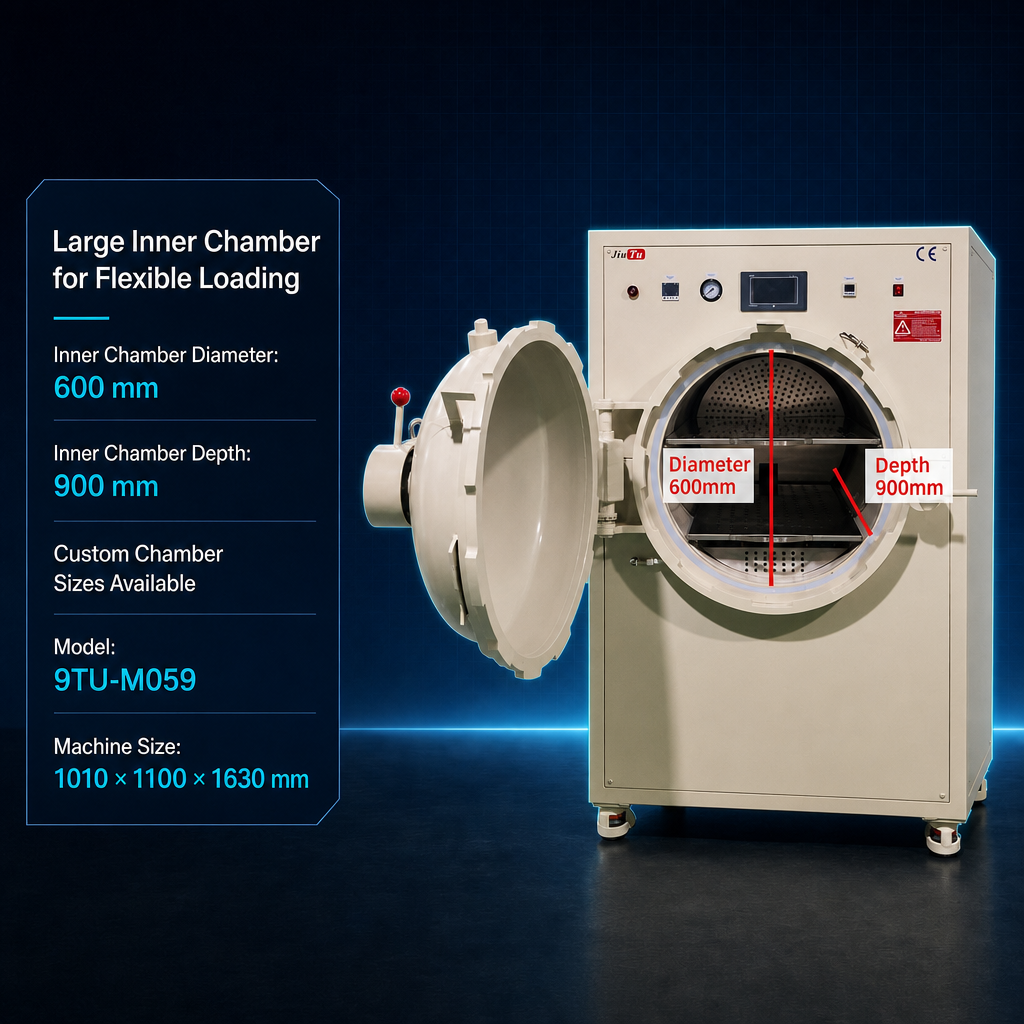
With an inner chamber of 1200mm diameter and 800mm depth, this carbon steel vacuum defoamer accepts display assemblies from 25 inch up to 85 inch — confirmed directly on the product documentation. That range covers everything from a mid-size industrial monitor to a large-format signage or TV panel, on one machine, without switching equipment.
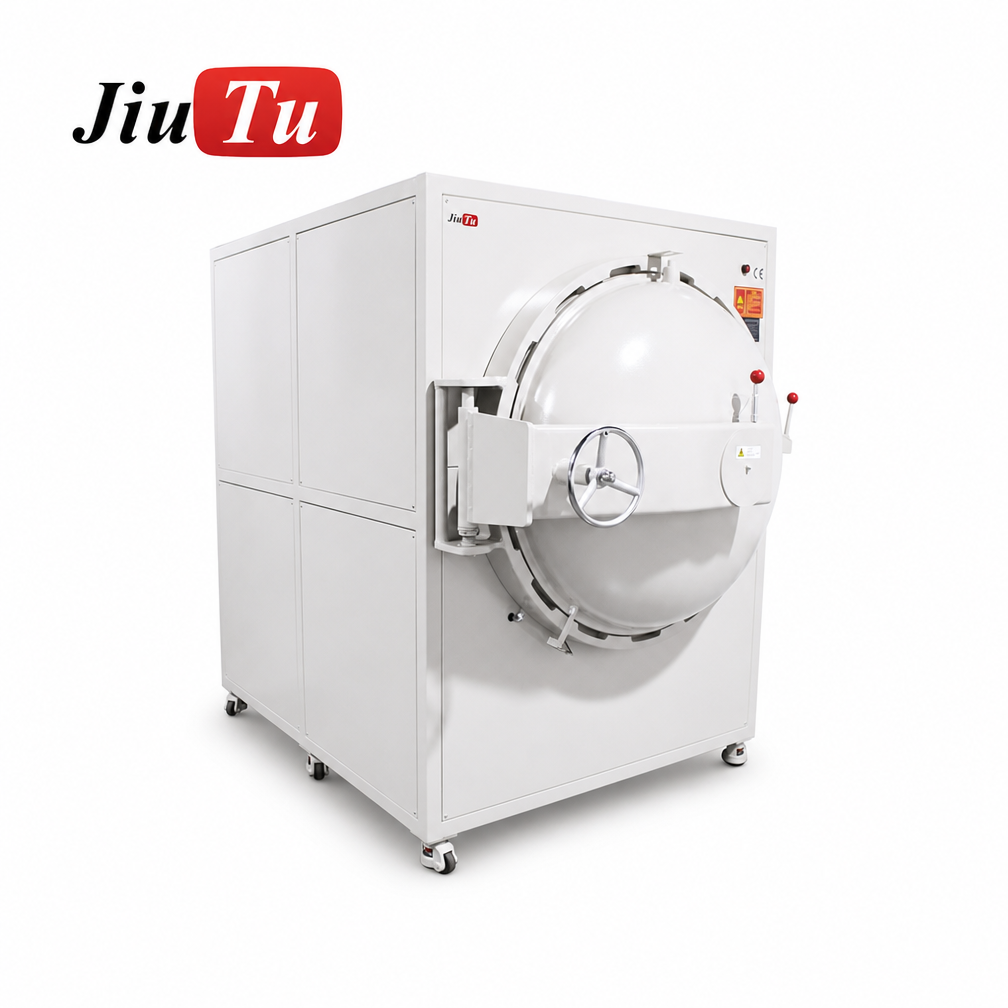
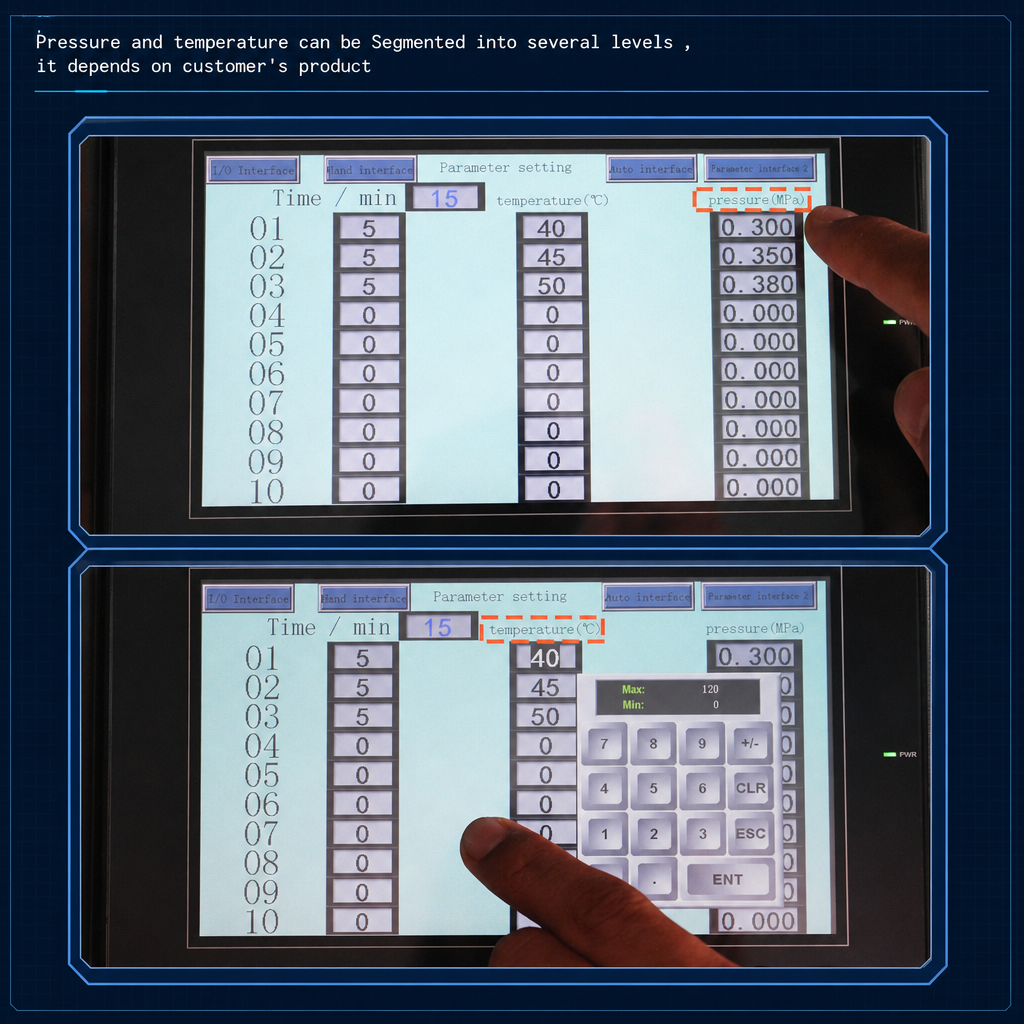
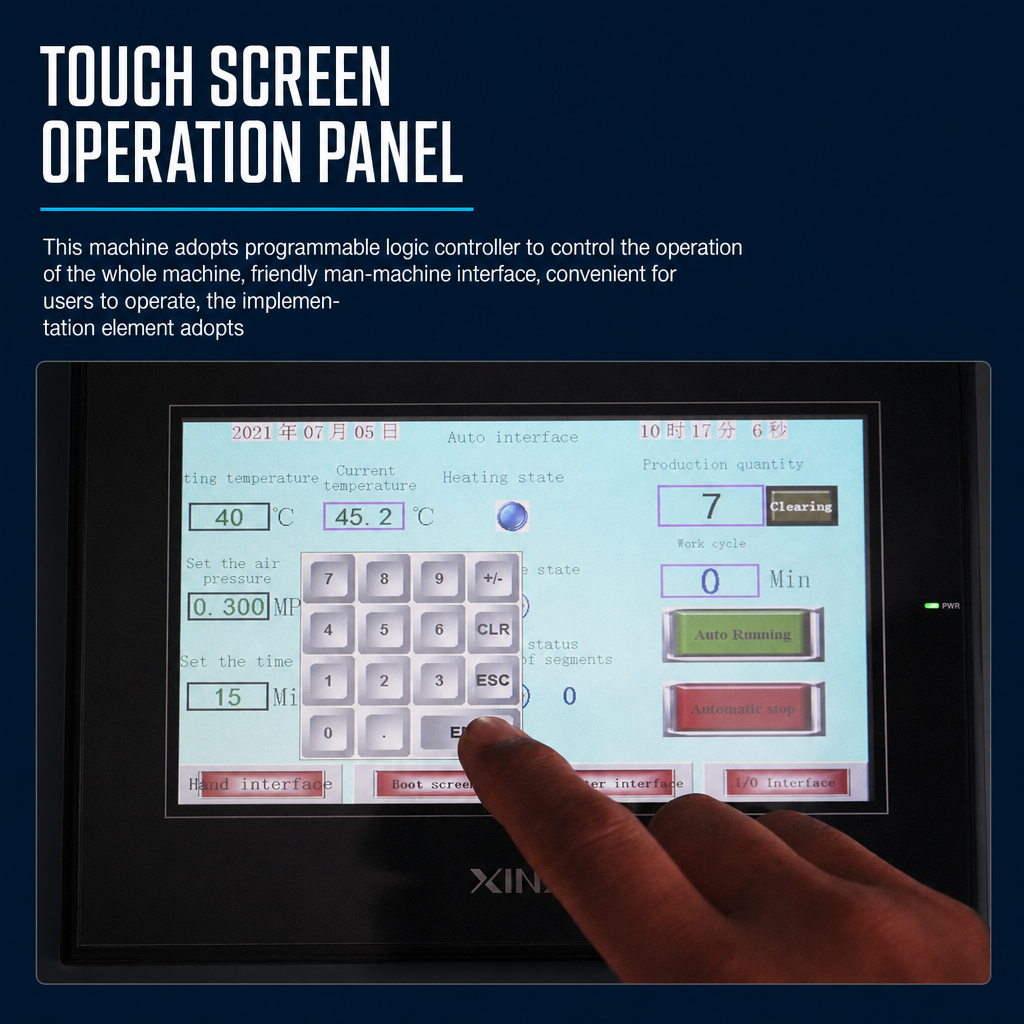
The cabinet and chamber are carbon steel. The control system is a XINJE PLC touchscreen running a ten-segment recipe where every segment carries its own time, temperature and pressure. And because this is an ODM & OEM platform, both the chamber size and the chamber material can be built to your specification.
Key Features
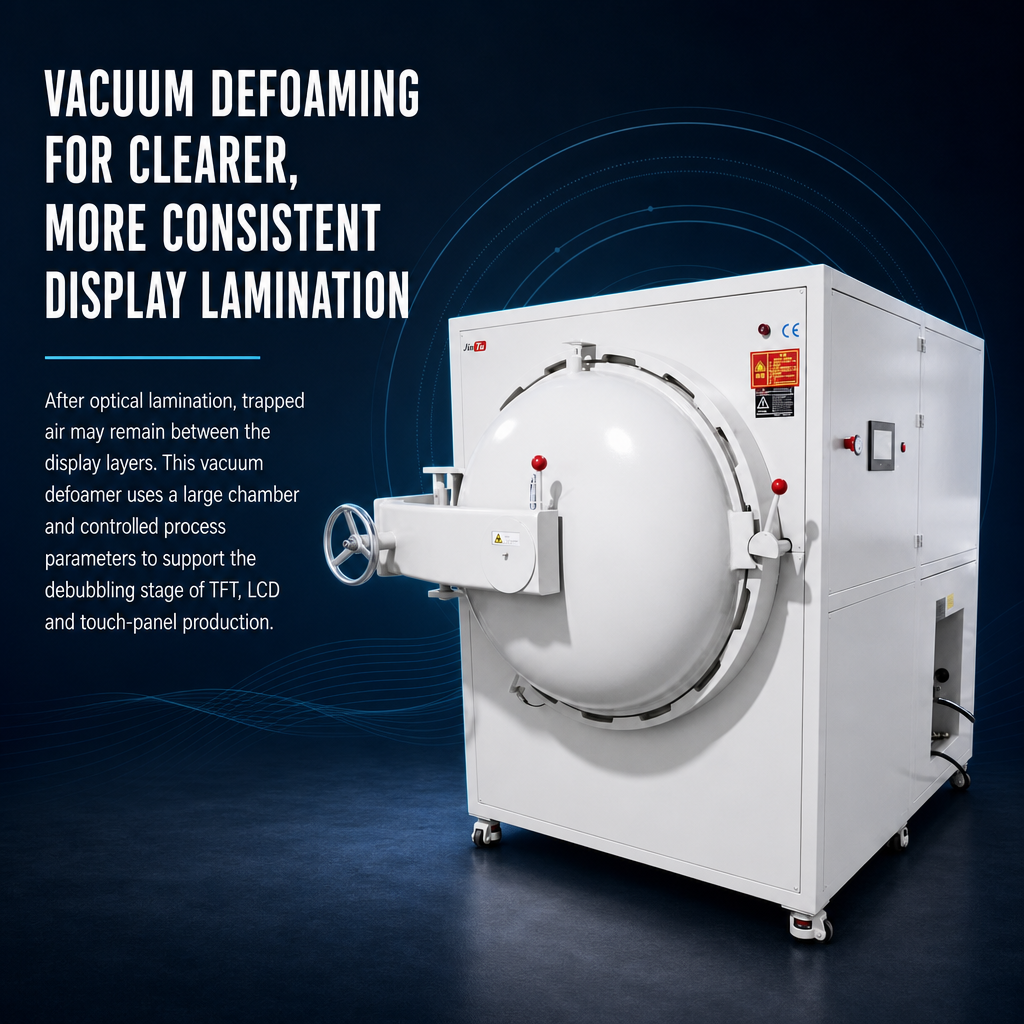
Chamber: 1200mm Diameter × 800mm Depth — Sized for 25 to 85 Inch Panels
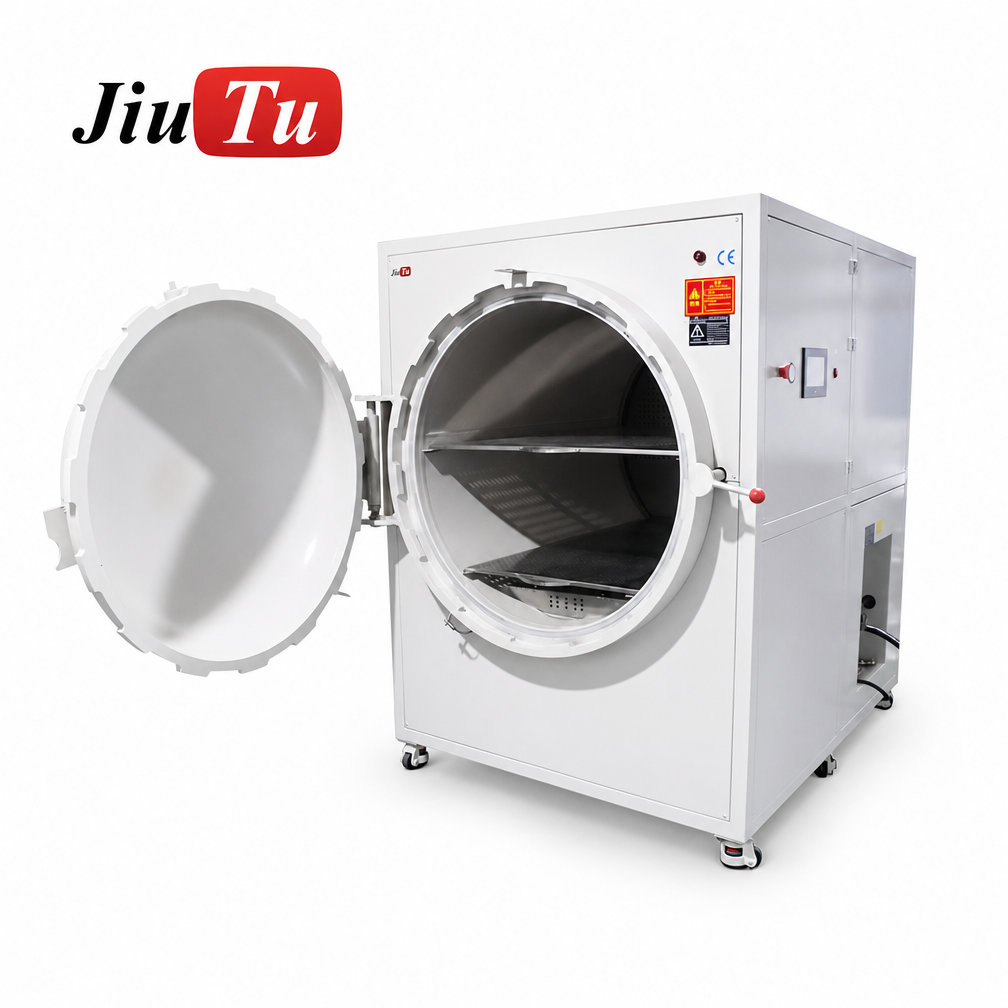
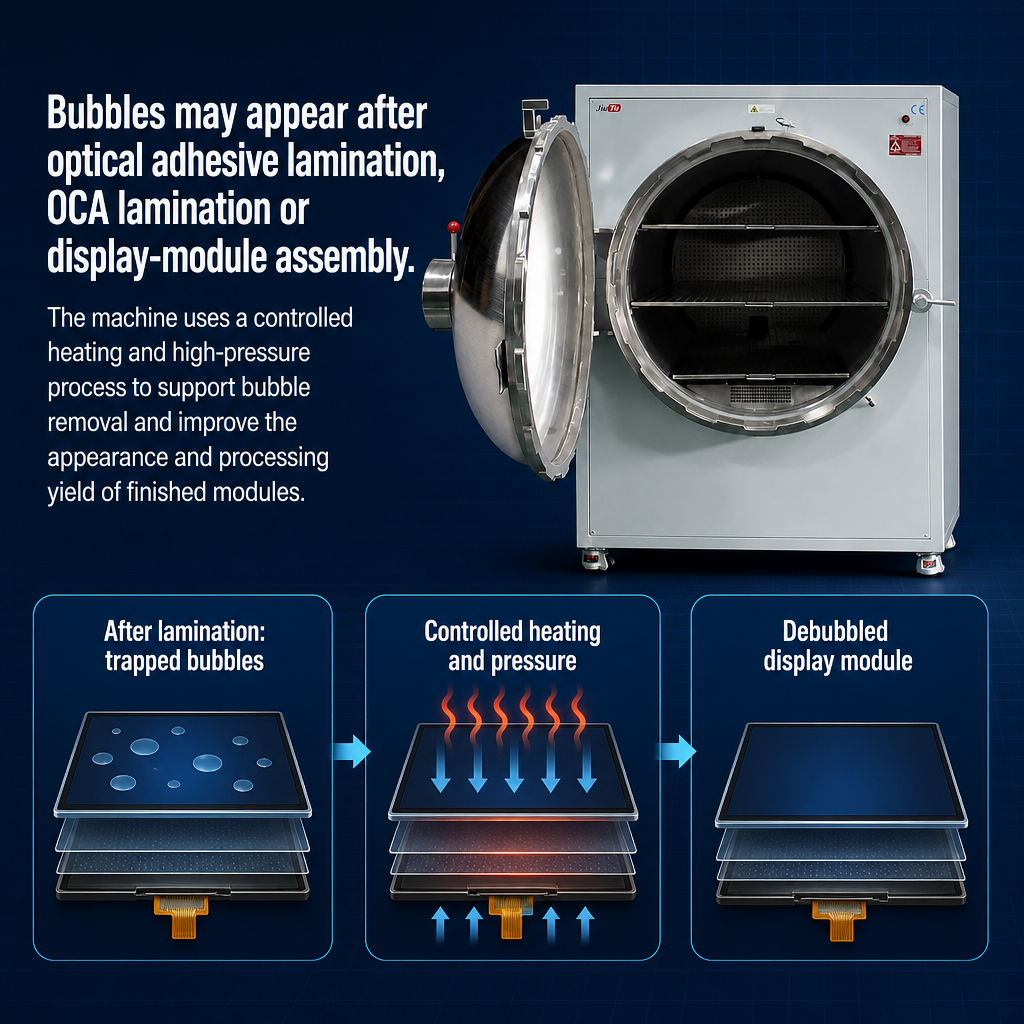
The chamber interior uses perforated steel shelves, visible in the open-door images. Perforation lets pressurised air reach the full surface of each loaded panel instead of being masked by a solid tray plate — which is what makes pressure uniform across a wide panel rather than only at its edges.
The wide-diameter geometry is the point here. A 1200mm bore gives you clearance for large single panels laid flat on a shelf. If your product mix is dominated by big-format displays rather than high-count small parts, this chamber shape fits the work better than a narrow deep cylinder.
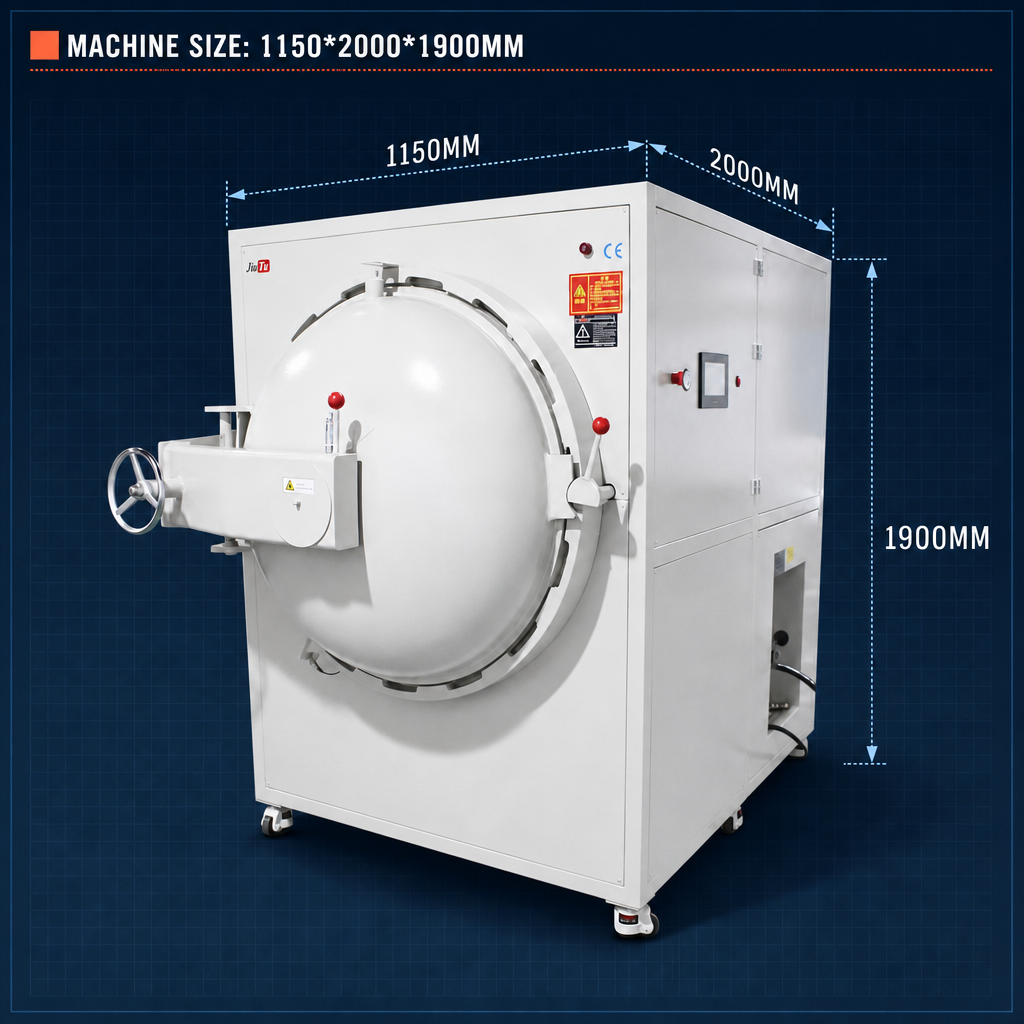
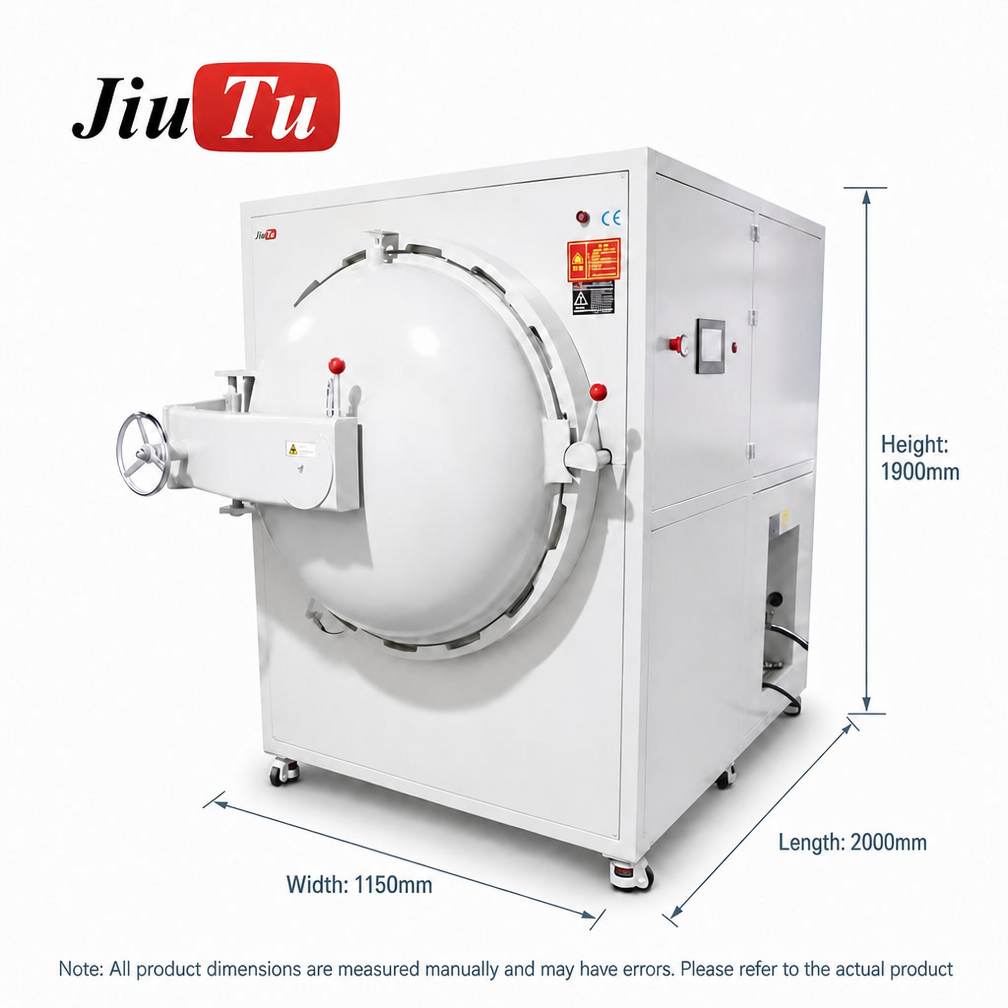
Note: All product dimensions are measured manually and may have errors. Please refer to the actual product.
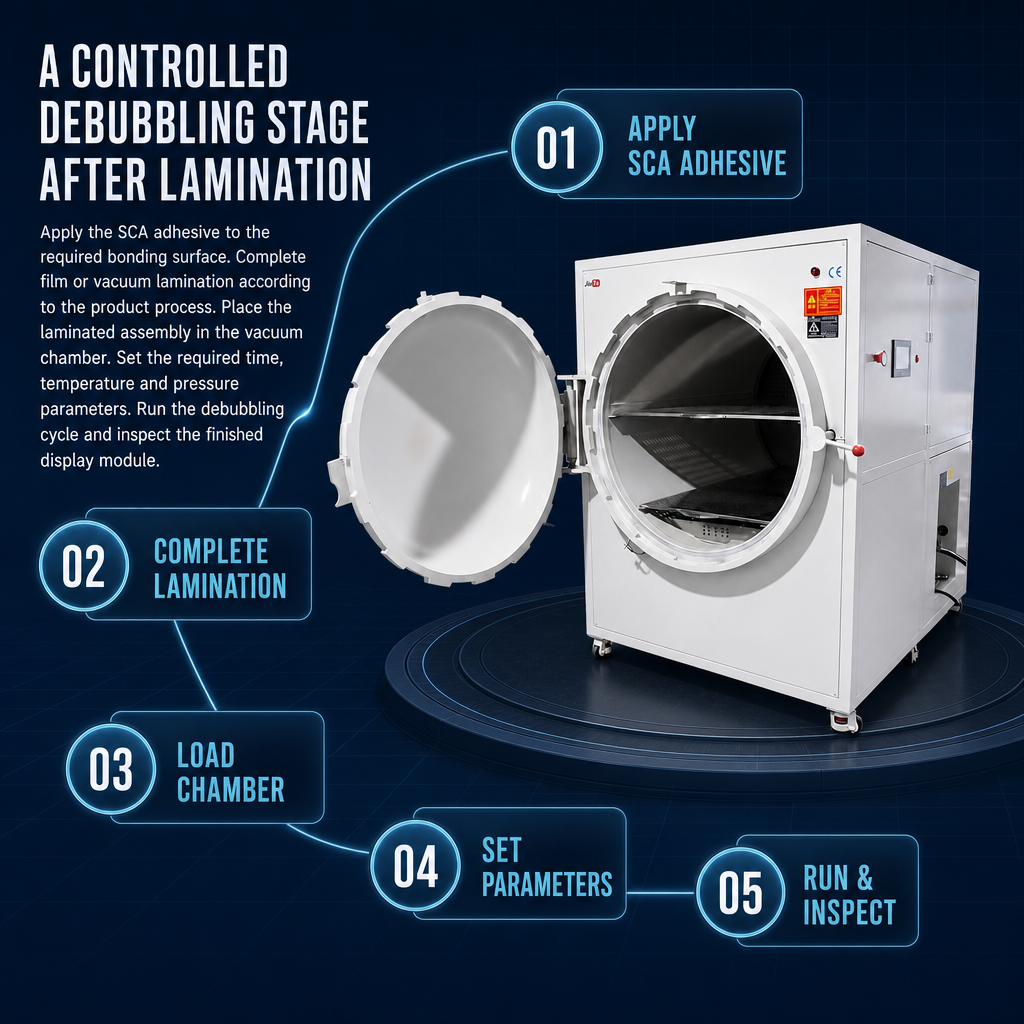
Ten-Segment Recipe Control — With Real Values You Can See
The parameter screen on this machine is photographed in the product documentation, so these are not claimed capabilities — they are visible settings.
Confirmed statement on the machine documentation:
“Pressure and temperature can be segmented into several levels, it depends on customer’s product.”
The Process This Machine Completes
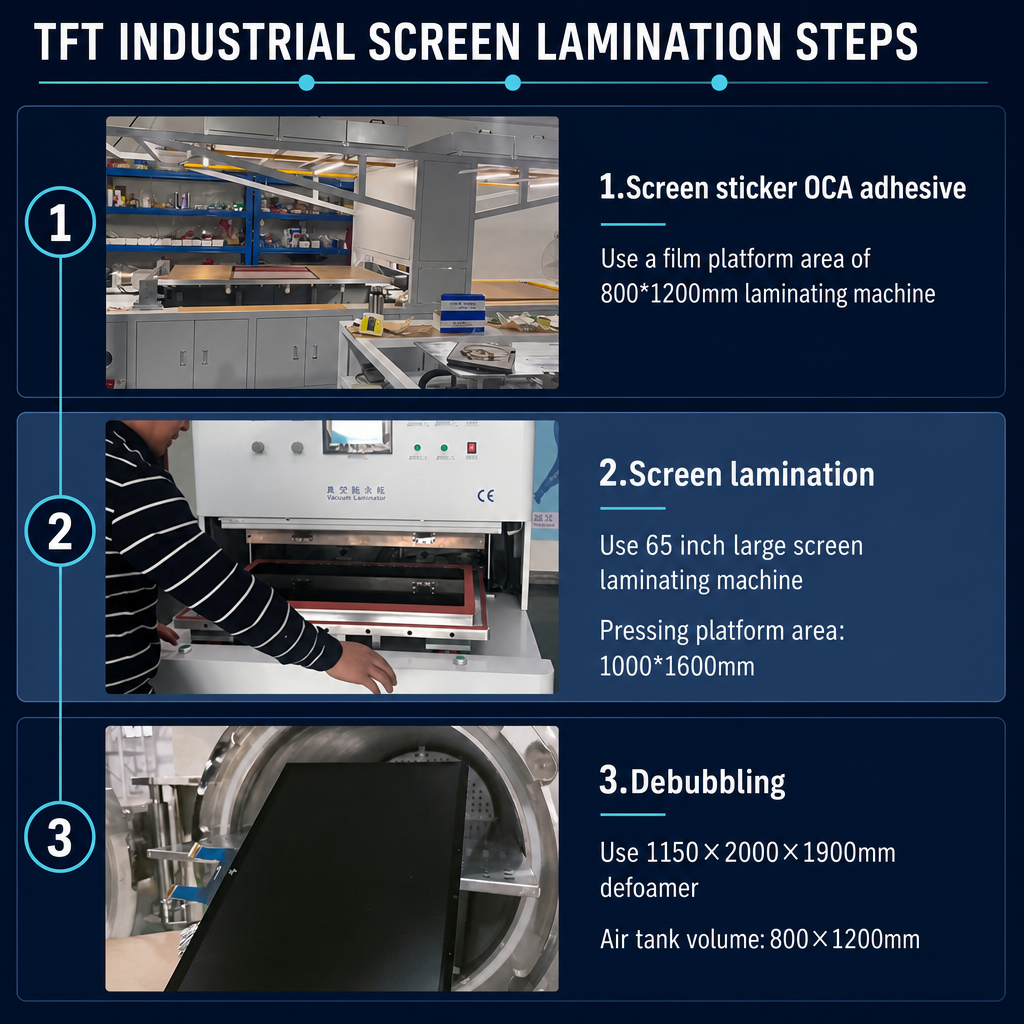
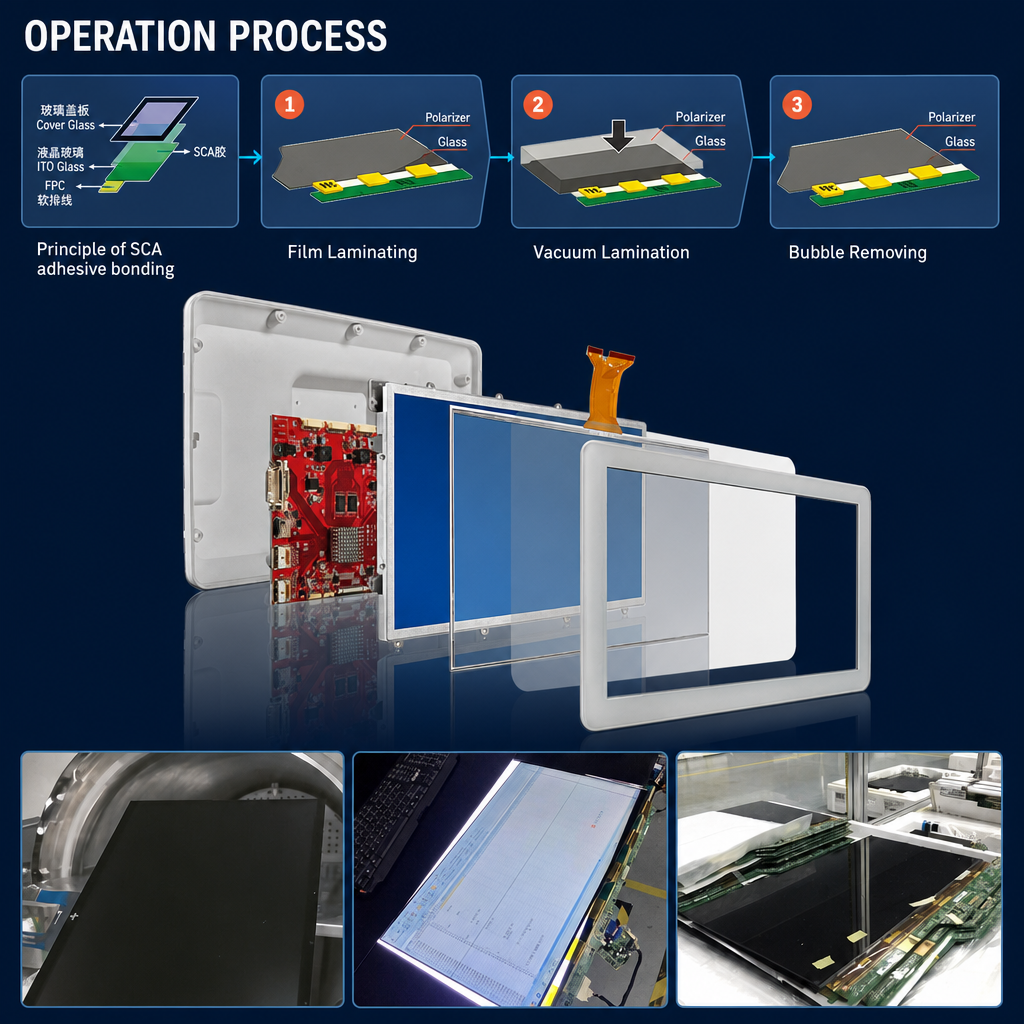
The product documentation includes the full bonding sequence, so the machine’s position in your line is explicit.
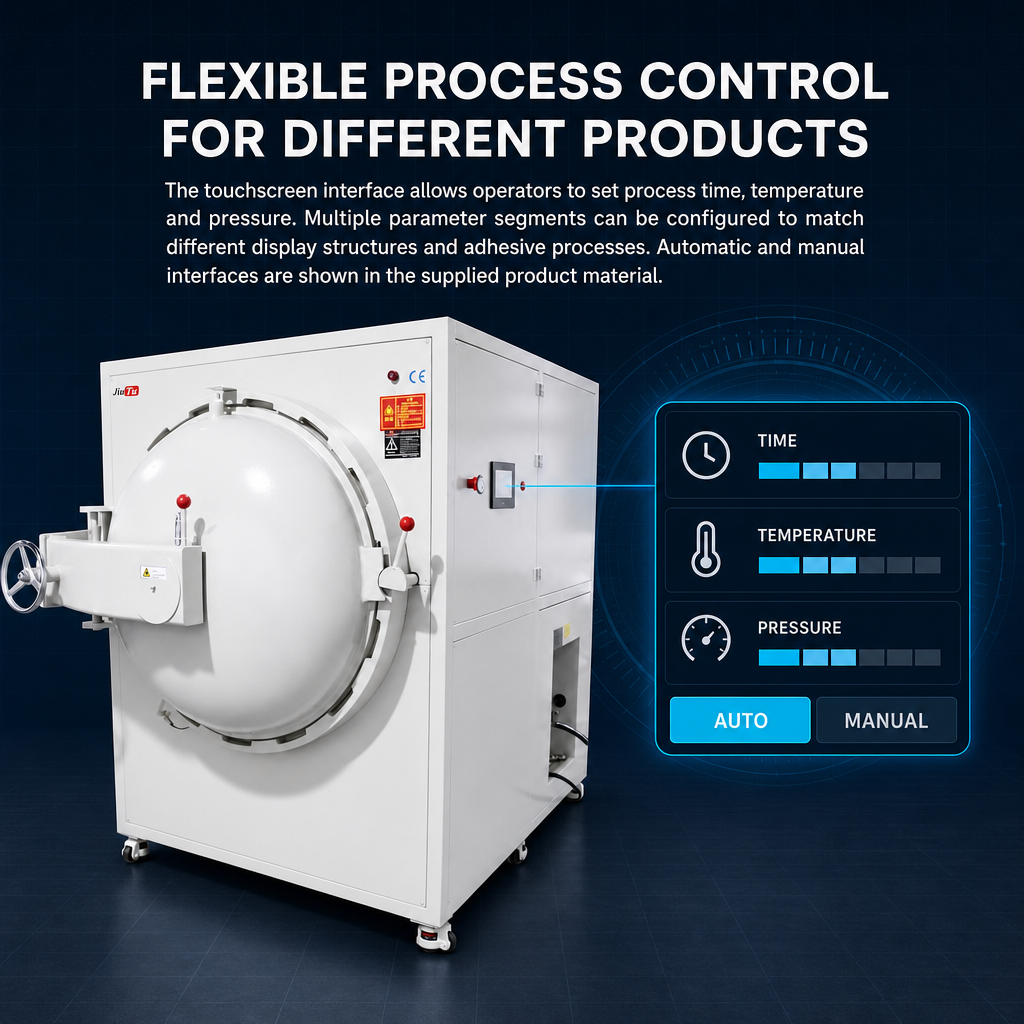
SCA adhesive bonding structure: Cover Glass → SCA adhesive → ITO Glass → FPC flex cable
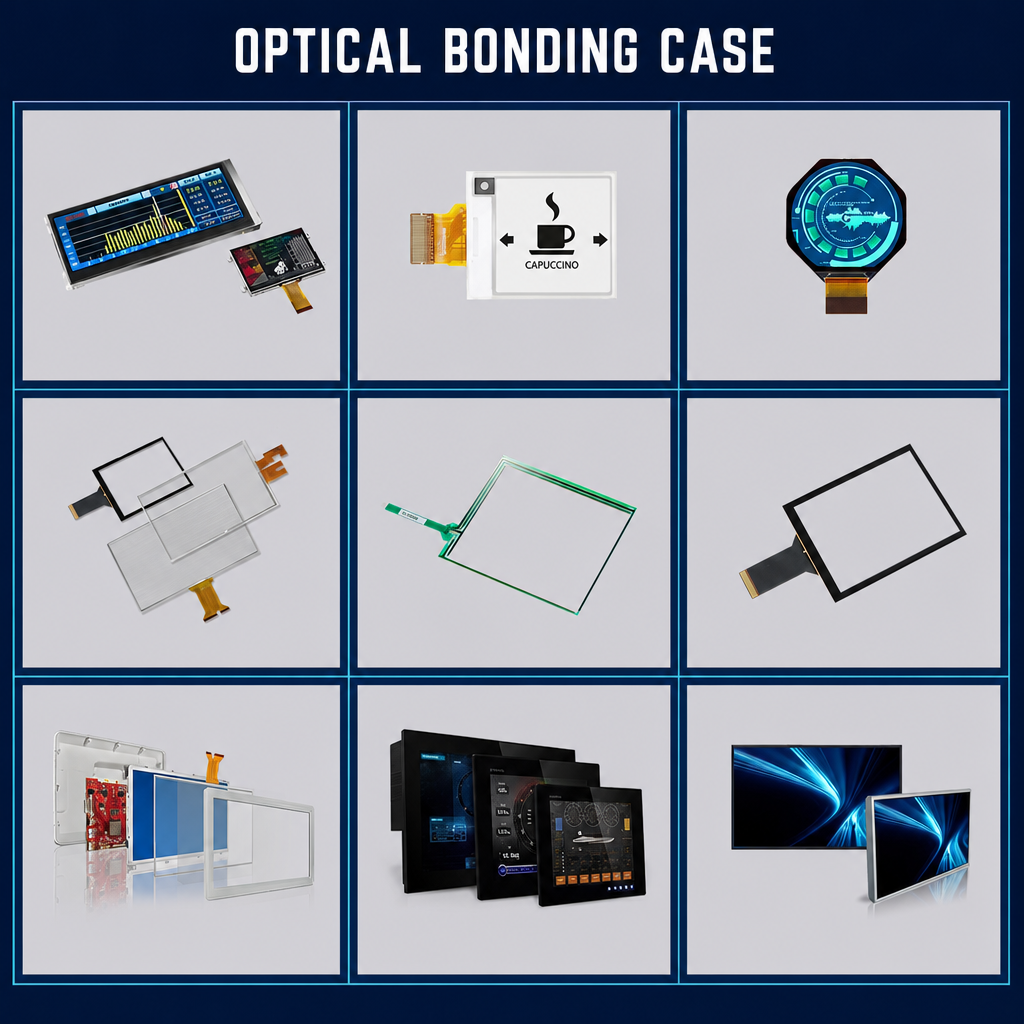
Optical bonding cases :
Bar-type / stretched LCD strips、E-paper and e-label displays、Round and polygonal display modules、Resistive touch screens、Capacitive touch film sensors、Small-format touch panels、Full display module assemblies with driver board、Multi-size industrial panel sets、Large-format TV and signage panels。
Confirmed product categories: TFT industrial screens, LCD modules, touch panels, and other optical-bonded display products.
The custom-shape capability is worth noting. Round, octagonal and irregular-outline displays are increasingly common in automotive clusters, appliance panels and retail fixtures, and they are exactly the products a fixture-constrained machine struggles with. A pressurised chamber applies force through the gas — geometry of the part matters far less than it does in a platen press.
Operating parameters must be validated per product and per adhesive. A recipe proven on a 32 inch flat panel should not be assumed valid for an 85 inch panel or a custom-shaped part.
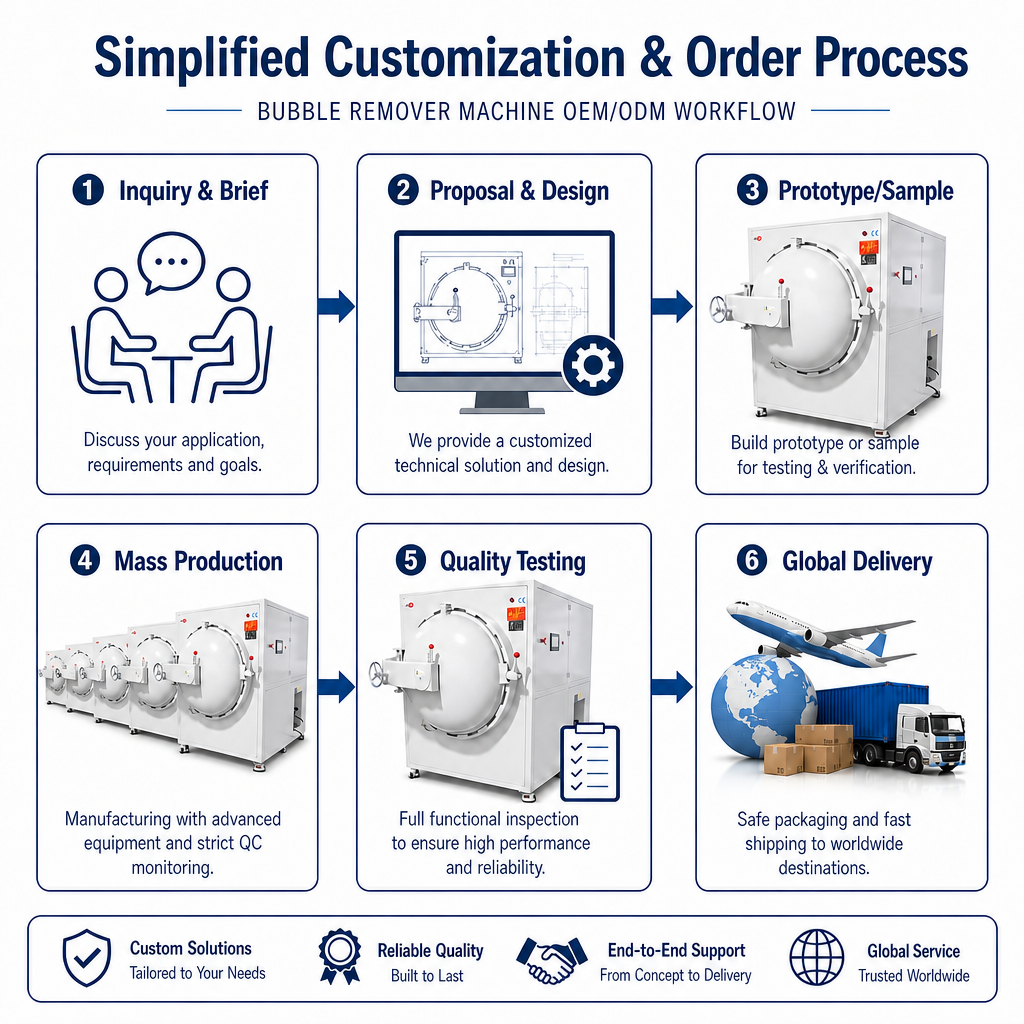
ODM & OEM — Size and Material to Specification
Confirmed statement from product documentation:
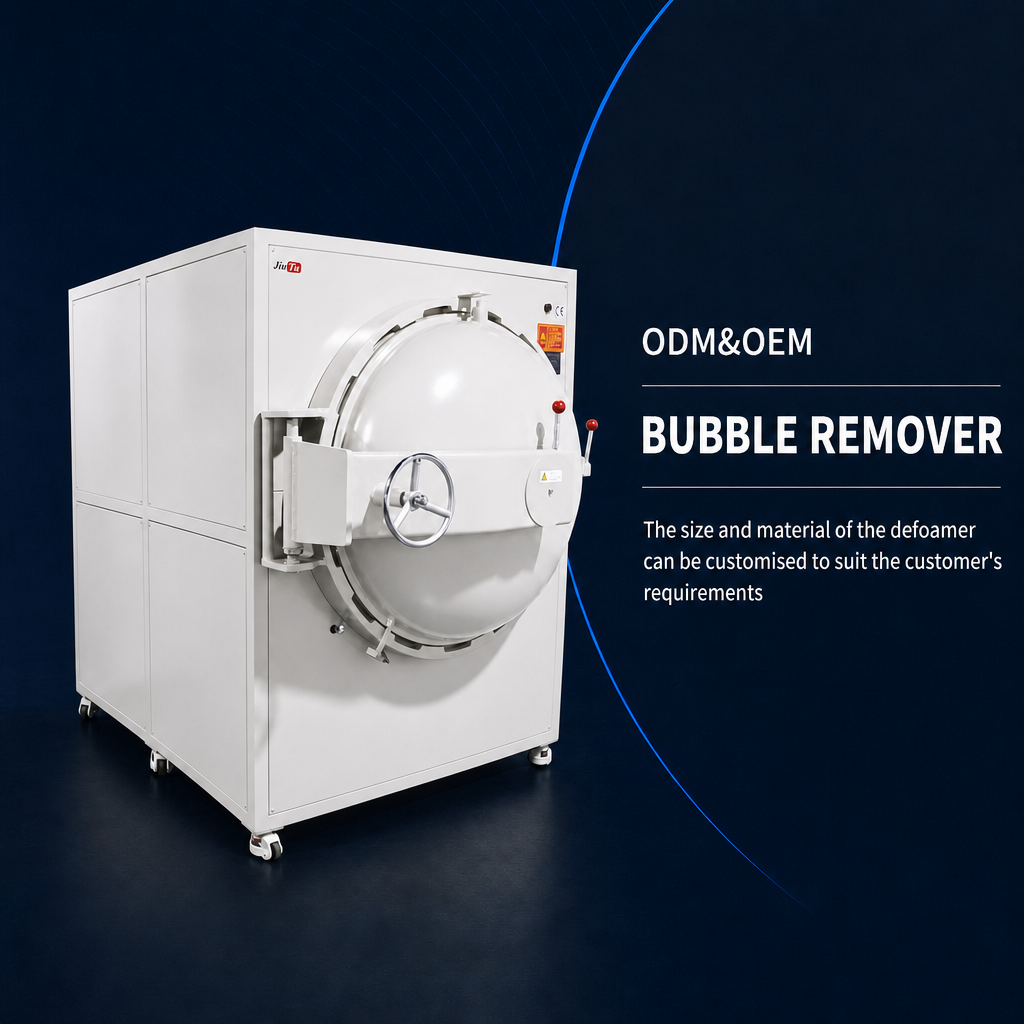
“The size and material of the defoamer can be customised to suit the customer’s requirements.”
Two variables are open, not one:
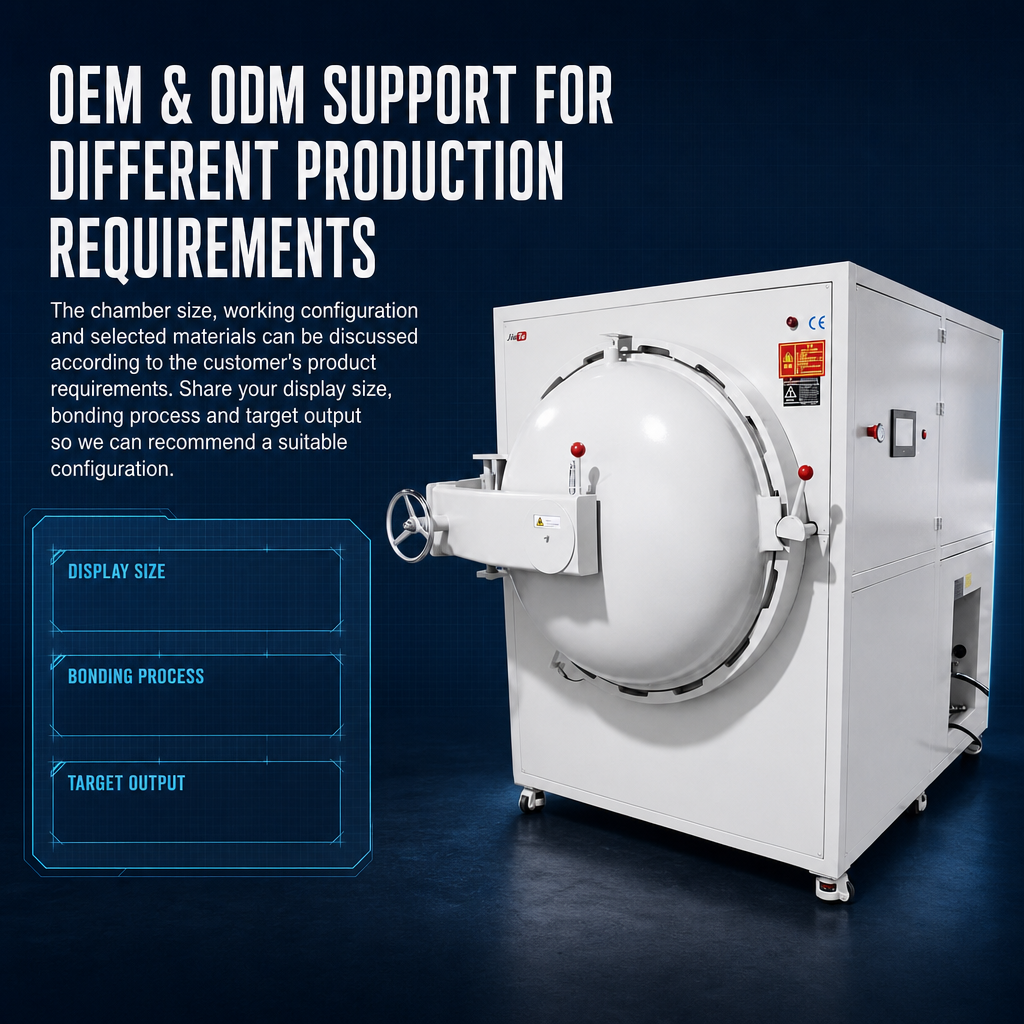
Chamber size. If your panel mix sits outside the 25–85 inch window, or your fixtures need a different bore-to-depth ratio, the chamber can be built to dimension.
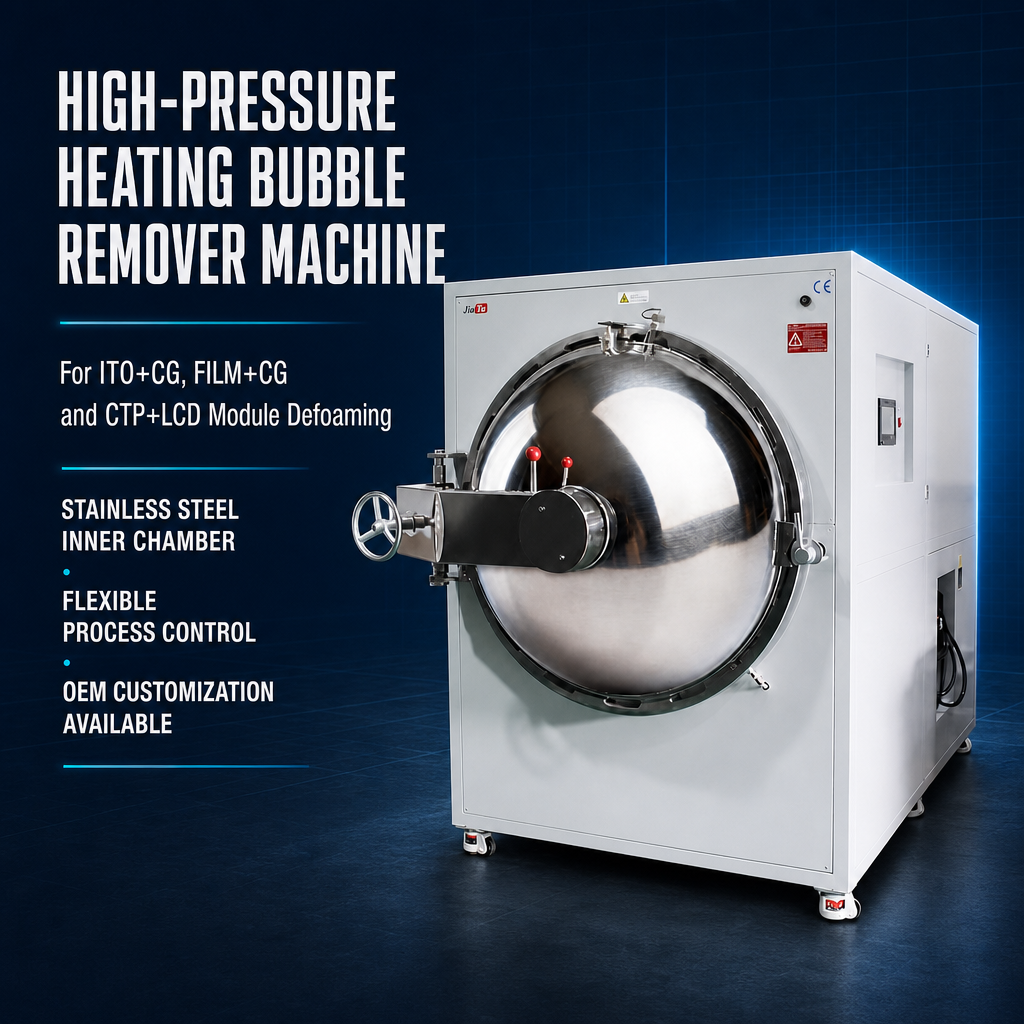
Chamber material. Carbon steel is the standard build on this model. If your process involves frequent cleaning cycles, humidity, or reactive chemistry, the same machine architecture can be specified in stainless steel instead.
This matters when you are buying for a specific product family rather than general-purpose work. Send panel dimensions, adhesive system, form factor, daily volume and voltage — JiuTu will assess the configuration.
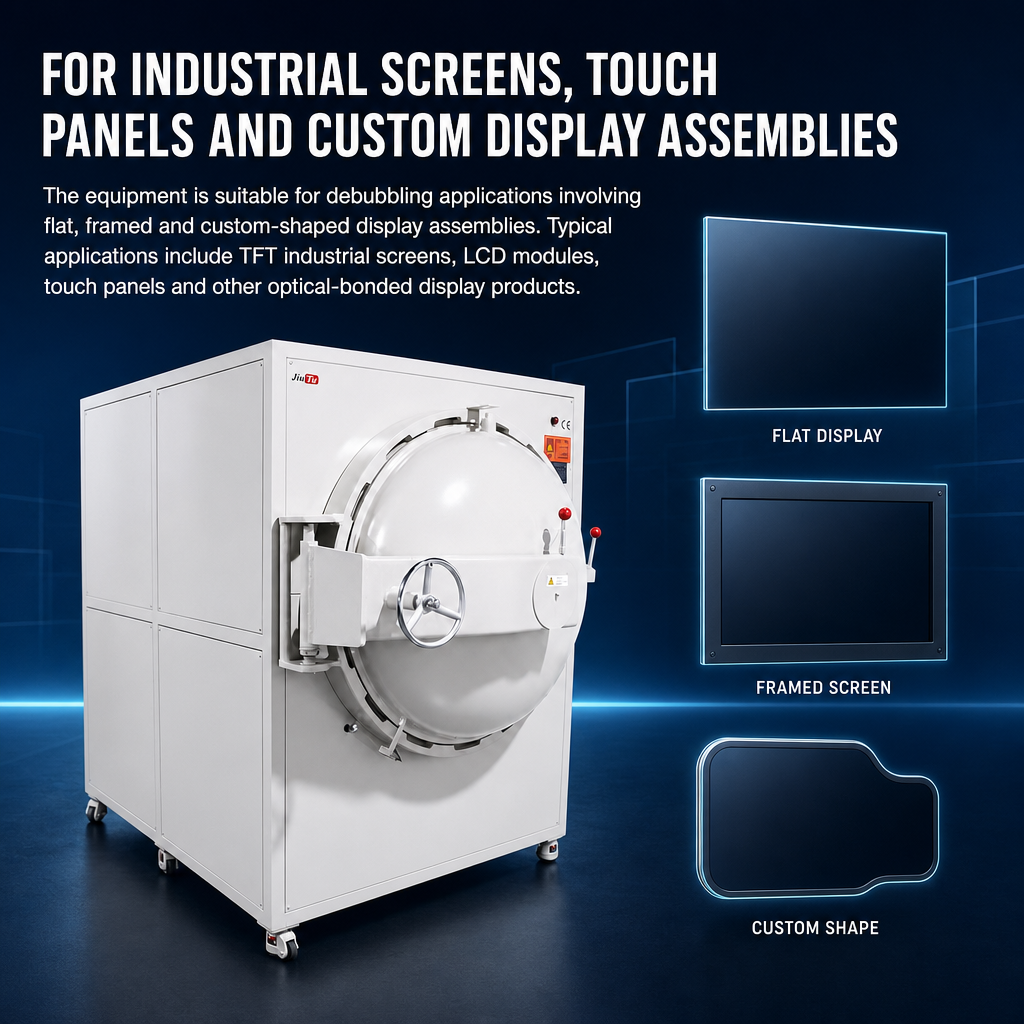
Carbon Steel Build — What to Weigh
The cabinet and chamber on this model are carbon steel with a painted finish.
In its favour: structural rigidity for a large-bore pressure vessel, and a lower cost basis than an equivalent stainless build — relevant when the chamber is this size.
To consider: carbon steel does not offer the corrosion resistance of stainless. In a dry, controlled environment running standard OCA or SCA adhesives, this is a non-issue. In a humid workshop, or where the chamber interior meets solvents and cleaning agents regularly, surface oxidation becomes a maintenance item over time.
If your environment falls into the second category, ask about the stainless specification of the same machine rather than accepting a build that will fight your conditions.
Why Choose Us

ODM & OEM — Size and Material to Specification
Confirmed statement from product documentation:
“The size and material of the defoamer can be customised to suit the customer’s requirements.”
Two variables are open, not one:
Chamber size. If your panel mix sits outside the 25–85 inch window, or your fixtures need a different bore-to-depth ratio, the chamber can be built to dimension.
Chamber material. Carbon steel is the standard build on this model. If your process involves frequent cleaning cycles, humidity, or reactive chemistry, the same machine architecture can be specified in stainless steel instead.
This matters when you are buying for a specific product family rather than general-purpose work. Send panel dimensions, adhesive system, form factor, daily volume and voltage — JiuTu will assess the configuration.
Carbon Steel Build — What to Weigh
The cabinet and chamber on this model are carbon steel with a painted finish.
In its favour: structural rigidity for a large-bore pressure vessel, and a lower cost basis than an equivalent stainless build — relevant when the chamber is this size.
To consider: carbon steel does not offer the corrosion resistance of stainless. In a dry, controlled environment running standard OCA or SCA adhesives, this is a non-issue. In a humid workshop, or where the chamber interior meets solvents and cleaning agents regularly, surface oxidation becomes a maintenance item over time.
If your environment falls into the second category, ask about the stainless specification of the same machine rather than accepting a build that will fight your conditions.
Key Features
Product Details
FAQ
Q1. What panel sizes does this machine handle?
Q2. Why is the chamber wide rather than deep?
Q3. What does ODM & OEM actually cover on this machine?
Q4. Can it handle non-rectangular or framed displays?
Q5. What is the difference between this and the stainless steel 800×1200?
Interested in This Product?
Tell us your project details and our team will prepare a customized quotation.
GET QUOTE NOW