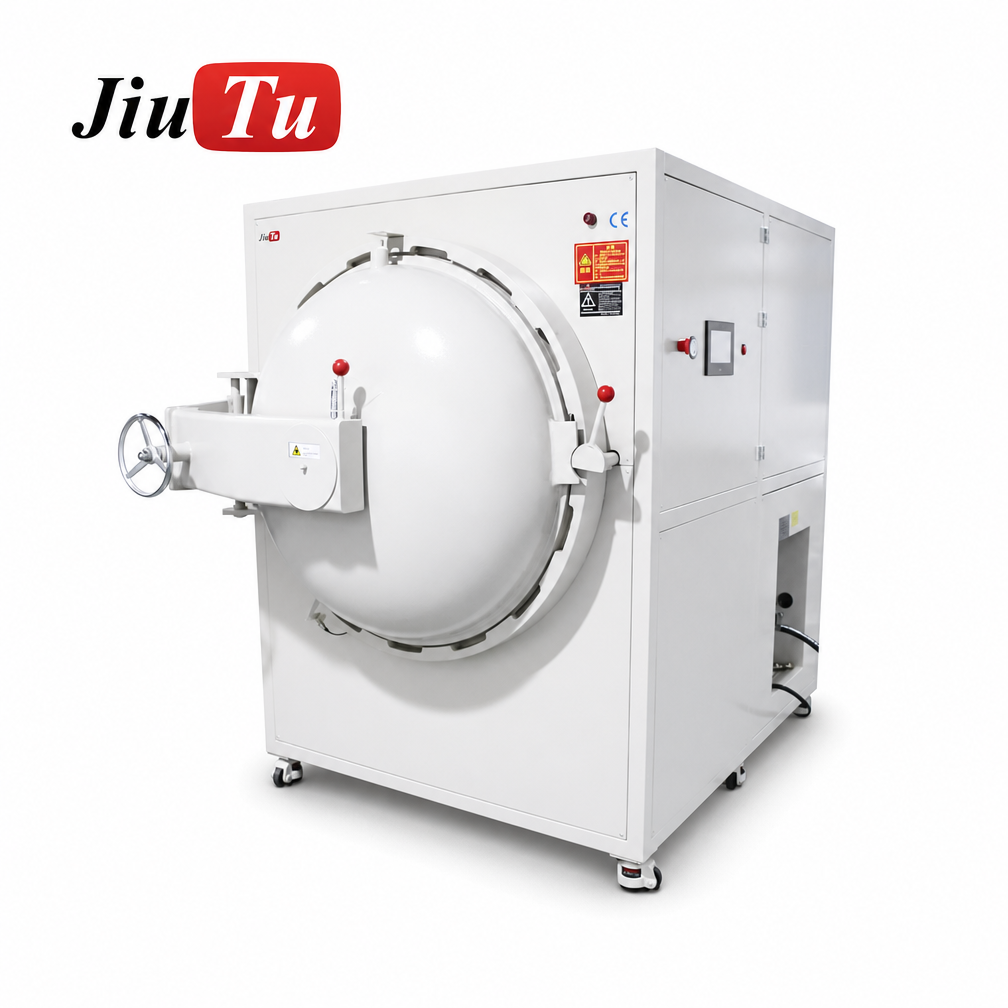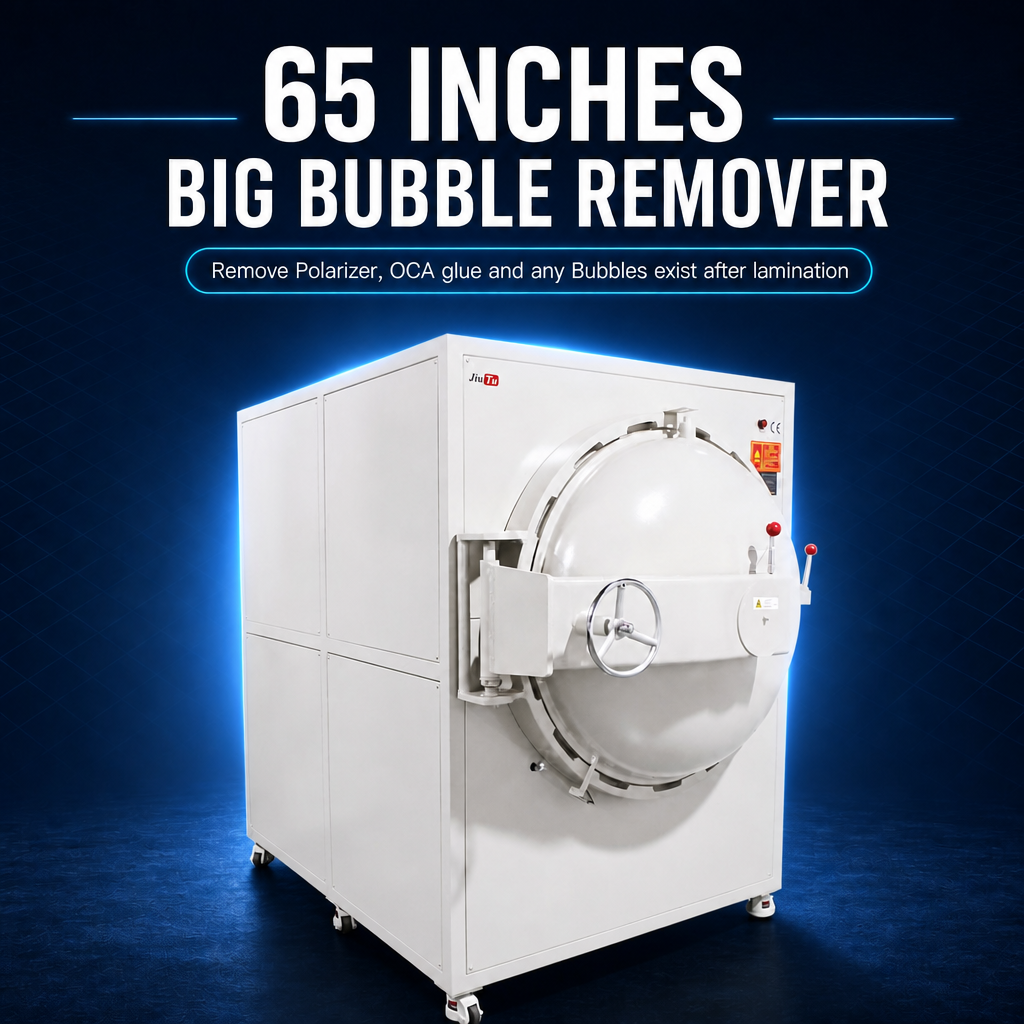
1000×1300 Carbon Steel Bubble Remover Machine

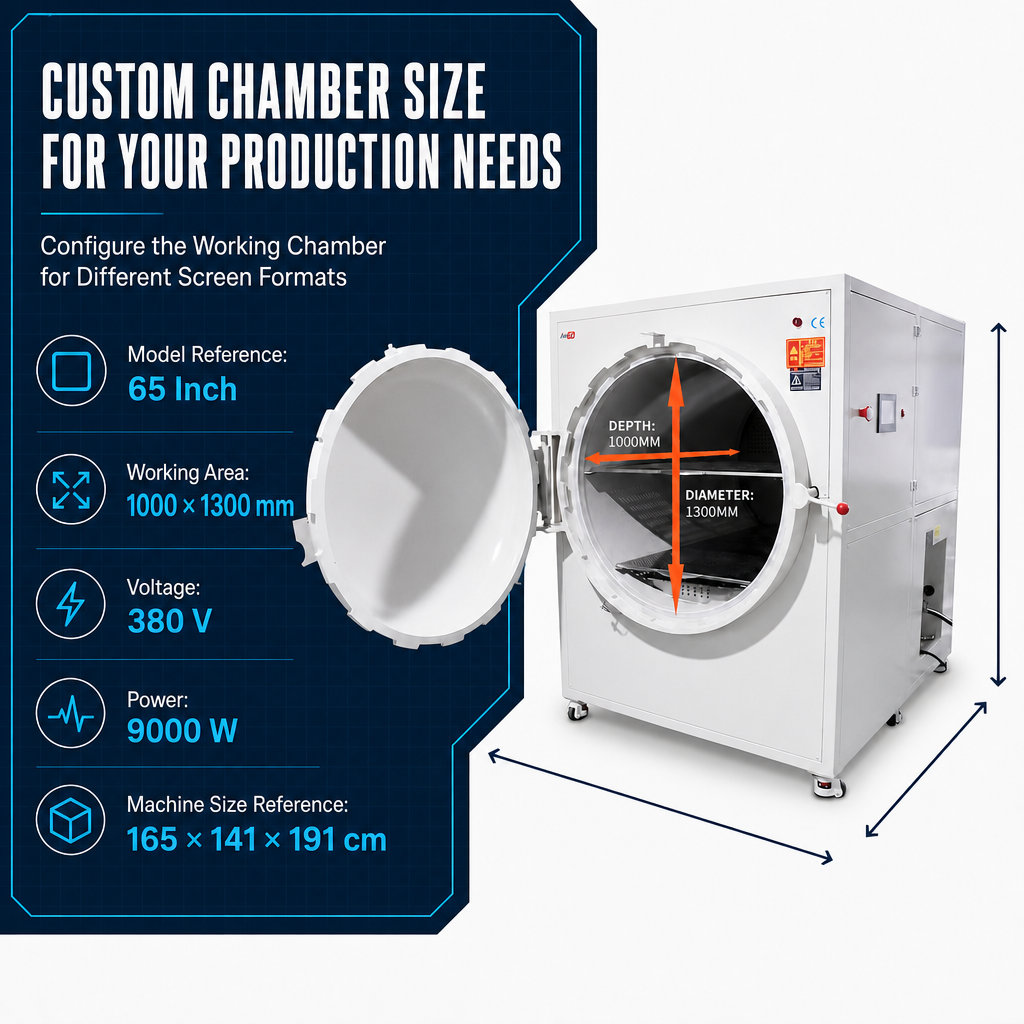
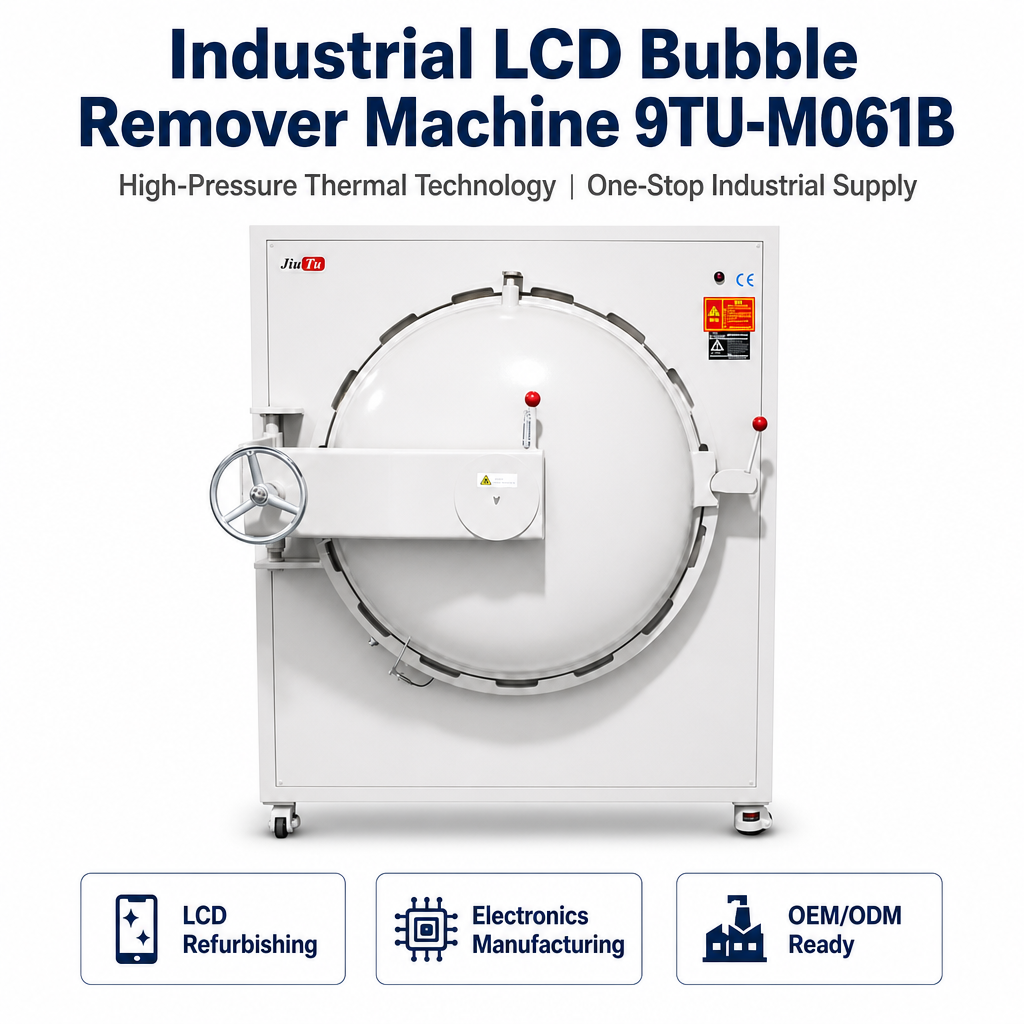
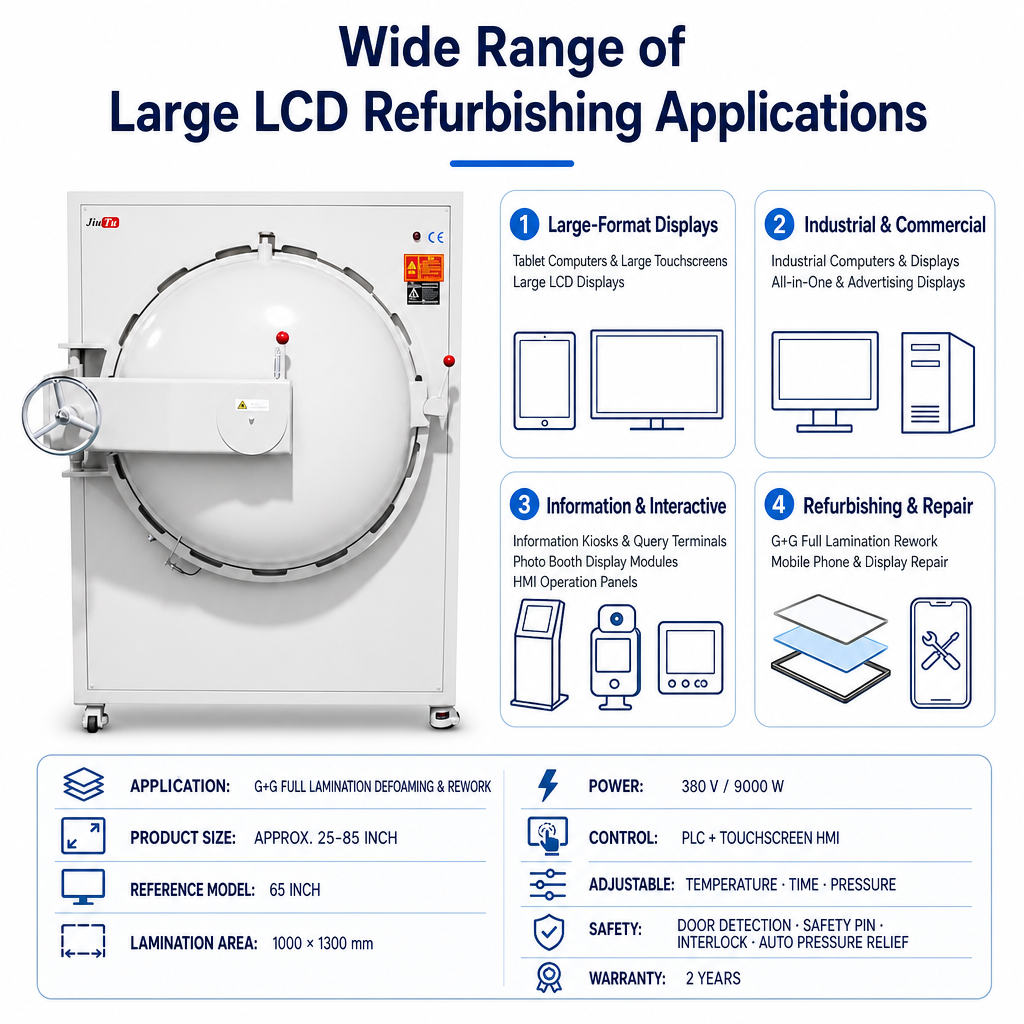
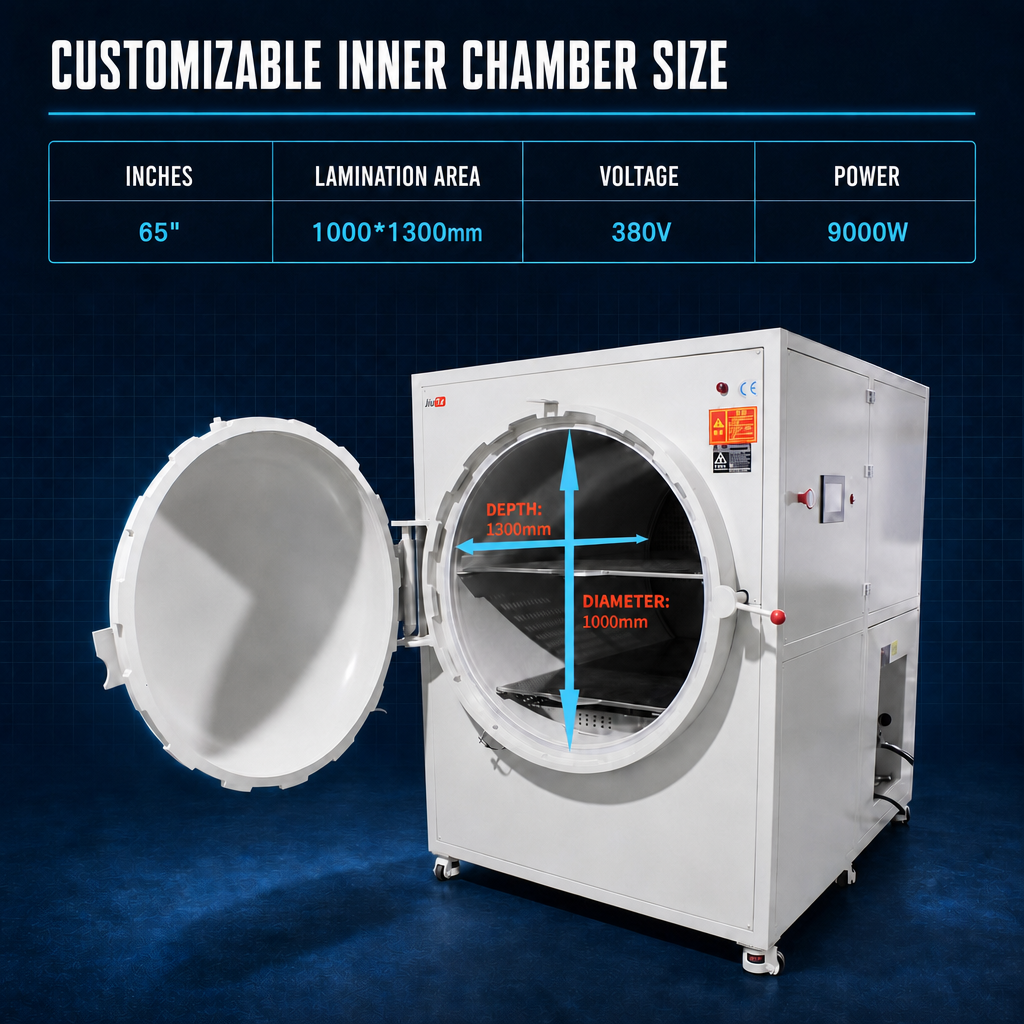
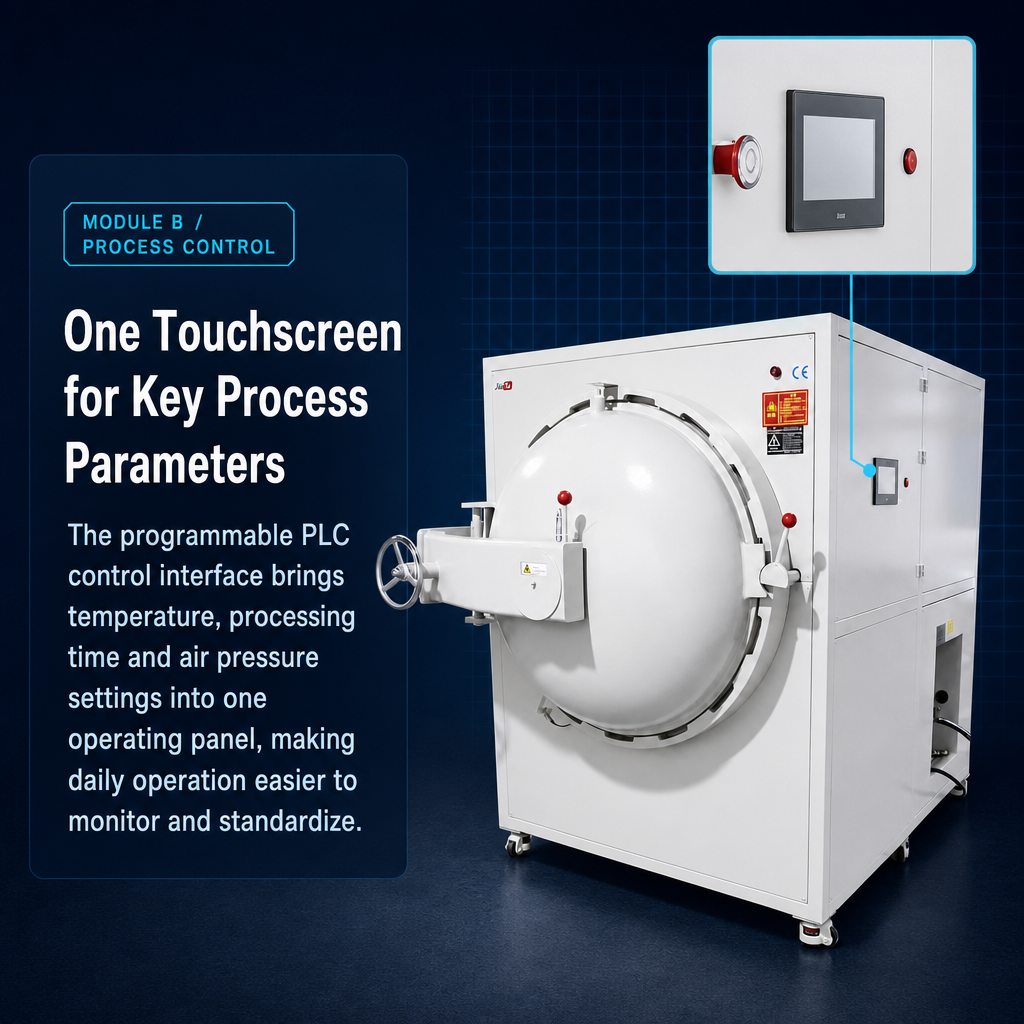
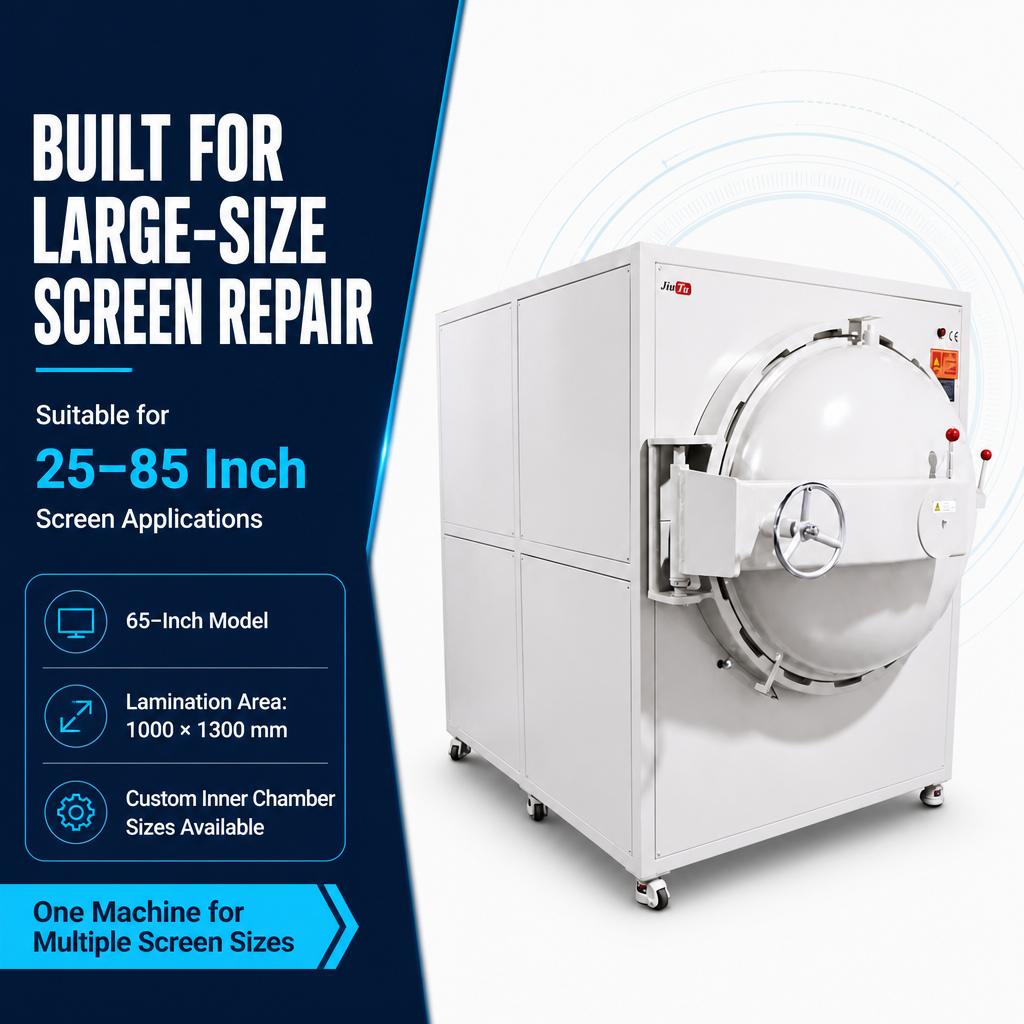
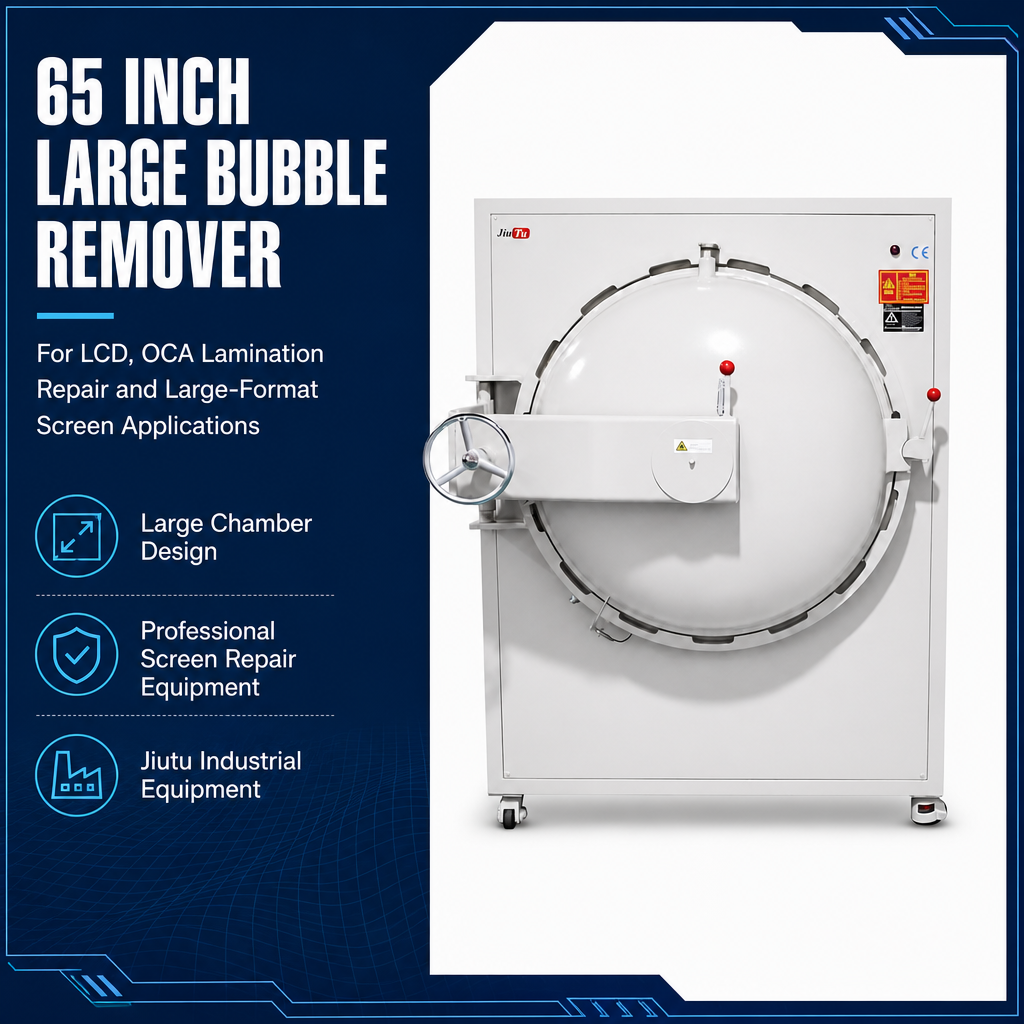
65 inch · Lamination area 1000 × 1300 mm · 380 V · 9000 W The build is carbon steel. Control is a XINJE PLC touchscreen with fully automatic operation and automatic discharge once debubbling completes...

GET QUOTE NOW
1000×1300 Carbon Steel Bubble Remover Machine
1000×1300 Carbon Steel Bubble Remover Machine 1000×1300 Carbon Steel Bubble Remover Machine 1000×1300 Carbon Steel Bubble Remover Machine
The Specification Sheet Most Suppliers Will Not Show You
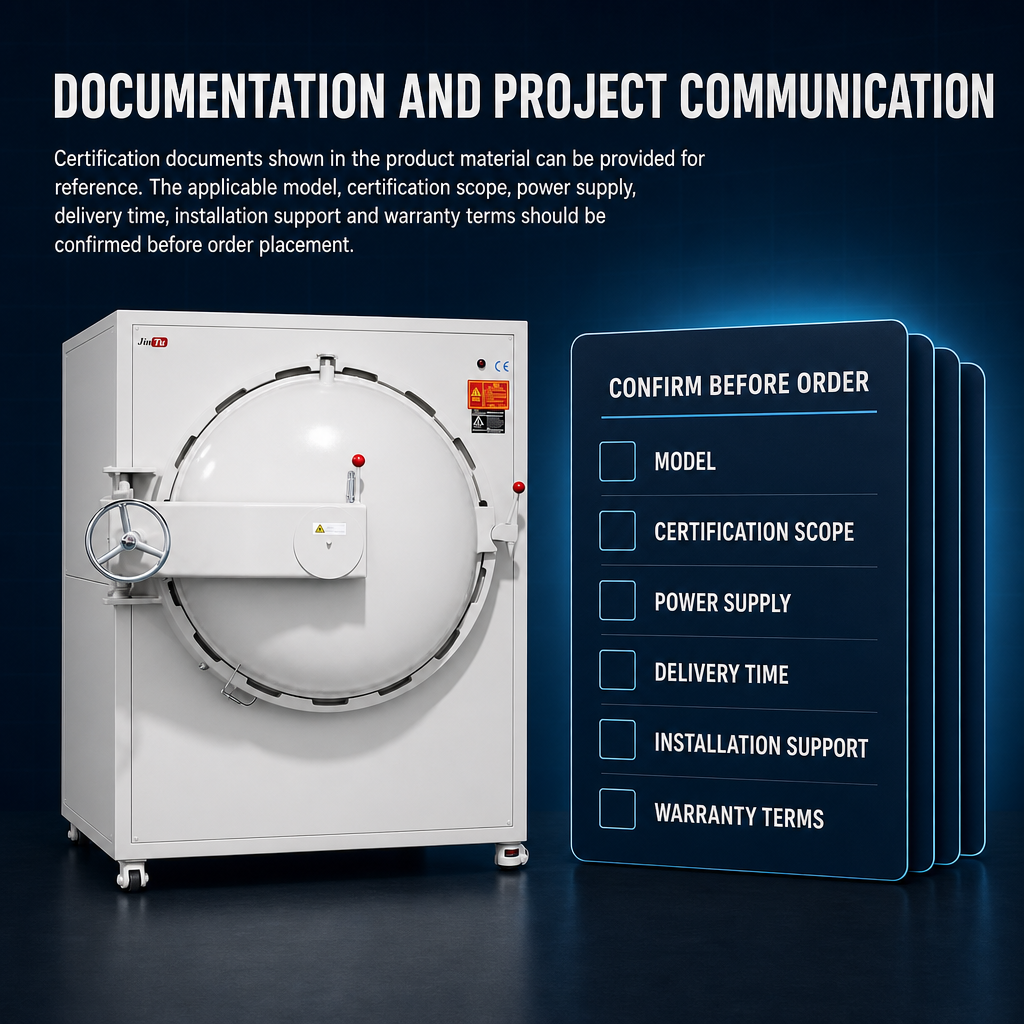
Why the electrical spec matters more than buyers expect. A 9000 W three-phase load is not something you plug in on arrival. It needs a dedicated 380 V circuit sized and installed before the machine lands. Buyers who discover this after delivery lose weeks. Publishing it here means you can check your supply now, not later.
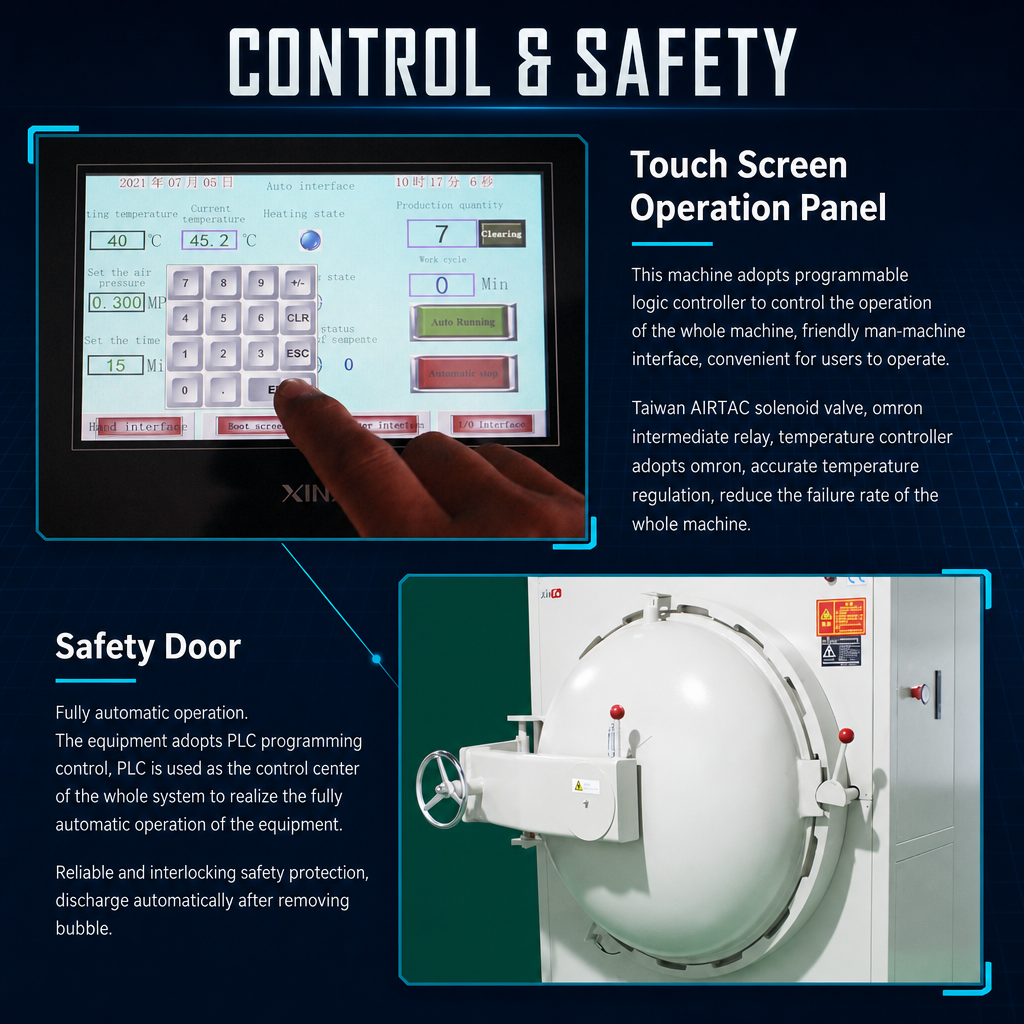
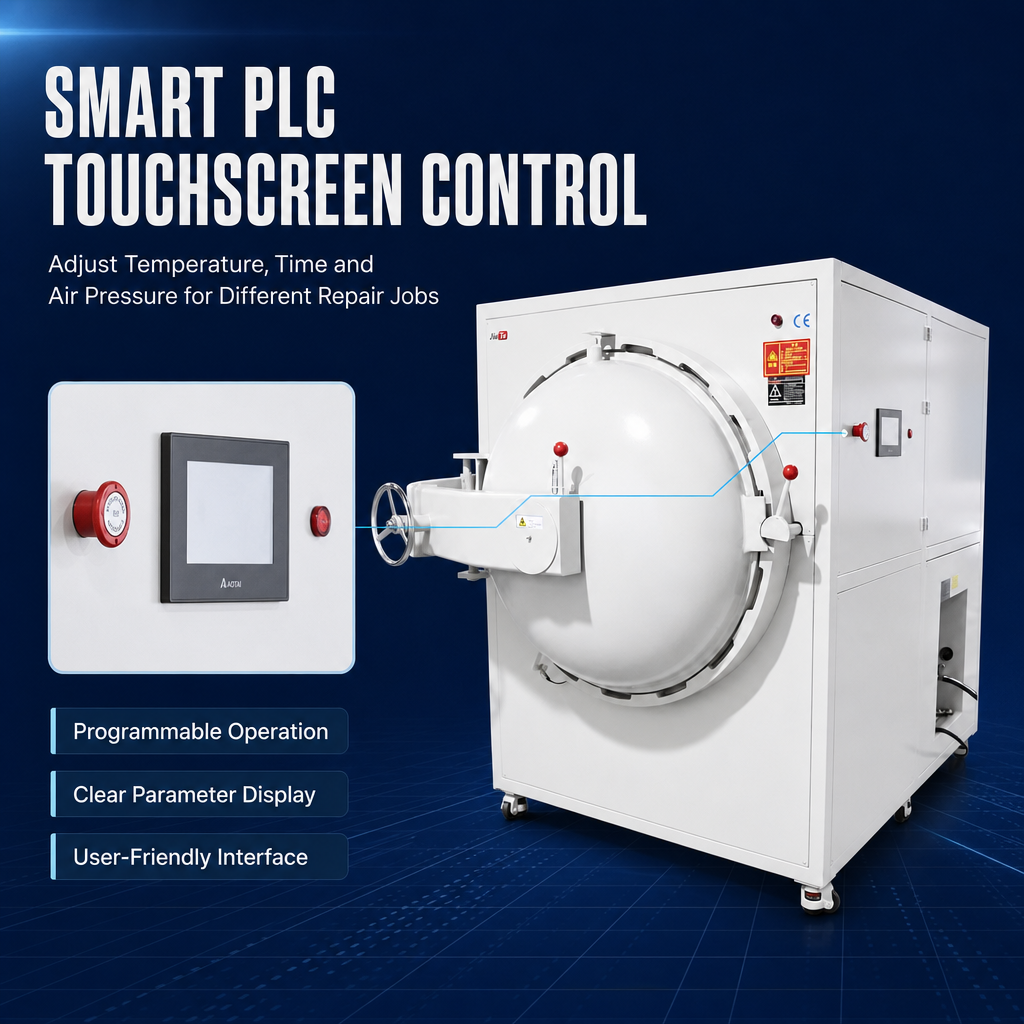
“The equipment adopts PLC programming control, PLC is used as the control center of the whole system to realize the fully automatic operation of the equipment.”
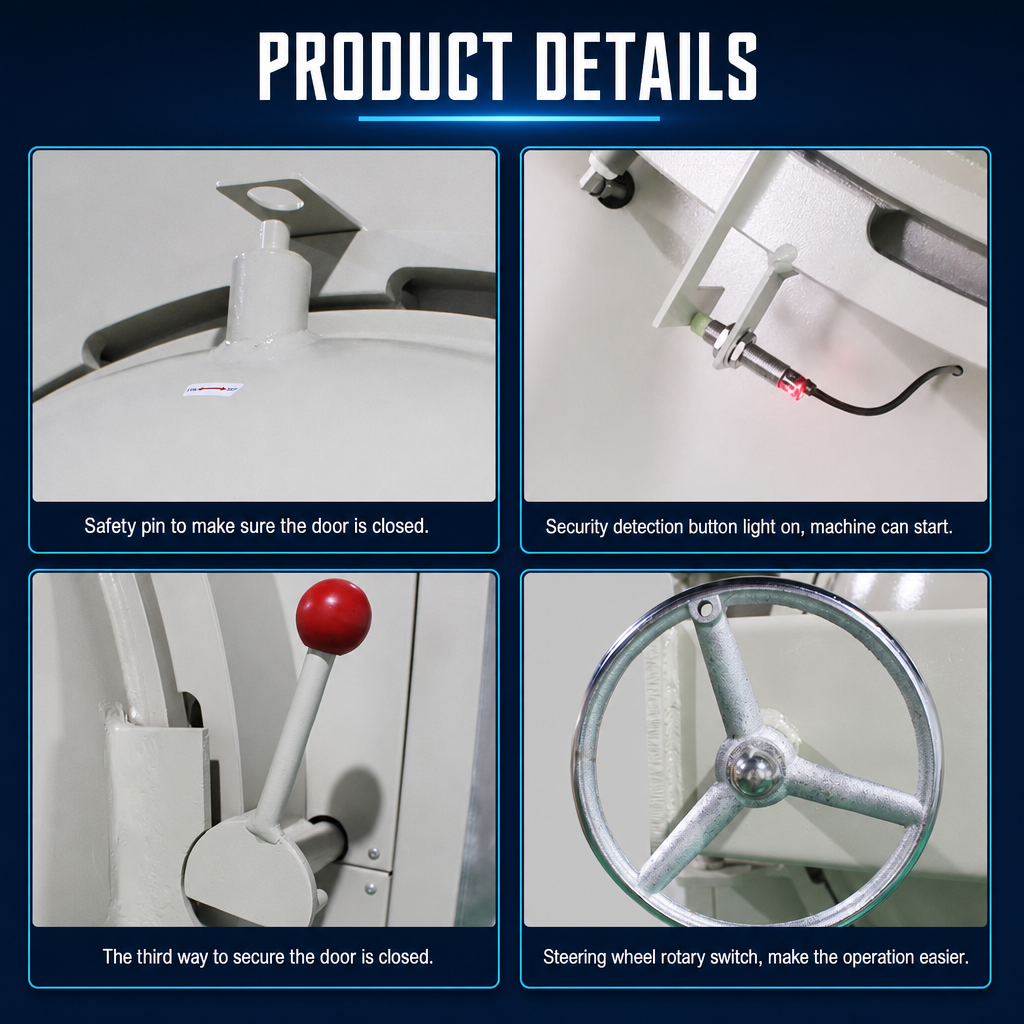
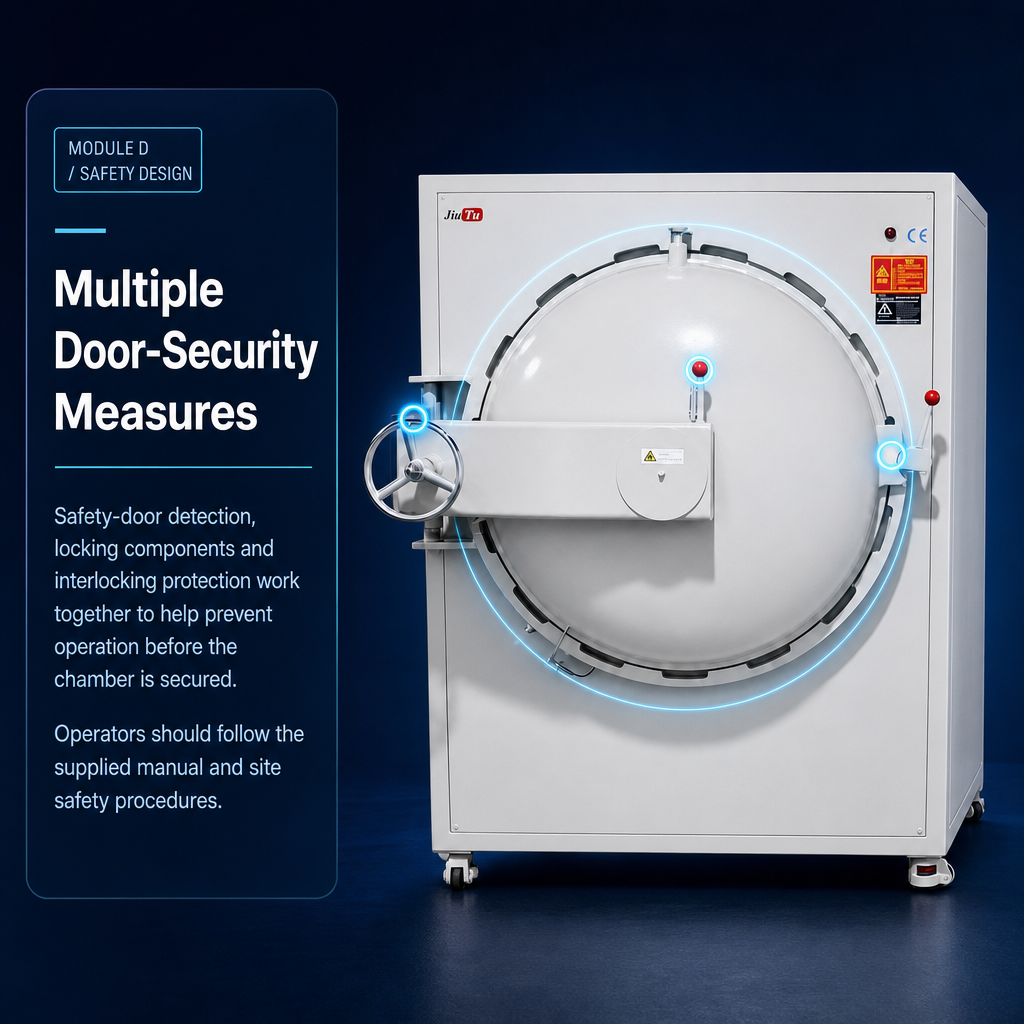
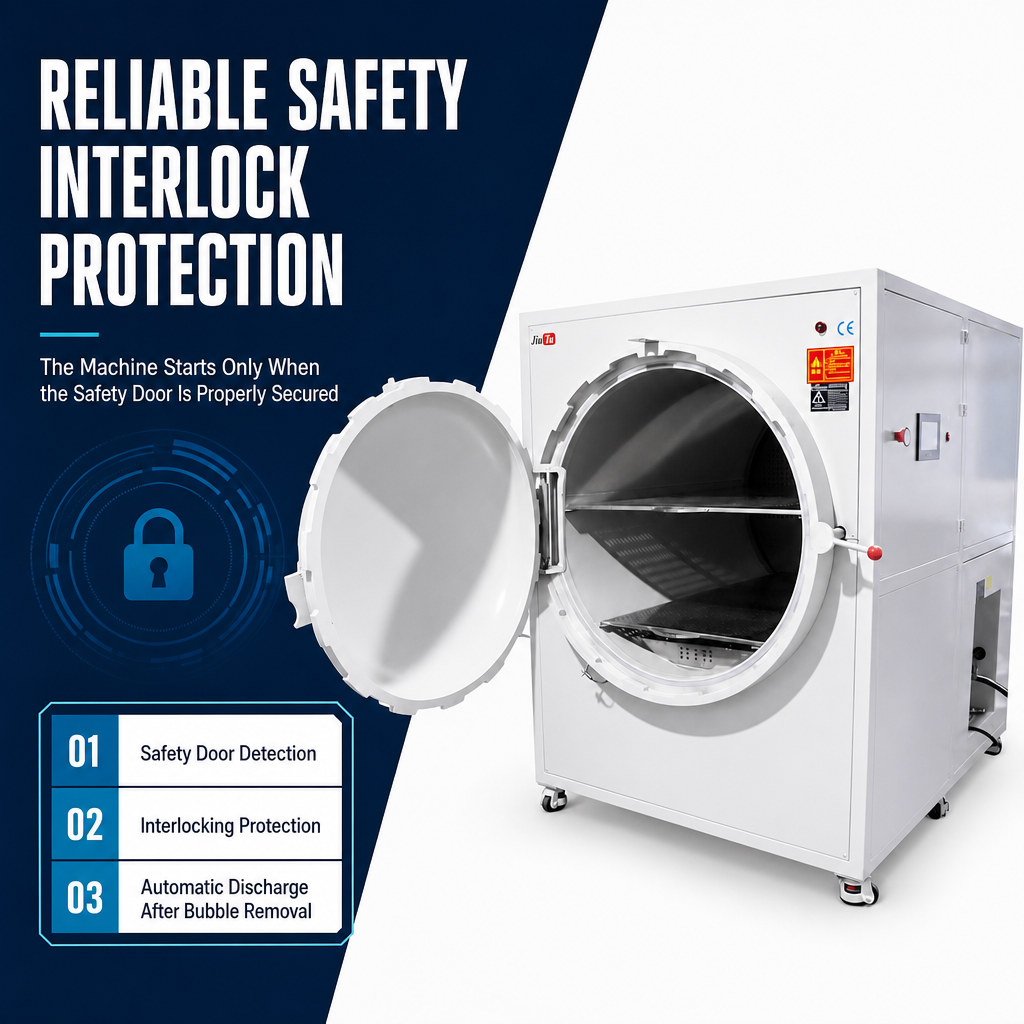
“Reliable and interlocking safety protection, discharge automatically after removing bubble.”
“Temperature working time and pressure are adjustable.”
The auto-discharge behaviour matters for shift planning. The chamber vents itself once the debubbling stage finishes, rather than holding pressure until an operator returns to release it manually. On a long cycle, that means the machine is not idling under pressure waiting for attention — and the operator is not tied to the machine for the final minutes of every run.
Feature List
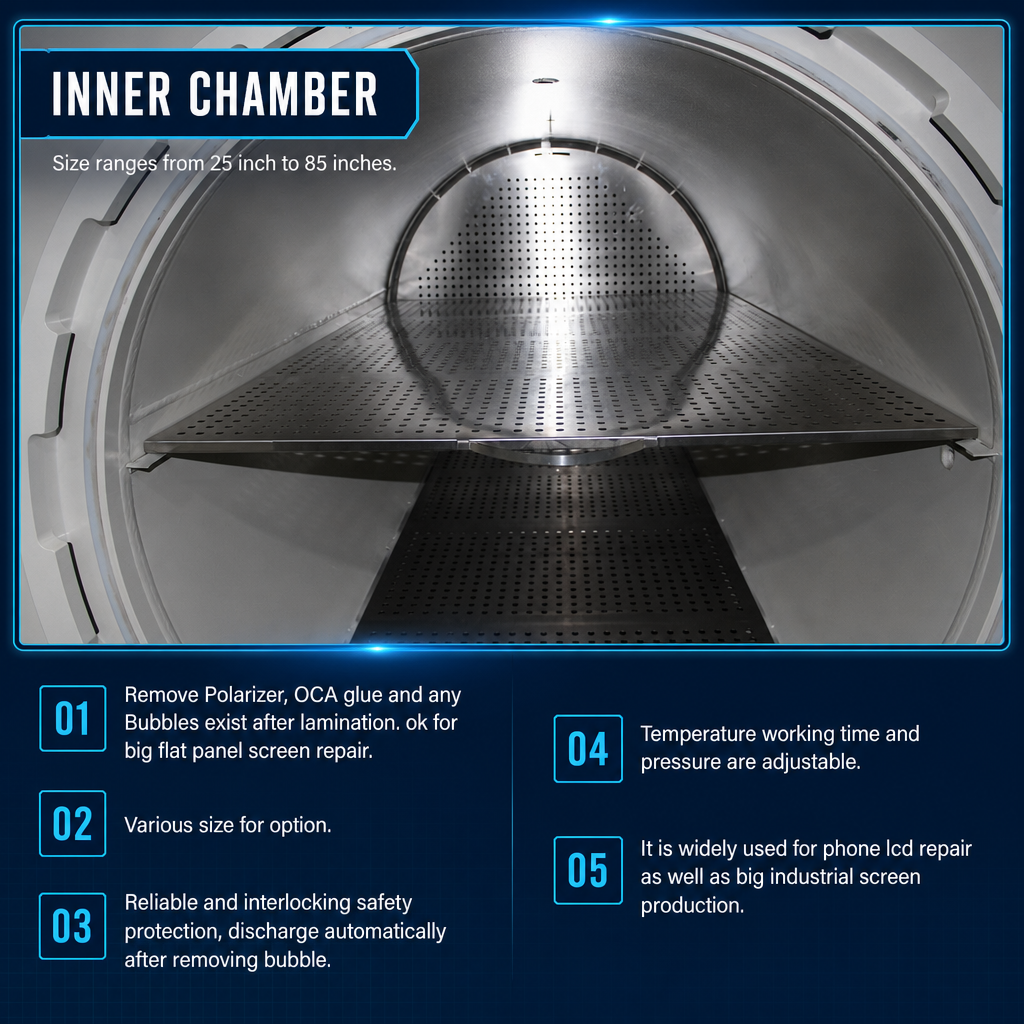
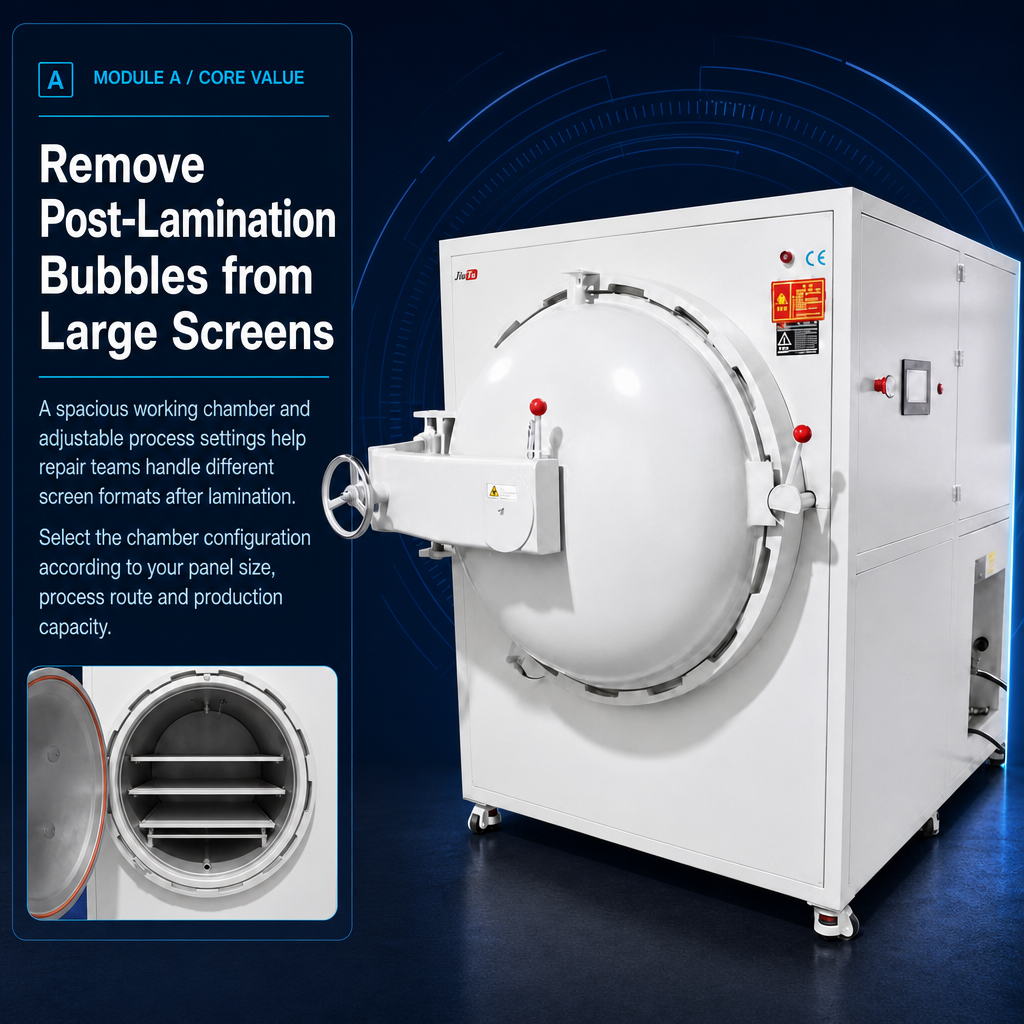
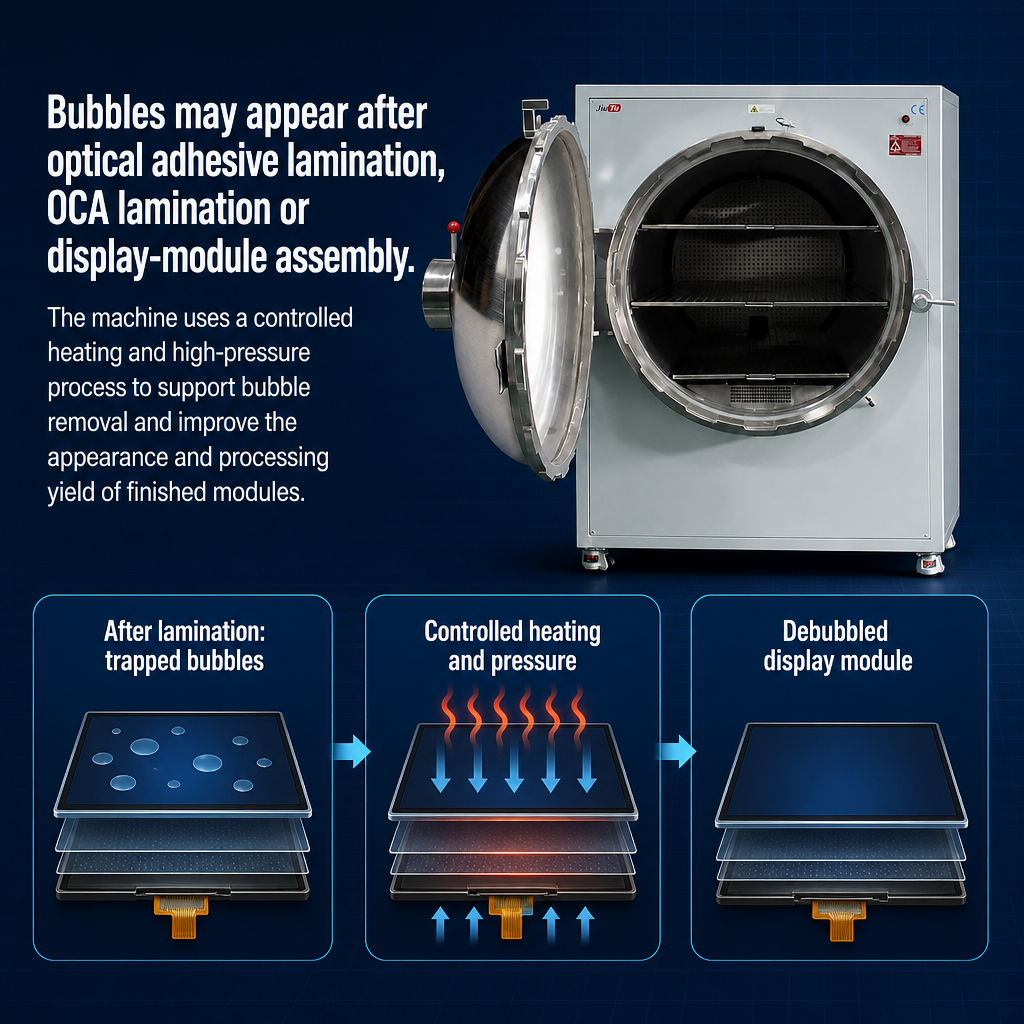
  • 01. Remove Polarizer, OCA glue and any bubbles that exist after lamination. Suitable for big flat panel screen repair.
  • 02. Various size for option.
  • 03. Reliable and interlocking safety protection, discharge automatically after removing bubble.
  • 04. Temperature, working time and pressure are adjustable.
  • 05. Widely used for Big LCD repair as well as big industrial screen production.
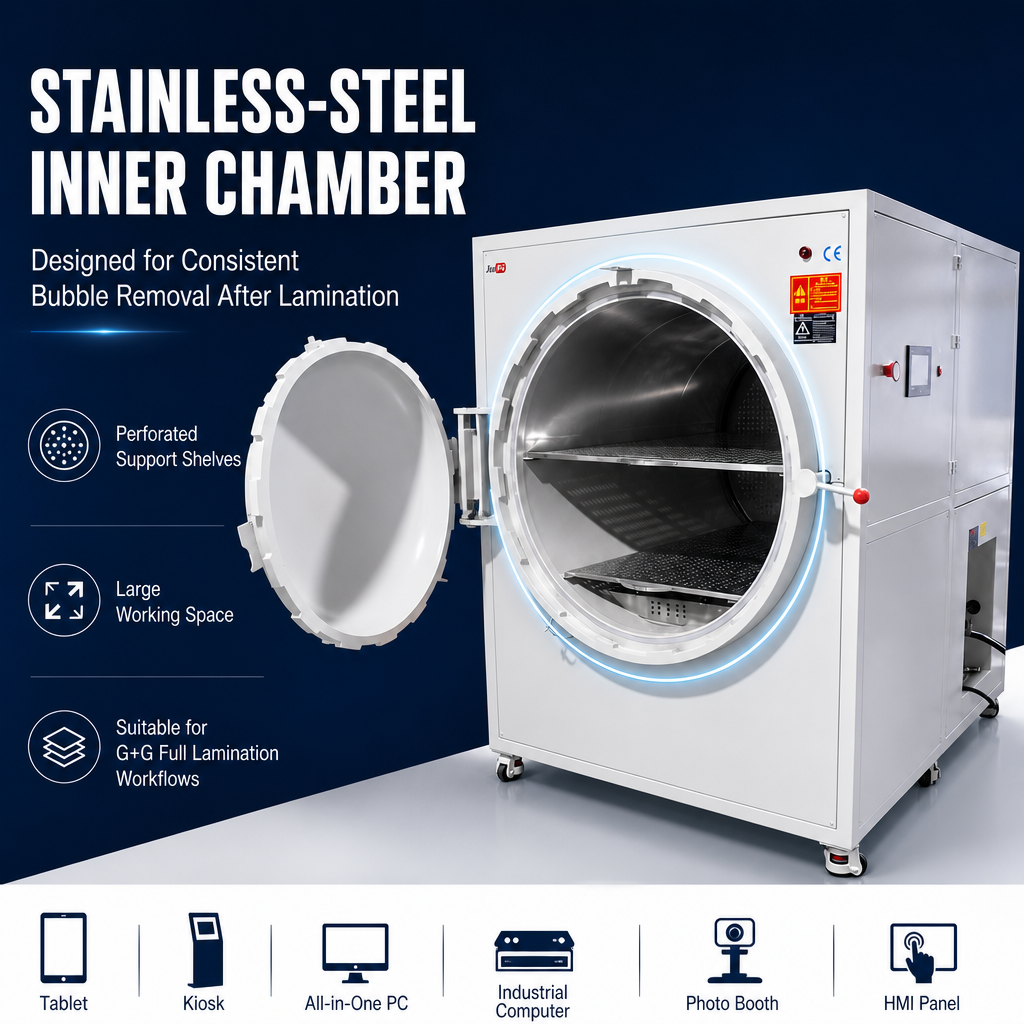
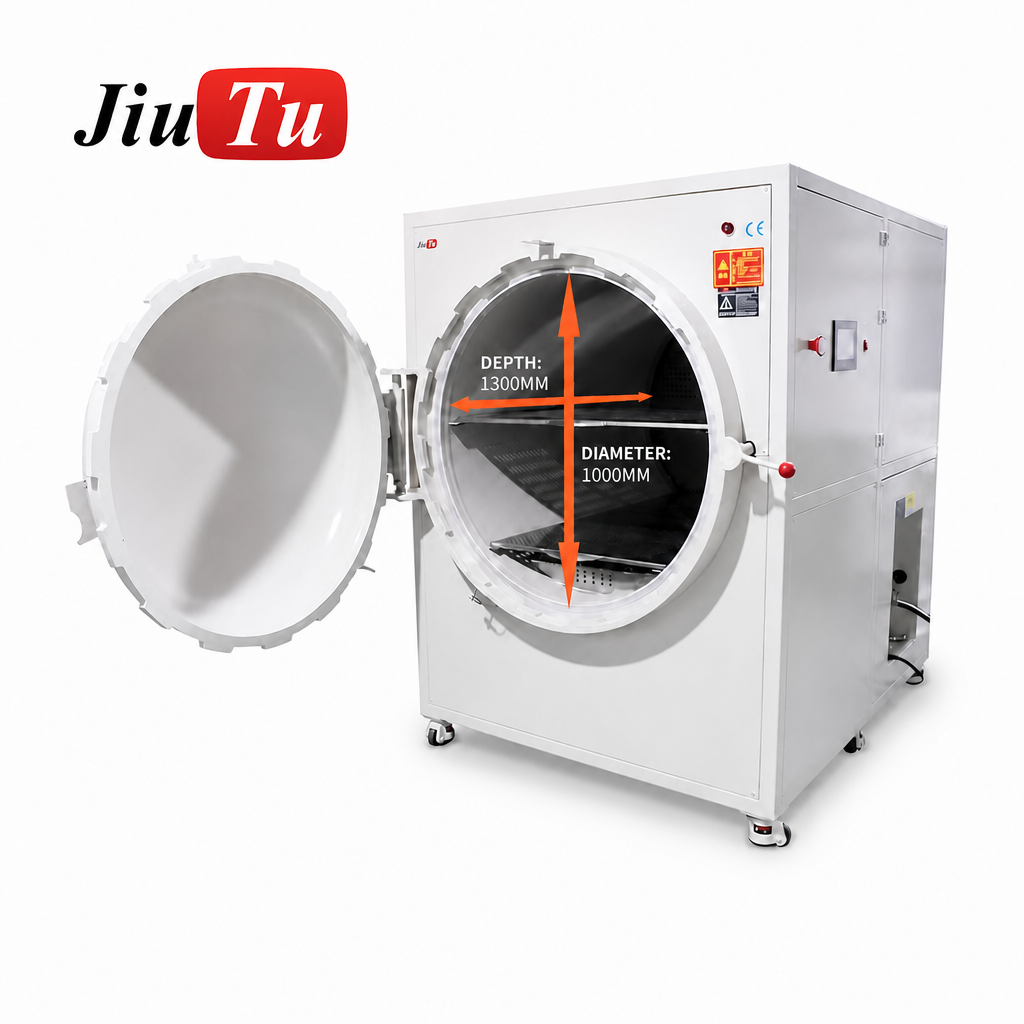
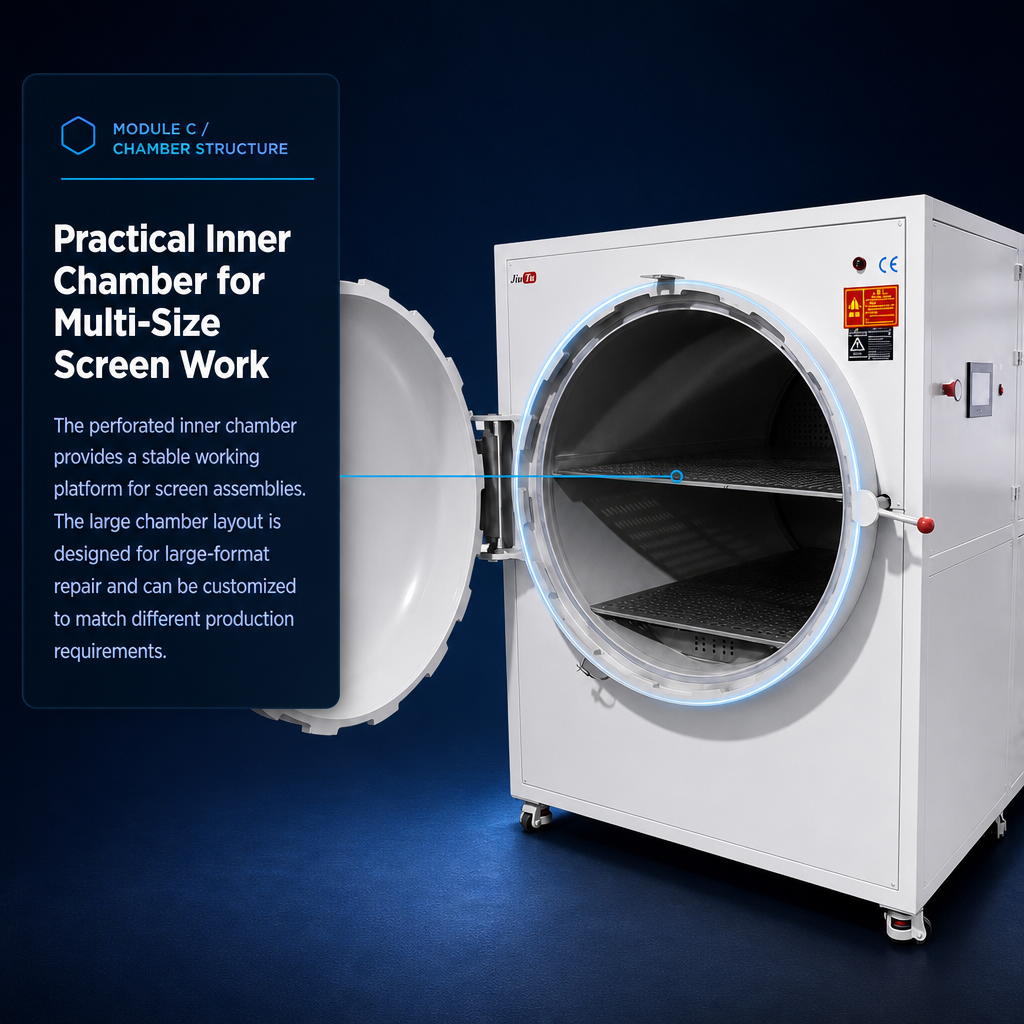
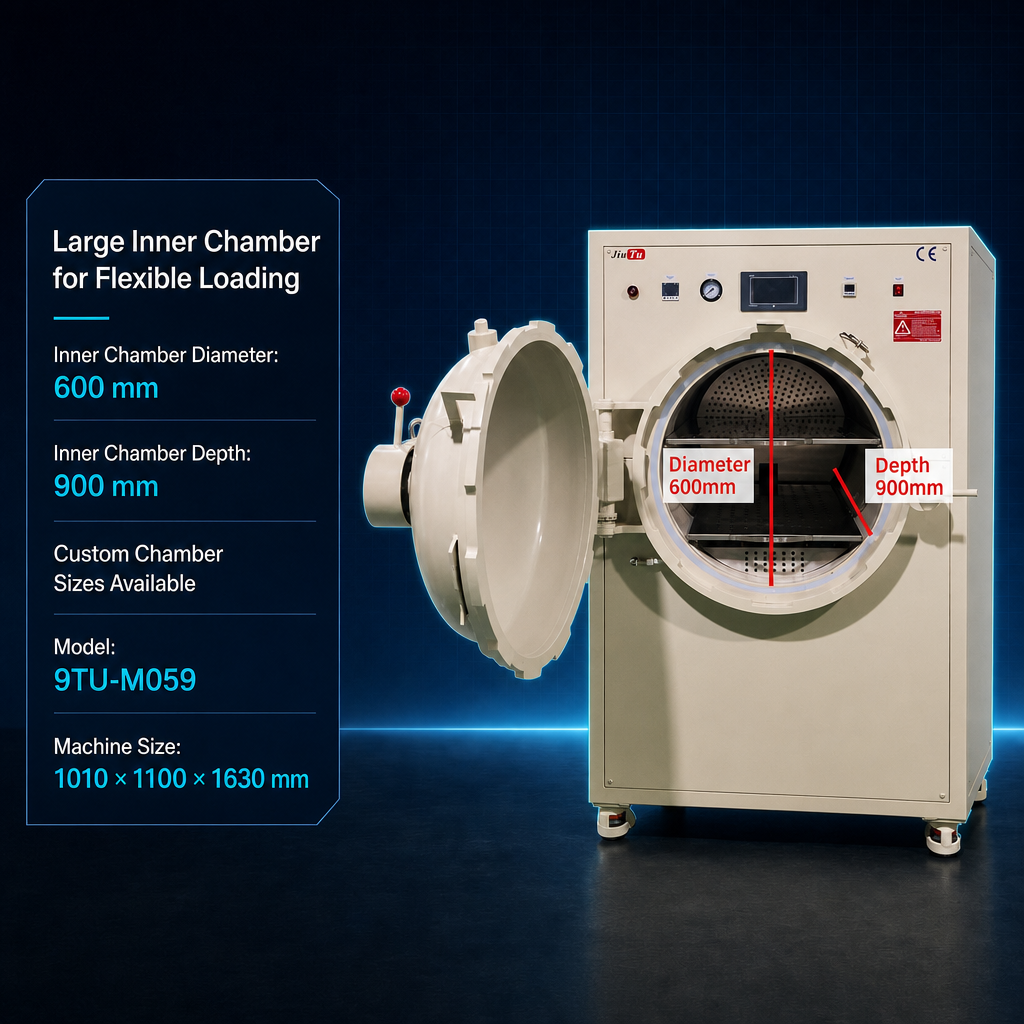
Chamber Interior — 1000mm Bore, 1300mm Deep, Multi-Level Perforated Shelving
The chamber measures 1000 mm in diameter and 1300 mm deep. That proportion — deeper than it is wide — is what defines how this machine is loaded.
The diameter sets your panel width limit. The depth is what multiplies your throughput.
A 1000 mm bore gives the clear width for each panel or fixture going in. The 1300 mm depth then runs back along the cylinder axis, and the open-chamber photograph shows perforated steel shelves on multiple levels occupying that length, with a curved perforated back section following the cylinder wall.
In practice this means the machine is built for batch loading rather than one oversized panel at a time. Several assemblies sit across the shelf levels and run through the same pressure and temperature cycle together. For a shop processing steady volume in the 25–85 inch range, cycles amortised across a full load cost far less per panel than cycles run one piece at a time.
Why the shelves are perforated. A solid tray plate shields whatever sits on it from the pressurised gas above and below, producing uneven force across the panel. A perforated shelf lets pressure equalise around the full surface — and in a deep chamber where panels sit at different depths, uniform gas circulation front to back is what keeps the panel at the rear of the chamber behaving the same as the one nearest the door.
Documented panel range: 25 inch to 85 inches.
The shelves are removable and repositionable, so the same chamber runs a single large panel on one level or a full stack of smaller assemblies across every level.
Carbon Steel Build — An Honest Assessment
The cabinet and chamber are carbon steel with a painted finish.
Where it works well: structural rigidity at large bore, and a materially lower cost basis than stainless at this chamber size — which is where the price gap between the two materials is widest.
Where to think twice: carbon steel does not match stainless for corrosion resistance. In a dry, temperature-controlled production area running standard OCA or SCA systems, this is a non-issue over the life of the machine. In a humid workshop, or where chamber interiors regularly meet solvents and cleaning agents, surface oxidation becomes a scheduled maintenance item.
If your environment is the second kind, ask about a stainless specification of the same architecture rather than buying a build that will work against your conditions.

Key Features

Feature List

Feature List

    1. Remove Polarizer, OCA glue and any bubbles that exist after lamination. Suitable for big flat panel screen repair.

    1. Various size for option.

    1. Reliable and interlocking safety protection, discharge automatically after removing bubble.

    1. Temperature, working time and pressure are adjustable.

    1. Widely used for Big LCD repair as well as big industrial screen production.

Automation & Control Features

Automation & Control Features

The equipment adopts PLC programming control, PLC is used as the control center of the whole system to realize the fully automatic operation of the equipment.”

“The auto-discharge behaviour matters for shift planning. The chamber vents itself once the debubbling stage finishes, rather than holding pressure until an operator returns to release it manually.
Physical & Structural Features

Physical & Structural Features

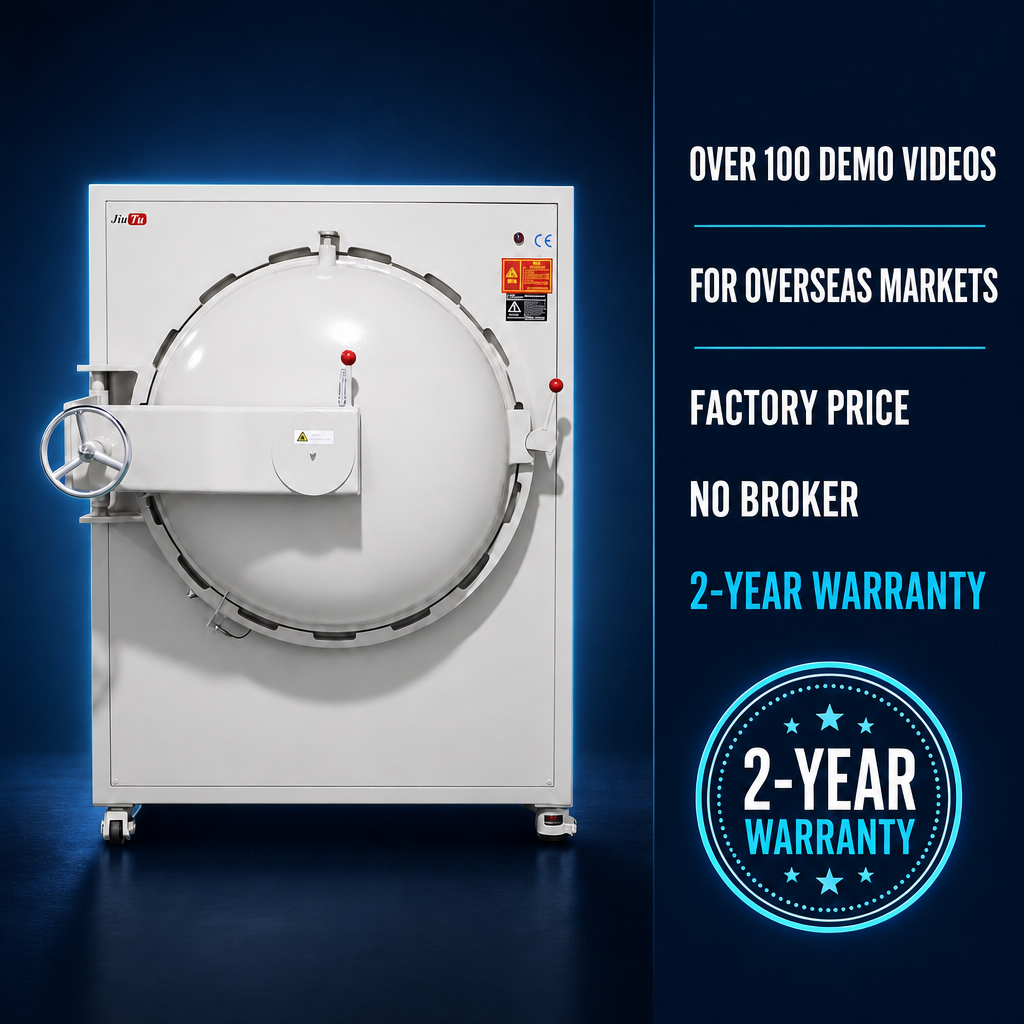
Chamber Interior — 1000mm Bore, 1300mm Deep, Multi-Level Perforated Shelving “The 1300 mm depth then runs back along the cylinder axis, and the open-chamber photograph shows perforated steel shelves on multiple levels occupying that length… A perforated shelf lets pressure equalise around the full surface — and in a deep chamber where panels sit at different depths, uniform gas circulation front to back is what keeps the panel at the rear of the chamber behaving the same as the one nearest the door.”

Why Choose Us
1000×1300 Carbon Steel Bubble Remover Machine 1000×1300 Carbon Steel Bubble Remover Machine 1000×1300 Carbon Steel Bubble Remover Machine 1000×1300 Carbon Steel Bubble Remover Machine 1000×1300 Carbon Steel Bubble Remover Machine 1000×1300 Carbon Steel Bubble Remover Machine 1000×1300 Carbon Steel Bubble Remover Machine

Carbon Steel Build — An Honest Assessment
The cabinet and chamber are carbon steel with a painted finish.

Where it works well: structural rigidity at large bore, and a materially lower cost basis than stainless at this chamber size — which is where the price gap between the two materials is widest.

Where to think twice: carbon steel does not match stainless for corrosion resistance. In a dry, temperature-controlled production area running standard OCA or SCA systems, this is a non-issue over the life of the machine. In a humid workshop, or where chamber interiors regularly meet solvents and cleaning agents, surface oxidation becomes a scheduled maintenance item.

If your environment is the second kind, ask about a stainless specification of the same architecture rather than buying a build that will work against your conditions.

Key Features
1000×1300 Carbon Steel Bubble Remover Machine 1000×1300 Carbon Steel Bubble Remover Machine 1000×1300 Carbon Steel Bubble Remover Machine 1000×1300 Carbon Steel Bubble Remover Machine 1000×1300 Carbon Steel Bubble Remover Machine 1000×1300 Carbon Steel Bubble Remover Machine 1000×1300 Carbon Steel Bubble Remover Machine 1000×1300 Carbon Steel Bubble Remover Machine

Product Details

FAQ

Q1. What electrical supply does this machine need?
380 V at 9000 W, taken directly from the product specification table. This is a three-phase industrial supply, not a standard single-phase workshop outlet.Arrange a dedicated circuit rated for 9 kW before delivery. Buyers who treat electrical preparation as a post-delivery task commonly lose one to three weeks waiting on an electrician while the machine sits crated. If your facility voltage differs from 380 V, tell us at enquiry stage — voltage configuration is one of the things to confirm before the order is built, not after.
Q2. What panel sizes does it handle?
The documentation states a range of 25 inch to 85 inches, with a headline specification of 65 inch class and a lamination area of 1000 × 1300 mm.The chamber is 1000 mm in diameter and 1300 mm deep. The diameter is what limits panel width — so measure the actual width and height of your largest panel, not its diagonal, when checking fit. The depth is what gives you multi-level capacity along the chamber axis.
Q3. What is G+G full laminating and why does it need this machine?
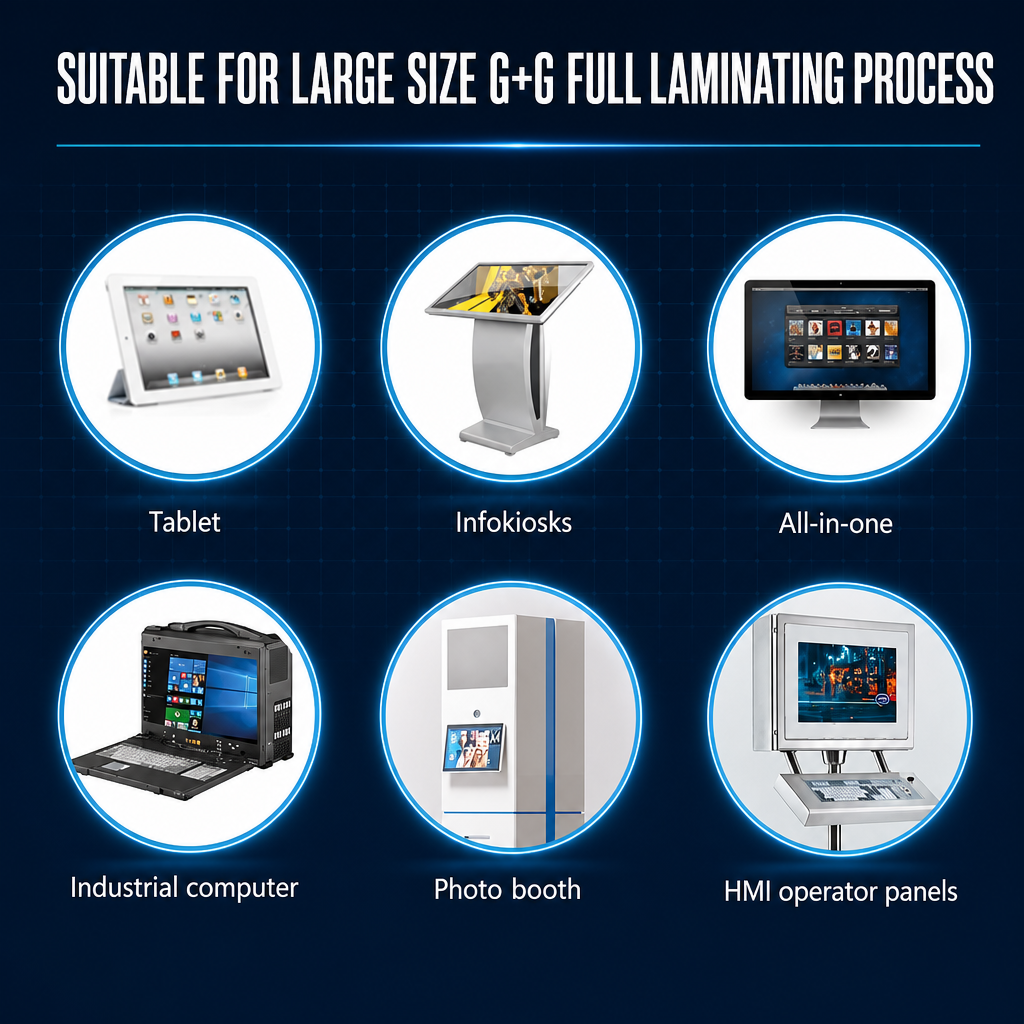
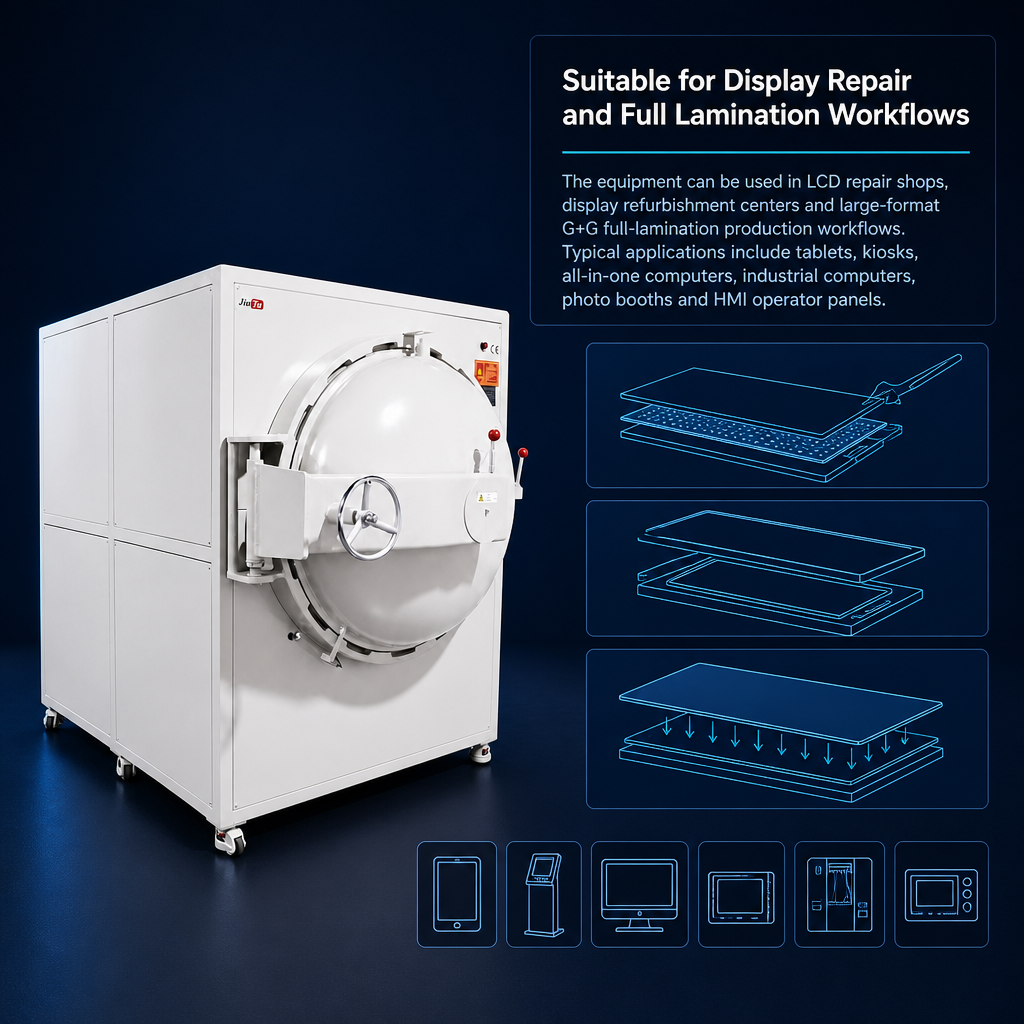
G+G means glass-to-glass full lamination — cover glass bonded directly to a glass display or sensor layer, with no compliant film between them.Because both surfaces are rigid, there is nothing in the stack to absorb air that gets trapped during bonding. Trapped air stays exactly where it was formed and shows as visible bubbles. Pressurised debubbling compresses that residual air and drives it back into solution in the adhesive.The documentation confirms suitability for large size G+G full laminating, with applications listed across tablets, infokiosks, all-in-ones, industrial computers, photo booths and HMI operator panels.
Q4. Can the chamber size be changed?
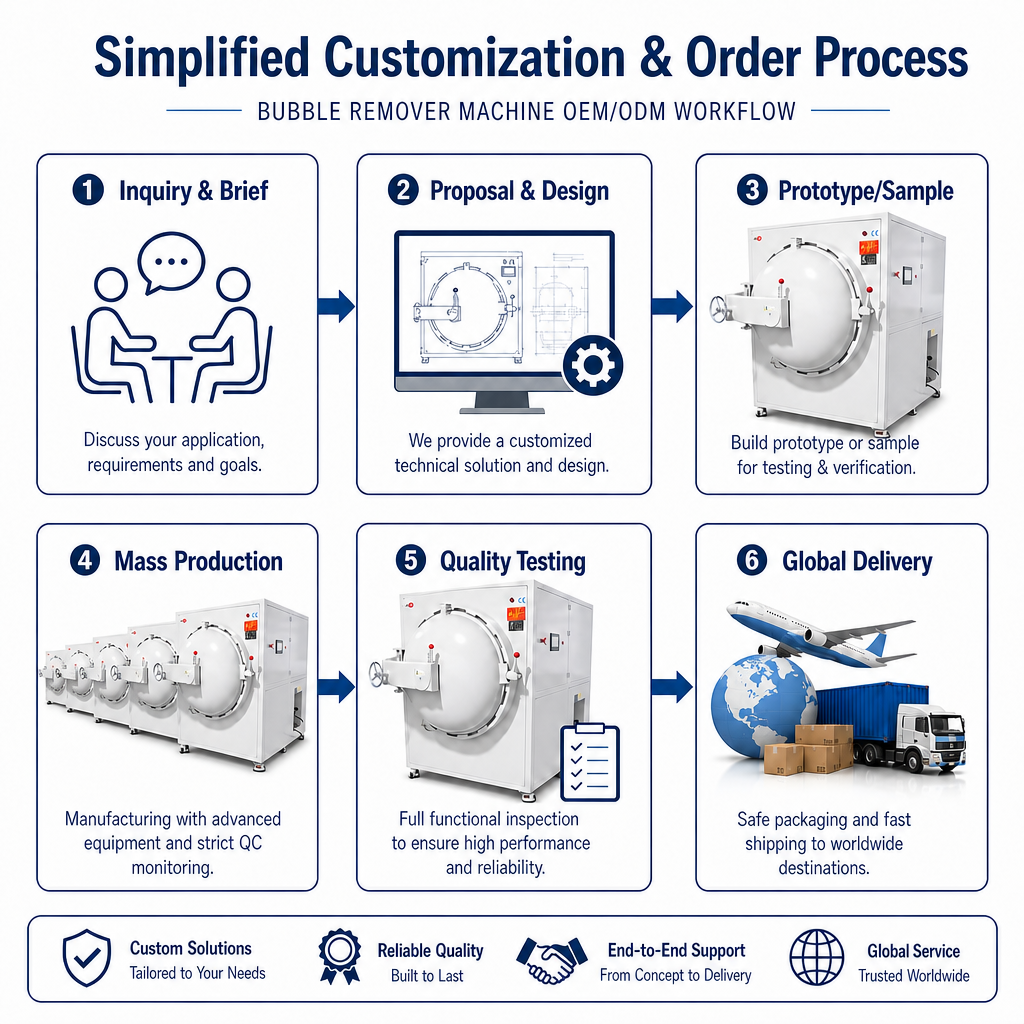
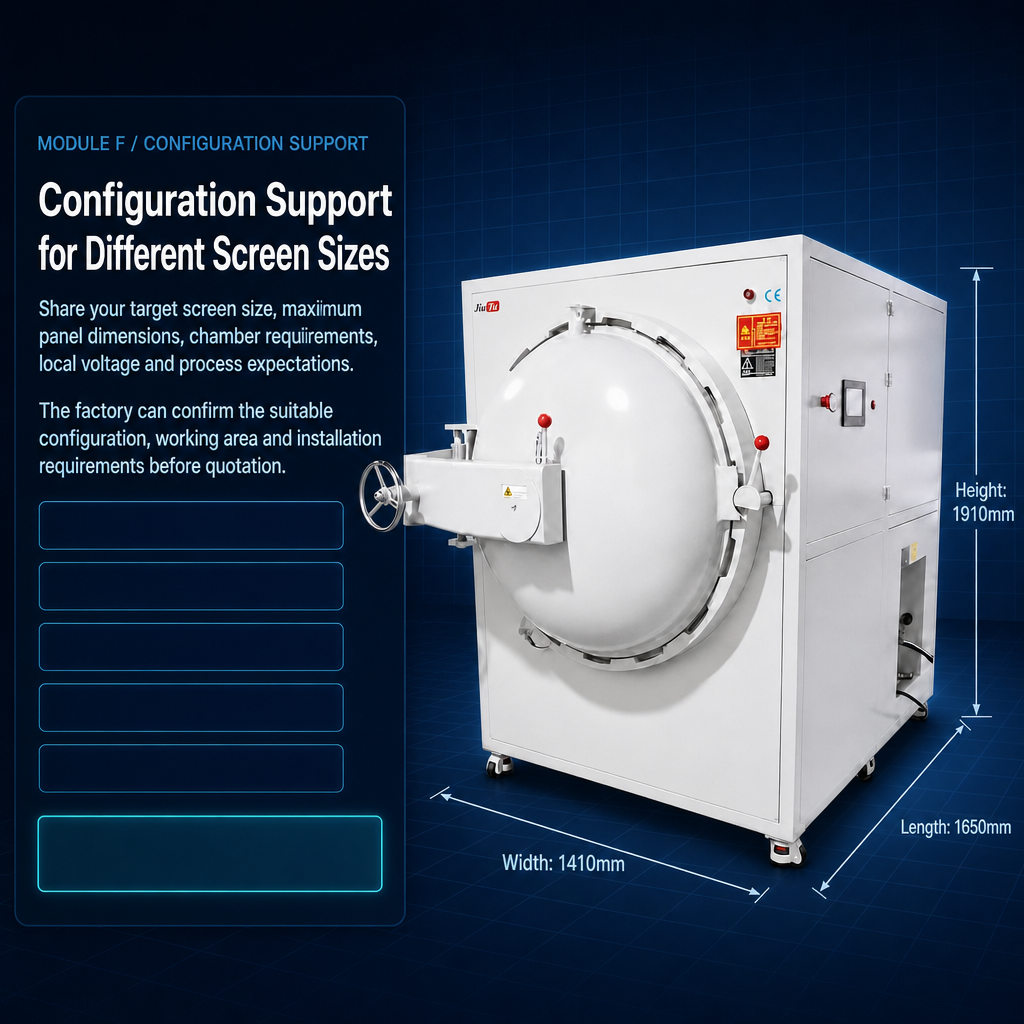
Yes. The documentation lists "Various size for option" and presents the chamber under the heading "Customizable inner chamber size."If your panel mix sits outside the 25–85 inch window, or your fixtures need a different bore-to-depth ratio, the chamber can be built to your dimensions. Send panel sizes, form factors, adhesive system, daily volume and supply voltage, and JiuTu will assess the configuration against your actual process.
Q5. What is the warranty and what support comes with it?
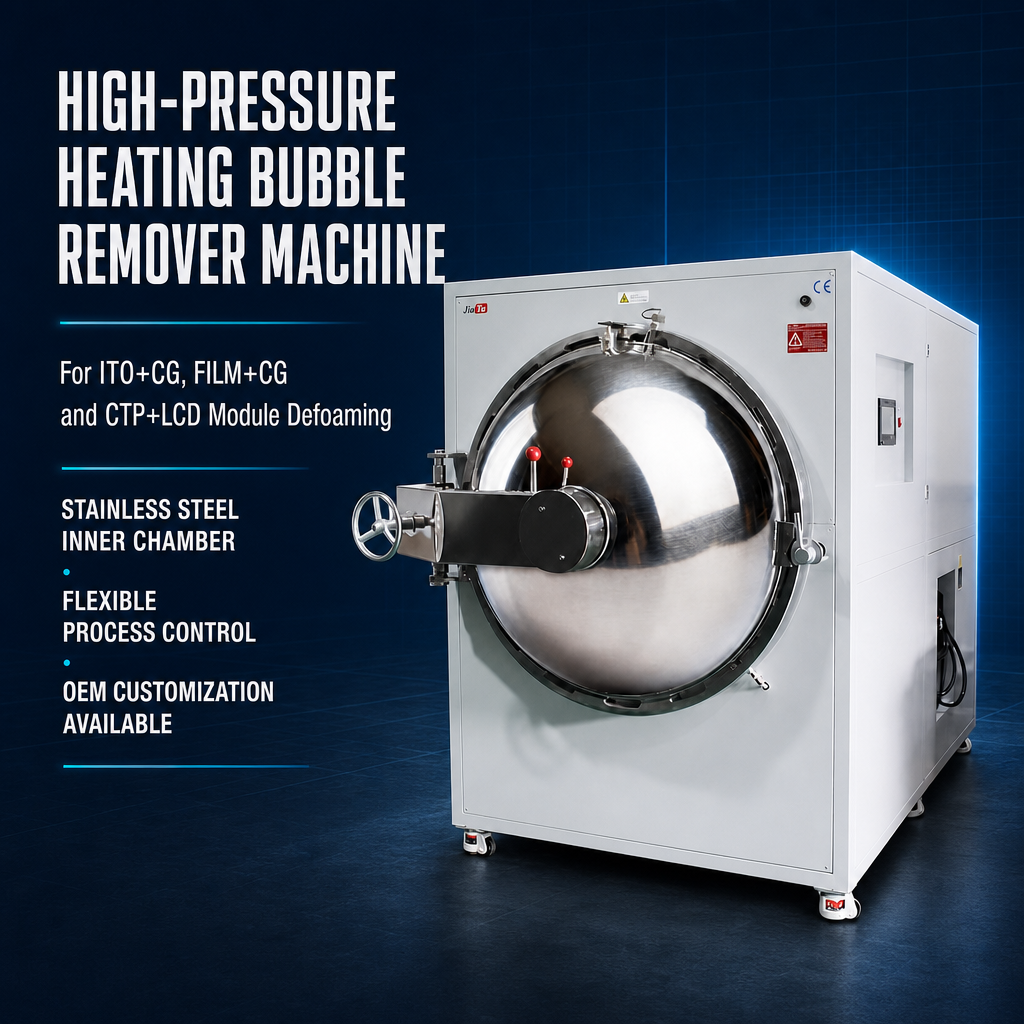
The product documentation states a 2-year warranty, alongside over 100 demo videos, factory price with no broker, and export supply for overseas markets.

Interested in This Product?

Tell us your project details and our team will prepare a customized quotation.

GET QUOTE NOW
Contact Us