
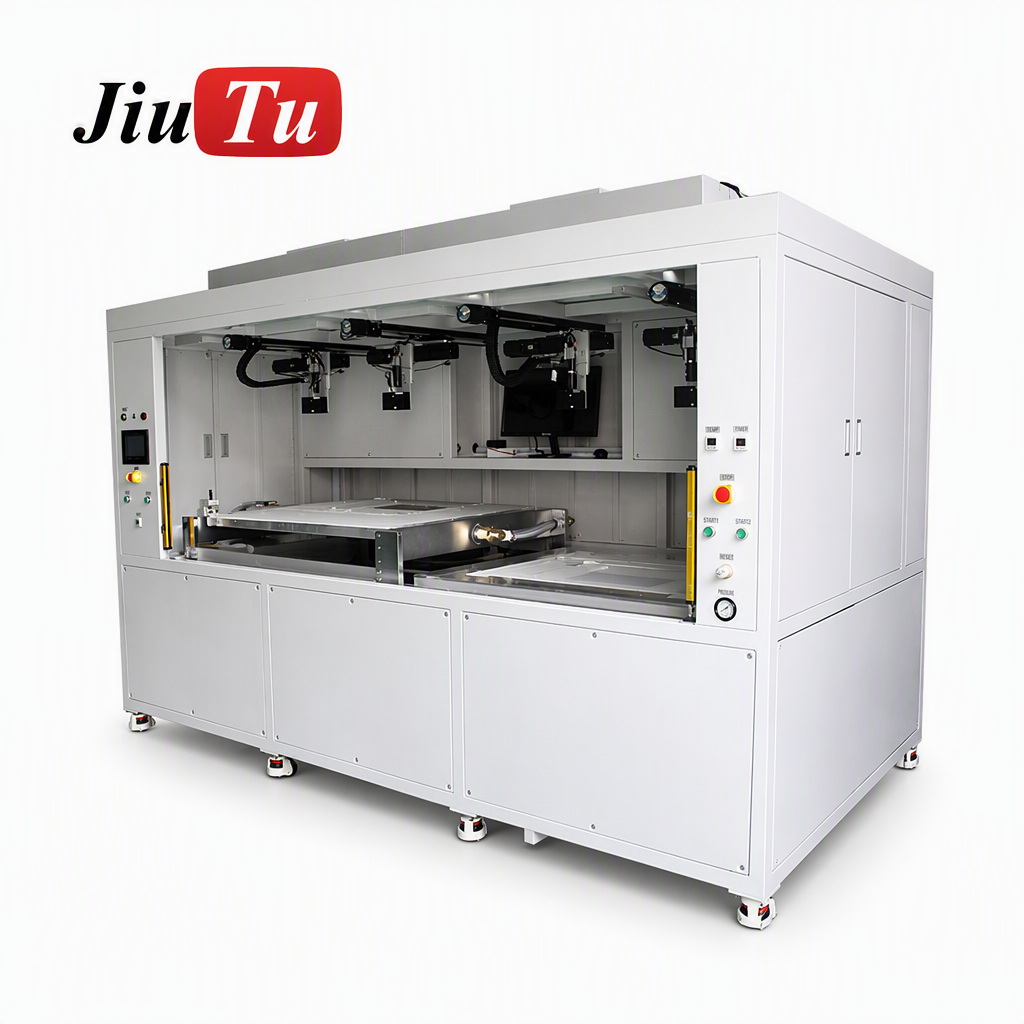
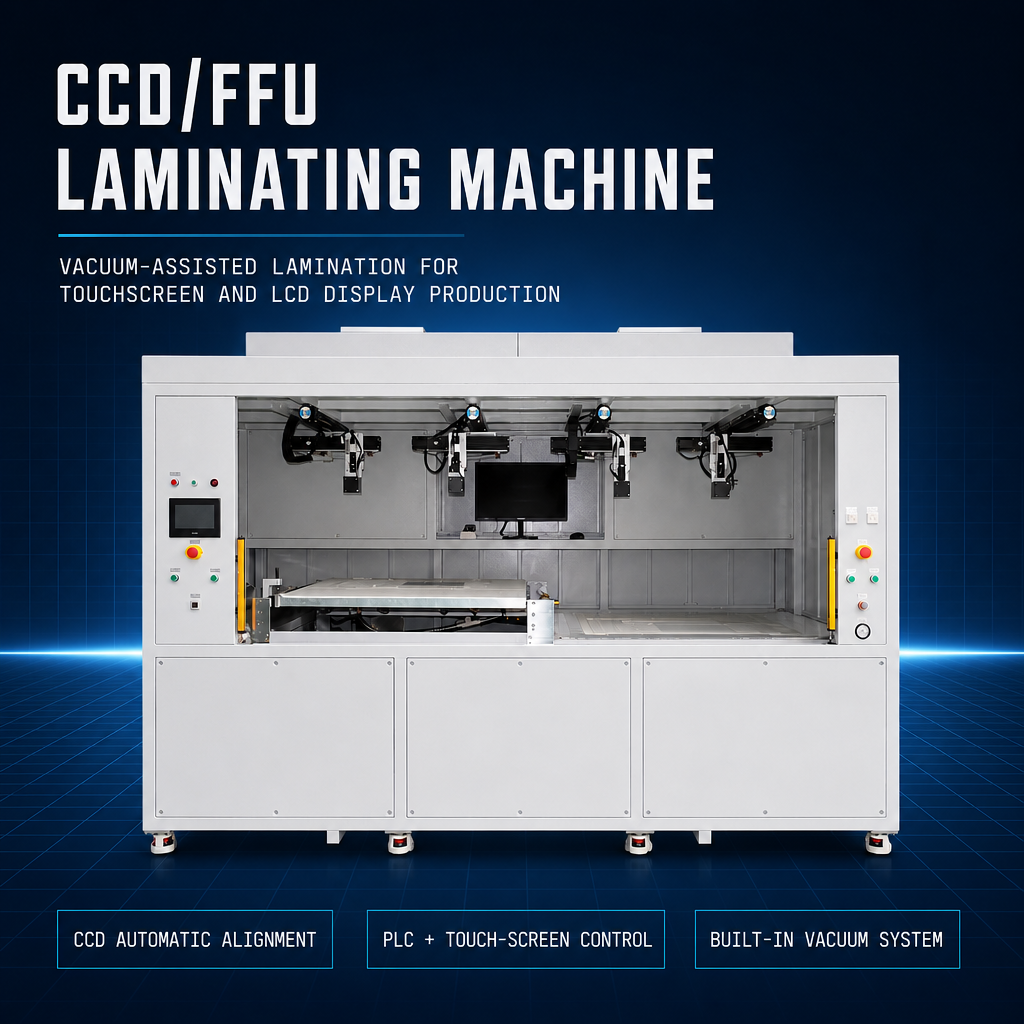
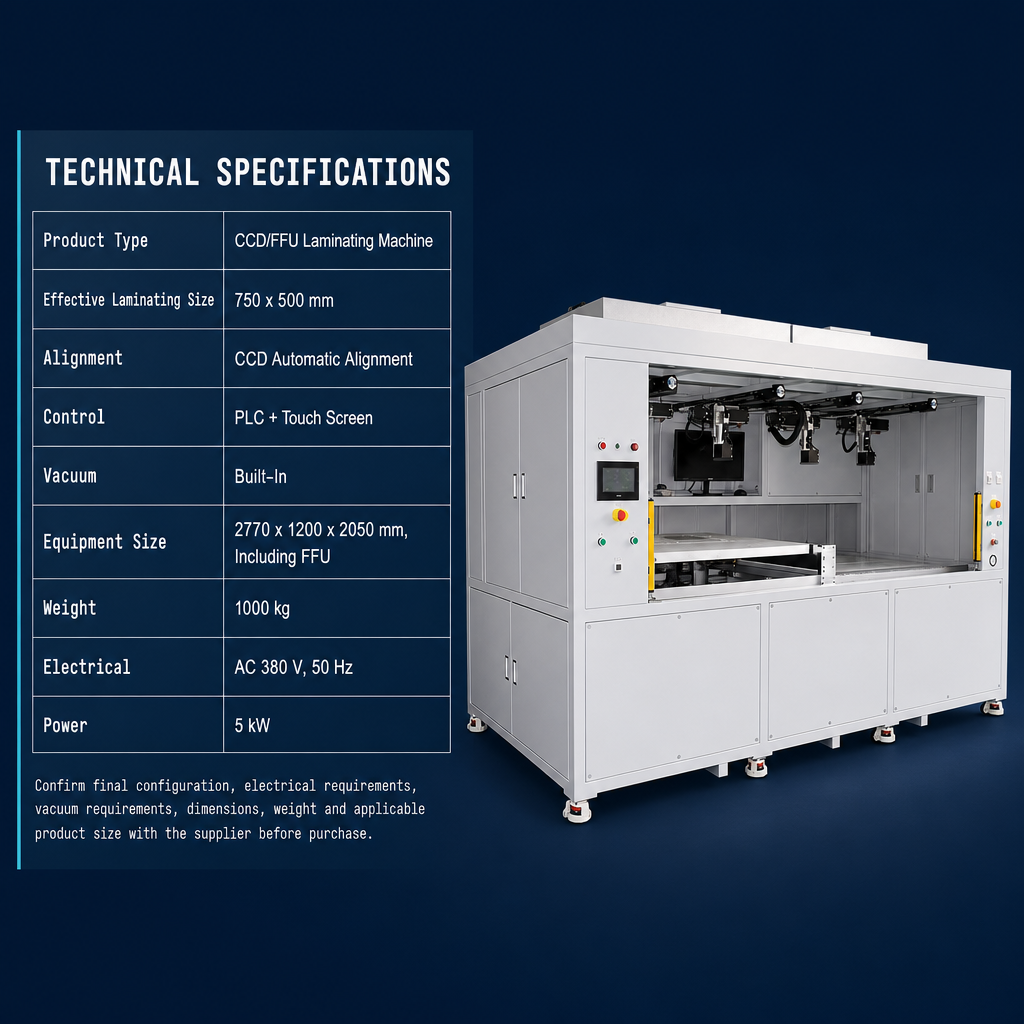
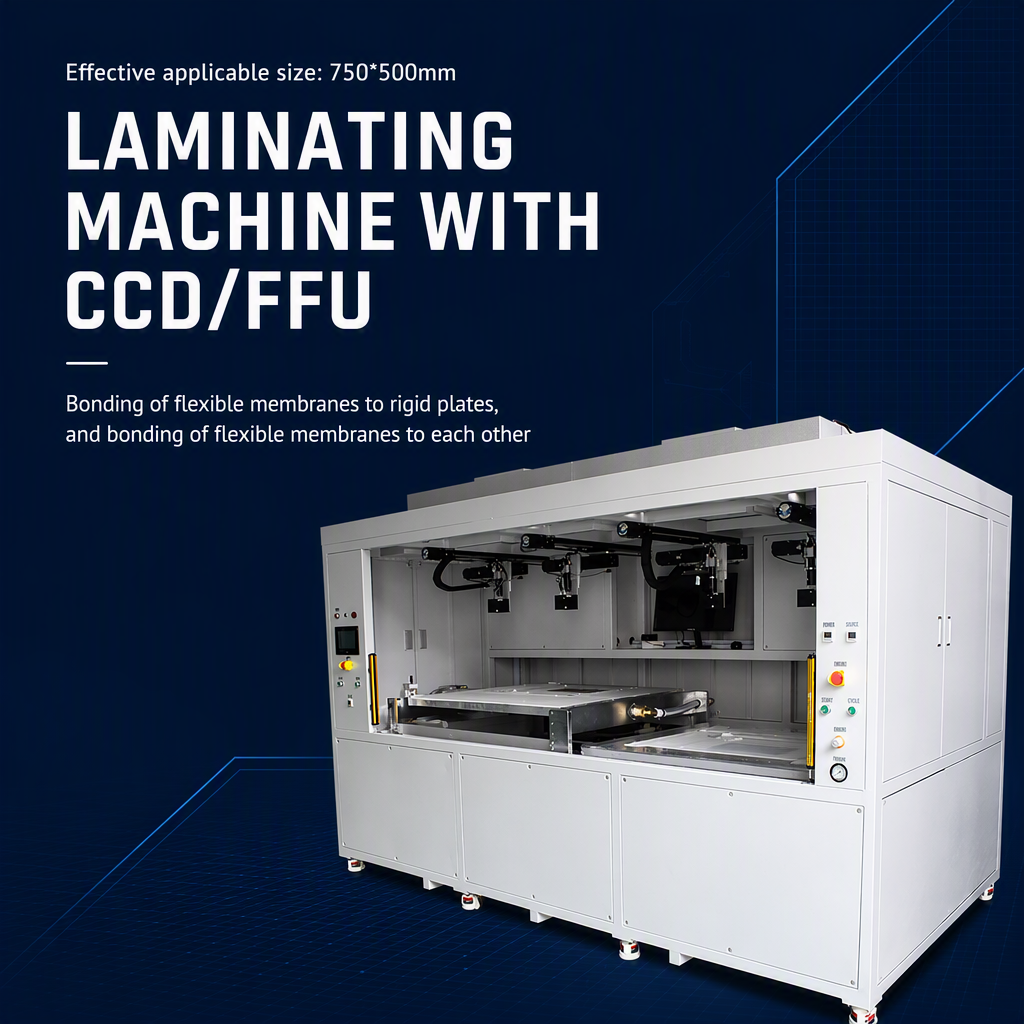
The 750×500 Laminating Machine with CCD/FFU
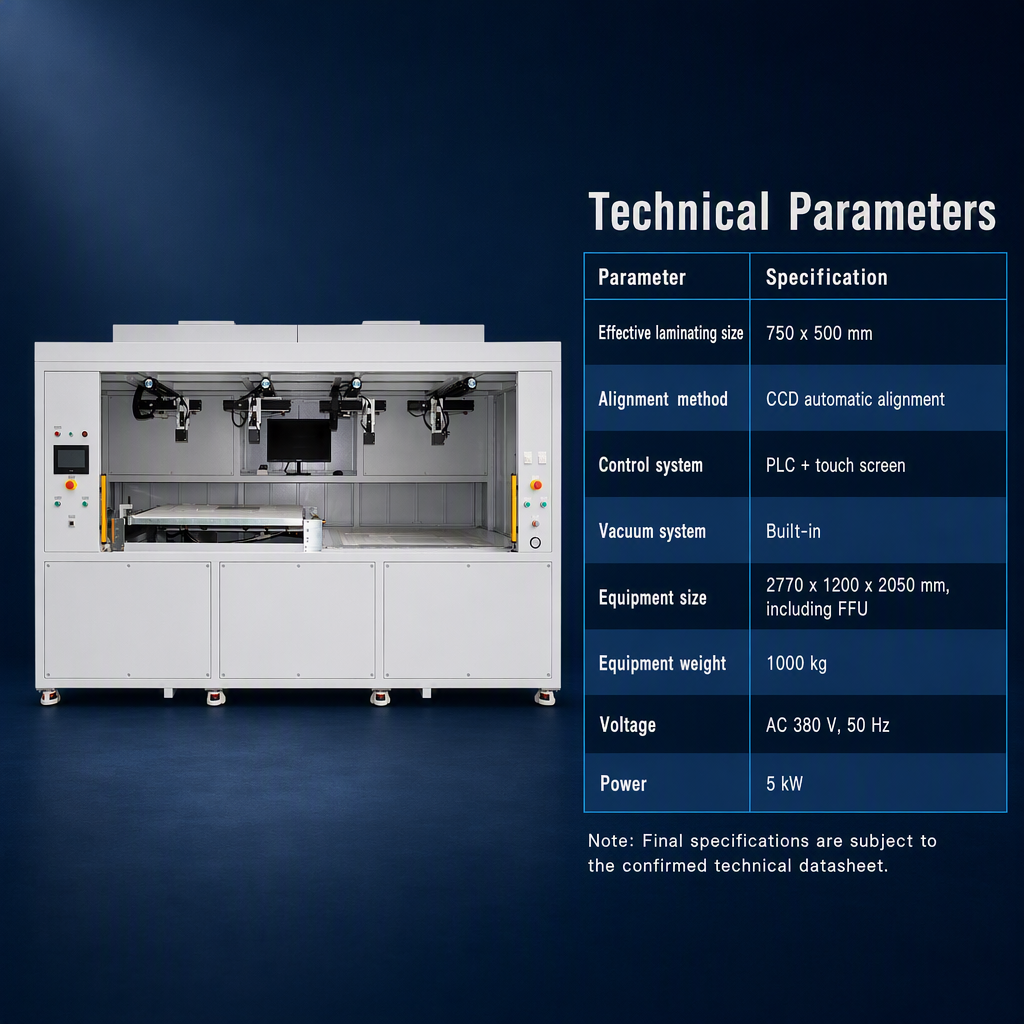
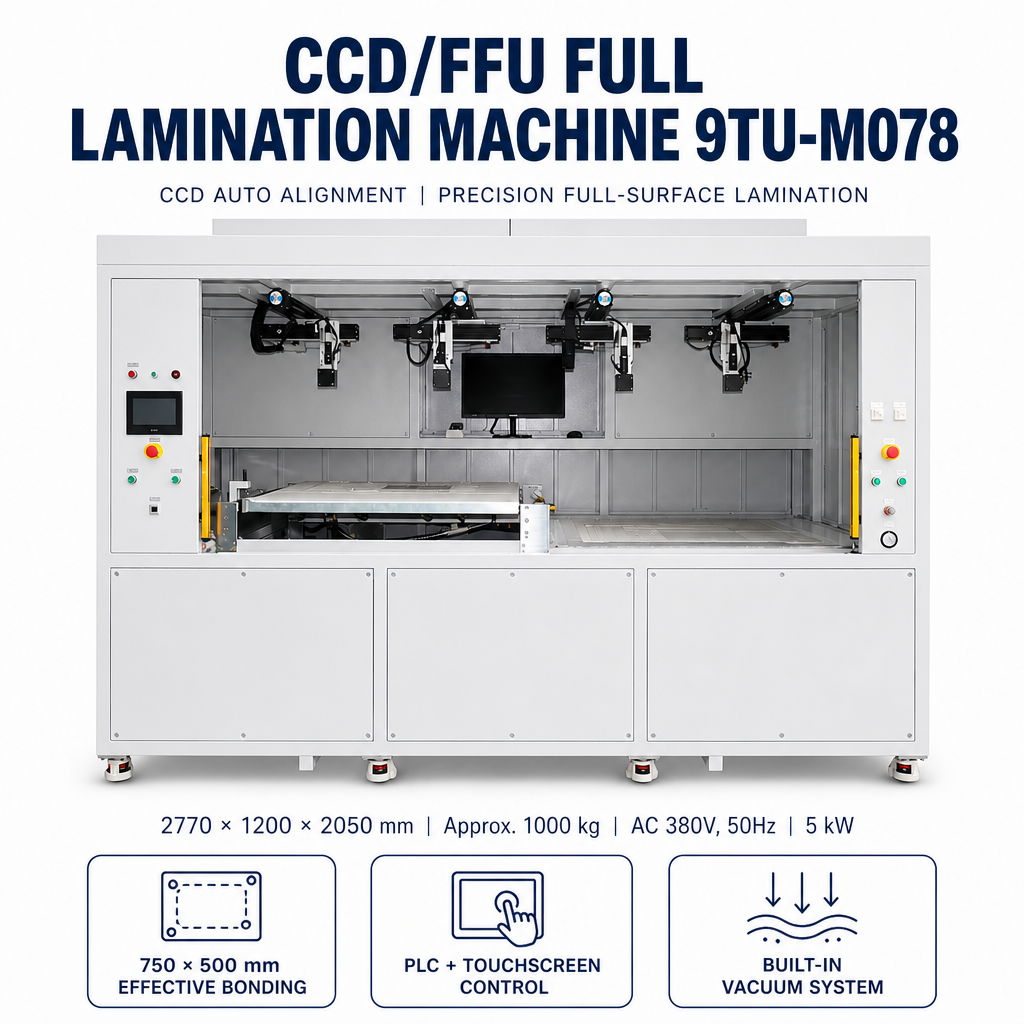
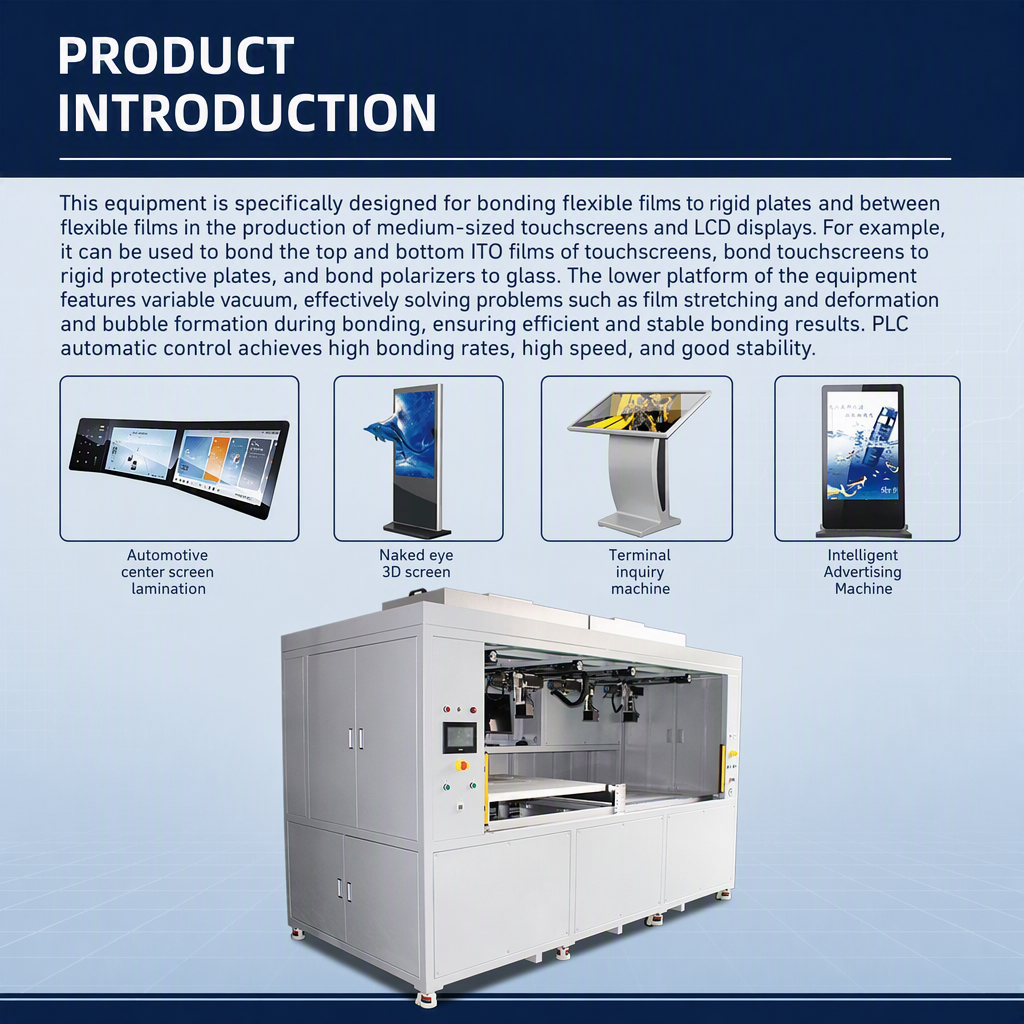
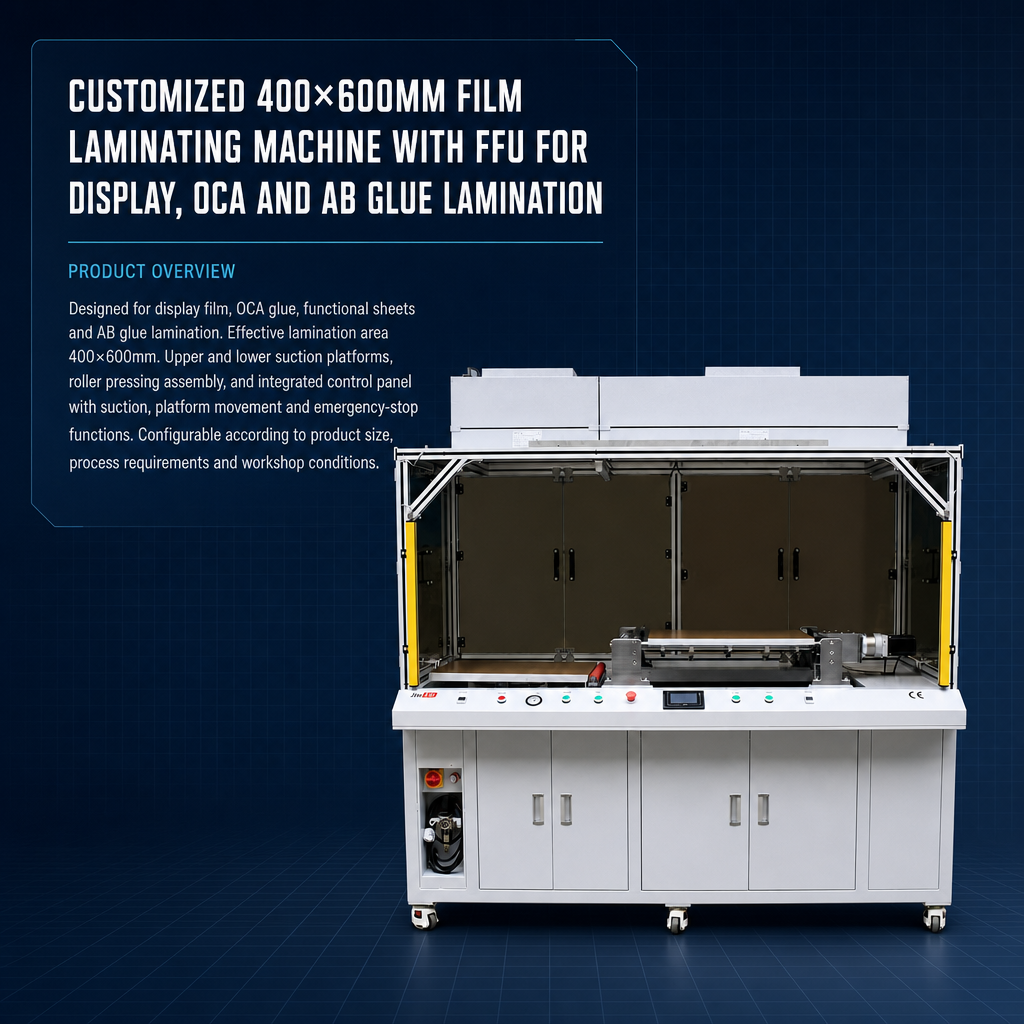
The 750×500 Laminating Machine with CCD/FFU is designed for bonding flexible films to rigid plates and between flexible films in the production of medium-sized touchscreens and LCD displays. It addres...
GET QUOTE NOW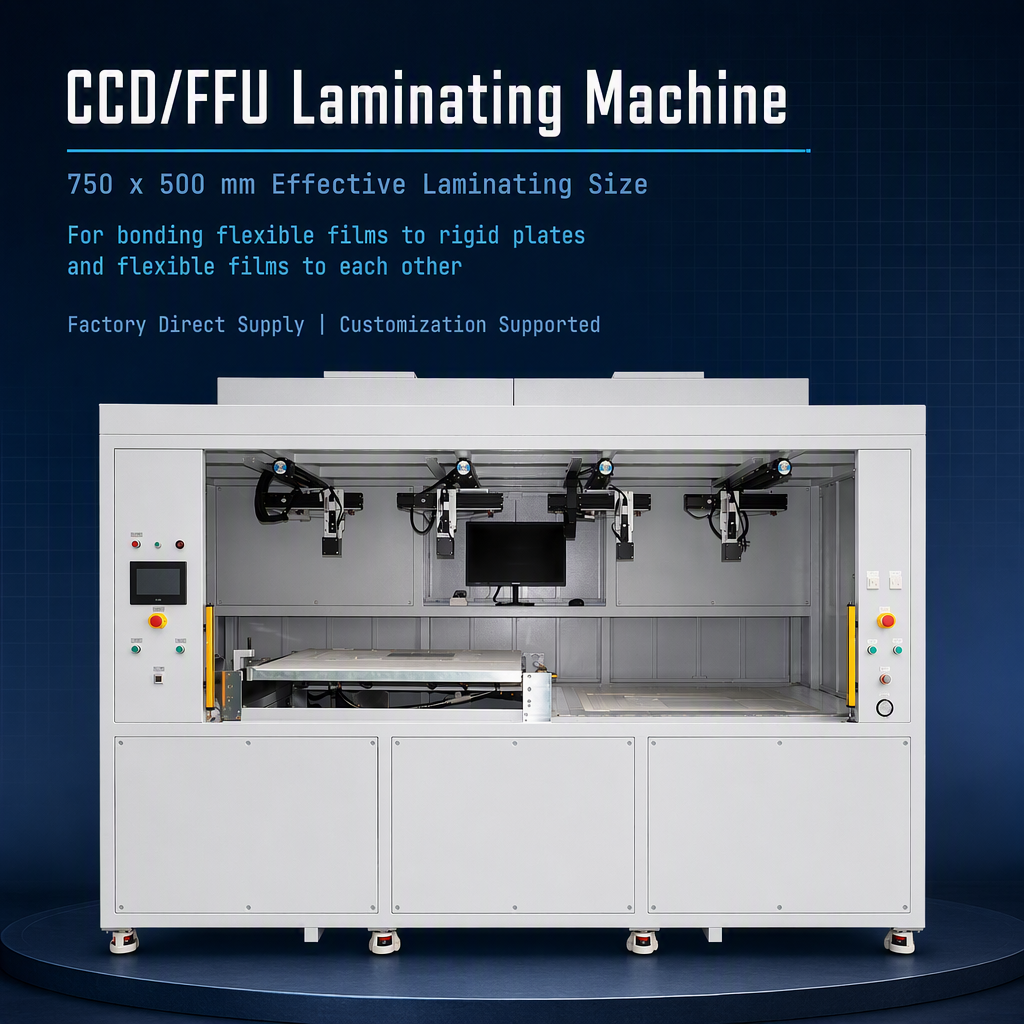
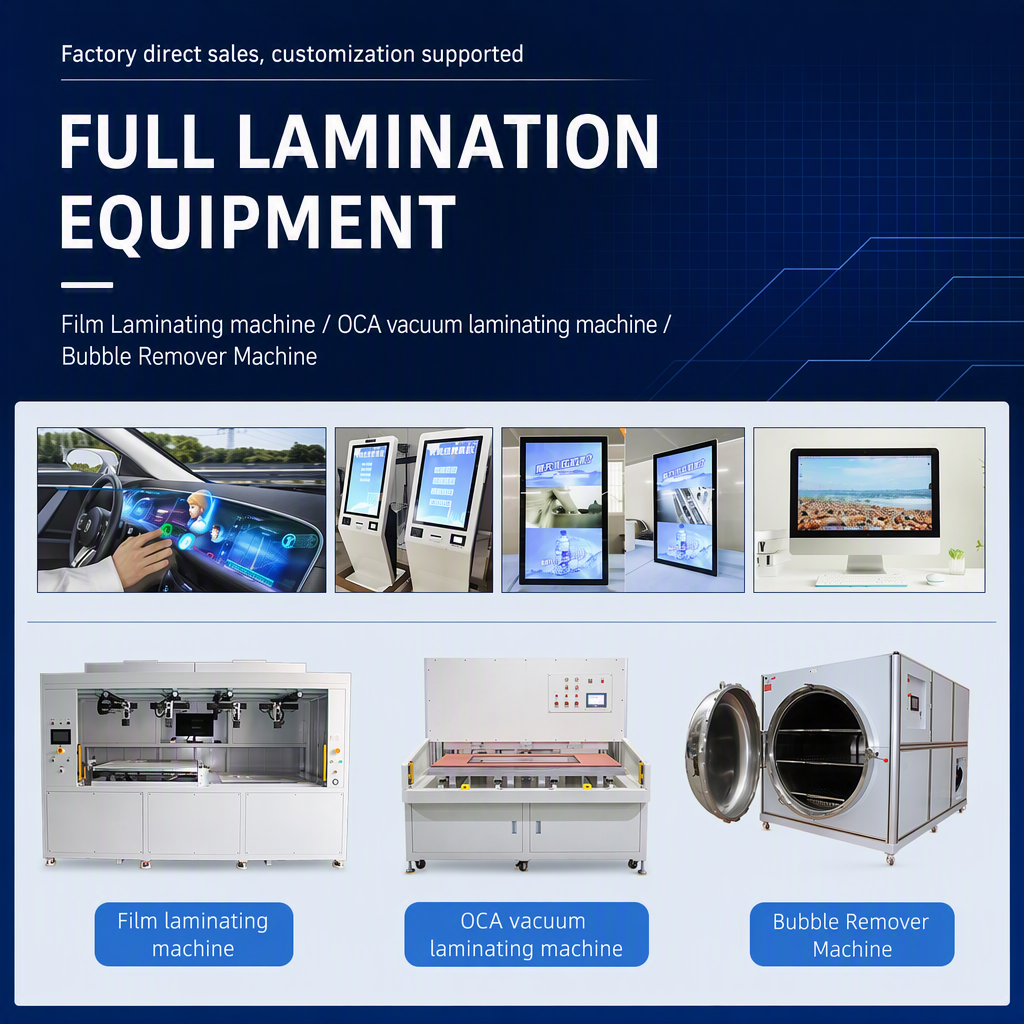
Typical process applications confirmed from product imagery
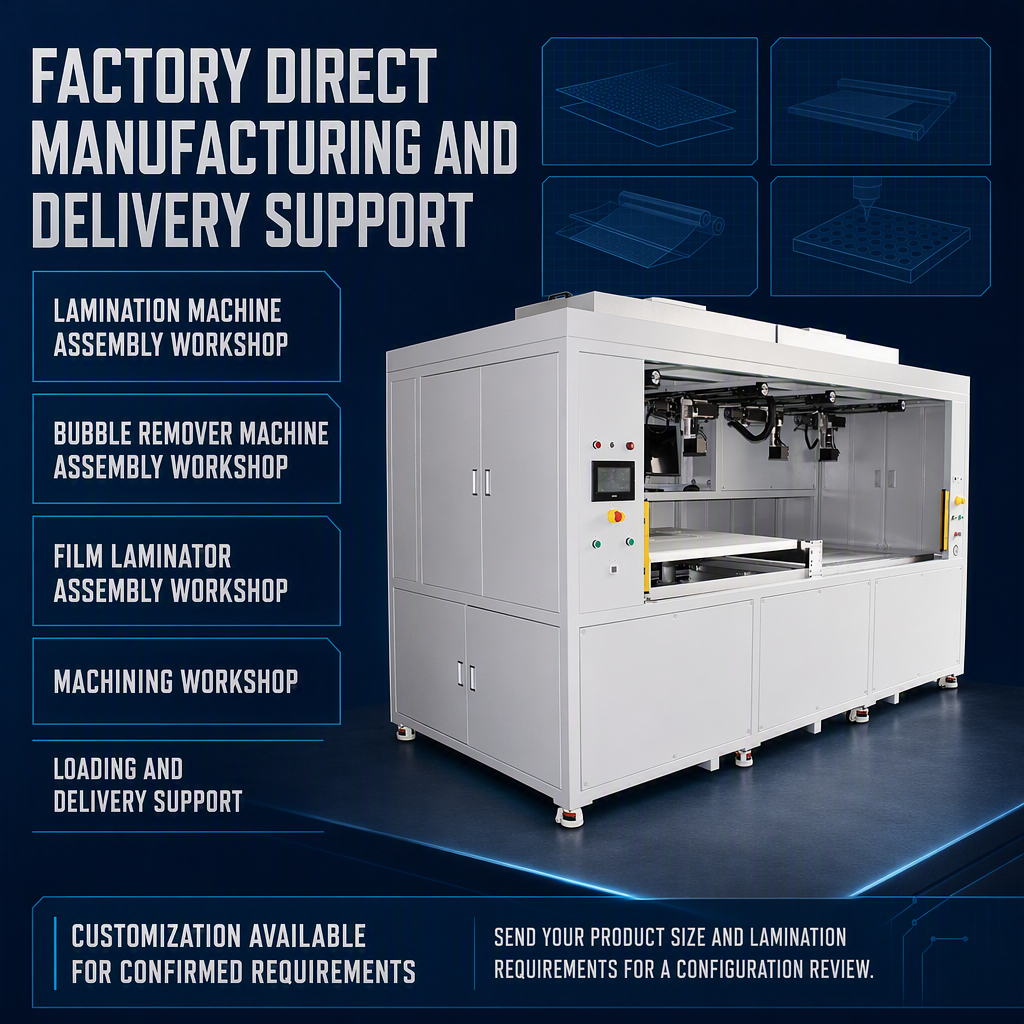
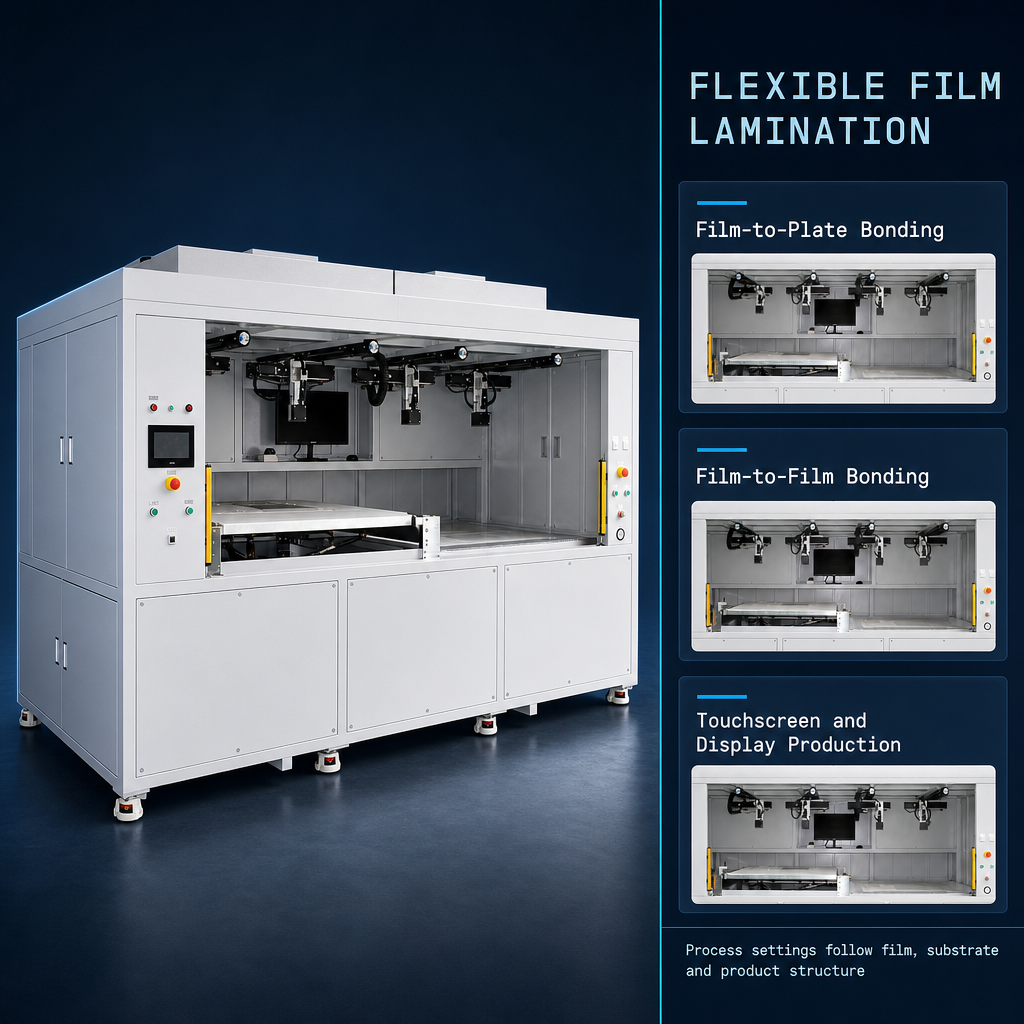
Bonding top and bottom ITO films of touchscreen sensors
Bonding touchscreen assemblies to rigid protective plates
Bonding polarizers to glass substrates
Protective film application on flat display glass
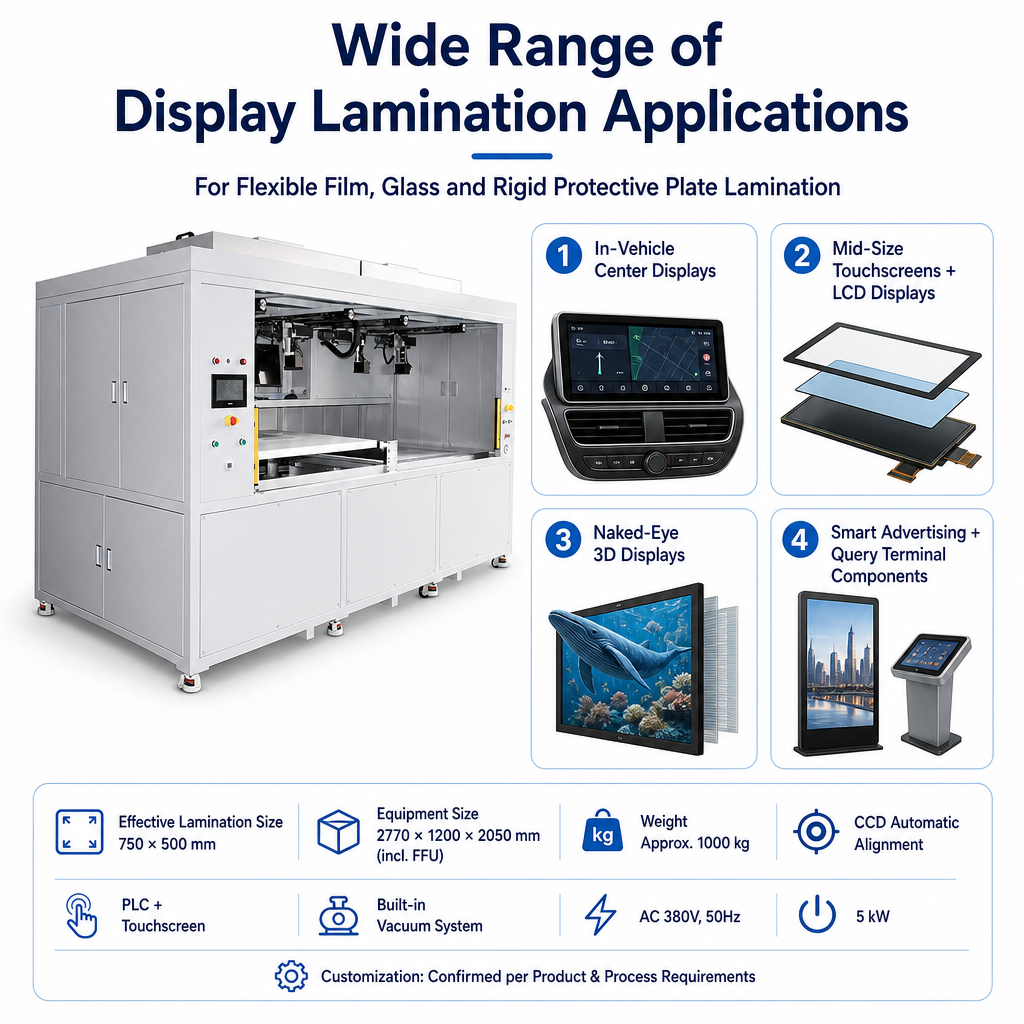
Application industries confirmed from product imagery:
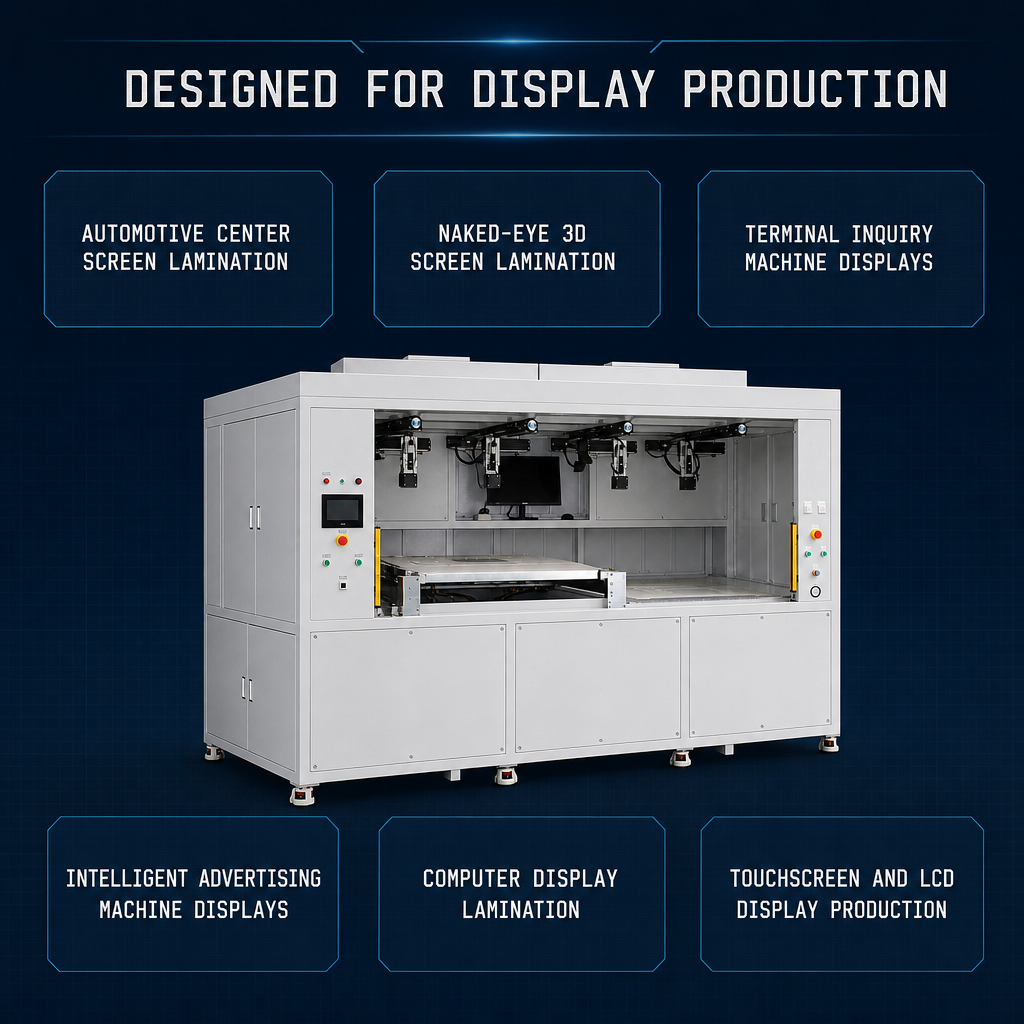
In-vehicle center display assemblies
Mid-size touchscreen and LCD displays
Naked-eye 3D displays
Smart advertising and query terminal displays
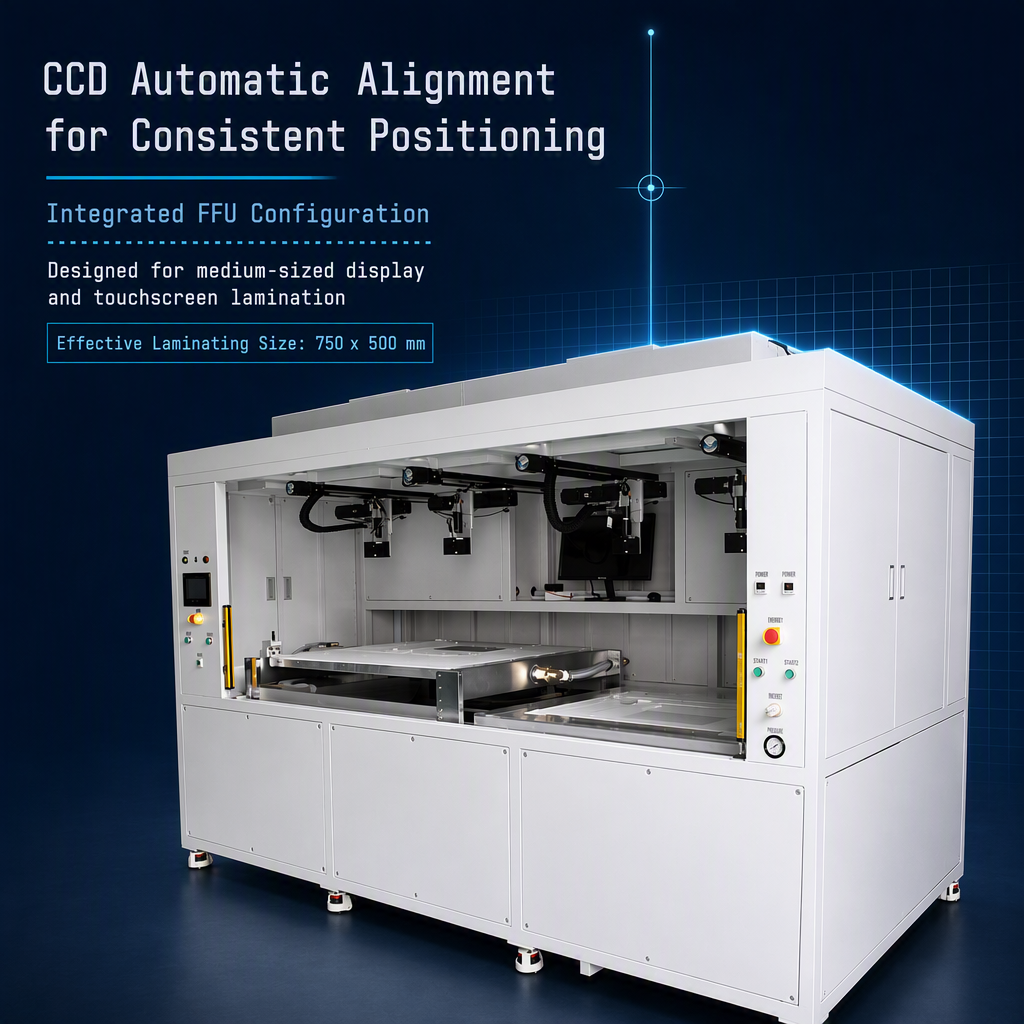
The lower platform features variable vacuum control, which addresses film stretching, deformation, and bubble formation during bonding — adapting suction force to different film stiffness and substrate combinations.
Compatible Film & Substrate Materials
Film / Material Type Industrial Application
OCA (Optical Clear Adhesive) film Cover glass optical bonding, module assembly
ITO conductive film Top/bottom ITO layer bonding for capacitive touchscreens
Polarizing film LCD polarizer lamination on display glass
Protective film Surface protection on display panel glass
AB adhesive film Glass-to-panel and panel-to-panel bonding
SCA (Super Clear Adhesive) film Flat display surface bonding
Rigid protective plate Touchscreen bonding to protective glass/plate
Compatible Substrate & Application Scenarios
Application Bonding Mode Notes
In-vehicle center display panels G+F Automotive multi-screen and wide-format dashboard panels
Mid-size touchscreen assemblies G+F / F+F ITO film bonding, sensor-to-glass bonding
Naked-eye 3D display glass G+F Precision optical film angular placement on lenticular panels
Intelligent advertising terminals G+F Protective and optical film bonding on signage display glass
Query terminal touch panels G+F Glass-to-film bonding for interactive display assembly
LCD module polarizer bonding G+F Polarizer film application on flat LCD glass
Key Features
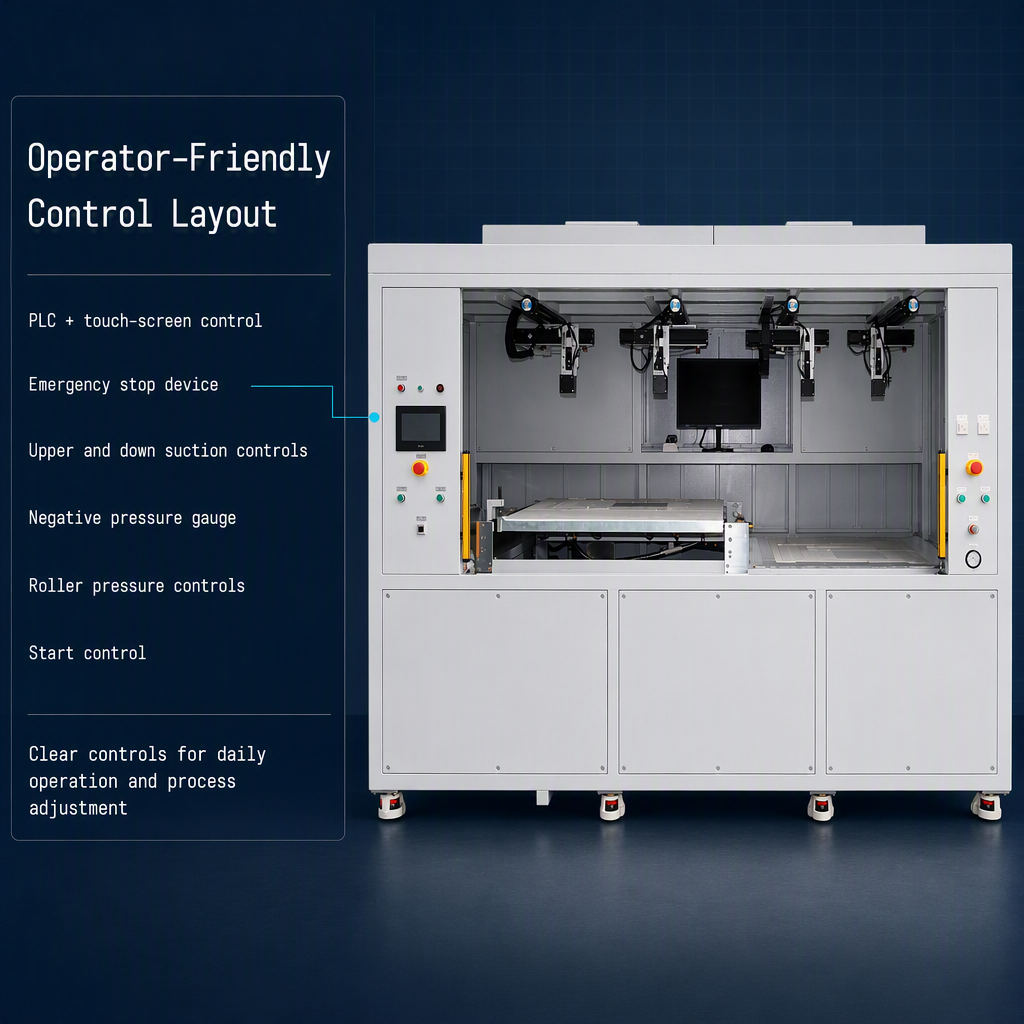
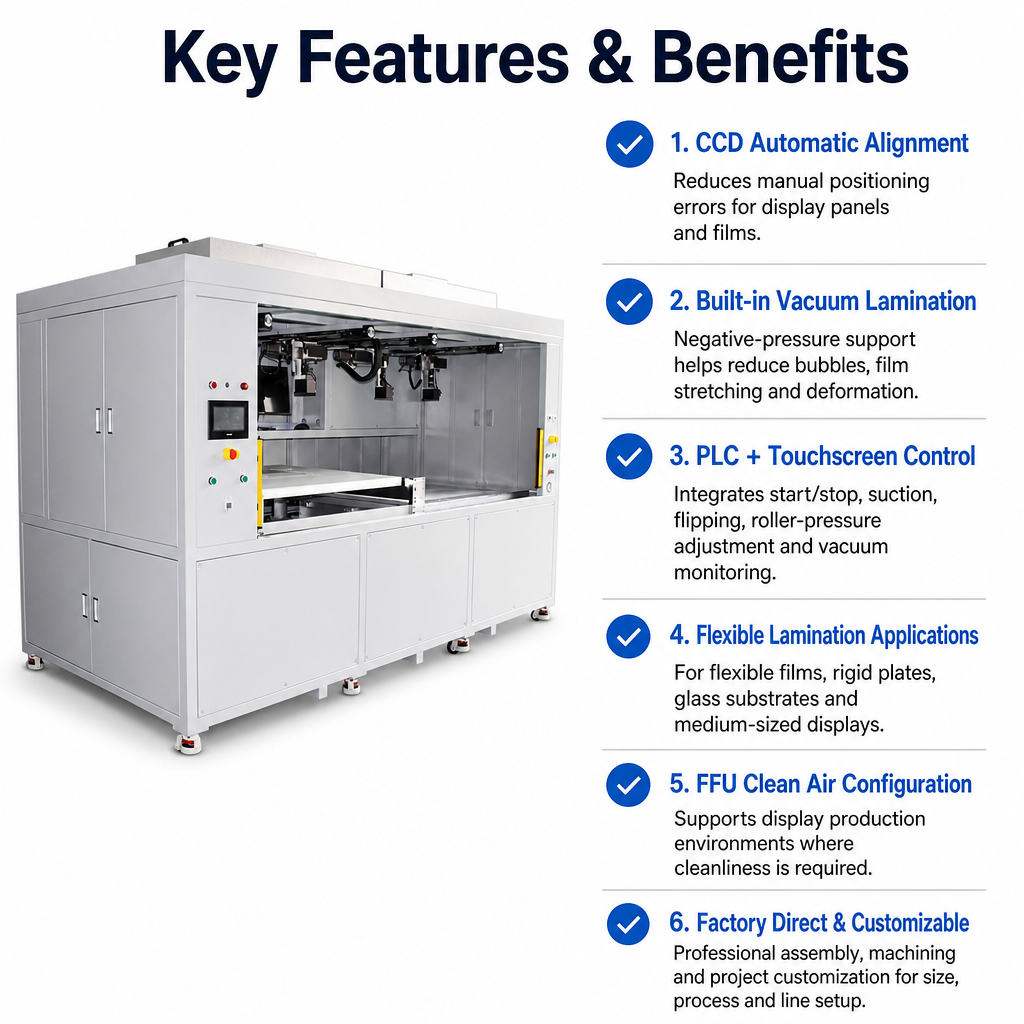
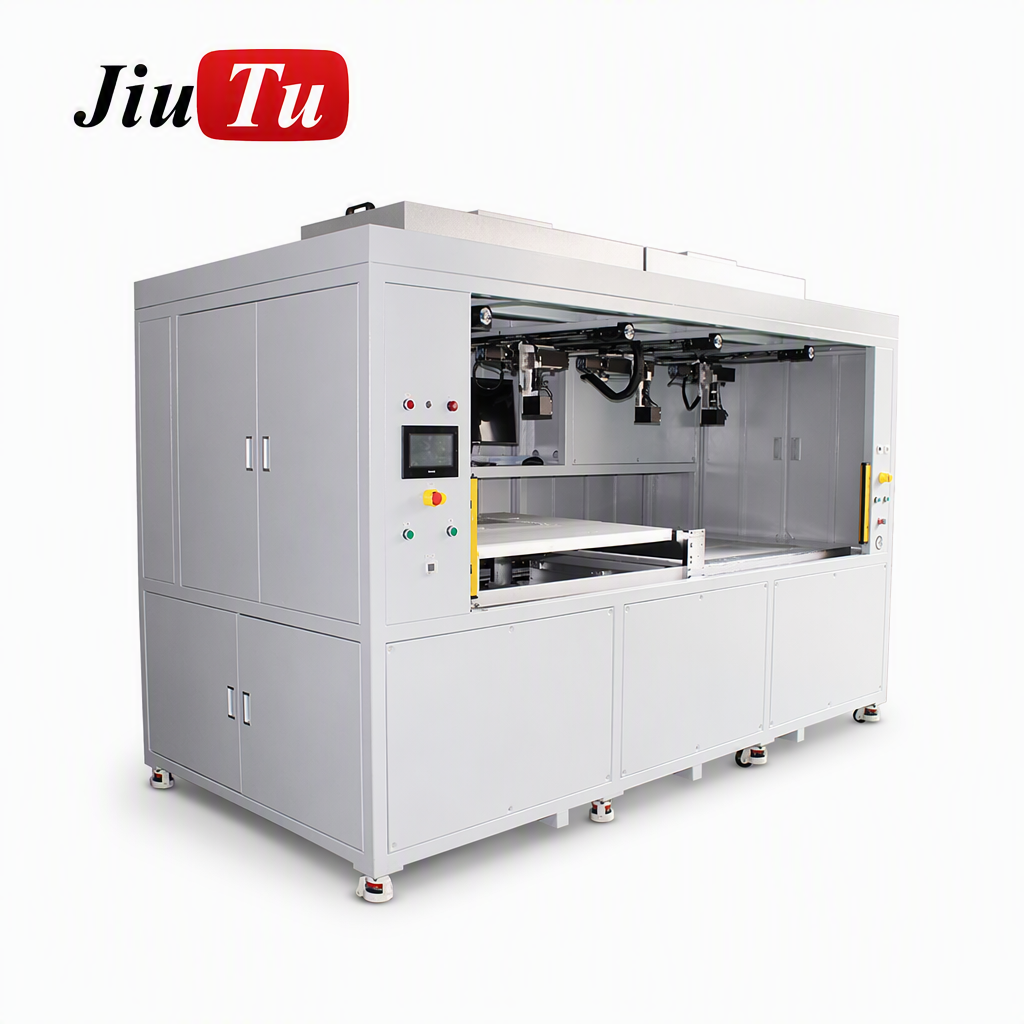
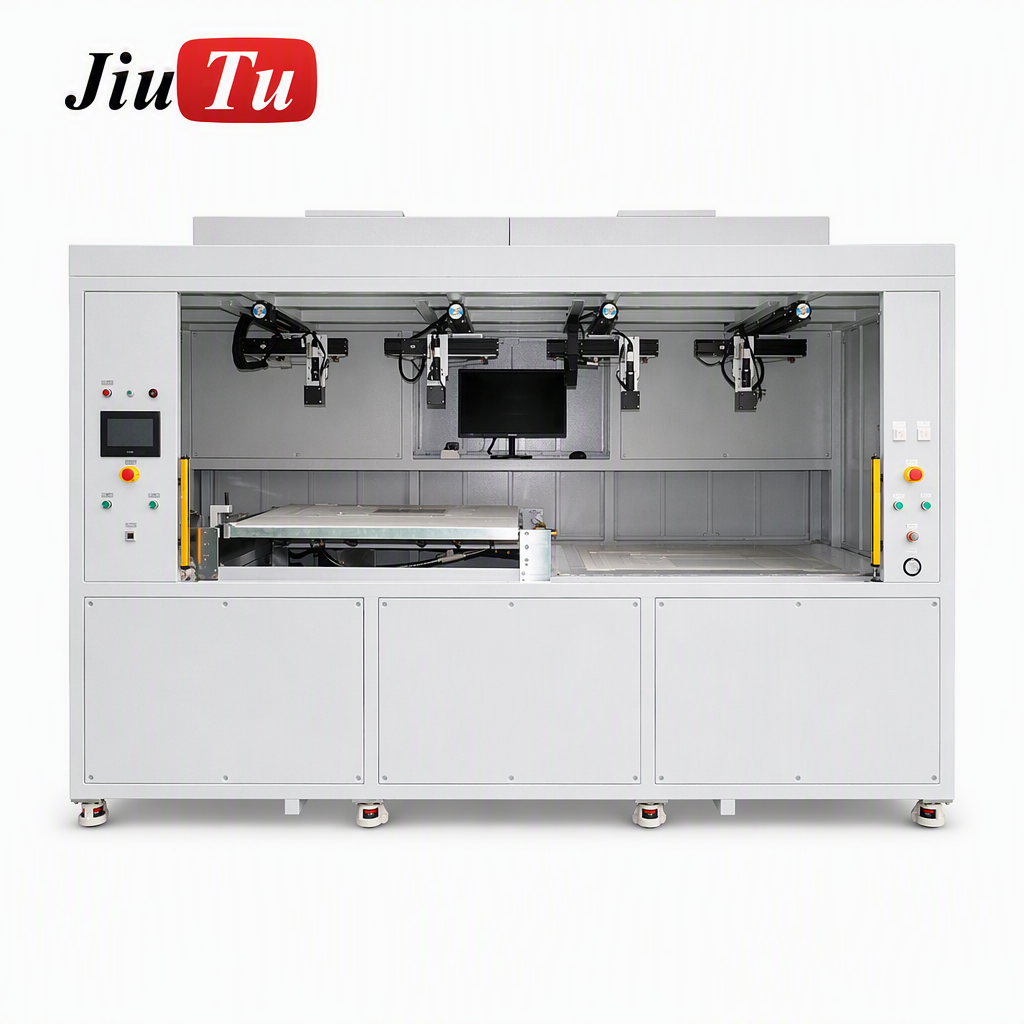
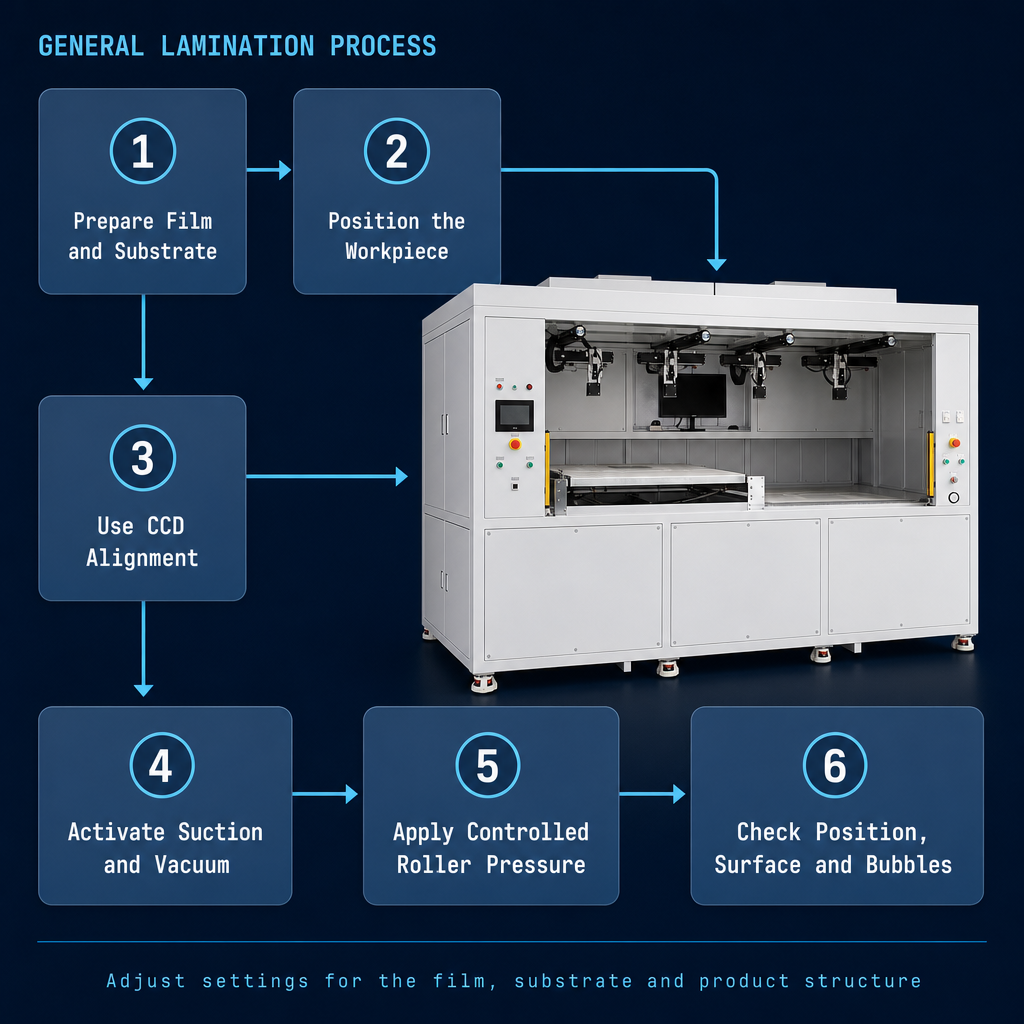
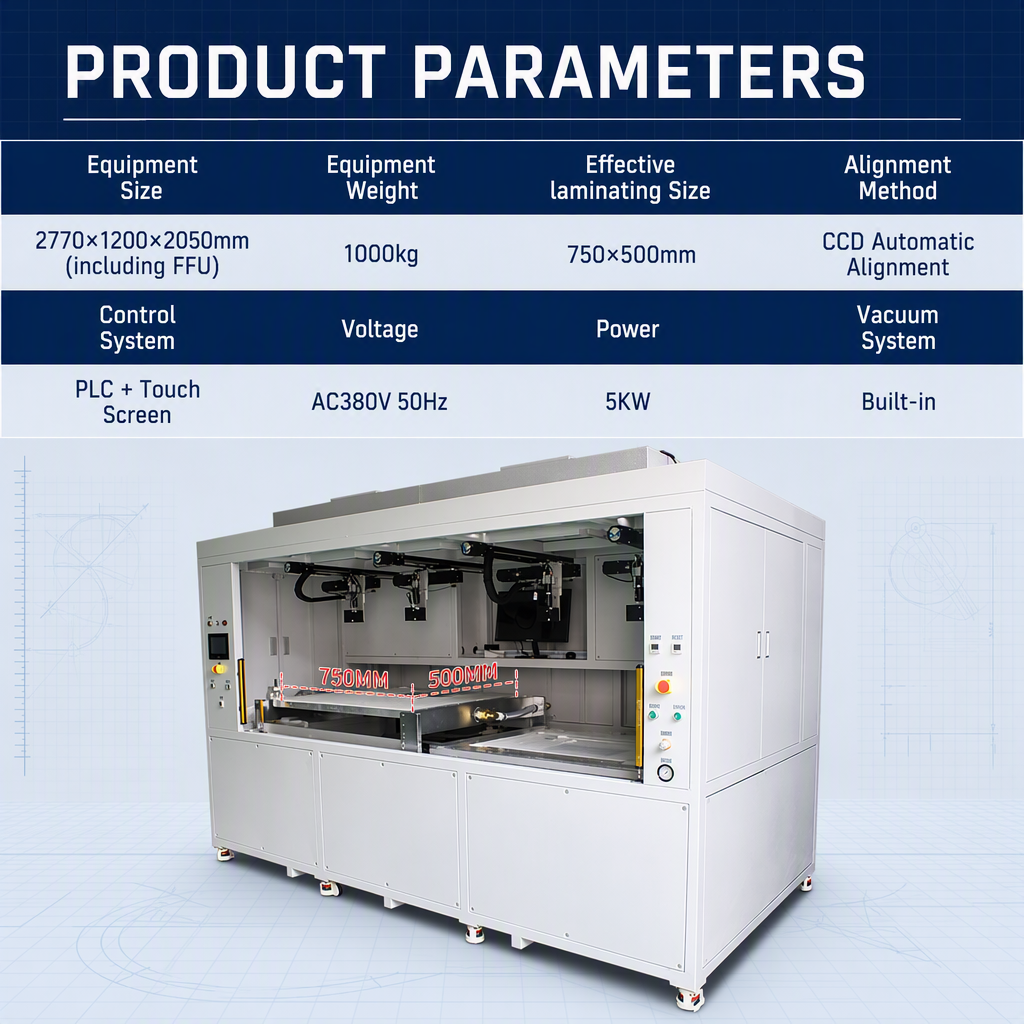
1. CCD Automatic Alignment The machine is equipped with CCD camera modules mounted on the overhead cross-beam inside the enclosure. The system captures alignment marks on both the substrate and the film, calculates positional offset, and corrects registration before the bonding cycle begins. This reduces manual positioning errors on display panels and films across production batches.
CCD alignment is particularly relevant for:
Automotive multi-display panels where film edge registration affects visual continuity
Naked-eye 3D displays where lenticular film angular placement directly affects 3D quality
Touchscreen ITO film stacking where layer-to-layer registration affects sensor performance
CCD alignment accuracy: [To be confirmed — not stated in available documentation]
2. Built-In Vacuum Lamination — Variable Vacuum Control The lower platform uses a built-in vacuum system with variable vacuum control. Negative pressure supports the substrate and film during bonding, reducing bubble formation, film stretching, and deformation. The variable vacuum mode adapts suction force to different film and substrate material combinations — firmer suction for rigid substrates, gentler suction for soft films that are susceptible to stretching under fixed vacuum.
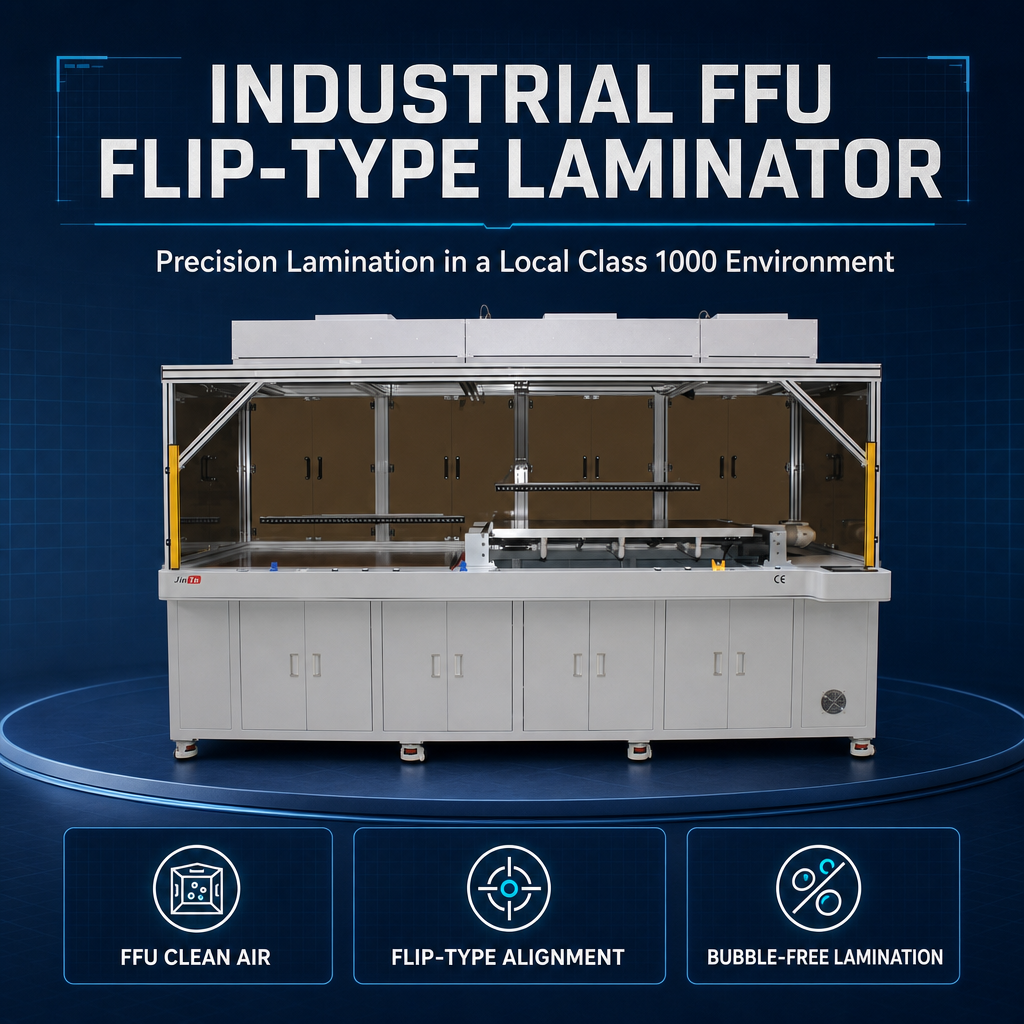
3. FFU Clean Air Configuration The machine incorporates an FFU (Fan Filter Unit) system in the overhead structure of the enclosure, providing filtered clean-air flow over the lamination work zone during the bonding cycle. This supports display production environments where particulate contamination during film exposure and bonding needs to be controlled.
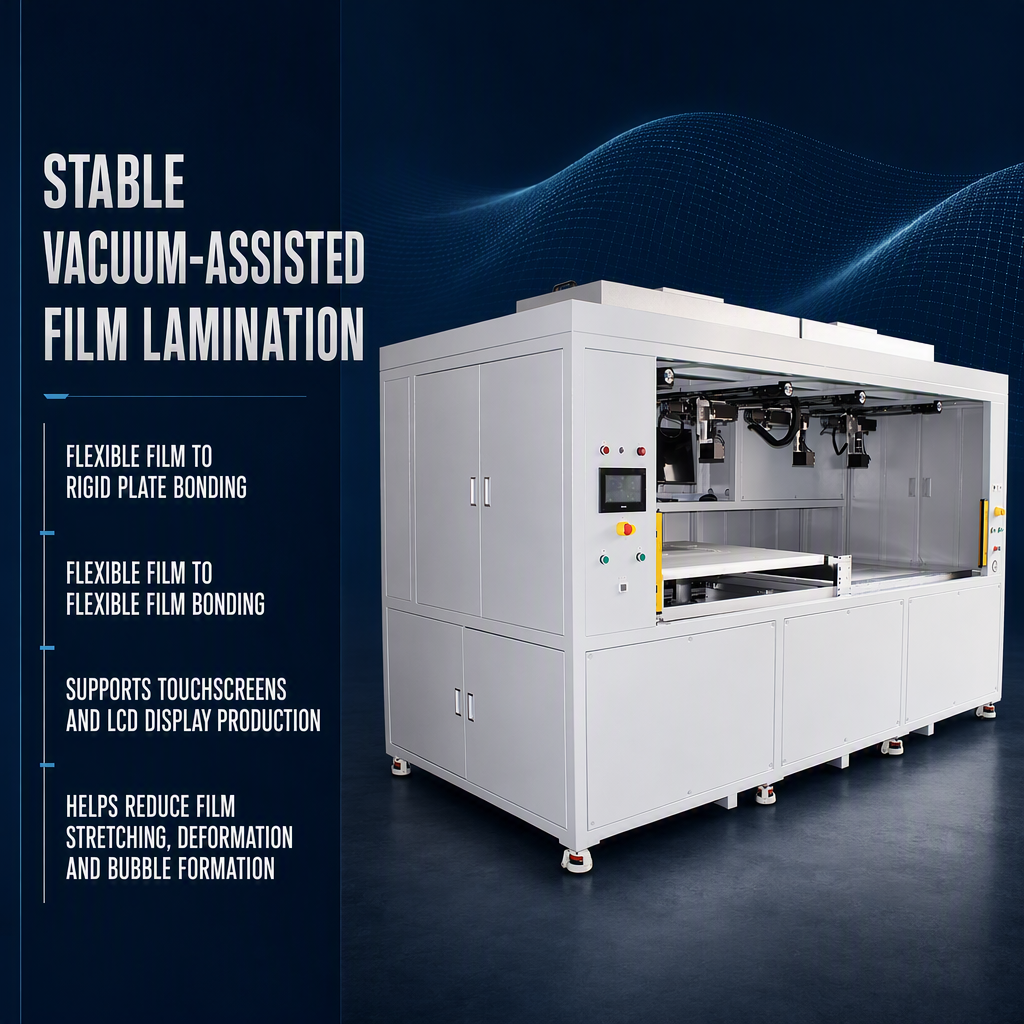
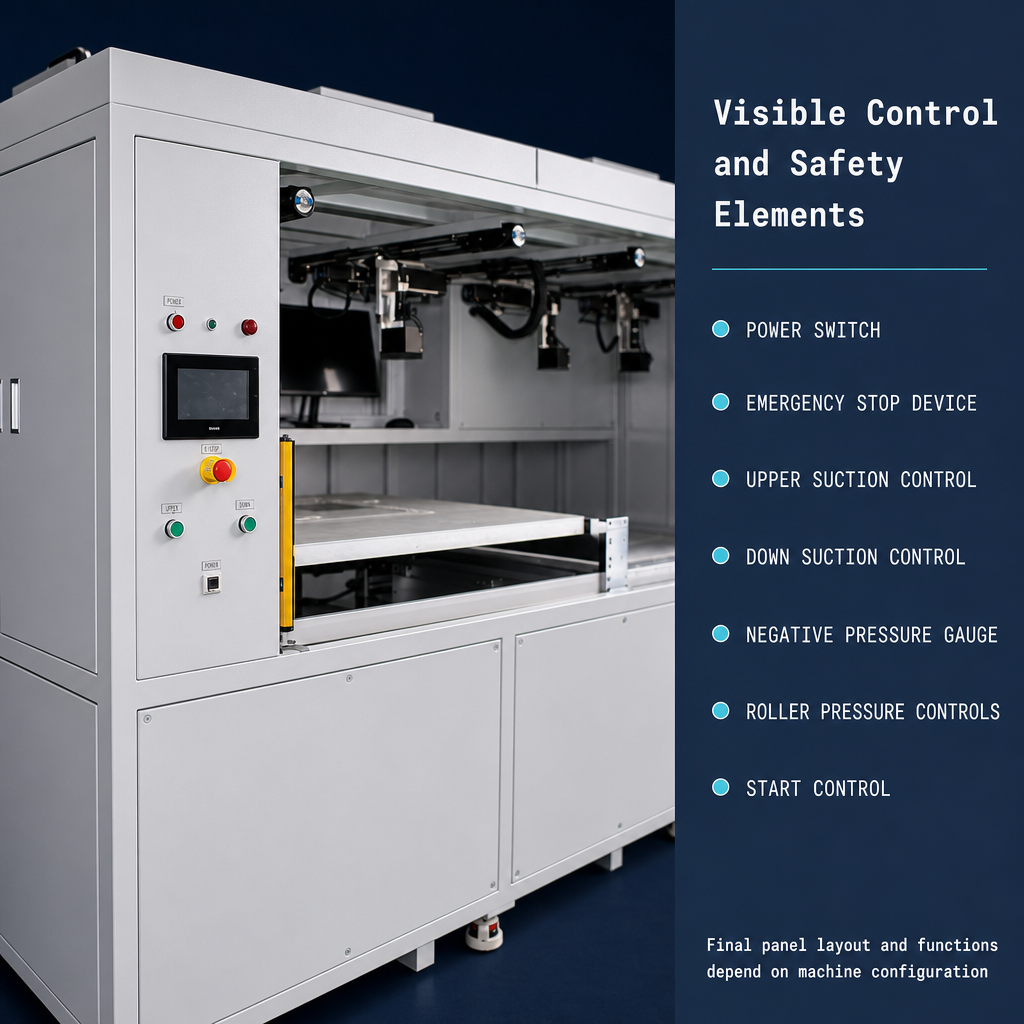
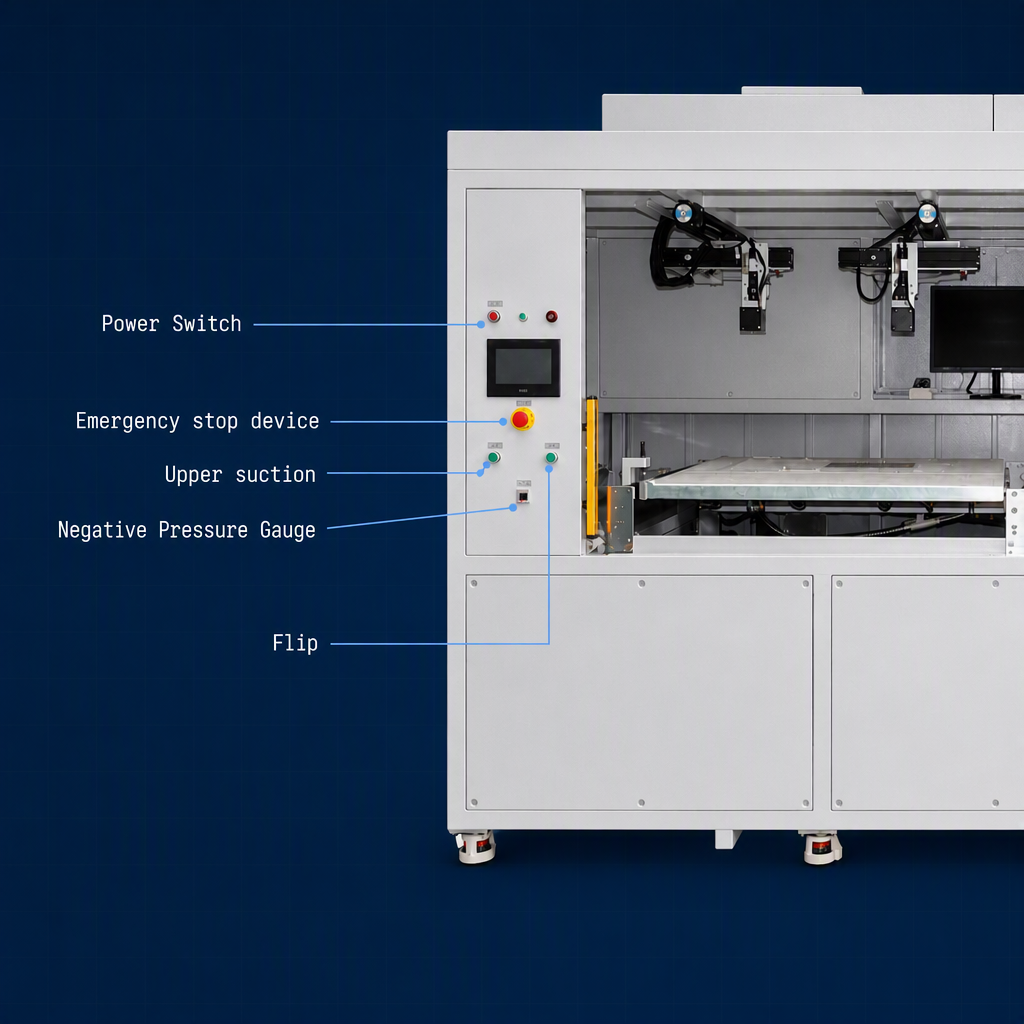
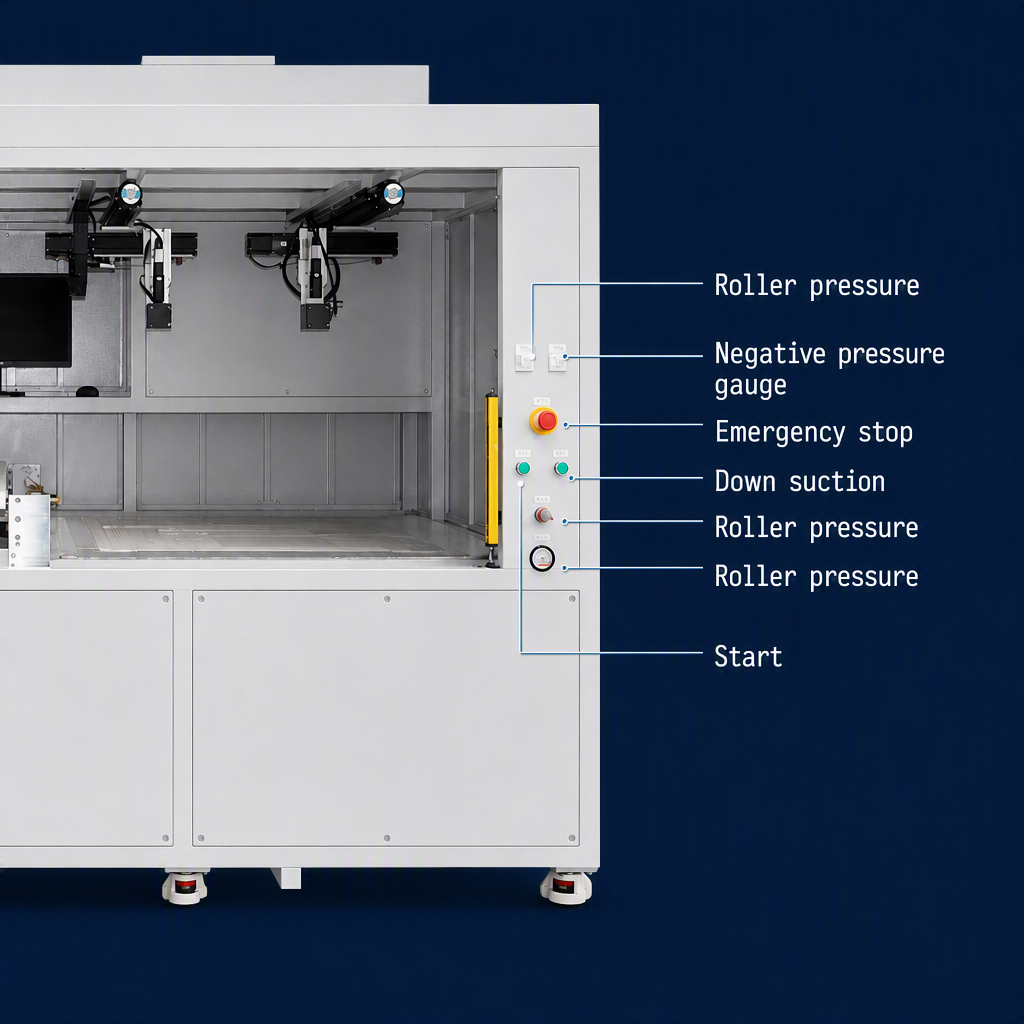
4. PLC + Touchscreen Control The PLC + touchscreen control system integrates start/stop operation, upper suction control, flip-platform operation, roller-pressure adjustment, and vacuum monitoring in a single operator interface. Operating controls visible on the machine include:
Power switch
Emergency stop device
Upper suction control
Negative pressure gauge
Flip platform control
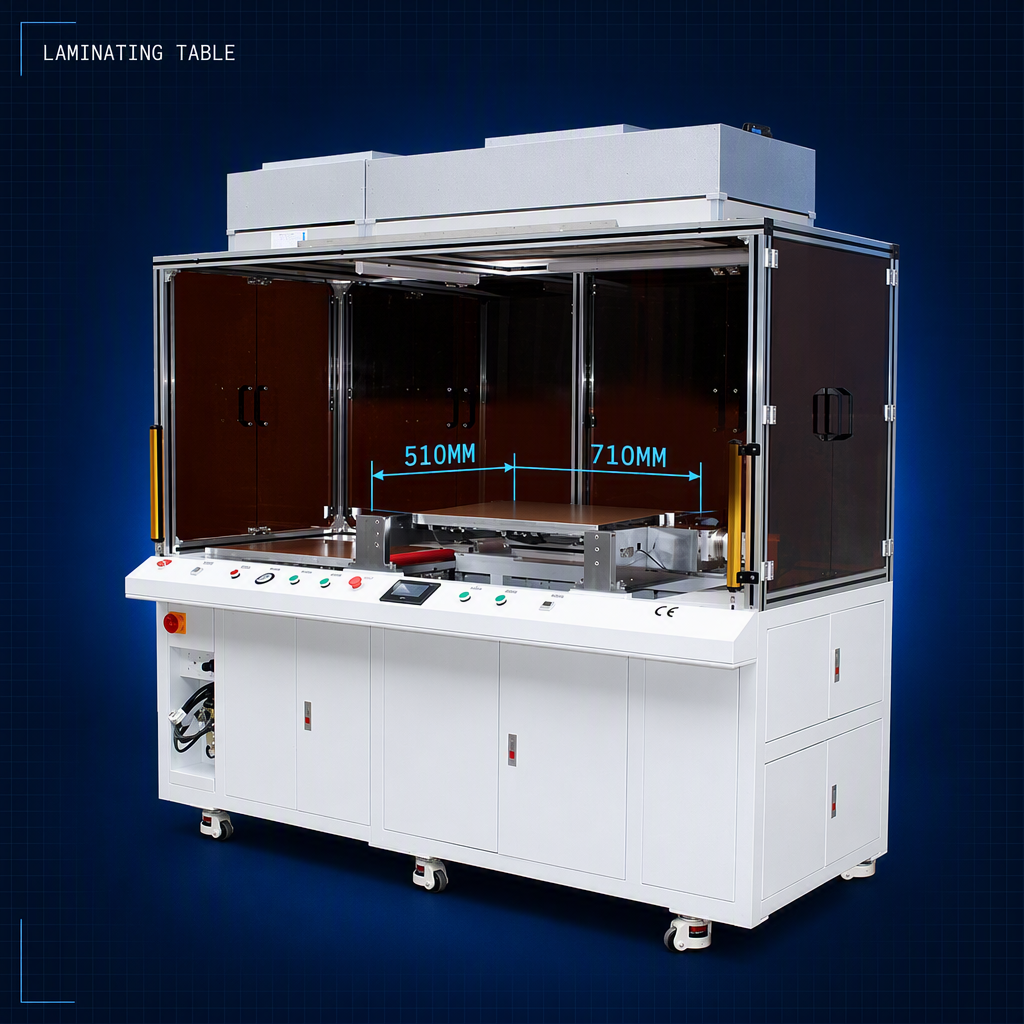
5. Flip-Platform Architecture (G+F and F+F) The upper flip platform loads the film with vacuum suction, then rotates to the bonding angle at the start of each cycle. The lower platform holds the substrate. The roller progresses across the 750mm bonding stroke, bonding film to substrate progressively. Both G+F (flexible film to rigid plate/glass) and F+F (flexible film to flexible film) bonding modes are supported.
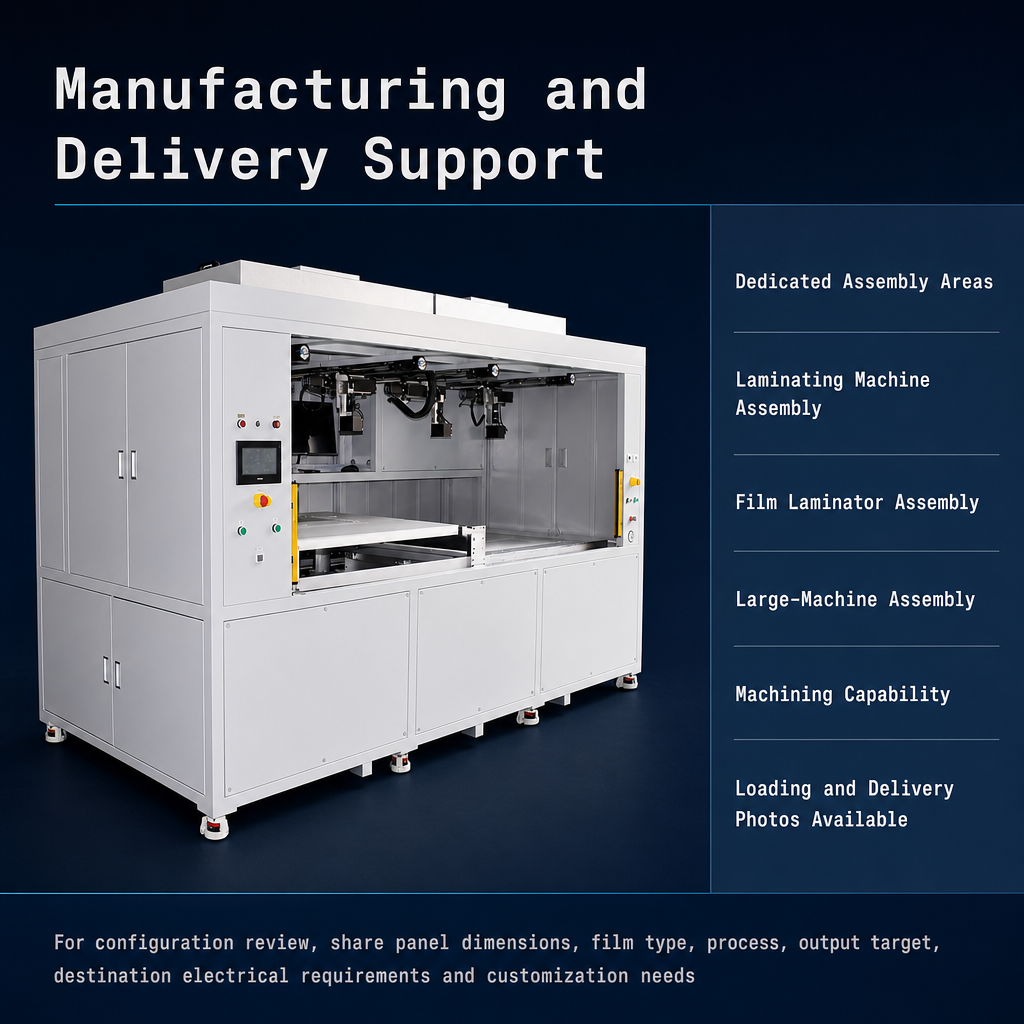
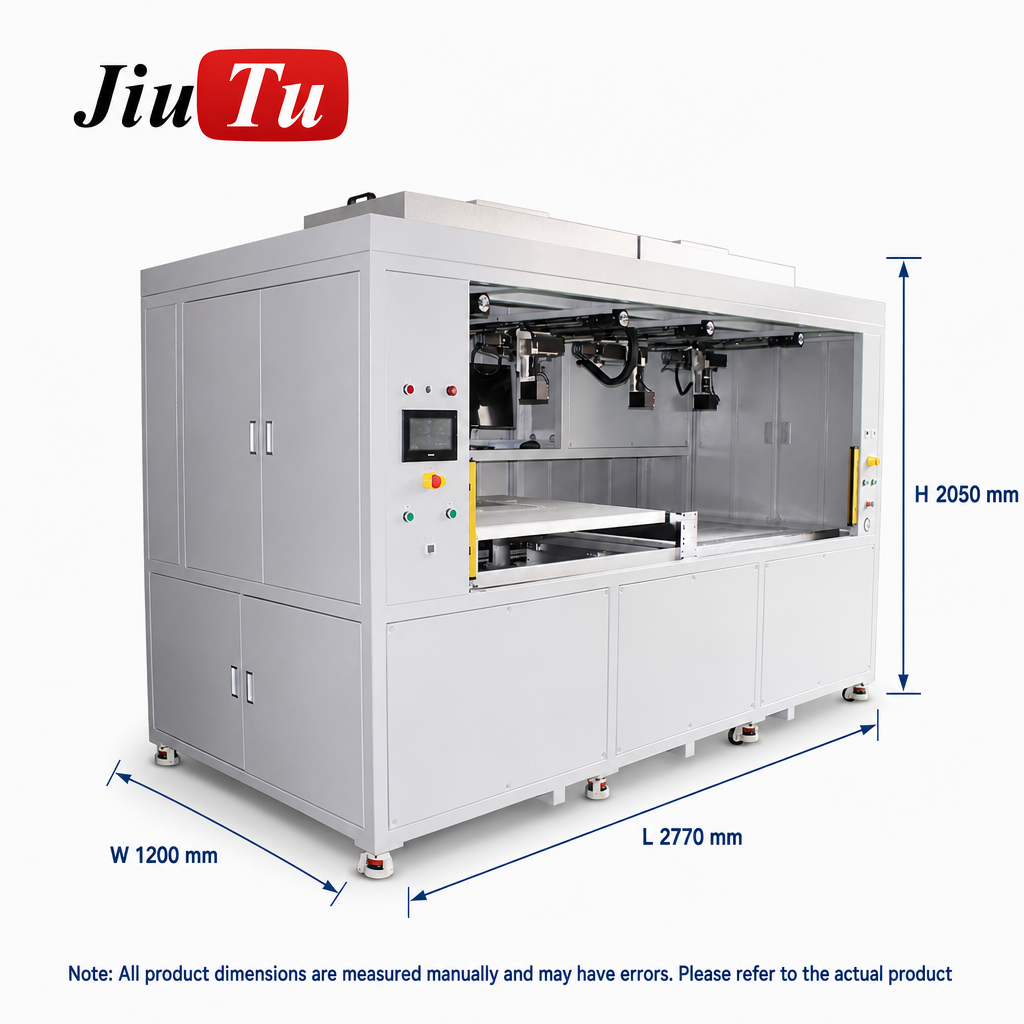
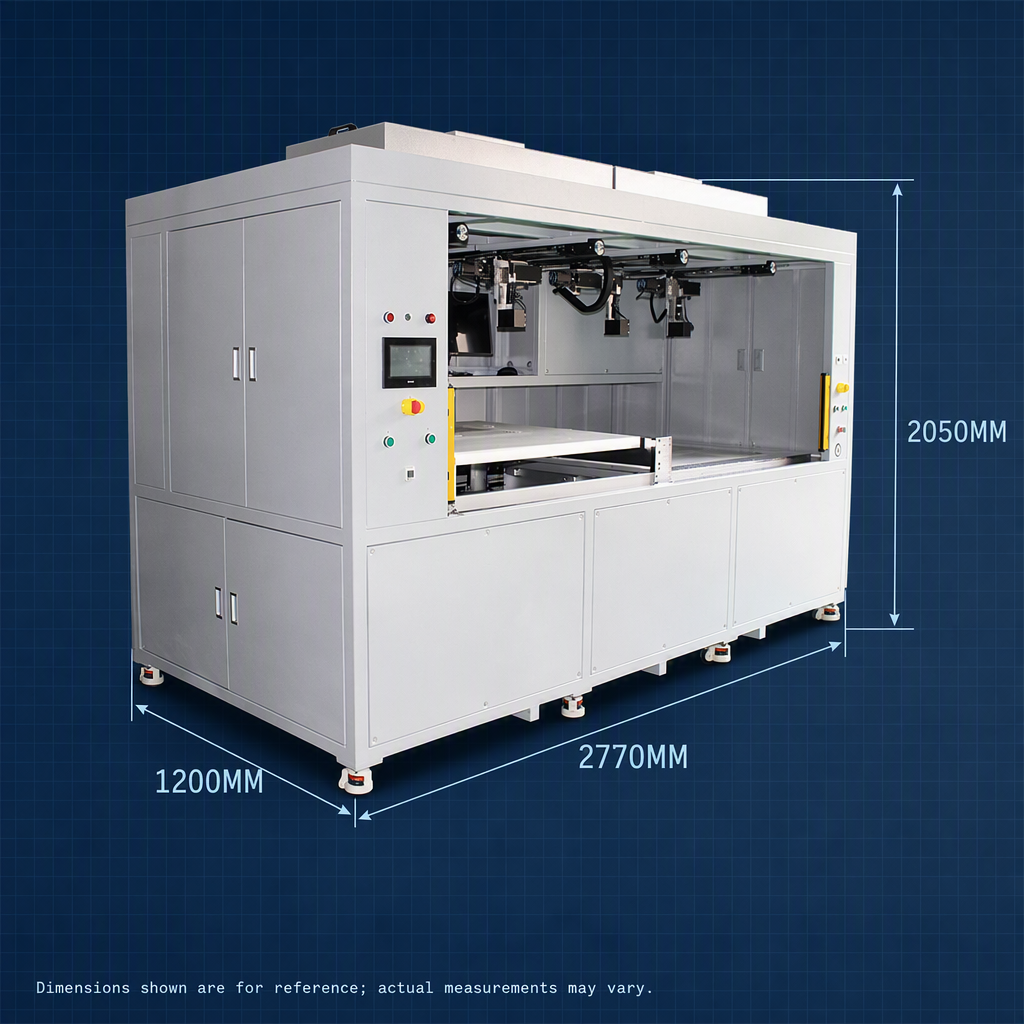
6. Enclosed Enclosure with Safety Features The machine is fully enclosed with sliding access panels. Safety features include emergency stop buttons at operator positions and a yellow safety light curtain at the substrate loading zone. The enclosed structure works with the overhead FFU to maintain air quality at the bonding zone during the cycle.
Why Choose Us
1. CCD Alignment Reduces Registration Variability CCD vision-guided registration compensates for manual loading variation and material edge irregularity. For production lines processing automotive multi-screen panels, naked-eye 3D displays, or touchscreen ITO film stacking, consistent registration across batches reduces rework rates compared to mechanical corner-stop alignment.
2. Variable Vacuum Addresses Film Deformation The variable vacuum control on the lower platform adapts suction to the film’s mechanical properties. Softer films susceptible to stretching receive gentler suction; rigid substrates receive firmer hold. This directly addresses a common defect source in flexible film lamination — stretching and bubble formation during the bonding stroke.
3. FFU Clean-Air Zone Without Dedicated Cleanroom The built-in FFU system provides filtered air at the bonding zone within the enclosure. Production lines that need clean-air conditions for optical film applications can achieve this without installing or expanding a dedicated cleanroom — the machine provides its own controlled-air environment at the work zone.
4. Three-System Integration in One Footprint CCD alignment, FFU clean air, and built-in vacuum are available in one machine. Separating these into stand-alone stations would require additional equipment, floor space, and substrate transfer steps — each transfer introducing additional handling variation.
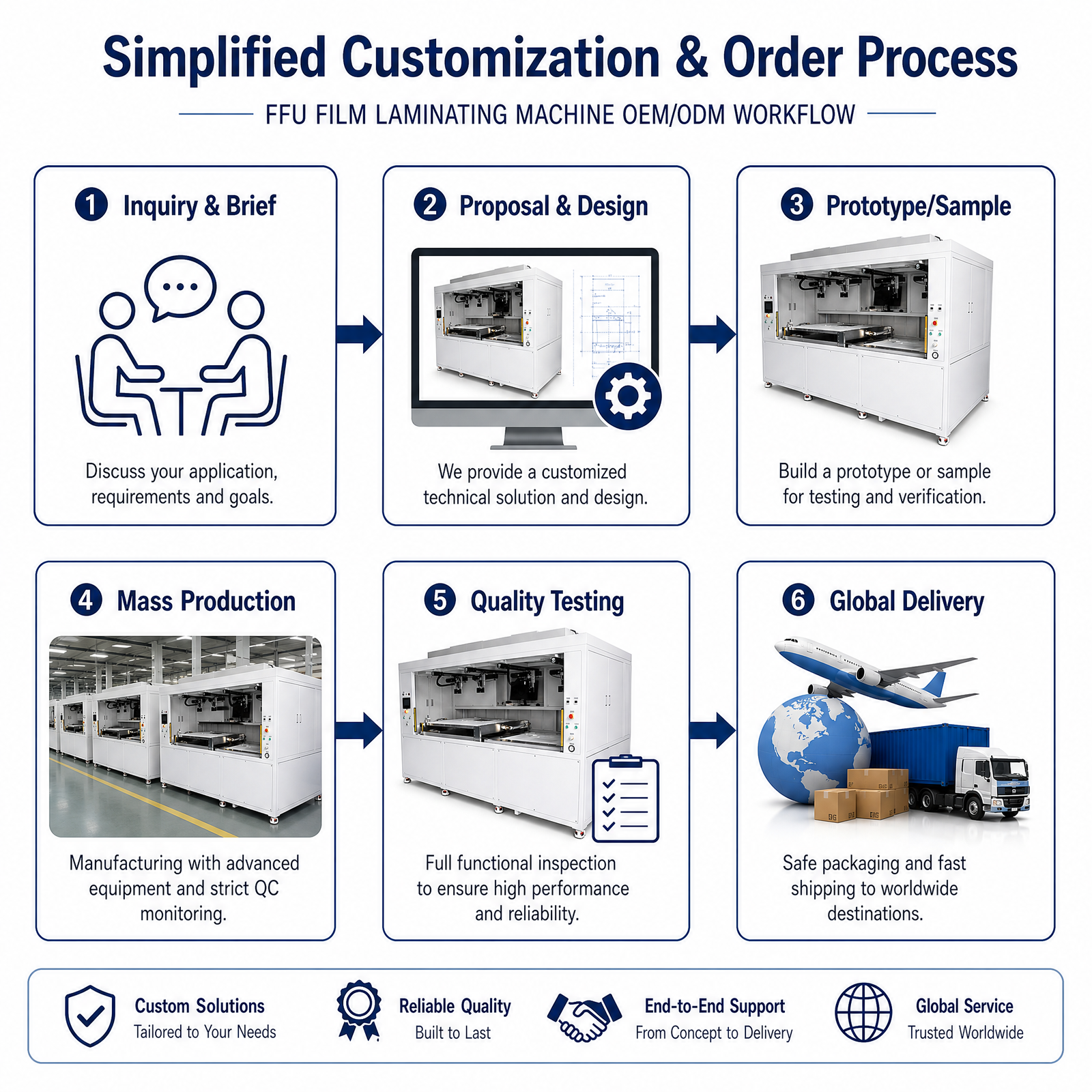
5. Factory Direct with Process Customization Customization of size, process parameters, and production line integration is supported and confirmed per product and process requirements. Suitable for OEM and project-specific configurations.
Key Features
Product Details
FAQ
Q1: What is the effective lamination area of this machine?
Q2: What bonding modes does the machine support?
Q3: How does the CCD alignment system work?
Q4: What does the variable vacuum system do, and why does it matter?
Q5: What are the power and installation requirements?
Q6: What types of films and substrates is the machine compatible with?
Q7: What industries and product types is this machine used for?
Q8: Can the machine be customised for specific panel sizes or process requirements?
Interested in This Product?
Tell us your project details and our team will prepare a customized quotation.
GET QUOTE NOW