
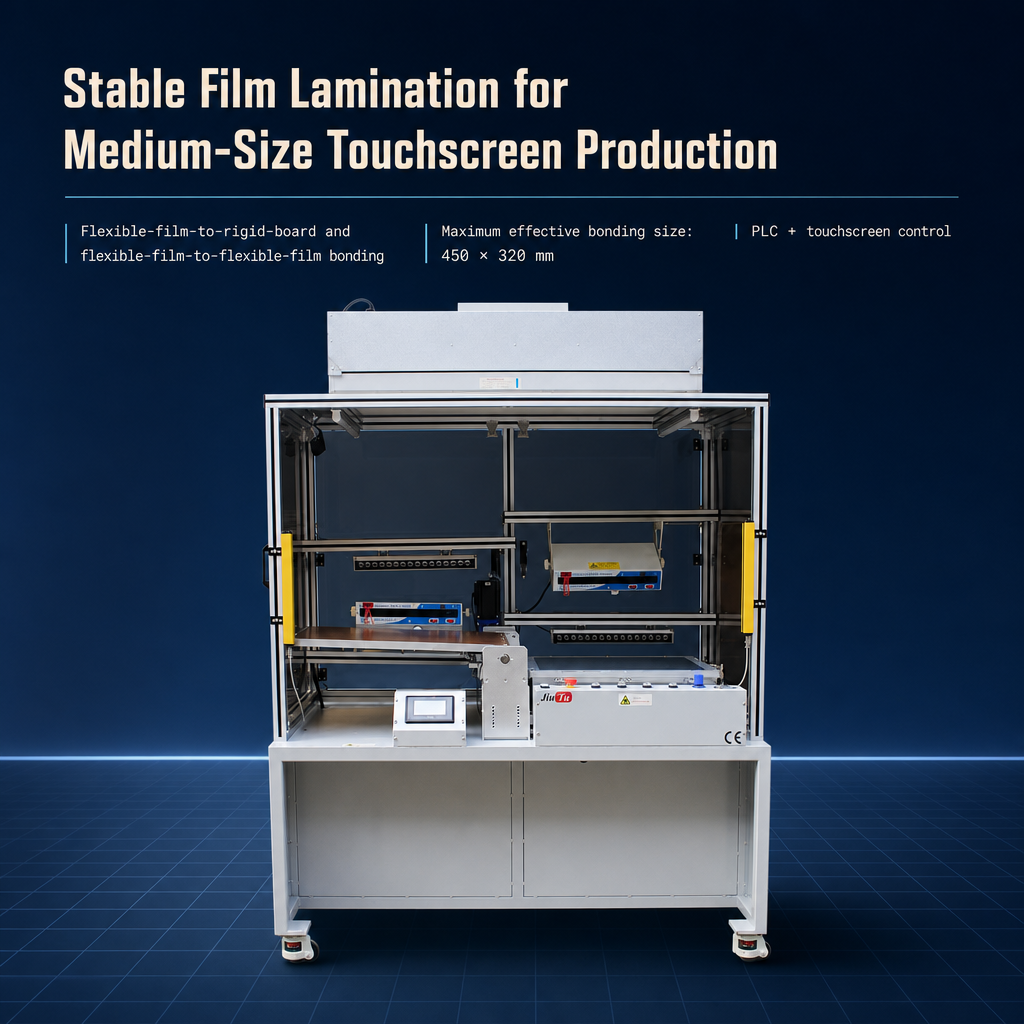
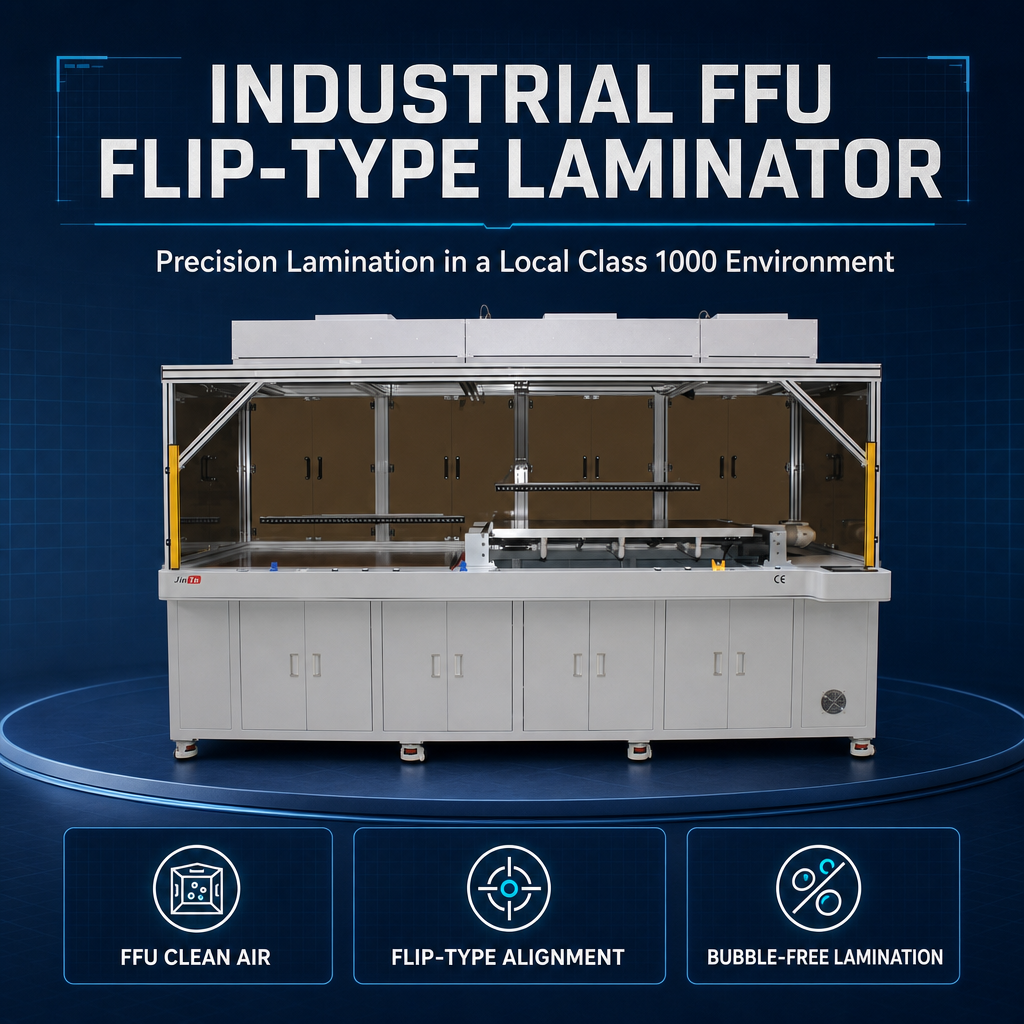
450×320 FFU Mesh Film Laminating Machine
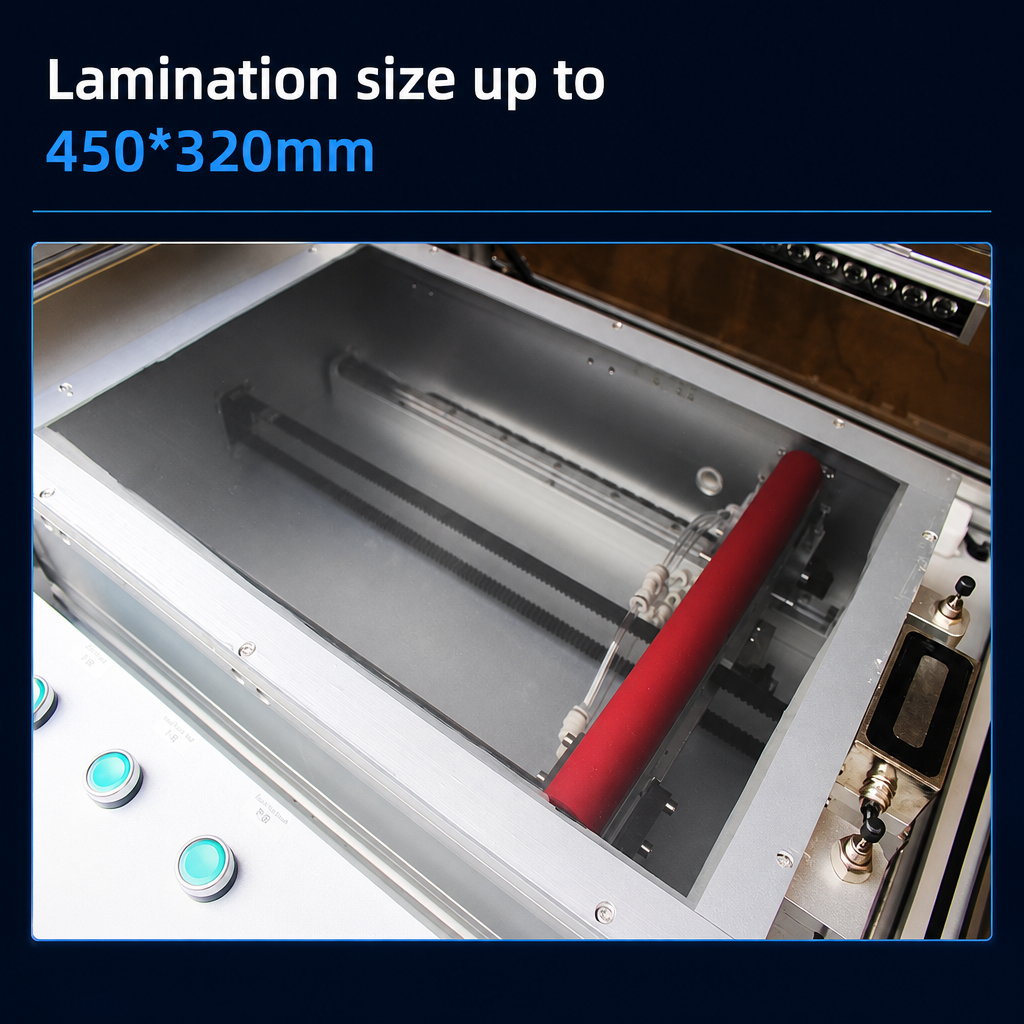
The mesh frame helps support and control flexible material before roller contact. The upper platform is cylinder-controlled, while the lower platform uses servo-driven linear travel through the effect...
GET QUOTE NOW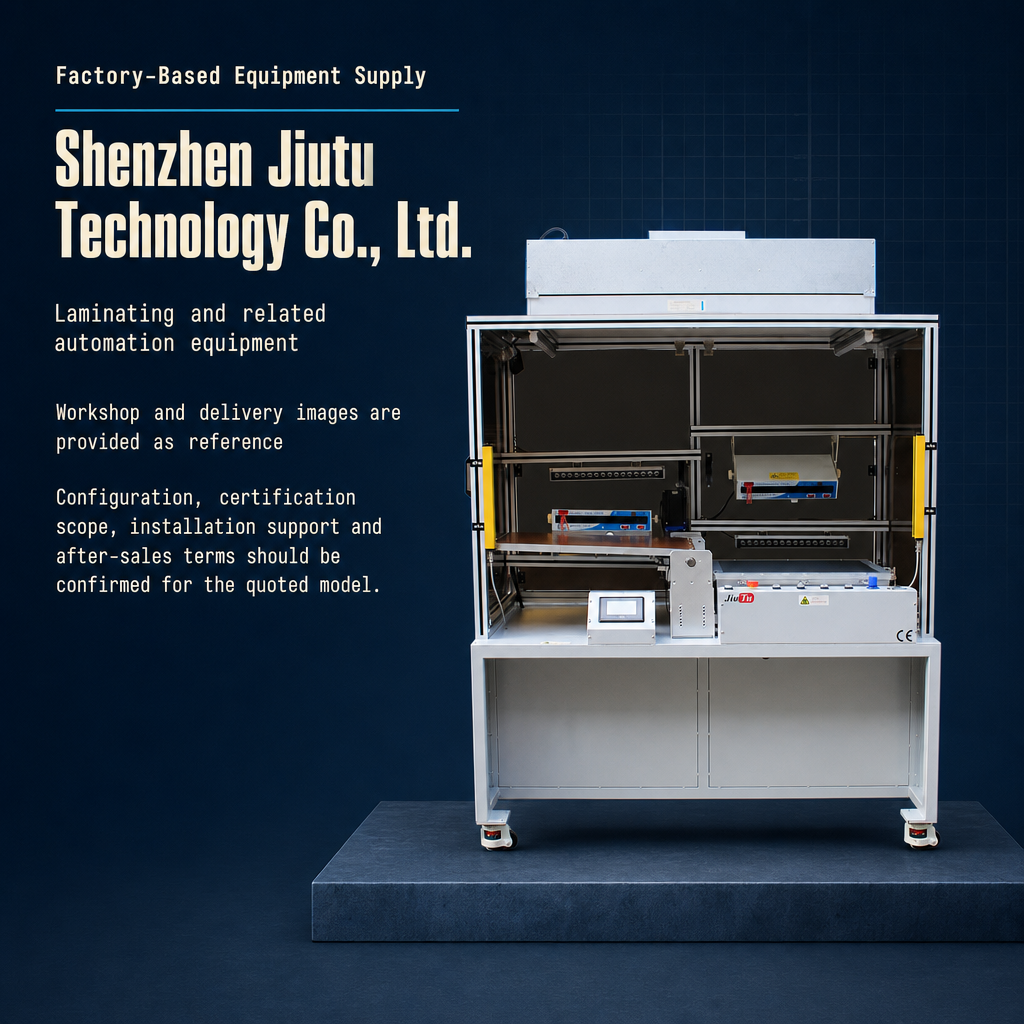
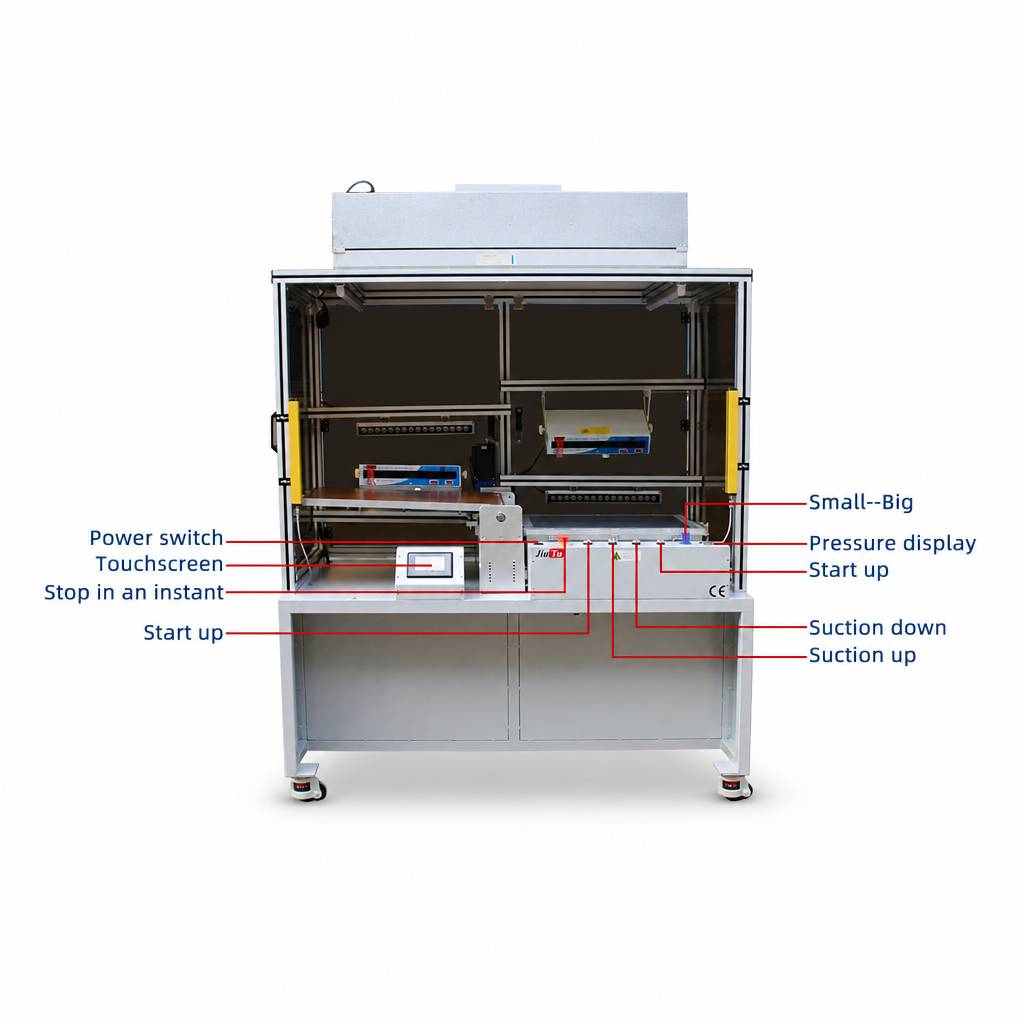
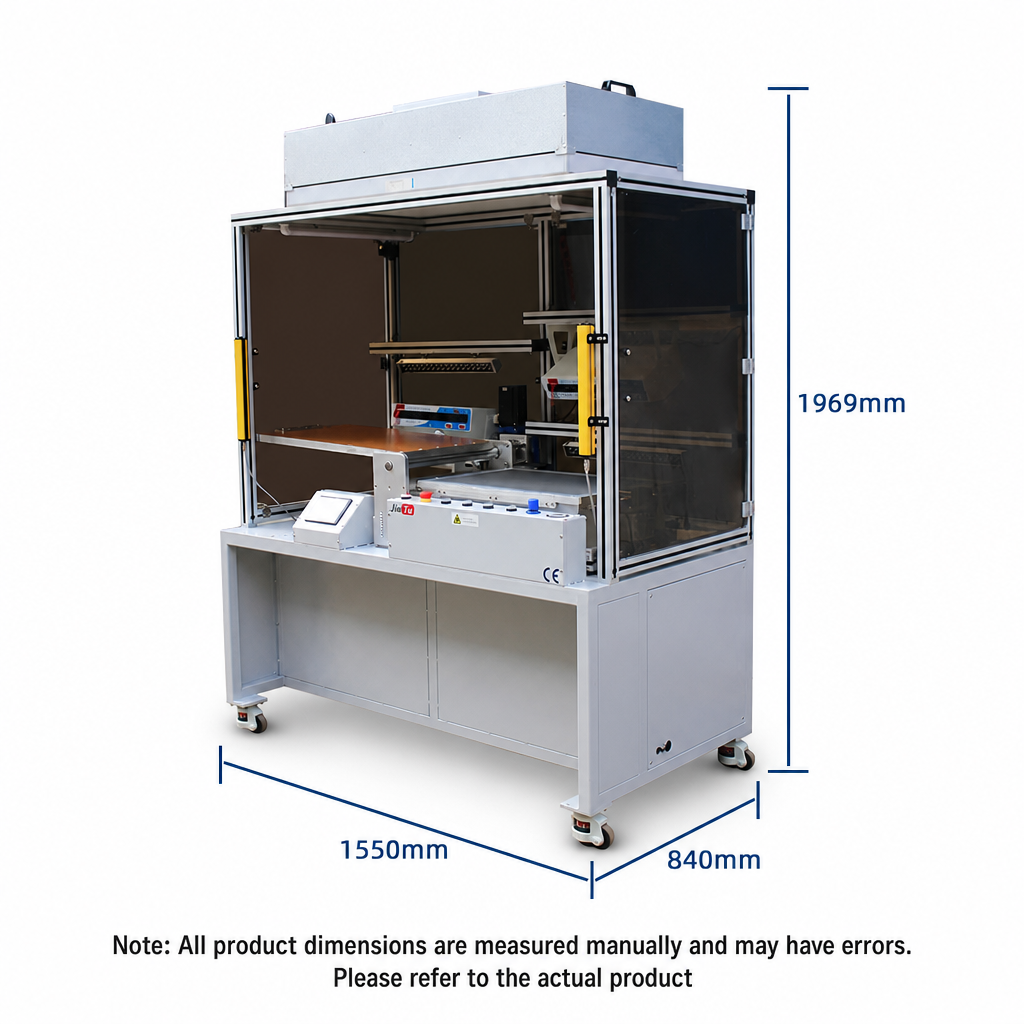
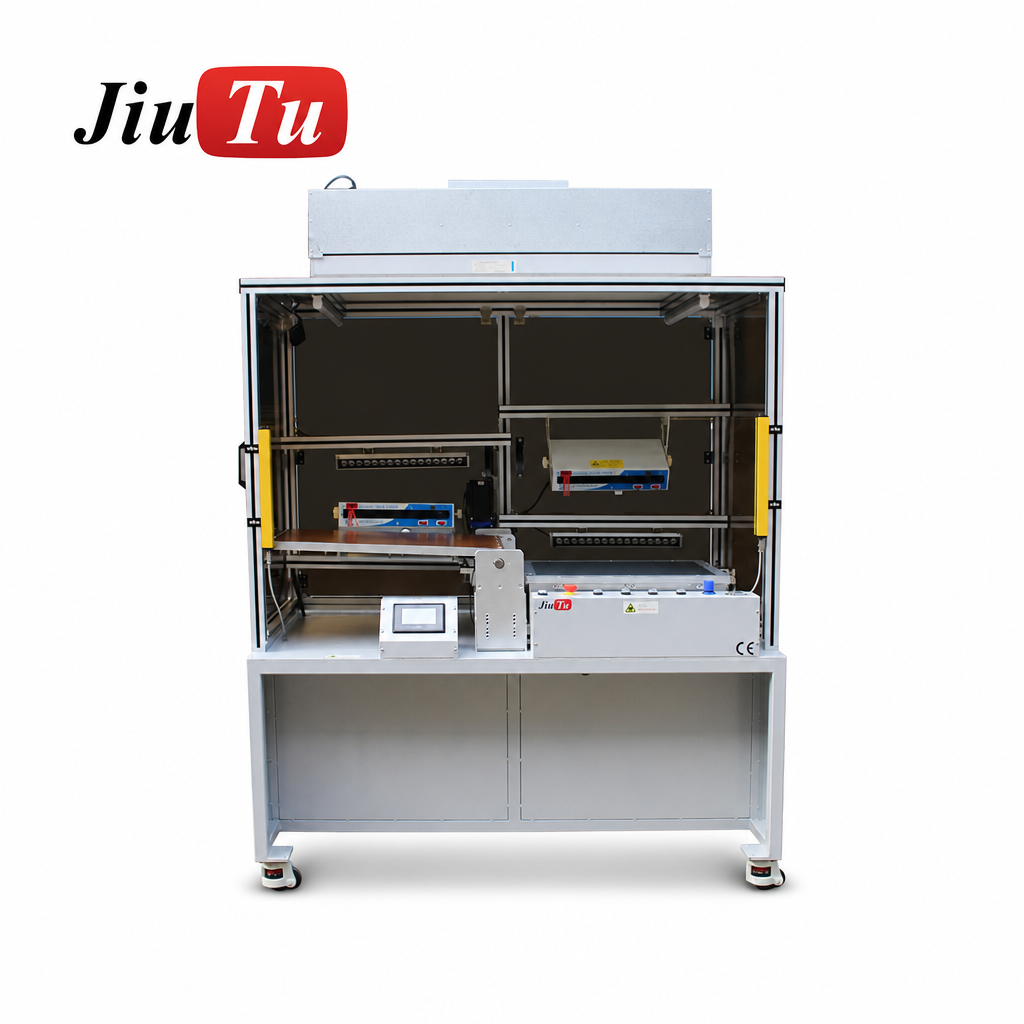
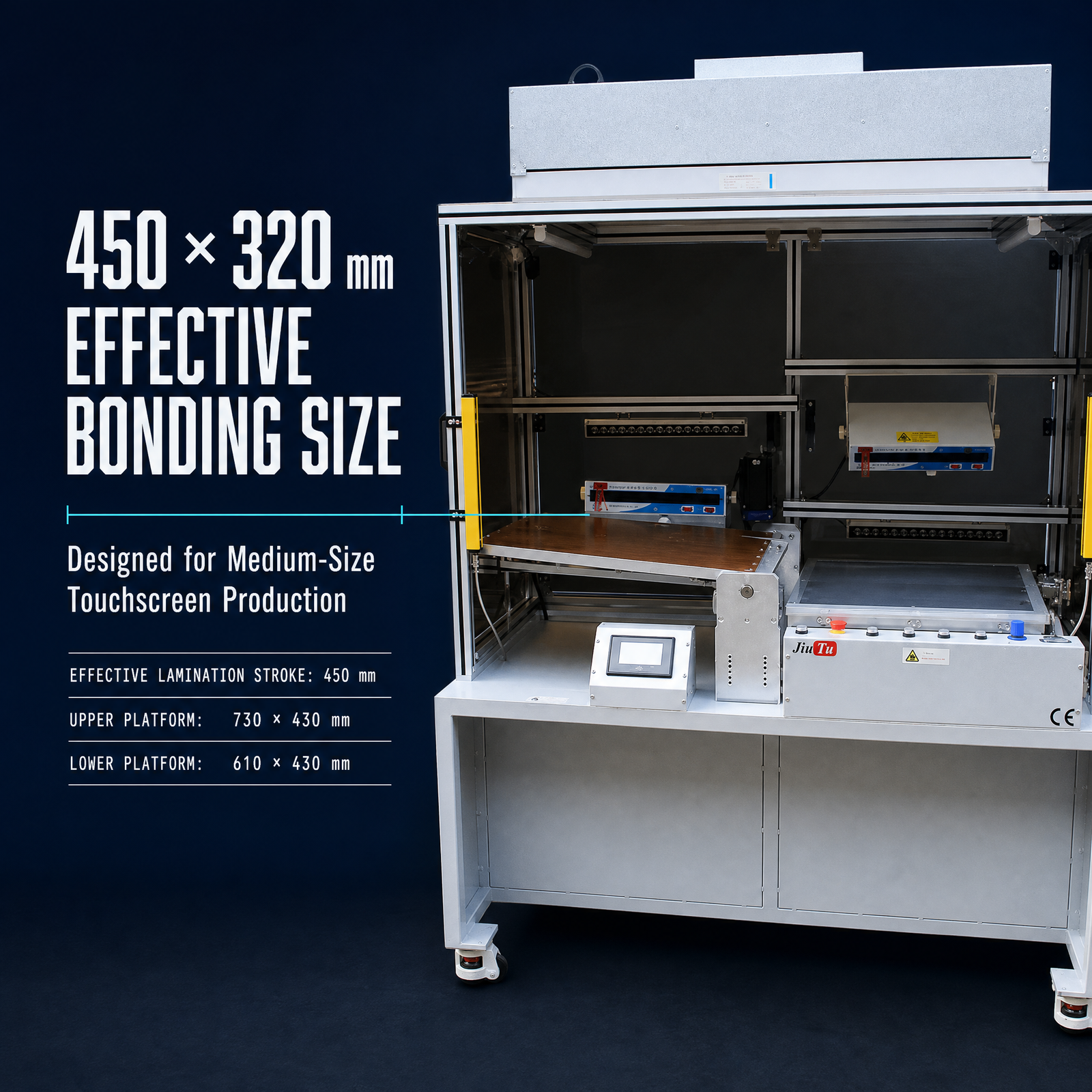
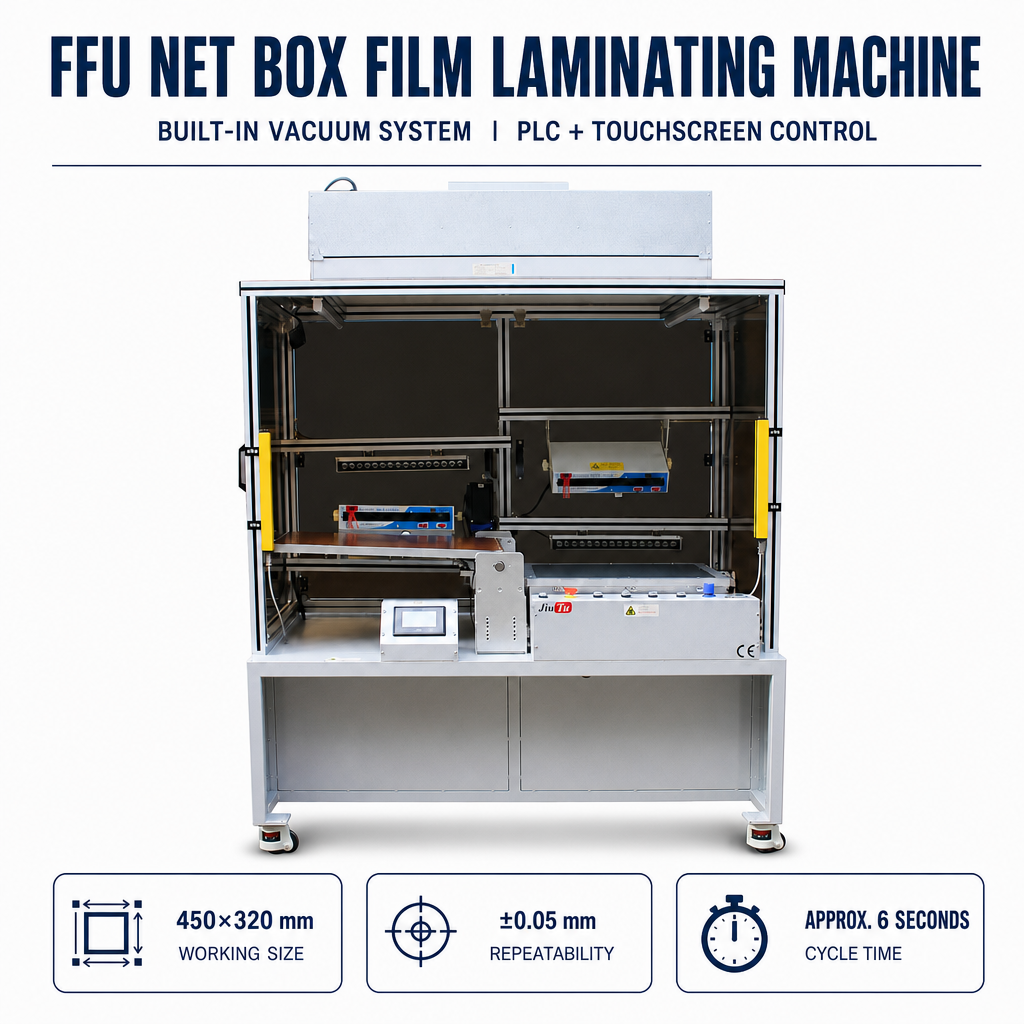
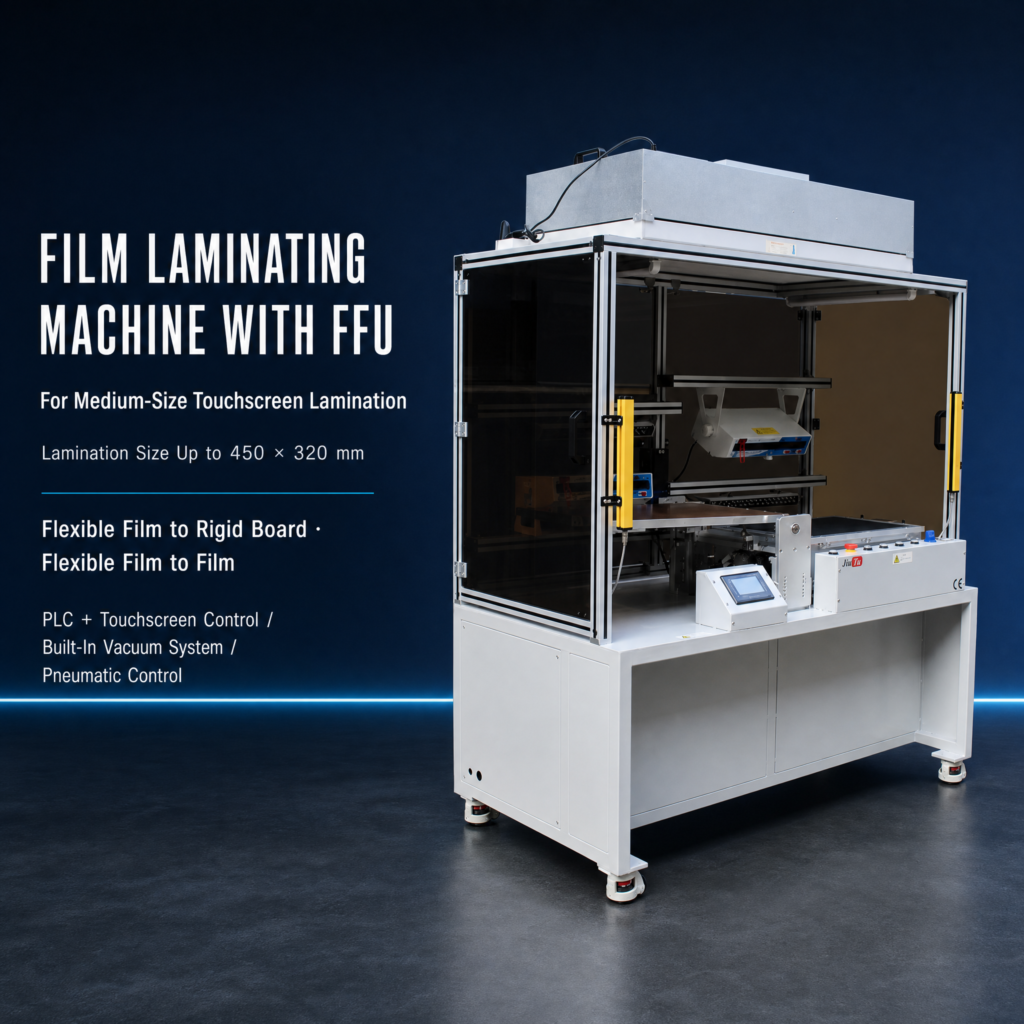
The mesh frame helps support and control flexible material before roller contact. The upper platform is cylinder-controlled, while the lower platform uses servo-driven linear travel through the effective 450 mm stroke. A 320 mm effective roller length applies the configured force as the platform moves through the laminating path.
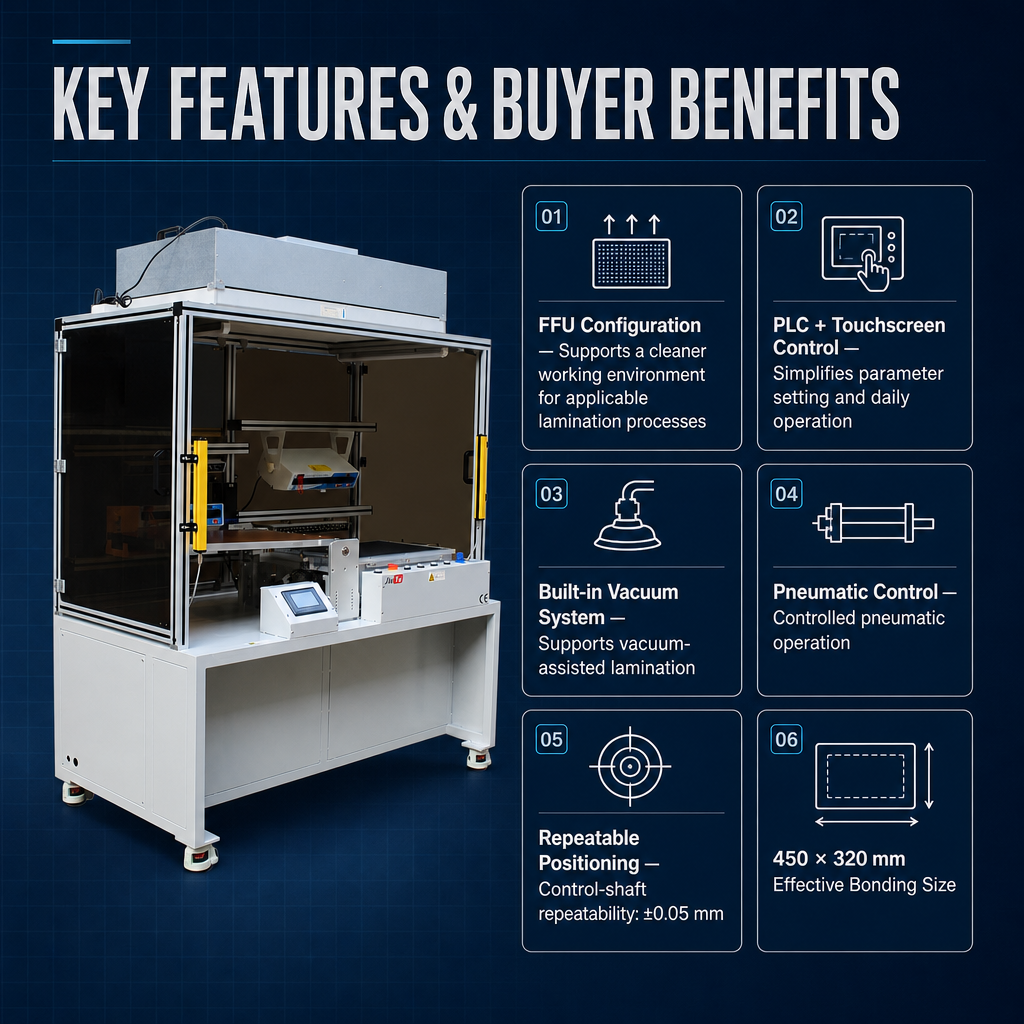
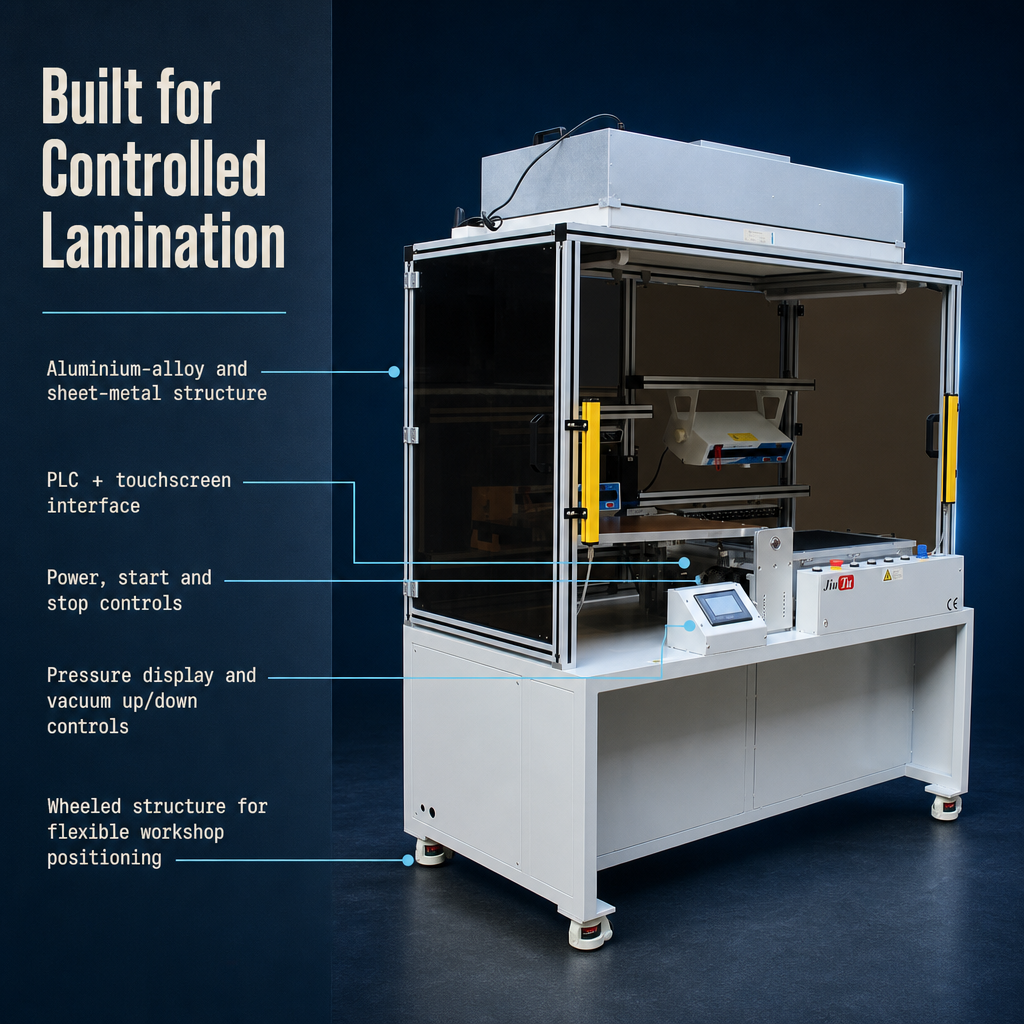
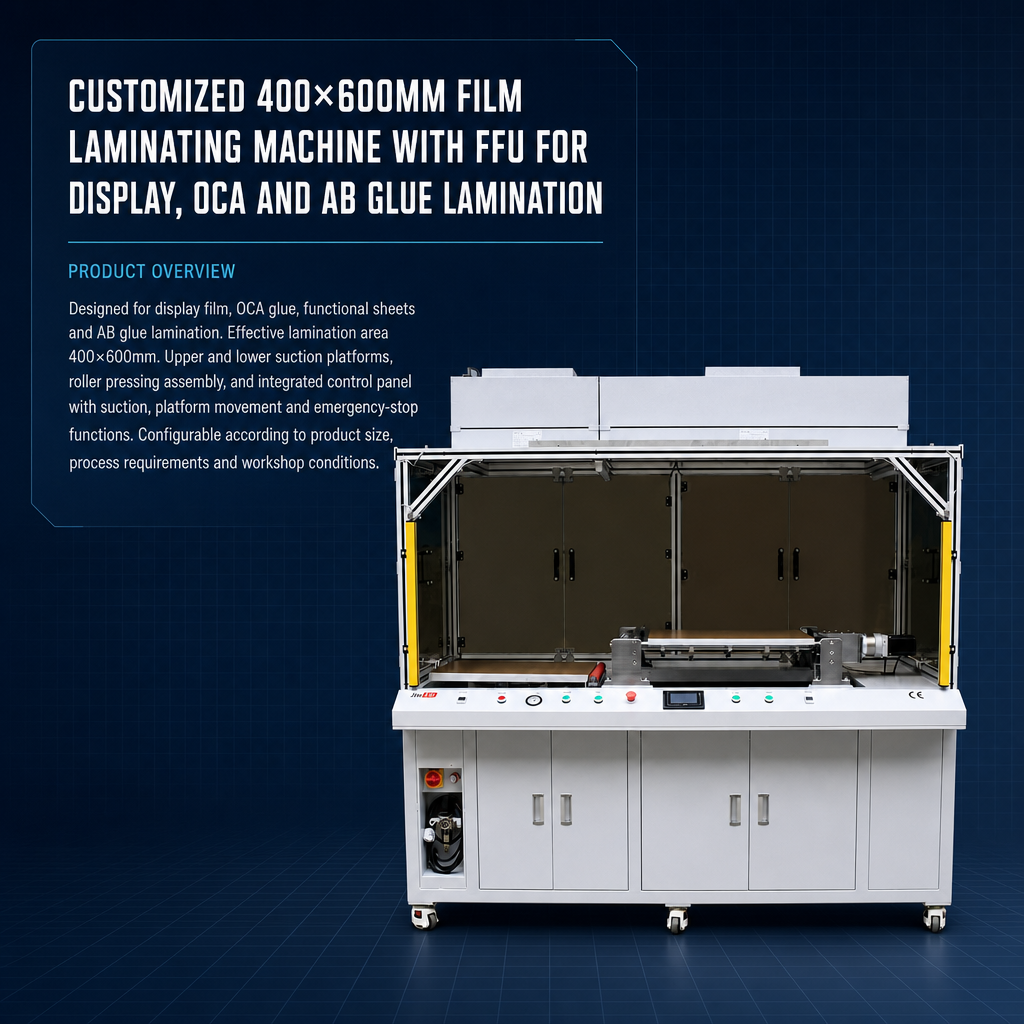
A built-in vacuum system holds suitable workpieces on the platform. Corner positioning provides a straightforward mechanical reference for product placement. Process parameters are set through the PLC and touchscreen interface.
The upper FFU assembly supports a cleaner local operating zone around the laminating area. Because the supplied materials do not state the FFU quantity, filter grade or measured local cleanliness, those values should be confirmed before publication as quantitative claims.
Key Features
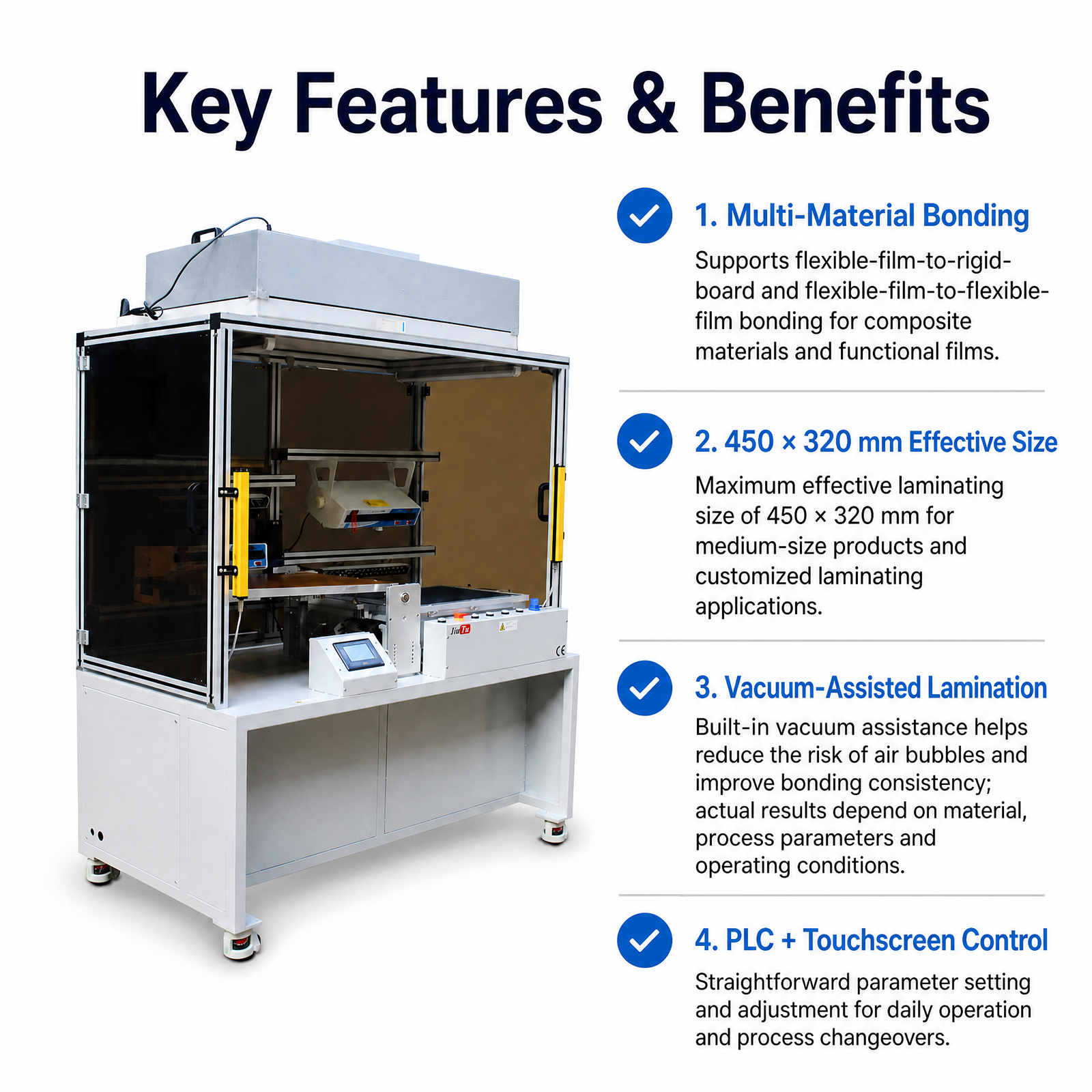
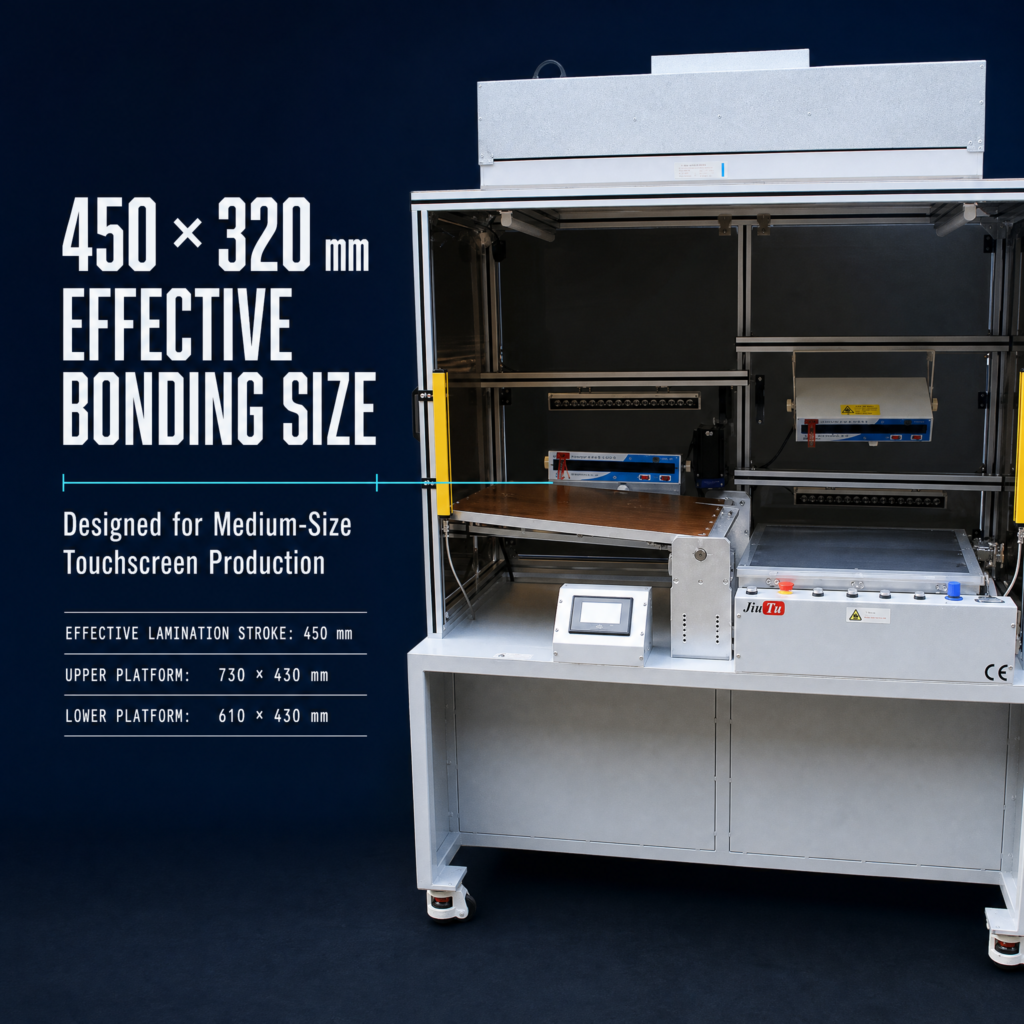
1. 450 × 320 mm Effective Laminating Area
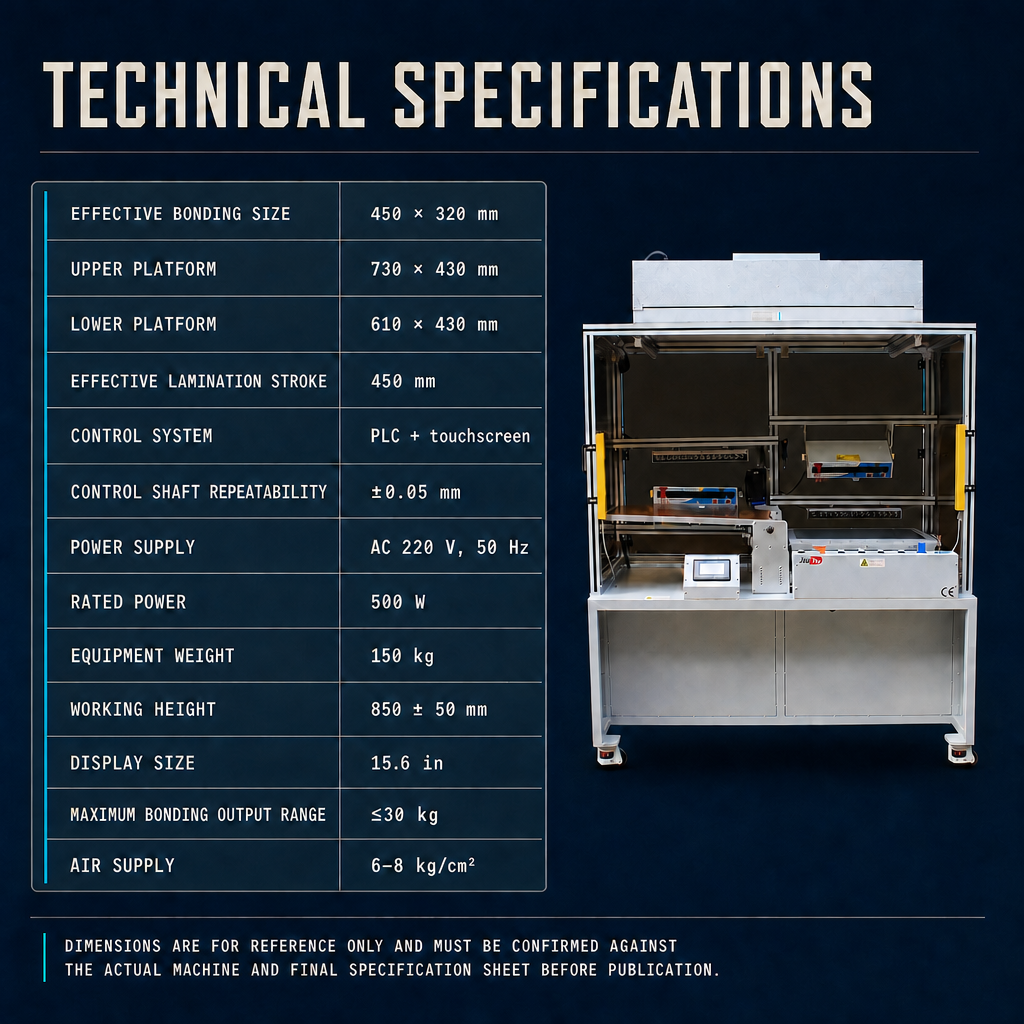
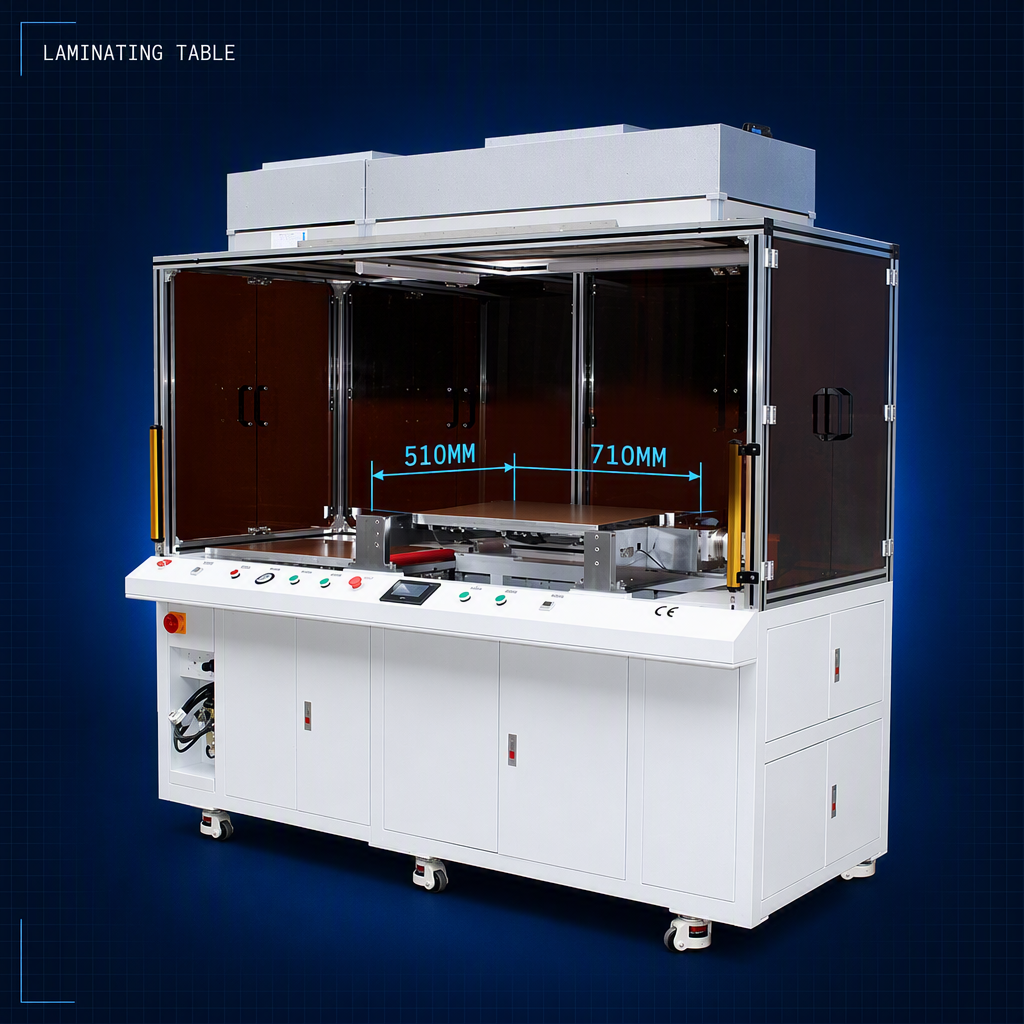
The confirmed maximum effective area is 450 × 320 mm.
Buyer benefit: Supports medium-size industrial display components, touch assemblies and compatible functional-film products within the validated working envelope.
2. Mesh-Assisted Film Handling
The supplied specification lists:
200/300 mesh
16–24 N/cm mesh tension
White polyester mesh
Buyer benefit: The mesh structure supports controlled handling of flexible material before and during roller lamination.
3. Local FFU Airflow Support
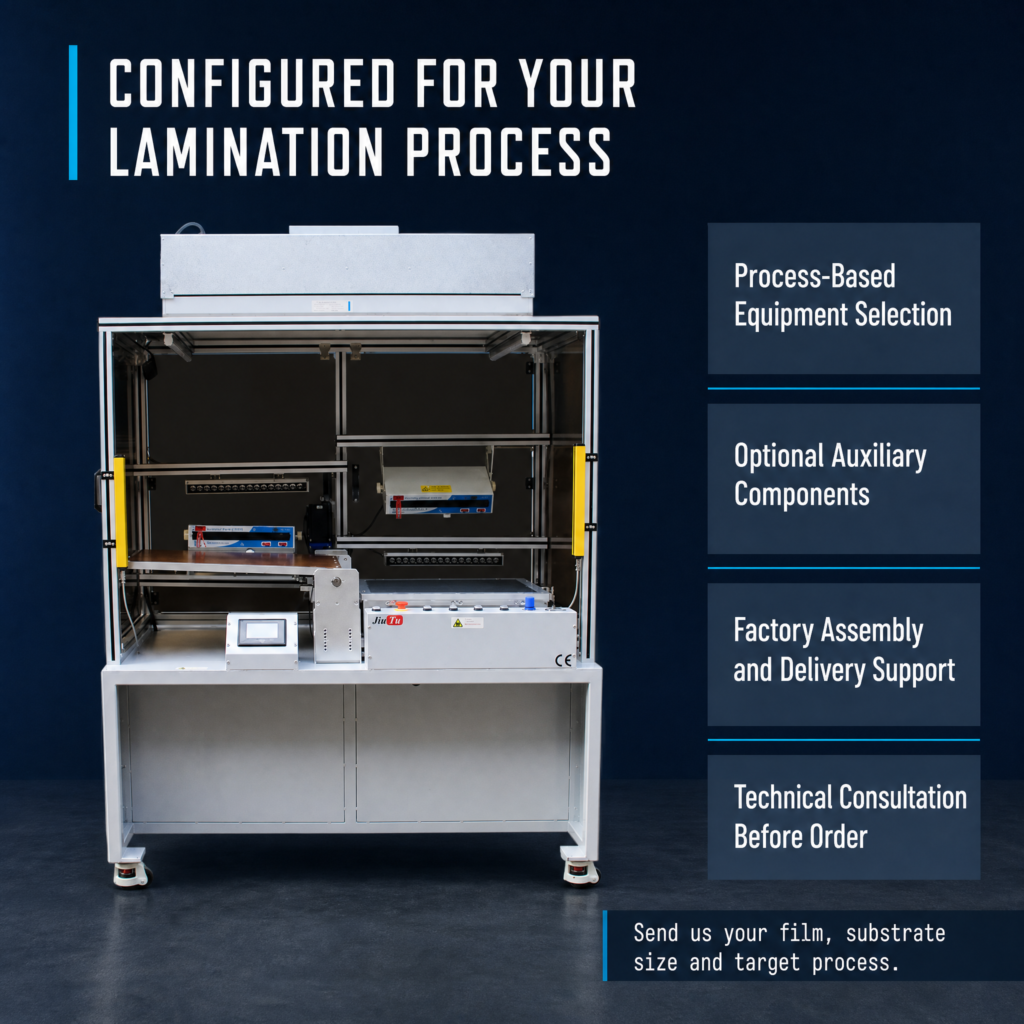
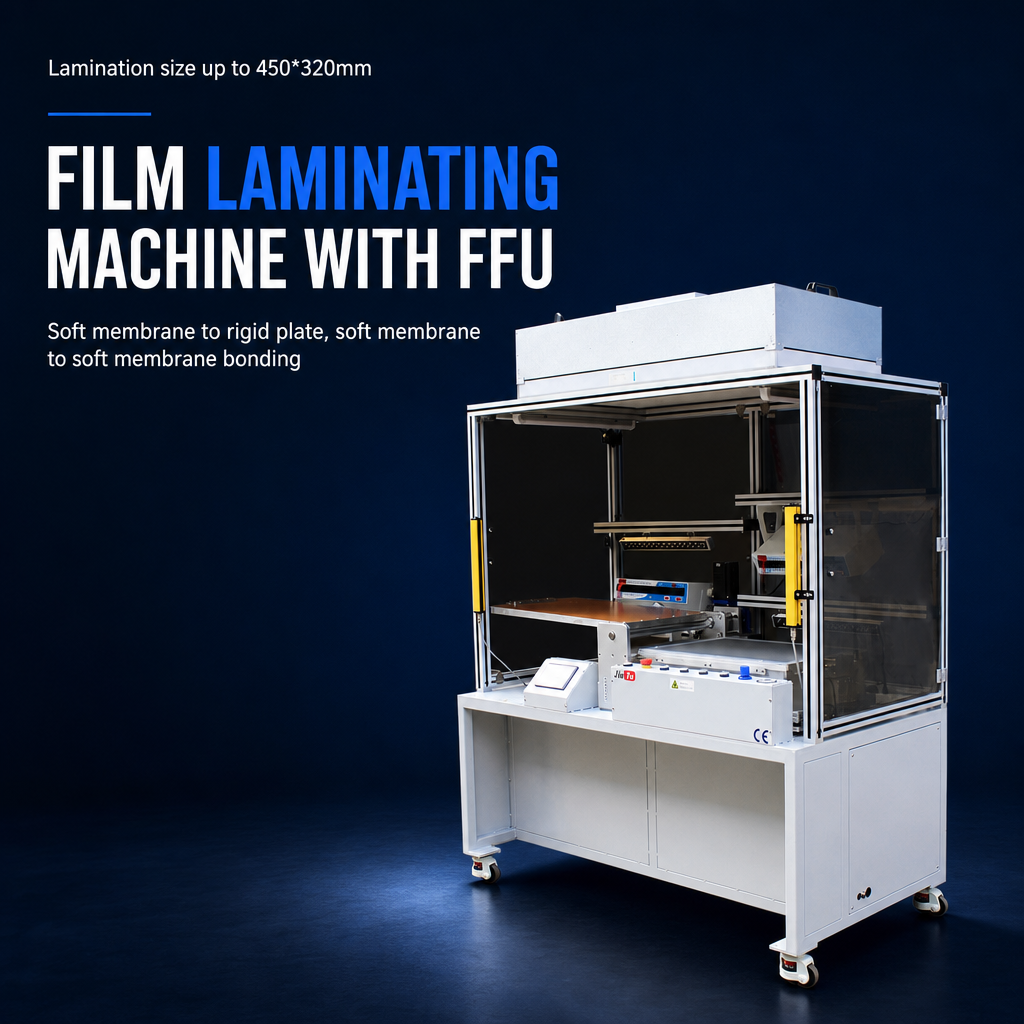
An FFU assembly is installed above the enclosed work area.
Buyer benefit: Filtered local airflow can help manage airborne particles around suitable lamination processes when used within the required production environment.
FFU quantity, filter grade, airflow and measured local cleanliness must be confirmed for the quoted configuration.
4. Built-In Vacuum Holding
The machine includes an integrated vacuum system. The upper platform uses a stated 10 × 10 mm vacuum-hole pitch with Ø0.8 mm holes.
Buyer benefit: Vacuum holding helps stabilize compatible films or substrates during positioning and process travel.
5. Servo-Controlled Lower Platform
The lower platform is driven by a servo motor, while the upper mechanism uses pneumatic cylinder control.
Buyer benefit: Servo travel supports repeatable movement through the 450 mm effective laminating stroke.
6. Corner-Based Positioning
The machine uses mechanical corner references for workpiece positioning.
Buyer benefit: Operators can locate compatible products without adding an optical alignment system to the standard process.
7. Controlled Roller Lamination
The effective roller length is 320 mm, with published laminating output of up to 30 kg.
Buyer benefit: The roller applies controlled contact progressively across the workpiece rather than pressing the full area at once.
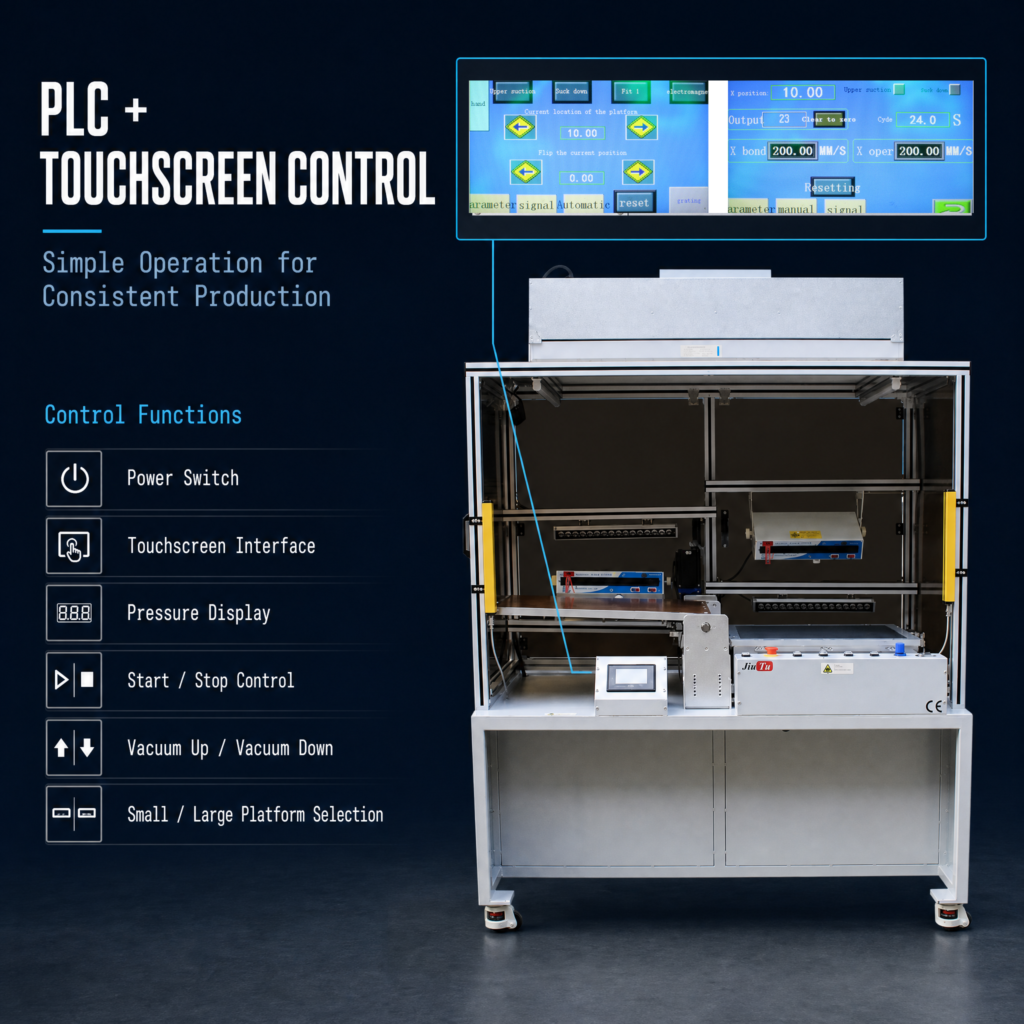
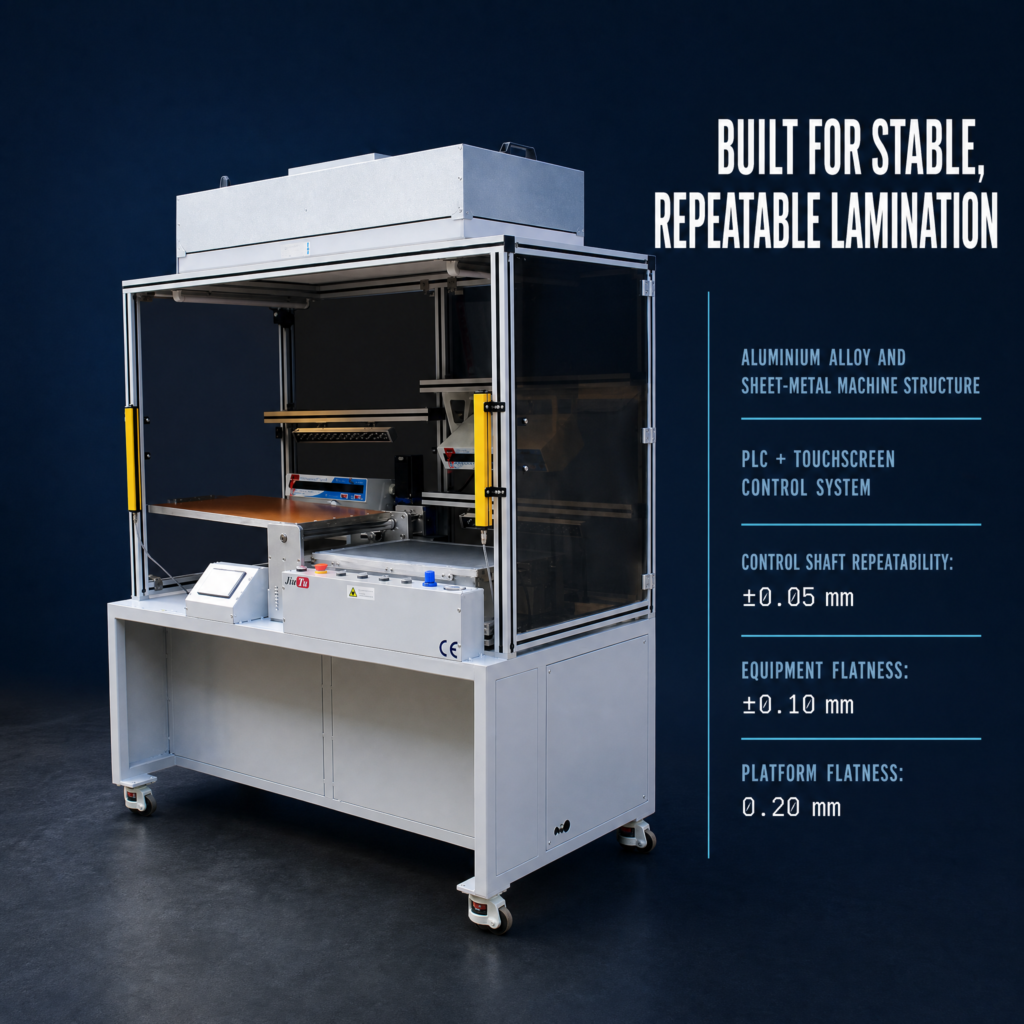
8. PLC and Touchscreen Control
Process settings can be adjusted through the touchscreen parameter interface.
Buyer benefit: Motion and operating parameters can be managed from one interface during setup and product changeover.
9. Published 6-Second Machine Cycle
The stated production cycle is approximately 6 seconds, excluding manual handling time.
Buyer benefit: Provides a reference for line planning after the complete loading, alignment and unloading sequence has been validated.
10. Enclosed Industrial Structure
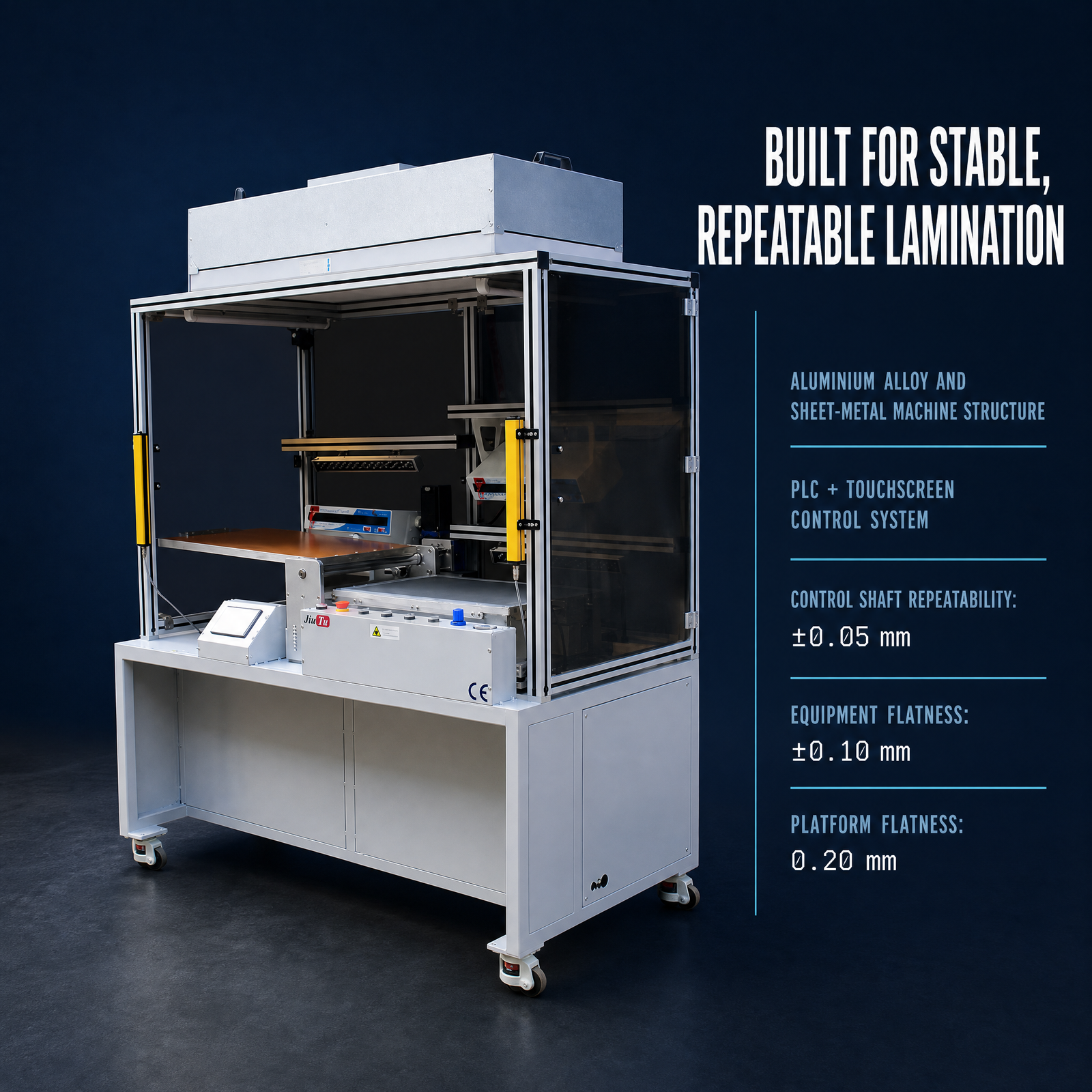
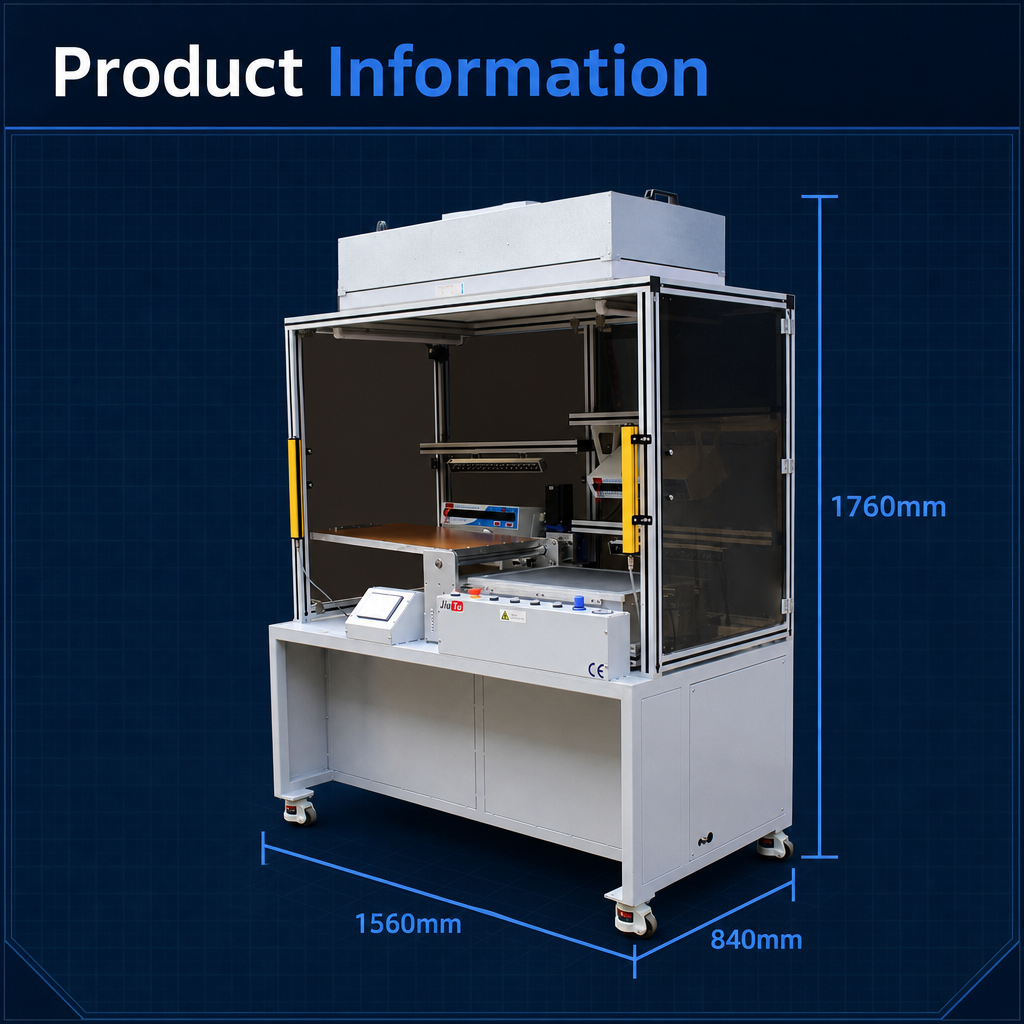
The aluminum-alloy and sheet-metal machine body includes a guarded work area, safety light curtains, emergency-stop control and movable casters.
Why Choose Us
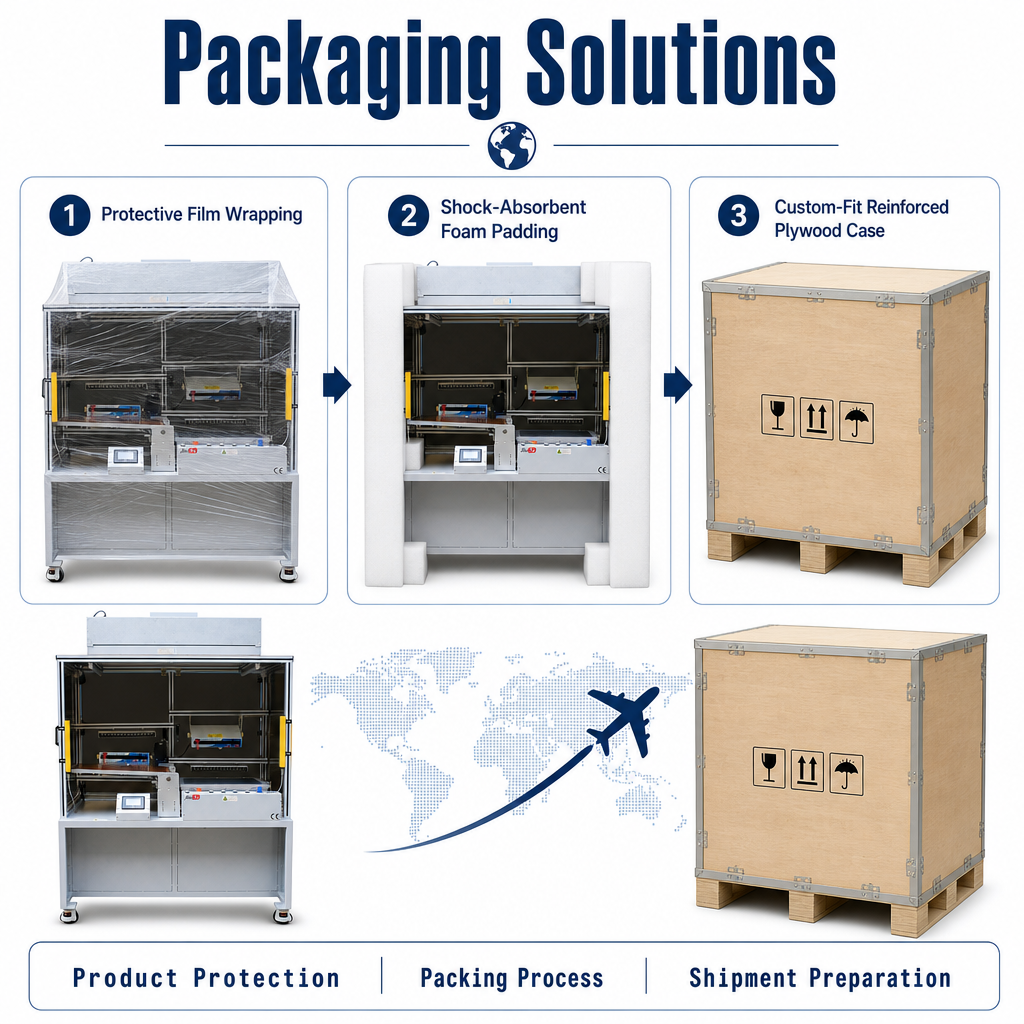
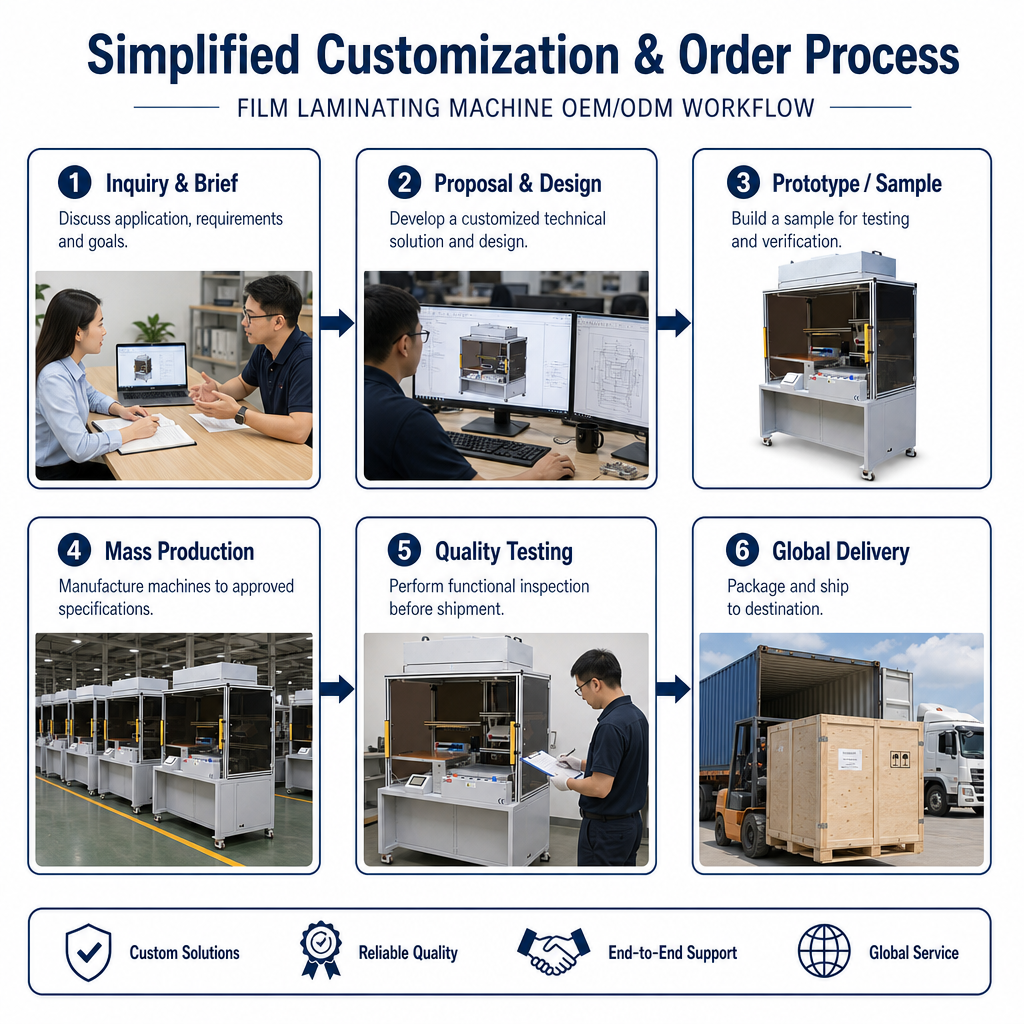
Buyer benefit: The enclosed structure separates moving mechanisms from the surrounding workspace while supporting factory layout adjustments.
Suitable Industrial Applications
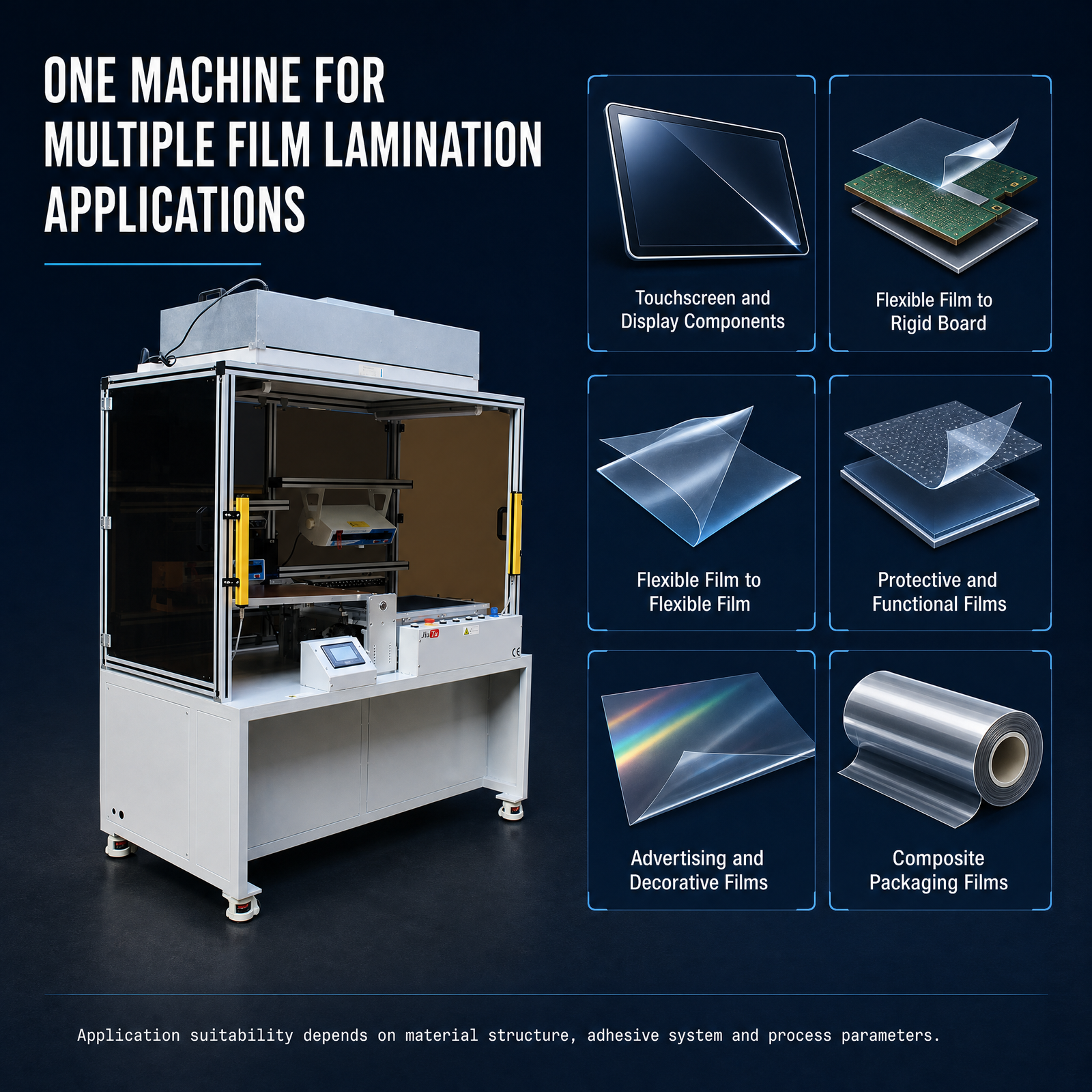
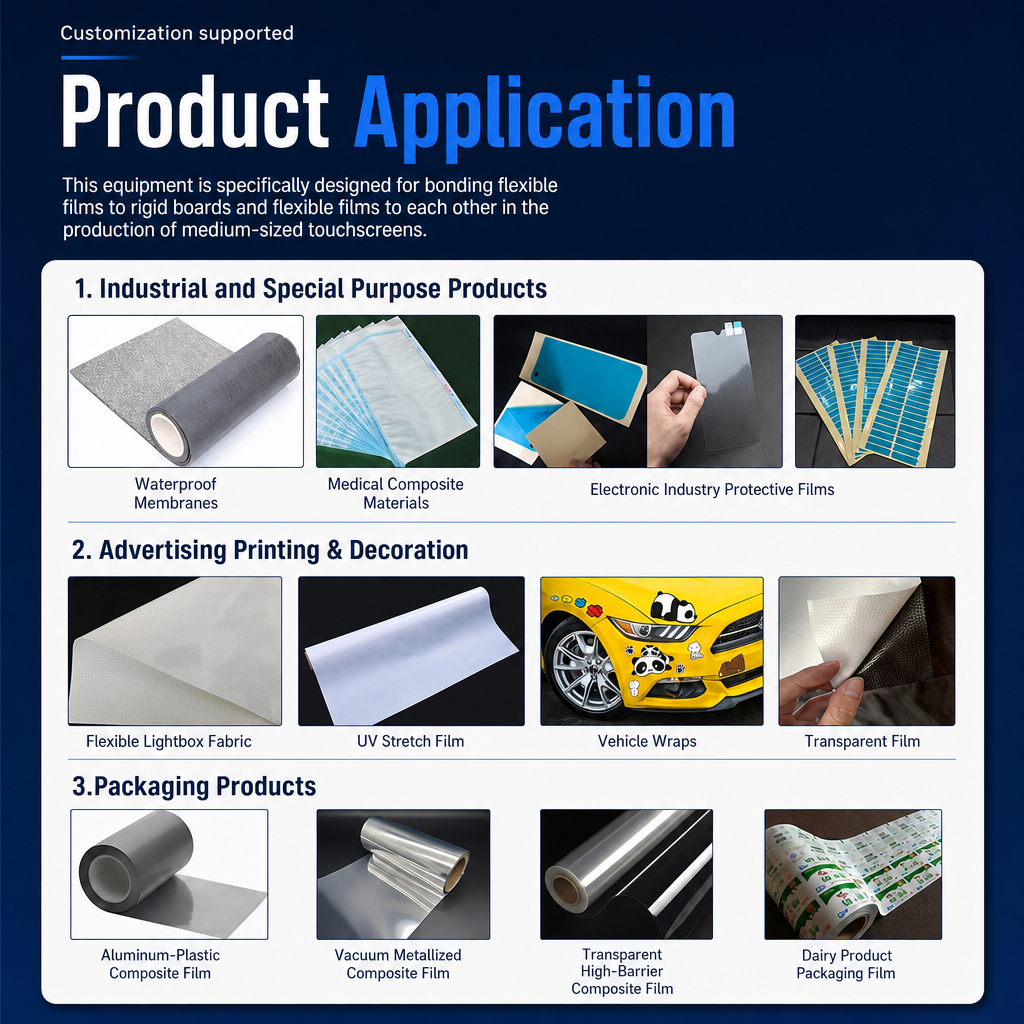
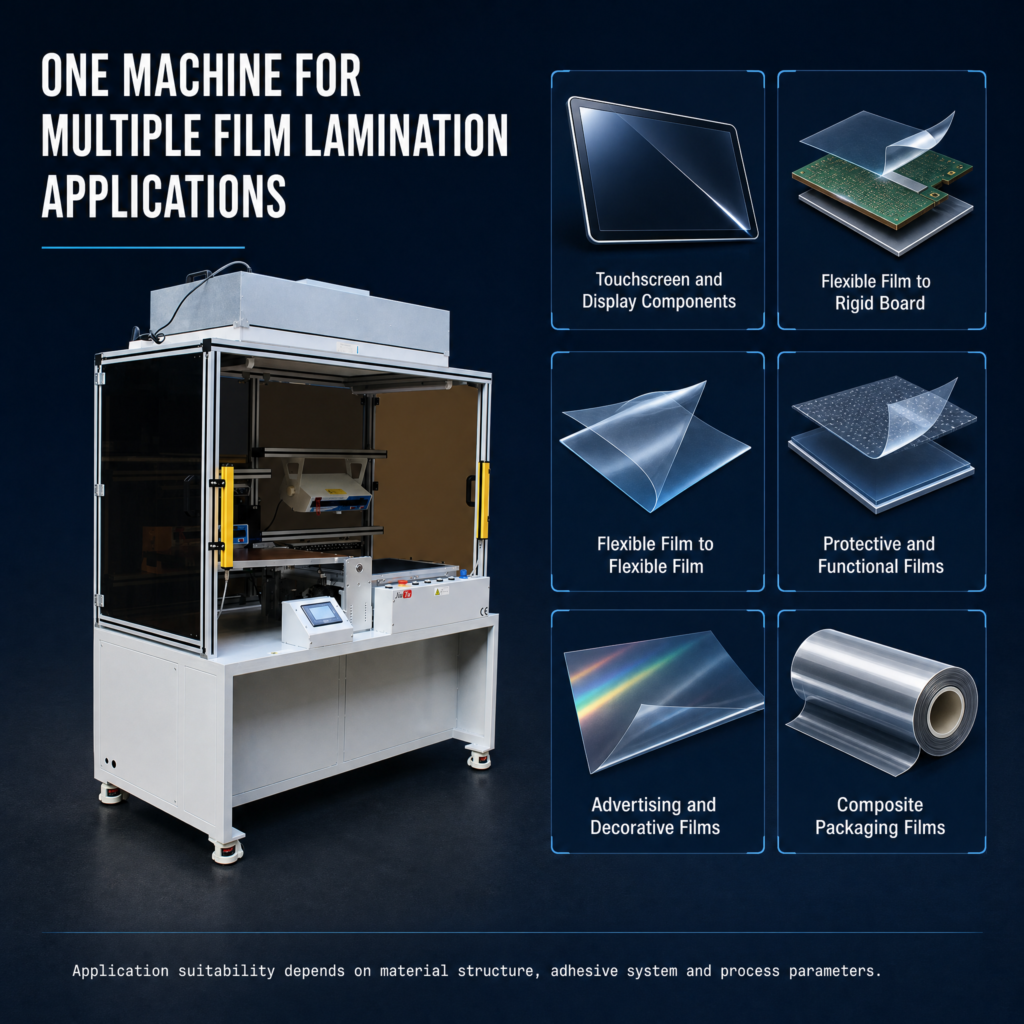
Industrial Display Components
Industrial touch panels
Human-machine interface components
Embedded display assemblies
Control-panel display structures
Medium-size touch modules
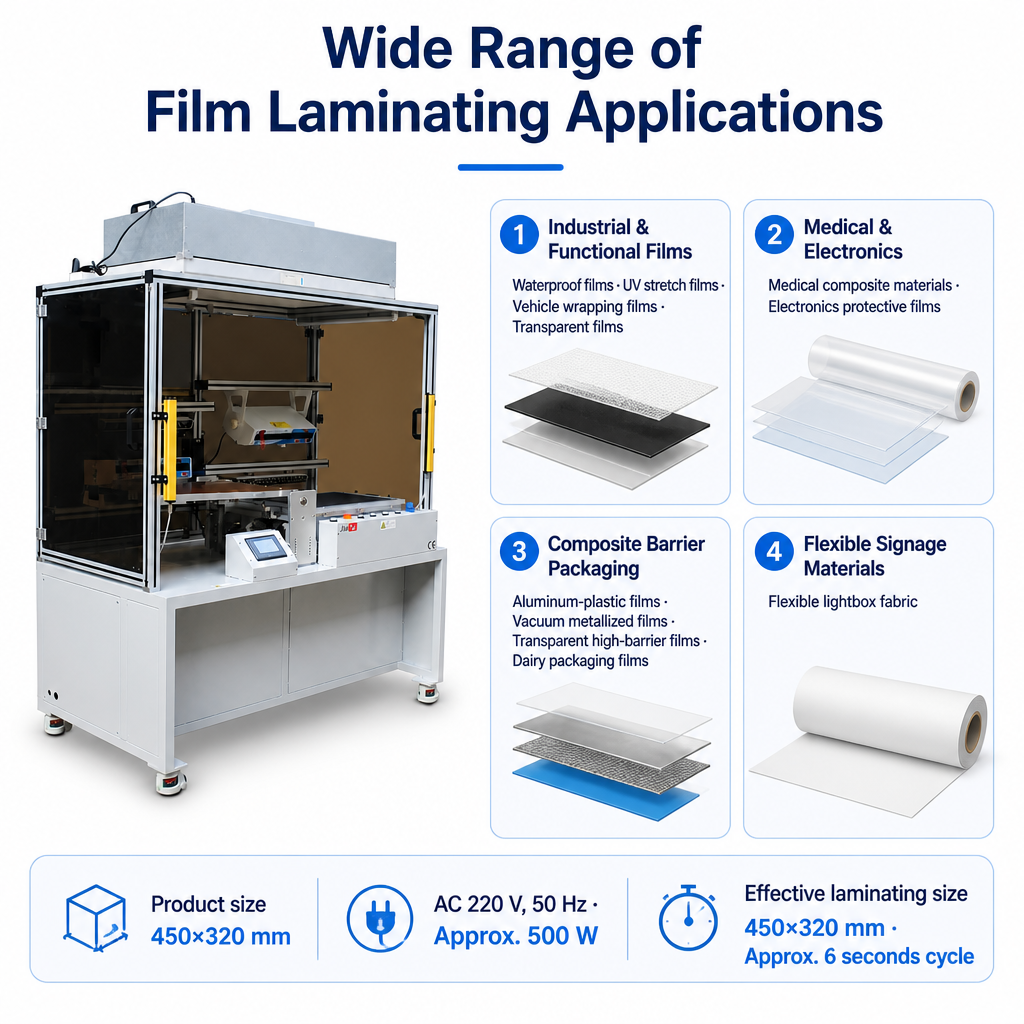
Flexible and Functional Films
Optical functional films
Protective films
Electronic-industry films
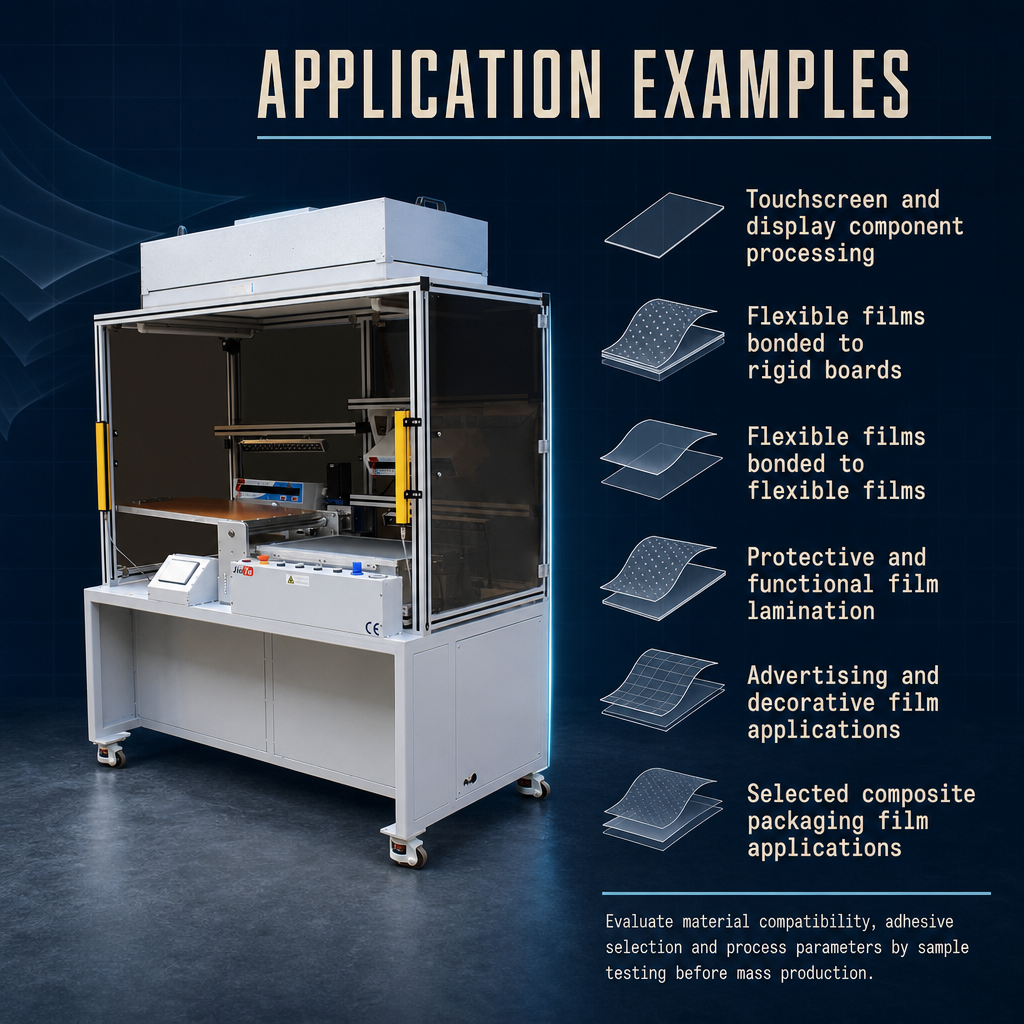
Flexible films bonded to rigid boards
Flexible films bonded to flexible films
Applicable Material Structures
Soft-to-rigid lamination
Soft-to-soft lamination
Film-to-glass structures
Film-to-panel structures
Film-to-functional substrate structures
Final compatibility depends on film stiffness, adhesive system, substrate flatness, thickness, static-control requirements and process validation.
Standard Process Flow
Confirm the film, substrate and adhesive combination.
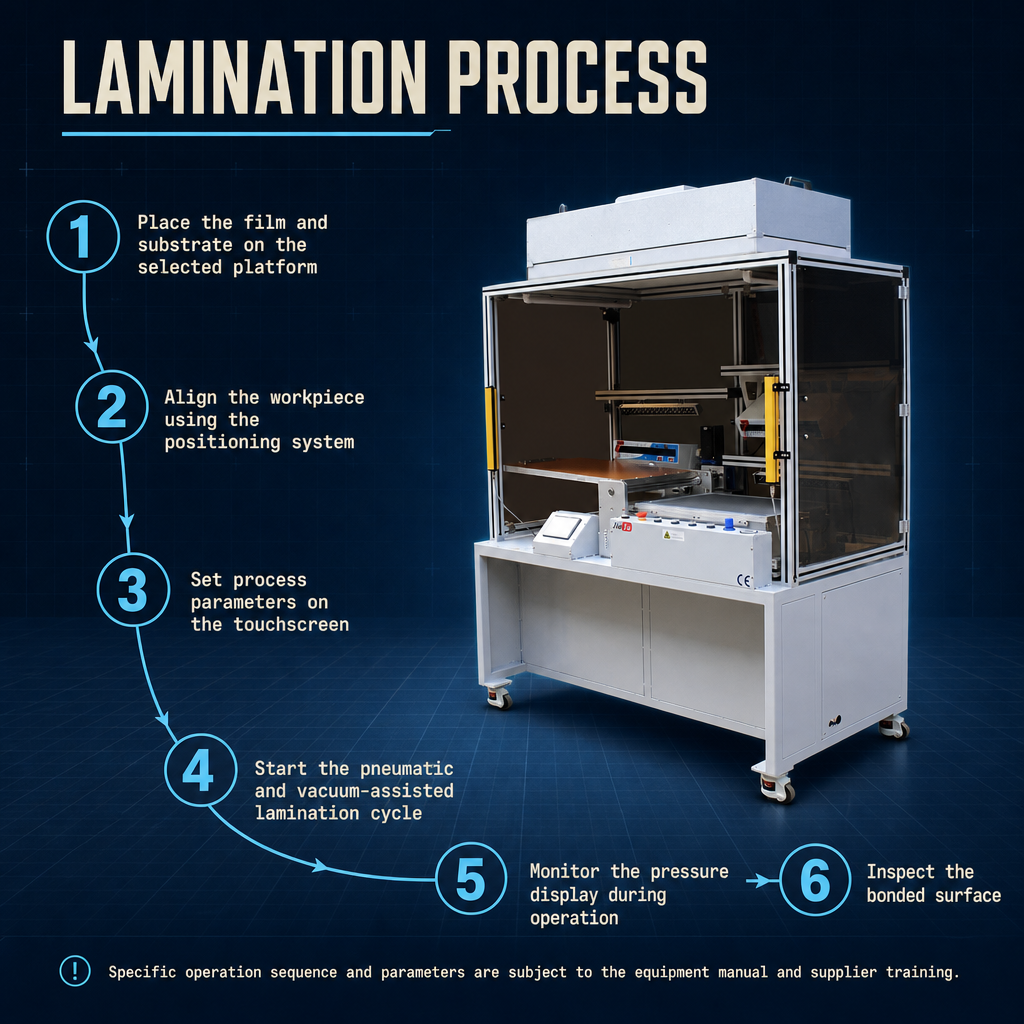
Load the substrate on the selected platform.
Position the film using the corner references and approved method.
Activate vacuum holding where required.
Set the validated motion and process parameters on the touchscreen.
Start the pneumatic and servo-controlled laminating cycle.
Allow the roller and platform to complete the effective stroke.
Release vacuum after the programmed sequence.
Remove the laminated workpiece.
Inspect alignment, surface condition and bonding consistency.
Information Required for Configuration
Please provide:
Product type
Maximum workpiece length and width
Film material
Film thickness
Substrate material
Substrate thickness
Adhesive type
Required alignment tolerance
Surface-cleanliness requirement
Static-control requirement
Target cycle time
Daily output target
Product drawing
Sample images
Acceptance criteria
Product Documents
Flipper Machine Specification Sheet
Key Features
Product Details
FAQ
Q1. What is the effective laminating size?
Q2. Which material combinations can the machine process?
Q3. What is the purpose of the mesh frame?
Q4. What does the FFU do?
Q5. What FFU filter grade is supplied?
Q6. Does the machine include a vacuum system?
Q7. How is the lower platform driven?
Q8. What positioning system is used?
Q9. What information is needed for a quotation?
Interested in This Product?
Tell us your project details and our team will prepare a customized quotation.
GET QUOTE NOW