
The 600×900 CCD Film Laminating Machine
The 600×900 CCD film laminating machine is specially designed for automatic alignment film lamination in the production of large-size touch screen panels and LCD monitors. It can handle soft film to h...
GET QUOTE NOW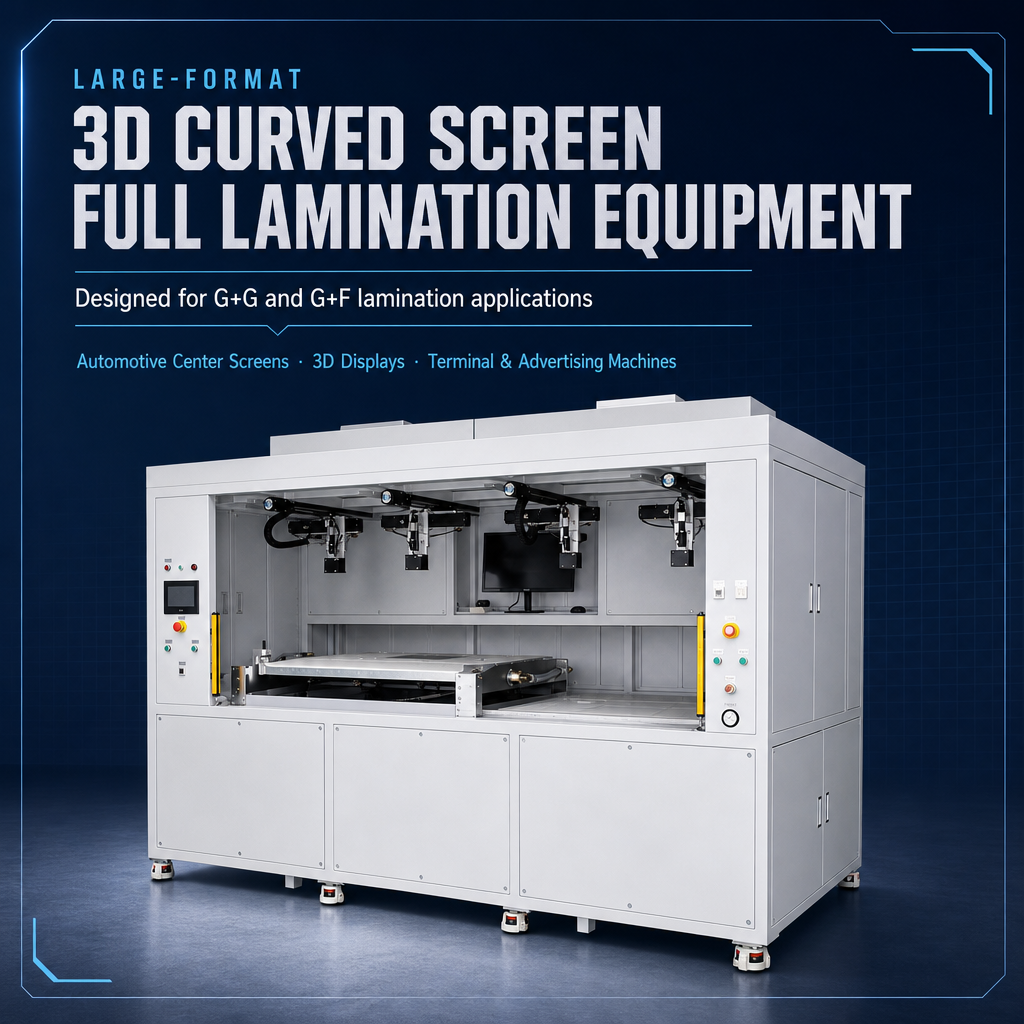
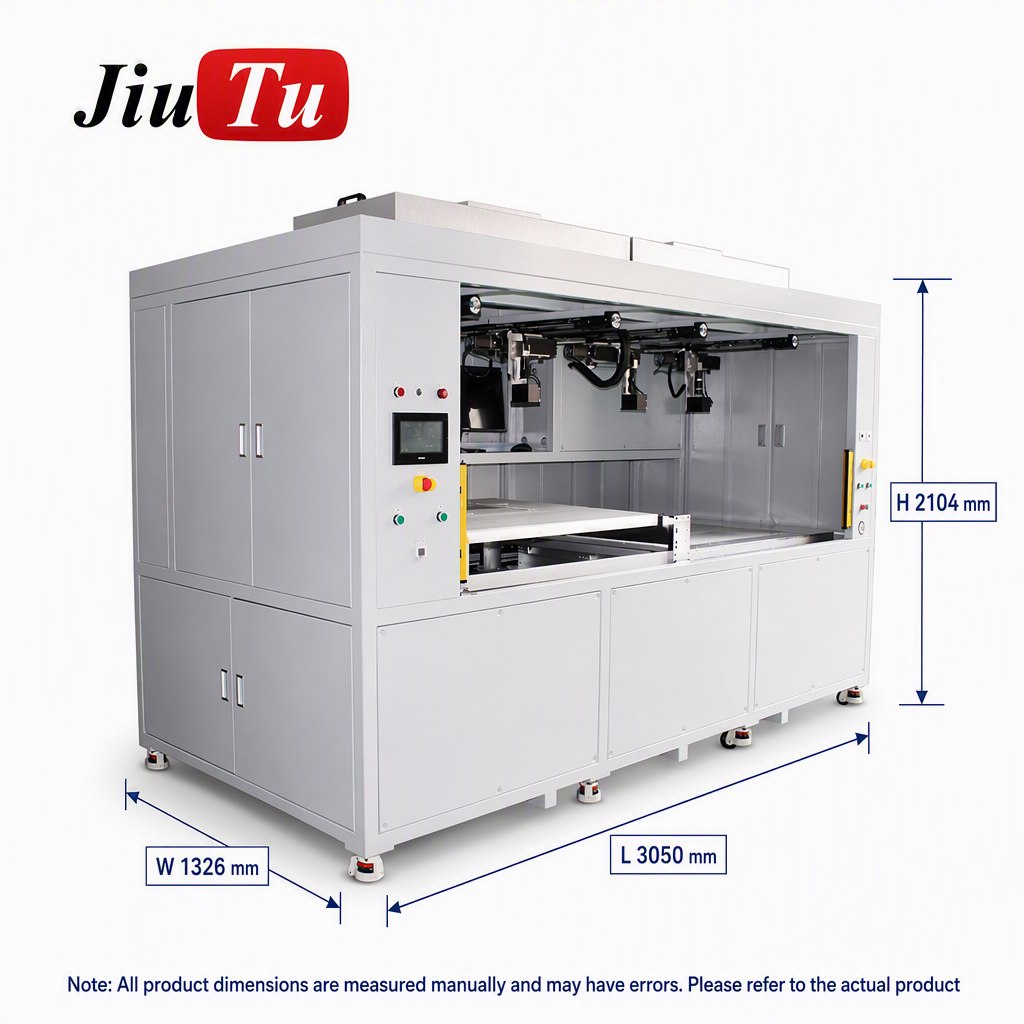
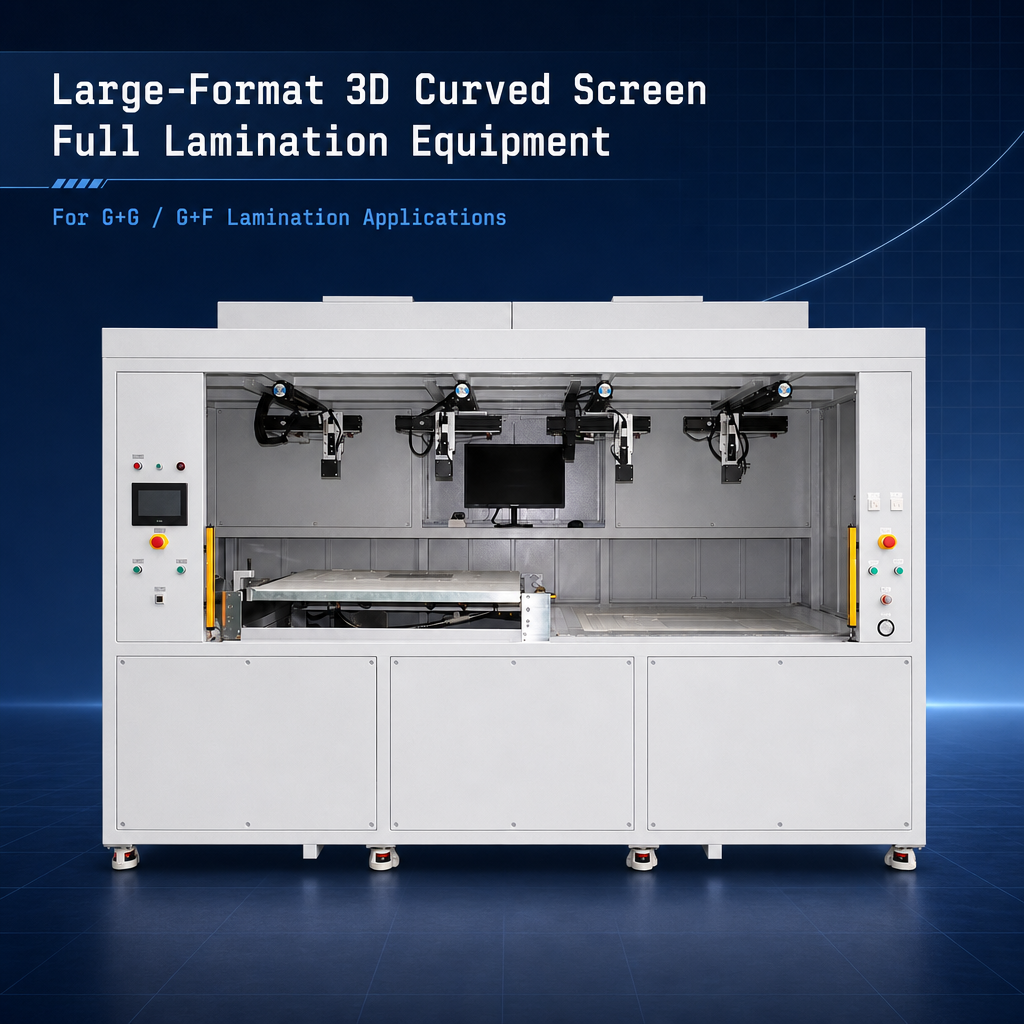
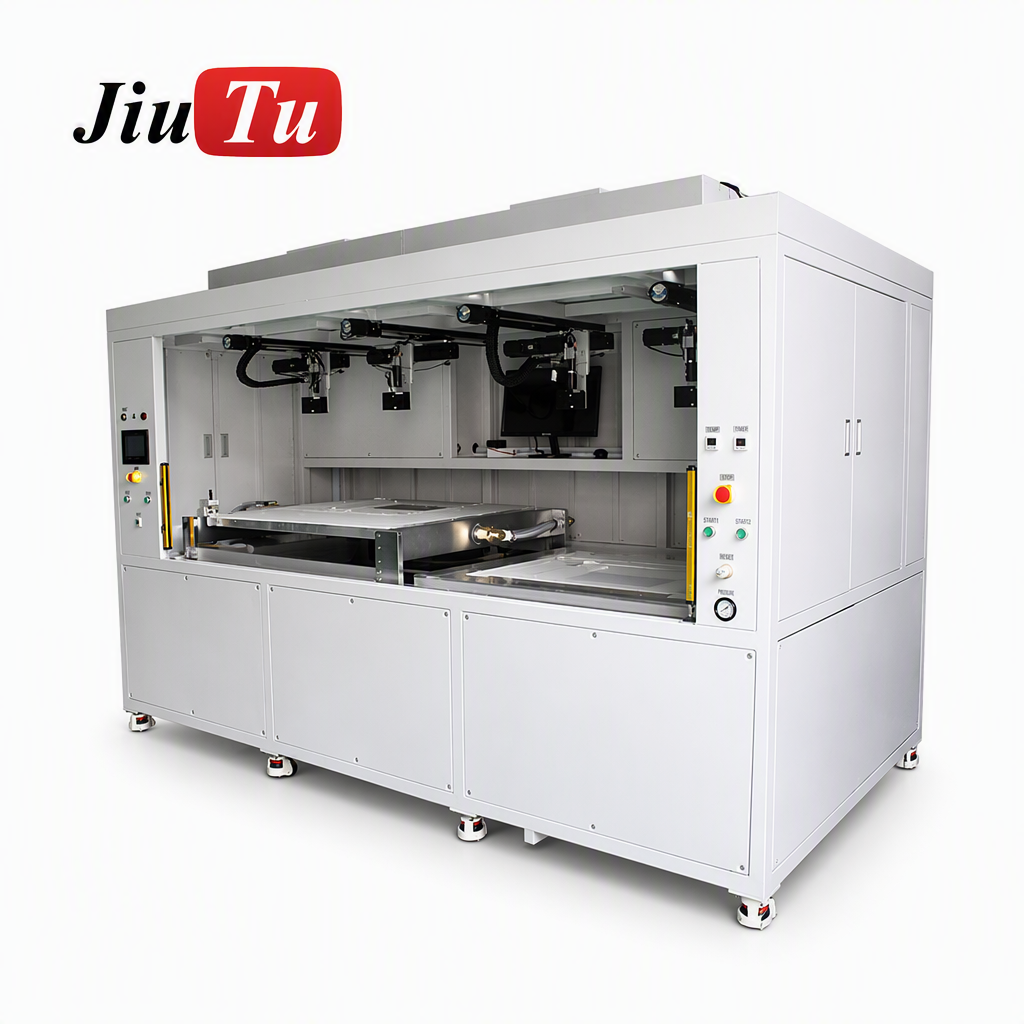
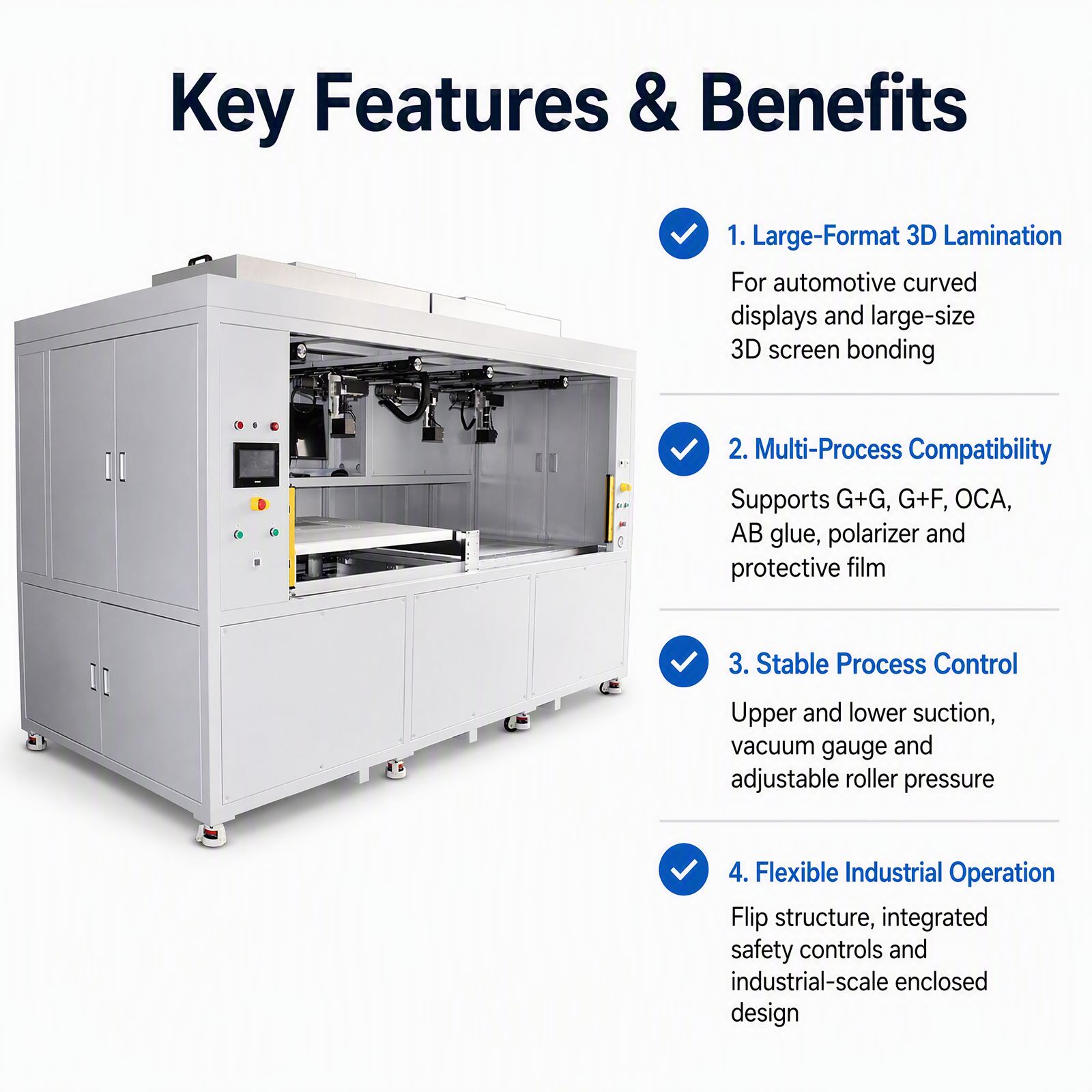
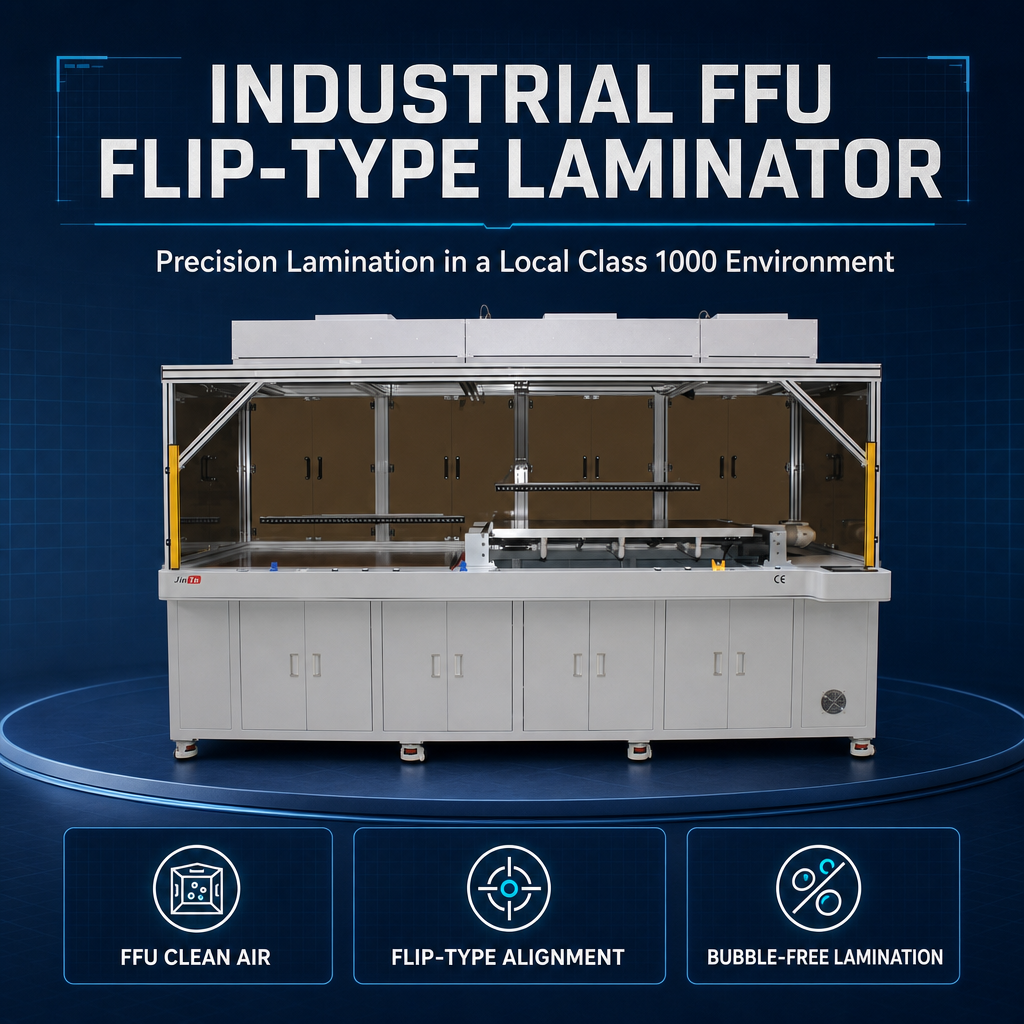
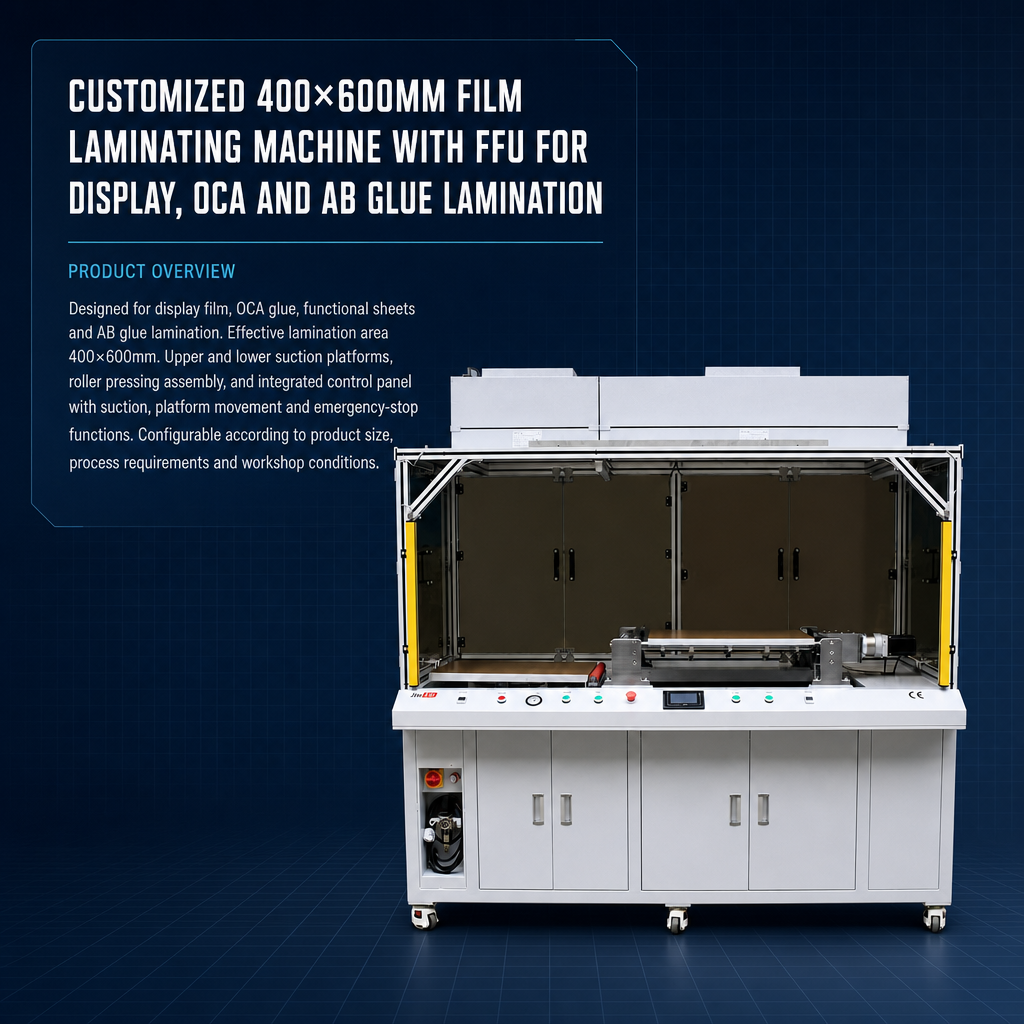
The equipment utilizes CCD visual alignment technology combined with an XYY grid alignment module to minimize positioning errors. The lower platform employs a high-speed vacuum blower system to keep the substrate flat during the bonding process, effectively preventing film stretching, deformation, and the formation of air bubbles. Two integrated FFU (Fan Filter Unit) modules provide a clean air environment for the bonding zone.
Confirmed bonding types (PDF Sections 3 & 4):
G+F: Flexible film bonding to rigid glass or protective panels;
G+G: Glass-to-glass full lamination;
F+F: Flexible film to flexible film;
TP+LCD full lamination
Compatible Film & Material Types
Film / Material | Industrial Application
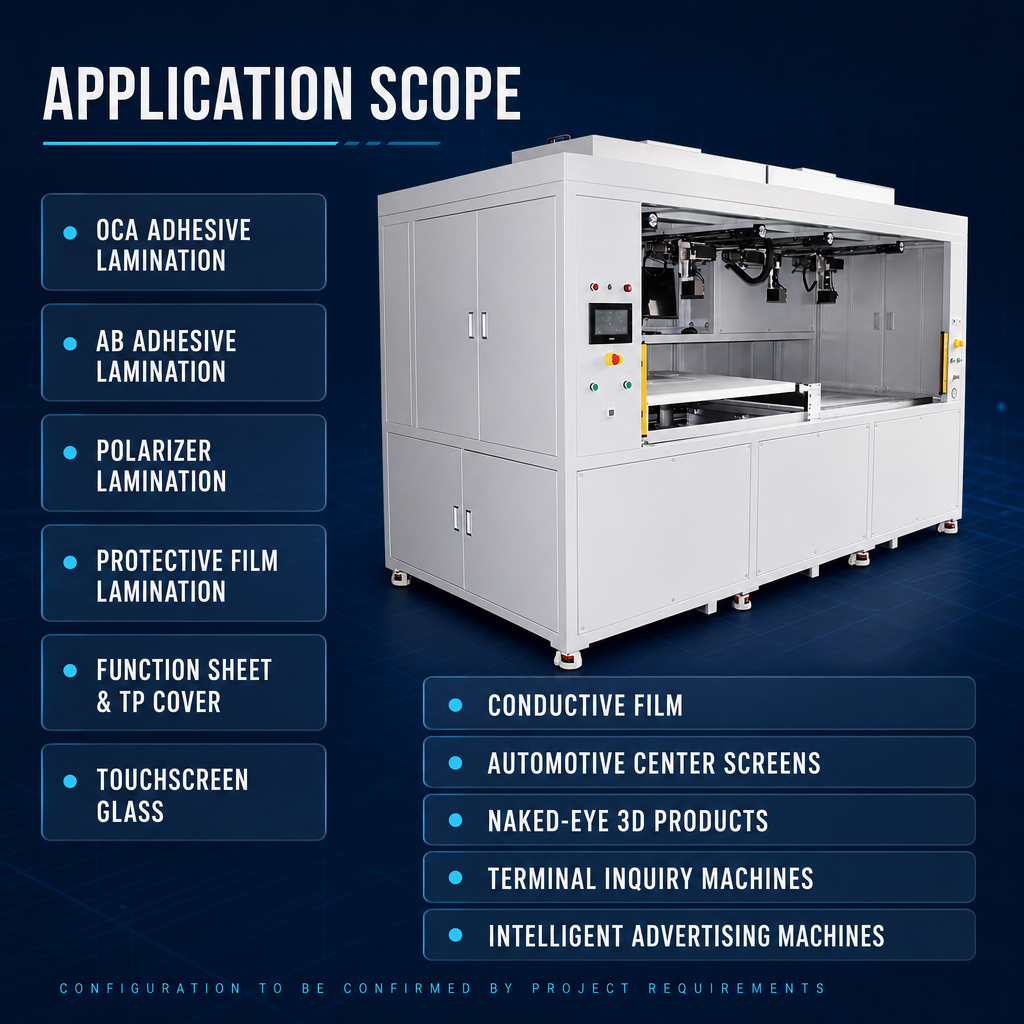
OCA (Optical Clear Adhesive) film | Cover glass optical bonding, display module assembly
SCA (Super Clear Adhesive) film | Large flat display surface bonding
ITO conductive film | Top/bottom ITO layer bonding for capacitive touchscreens
Polarizing film | LCD polarizer lamination on display glass
COF (Chip-on-Film) | Flexible circuit bonding in display module production
CCF film | Functional film bonding on display glass
AB adhesive film | Glass-to-panel and panel-to-panel bonding
Protective film | Surface protection on display panel glass
Conductive film | Conductive film lamination on display assemblies
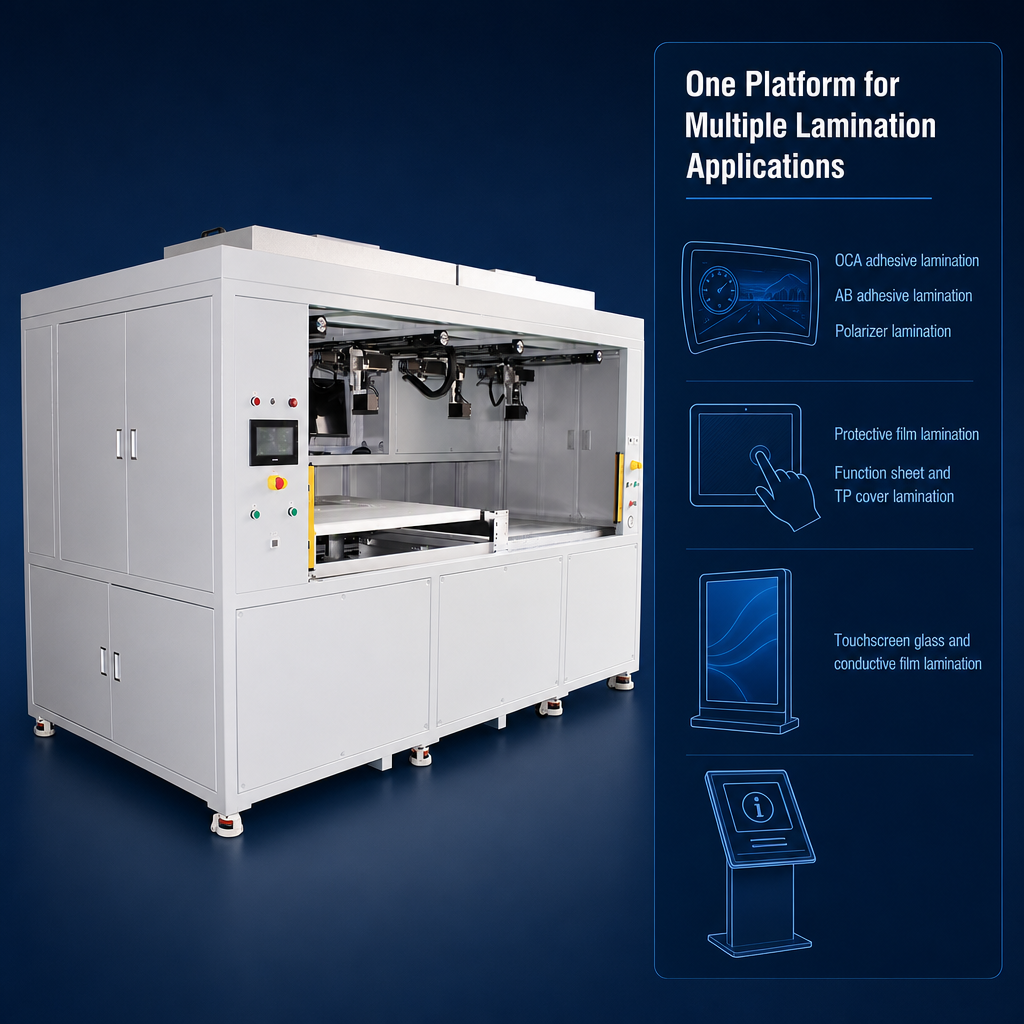
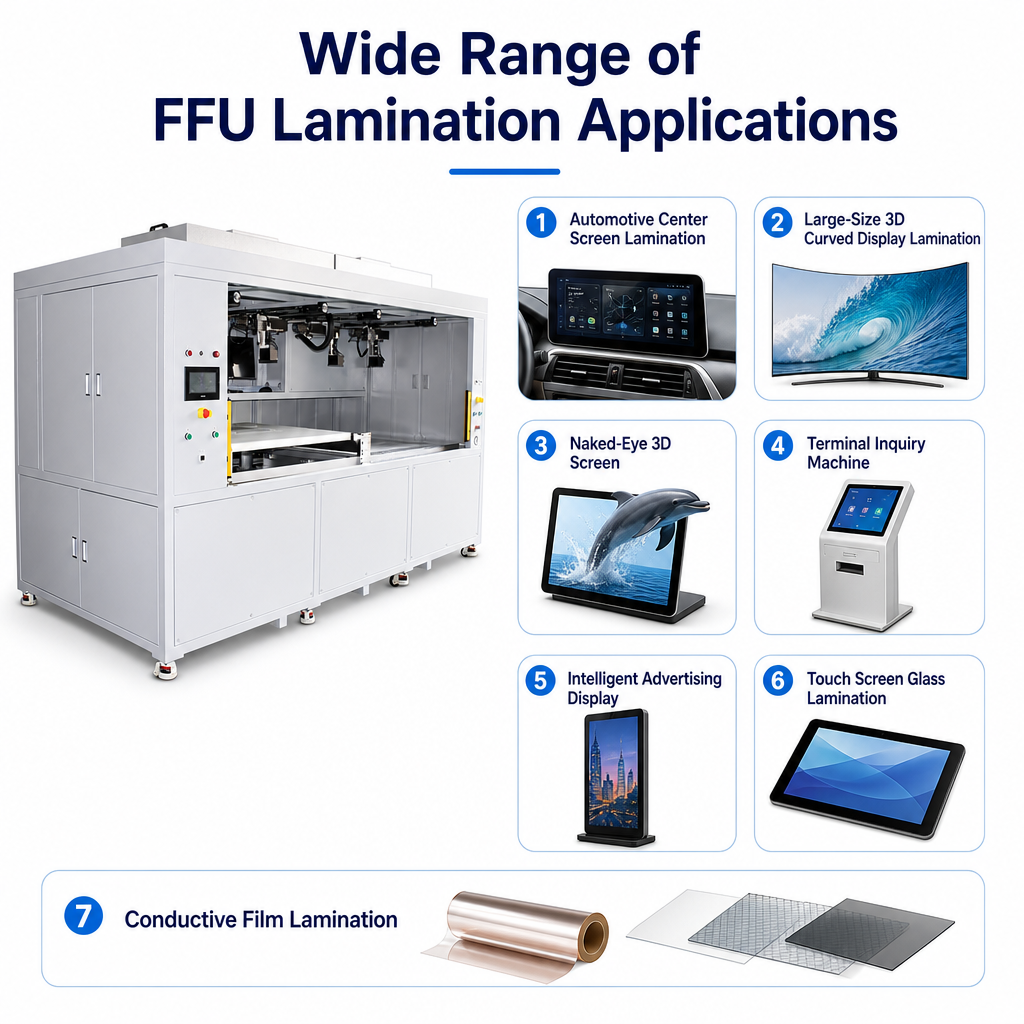
Application Scenarios (Confirmed from Product Imagery)
Application | Bonding Mode
Automotive center screen lamination — curved displays | G+F / G+G
Large-size 3D curved display lamination | G+G / G+F
Naked-eye 3D screen — lenticular film bonding | G+F
Terminal inquiry machine display glass | G+F
Intelligent advertising display lamination | G+F
Touch-screen glass lamination | G+F / F+F
Conductive film lamination | F+F
Key Features
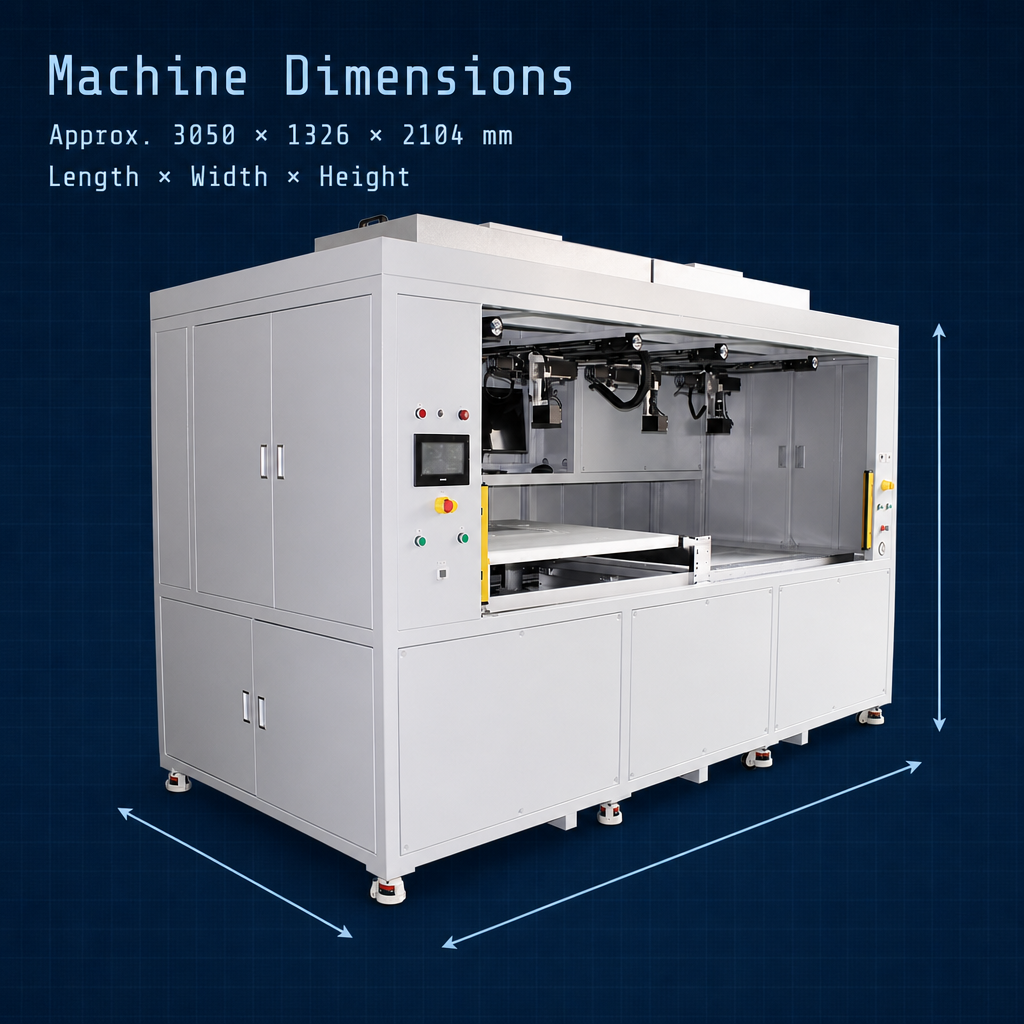
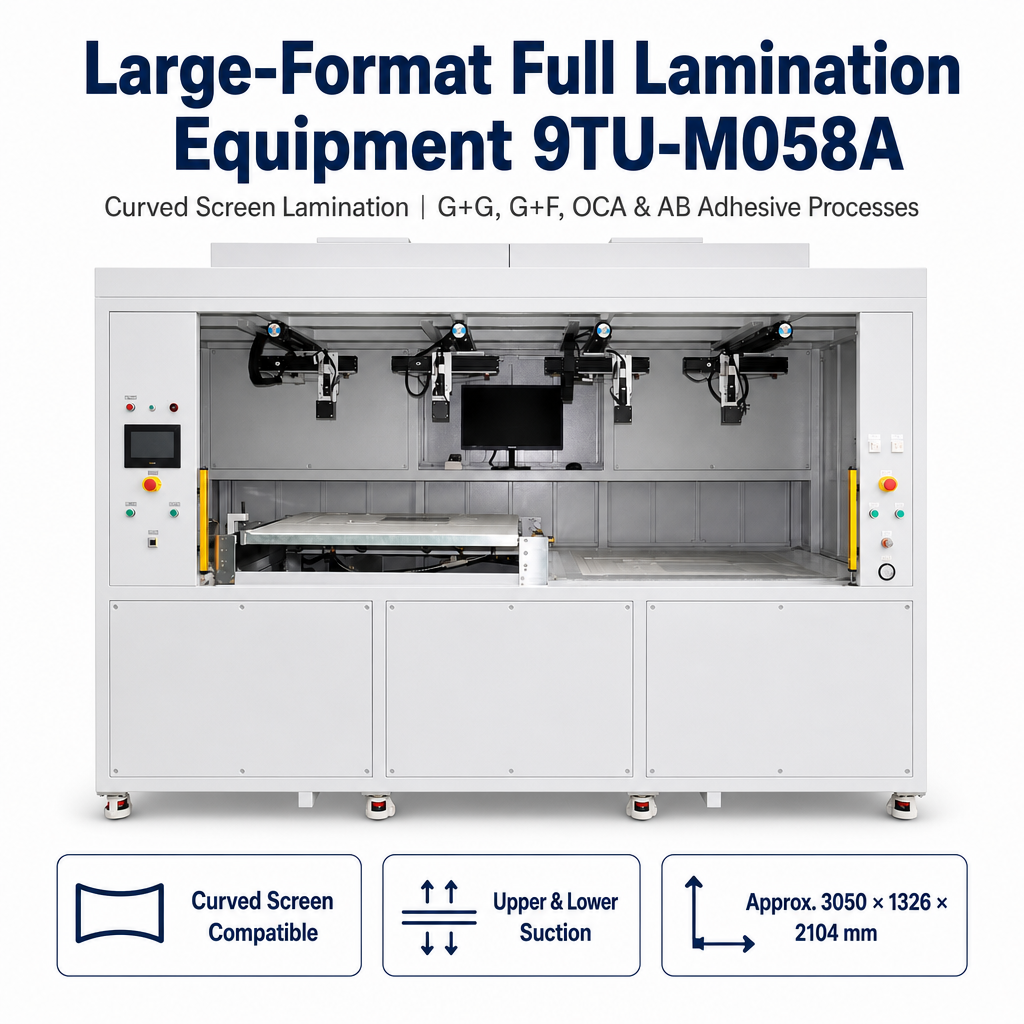
1. CCD Automatic Alignment — Mesh XYY Module The machine uses 4× Dahua industrial cameras (MV-A3600MG18, 6MP each) mounted on the overhead cross-beam. The Haibo Intelligent vision system (HBvision-S1) captures two alignment mark positions on the substrate and film, calculates X/Y/θ offset, and drives the Mesh XYY alignment module to correct position before the bonding cycle begins.
Key alignment specifications (PDF §8):
Alignment adjustment stroke: X/Y ±10mm, θ±1°
CCD pixel accuracy: 0.0115mm
Positioning system accuracy: ±0.01mm
Fitting accuracy: ±0.1mm (excluding material tolerance)
Control axis repeatability accuracy: ±0.03mm
The flip plate and mesh plate are positioned directly above the lower platform CCD for image capture. The mesh box automatically rises and falls to accommodate different substrate thicknesses and multi-layer lamination configurations. Lamination gap and lamination angle are set by parameters via the touchscreen interface.
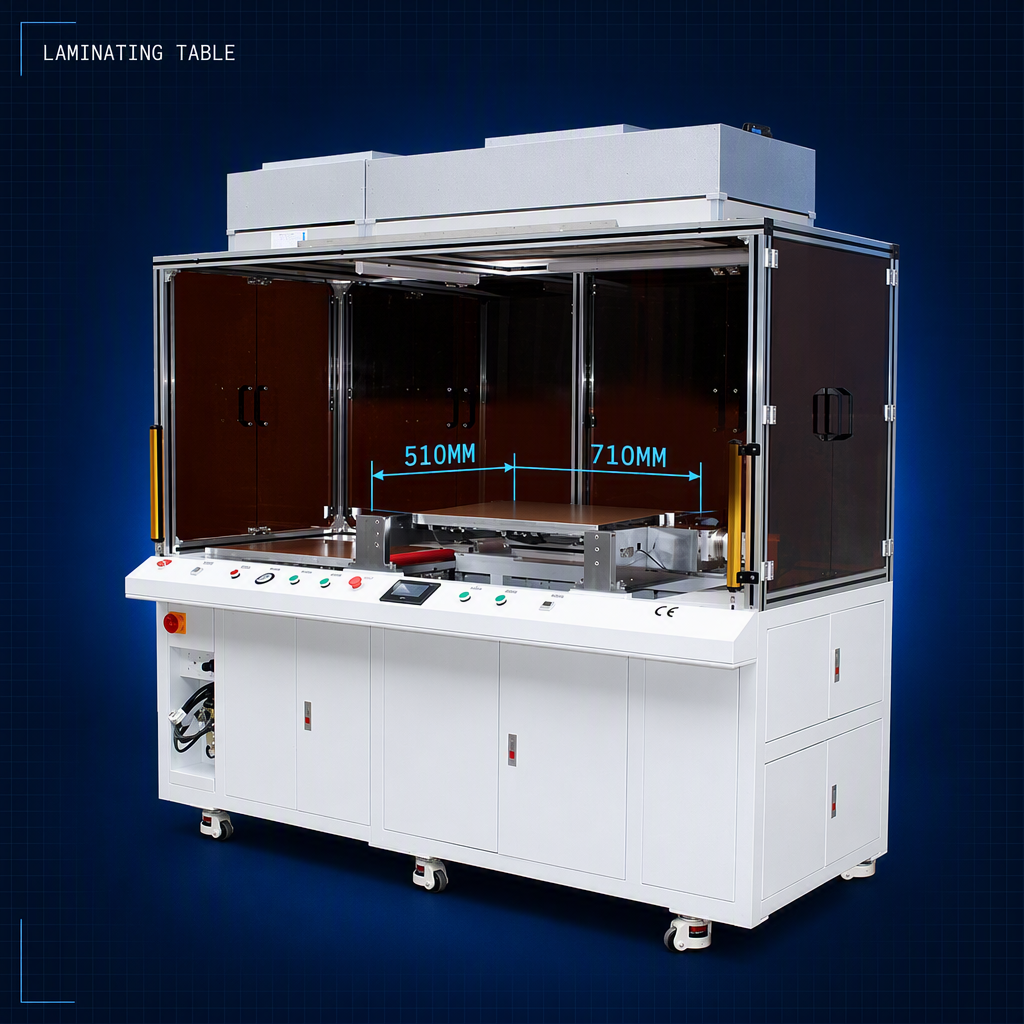
2. Large-Format Vacuum Platform The lower platform (L1050×W930mm) uses high-speed fan vacuum with digital pressure gauge monitoring. Upper platform vacuum hole spacing: Ø0.8mm at 10×10mm pitch, hard-anodised surface, servo motor controlled with 180° centre flip and horizontal movement. Platform flatness: 0.20mm.
The roller (Ø30×L650mm, PU, Shore A55–60) applies lamination force ≤40KG across an effective bonding stroke of 900mm, parallel to the long side of the substrate or film. Lamination speed: <500mm/s.
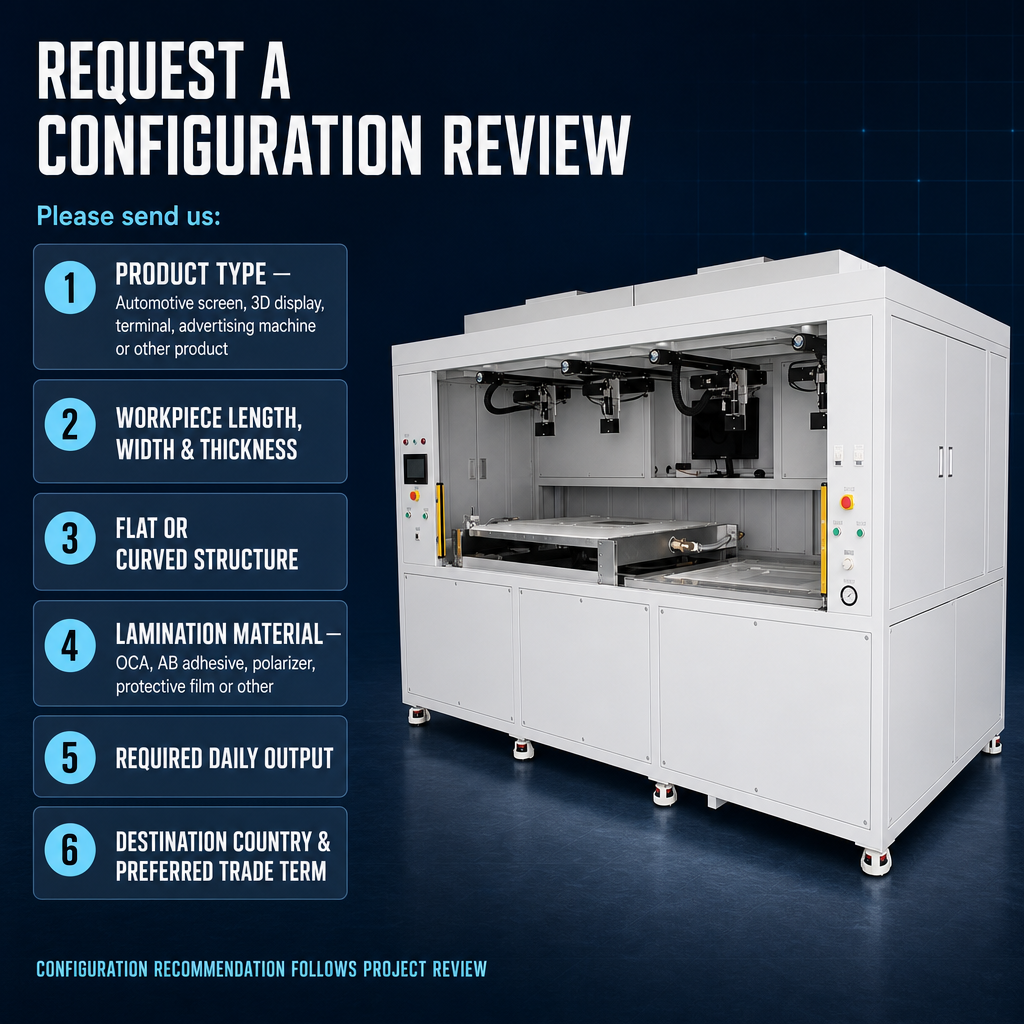
3. 2× FFU Clean-Air Units Two FFU (Fan Filter Unit) units are integrated into the overhead structure of the machine enclosure. These provide filtered clean-air flow over the bonding work zone during the lamination cycle. Working environment specification: Temperature 25±5°C, Humidity 60±5%, Cleanliness level 1000 (CLASS 1000).
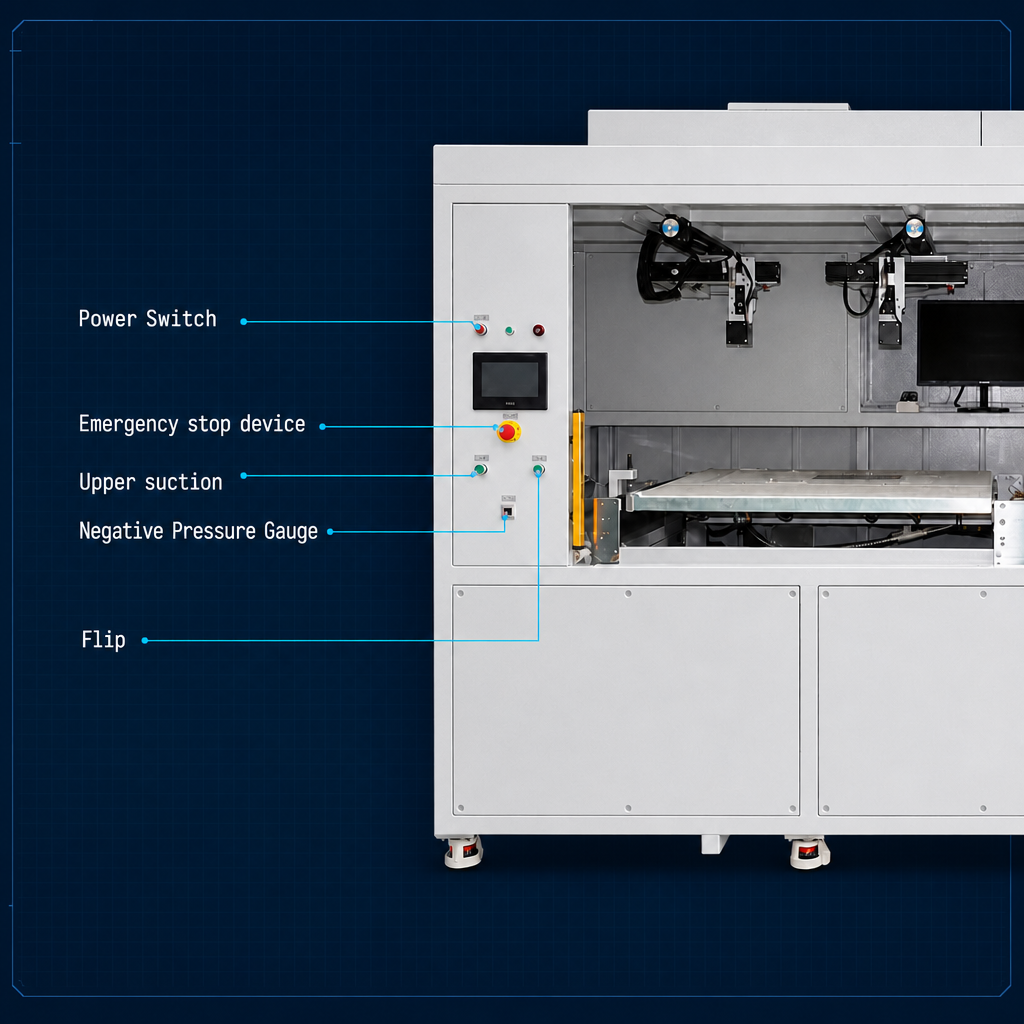
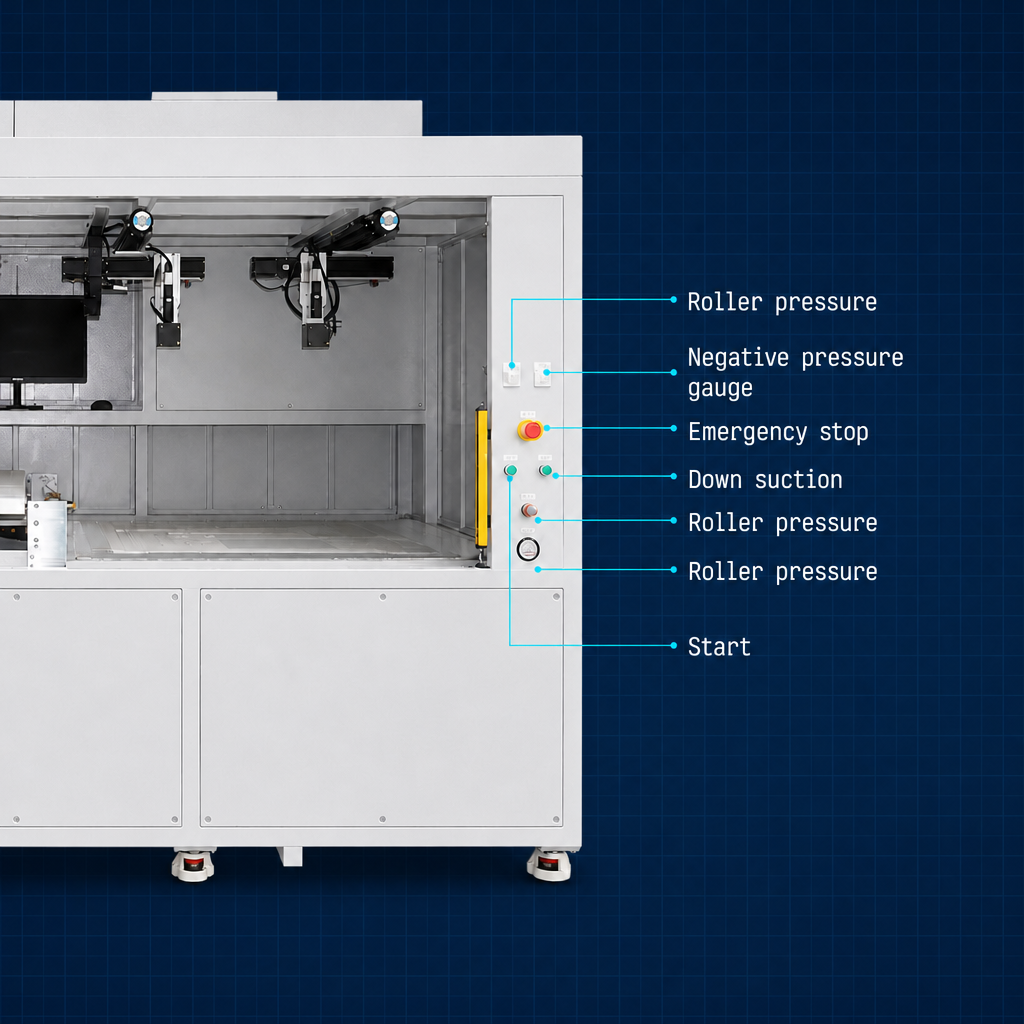
4. Industrial Computer + PLC Automatic Control The control system uses an industrial computer combined with PLC and touchscreen HMI. Parameter debugging is done via touchscreen. Controls include power switch, emergency stop, upper suction, negative pressure gauge, and flip platform control. Product line changeover: existing specifications <15 minutes; new specifications <30 minutes.
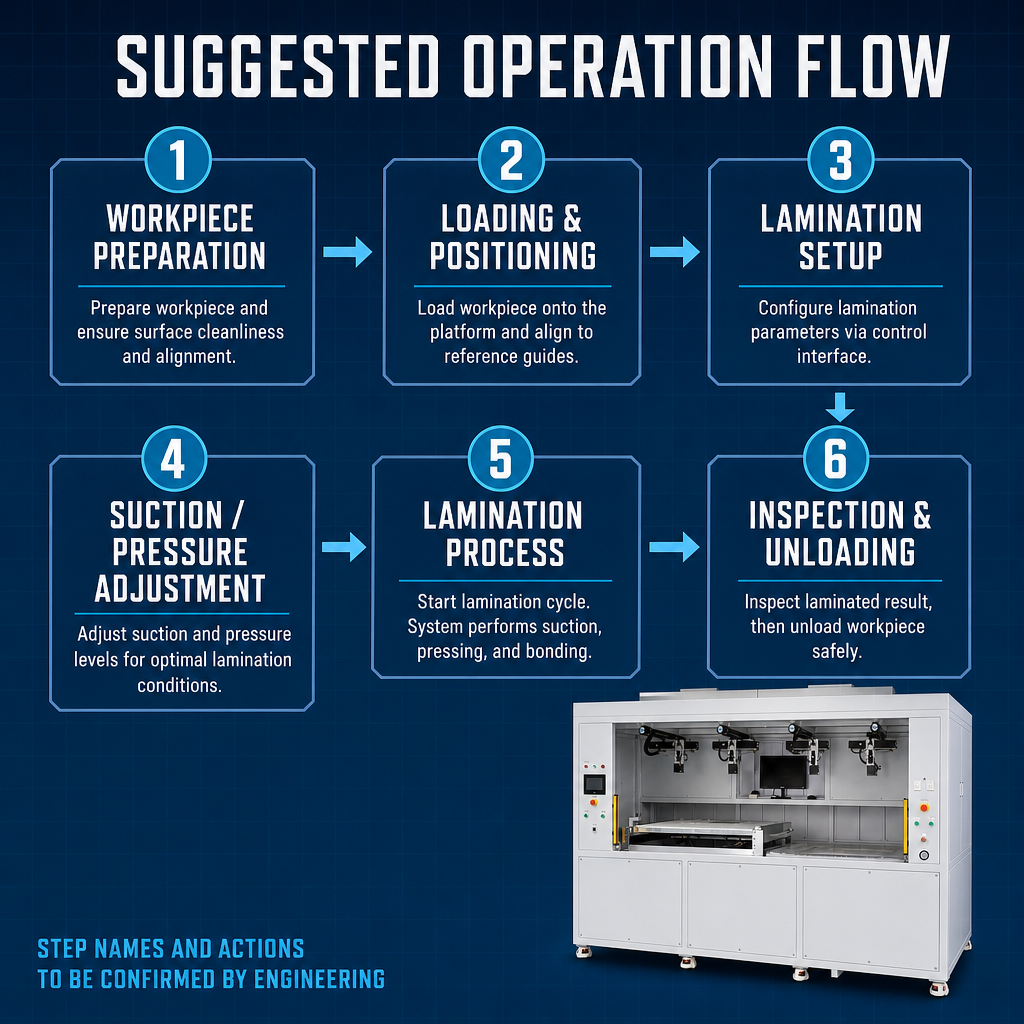
5. Steel Frame Construction & Component Quality The machine uses a steel structure frame for rigidity. Linear guides: HIWIN/PMI/CSK/THK or equivalent. Ball screws: TBI/HIWIN/THK or equivalent. Servo motors: YASKAWA/Panasonic/Leisai/Xinjie or equivalent. Pneumatic actuators: SMC/MAXAIR/AirTAC or equivalent. Sensor brands: OMRON/Panasonic/KEYENCE/SICK or equivalent.
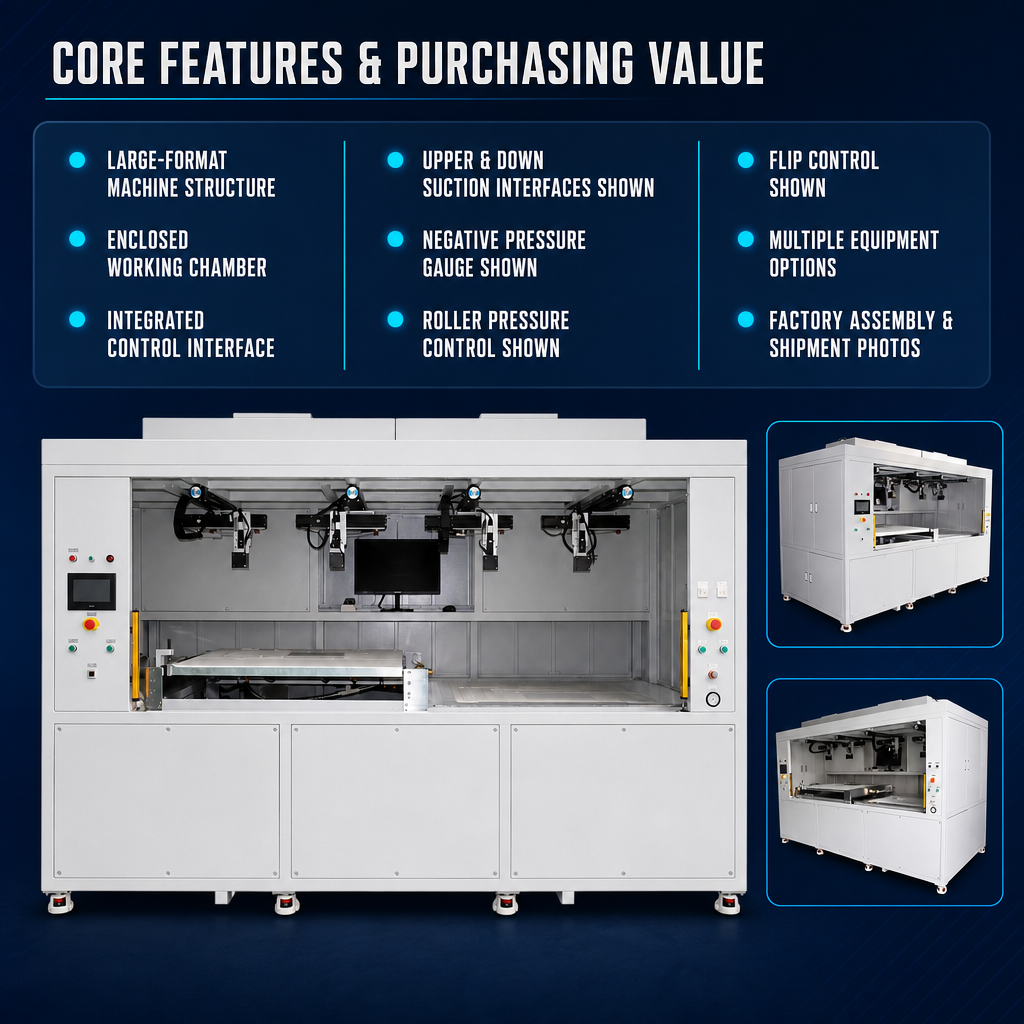
6. Safety Configuration
1× safety grating at operator loading zone
Emergency stop buttons (machine re-homes after manual fault resolution)
Electrical interlocking design to prevent misoperation
Vacuum detection signal feedback
Safety signage at AC30V+, DC60V+, and mechanical movement zones
Why Choose Us

1. CCD Alignment Suited to Large-Format and Curved Display Production The 4-camera CCD system with Mesh XYY correction achieves ±0.1mm fitting accuracy across a 900×600mm bonding area. For large-size automotive curved displays and 3D screen production, where the bonding area is large and angular registration directly affects visual quality, consistent alignment across batches reduces rework rate compared to manual or mechanical-stop registration methods.
2. Mesh XYY Module with Automatic Height Adjustment The mesh box Z-axis is servo-motor controlled (20mm stroke), automatically adjusting lamination gap and angle by parameter for different substrate thicknesses and multi-layer lamination processes. This allows the same machine to handle G+F, G+G, F+F, and TP+LCD full lamination without hardware tooling changes between product types.
3. Variable-Frequency Vacuum Control on Net Platform The net vacuum source uses a high-speed fan with variable-frequency vacuum control, adjustable to match different film materials and substrate thicknesses. This directly addresses film stretching, deformation, and bubble formation — common defect sources when fixed vacuum is applied to flexible films of varying stiffness.
4. CLASS 1000 Clean Environment with Integrated FFU Two FFU units provide CLASS 1000 clean-air conditions at the bonding work zone within the machine enclosure. Production lines processing OCA film, optical conductive film, or polarizers under clean-air requirements can operate without a full clean-room installation — the machine provides its own clean-air zone.
5. Comprehensive Precision Chain The machine combines ±0.01mm positioning system accuracy, ±0.03mm control axis repeatability, 0.0115mm CCD pixel accuracy, and 0.20mm platform flatness in a single production unit. Each element in the precision chain is documented in the specification, providing a verifiable basis for process qualification discussions with quality teams.
Product Documents
600x900 CCD film laminator specification
Key Features
Product Details
FAQ
Q1: What is the effective lamination area, and what is the minimum panel size supported?
Q2: What bonding modes does the machine support?
Q3: How does the CCD automatic alignment system work, and what accuracy does it achieve?
Q4: What film types and substrates is this machine compatible with?
Q5: What is the mesh screen specification, and how does it affect the lamination process?
Q6: Can the machine be customised for specific panel sizes or process requirements?
Interested in This Product?
Tell us your project details and our team will prepare a customized quotation.
GET QUOTE NOW