
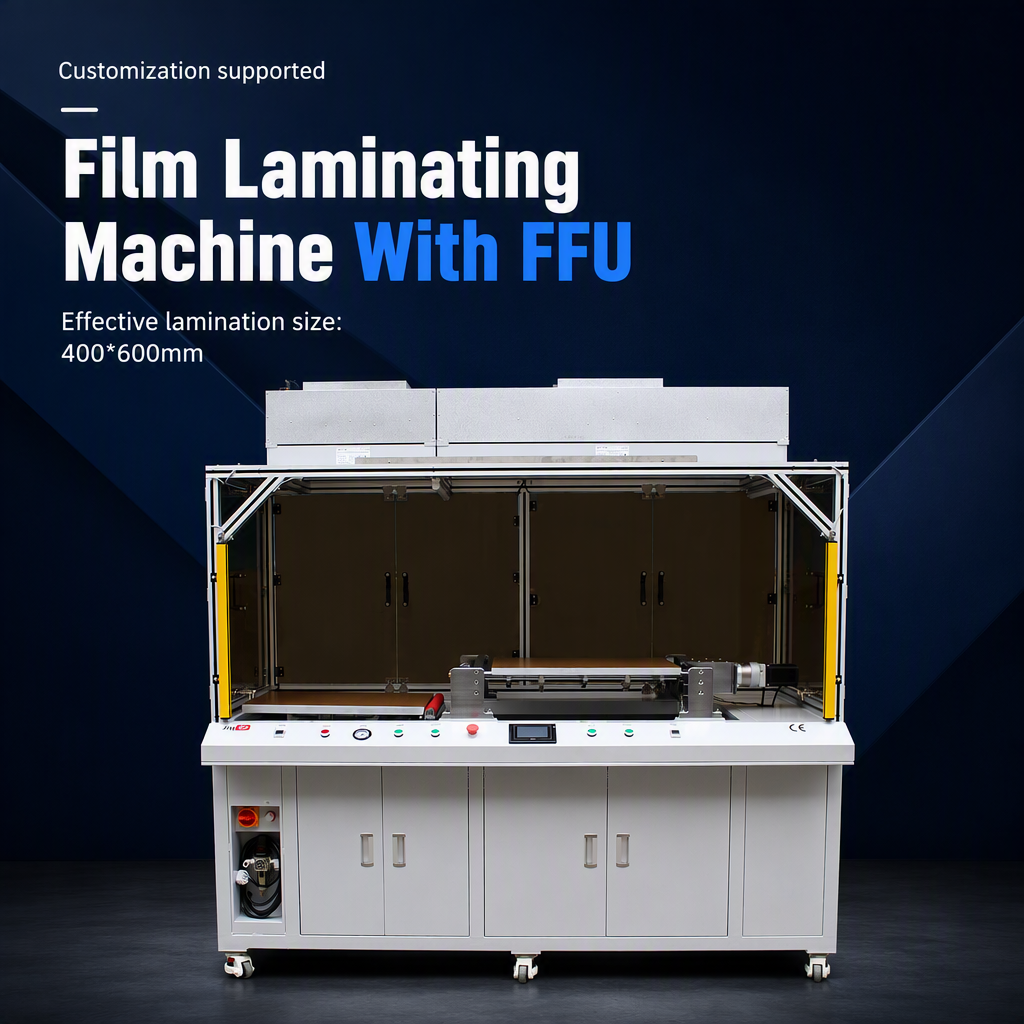
400×600 Film Laminating Machine with FFU
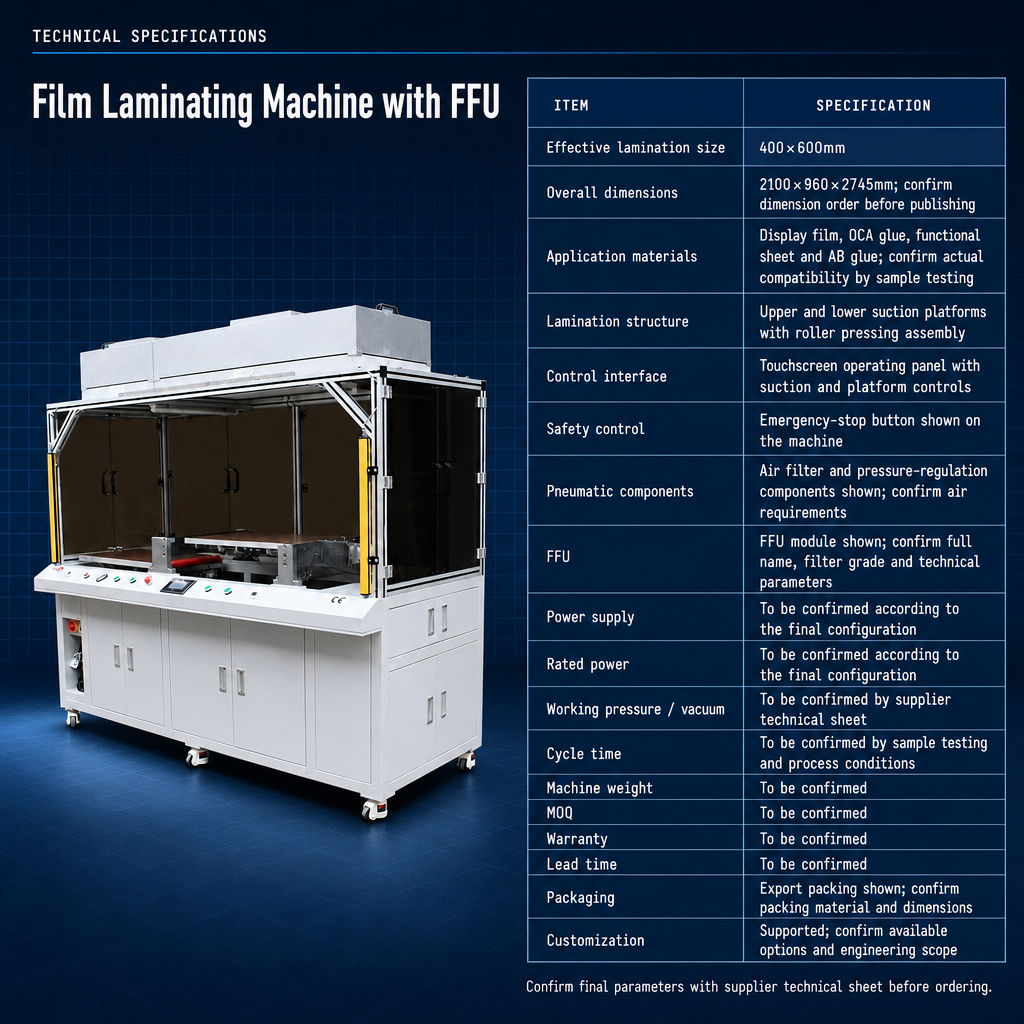
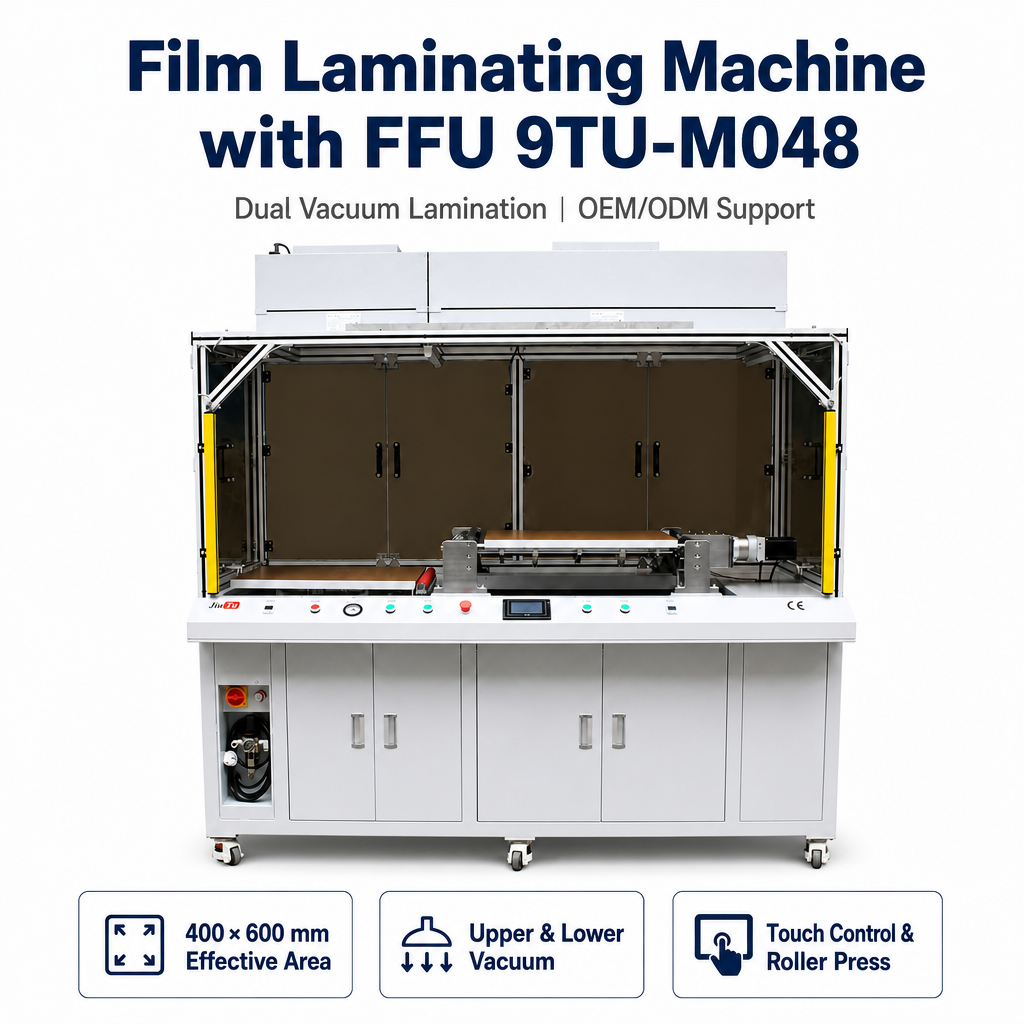
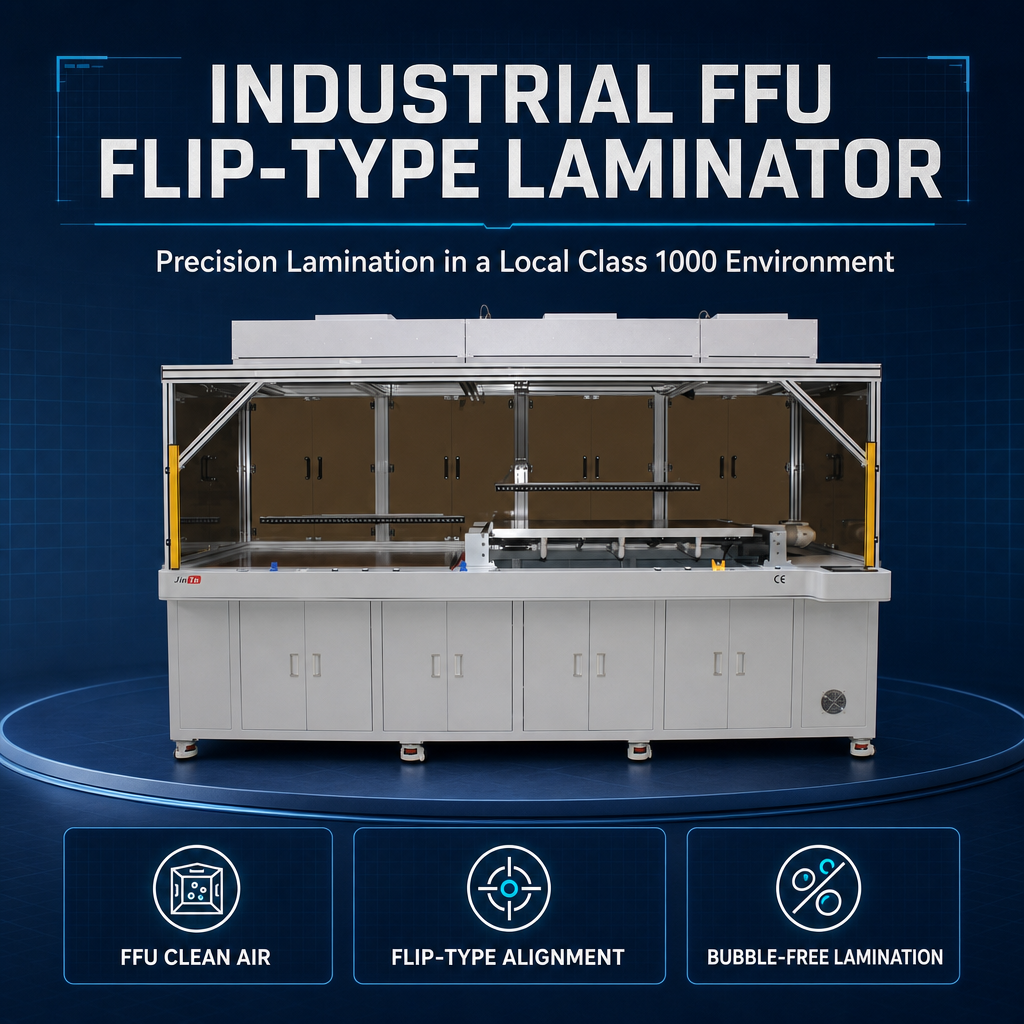
The 400×600 Film Laminating Machine with FFU is designed for soft film-to-hard board (G+F) and soft film-to-soft film (F+F) bonding in the production of medium-sized touch screens and LCD displays. It...
GET QUOTE NOW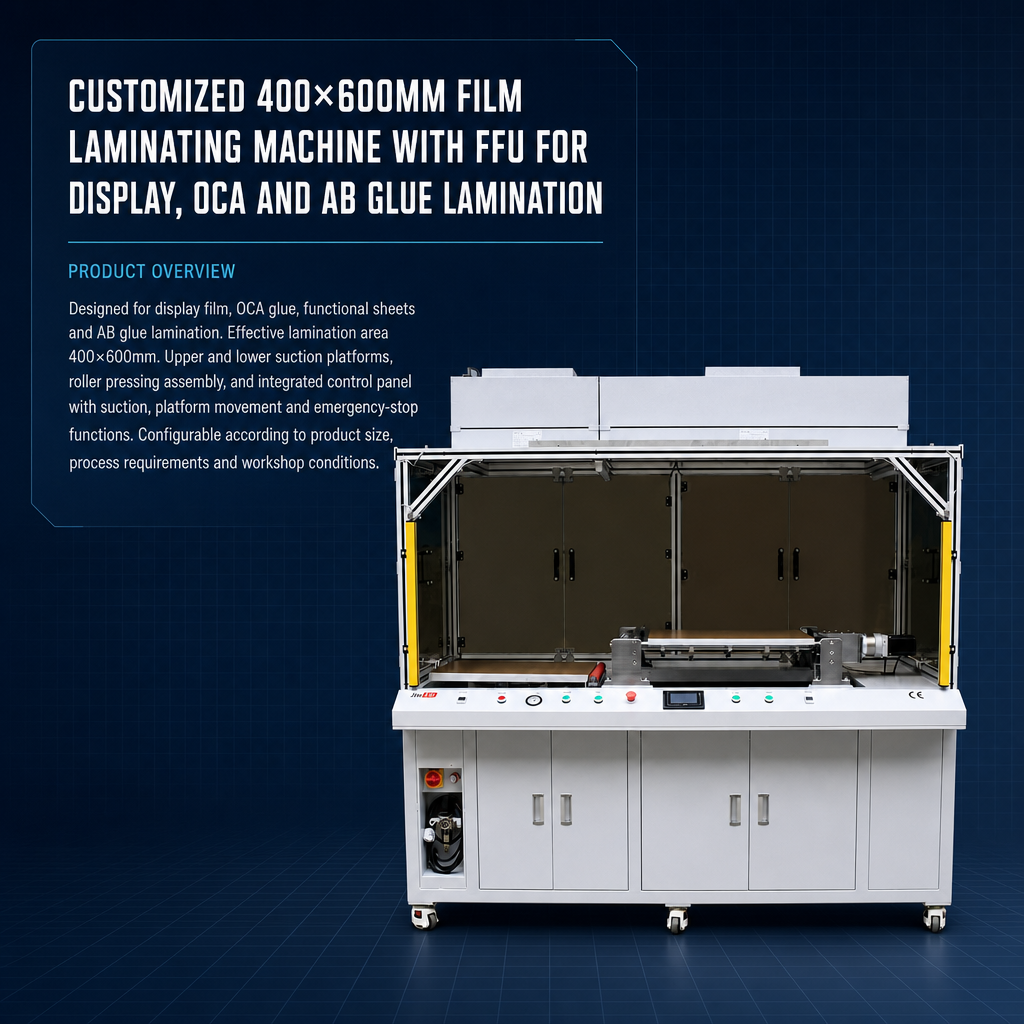
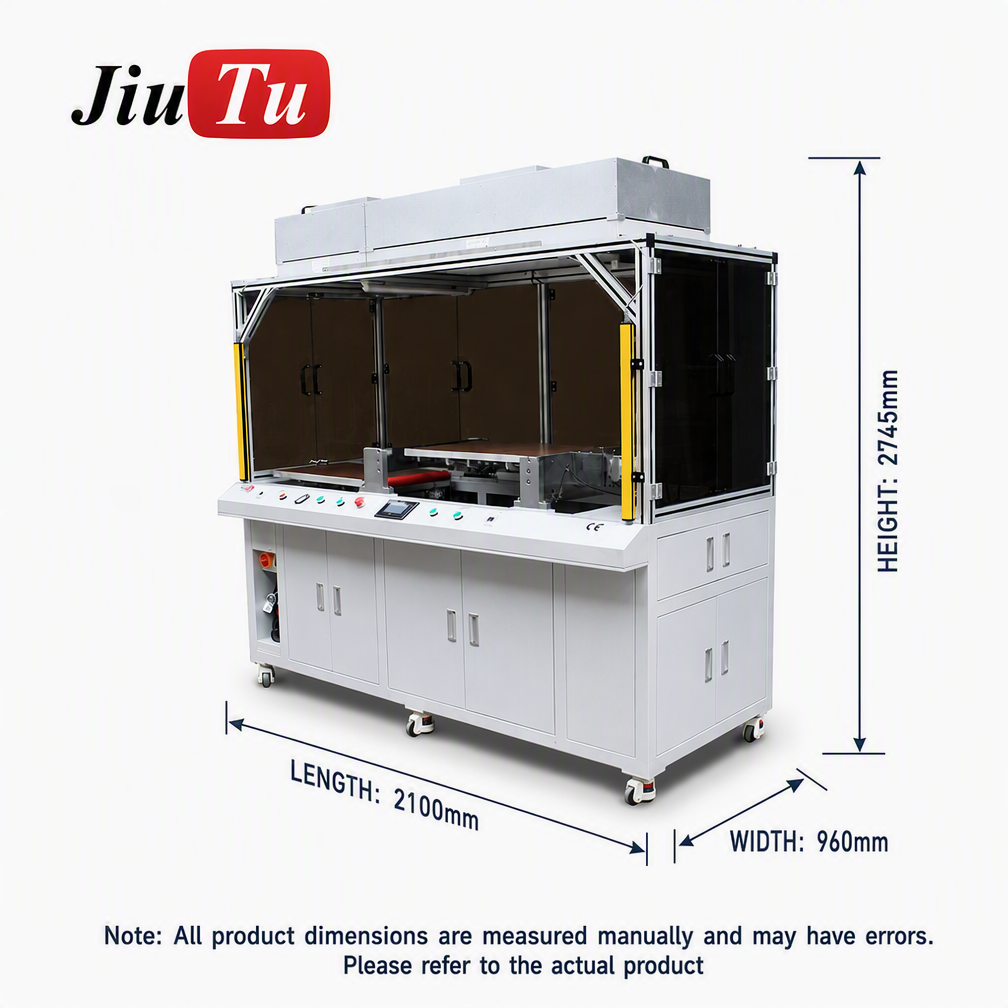
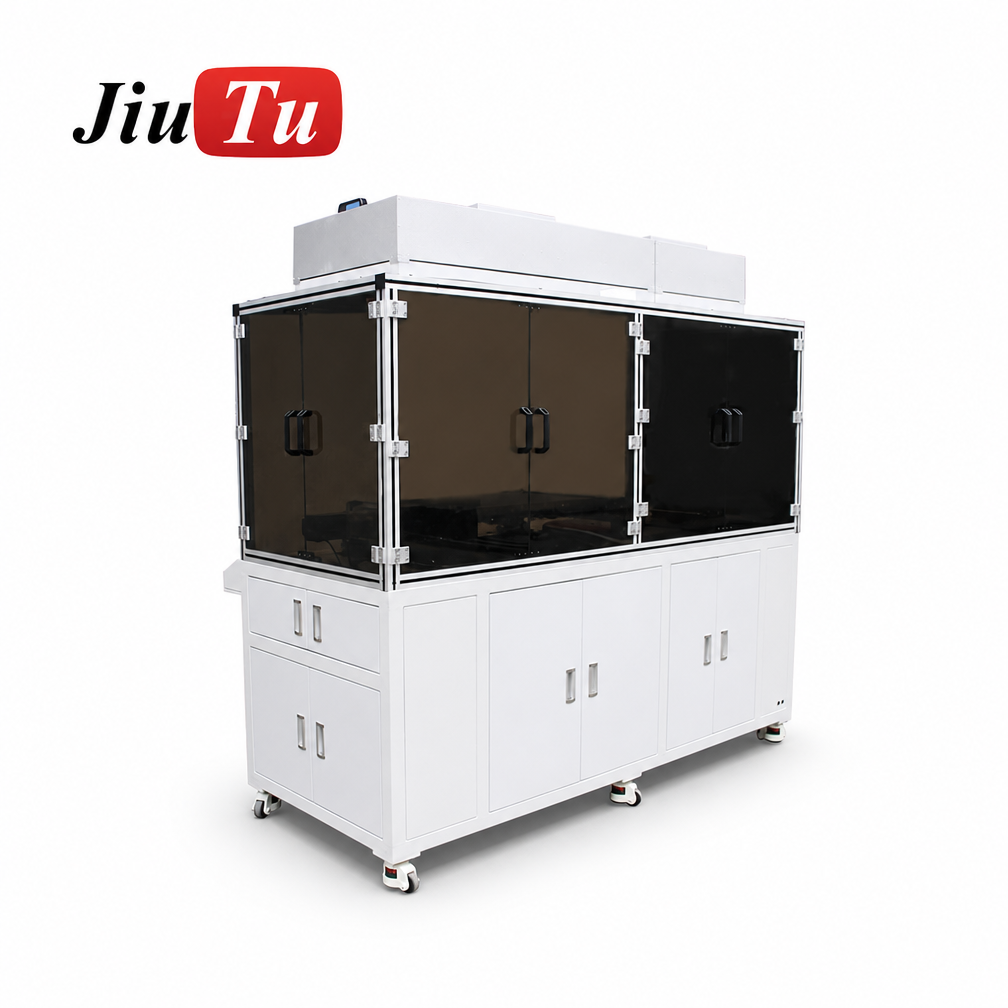
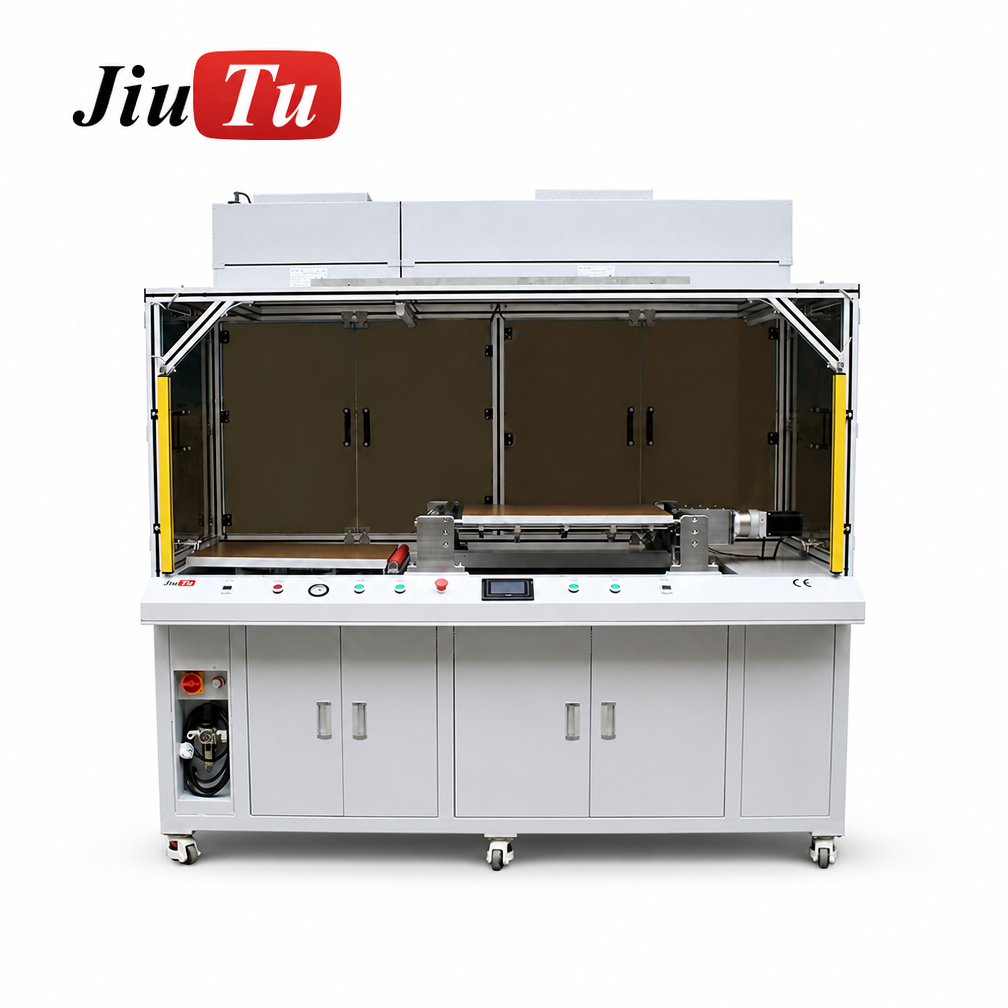
The lower platform features strong/weak vacuum switching control, adapting suction level to different film stiffness levels to reduce film stretching deformation and bubble formation during the bonding stroke. Two overhead FFU units provide filtered clean-air flow over the bonding work zone from above.
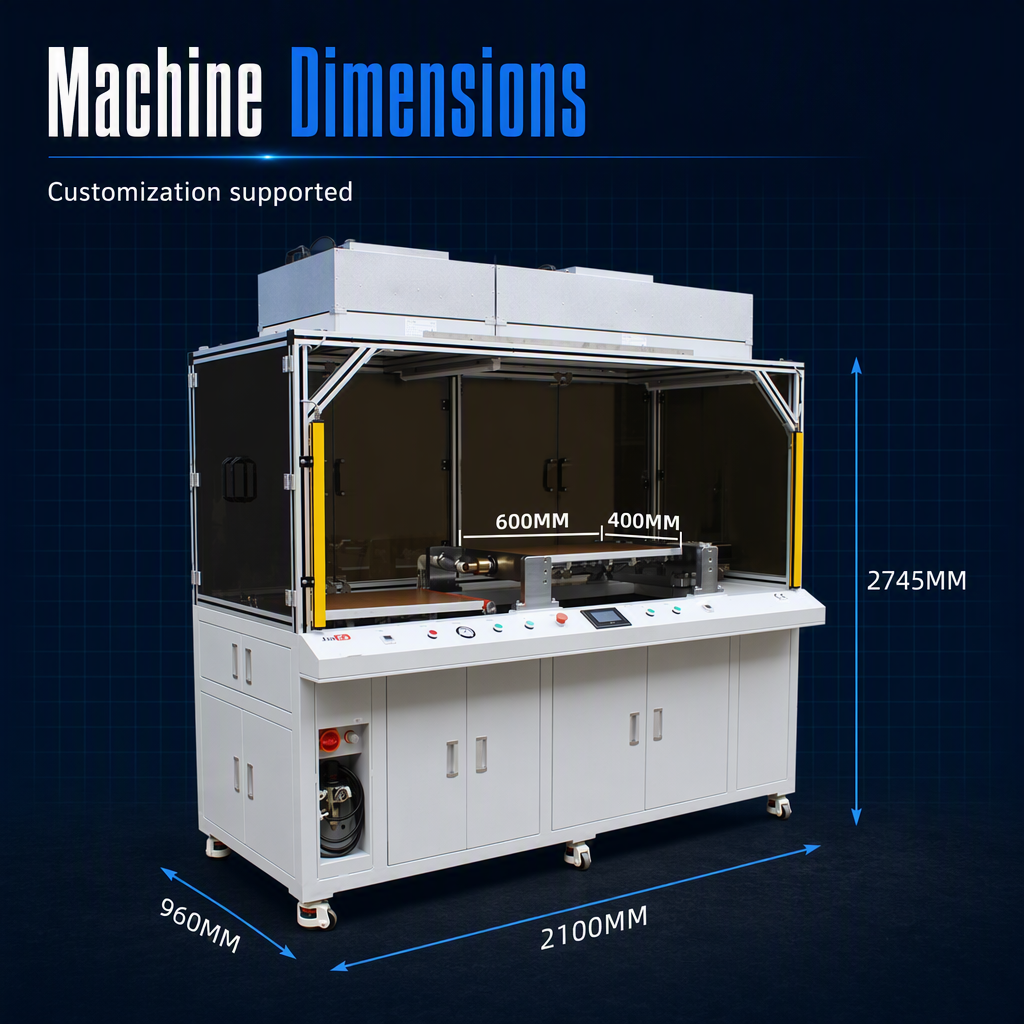
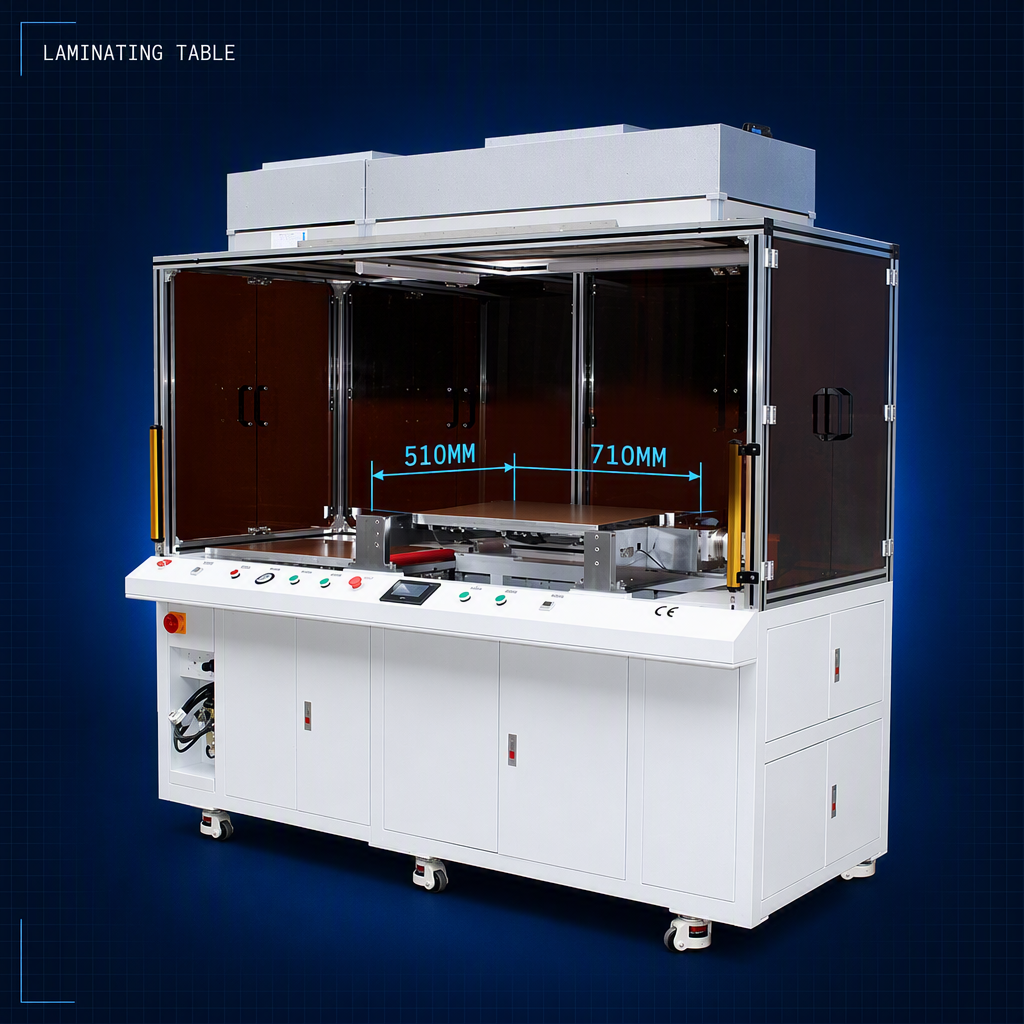
Key architectural distinction from fully enclosed models: This machine uses a workbench-height open-top design with hinged protective panels — the bonding platform is accessible at 940–1075mm working height. FFU units mount on the top frame directly above the bonding zone. This layout provides easy substrate loading access while maintaining clean-air conditions over the work area. The structure is on caster wheels, allowing repositioning within the production floor.
Confirmed bonding types
G+F: Flexible film to rigid glass panel or protective plate
F+F: Flexible film to flexible film
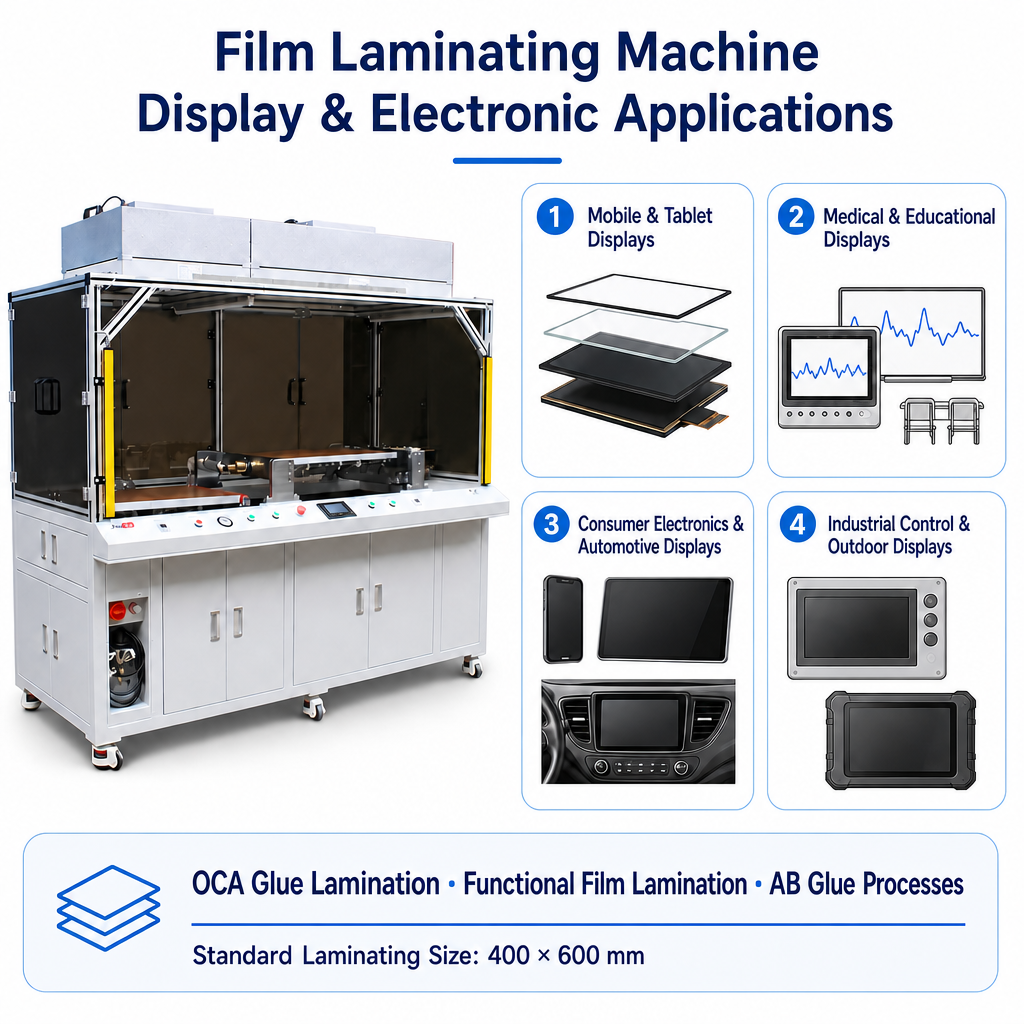
Confirmed application process types (PDF + product images):
OCA glue lamination
Functional film lamination
AB glue processes
Compatible Film & Material Types
Film / Material Industrial Application
OCA (Optical Clear Adhesive) film Cover glass optical bonding, display module assembly
ITO conductive film Top/bottom ITO layer bonding for capacitive touchscreens
Polarizing film LCD polarizer lamination on display glass
Functional film (AG/AR/AF) Surface treatment film on display glass
AB adhesive film Glass-to-panel and panel-to-panel bonding
Protective film Surface protection on display panel glass
SCA film Flat display surface bonding
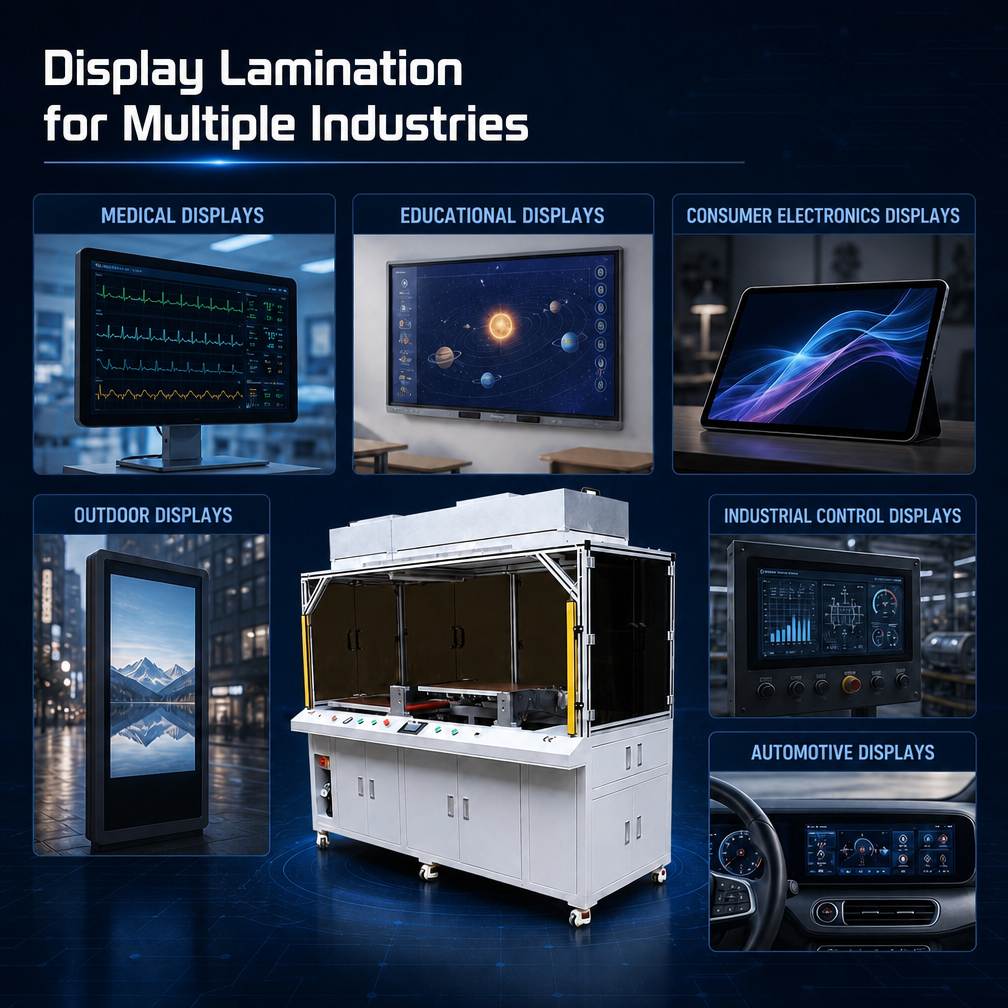
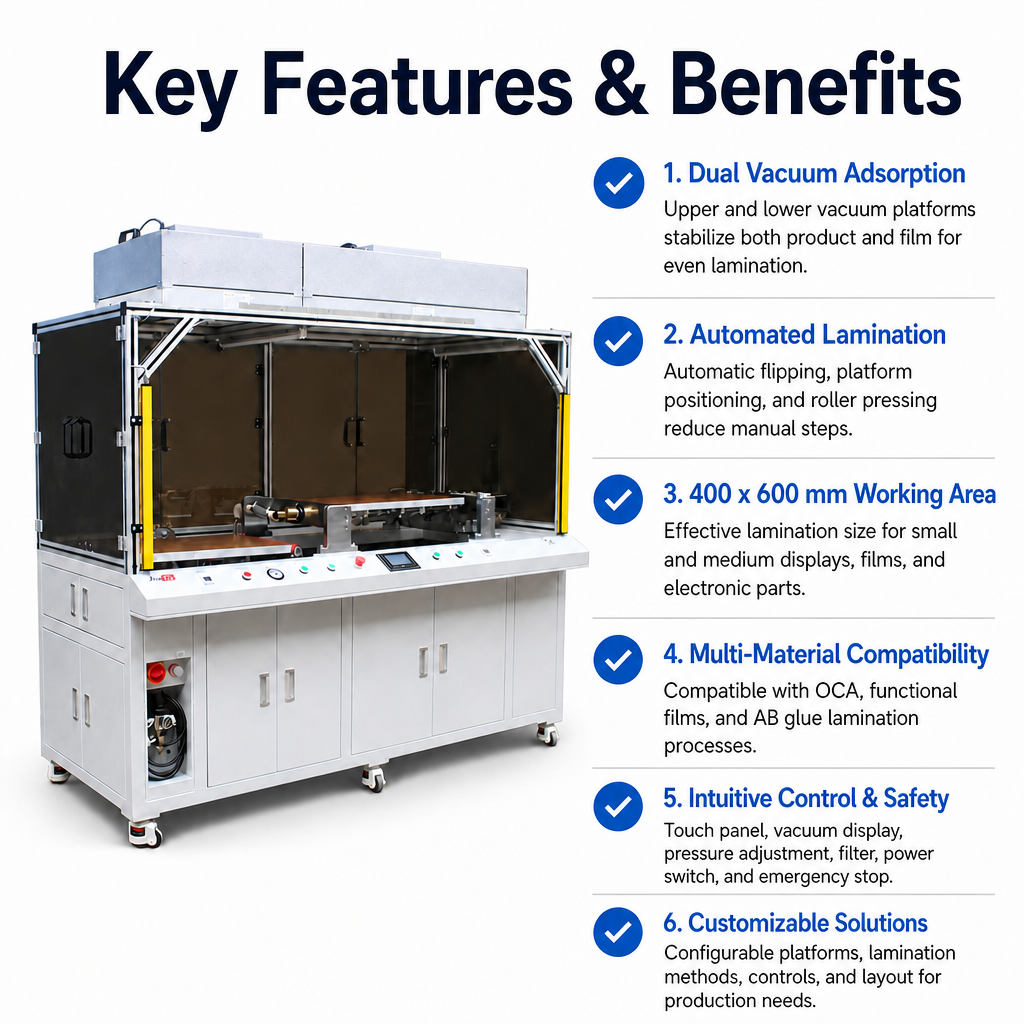
Application Scenarios (Confirmed from Product Images)
Application Notes
Tablet display glass lamination Flat glass to display module film bonding
Medical & educational display lamination Monitor-class display glass lamination
Automotive display film lamination In-vehicle display glass and film bonding
Industrial control display lamination HMI panel and rugged display film bonding
Outdoor display glass lamination Display glass film application
Touchscreen ITO film bonding Top/bottom conductive layer stacking
LCD polarizer bonding Polarizer film to glass substrate
Key Features
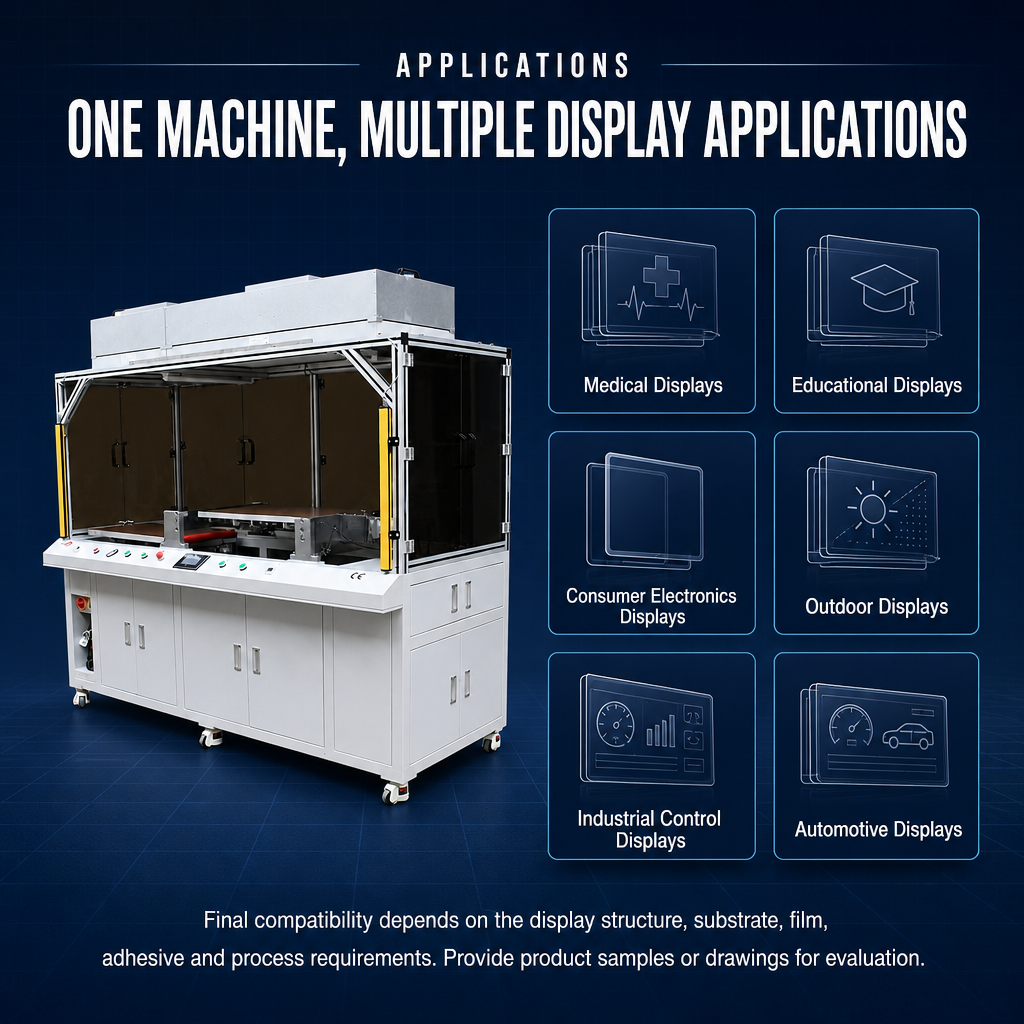
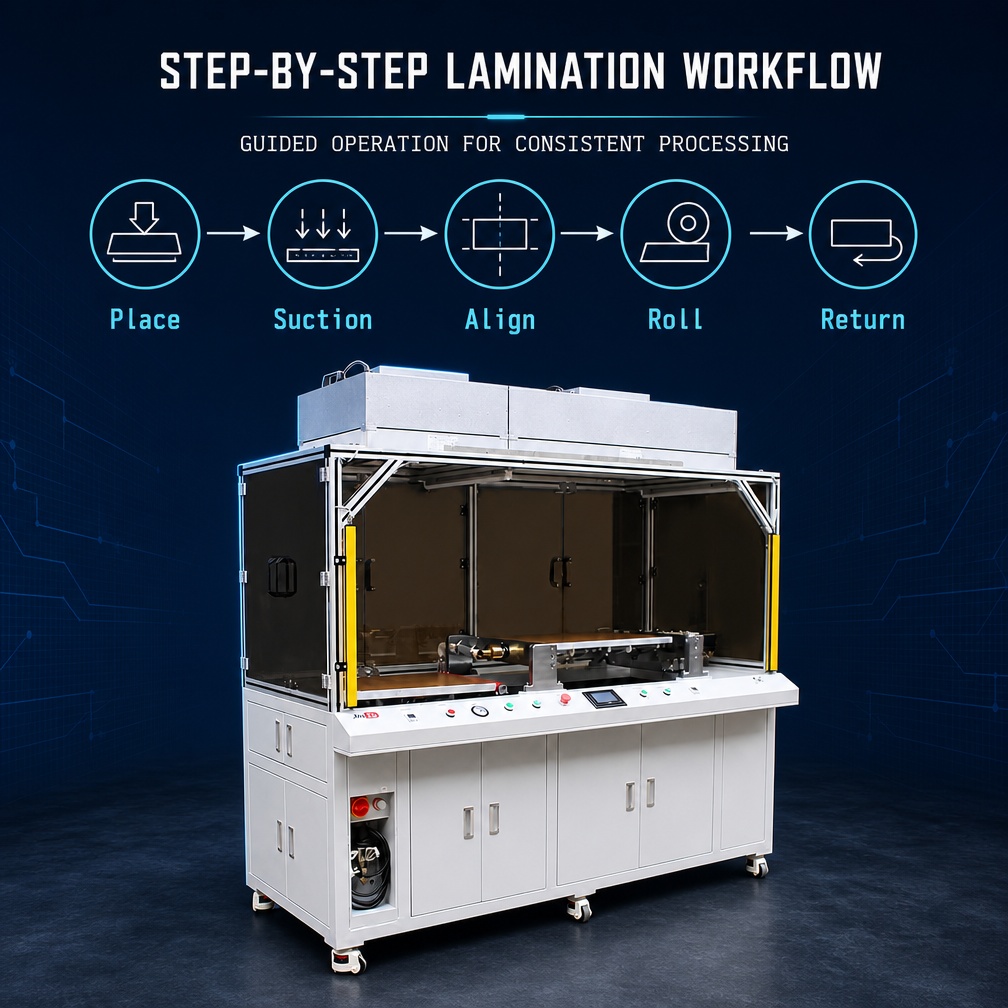
1. Dual Vacuum Adsorption — Strong/Weak Switching on Lower Platform Both upper and lower platforms use vacuum adsorption. The lower platform features strong/weak vacuum switching control — adjustable suction level allows the operator to apply firmer vacuum for rigid substrates and gentler vacuum for soft or thin films susceptible to stretching. This directly reduces film deformation and bubble formation during the bonding stroke.
Upper platform: Ø0.8mm vacuum holes at 10×10mm pitch, hard-anodised surface, high-speed fan with digital pressure gauge monitoring, servo-driven 180° centre flip.
Lower platform: Ø0.8mm vacuum holes at 10×10mm pitch, hard-anodised surface, strong/weak vacuum switching, servo-driven horizontal movement via lead screw.
2. 2× Overhead FFU — CLASS 1000 Clean-Air at Bonding Zone Two FFU (Fan Filter Unit) units are mounted in the top frame structure directly above the open bonding work area. This provides filtered, downward clean-air flow over the substrate and film during loading and the bonding cycle — maintaining CLASS 1000 cleanliness at the work zone without requiring a full enclosed cabinet structure.
Additional clean-air accessories available: Ion fan (2 sets, optional), static grounding (optional), dust indicator light (2 sets, optional), internal lighting (2 sets, standard).
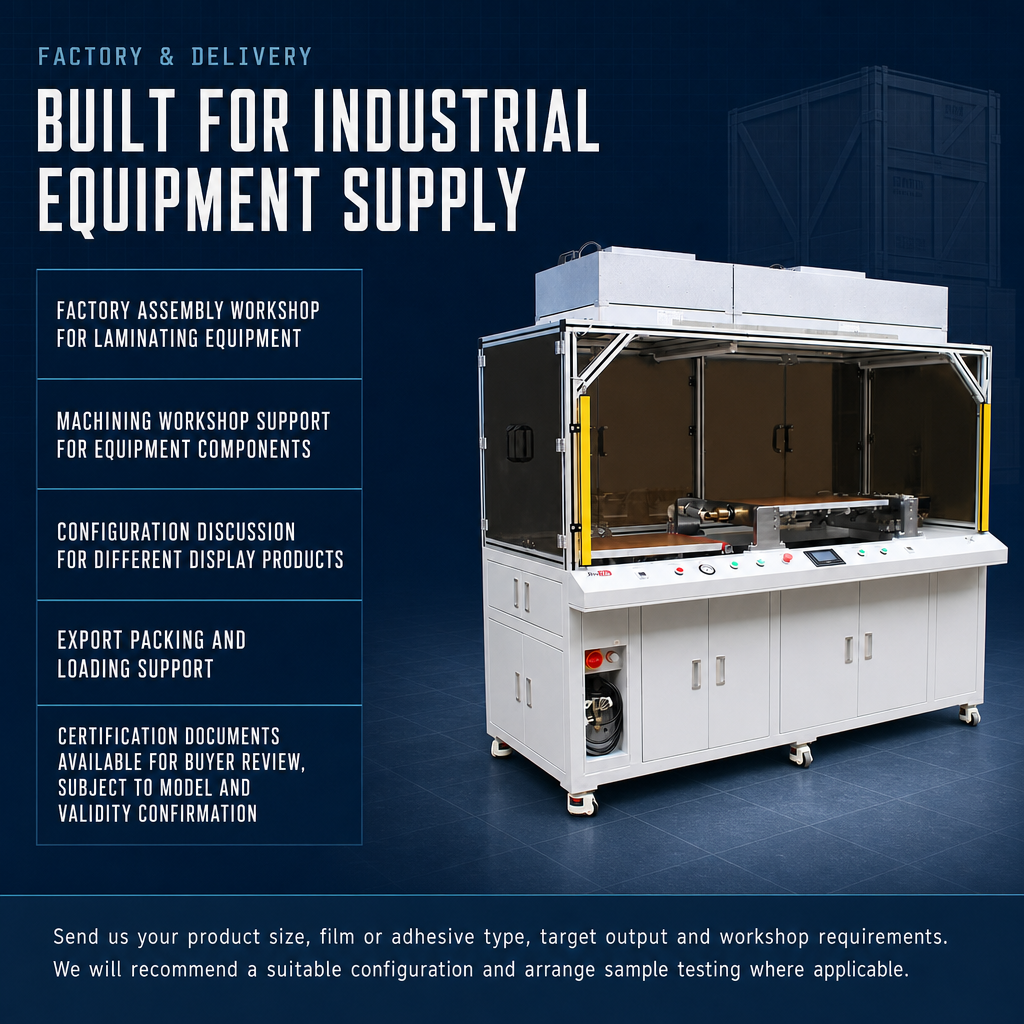
3. Workbench-Height Accessible Layout Working height: 940/1075mm (adjustable). The open-front hinged protective panel design provides direct access to the bonding platform for substrate loading and film positioning. The transparent protective panels (hinged at top, with yellow safety light curtains at both sides) remain closed during the bonding cycle. Caster wheel base supports repositioning on the production floor.
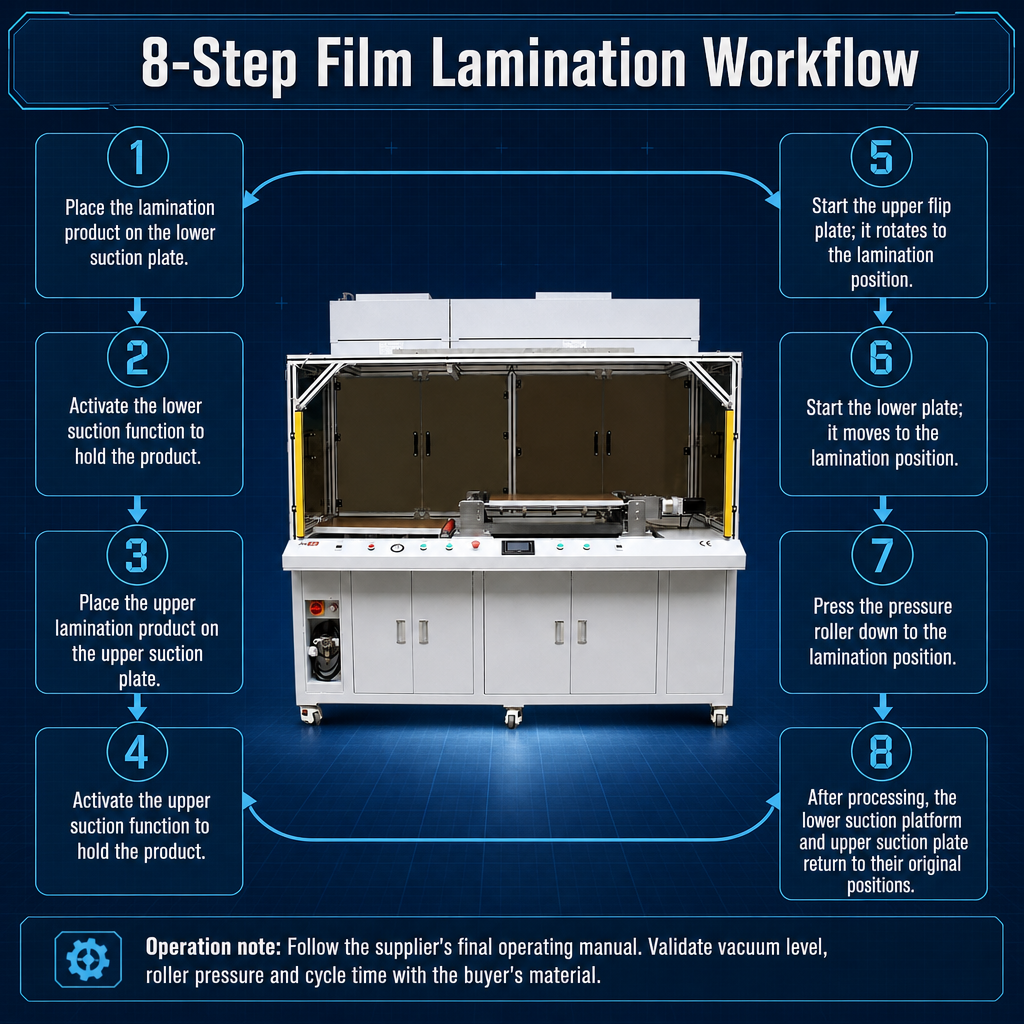
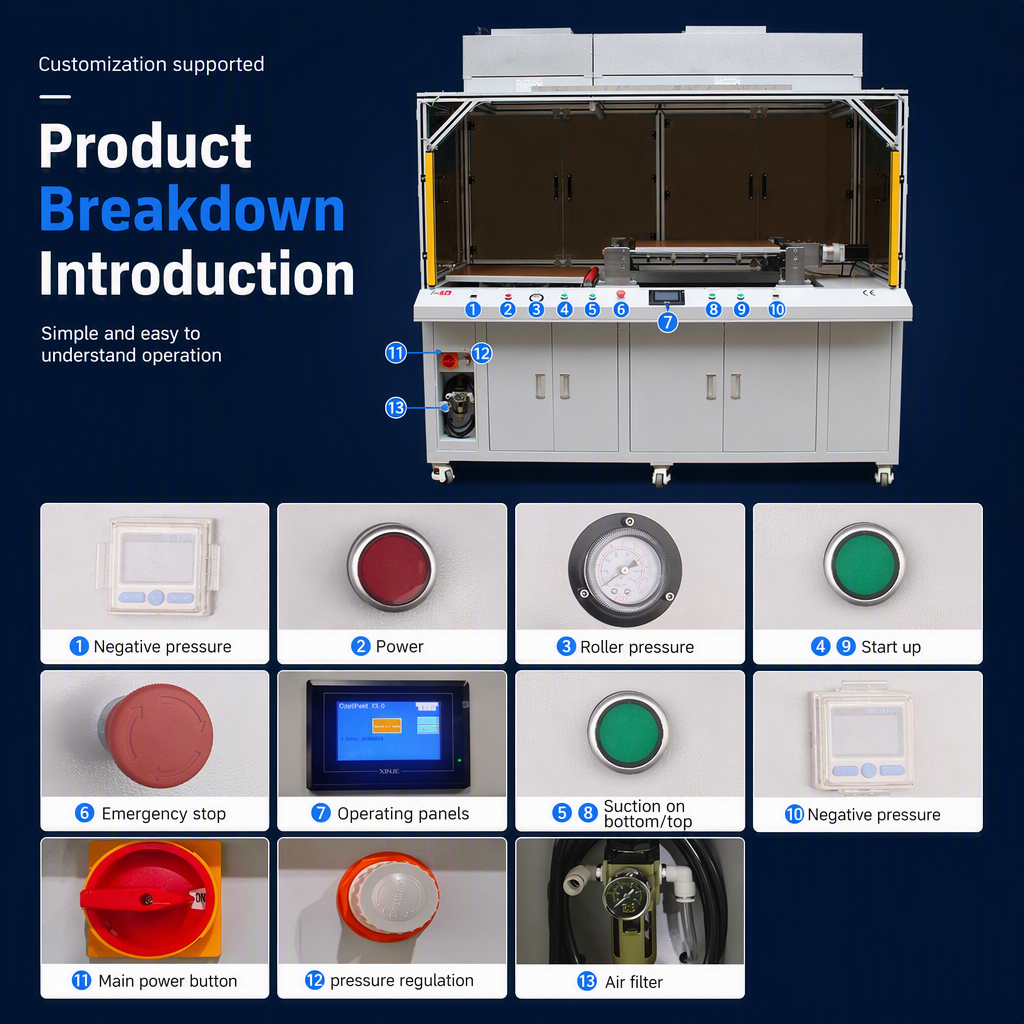
4. PLC + Touchscreen Control — 13-Point Operator Interface Control system: PLC + touch screen (Xinjie; OMRON/Panasonic/MITSUBISHI/KEYENCE or equivalent). The front operator panel includes 13 clearly labelled controls: ① Negative pressure display ② Power switch ③ Roller pressure gauge ④⑨ Start buttons ⑤⑧ Bottom/top suction switches ⑥ Emergency stop ⑦ Touch operating panel ⑩ Negative pressure display ⑪ Main power button ⑫ Pressure regulation ⑬ Air filter
Alignment: Mechanical corner positioning. Y-axis and θ angle adjusted manually via micrometer. X-axis coordinates set automatically.
5. Roller Lamination — Bias-Fitting Method Roller: Ø35×L440mm, PU, Shore A55–60 (can be specified per product process). Roller installation: bearing-supported at both ends, no idler/back roller support. Roller lifting method: vertical independent lifting with X-axis displacement to eliminate pressure marks at the contact point. Lamination force: ≤75KG. Lamination speed: <300mm/s. Effective stroke: 600mm. Method: soft-against-hard or soft-against-soft, bias-fitting roller bonding.
6. Steel Frame Construction Steel structure frame. Linear guides: AOSK (HIWIN/PMI/CSK/THK or equivalent). Ball screws: AOSK (TBI/HIWIN/THK or equivalent). Servo motors: Xinjie (YASKAWA/Panasonic or equivalent). Pneumatic actuators: Xingchen (SMC/MAXAIR/AirTAC or equivalent).
Why Choose Us
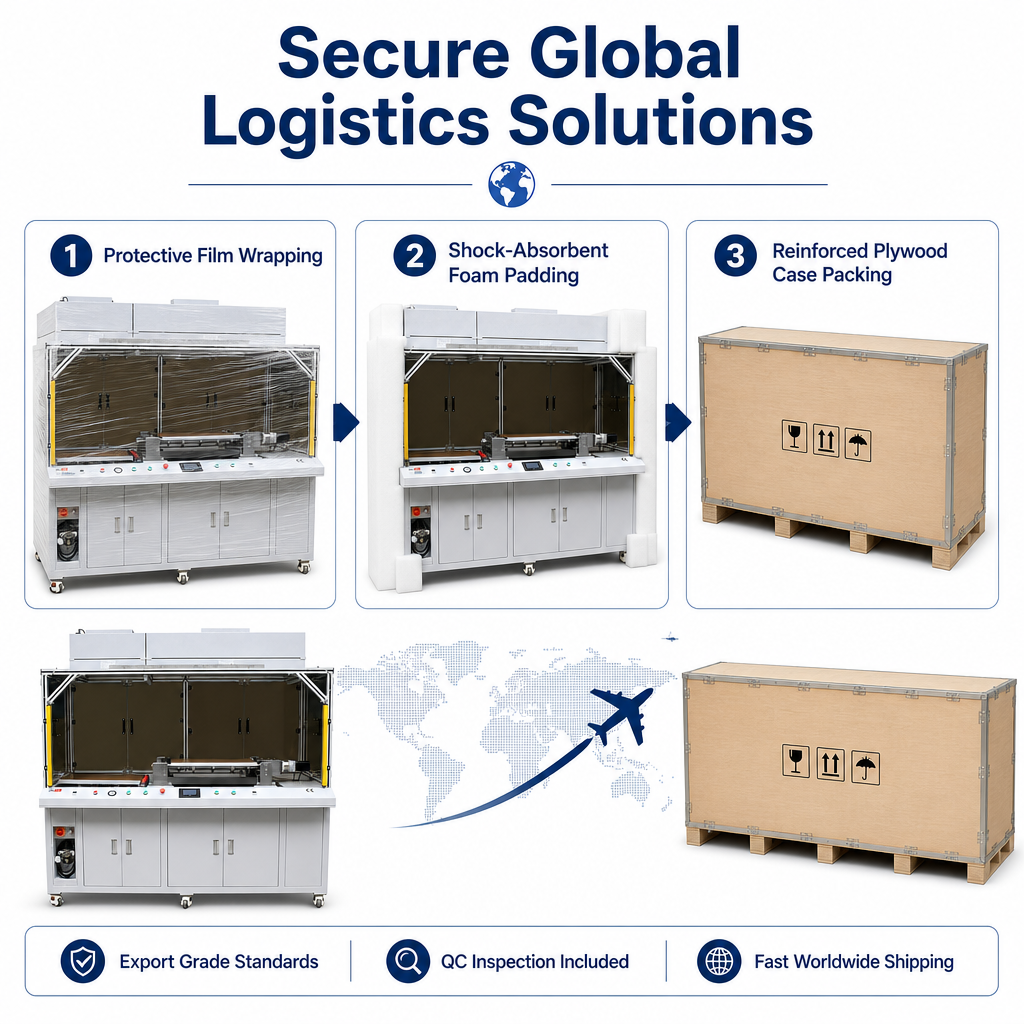
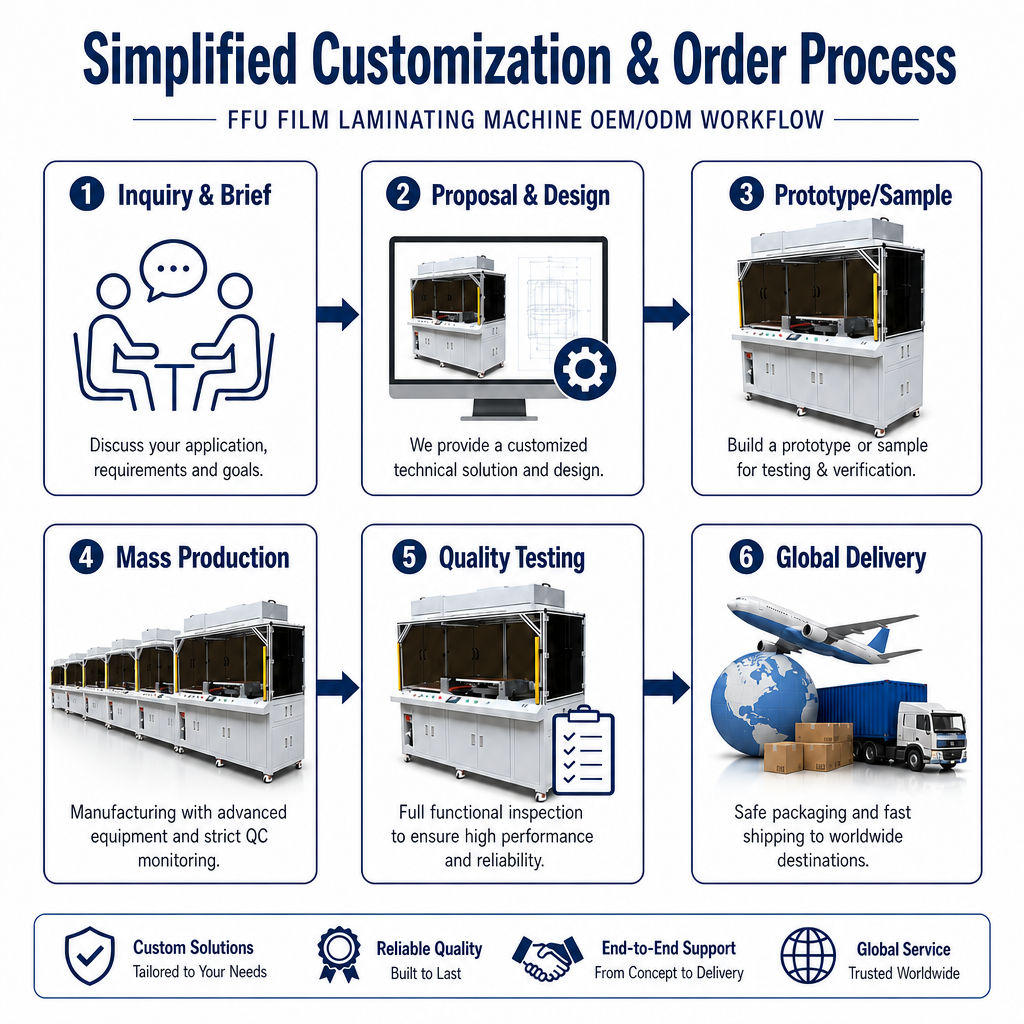

1. 15-Second Cycle Time — Faster Throughput in Standard Production At 15 seconds per piece (excluding manual time), this machine has a faster cycle time than larger CCD-equipped models suited to more complex alignment tasks. For production lines running standard 24-inch class panels with consistent mechanical registration requirements, the shorter cycle time directly affects daily output capacity.
2. Workbench-Height Layout — Ergonomic and Space-Efficient Working height 940–1075mm allows operators to load substrates and film at a natural working posture without reaching into a deep enclosed cabinet. The caster base allows repositioning on the production floor as line configurations change, without requiring fixed installation.
3. AC220V Single-Phase Power — Lower Infrastructure Requirement Operating on AC220V/50Hz (3KW), the machine connects to standard single-phase industrial power without requiring three-phase power supply infrastructure. This reduces installation preparation for production lines where 380V three-phase supply is not available at every station.
4. Strong/Weak Vacuum Switching — Addresses Film Deformation The lower platform’s adjustable vacuum switching allows operators to match suction level to film mechanical properties. This helps reduce stretching, deformation, and bubble formation for softer film types, improving bonding yield on compatible materials.
5. CLASS 1000 Clean Air Without Full Enclosure The two overhead FFU units provide CLASS 1000 clean-air conditions at the bonding zone. The open accessible design with top-mounted FFU delivers filtered air directly downward over the substrate during the bonding cycle, supporting clean-air process requirements for OCA, functional film, and AB glue lamination without full enclosed-cabinet installation constraints.
Product Documents
400X600 film laminator with FFU specifications
400x600mm film laminator user manual with FFU
Key Features
Product Details
FAQ
Q1: What is the effective lamination area of this machine?
Q2: What bonding modes does this machine support?
Q3: What does the strong/weak vacuum switching on the lower platform do?
Q4: How does the FFU system work on this machine, and does it require a cleanroom?
Q5: What is the alignment method on this machine?
Q6: What operator controls are included on the machine?
Q7: What industries and product types is this machine used for?
Q8: Can the machine be customized for specific panel sizes or process requirements?
Interested in This Product?
Tell us your project details and our team will prepare a customized quotation.
GET QUOTE NOW