
The 400×600 OCA/SCA Film Laminating Machine
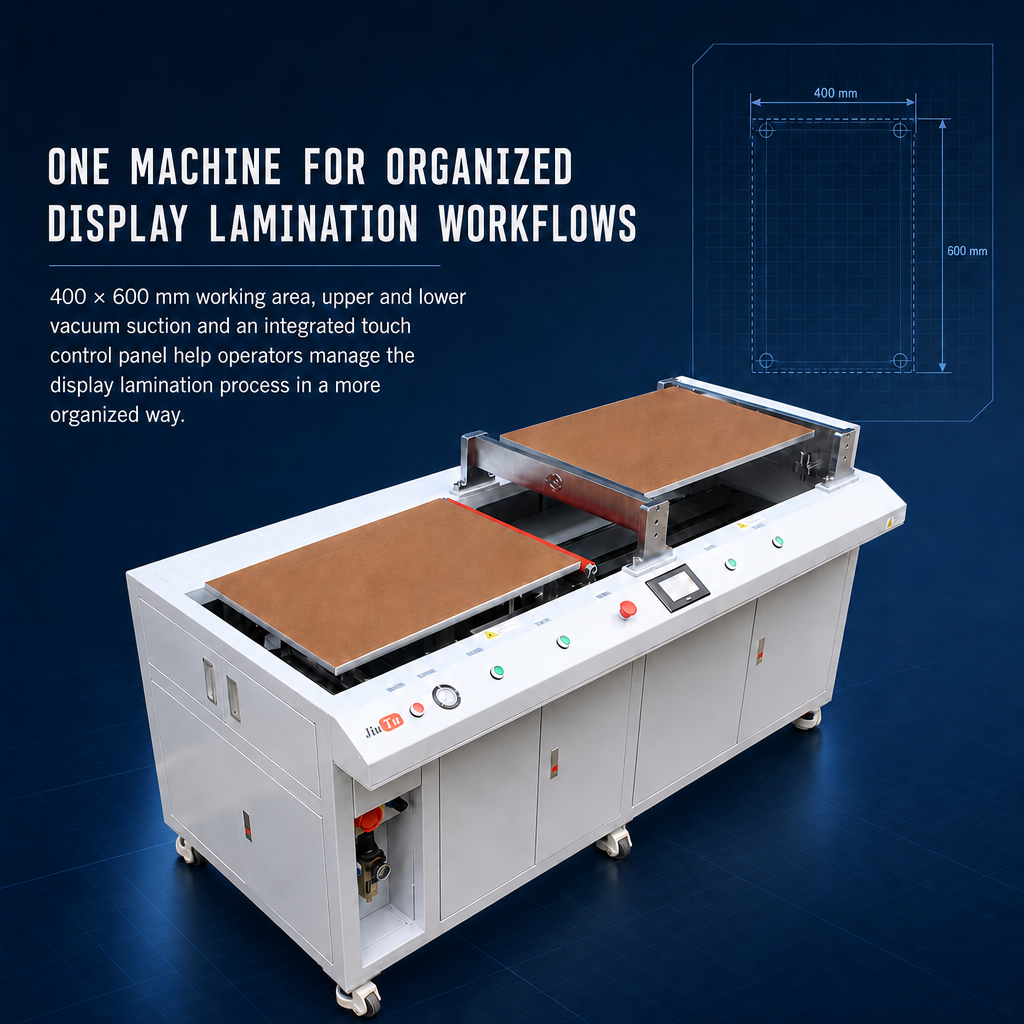
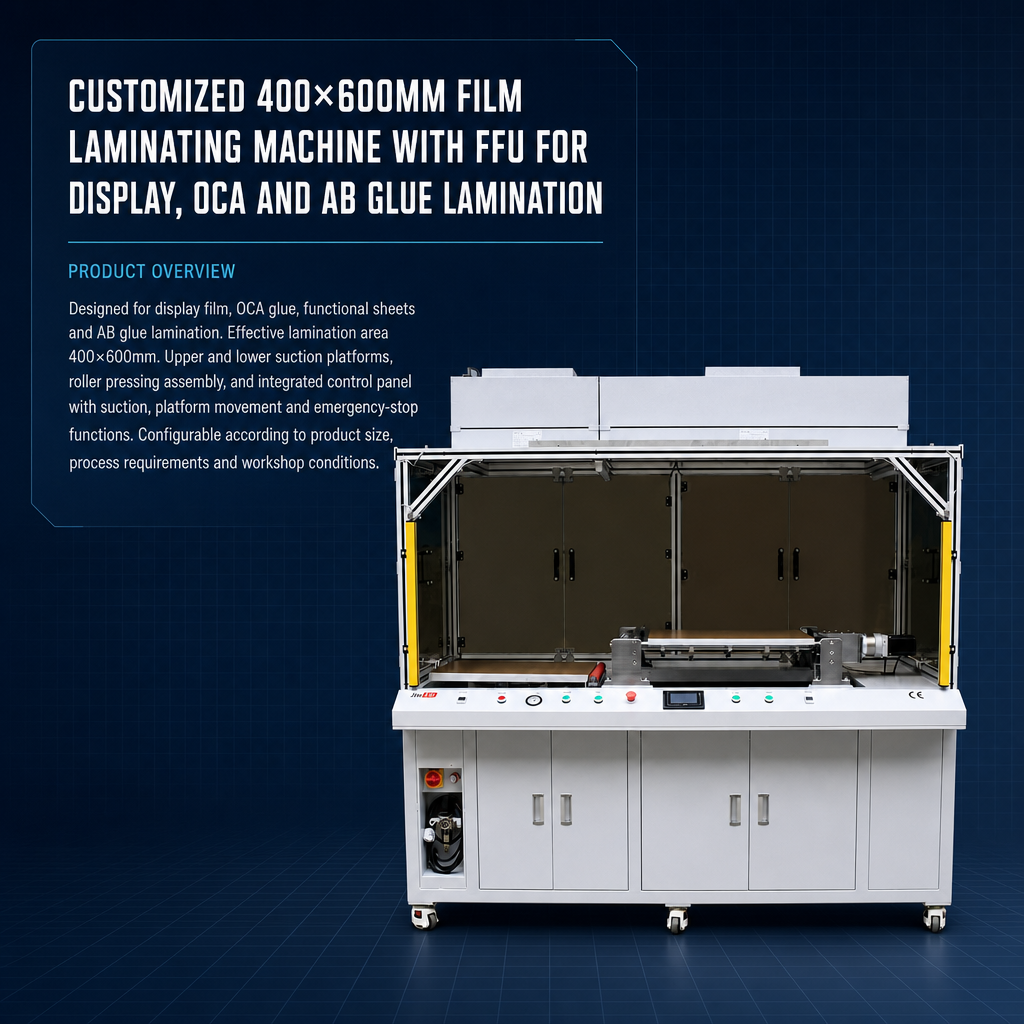
The 400×600 OCA/SCA Film Laminating Machine is a production-grade film lamination system engineered for industrial-scale display panel and touch-screen module manufacturing. With a film laminating are...
GET QUOTE NOW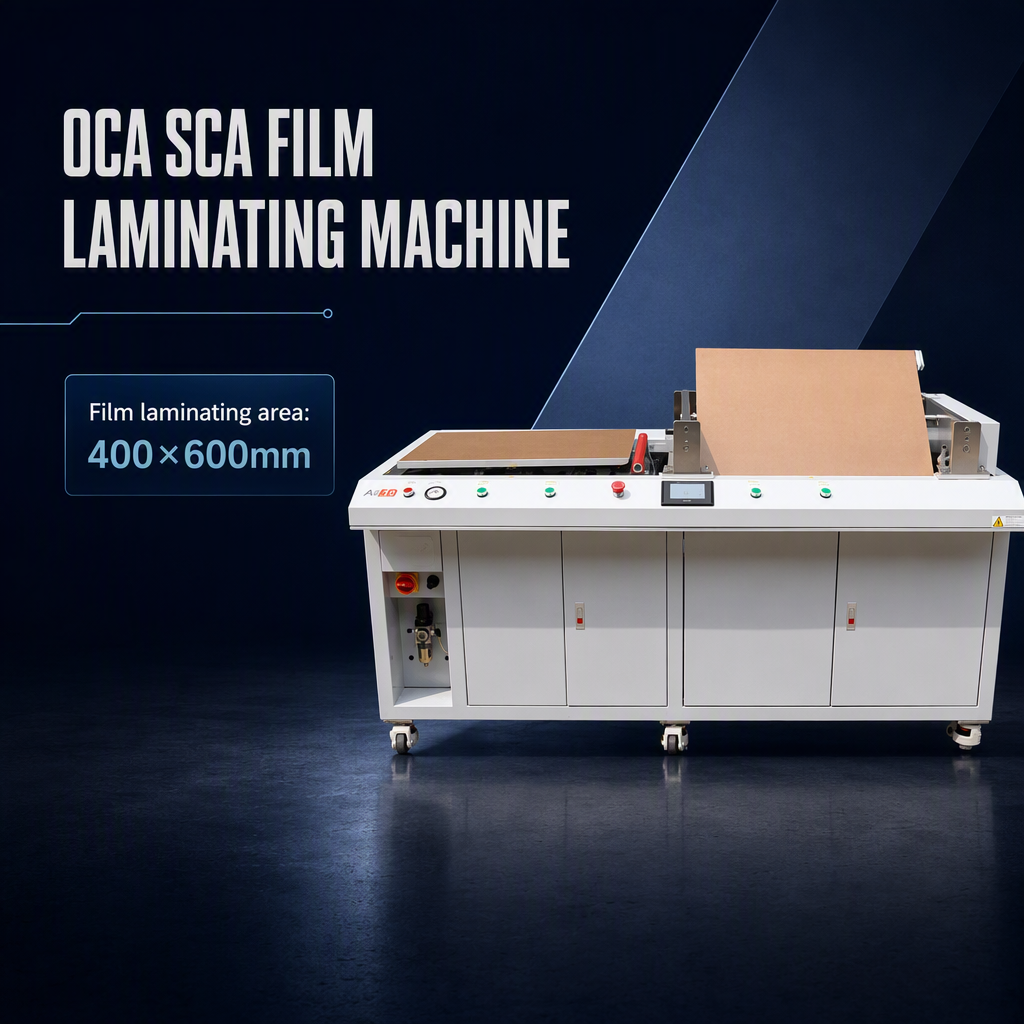
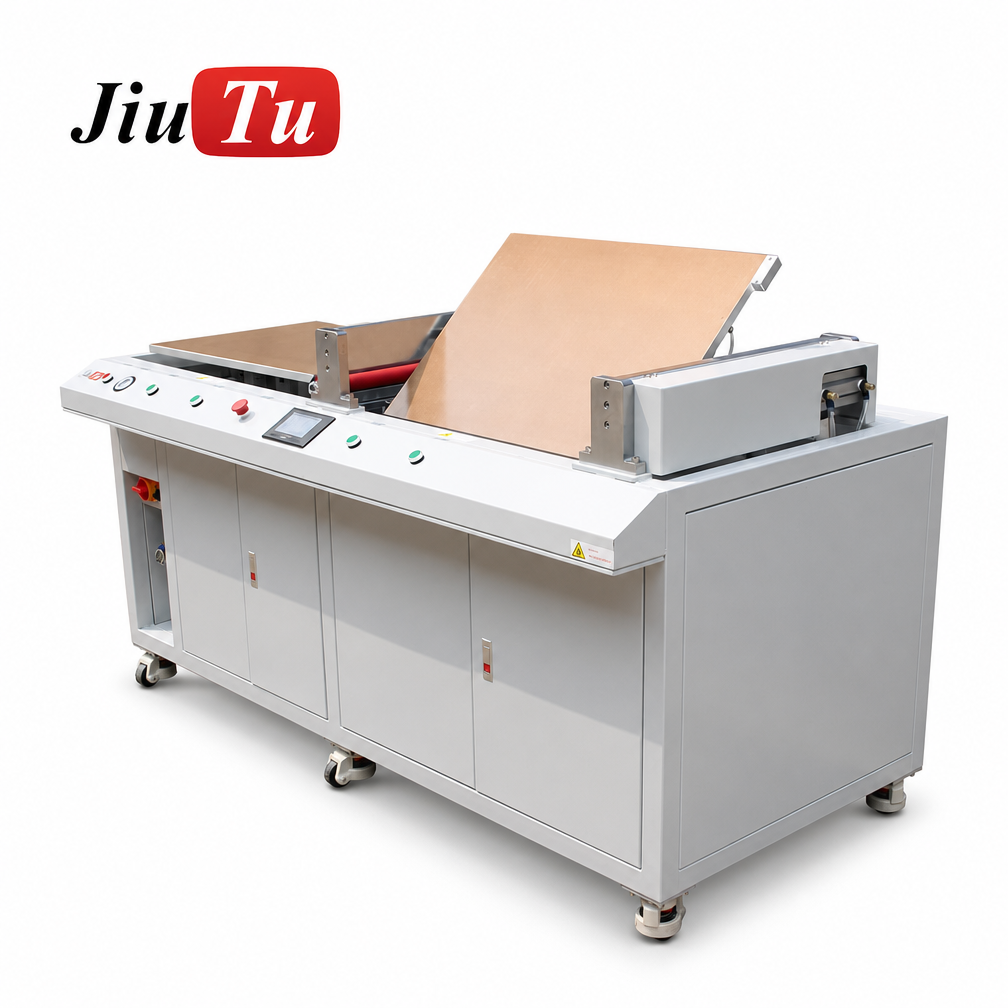
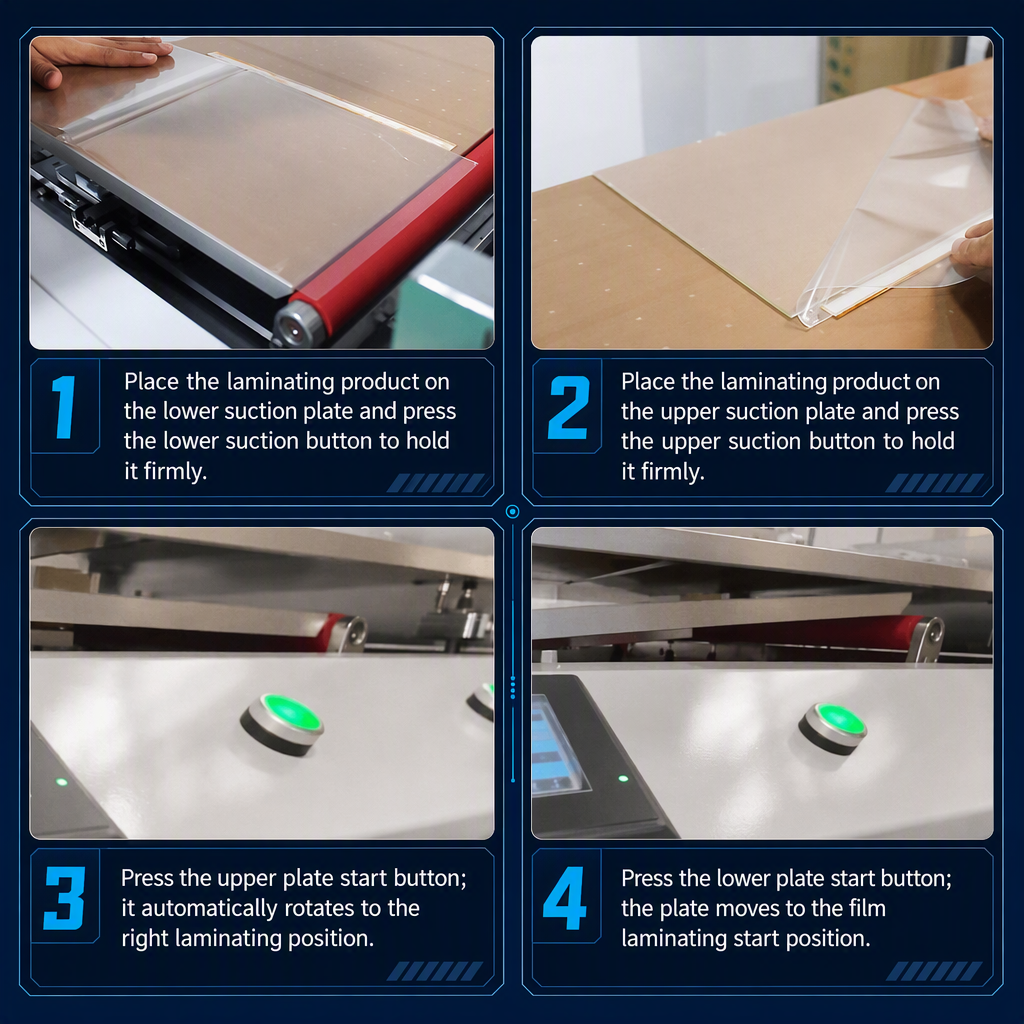
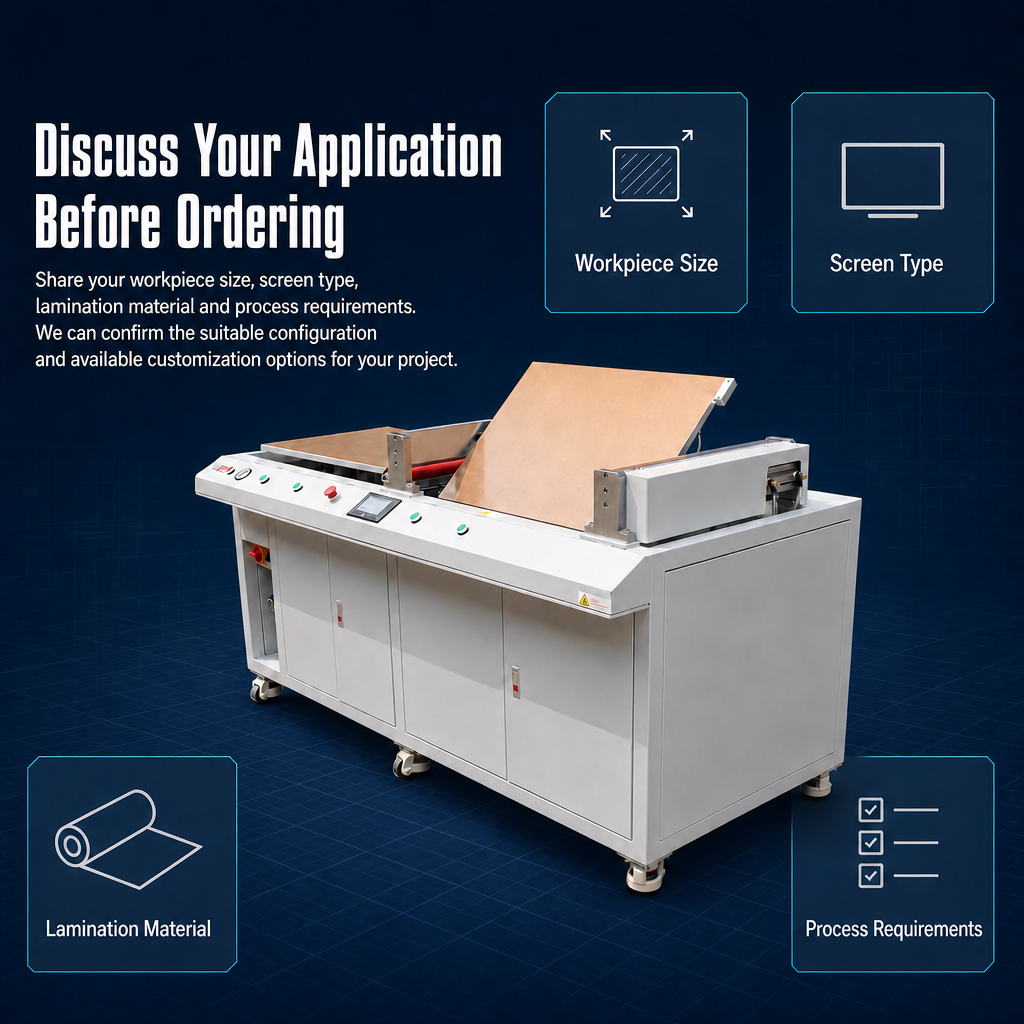
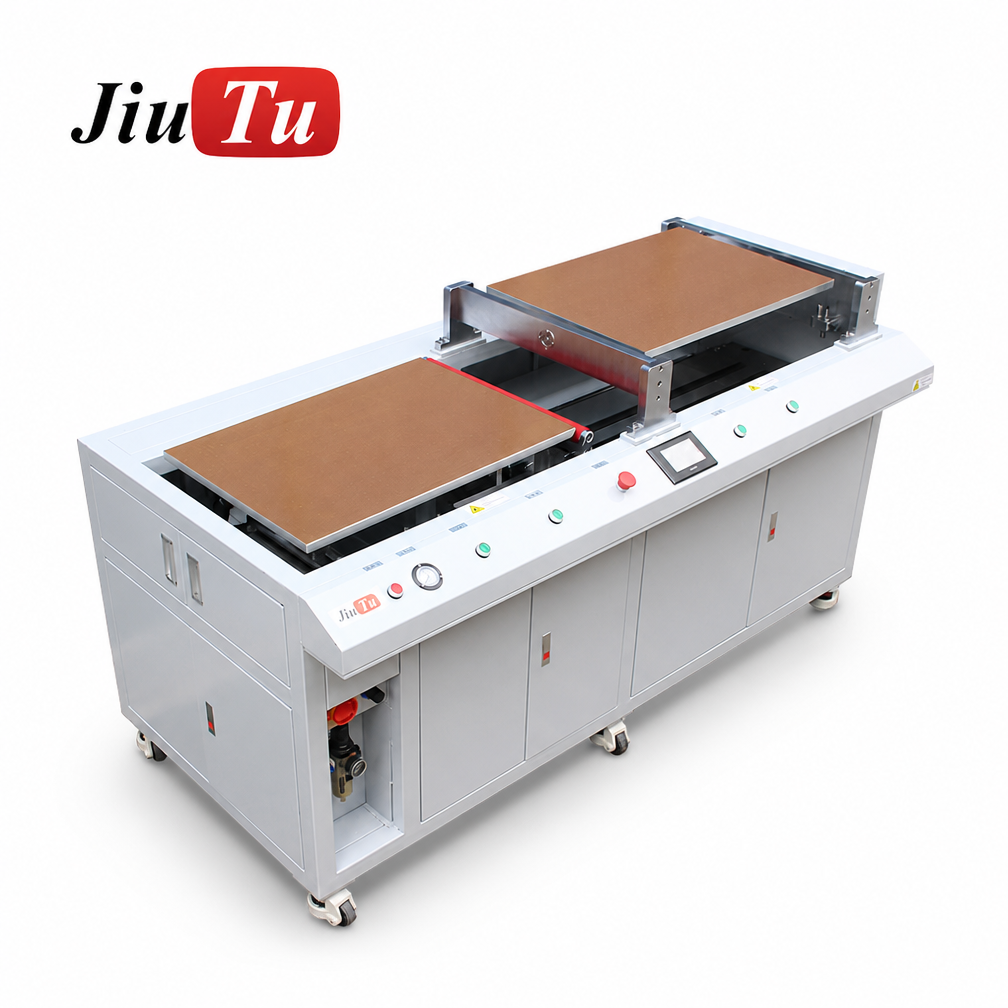
The machine employs a flap-plate roller mechanism: the upper suction platform is hinged and opens upward to receive the film, then automatically rotates closed to align film over substrate before the lamination roller traverses. This fully automated flap motion is PLC-controlled — the operator loads substrate and film, activates suction on both platforms, and presses Start; the flap closes, the roller traverses, and the cycle completes automatically in 10–20 seconds.
At a rated throughput of approximately 1,500 panels per 10-hour shift (cycle time 10–20 seconds per panel), the machine is built for the sustained daily volumes of industrial display panel production environments — not low-volume or batch sampling operations.
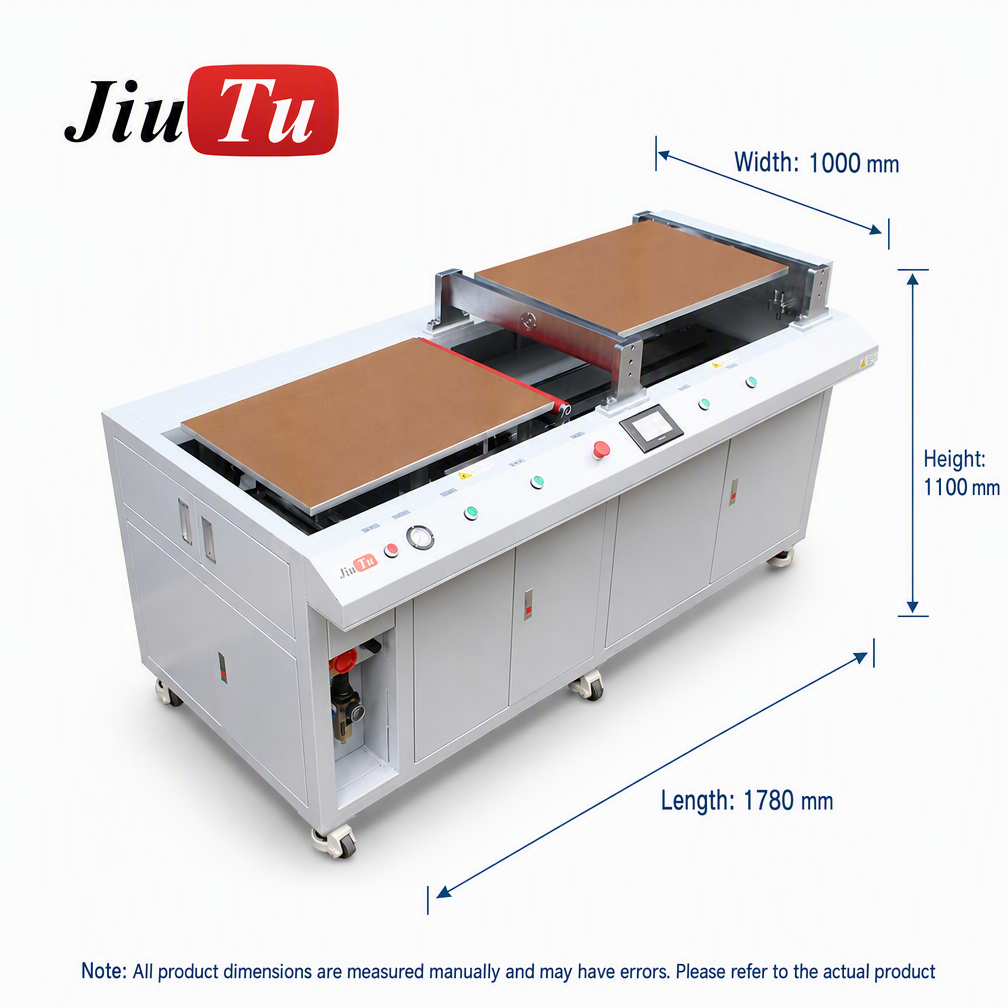
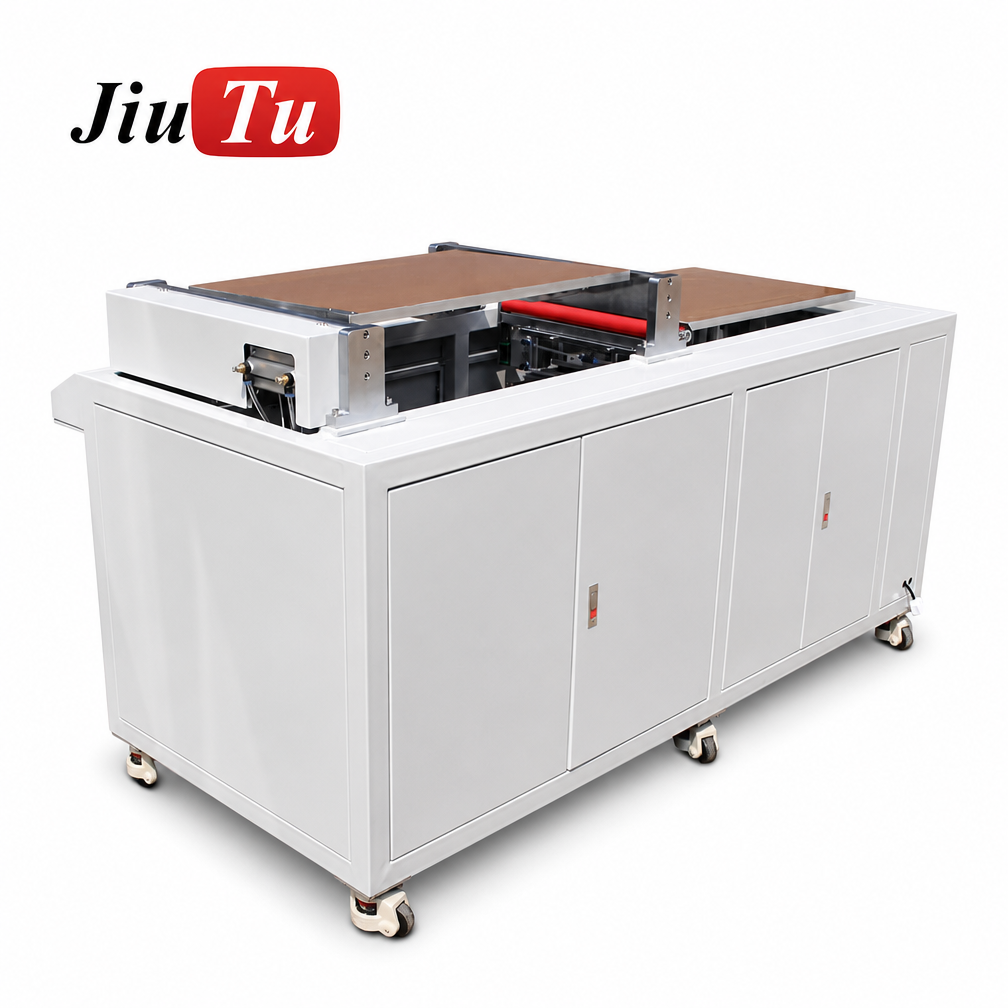
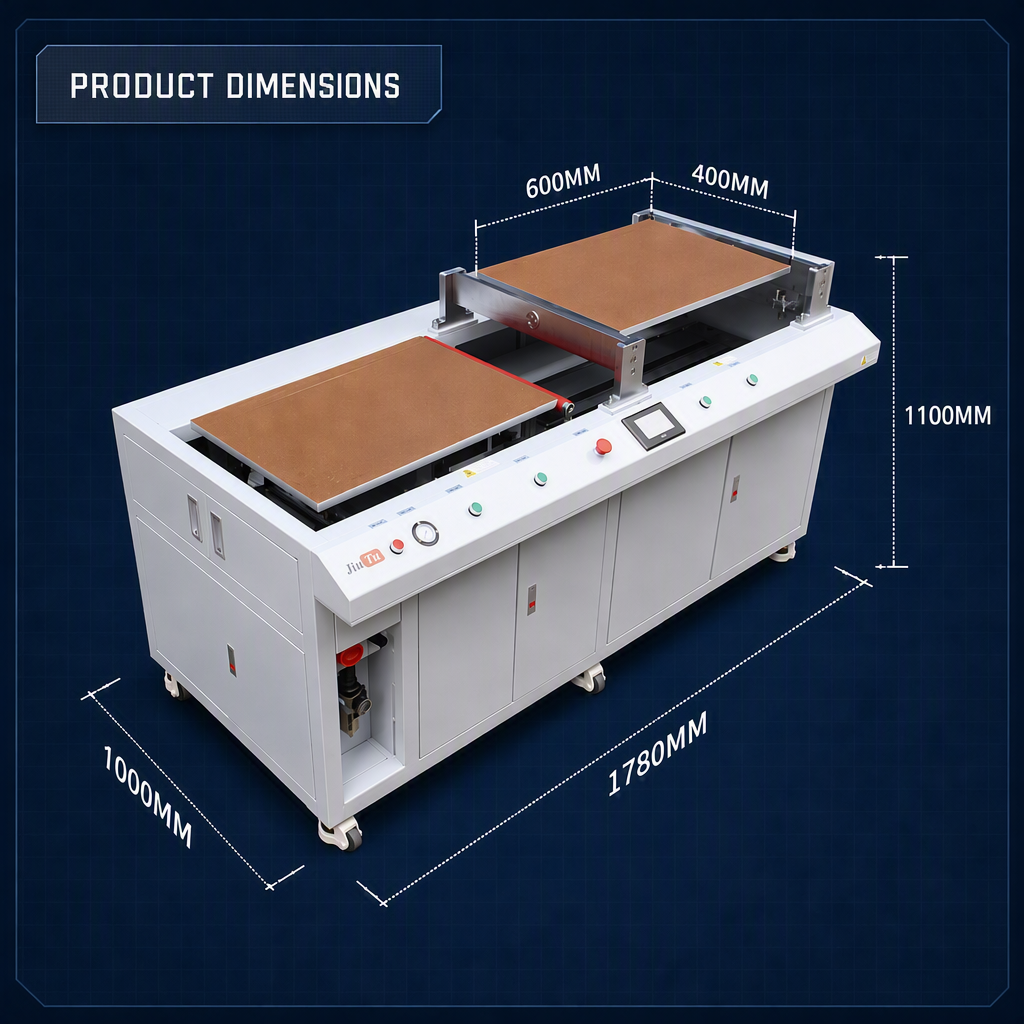
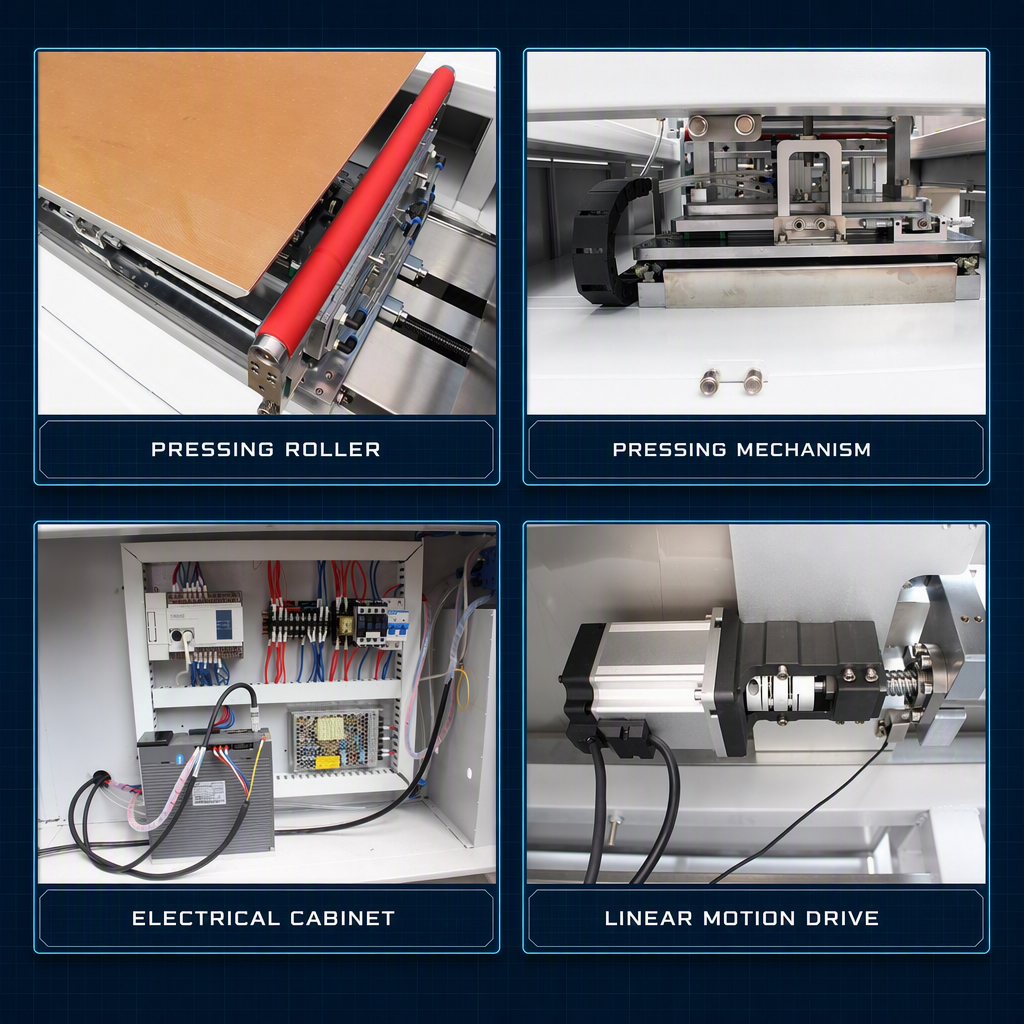
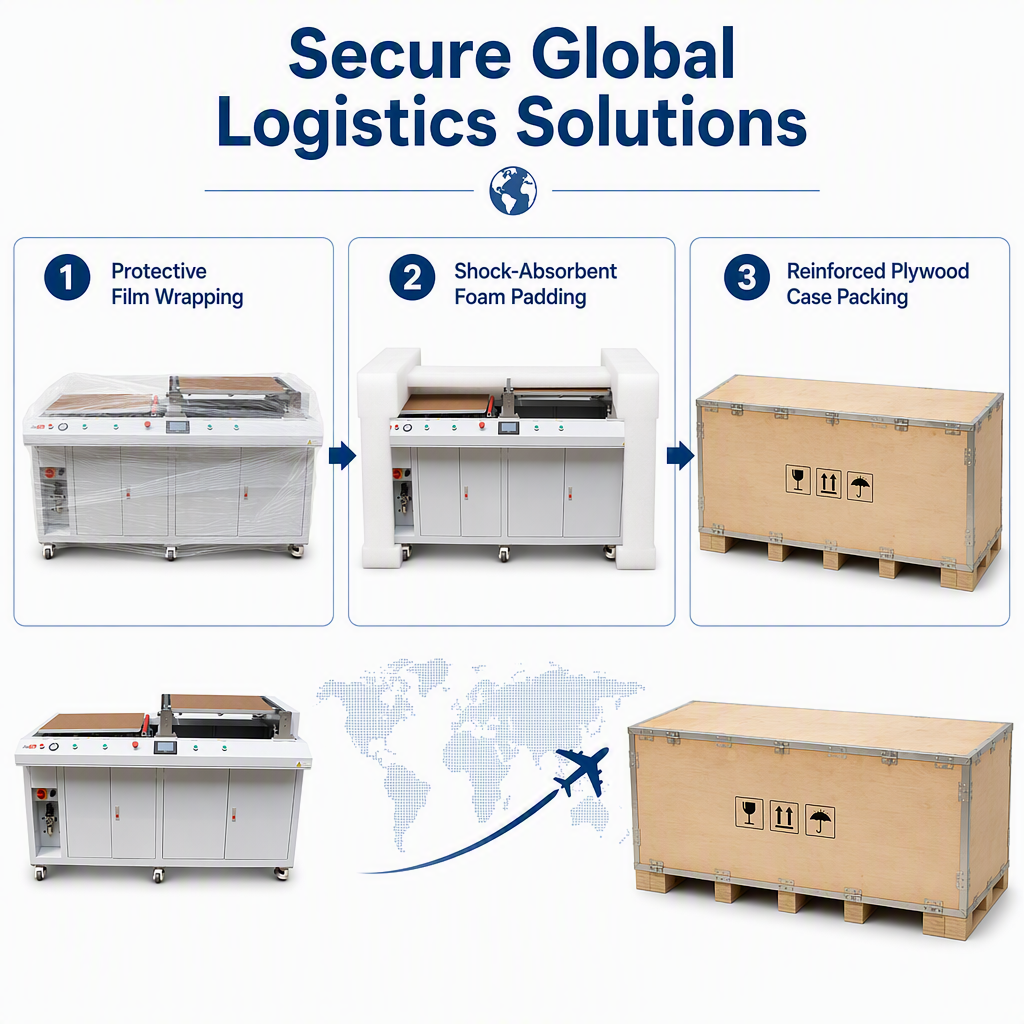
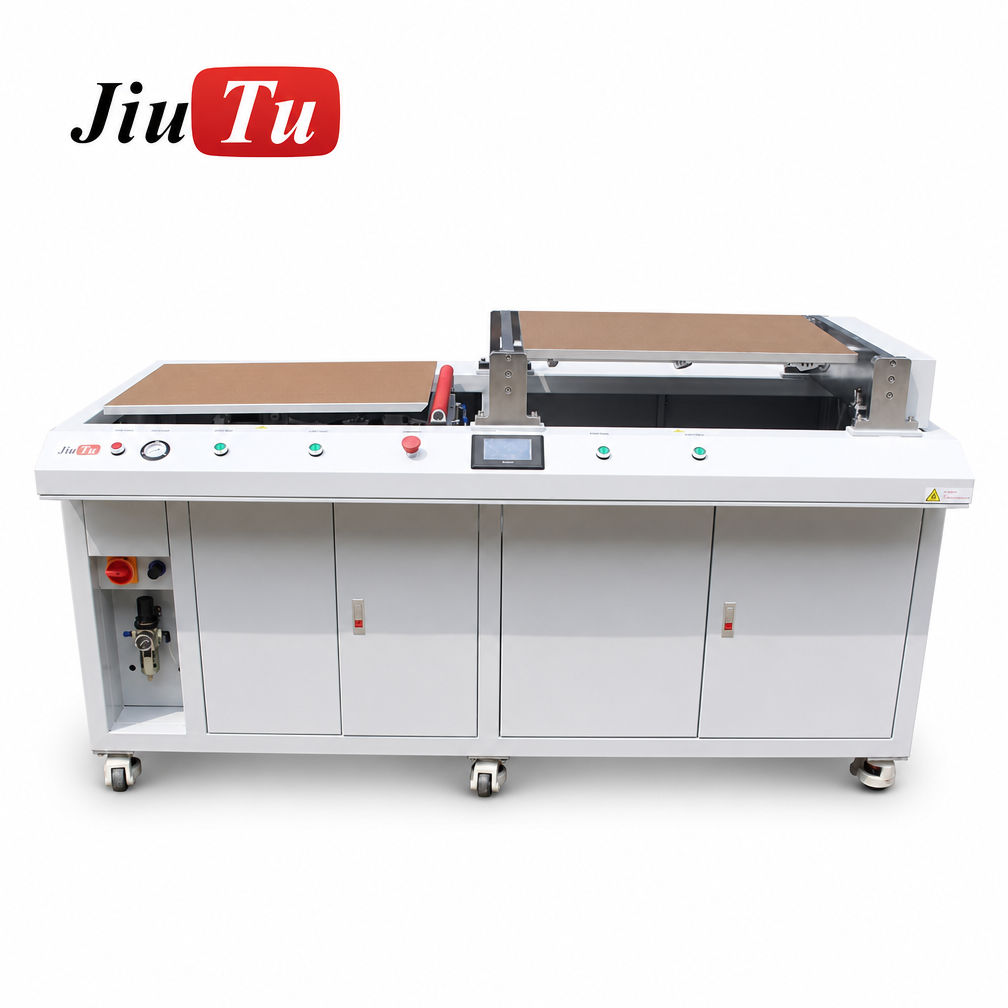
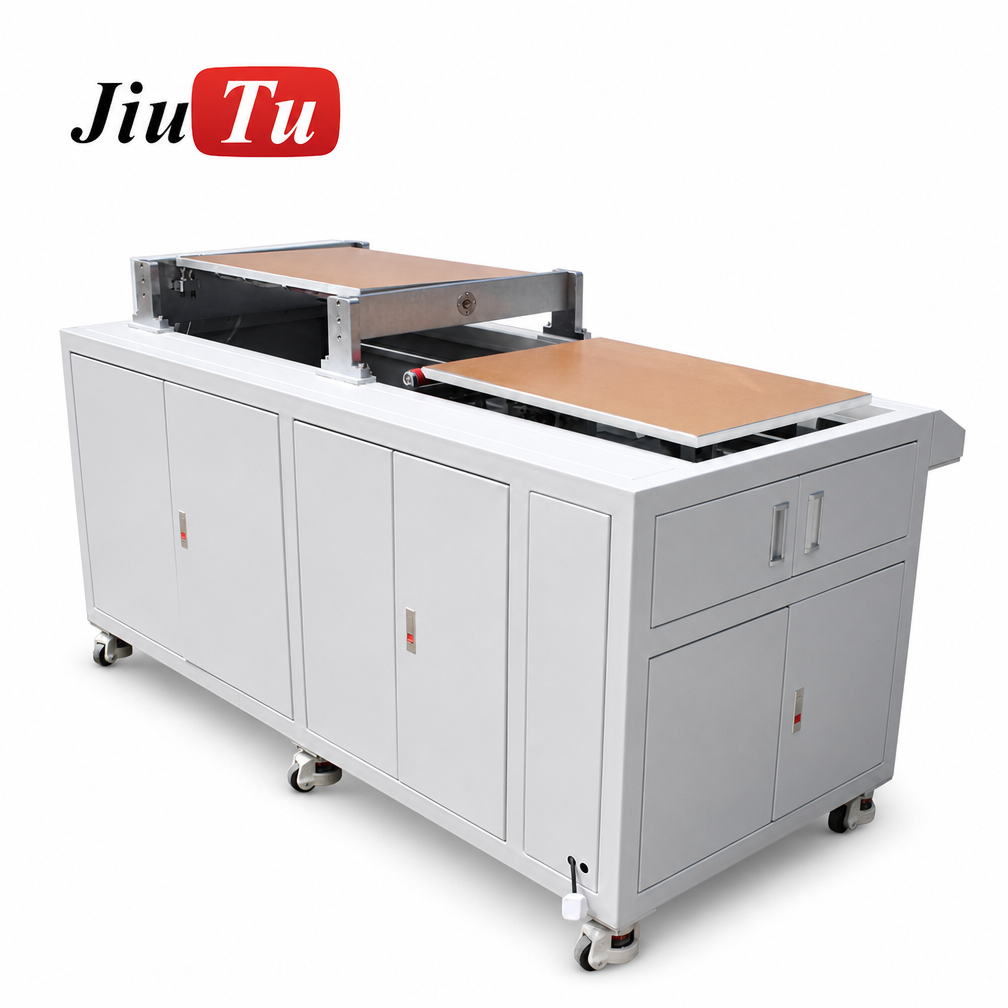
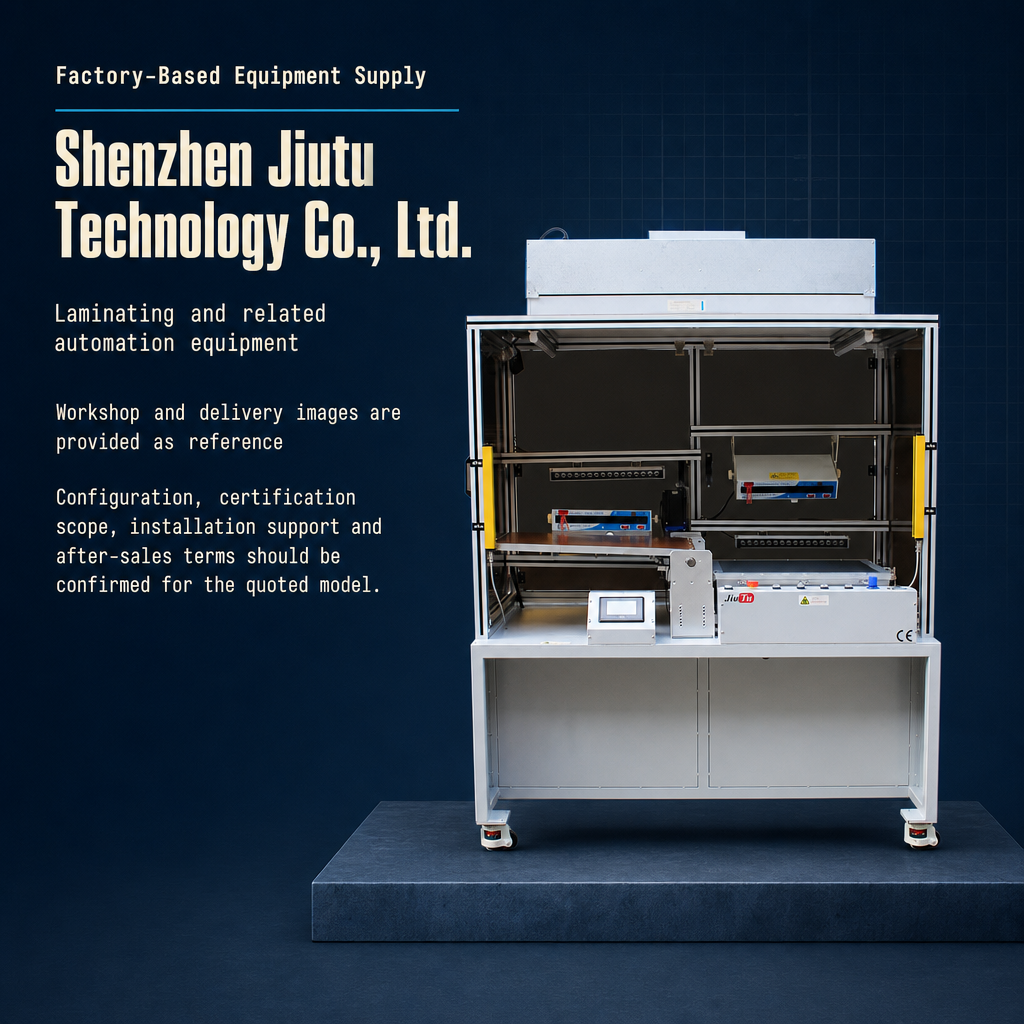
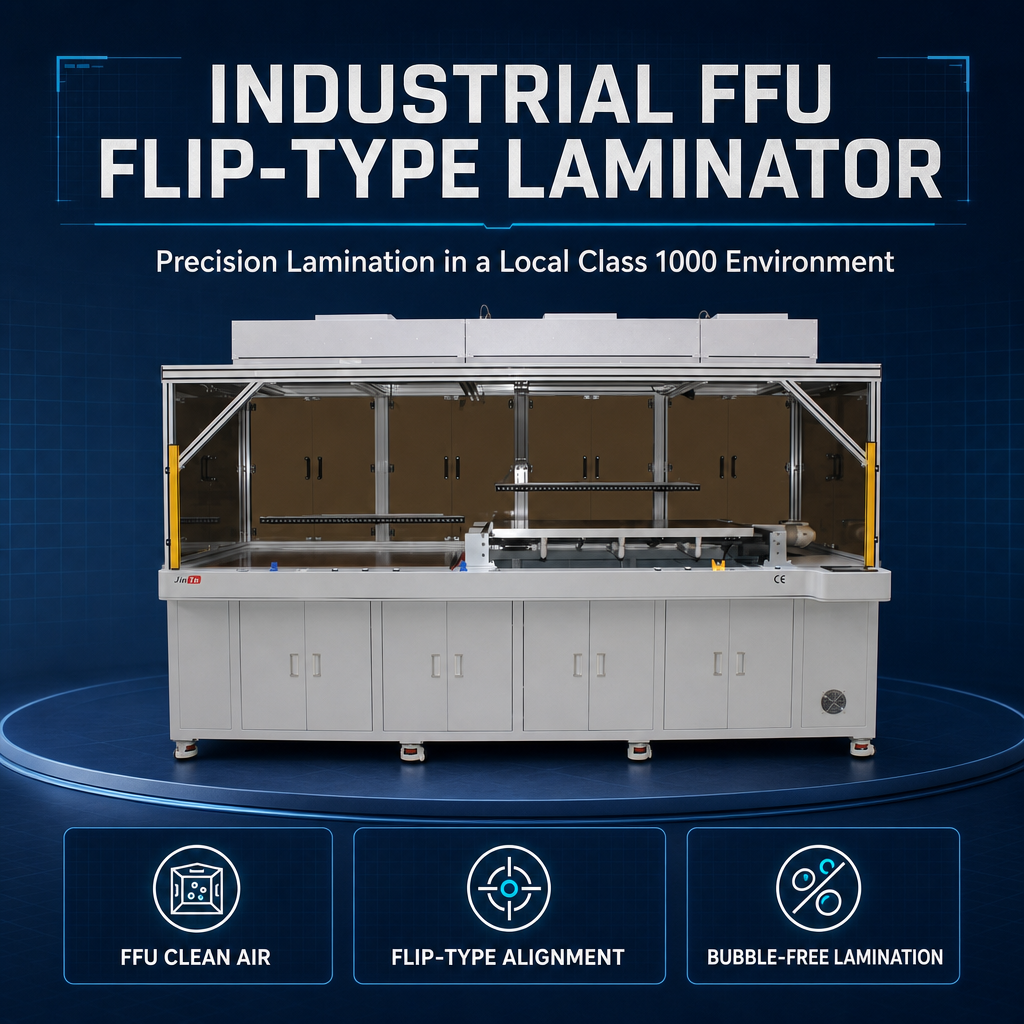
The machine sits on a full-height enclosed cabinet base with lockable castors, housing the pneumatic system, PLC, and built-in vacuum pump internally. The cabinet is fitted with four lockable door panels, making it self-contained and suitable for clean production floor integration. Overall footprint: L1780 × W1000 × H1100 mm (refer to actual machine for confirmed dimensions).
Compatible Film Types and Applications
Per the User Manual and product imagery:
Film / Material Type Application
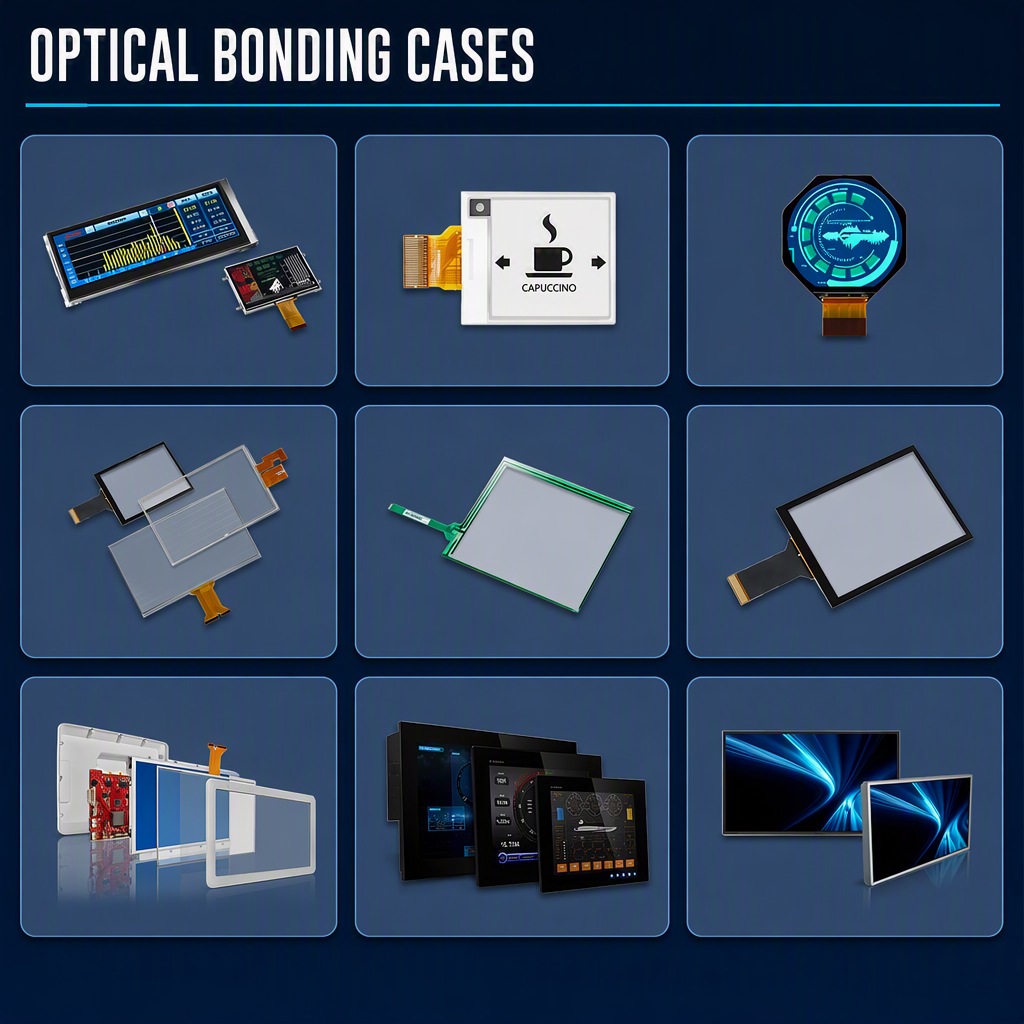
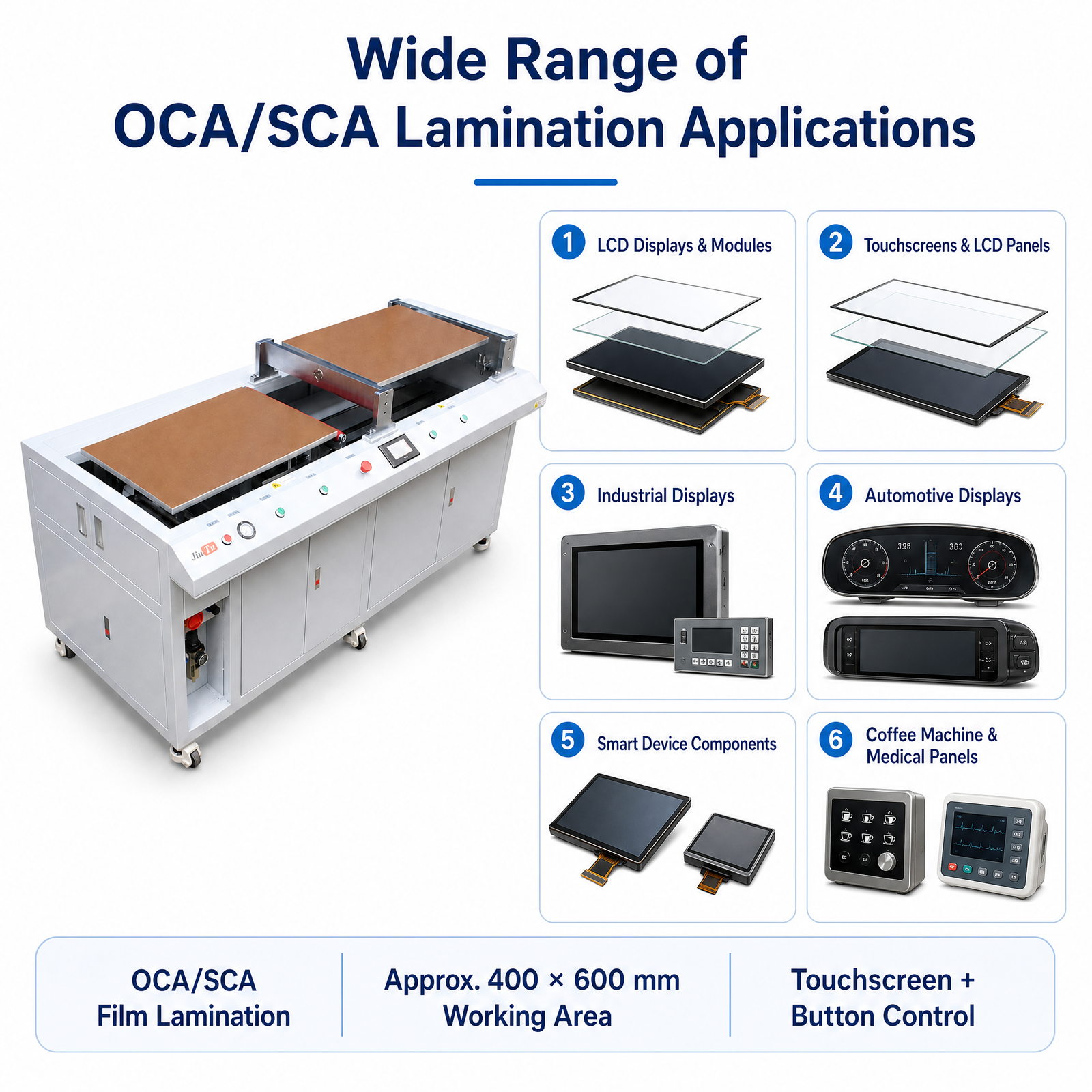
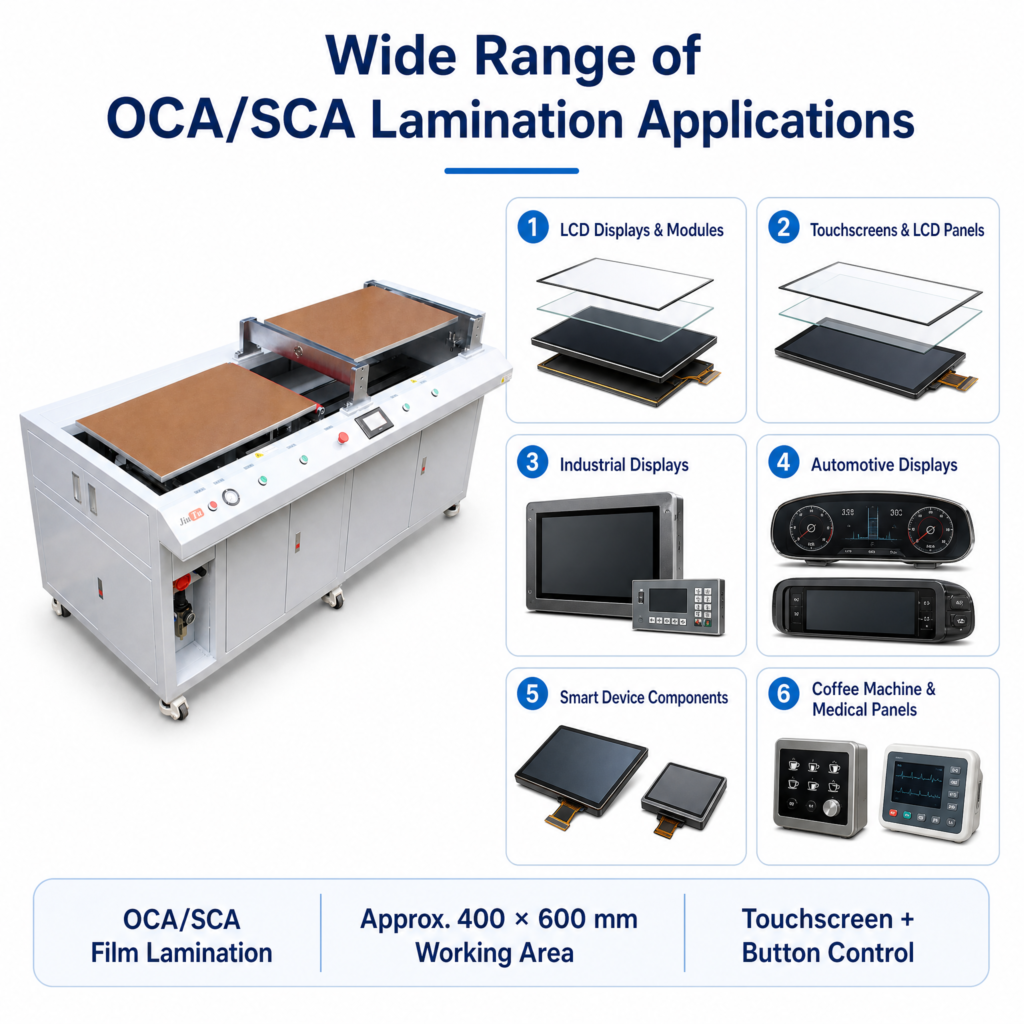
OCA (Optical Clear Adhesive) film Optical adhesive pre-lamination on cover glass and LCD panels for G+F display structures
SCA (Silicone Clear Adhesive) film SCA adhesive lamination for optical bonding assemblies
Functional sheet Functional optical sheet application on display panel assemblies
AB adhesive film Double-sided adhesive film lamination on flat glass and display module components
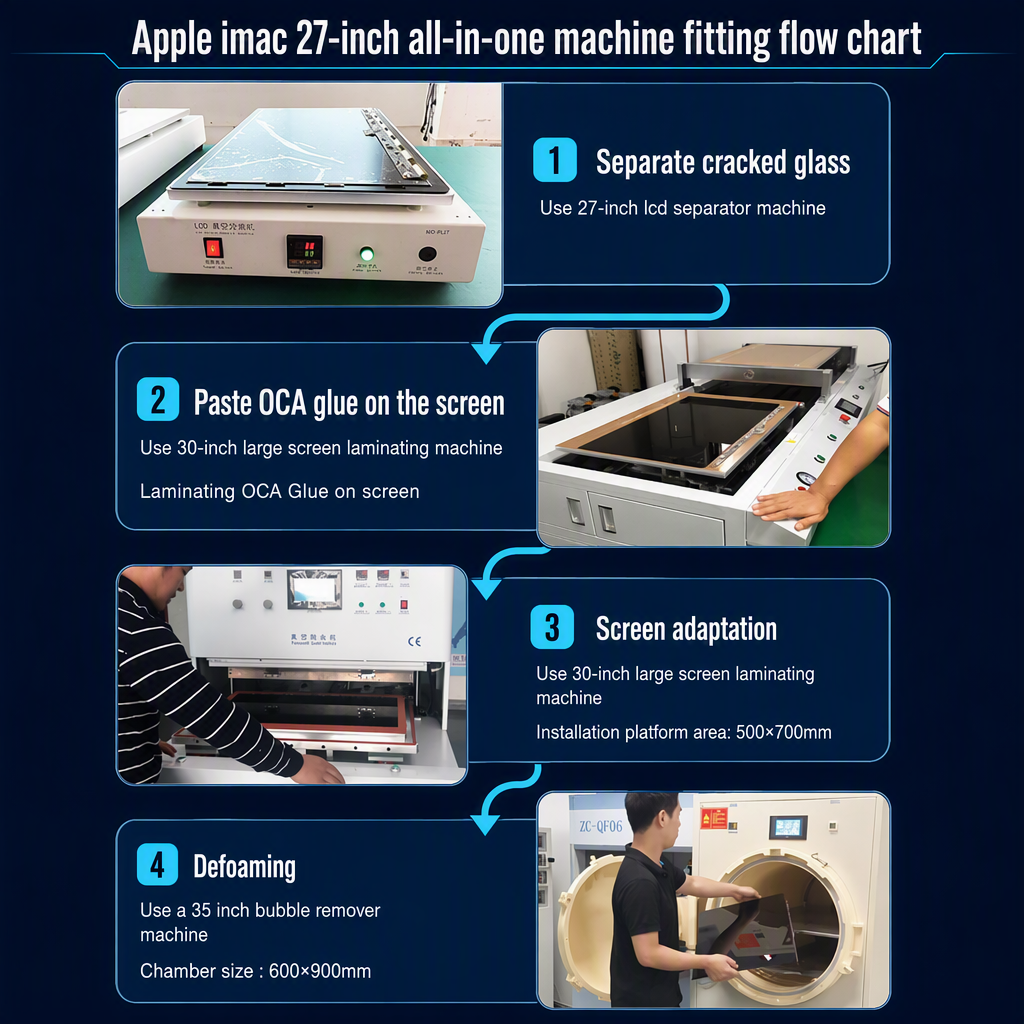
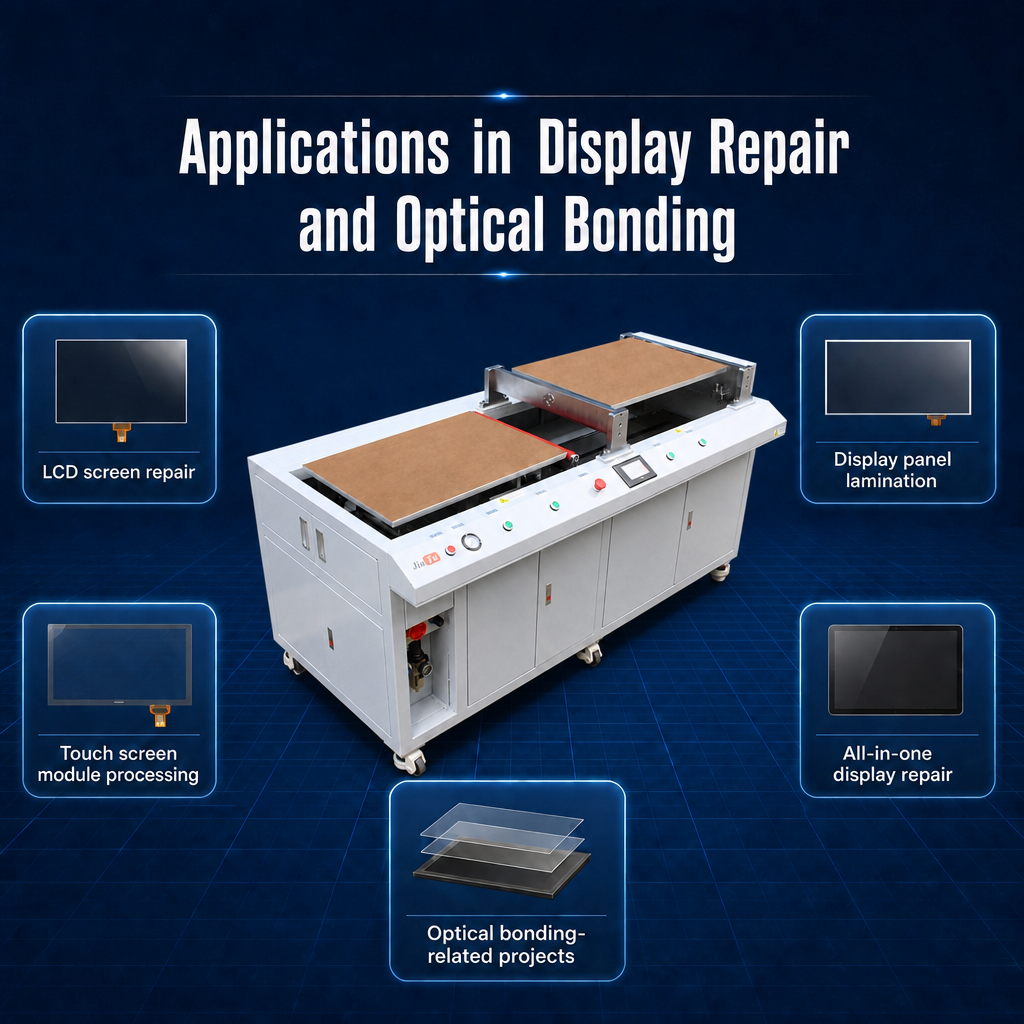
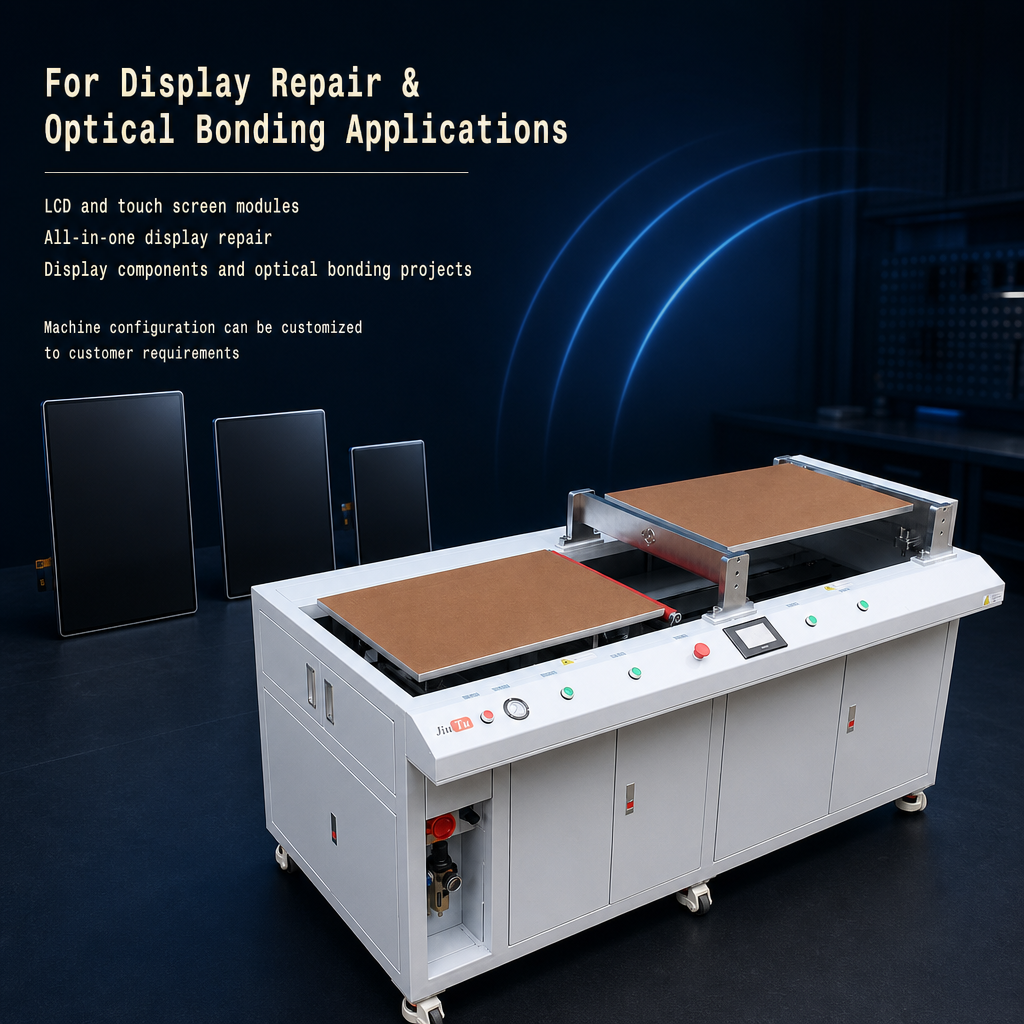
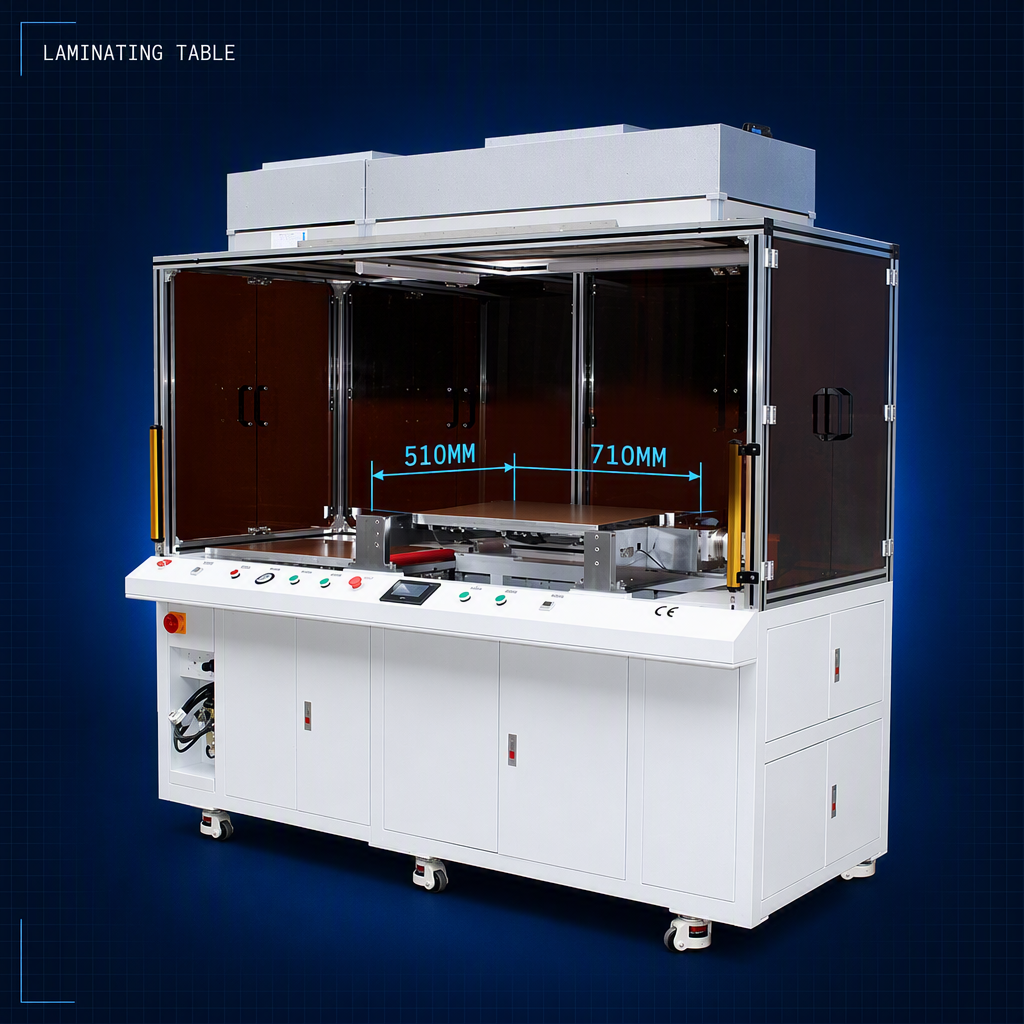
Substrate types: Flat glass panels (CG), LCD-related panels, touch-screen modules, display module assemblies within the 400 × 600 mm working area.
Official product positioning (from product image): “Designed for LCD, touch screen and display module lamination.”
Key Features
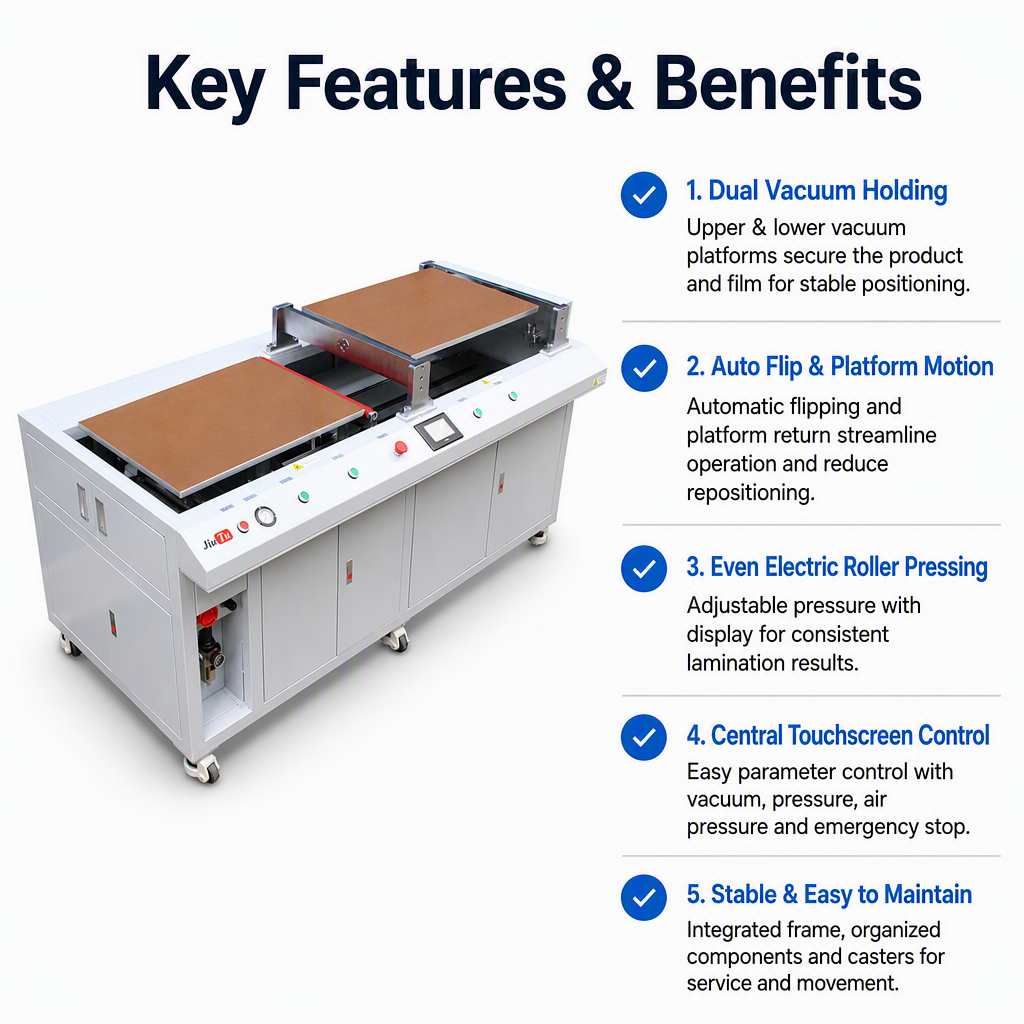
① Flap-Plate Upper Platform with Auto-Rotation The upper suction platform is hinged at the rear and opens to a raised loading position for film placement. Once the operator activates upper suction and presses Start, the flap automatically rotates to the closed position, precisely aligning the film over the substrate on the lower platform below. This automated flap motion eliminates manual film-alignment steps and ensures consistent film-to-substrate registration on every cycle.
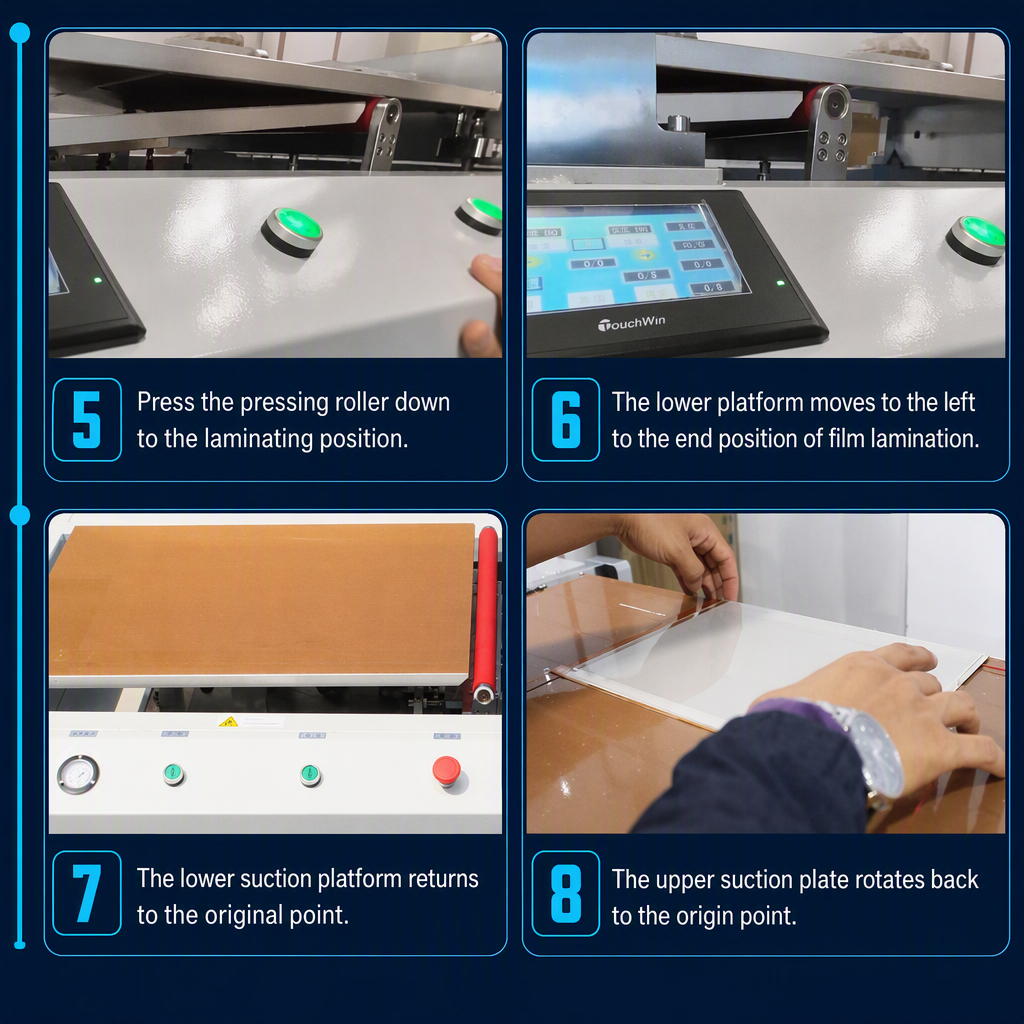
② Roller Lamination with Progressive Edge-to-Edge Bonding The lamination roller traverses the full bonding stroke from the starting edge to the end position. As the roller advances under platform motion, the film bonds to the substrate progressively from one edge to the other, driving air ahead of the bond line and expelling it at the open edge before the adhesive seals. The roller start point, end point, up-timing, and down-timing are all programmable via the Parameter interface.
③ Built-in Vacuum Pump The machine includes a built-in vacuum pump — no external vacuum generator is required. The vacuum pump is controlled via the Manual Interface on the touchscreen. Separate upper and lower suction circuits allow independent vacuum control for film platform and substrate platform.
④ Dual Independent Vacuum Suction Platforms
Lower board suction (Button 3): Activates lower platform vacuum to secure the substrate (glass panel / display module)
Upper vacuum suction (Button 8): Activates upper platform vacuum to hold the film during flap close and lamination stroke
Independent control allows precise sequencing: substrate secured first, then film, before the automated cycle begins.
⑤ PLC + Touchscreen HMI with Full Parameter Control The machine is controlled by a PLC with colour touchscreen HMI providing three operating interfaces:
Automatic interface: Displays processing yield (piece count), film laminating speed (%), running speed (%), Reset, and Zero functions
Manual interface: Individual control of all single actions — Up Suction, Down Suction, Flip (flap open/close), Vacuum Pump on/off, Left/Right platform motion, Reset
Parameter interface: Film laminating start point, end point, vacuum pump standby timeout, roller up time, roller down time
Production count is persistent — count accumulates and is not lost on power-off. Reset requires a long-press of the Zero button.
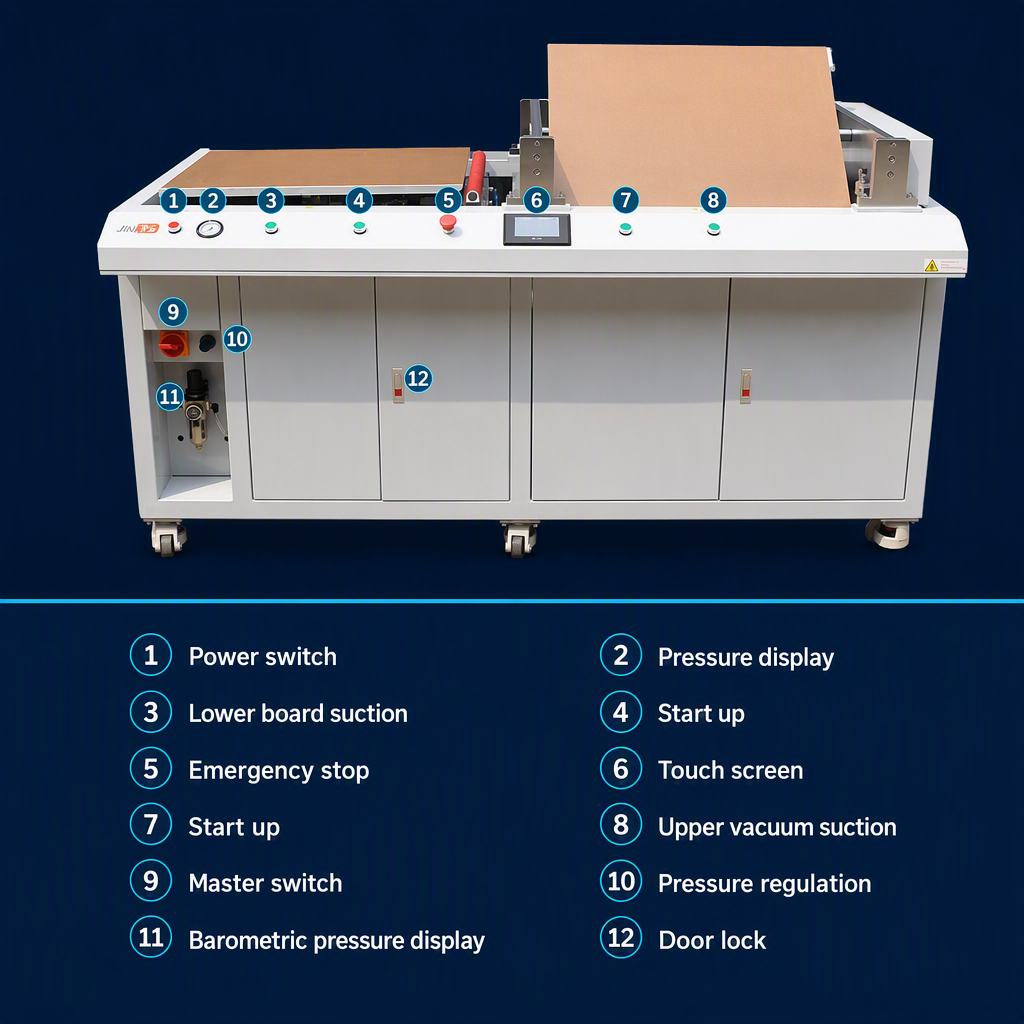
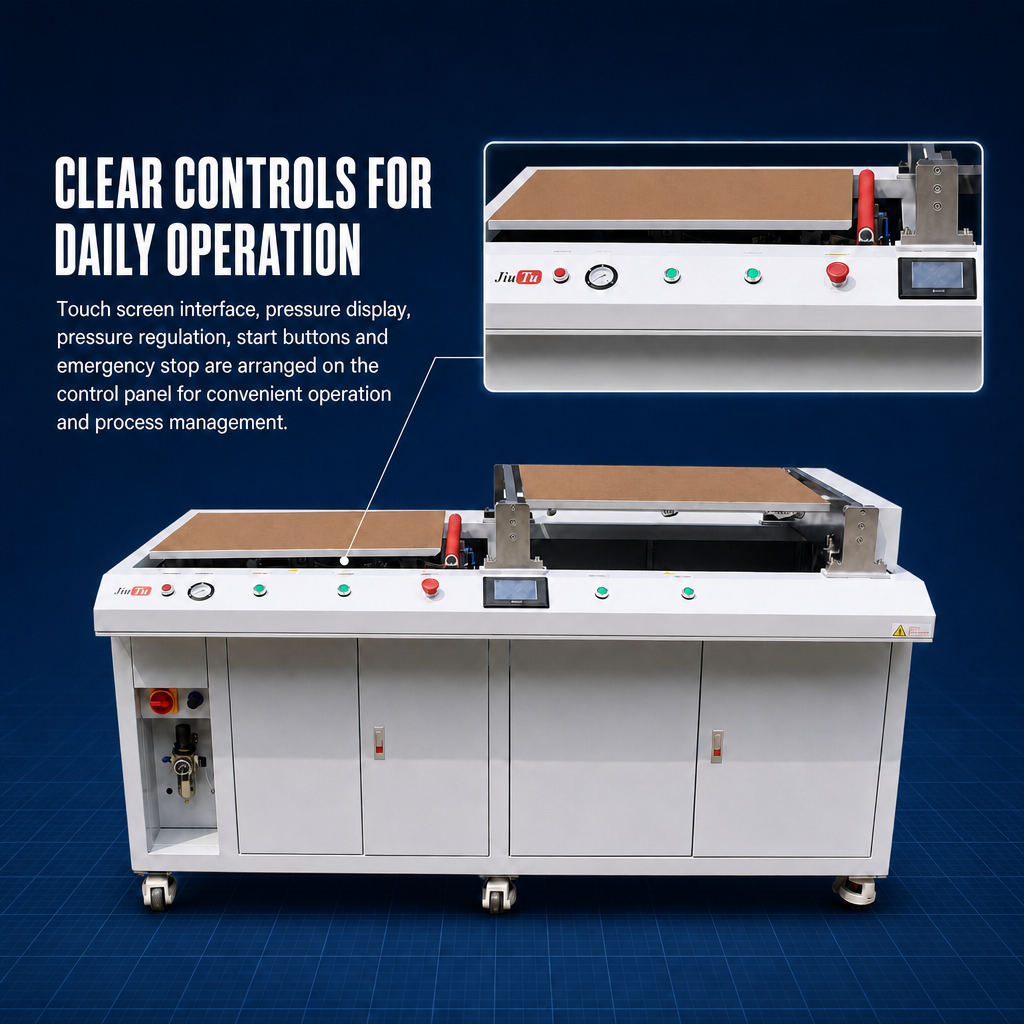
⑥ Comprehensive Front-Panel Control Layout 12 control elements on the front panel and left side (per product imagery):
Control Function
1、 Power switch Main machine power on/off
2、 Pressure display Analogue air pressure gauge
3、 Lower board suction Lower platform vacuum activation
4、 Start up Cycle start button (left)
5、 Emergency stop Immediate halt and reset
6、 Touch screen PLC HMI touchscreen
7、 Start up Cycle start button (right)
8、 Upper vacuum suction Upper platform vacuum activation
9、 Master switch Main power master switch (left side)
10、 Pressure regulation Air pressure regulator knob
11、 Barometric pressure display Analogue pressure gauge with filter unit
12、 Door lock Cabinet door lock
⑦ Pneumatic Drive with Pressure Regulation All platform motion and roller actuation are pneumatically driven. Working air pressure: 0.4–0.6 MPa (4–6 kg/cm²). The pressure regulator and filter unit are accessible from the left side of the machine cabinet. Air supply requires an external compressor connected via standard fitting. The pneumatic system uses cylinders, solenoid valves, and the built-in vacuum pump.
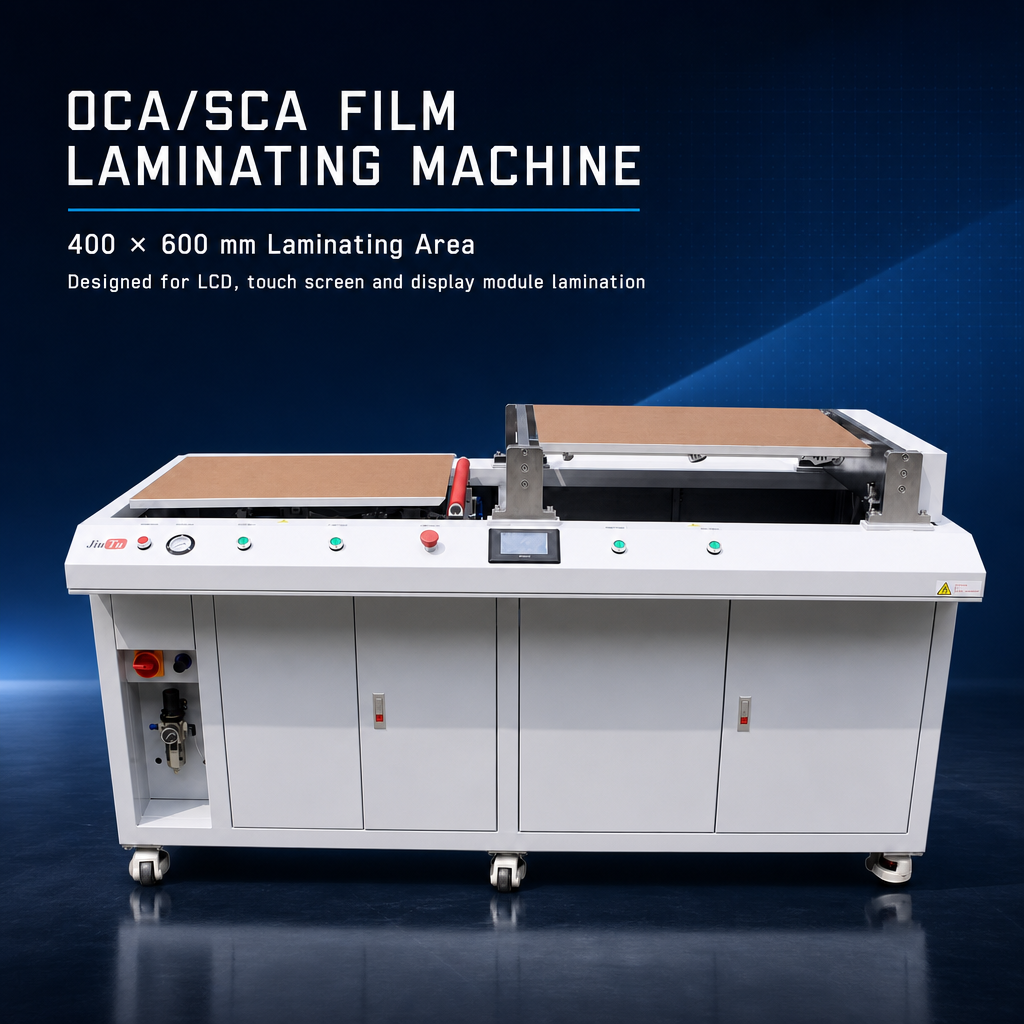
⑧ Enclosed Full-Height Cabinet Base with Mobile Castors The full-height enclosed cabinet (four lockable doors) houses all internal systems: PLC, vacuum pump, pneumatic control components, and electrical panels. The cabinet base is fitted with heavy-duty lockable castors, allowing the machine to be repositioned on the production floor. Levelling pads provide stable fixed-position operation.
⑨ Aluminium Alloy and Sheet Metal Frame Machine structure uses sheet metal and aluminium alloy construction (per User Manual). Frame and fitting parts include rollers and flap plate components.
Why Choose Us

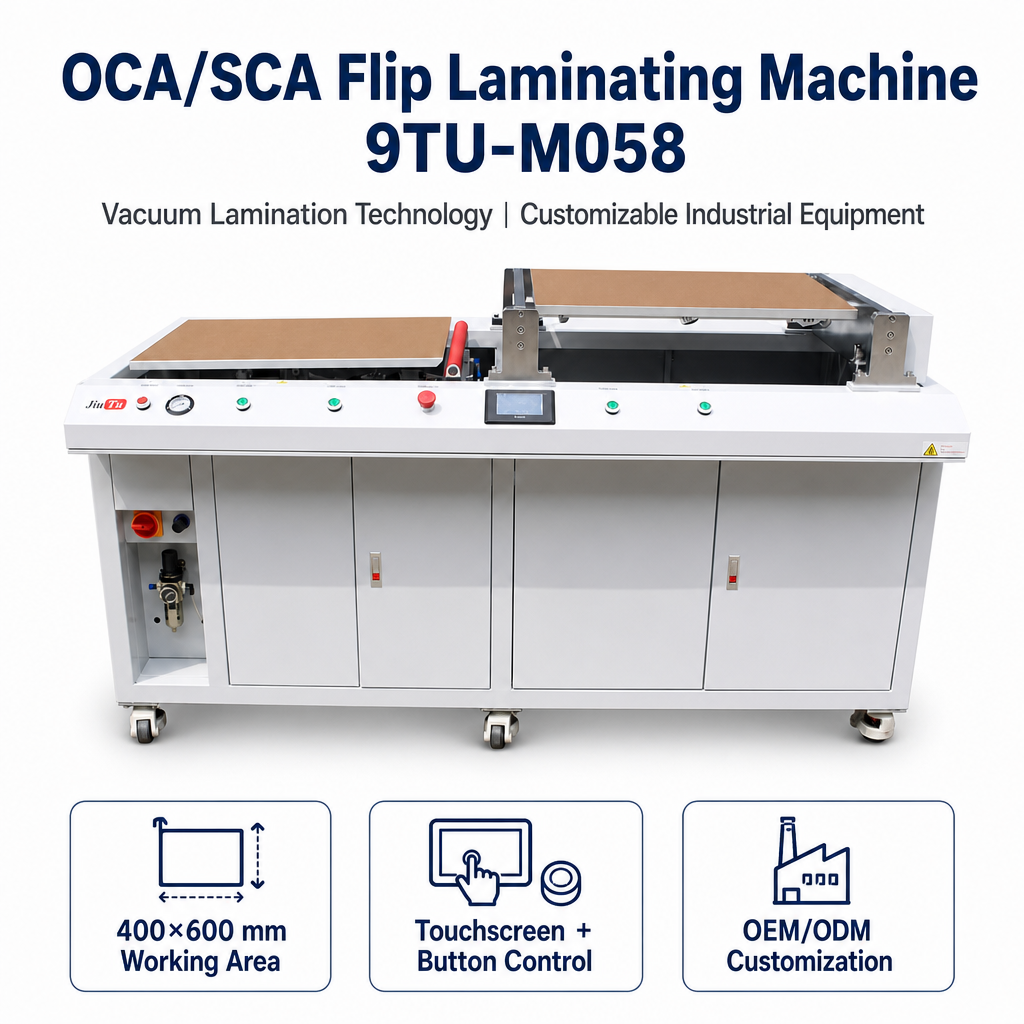
Largest working area in the 300–600mm laminator range The 400 × 600 mm film laminating area accommodates the display panel sizes used in industrial monitors, large-format HMI panels, and commercial display modules in the 18–27 inch range — formats that exceed the working envelope of 300 × 400 mm platform laminators.
High daily throughput for production line integration At 10–20 seconds per panel, the machine supports approximately 1,500 panels per 10-hour shift (User Manual reference figure). This cycle rate is suited to industrial production line environments operating on two or three shifts, where consistent high-volume output is required.
Fully automated flap-plate cycle from a single Start trigger Once substrate and film are loaded and vacuum activated, a single Start button press executes the complete lamination cycle — flap close, platform traverse, roller up, lamination stroke, roller down, platform return, flap open — without further operator intervention. This eliminates the variability of manual film alignment and reduces operator fatigue on high-volume runs.
Self-contained system: built-in vacuum pump, enclosed cabinet The built-in vacuum pump eliminates the need for a separate vacuum generator. All pneumatic, electrical, and control systems are housed inside the enclosed cabinet, reducing the external equipment footprint at the production station and simplifying installation.
Programmable speed and position parameters Film laminating speed and running speed are independently adjustable by percentage from the touchscreen. Roller start point, end point, and timing parameters are set per-product on the Parameter interface, allowing the same machine to handle different panel sizes and film types with straightforward parameter adjustment.
Product Documents
400X600 Slat Shutter Machine Operating Manual
Key Features
Product Details
FAQ
Q1: What does "OCA/SCA" mean, and what film types does this machine handle?
Q2: What panel sizes does the 400×600mm working area accommodate?
Q3: What is the production throughput of this machine?
Q4: Can lamination speed and roller parameters be adjusted for different film types?
Q5: Why does this machine weigh approximately 450 kg, and how is it moved?
Q6: What working environment does this machine require?
Q7: What does the Manual Interface on the touchscreen allow the operator to do?
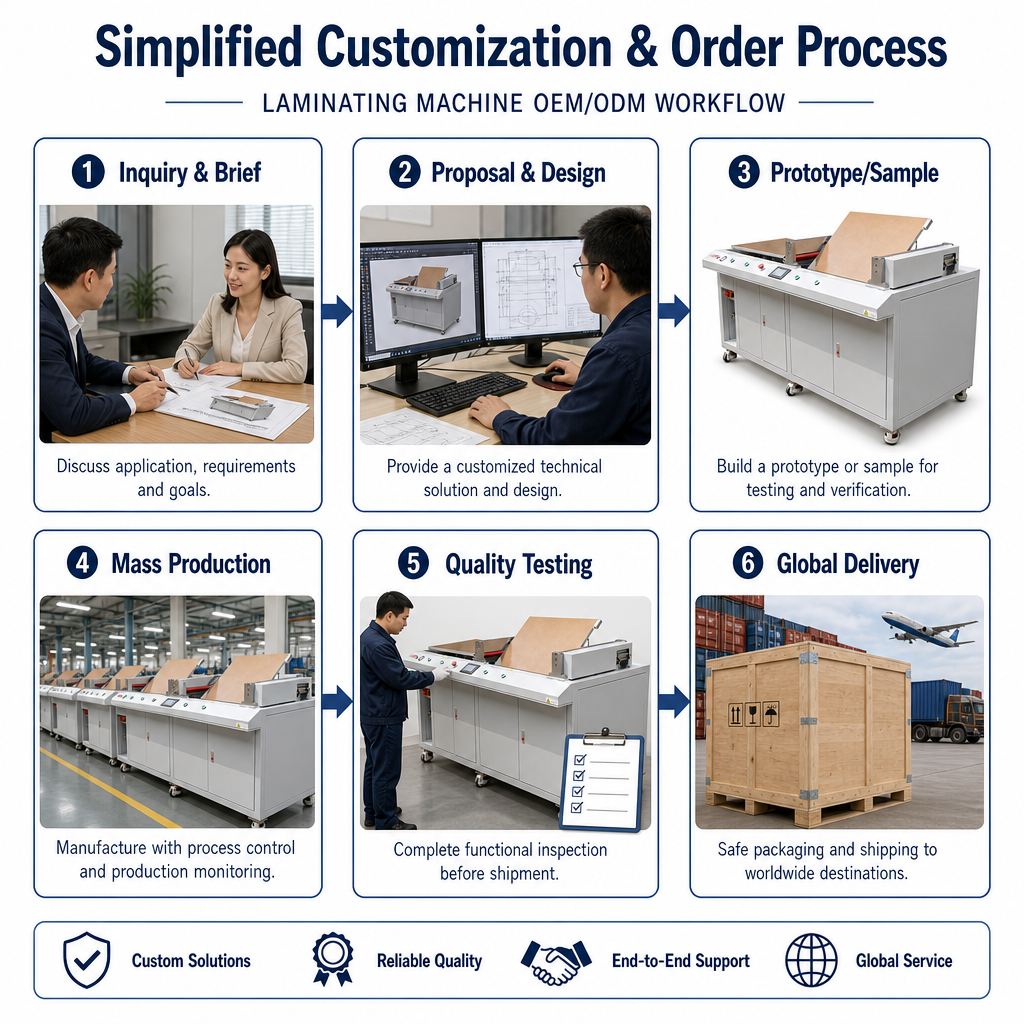
Q8: Is OEM or custom-specification ordering available?
Interested in This Product?
Tell us your project details and our team will prepare a customized quotation.
GET QUOTE NOW