
The 300×400 Flip-Plate Lower Roller Film Laminating Machine
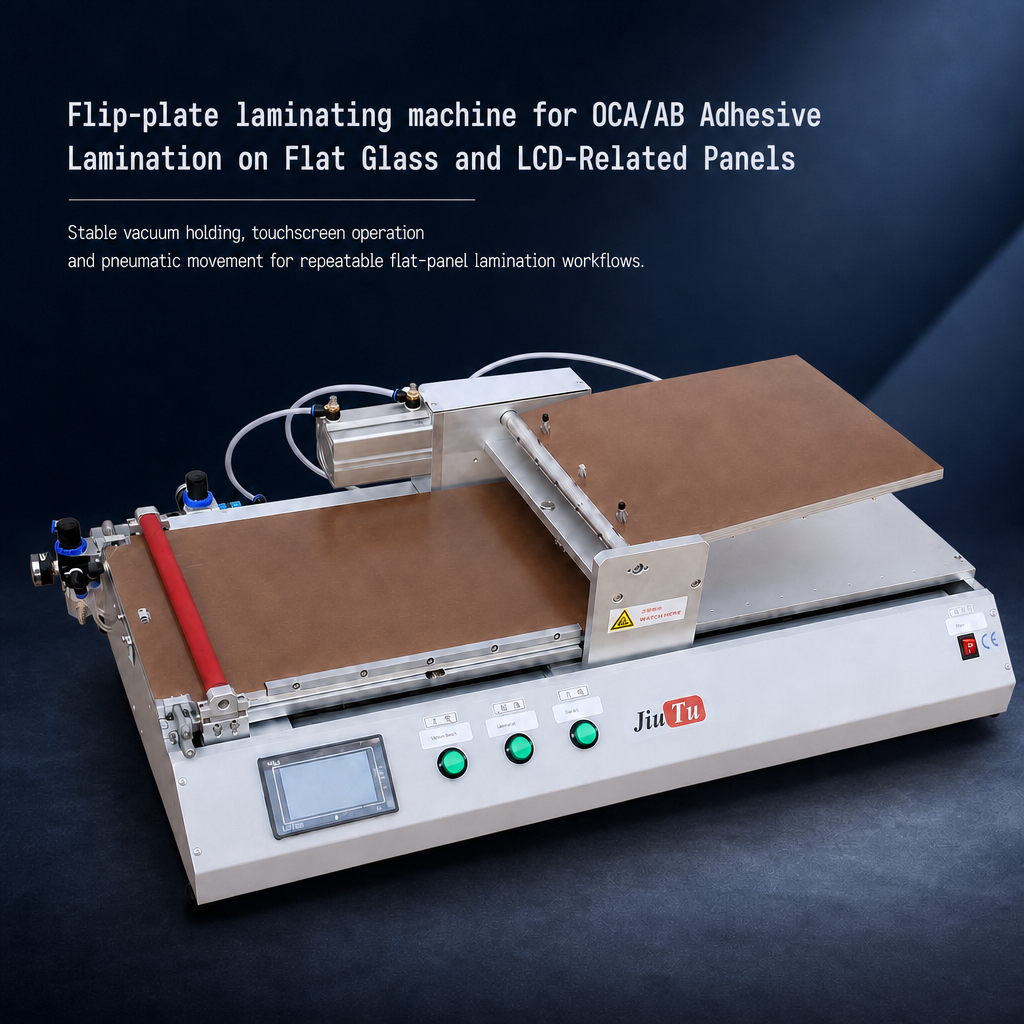
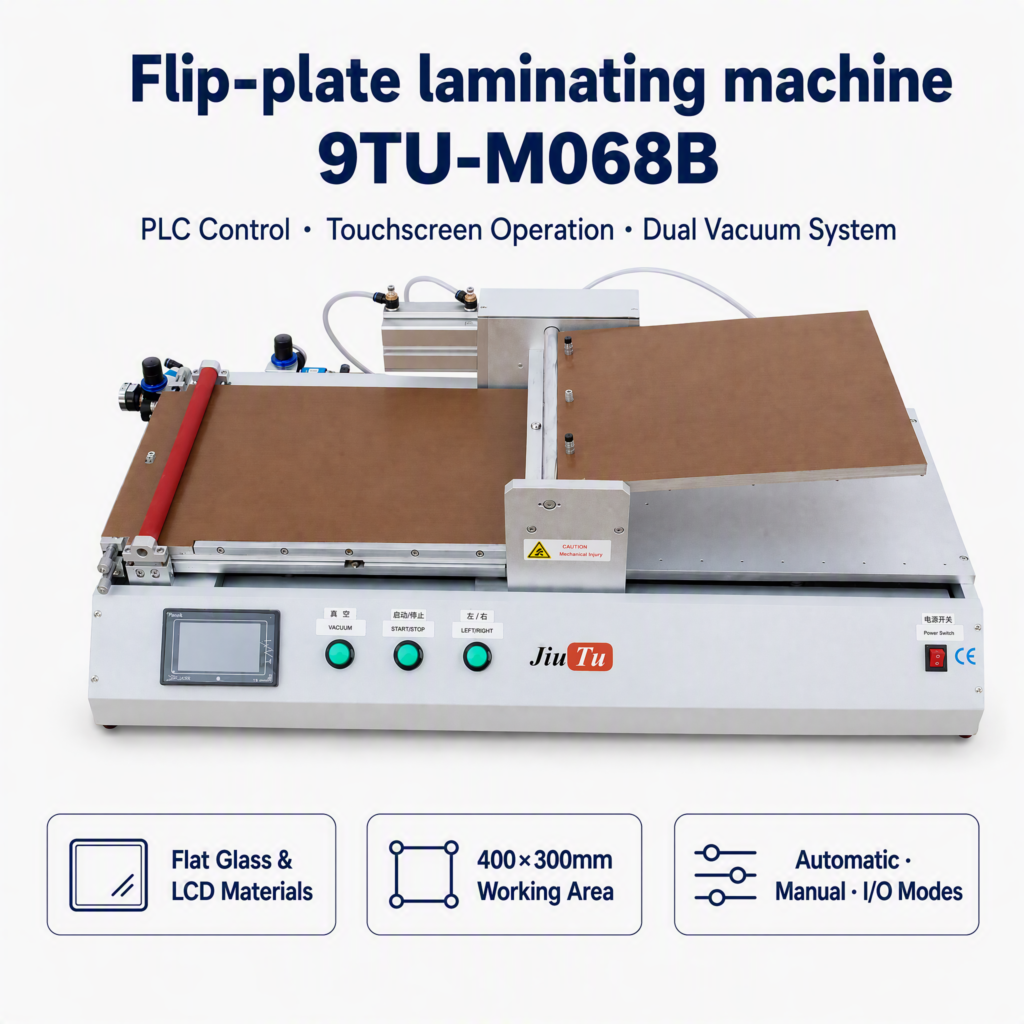
The 300×400 Flip-Plate Lower Roller Film Laminating Machine is a pneumatically driven film application system designed for industrial flat-panel display manufacturing and optical film lamination. The ...
GET QUOTE NOW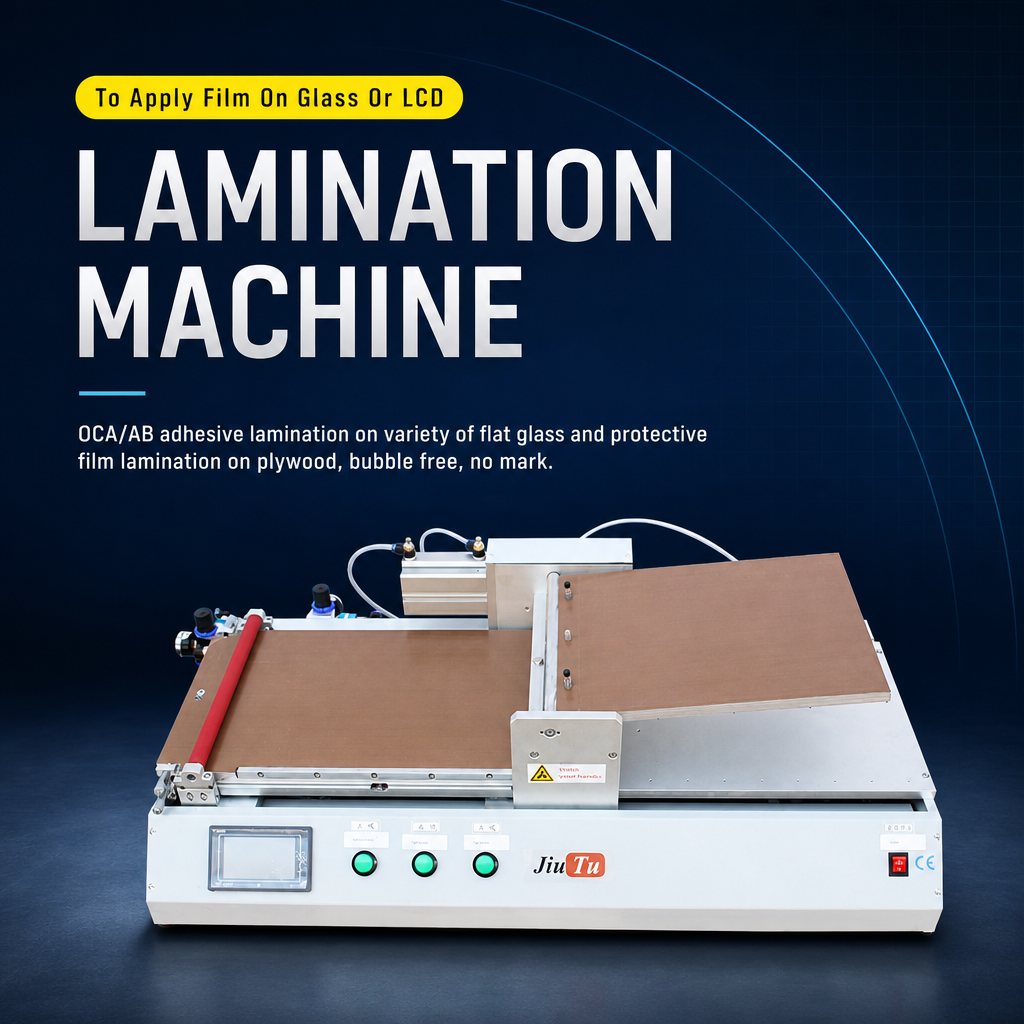
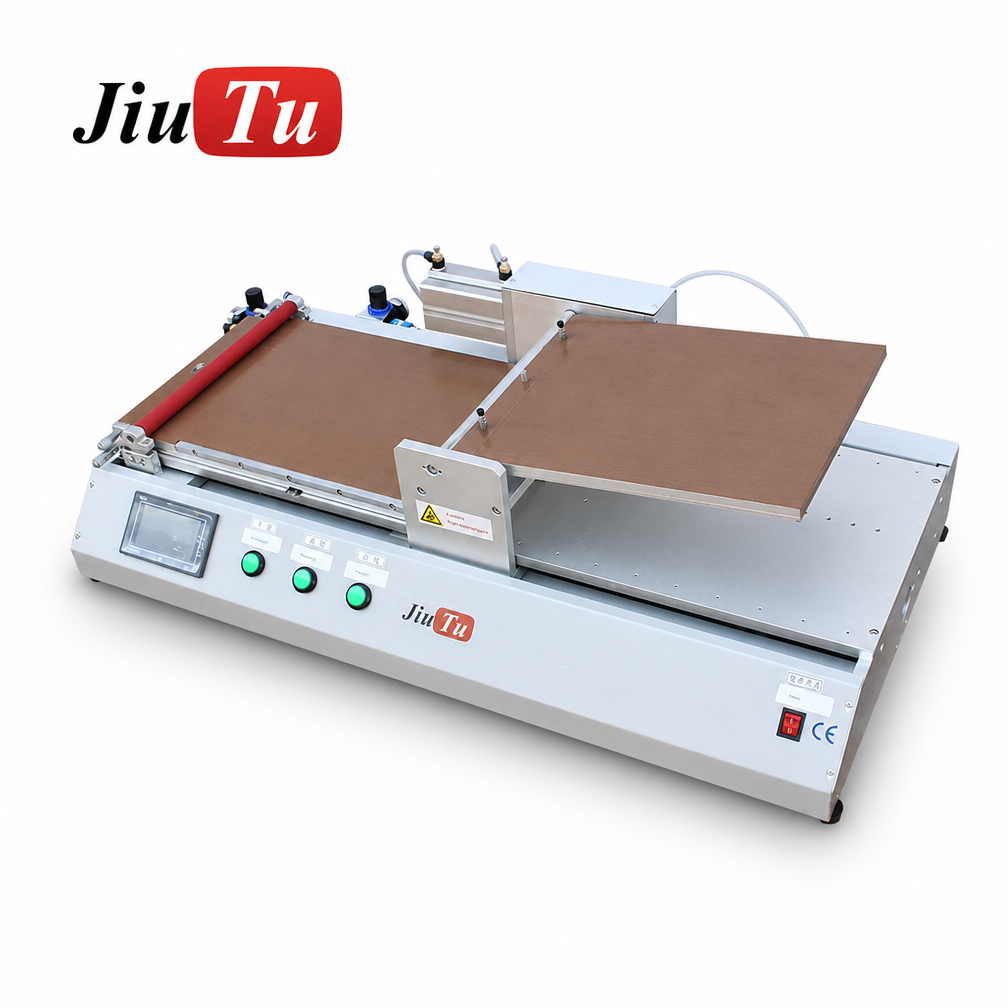
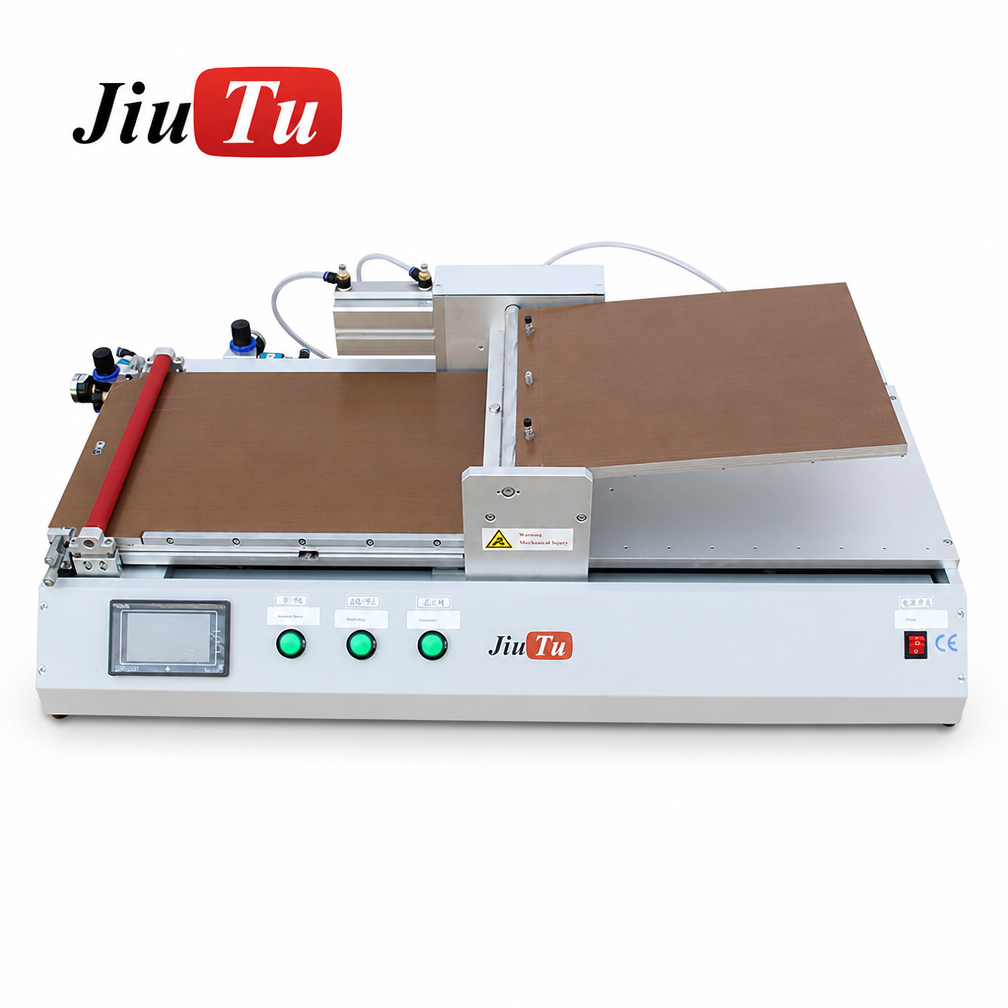
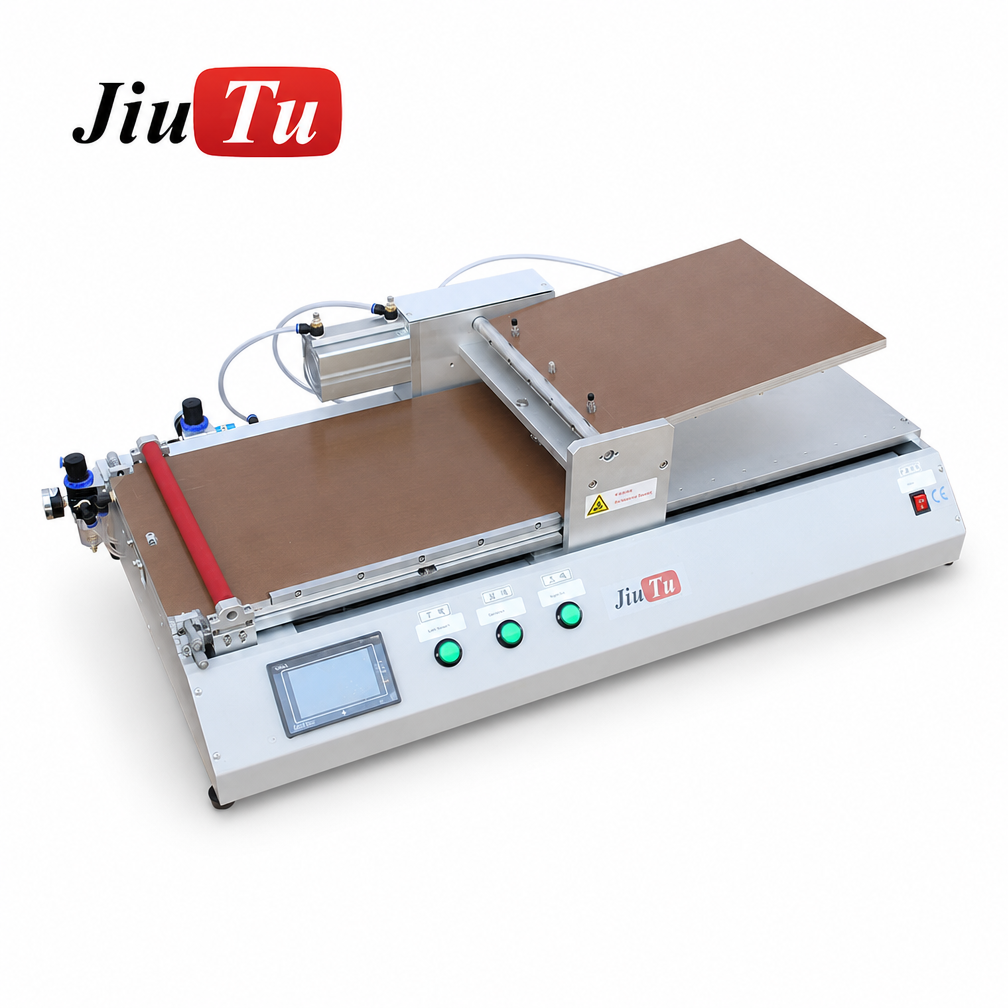
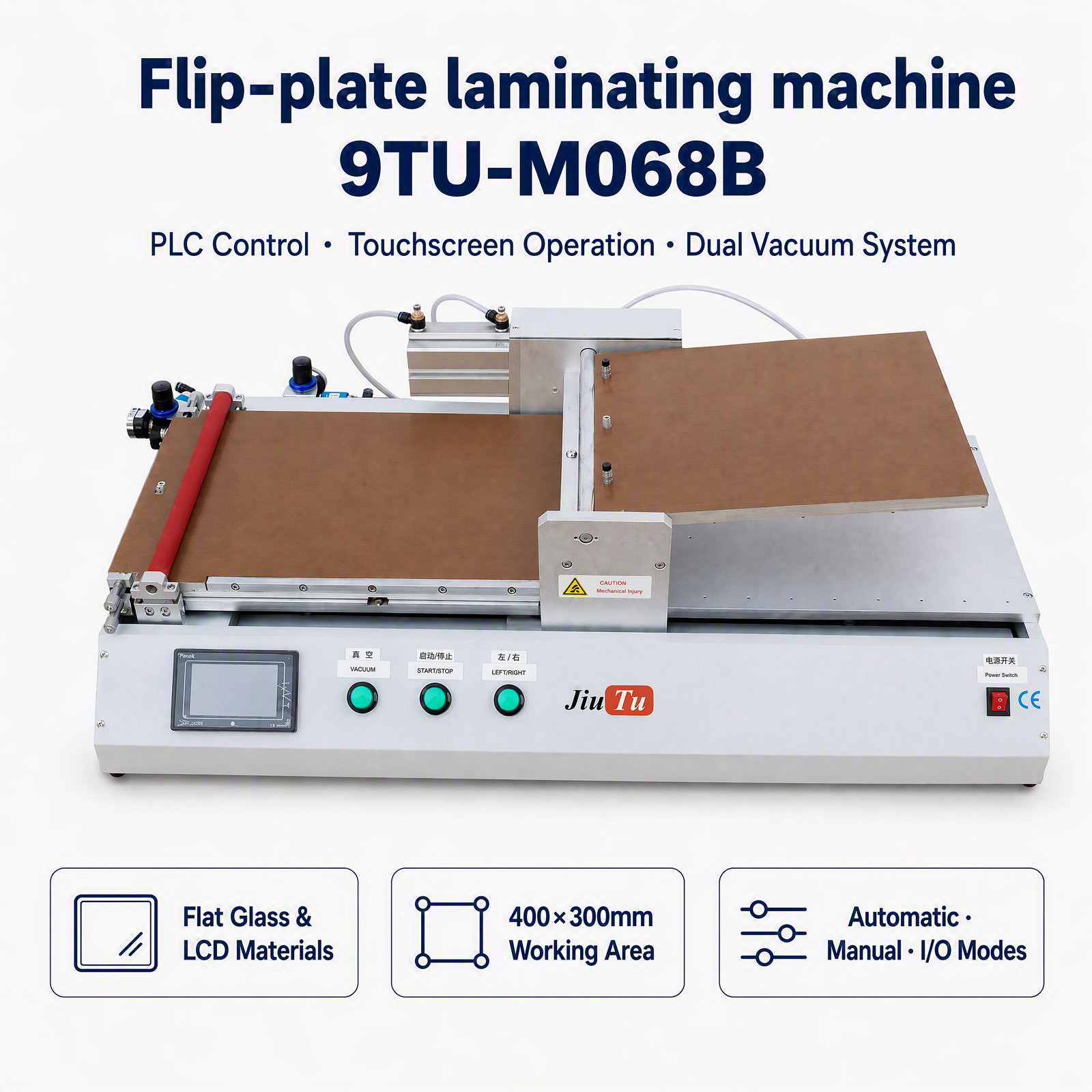
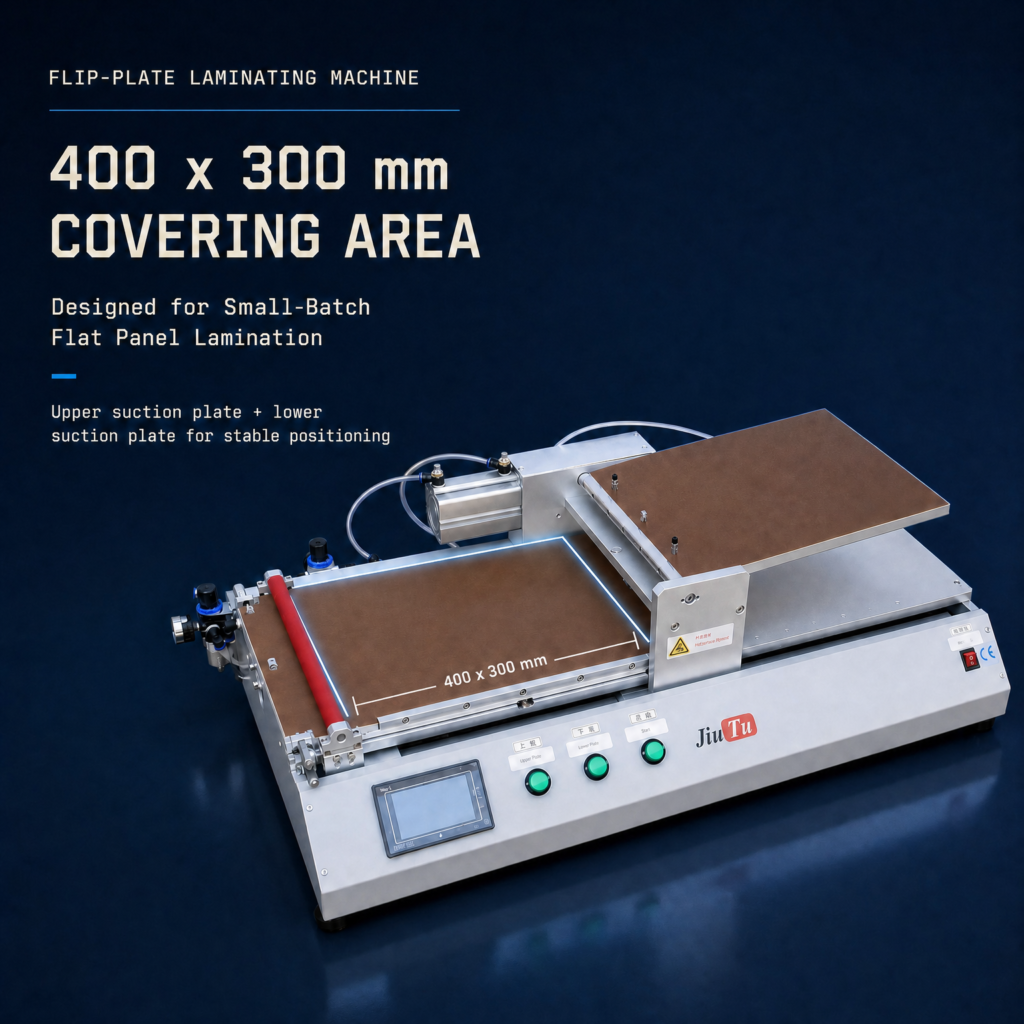
The machine’s defining structural feature is the flip-plate upper platform: the upper suction plate is hinged at the rear and opens upward to receive the film, then closes down to align film over substrate before the lamination roller traverses. This flip-plate mechanism simplifies film loading, aligns film position consistently with the substrate below, and allows the operator to inspect both surfaces before committing to the lamination stroke.
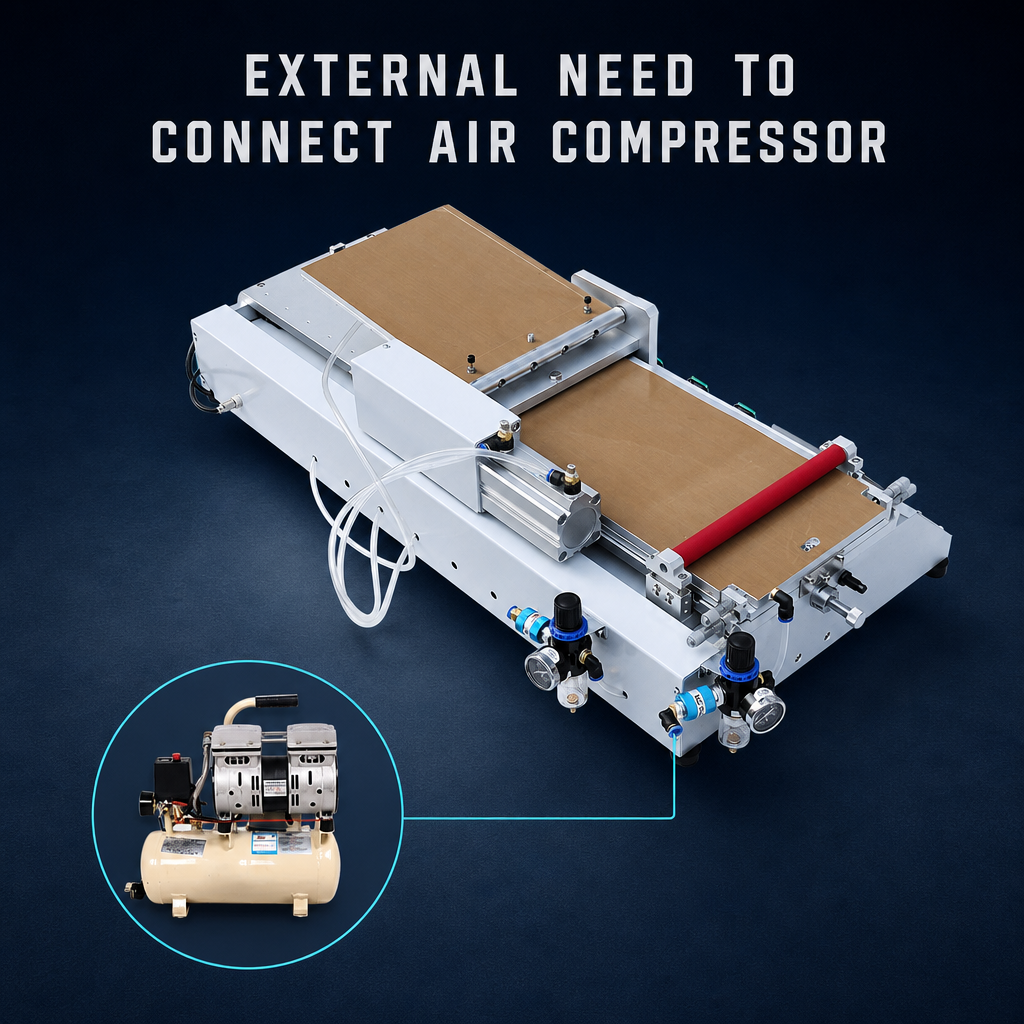
Compared to the servo motor–driven upper roller and mesh film models in the 300×400 range, this machine uses a fully pneumatic drive system — all platform motion and roller travel are powered by regulated compressed air. This makes the machine mechanically straightforward, with fewer electronic components, adjustable via barometric pressure regulation, and operable with a foot pedal in addition to the front-panel push buttons — leaving the operator’s hands free for substrate positioning during the cycle start.
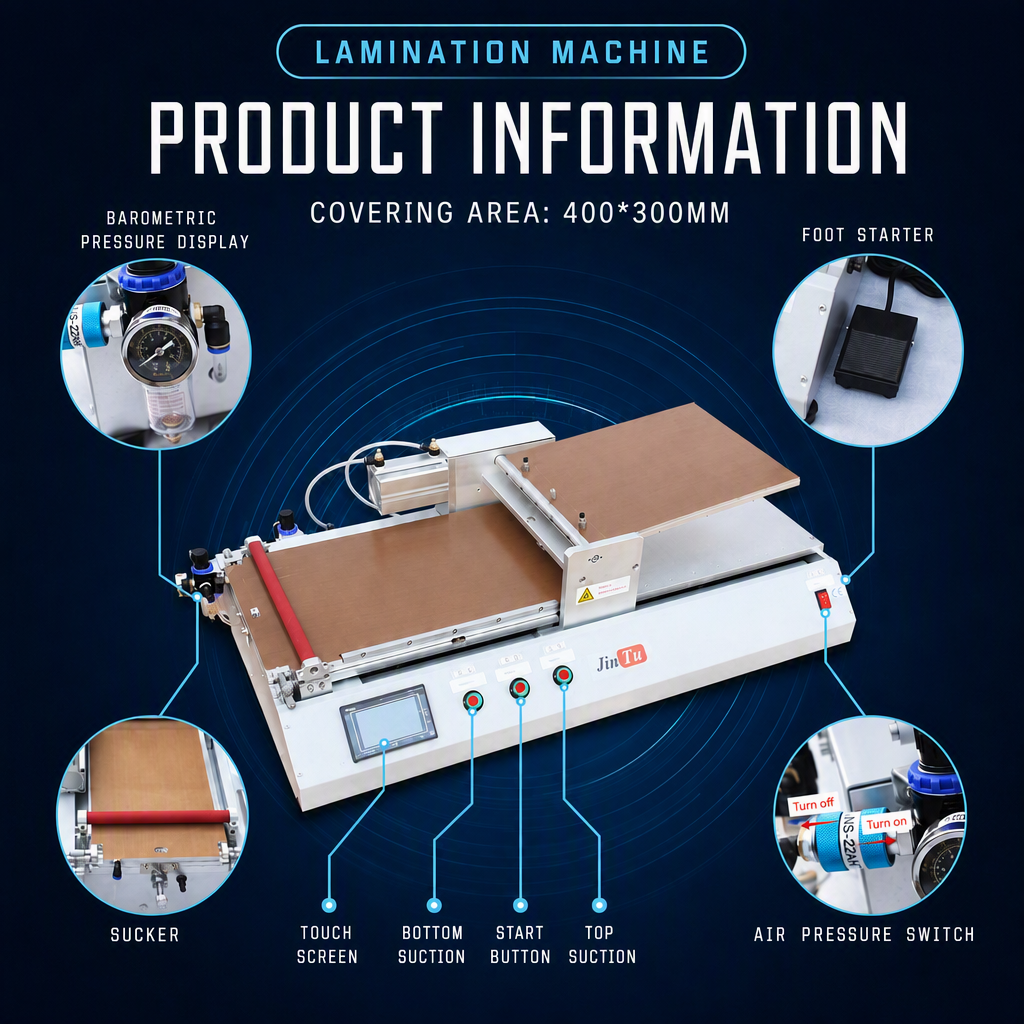
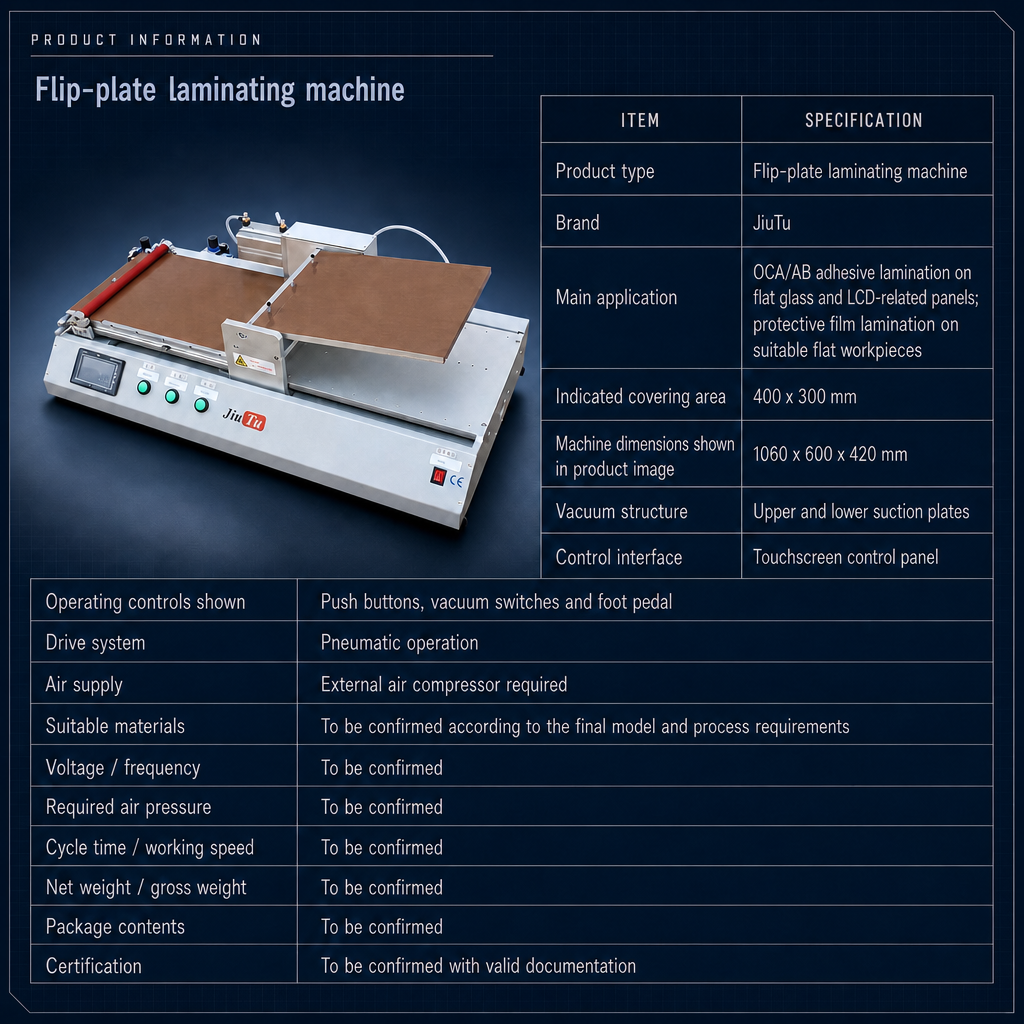
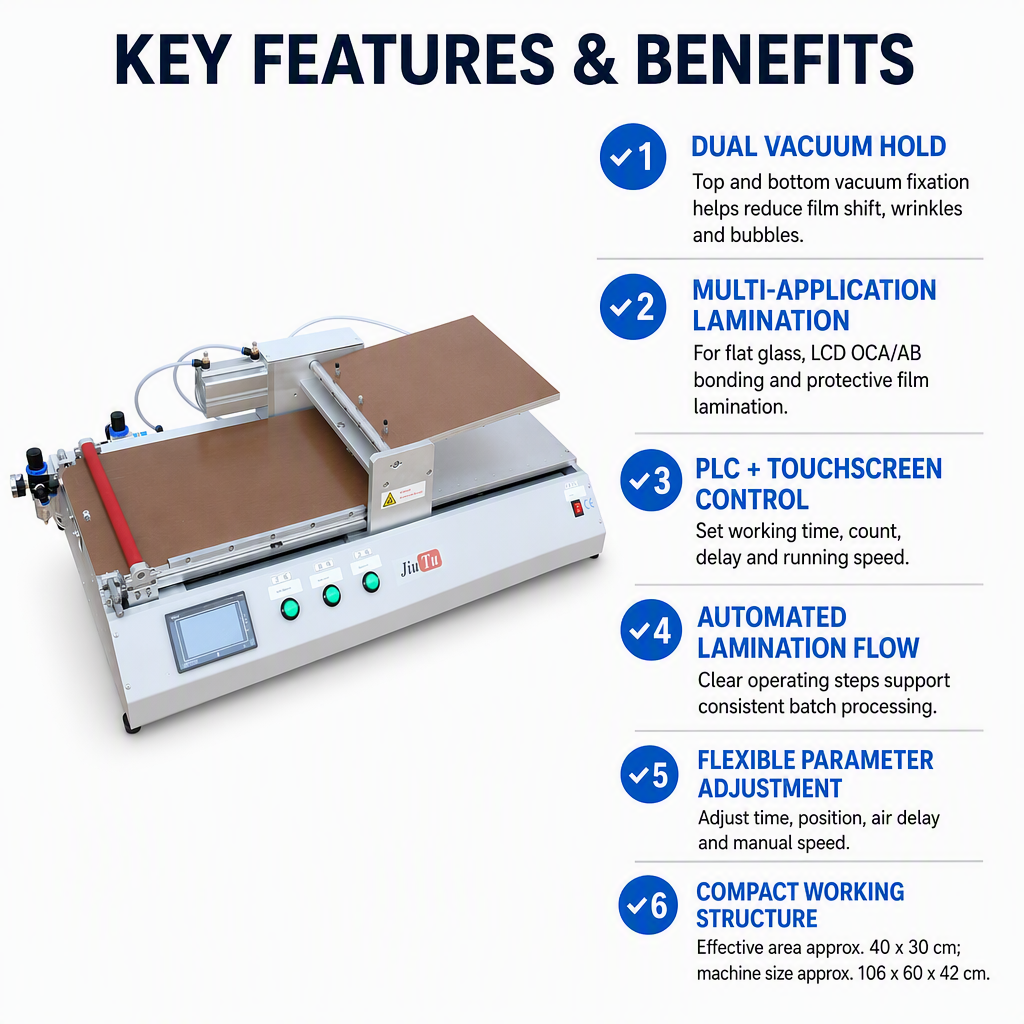
The machine is built on a low-profile flat-bed frame with an overall footprint of approximately L1060 × W600 × H420 mm (dimensions as shown in product image; measured manually — refer to actual product). Its compact, bench-height profile integrates directly into existing workstation arrangements without requiring elevated mounting or dedicated floor space.
The “Flip-Plate” Mechanism — How It Works
The flip-plate design separates the film loading step from the lamination step:
Upper plate opens (flips up): The operator places the film onto the upper suction plate while it is in the open position. Vacuum holds the film flat.
Upper plate closes (flips down): The plate rotates down, positioning the film face-down directly above the substrate on the lower suction plate.
Lower roller traverses: The pneumatically driven lower roller moves under the substrate platform, applying upward pressure through the substrate into the film above. The roller travels the full 400 mm stroke, progressively bonding film to substrate from one edge to the other.
Cycle complete: Both vacuum systems release. The bonded assembly is removed.
The progressive roller stroke — advancing from one edge across the full panel — drives air ahead of the bond front and expels it at the open edge before the adhesive seals it in, producing the bubble-free, no-mark result stated in the product specification.
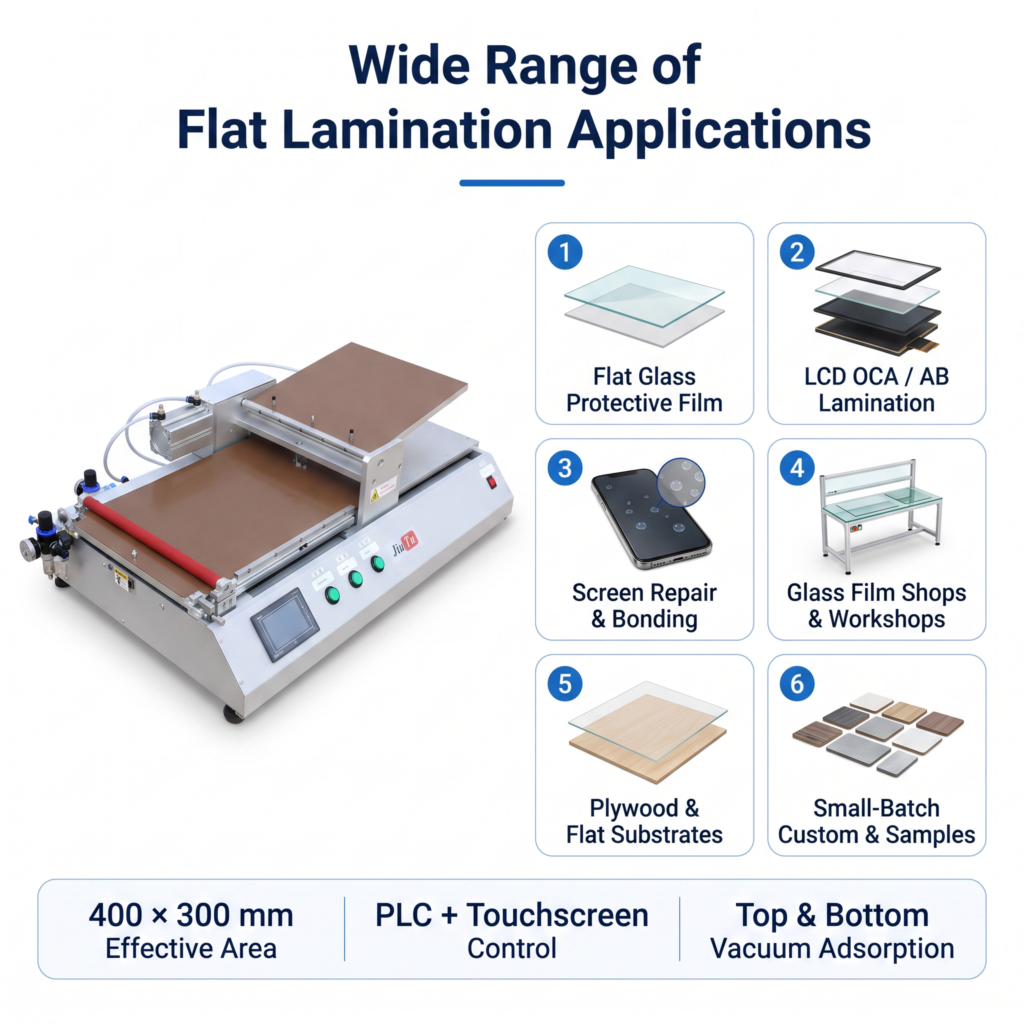
Compatible Applications
Per the official product specification and product imagery:
Application Substrate / Film
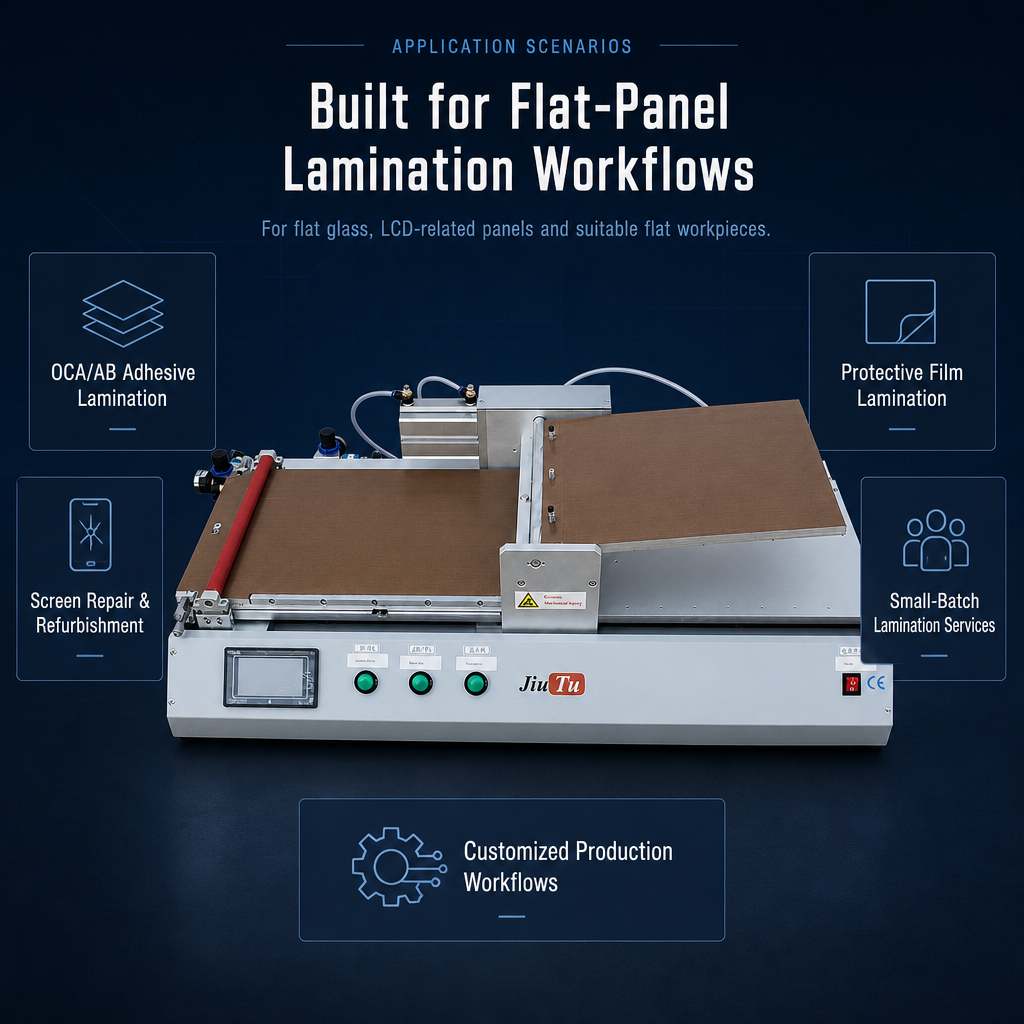
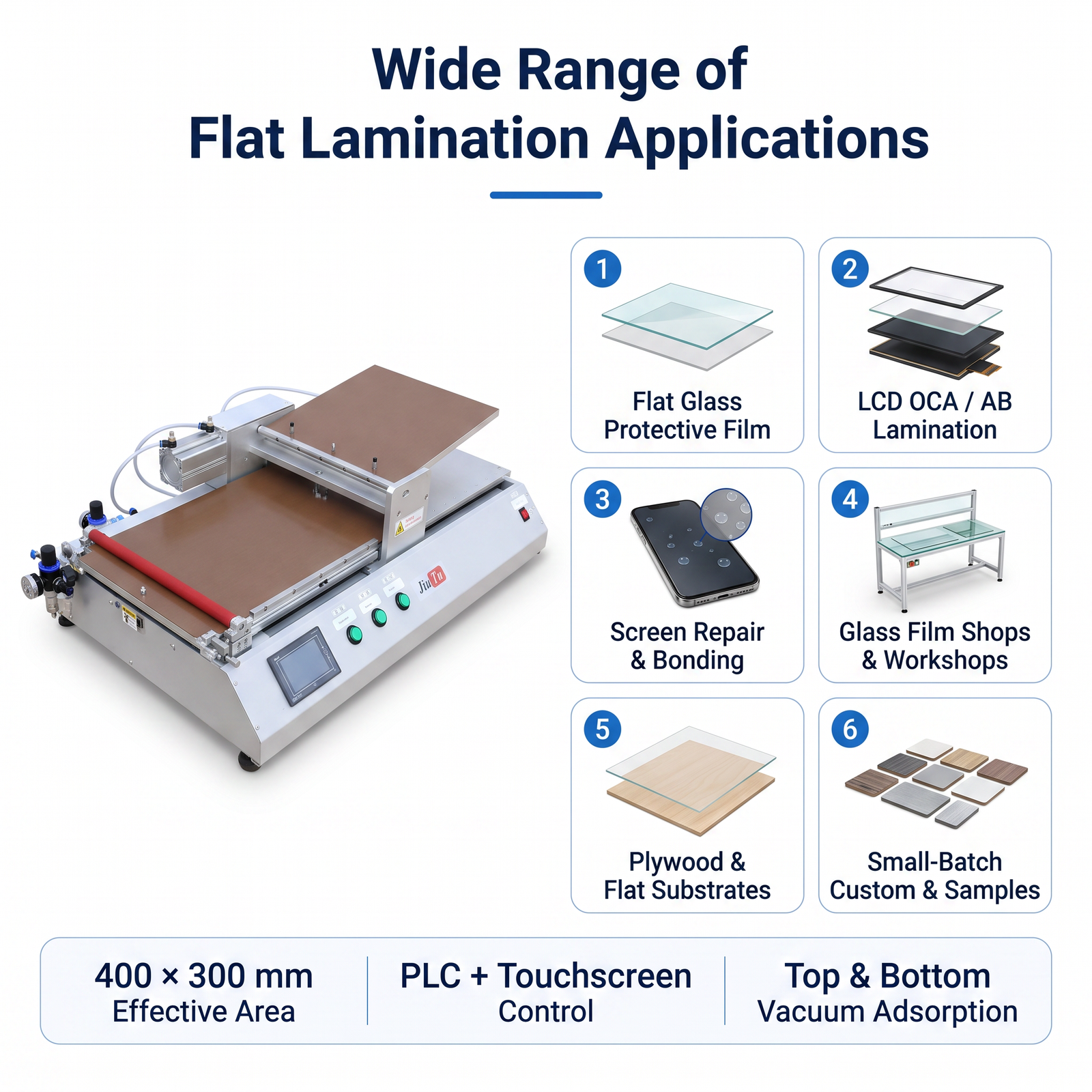
OCA adhesive film lamination On flat cover glass and LCD-related panels
AB adhesive film lamination On flat glass and flat workpiece surfaces
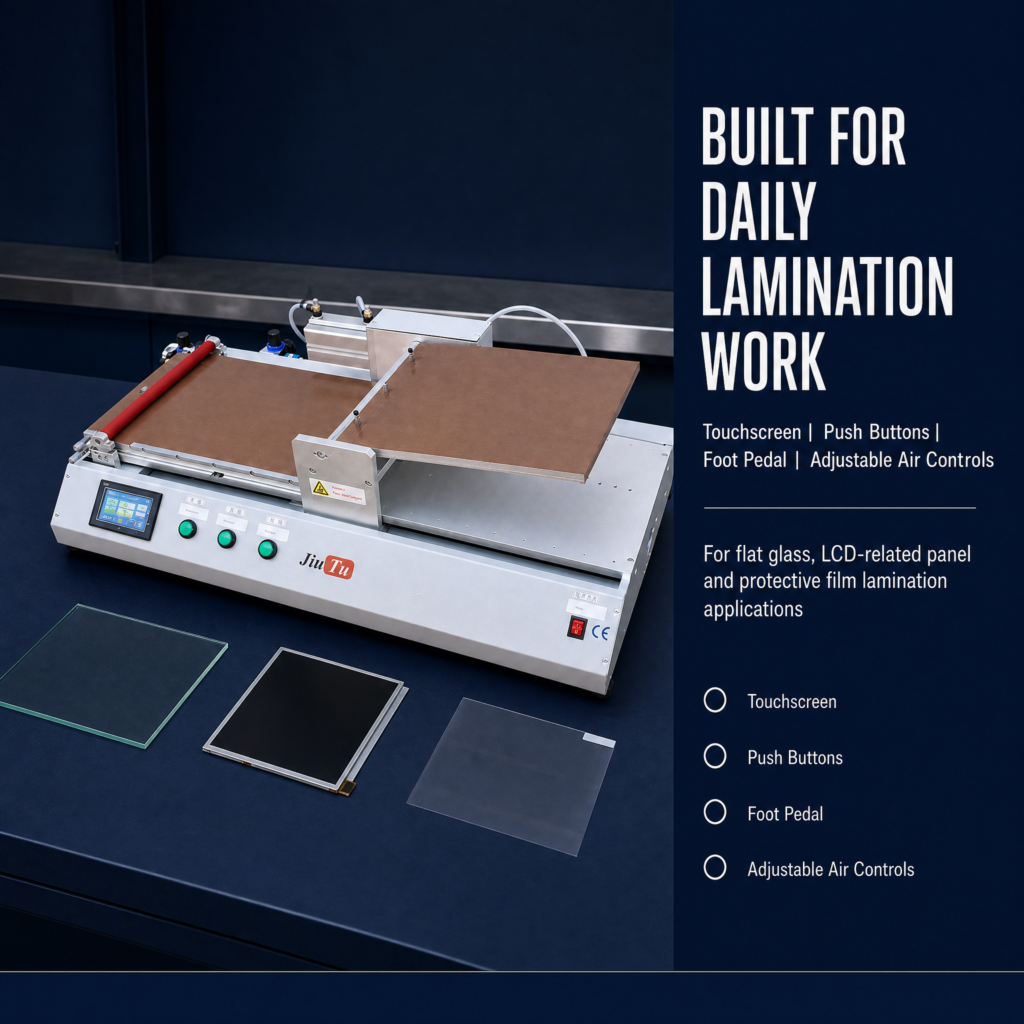
Protective film lamination On suitable flat workpieces — glass panels, LCM modules
Customised production workflows Flat glass and LCD-related panels per process requirements
Bonding result stated in product specification: Bubble-free, no mark.
Suitable materials: To be confirmed according to final model and process requirements — contact our sales team with your substrate and film specifications.
Key Features
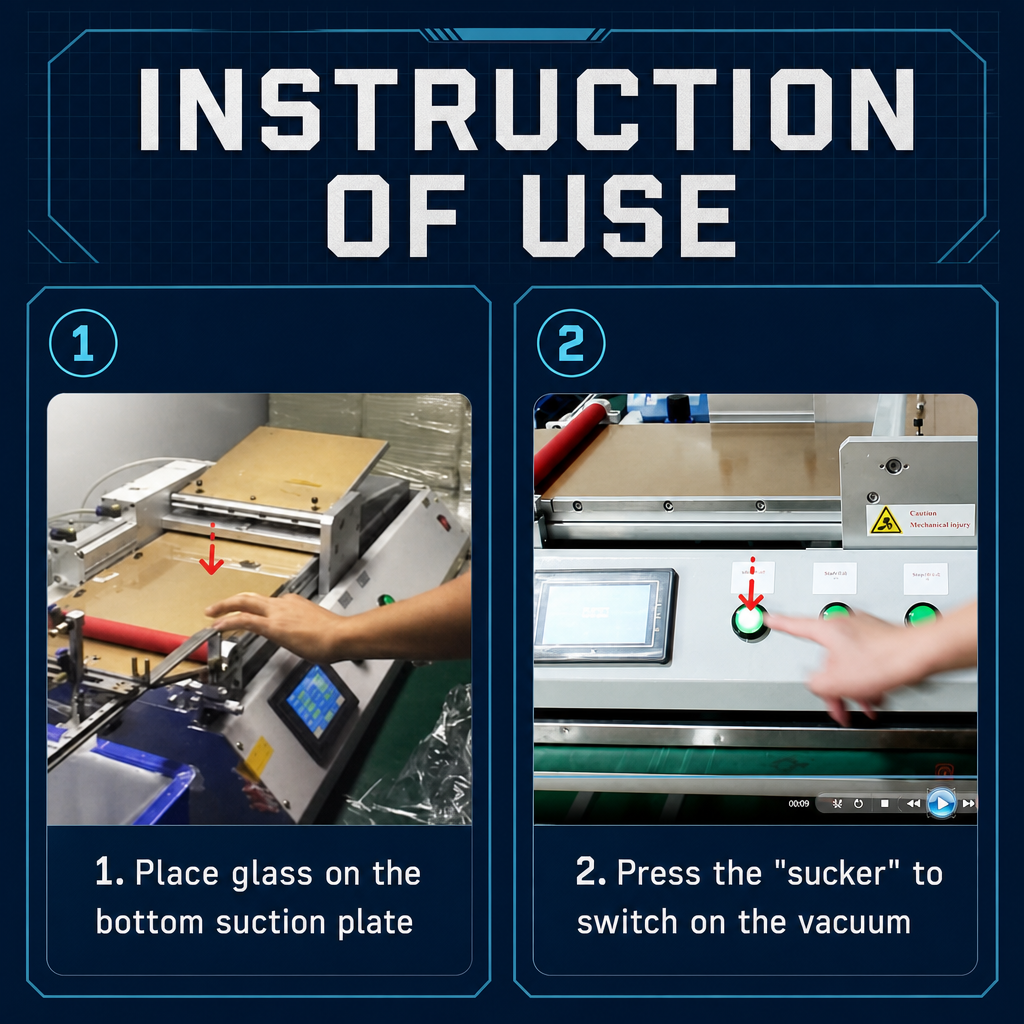
① Flip-Plate Upper Vacuum Platform The upper suction plate opens and closes on a rear hinge, creating a clear, unobstructed loading position for film placement. When closed, the flip-plate positions the film precisely over the substrate without manual alignment. Vacuum holds the film flat against the upper plate surface throughout the close-and-laminate sequence.
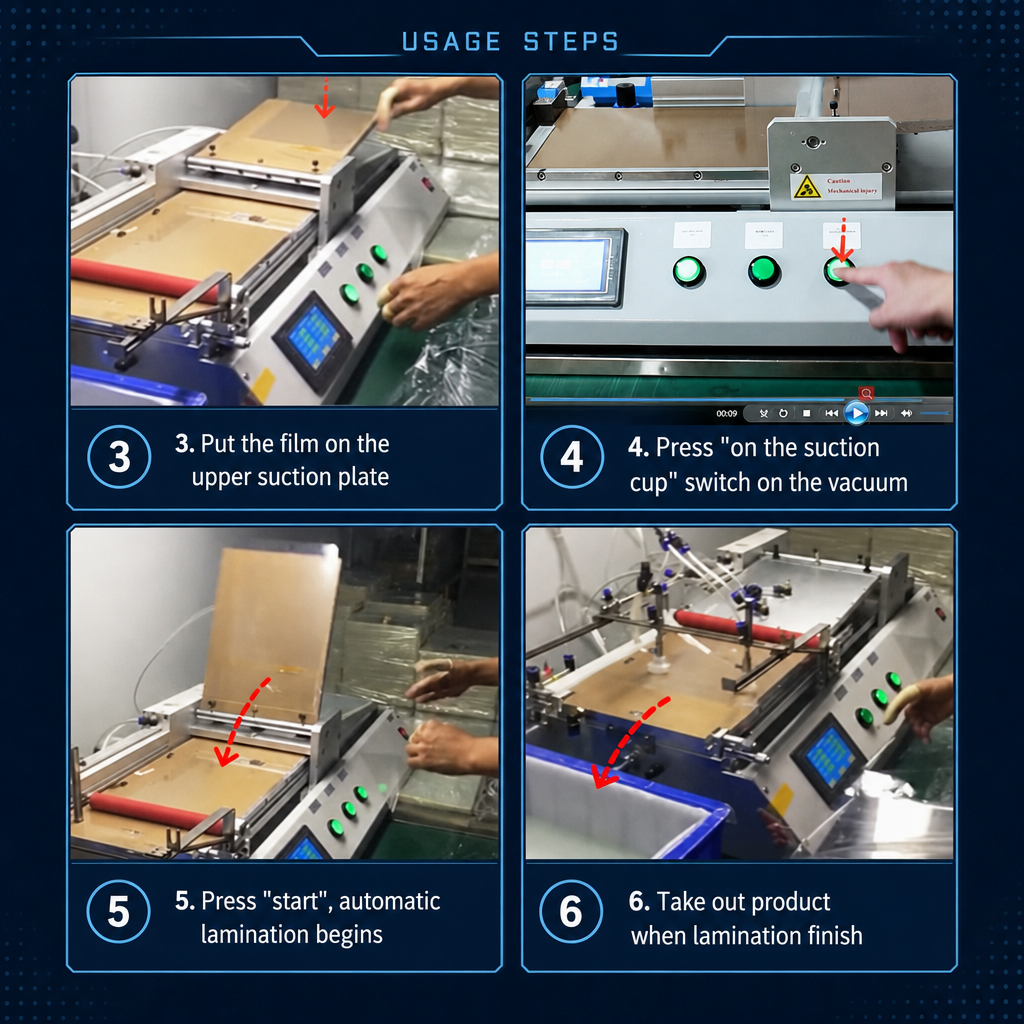
② Lower Roller Lamination Drive The lamination roller is positioned below the substrate platform and travels along the full 400 mm stroke length. As the roller advances, it lifts the substrate platform incrementally, pressing the substrate against the film from below. The roller traverses progressively edge-to-edge, expelling air ahead of the bond line on every cycle.
③ Lower Vacuum Suction Platform The lower platform holds the substrate (glass panel, LCM module, or flat workpiece) flat by vacuum suction throughout the lamination stroke, preventing substrate movement or surface deformation during roller travel.
④ Dual Independent Vacuum Controls Two separate vacuum switches on the front panel control upper and lower suction independently:
Bottom Suction button: activates lower platform vacuum (secures substrate)
Top Suction button: activates upper platform vacuum (secures film)
This independent control allows the operator to sequence vacuum engagement precisely — substrate first, then film — and to release each independently after lamination.
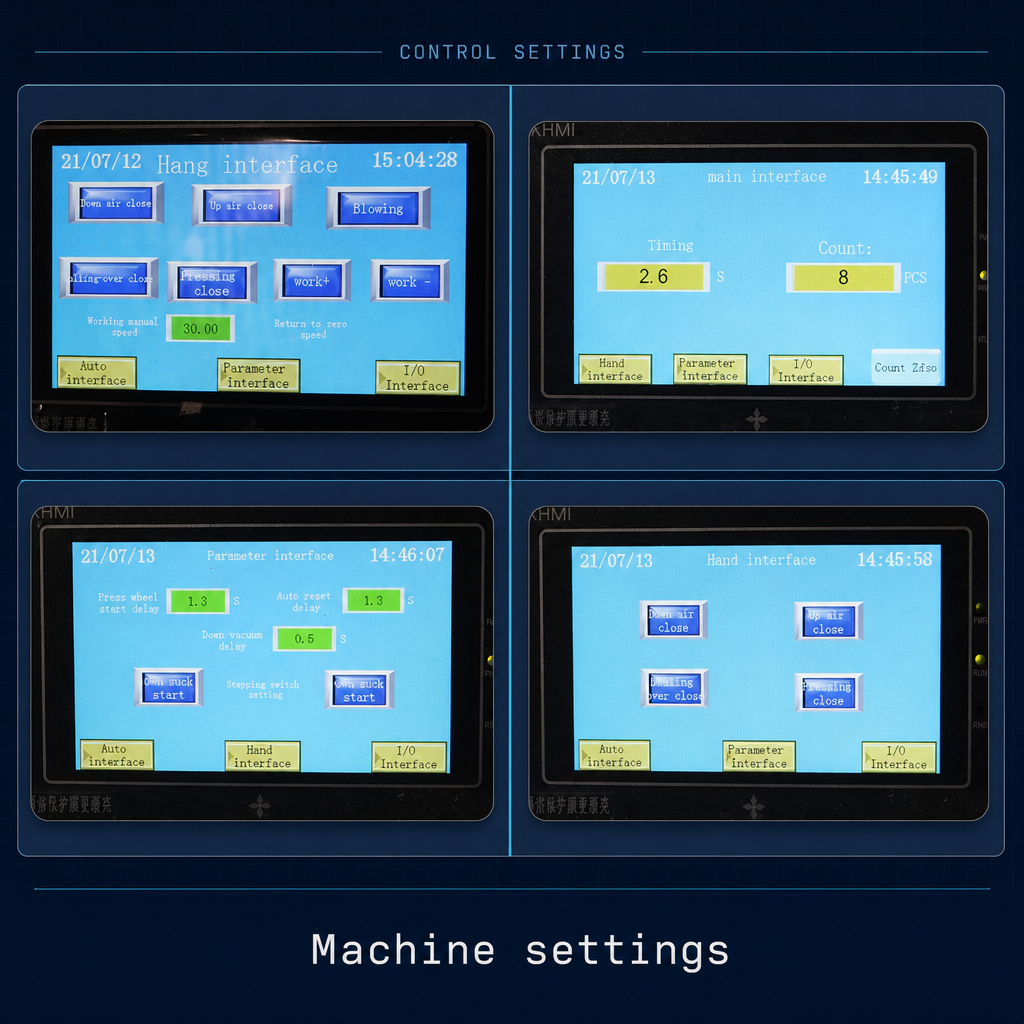
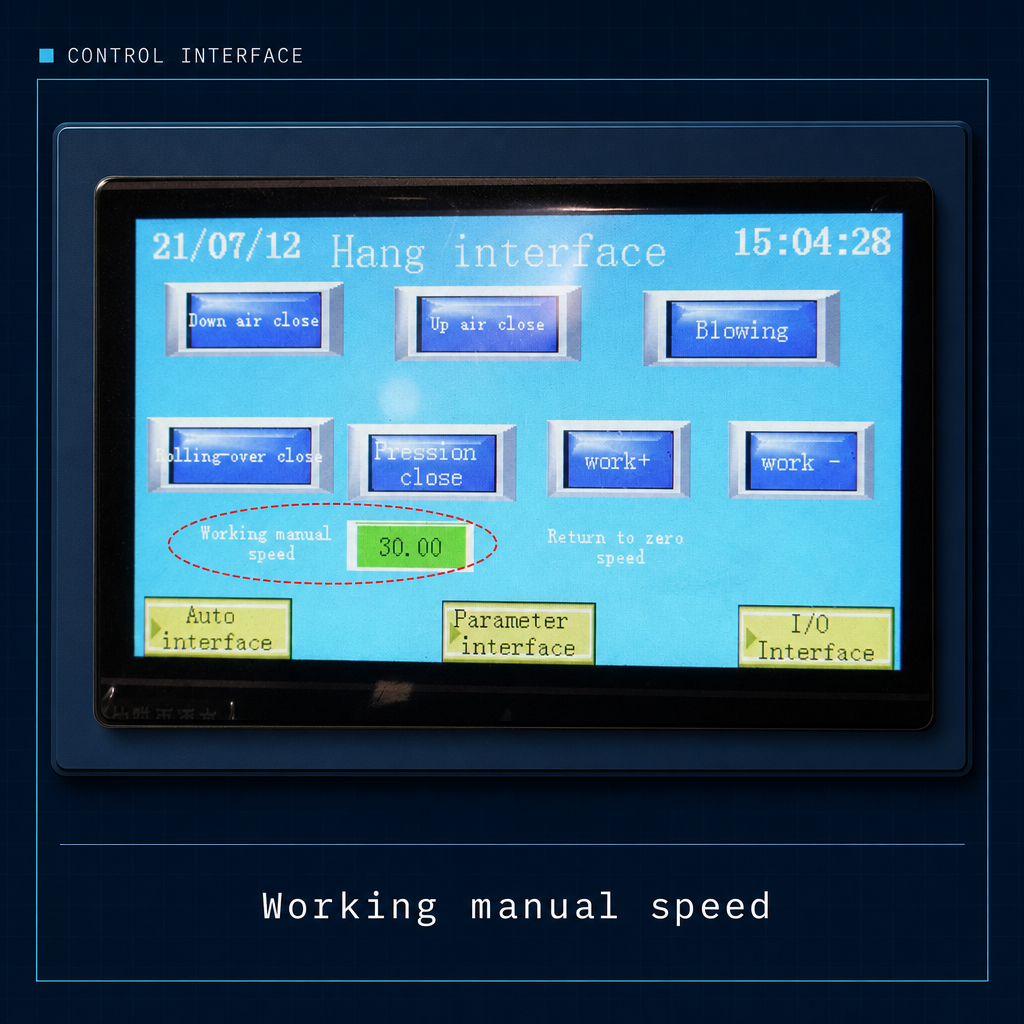
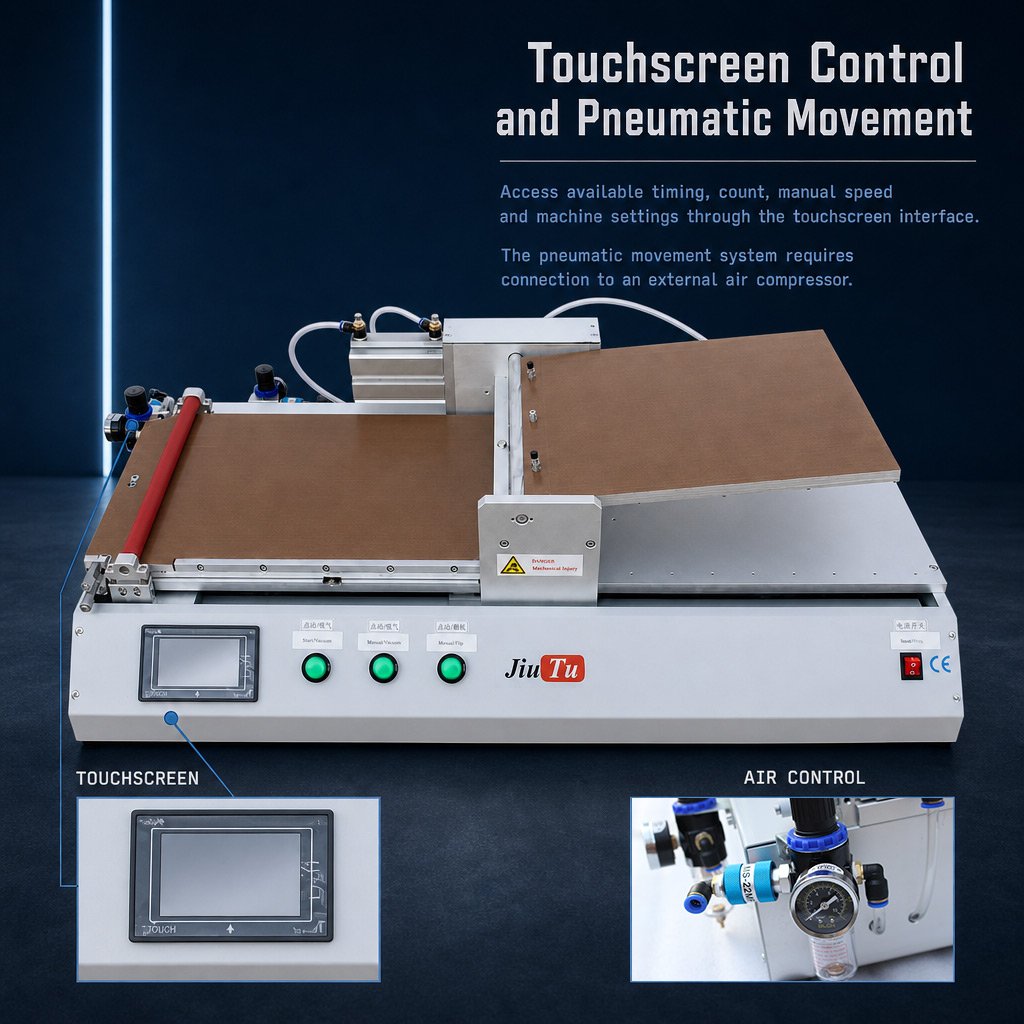
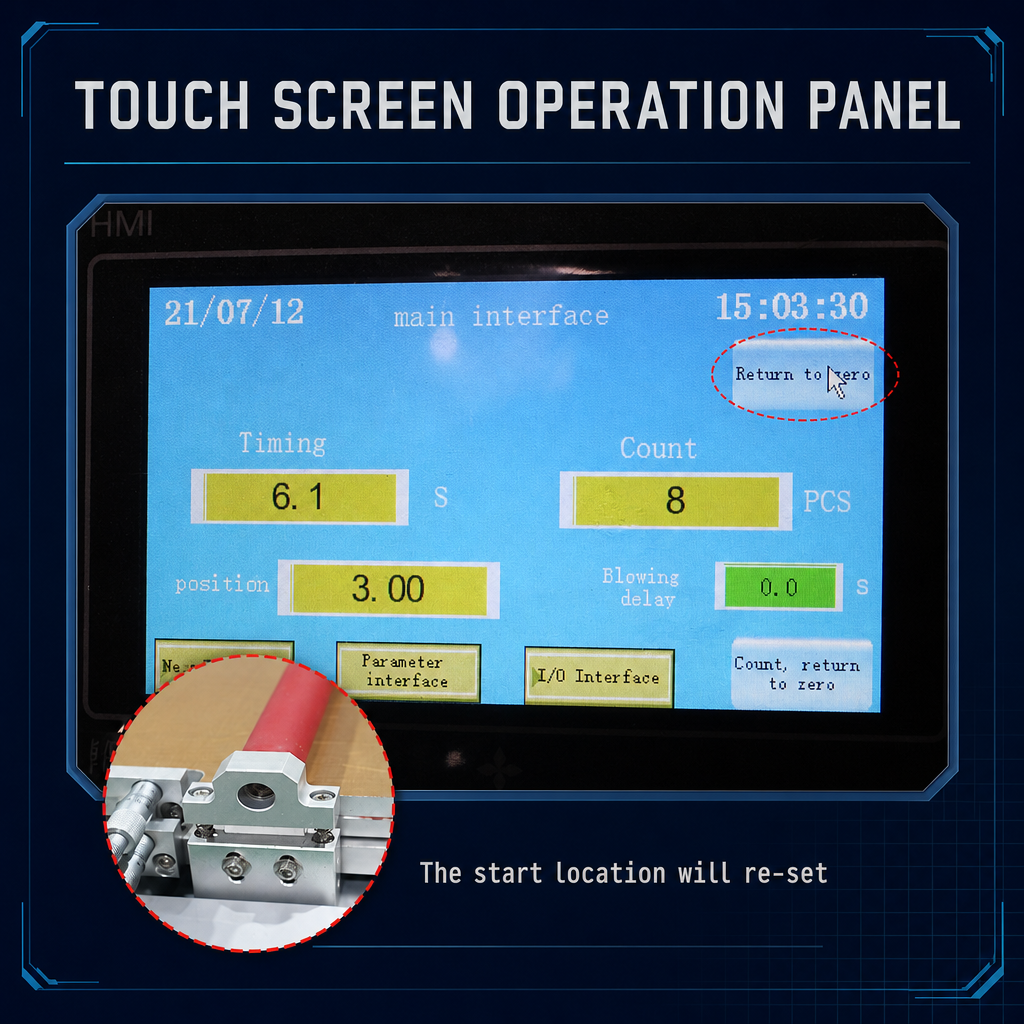
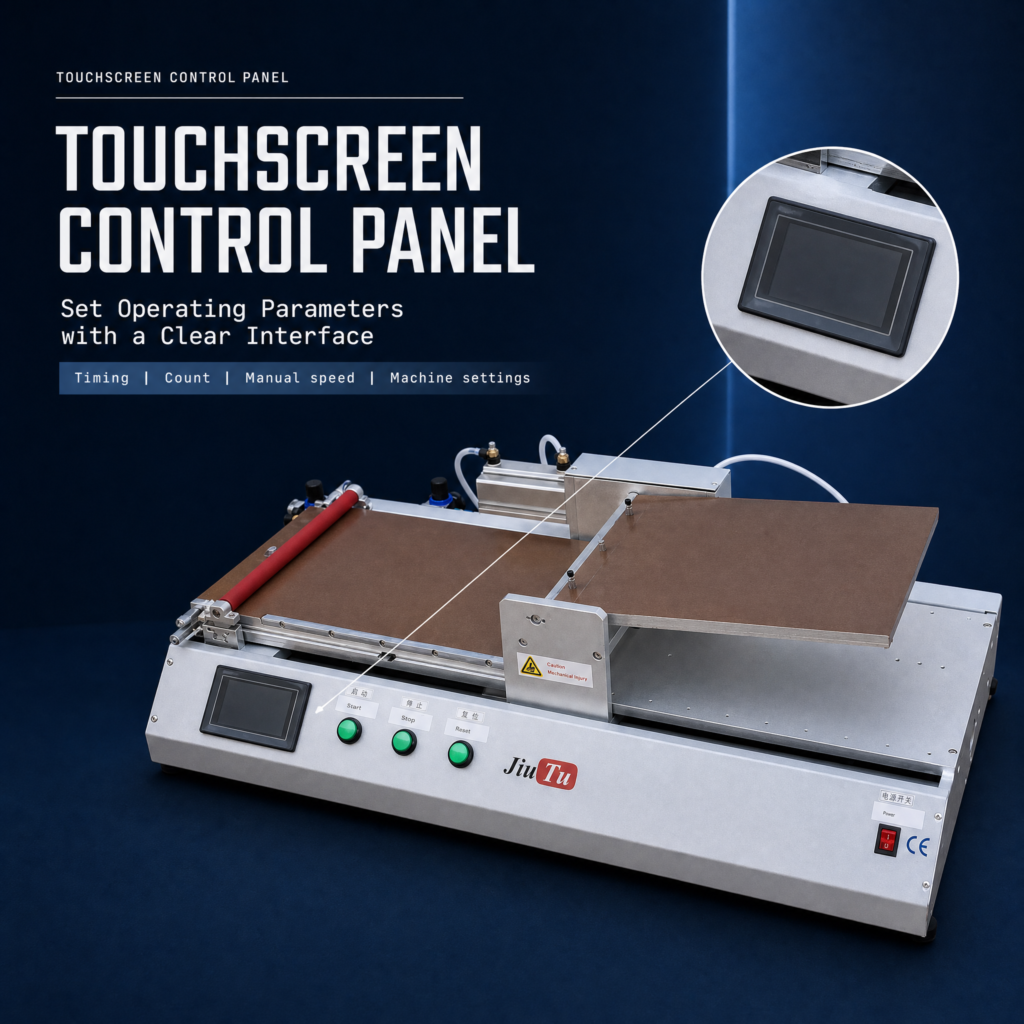
⑤ Touchscreen HMI with Parameter Interface The colour touchscreen displays and adjusts: timing (cycle time in seconds), production count (PCS), position setting, blowing delay, and a return-to-zero function. A separate Parameter Interface screen and I/O Interface screen are accessible from the main display. Count reset is available directly on the main screen.
⑥ Foot-Pedal Start Trigger A foot pedal provides a hands-free start trigger, allowing the operator to keep both hands on the substrate during cycle initiation. The foot pedal supplements the front-panel Start button — either input can trigger the lamination cycle.
⑦ Barometric Pressure Display and Air Pressure Regulation An analogue barometric pressure gauge with air pressure regulator and filter unit is mounted on the left side of the machine. The air pressure switch (turn on / turn off) is located on the right side. Roller pressure is adjusted via the air pressure regulator to match the requirements of different film types and substrate thicknesses.
⑧ Pneumatic Drive System All platform and roller motion is driven by compressed air from an external air compressor. The pneumatic system includes pressure regulation and throttle control. No servo motor or stepper motor is used — the drive system is mechanically direct and adjustable entirely through air pressure settings.
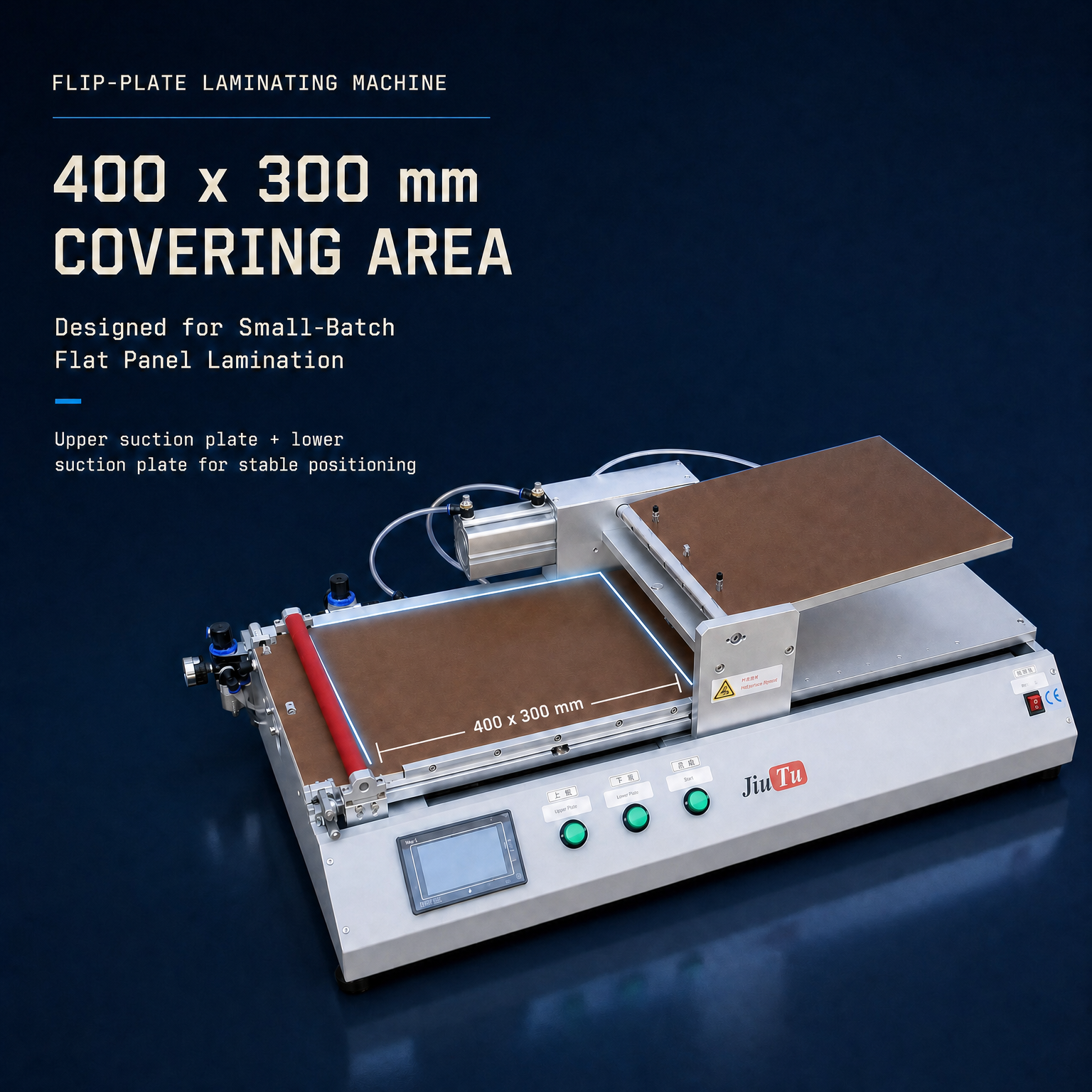
⑨ Low-Profile Flat-Bed Frame The machine sits on a low-profile flat-bed frame without a cabinet base, placing the work surface at a comfortable bench-height operating position. The compact footprint (approx. L1060 × W600 × H420 mm) suits bench installation in space-constrained production areas.
Why Choose Us


Flip-plate loading for consistent film placement The flip-plate mechanism positions the film directly above the substrate at a fixed, repeatable geometry when the upper plate closes. This eliminates the variability of manually aligning a film sheet over a substrate before lamination — a significant source of placement inconsistency in manual flat-press operations.
Foot-pedal start for hands-free cycle trigger The foot pedal allows the operator to hold the substrate in position while triggering the lamination cycle, without releasing hand contact with the workpiece. This is particularly useful when handling large, thin, or fragile glass panels where physical contact must be maintained until vacuum secures the substrate.
Pneumatic drive — mechanically direct, pressure-adjustable With no servo motors or electronic positioning systems, the machine’s roller pressure and motion characteristics are adjusted directly through the air pressure regulator. This makes pressure calibration straightforward for different film types and simplifies maintenance.
Progressive lower roller for bubble-free bonding The lower roller advances progressively under the substrate, bonding film from one edge to the other across the full 400 mm stroke. Air ahead of the bond line is continuously expelled toward the open edge and cannot be sealed in, producing the bubble-free, no-mark result on flat glass and LCD panel surfaces.
Compact bench-height footprint At approximately L1060 × W600 × H420 mm on a flat-bed frame, the machine occupies a compact production bench footprint and does not require the elevated cabinet base or floor space of heavier roll-feed laminators.
Key Features
Product Details
FAQ
Q1: What film types and substrates is this machine compatible with?
Q2: What is the effective covering area, and what panel sizes fit within it?
Q3: How does the lower roller prevent bubbles during lamination?
Q4: Why does this machine use a pneumatic drive instead of a servo motor?
Q5: Does this machine include a vacuum pump, or does it require an external vacuum source?
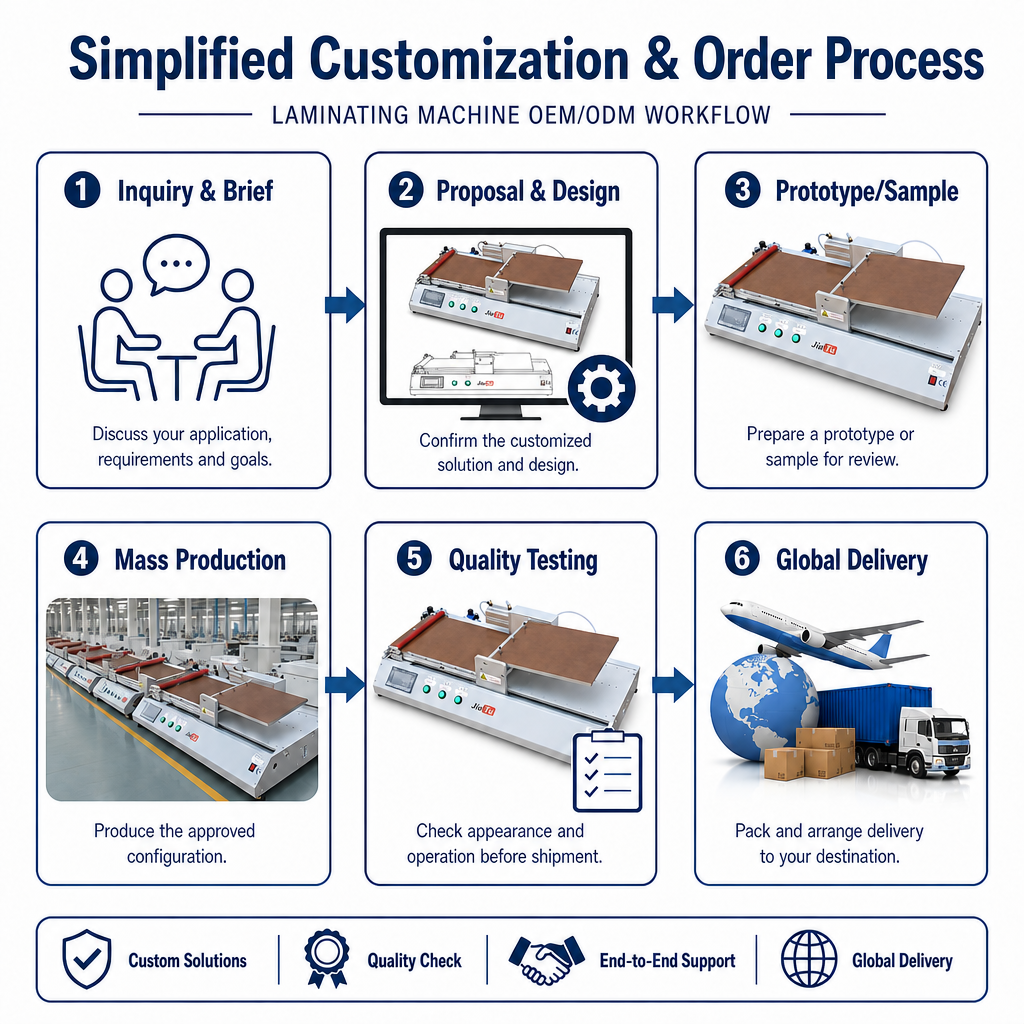
Q6: Is OEM or custom-specification ordering available, and what documentation is supplied?
Interested in This Product?
Tell us your project details and our team will prepare a customized quotation.
GET QUOTE NOW