
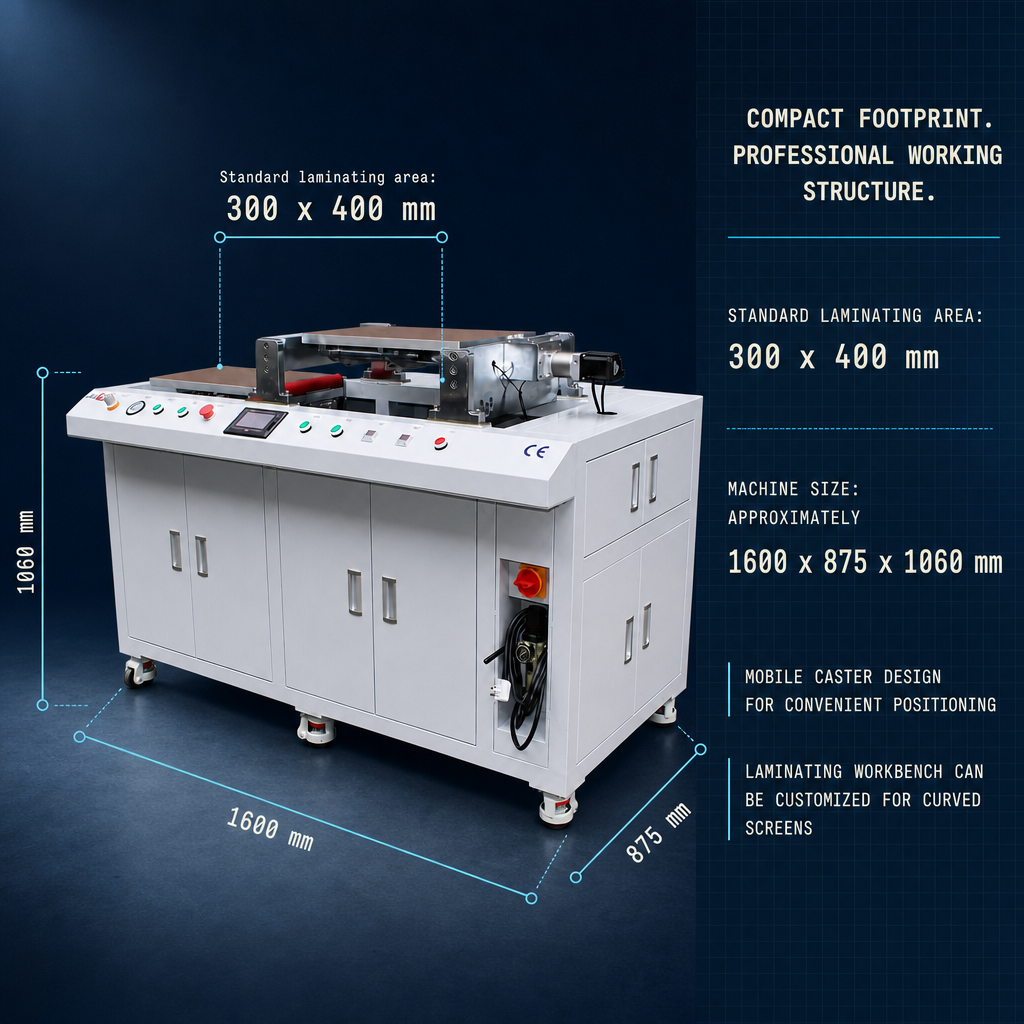
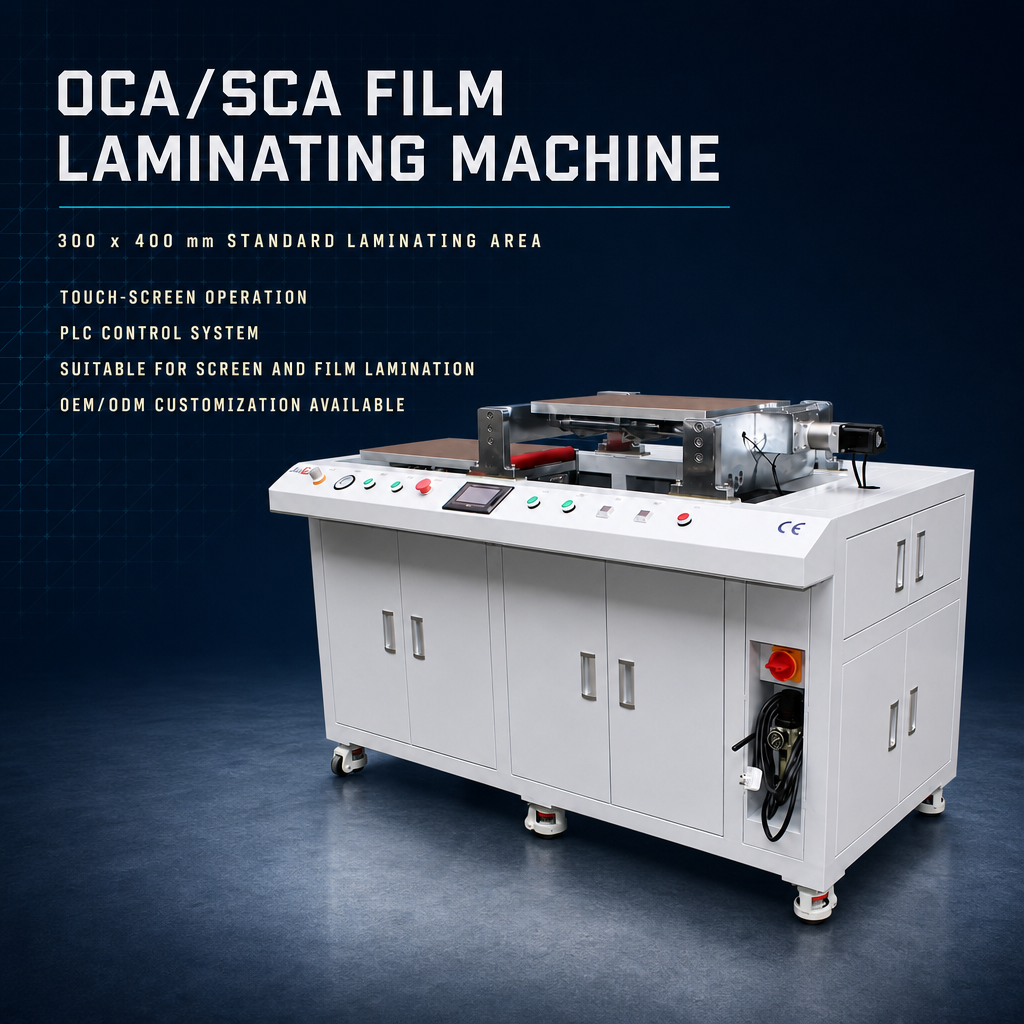
The 300×400 Automatic Film Laminating Machine
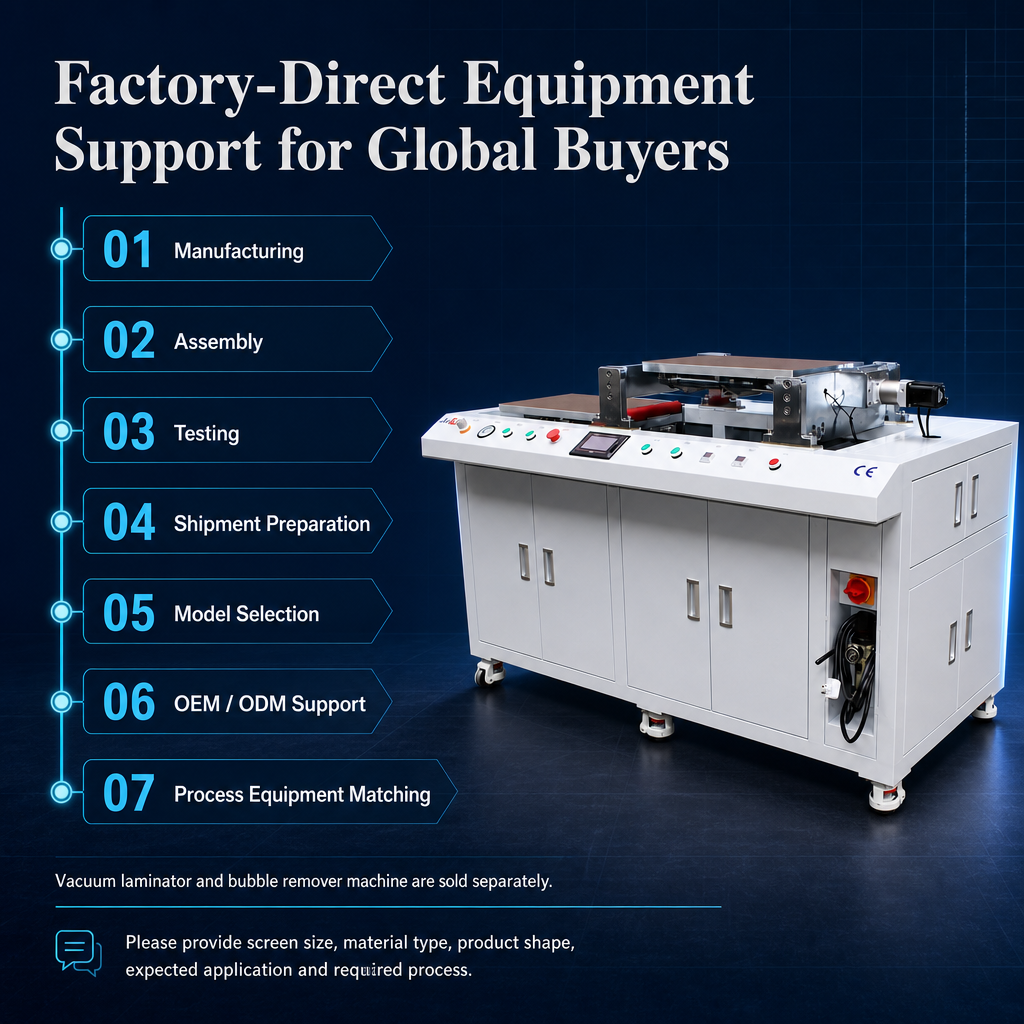
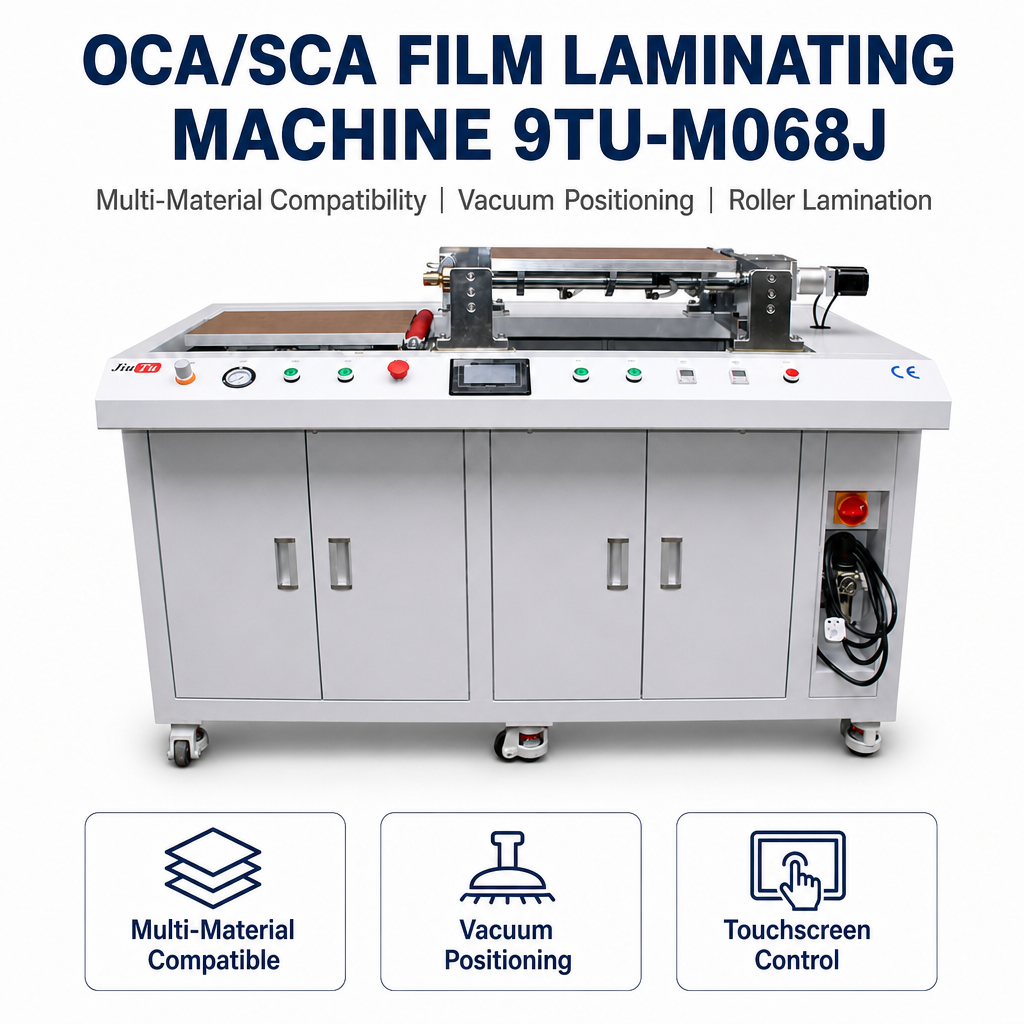
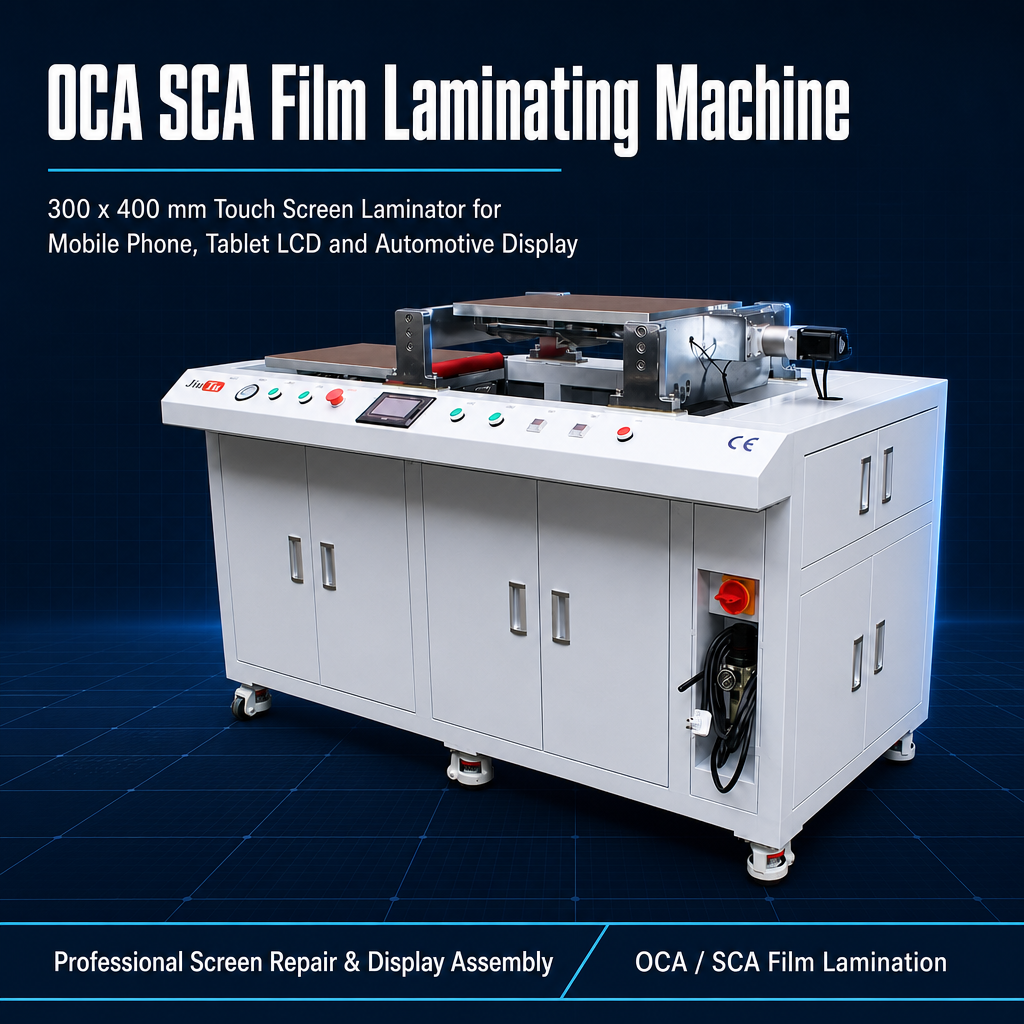
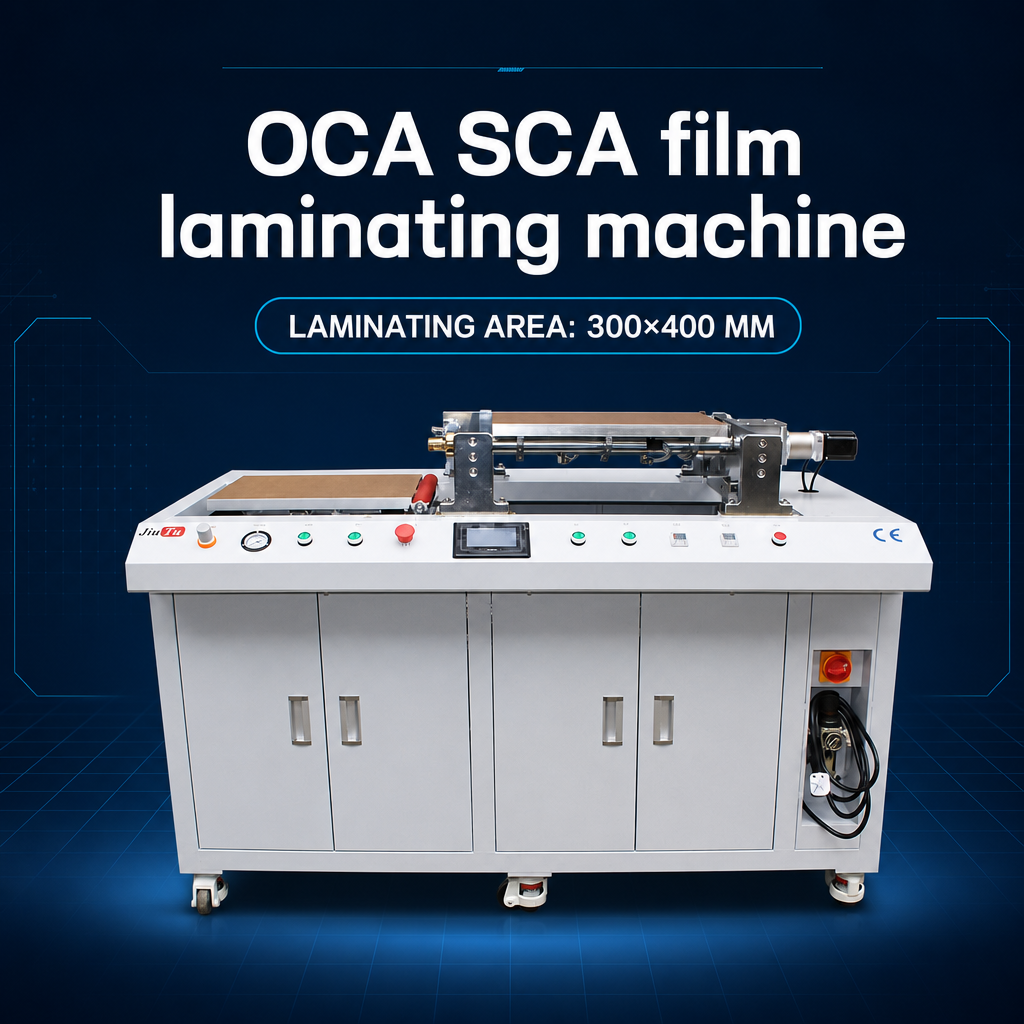
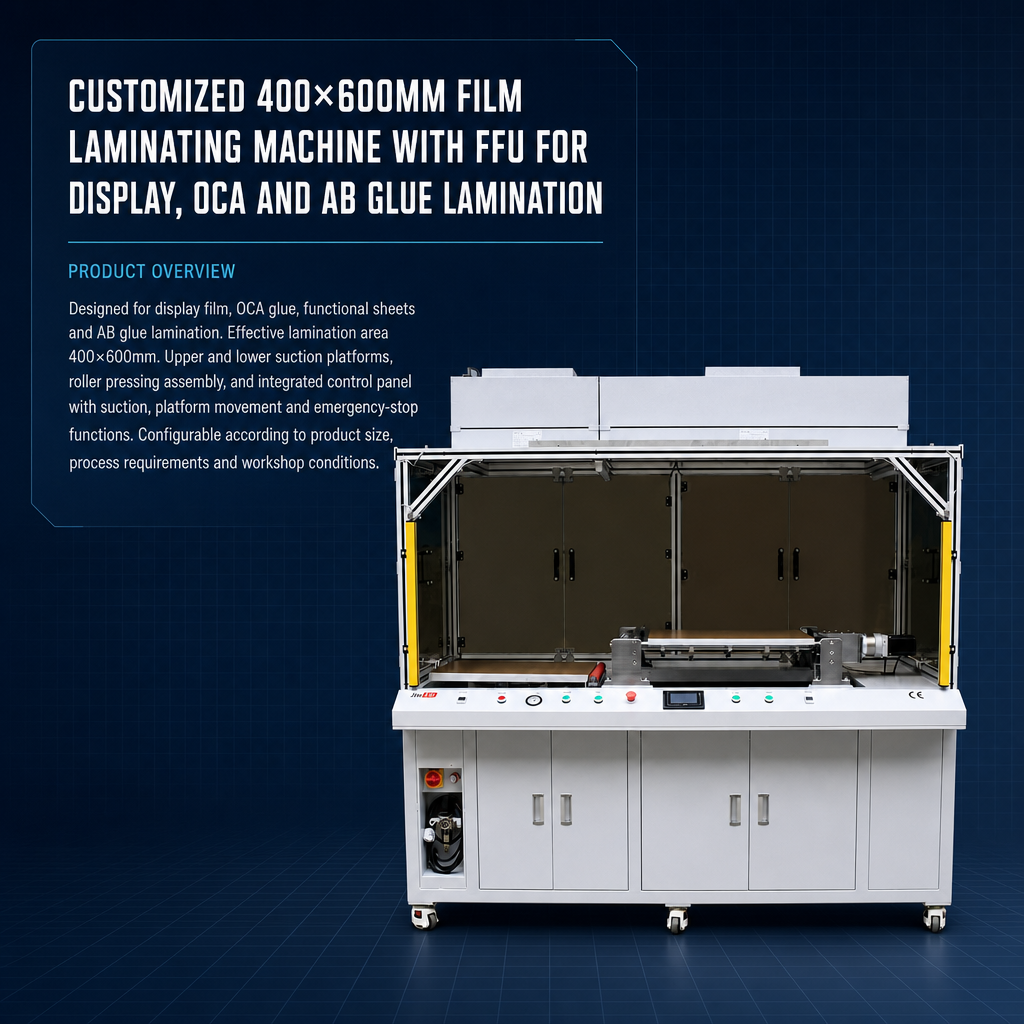
The 300×400 Automatic Film Laminating Machine is a high-precision, production-grade film application system built for factories that manufacture industrial display panels, large-format touch-screen mo...
GET QUOTE NOW
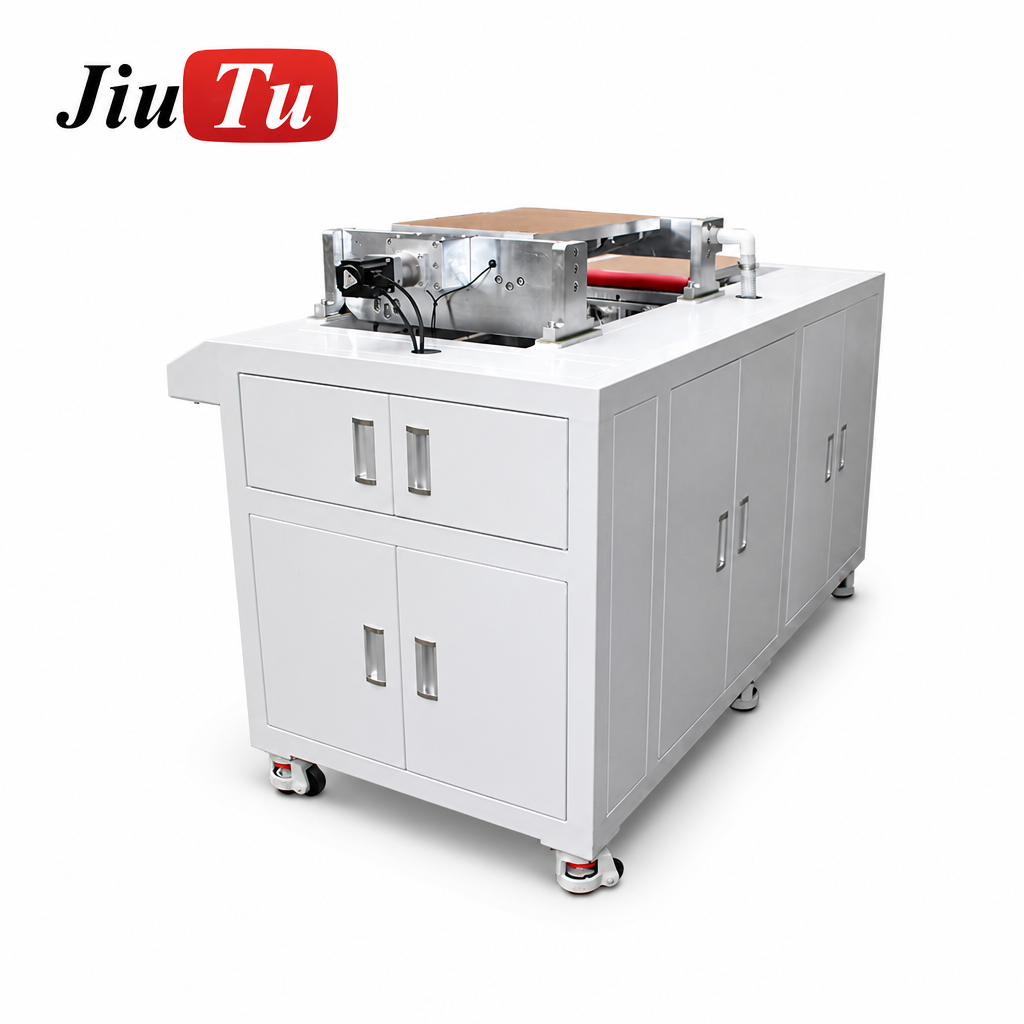
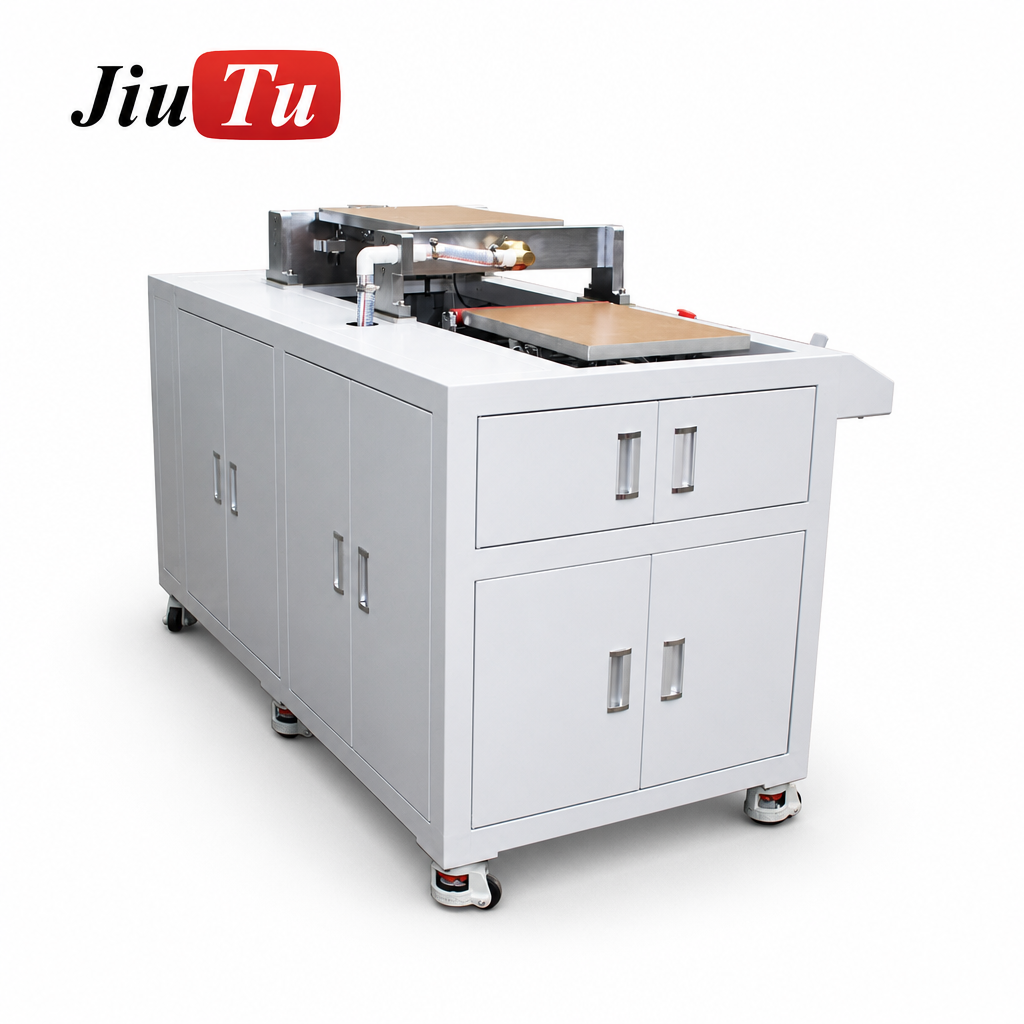
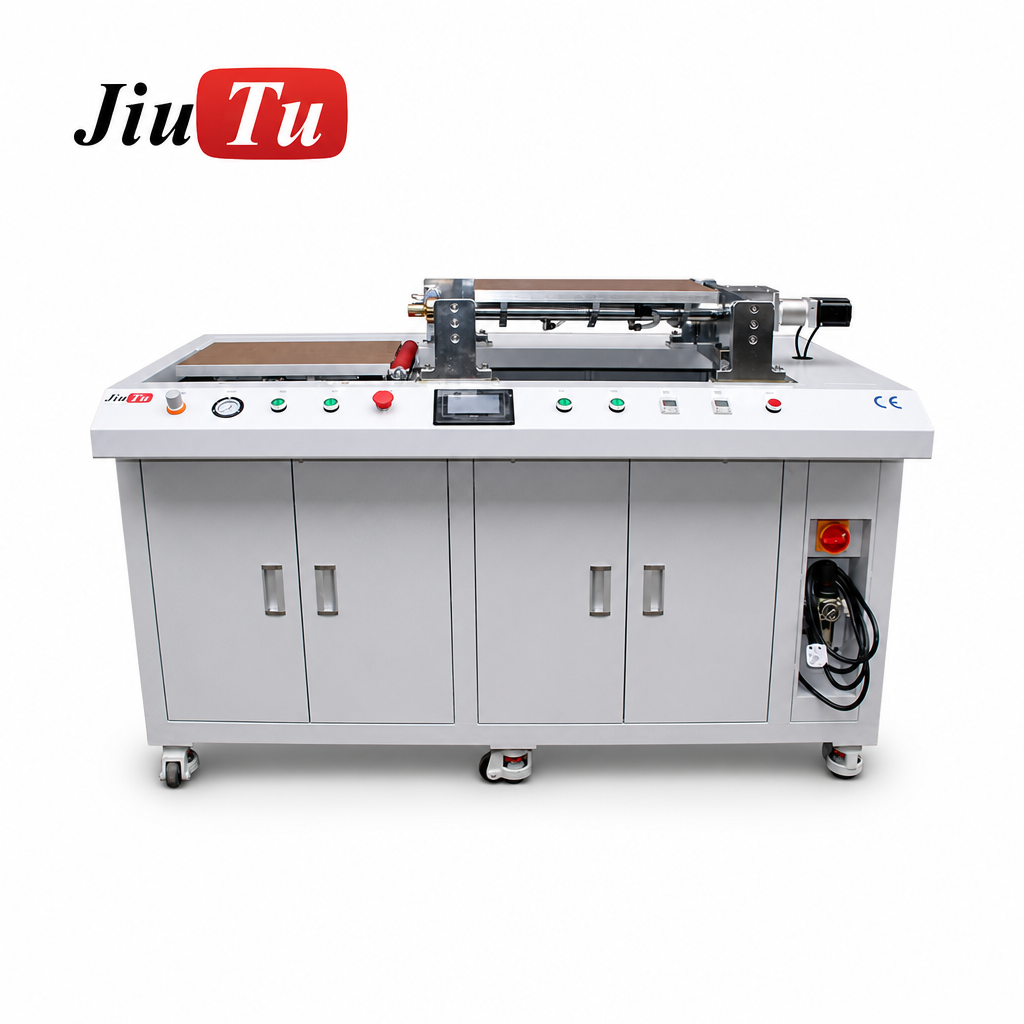
Designed for industrial-scale throughput, the machine eliminates air entrapment, wrinkles, and positional shift that arise from manual or semi-automatic film application processes. It integrates a vacuum adsorption platform, precision roll-film feeding system, and programmable PLC control to deliver consistent, high-yield lamination on every cycle.
Key Application Scenarios
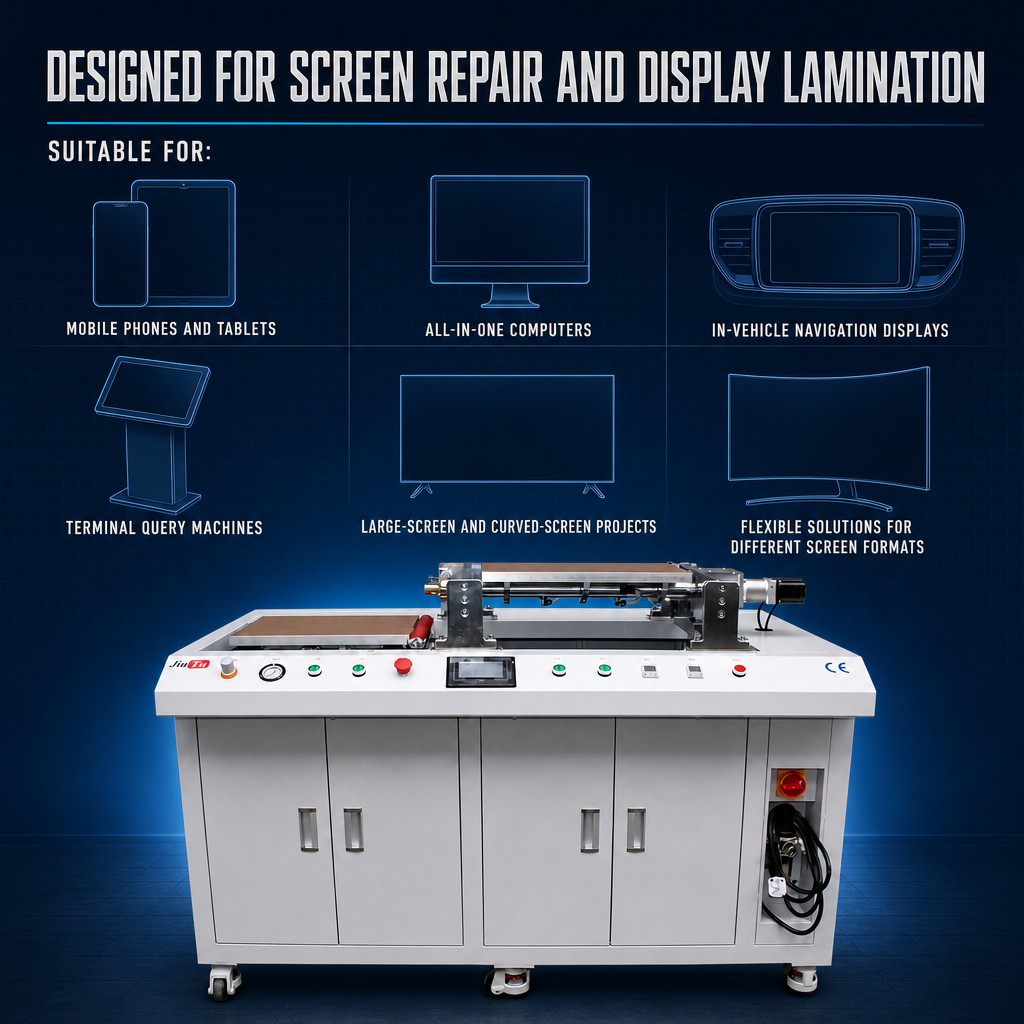
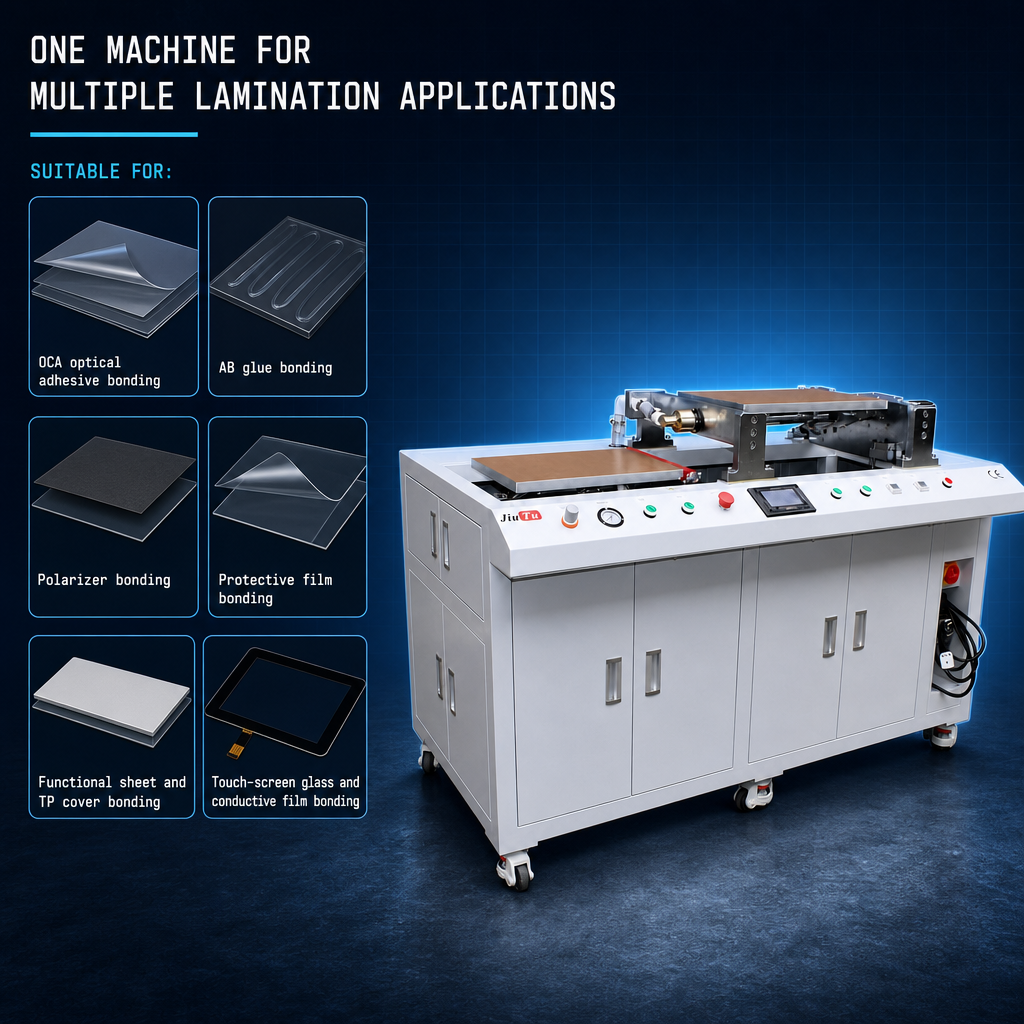
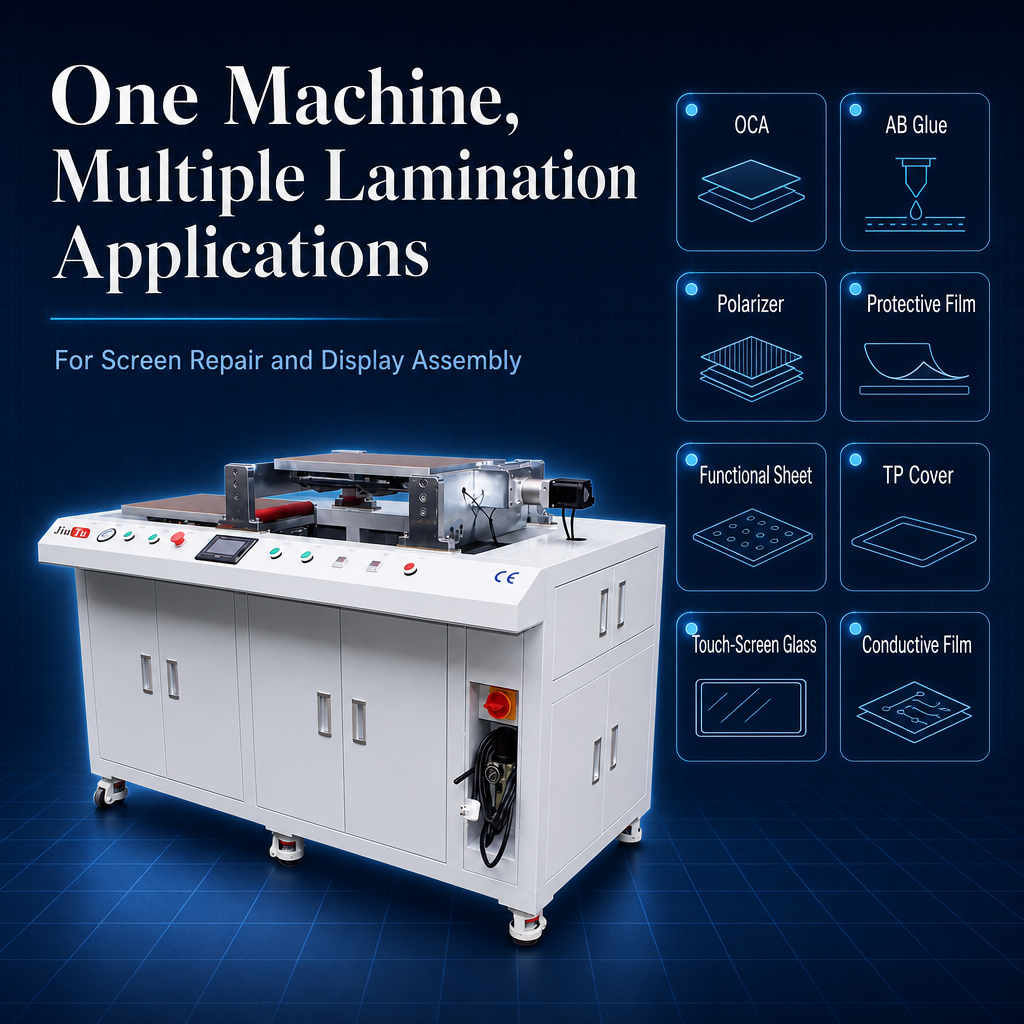
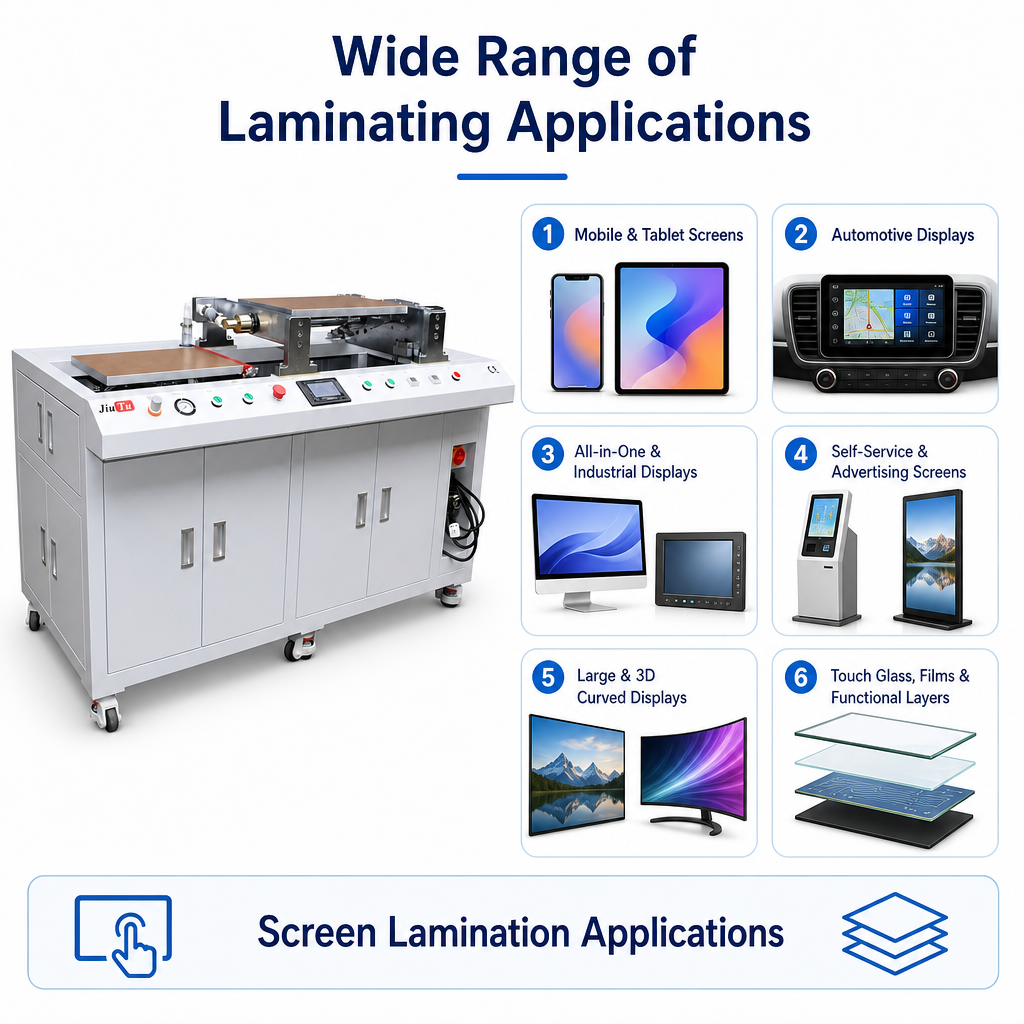
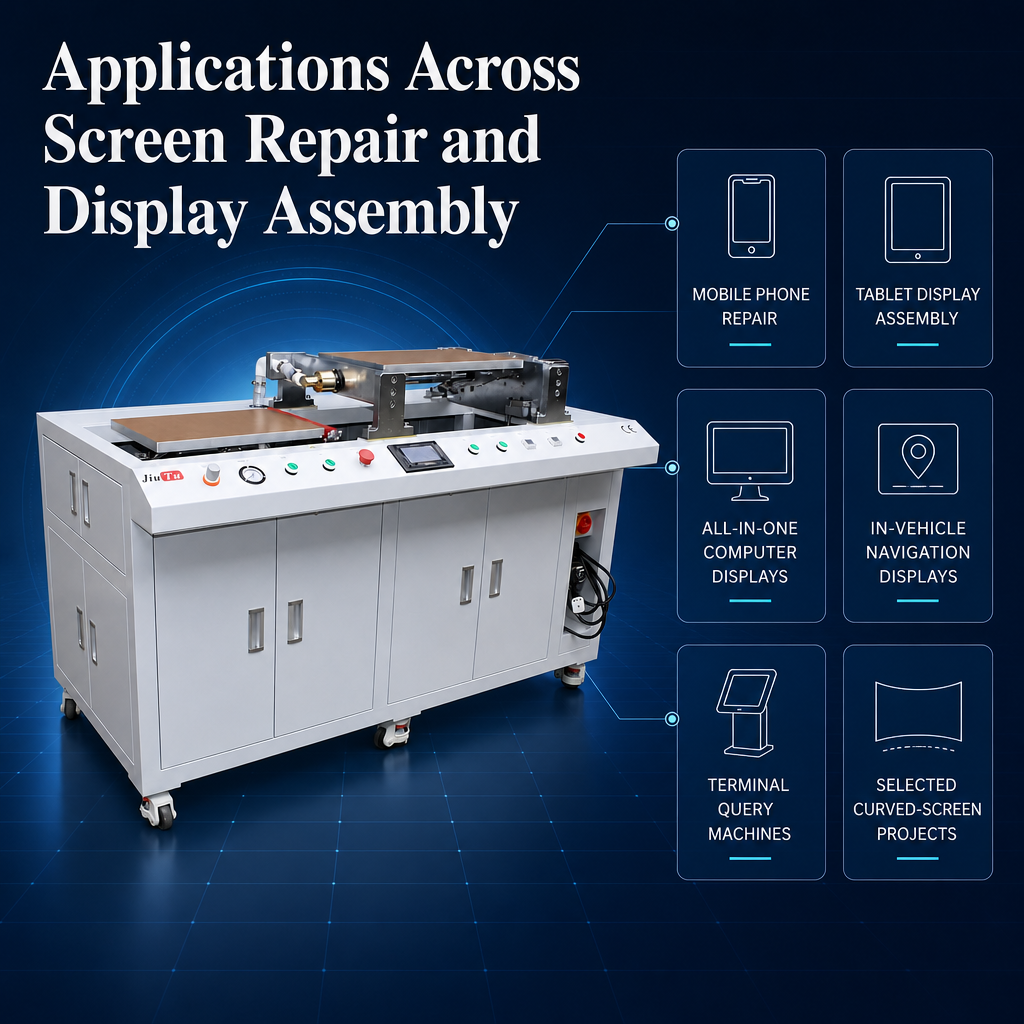
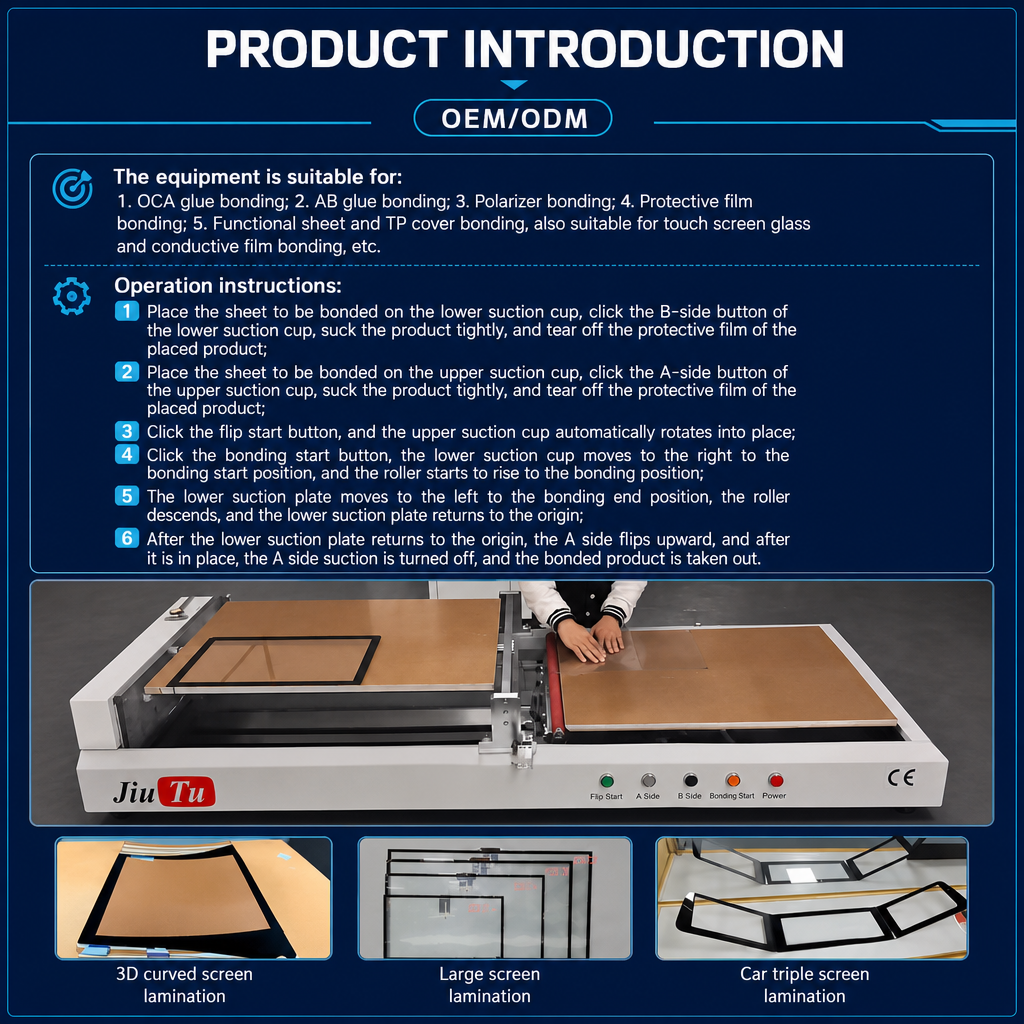
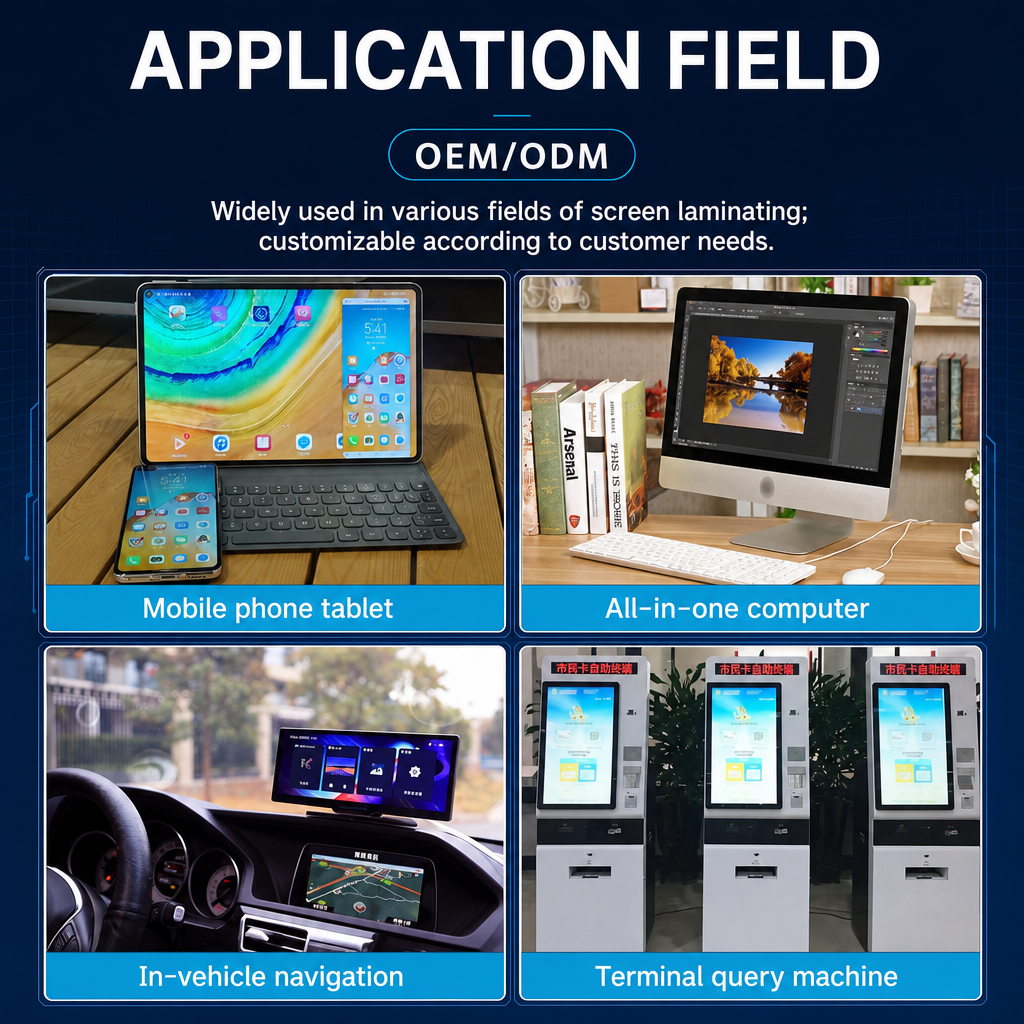
Optical protective film lamination on cover glass (CG) and glass panels for industrial monitors and HMI displays
Anti-explosion film / anti-glare (AG) / anti-reflection (AR) / anti-fingerprint (AF) film application on large-format flat-panel modules
OCA optical adhesive film pre-lamination onto cover glass prior to full optical bonding (G+G, G+F process)
SCA adhesive film application on LCD modules, LCM assemblies, and touch-panel cover glass
Process protection film / in-process film application on glass panels and liquid crystal modules during production flow
Polarizer (Pol) film attachment on LCD panels for industrial and commercial display assemblies
Key Features
1. Mechanical Precision Registration System
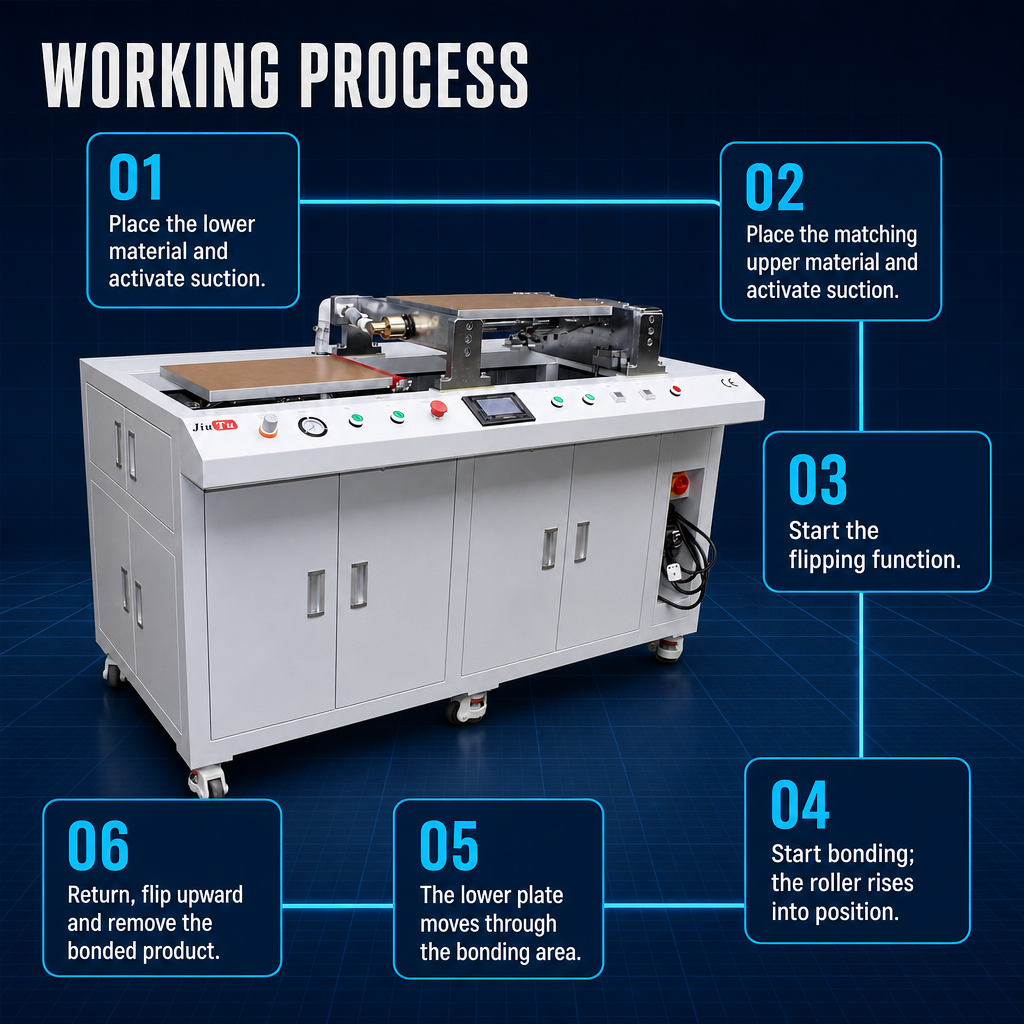
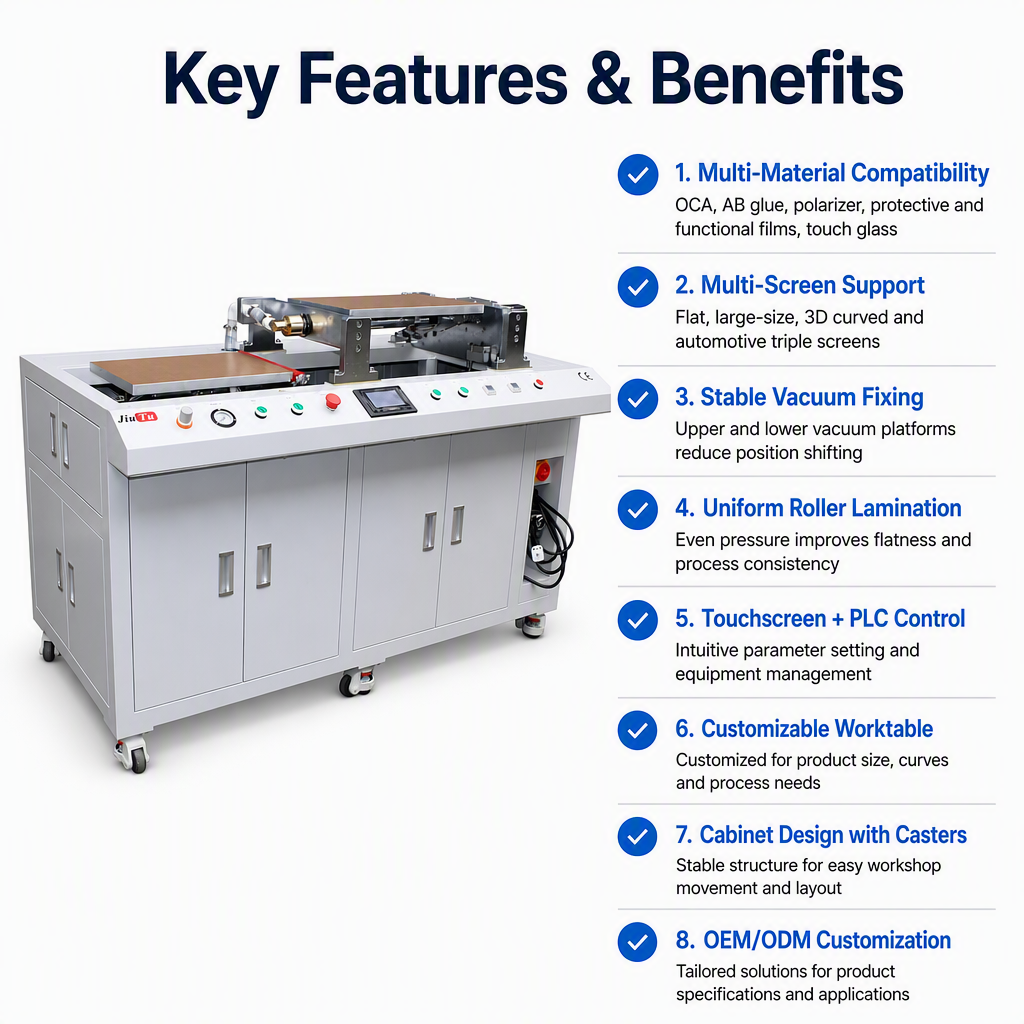
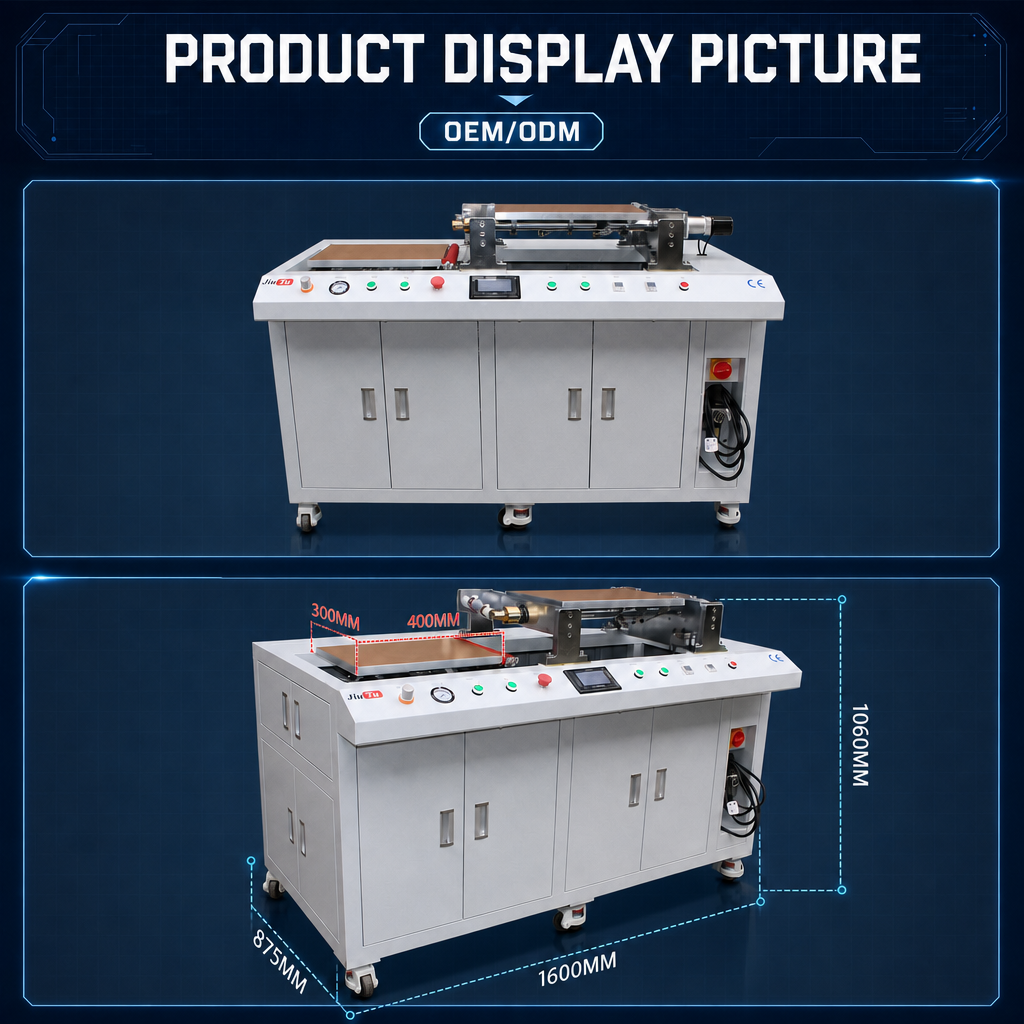
The machine uses a mechanical guide-stop and positioning fixture system to register the substrate accurately before each lamination cycle. Fixed locating pins and adjustable guide rails align the substrate in X and Y axes, ensuring consistent film placement repeatability across production batches without reliance on optical alignment hardware.
2. Vacuum Adsorption Platform
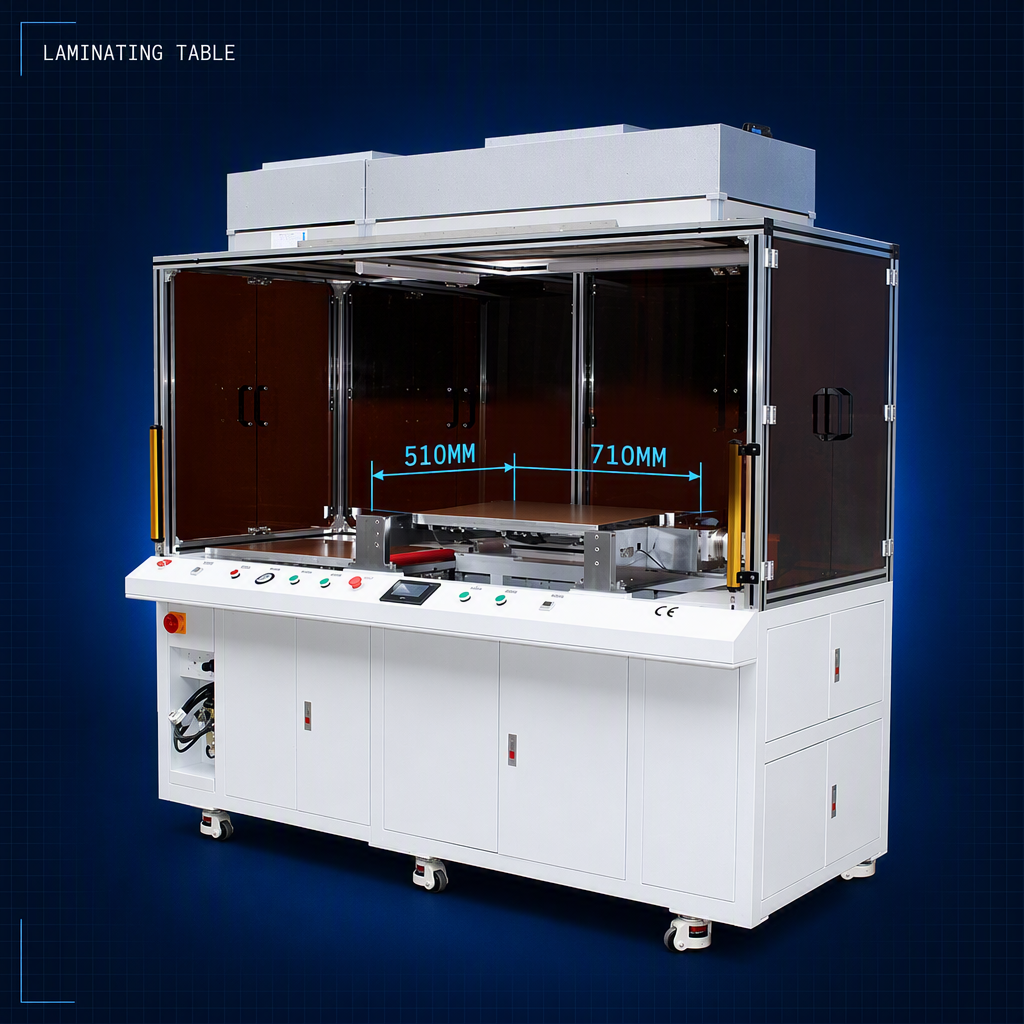
The flat vacuum chuck holds the substrate firmly and flat during film feeding and lamination, preventing substrate movement and accommodating glass panels, LCM modules, and composite assemblies with varying thickness (0.7 mm–5 mm reference range).
3. Reel-to-Sheet Edge-Peel Lamination
Roll film is loaded onto the pneumatic inflation-shaft spool. As the platform advances, the film is simultaneously peeled from its liner and applied edge-to-edge (“边撕边贴”), eliminating pre-cut film handling, reducing material waste, and achieving bubble-free attachment.
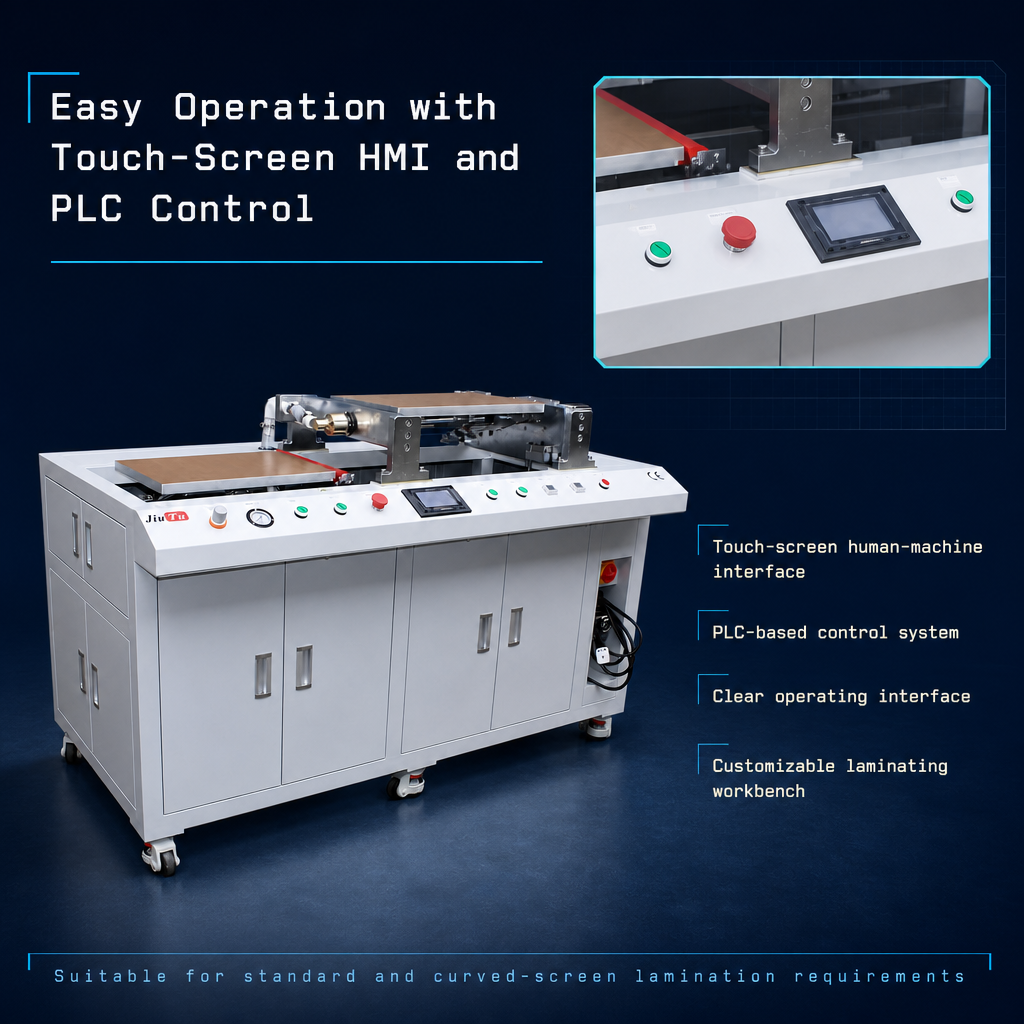
4. PLC Programme Control with Recipe Memory
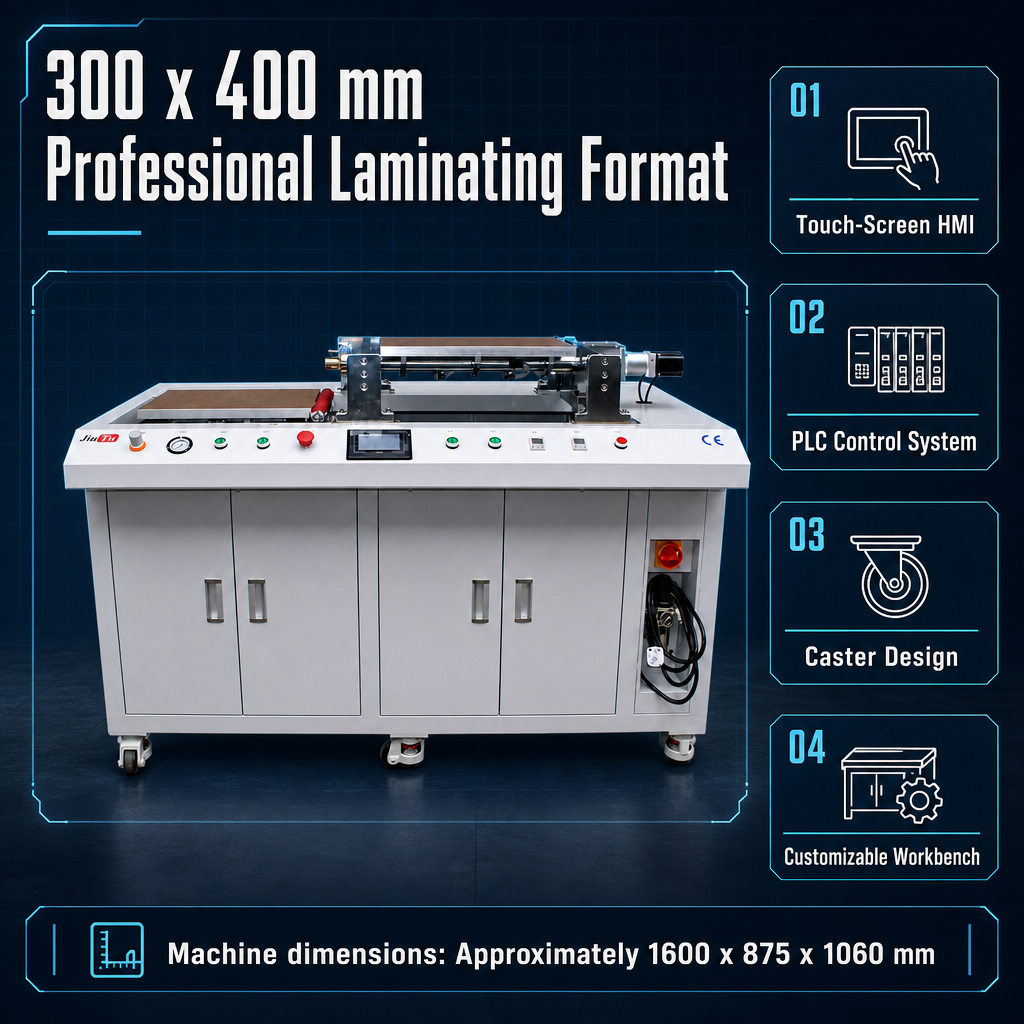
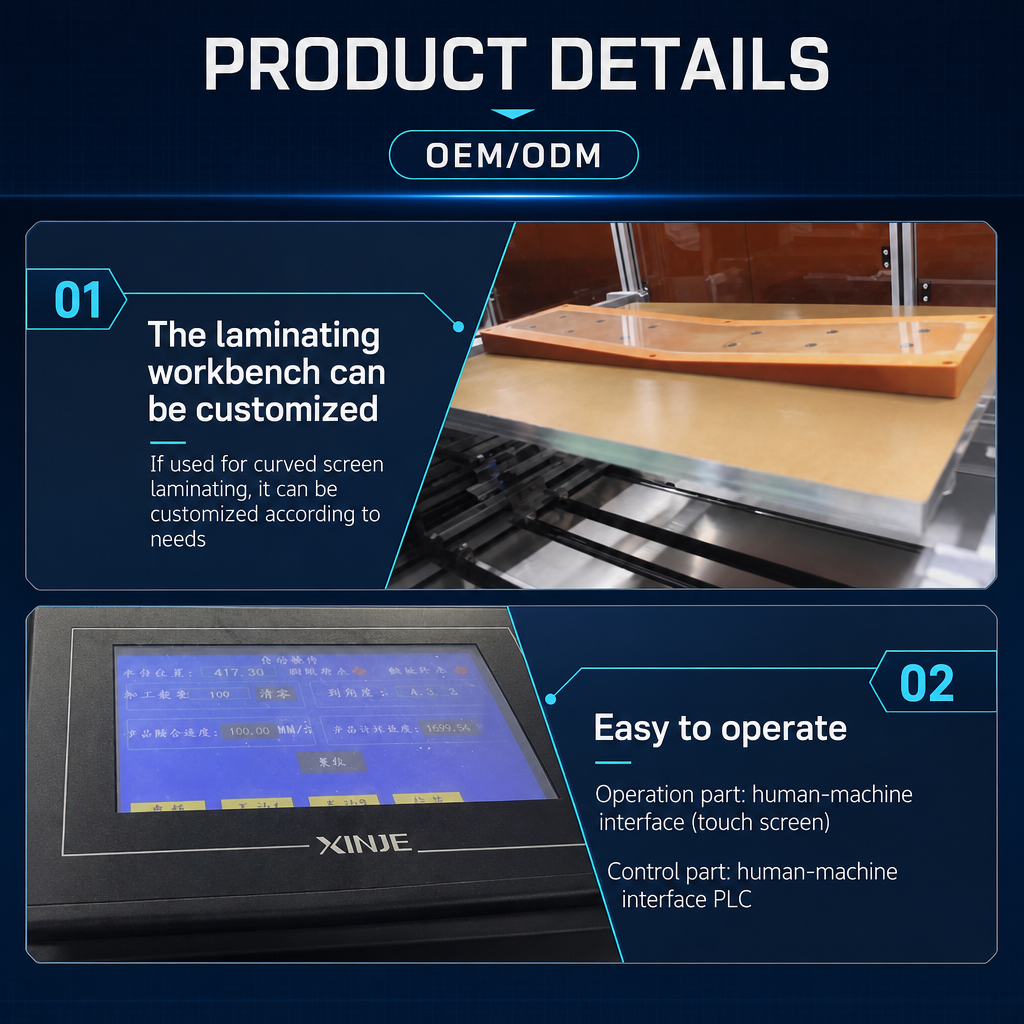
A colour touchscreen HMI controls all process parameters — lamination speed, roller pressure, vacuum hold time, and feed length. Multi-recipe storage allows operators to switch product types without re-teaching parameters, reducing changeover time significantly.
5. Roller Pressure Control
Precision air regulator (reference: 0.4–0.8 MPa working range) controls roller pressing force to match film type — thin functional films, thick OCA sheets, or rigid anti-explosion films — without substrate damage.
6. Clean-Room Compatible Design
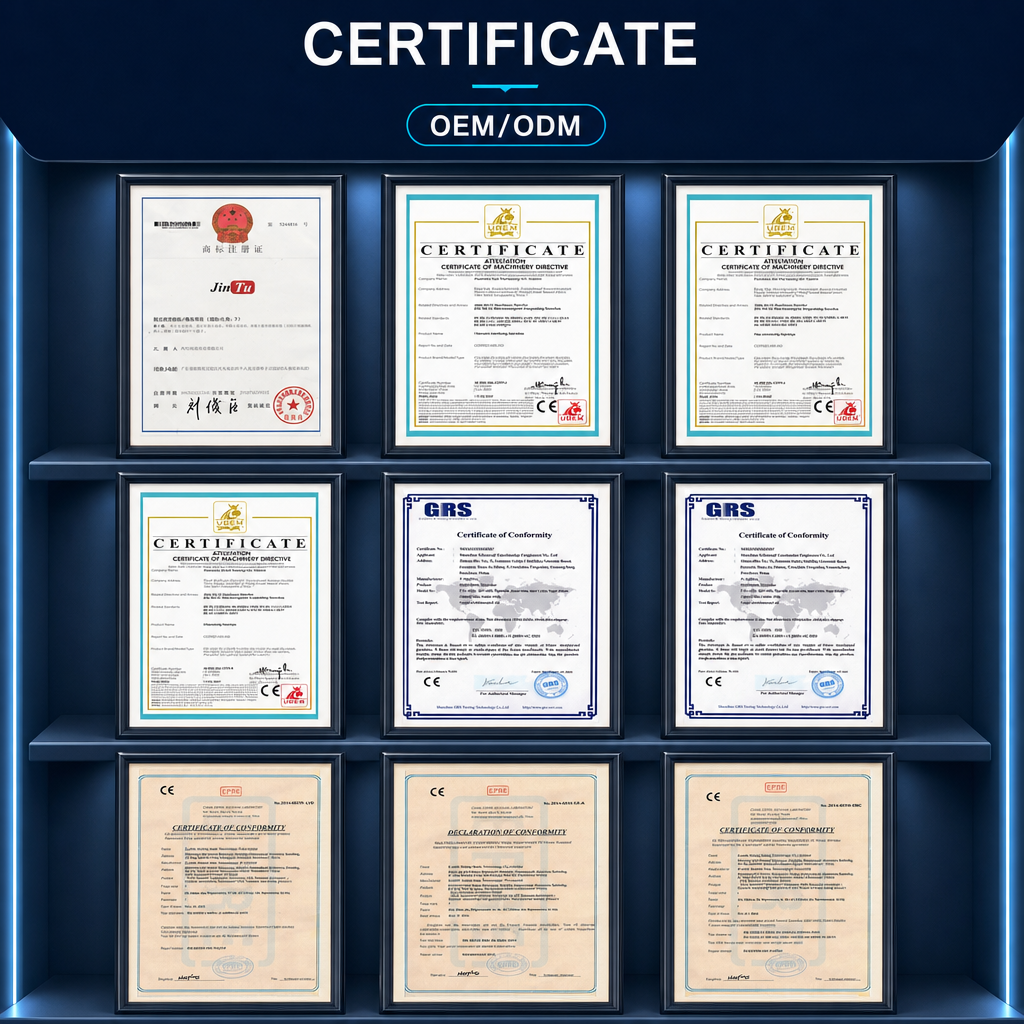
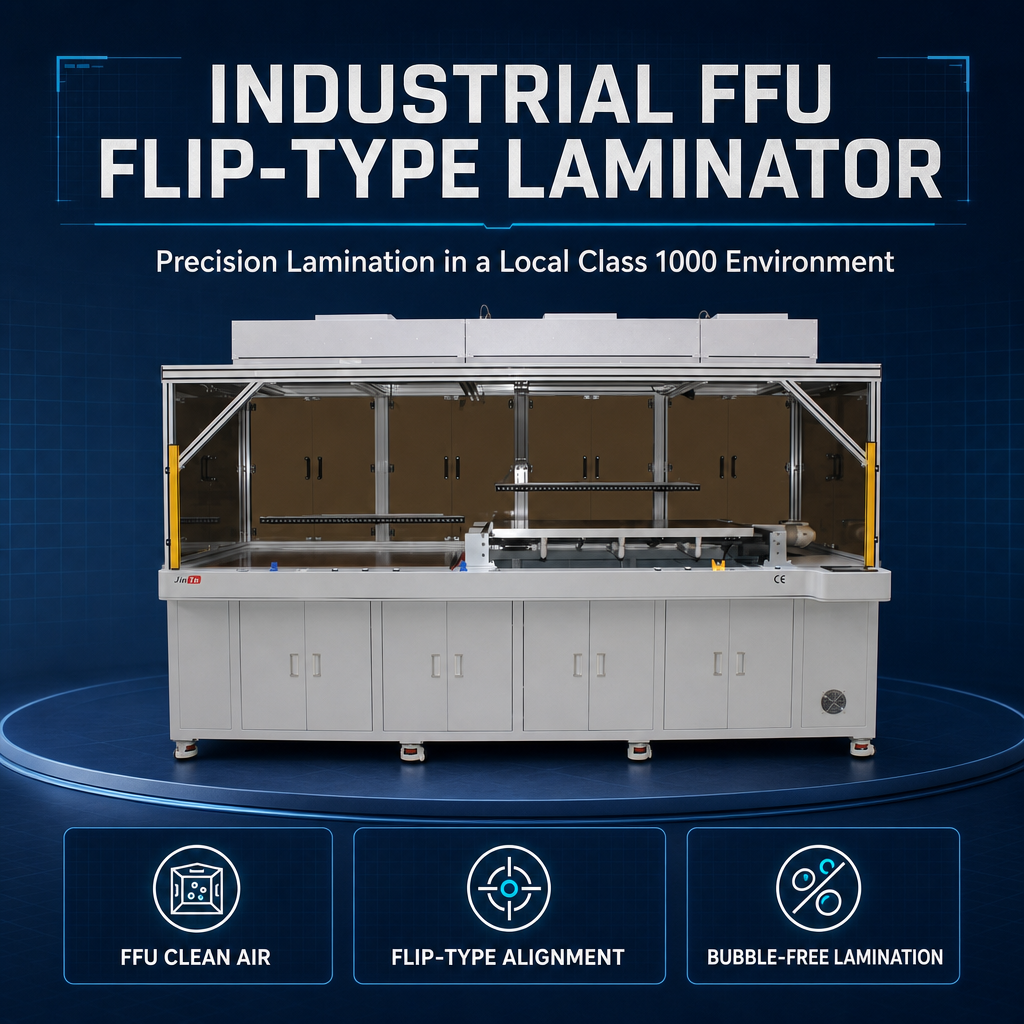
The working zone is enclosed and sealed to minimize airborne particle contamination during film application. Compatible with CLASS 1000 (ISO 6) environment requirements standard in display-panel factories.
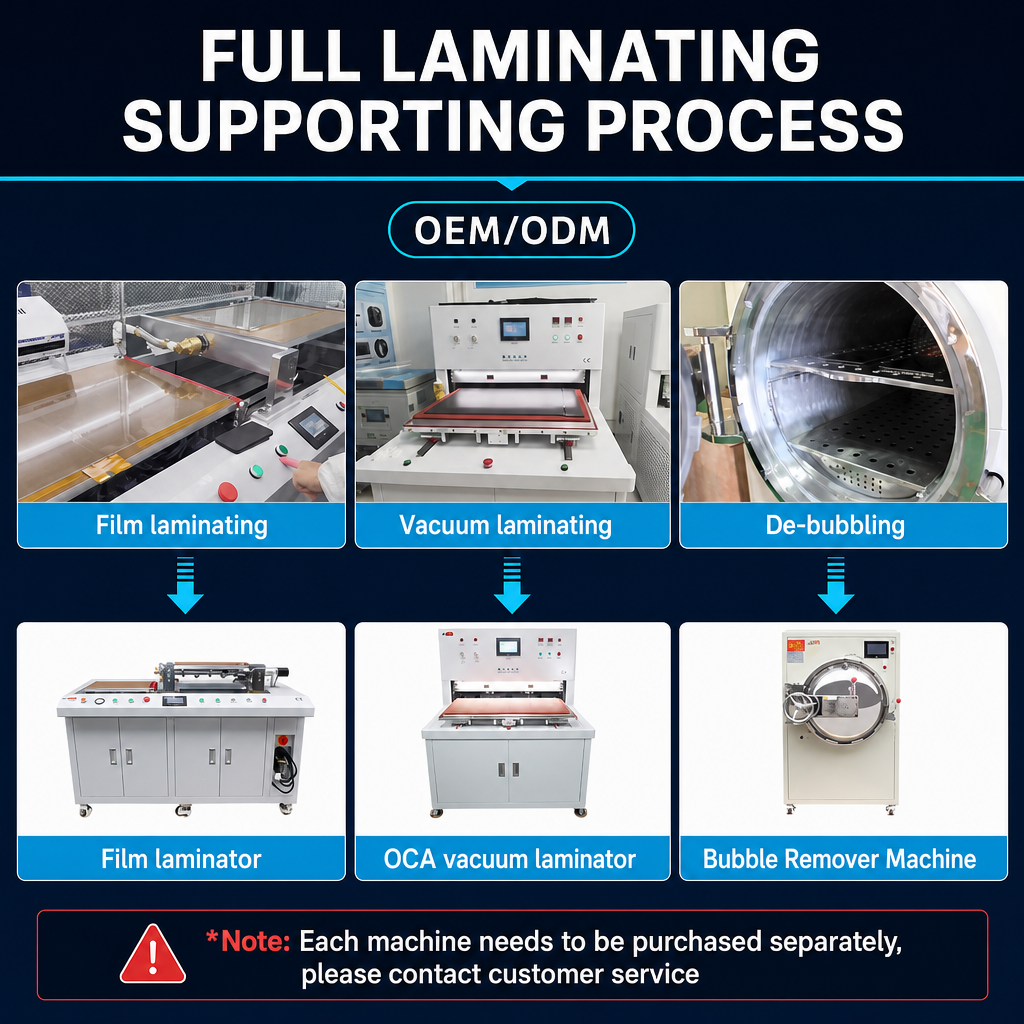
7. Compatibility with Downstream Autoclave Defoaming
The machine is designed as the upstream process step in the optical bonding workflow:
Film Lamination → Vacuum Full Bonding → High-Pressure Autoclave Defoaming
Film applied by this machine feeds directly into vacuum lamination and autoclave defoaming stations, enabling a seamless, integrated production line.
Why Choose Us


1. Eliminates Air Entrapment at the Source
Air gaps between the substrate and film cause optical degradation — increased surface reflectance, haze, and delamination risk. Edge-peel lamination under controlled roller pressure drives out entrapped air before it can be sealed in, achieving near-zero bubble rates at the film application stage.
2. Higher Yield Versus Manual Processes
Manual film application in a busy factory environment introduces inconsistency from operator fatigue, humidity variation, and dust. This machine removes the human variable: every panel receives the same pressure profile, the same mechanical alignment, and the same cleanliness standard — cycle after cycle.
3. Designed for the Industrial Panel Workflow
Unlike light-duty, small-format desktop laminators targeted at low-volume operations, the 300×400 platform is sized for industrial display panels — monitors, HMI panels, industrial touch screens — that require larger substrates and higher daily throughput. The roll-film loading system supports uninterrupted production runs without frequent consumable changeovers.
4. Flexible Film Type Compatibility
One machine handles multiple film types across production orders:
Protective process films (in-line production protection)
Anti-explosion / shatter-resistant films
Optical functional films: AG, AR, AF
OCA optical adhesive film (pre-lamination prior to full bonding)
SCA adhesive film
Switching between film types requires only a recipe recall and a spool change — no tooling modification.
5. Seamless Integration into the Optical Bonding Line
The machine is engineered as one process station within a complete optical bonding flow. It pairs directly with:
Upstream: glass cleaning / plasma cleaning stations
Downstream: vacuum full-bonding machines and high-pressure autoclave defoaming chambers
This modular integration supports scalable line expansion as production volume grows.
Key Features
Product Details
FAQ
Q1.What types of film can this machine apply, and what substrates does it work with?
Q2.What panel size range is compatible with the 300×400 working area?
Q3.How does the machine prevent bubbles during film application?
Q4.What is the film placement accuracy of this machine?
Q5.What film roll specifications does the machine accept?
Q6.Can this machine be customised for our specific panel format or film type?
Interested in This Product?
Tell us your project details and our team will prepare a customized quotation.
GET QUOTE NOW