
550×380 Laminating Machine with Grid and Dust Cover
The 9TU-M068S is designed as the vacuum hot-press station within an industrial optical bonding process. It combines controlled vacuum, positive pressure, back pressure and heating functions to support...
GET QUOTE NOW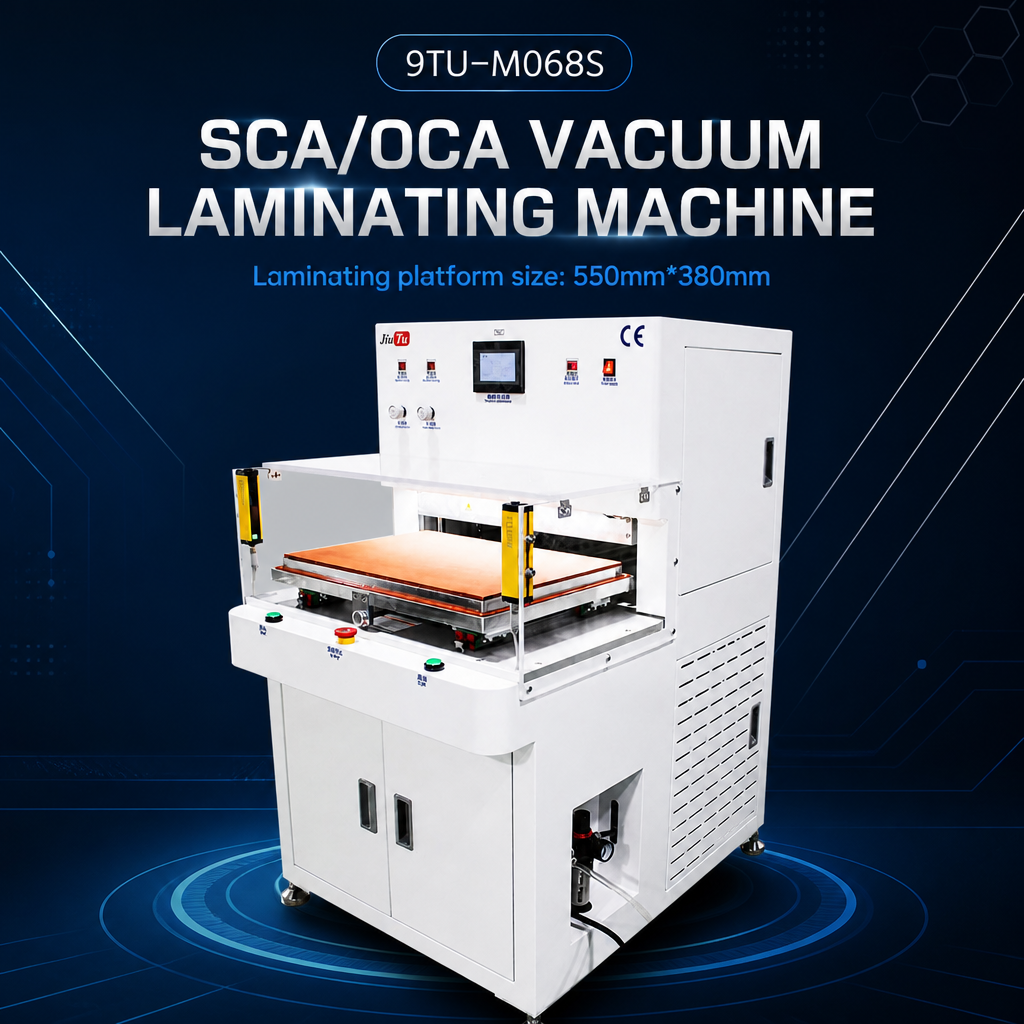
Industrial Vacuum Lamination for Display Manufacturing
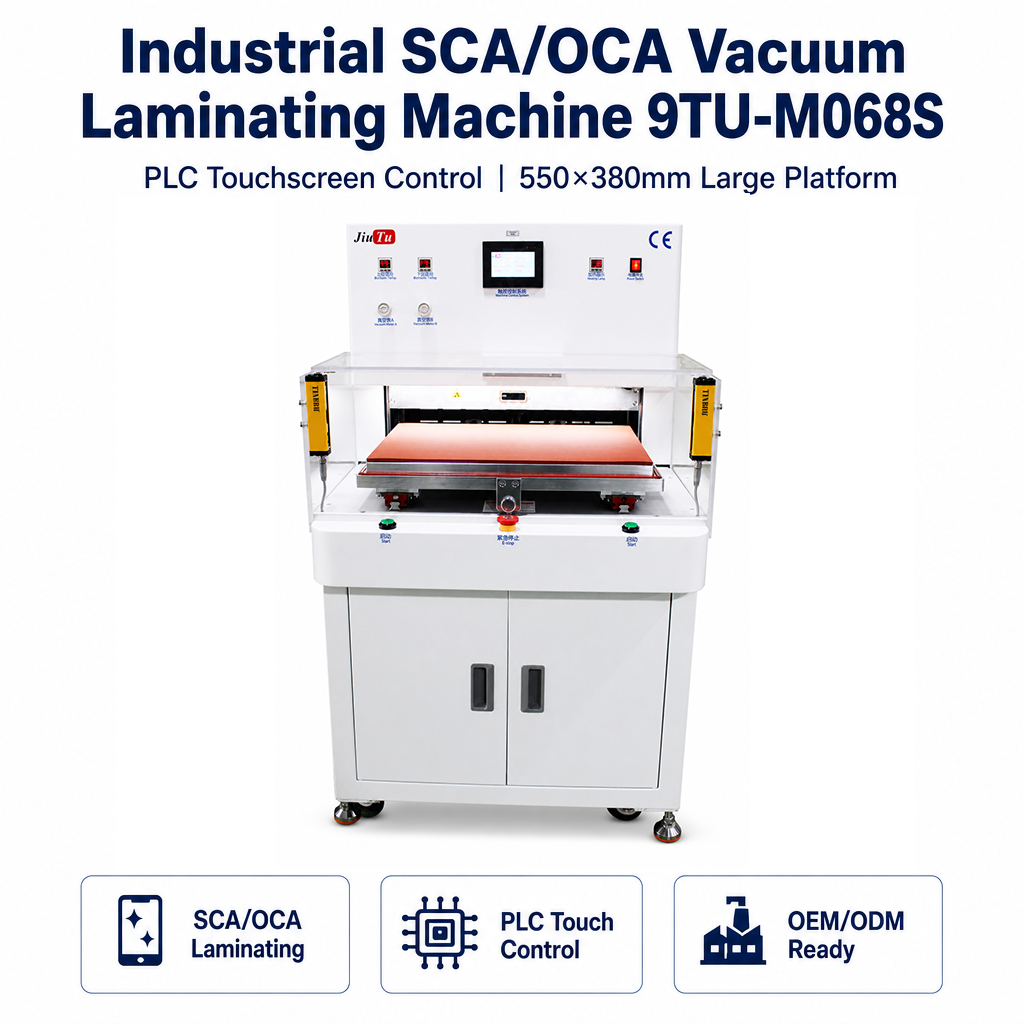
The 9TU-M068S is designed as the vacuum hot-press station within an industrial optical bonding process. It combines controlled vacuum, positive pressure, back pressure and heating functions to support repeatable lamination of compatible display components, touch structures and cover materials.
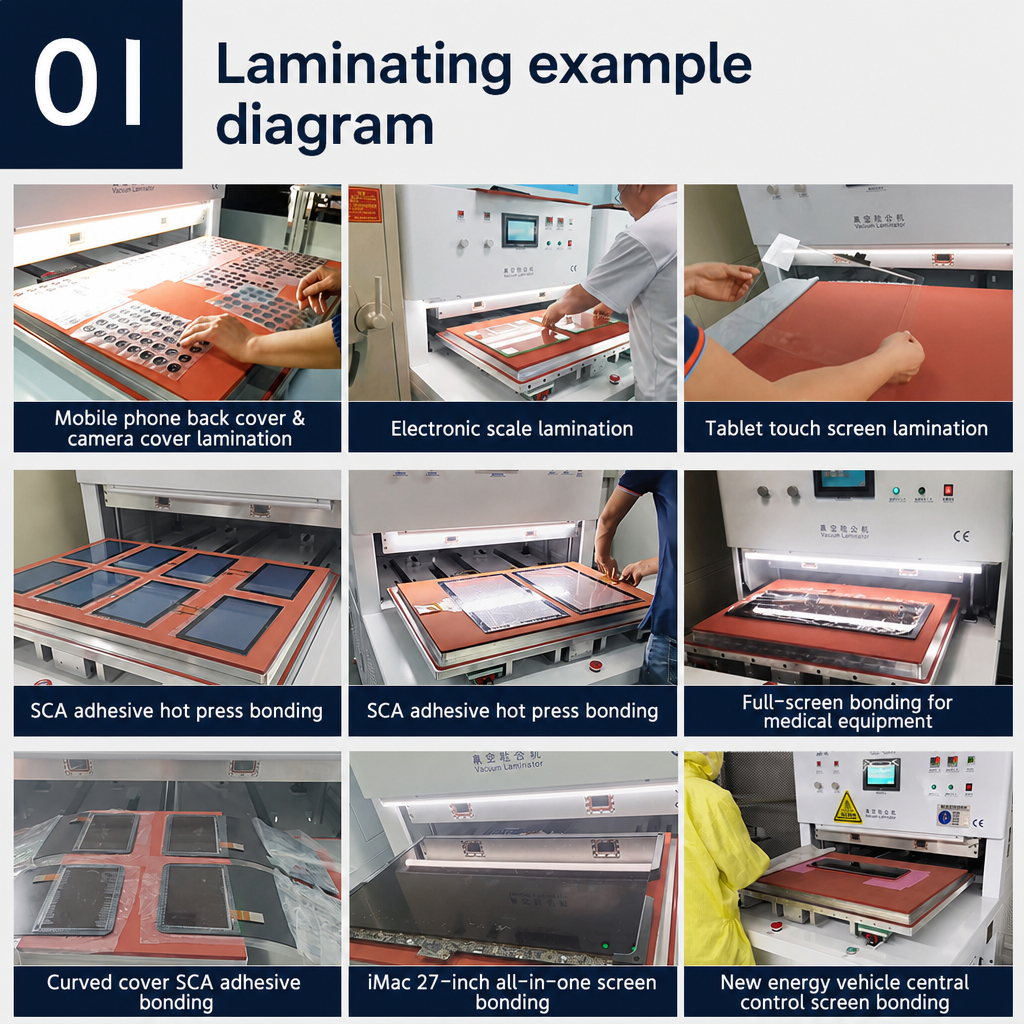
Its floor-standing configuration is suitable for dedicated production cells, process development areas and medium-volume assembly lines. Typical users include LCD and LCM manufacturers, touch panel processors, automotive display suppliers, medical equipment display producers, industrial HMI manufacturers and commercial display integrators.
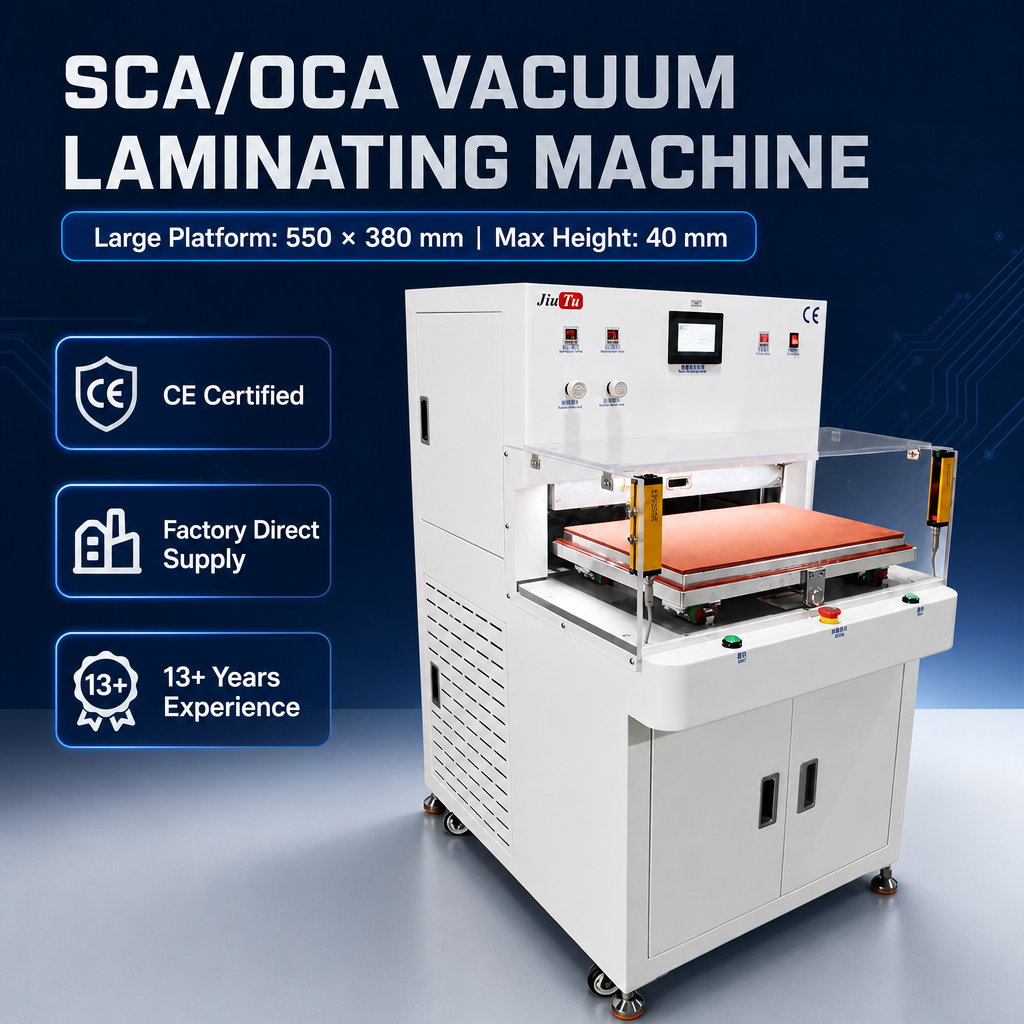
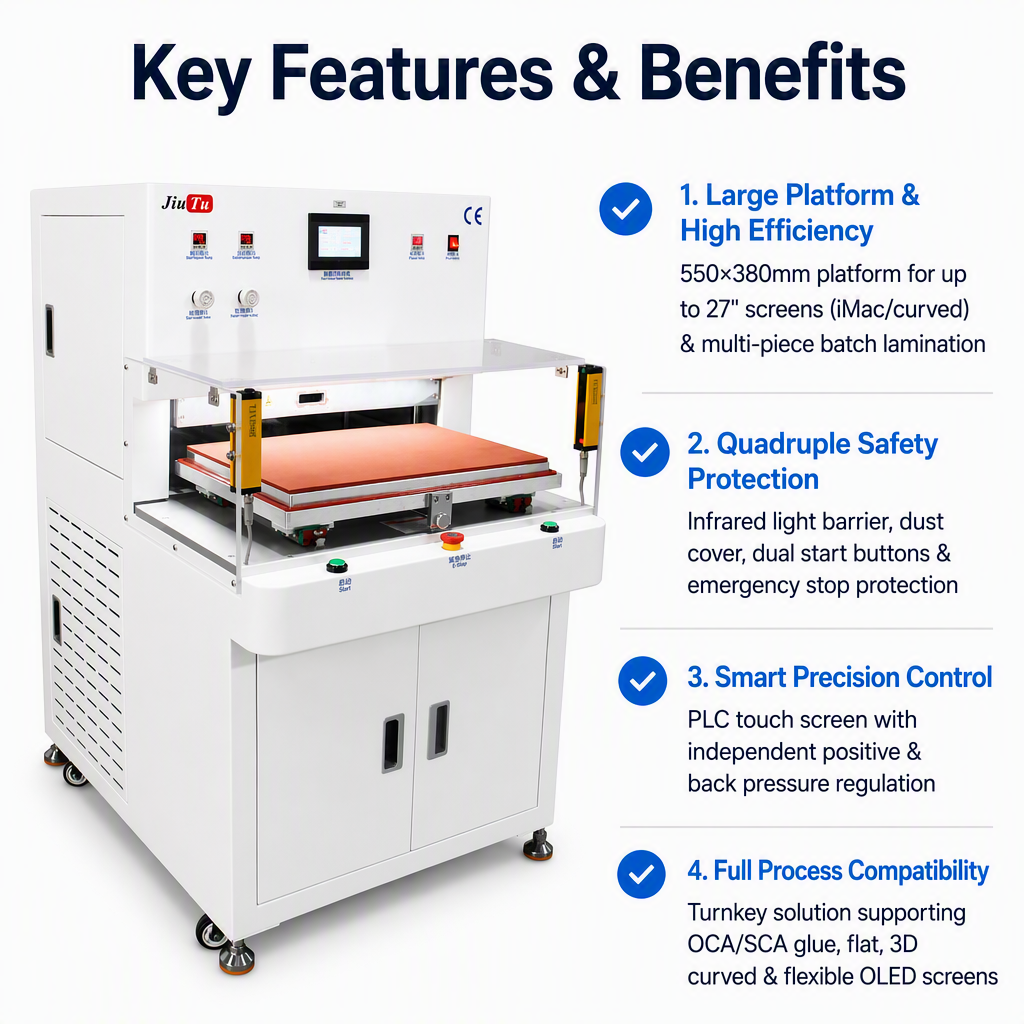
550 x 380 mm Effective Platform
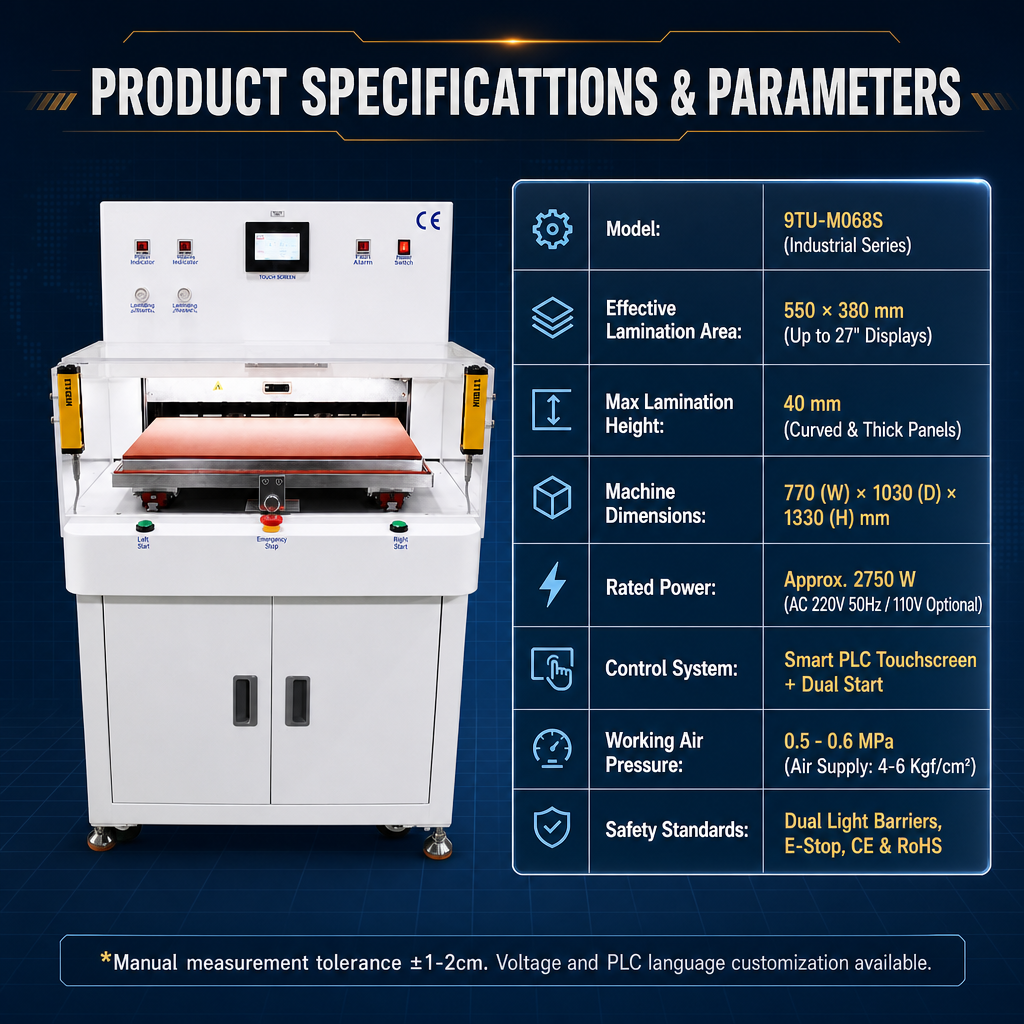
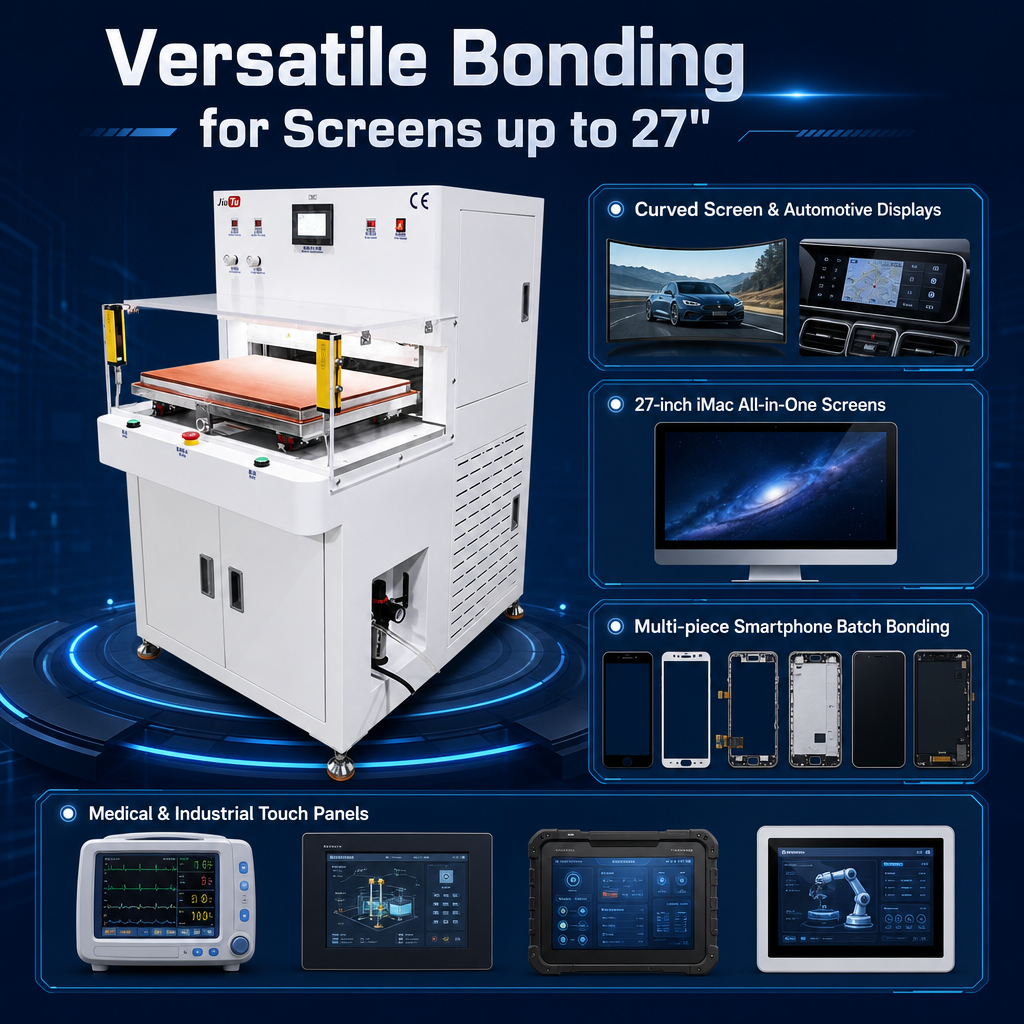
The machine provides a 550 x 380 mm effective lamination area. The current product material indicates compatibility with display assemblies up to 27 inches, subject to actual outer dimensions, fixture clearance, component geometry and process validation.
The platform can also accommodate multi-piece batch arrangements when the individual components, fixtures and spacing remain within the effective working area. Customers should provide drawings and sample assemblies before the loading layout is finalized.
Key Features
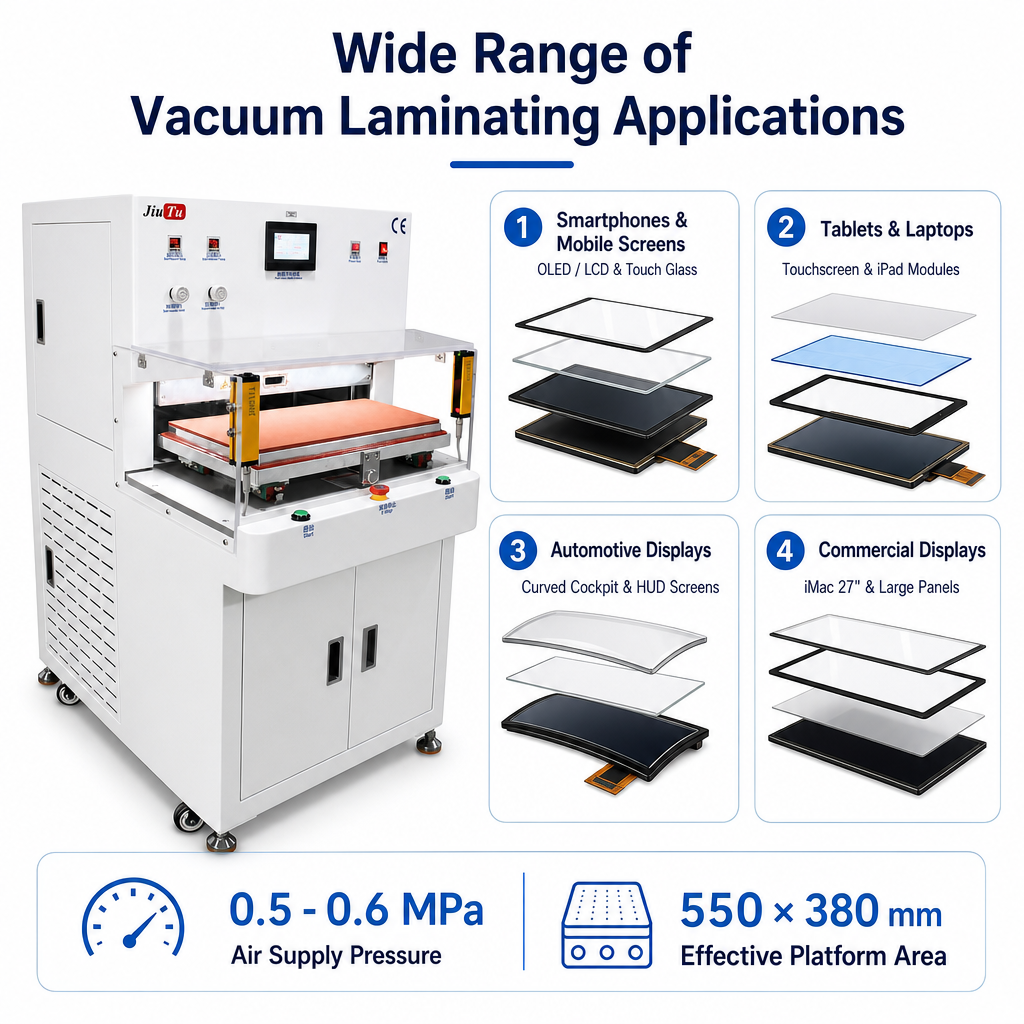
1. The 9TU-M068S is intended for compatible SCA and OCA lamination workflows involving LCD modules, TP/LCM assemblies, cover glass, touch panels, industrial displays and related electronic components.
2. The machine can be evaluated for flat, curved, soft-to-hard and hard-to-hard structures. Final compatibility depends on the adhesive specification, layer stack, component rigidity, surface condition, fixture design and required process window. Sample testing is recommended before production parameters are approved.
Dual Safety Light Curtains
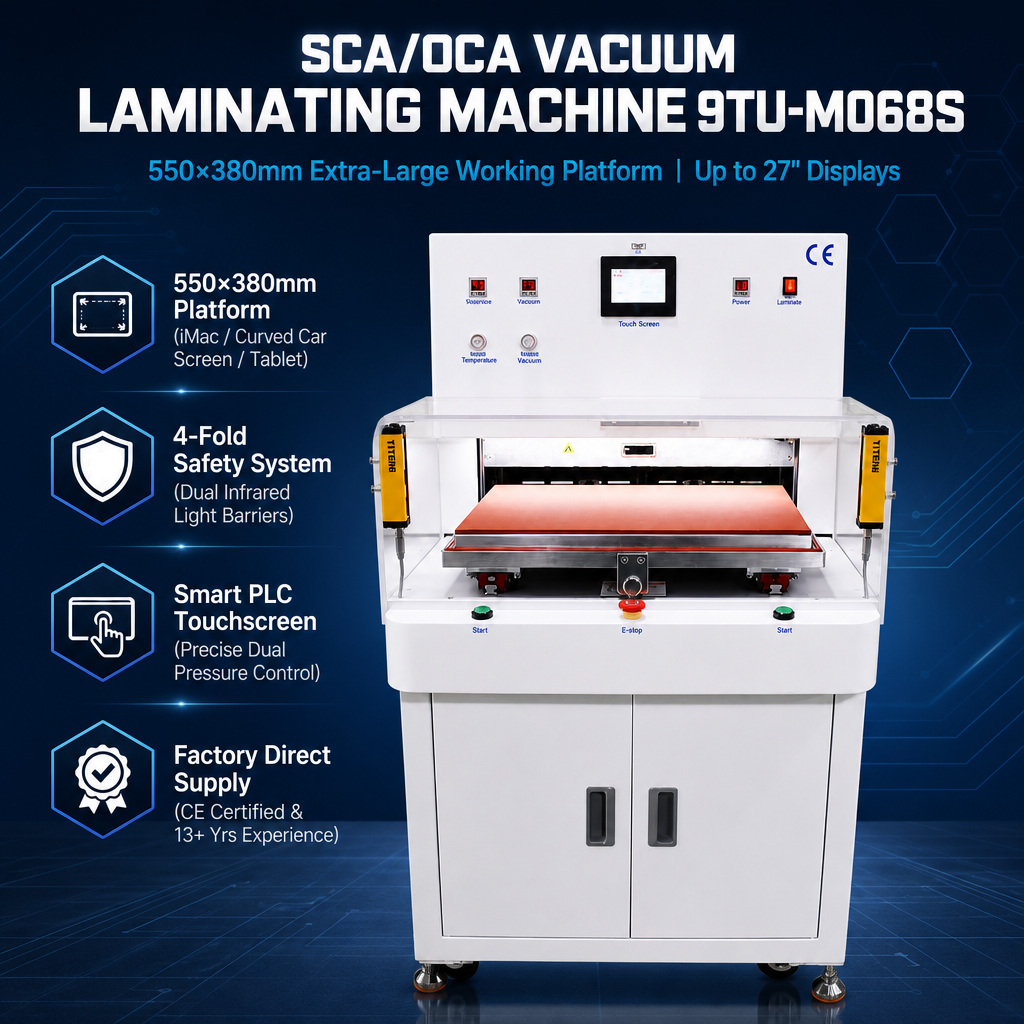
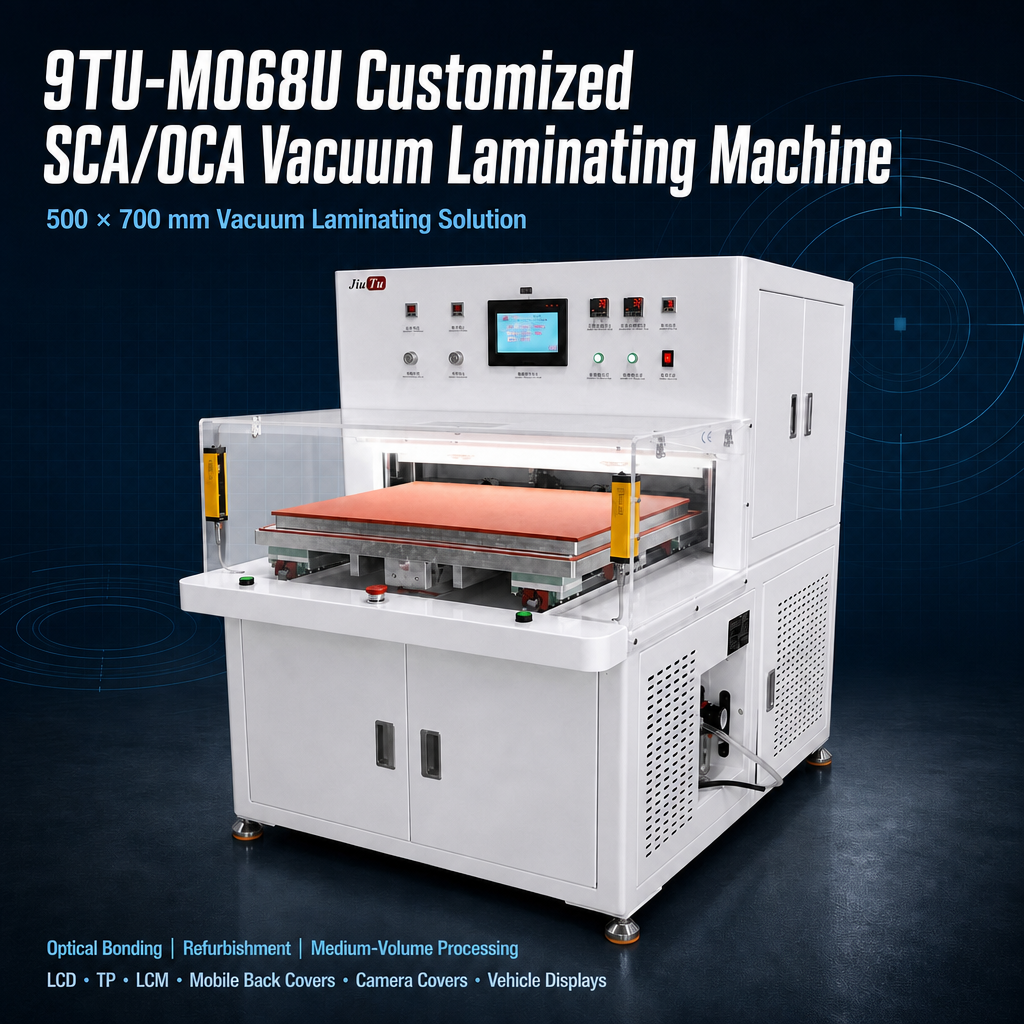
3. Safety light curtains are installed on both sides of the operating zone. When the protected field is entered during operation, machine motion is automatically interrupted. Operation can continue after the protected area is clear according to the configured control logic.
4. The non-contact safety system works together with dual-start controls and the central emergency stop to support safer loading and unloading procedures in a factory environment.
Transparent Dust Cover
5、The transparent cover surrounds the active bonding area and helps reduce airborne particle entry during loading and lamination. Its clear construction maintains visibility of the work zone and moving platform.
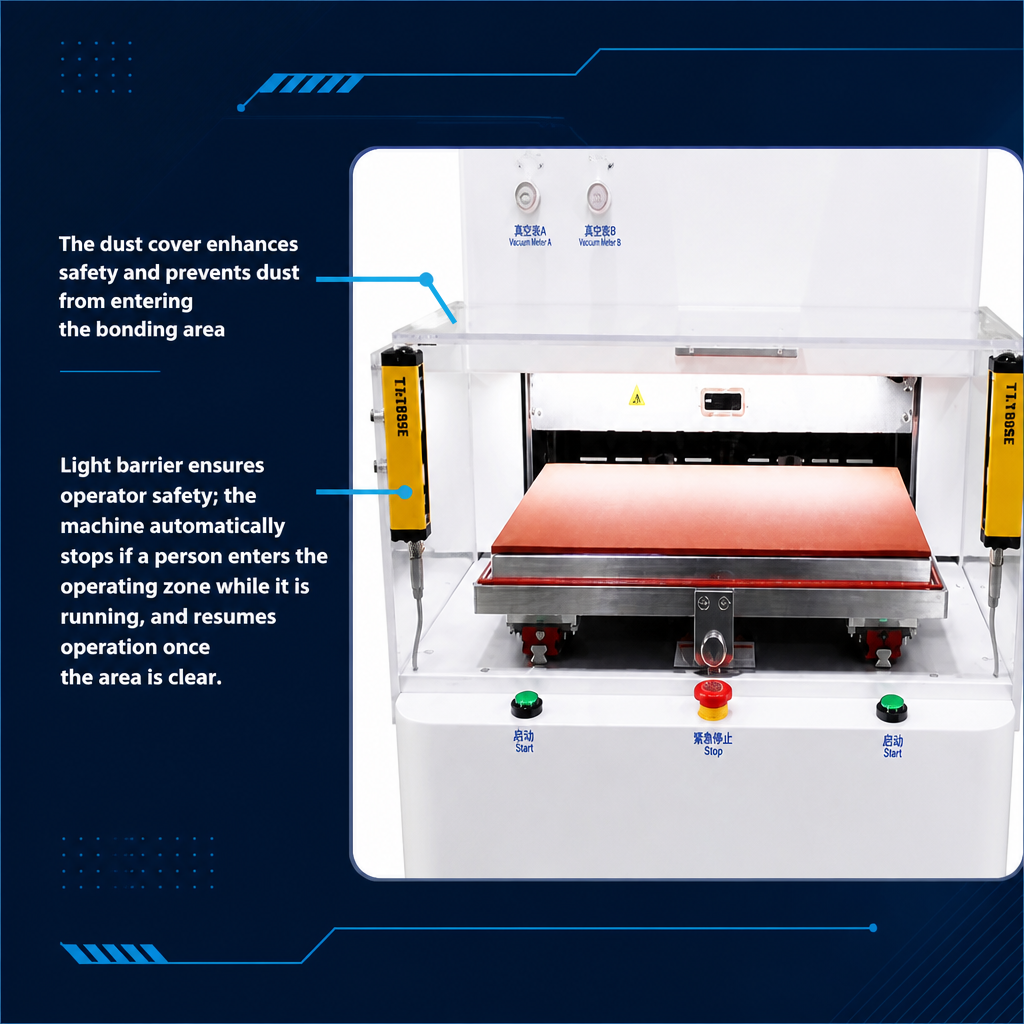
6. This cover is a local contamination-control feature. It does not represent a certified cleanroom classification. Final process cleanliness depends on the factory environment, component cleaning, material handling, operator procedures and upstream preparation.
PLC Touchscreen and Pressure Control
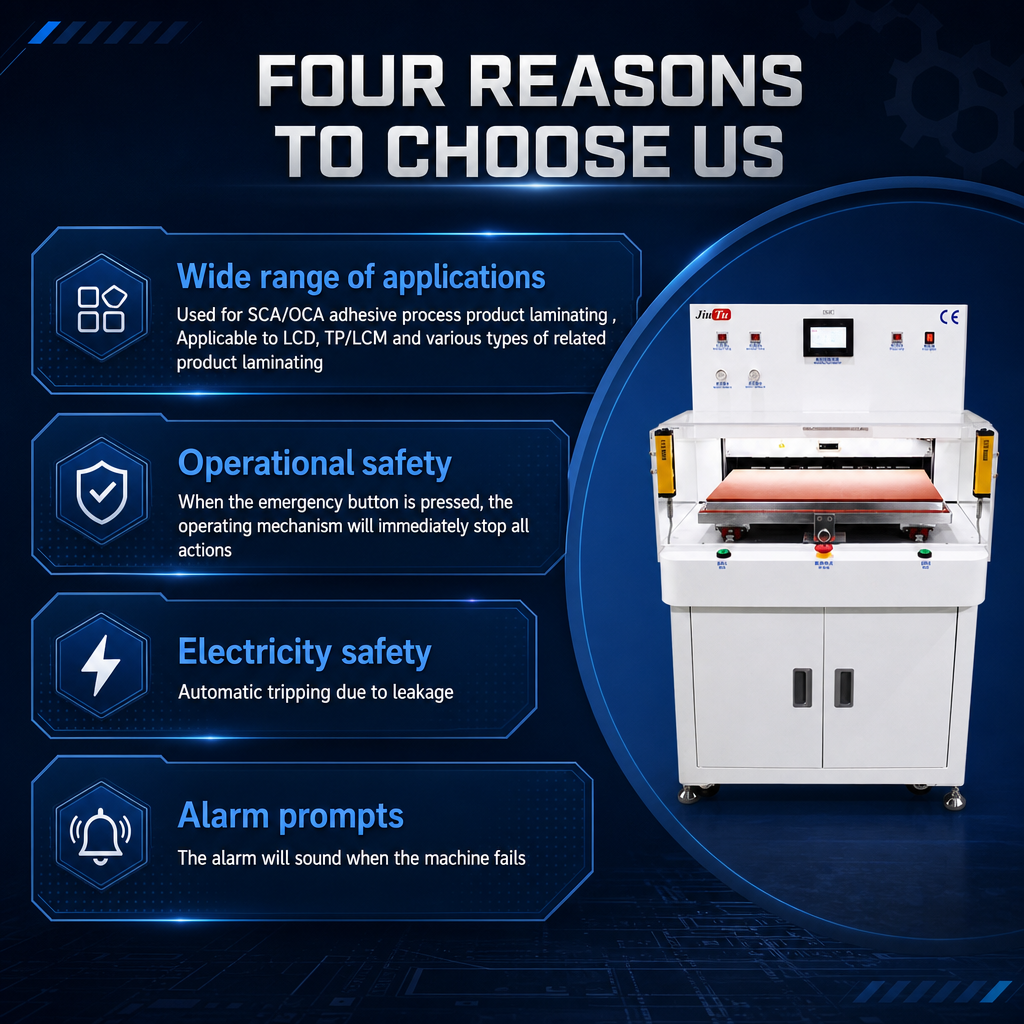
7. The integrated PLC touchscreen centralizes machine operation and process status monitoring. The control panel includes positive-pressure display and adjustment, back-pressure display and adjustment, vacuum display, a power switch, dual-start controls and an emergency stop.
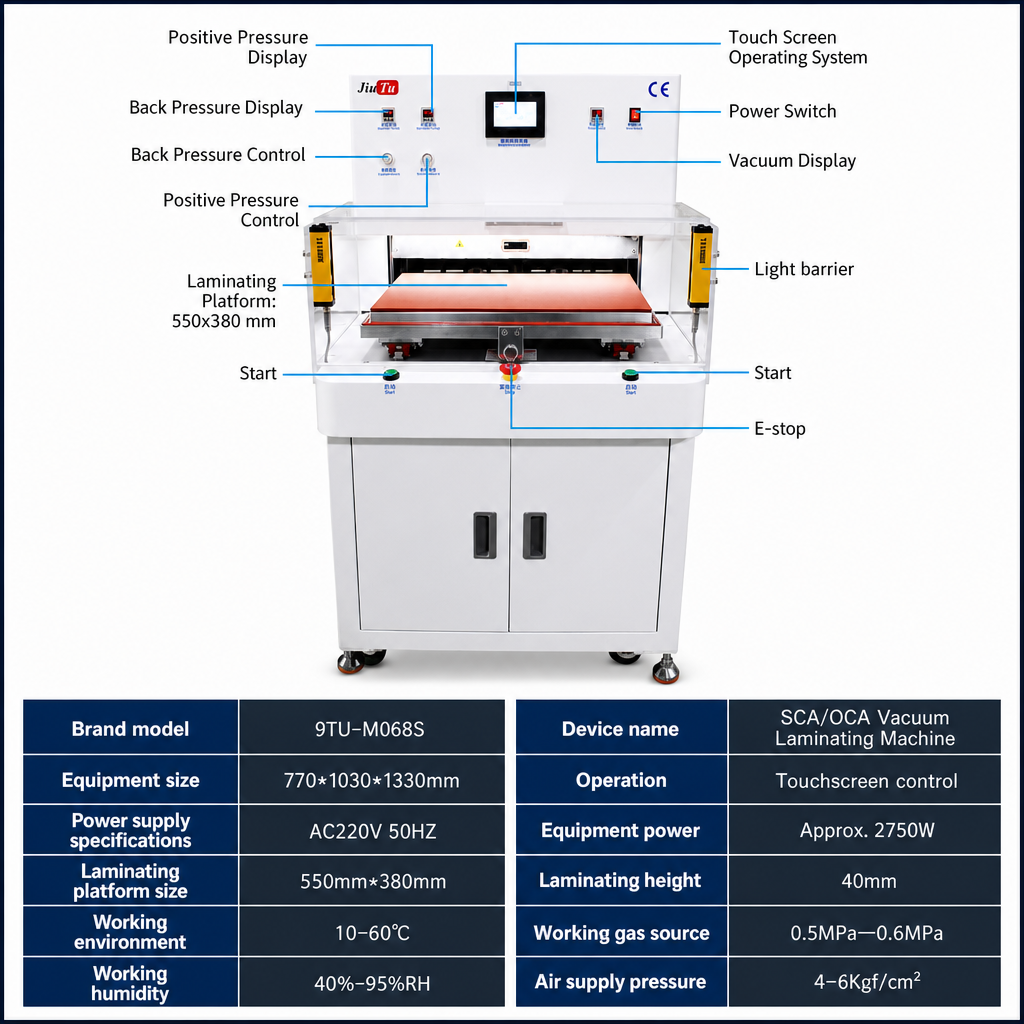
8. Independent positive-pressure and back-pressure control allows the process to be adjusted for different component structures and tooling configurations. Process settings should be verified through sample trials before volume production.
40 mm Lamination Height
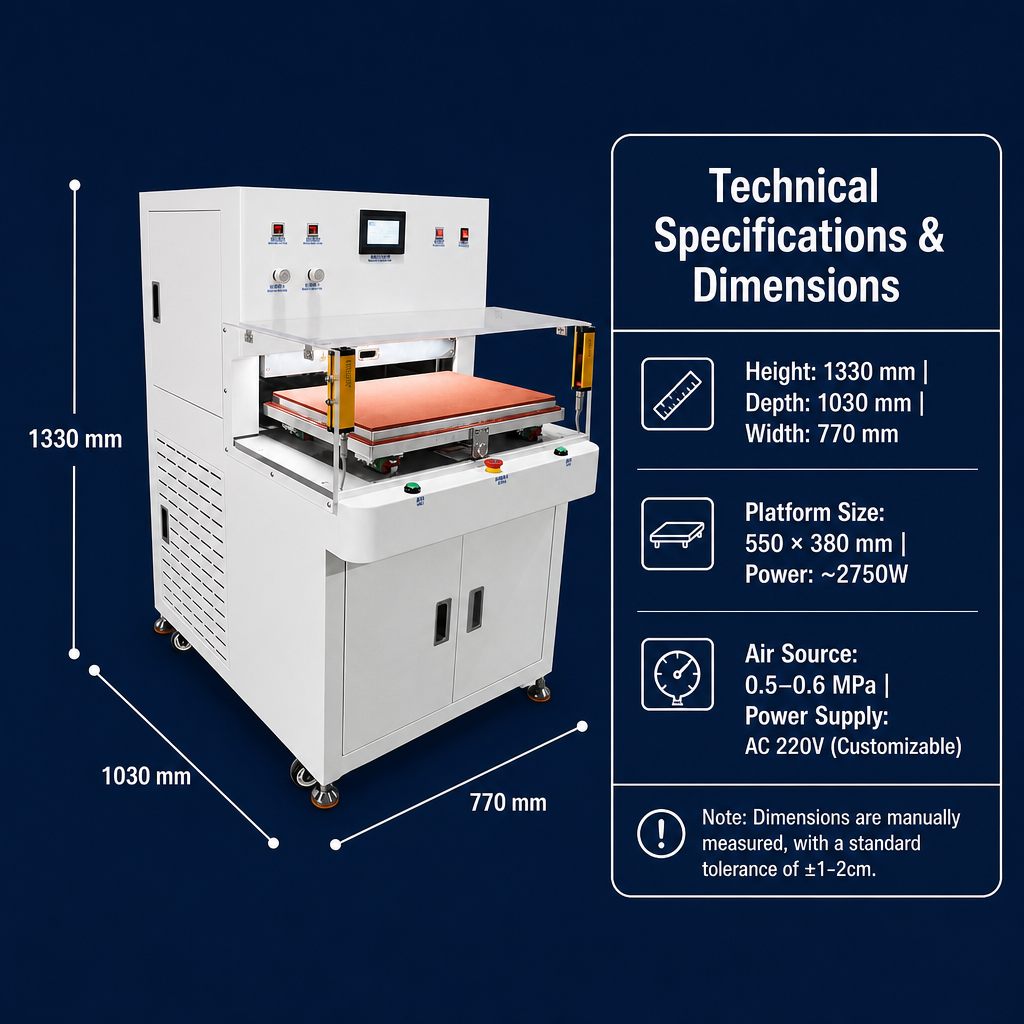
9. The maximum specified lamination height is 40 mm. This clearance supports compatible curved structures, thicker assemblies and custom fixtures when the complete stack remains within the machine envelope.
10. Fixture height, workpiece thickness and required travel must be reviewed together before production approval.
Factory-Oriented Configuration
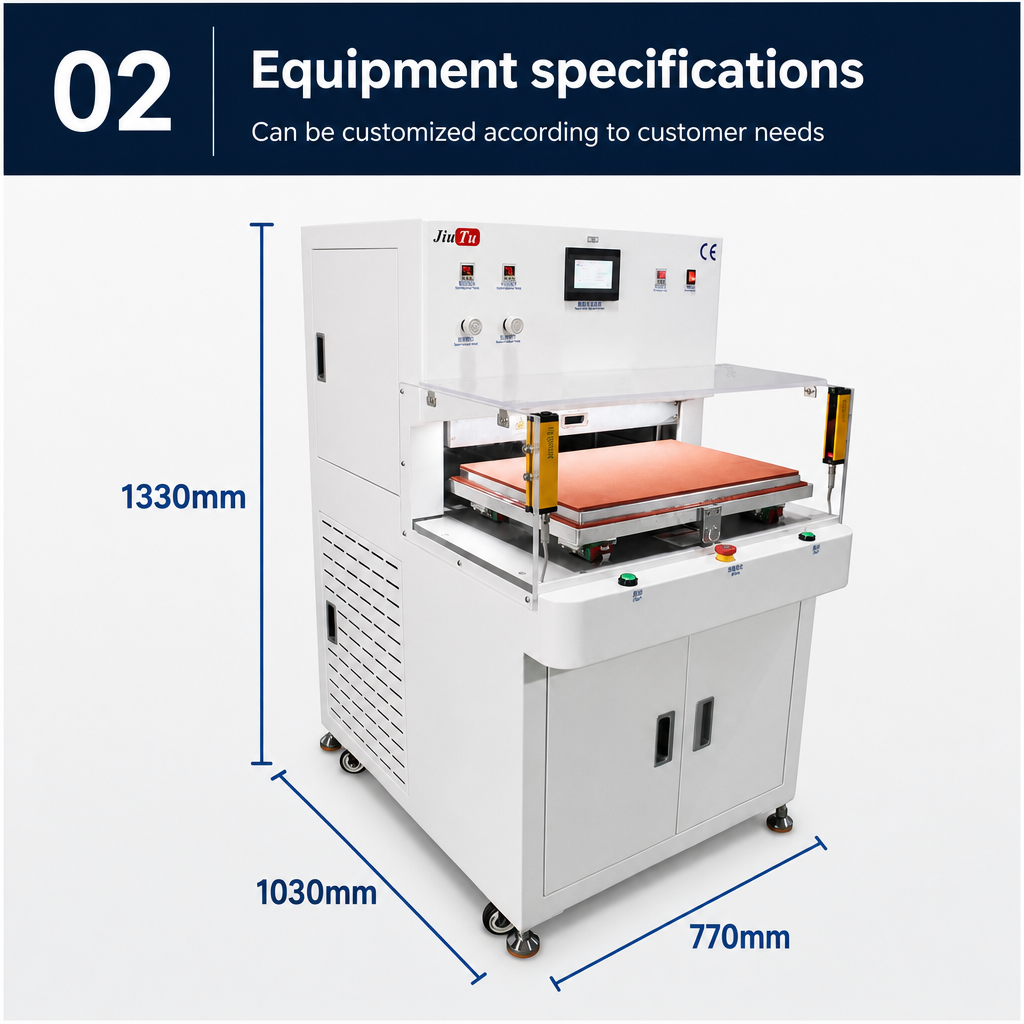
11. The machine measures 770 mm wide, 1,030 mm deep and 1,330 mm high. Rated power is approximately 2,750 W. Standard power is AC 220 V, 50 Hz, while 110 V configuration is shown as optional in the product material. Required working air pressure is 0.5-0.6 MPa.
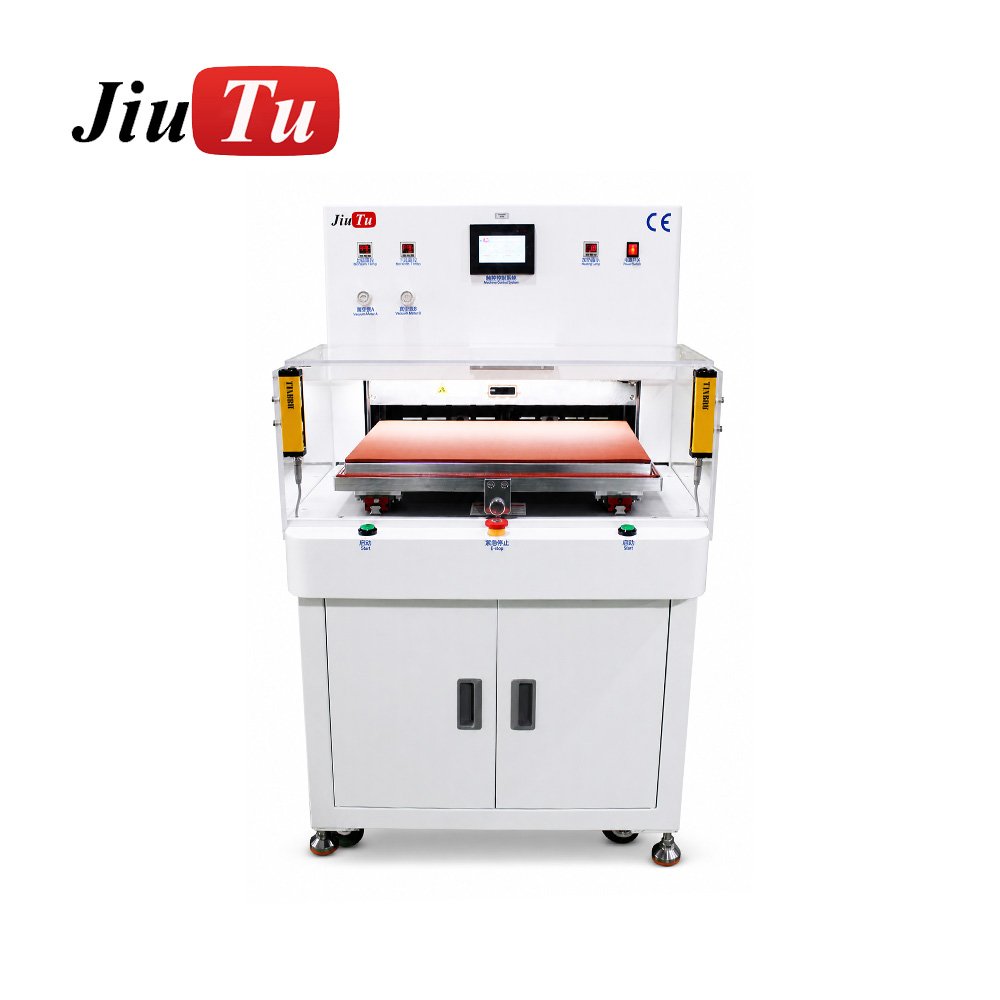
12. The machine includes adjustable feet and casters for positioning. Final electrical, pneumatic, installation and operating-clearance requirements should be confirmed in the technical agreement.
Why Choose Us
Industrial LCD module assembly
Touch panel optical bonding
TP/LCM module lamination
Automotive cockpit displays
Vehicle center displays
Curved automotive displays
Medical equipment displays
Industrial HMI panels
Commercial display assemblies
Electronic scale displays
Control panel displays
Cover glass bonding
G+G optical bonding
Soft-to-hard lamination
Hard-to-hard lamination
Flexible OLED assemblies
OEM/ODM display projects
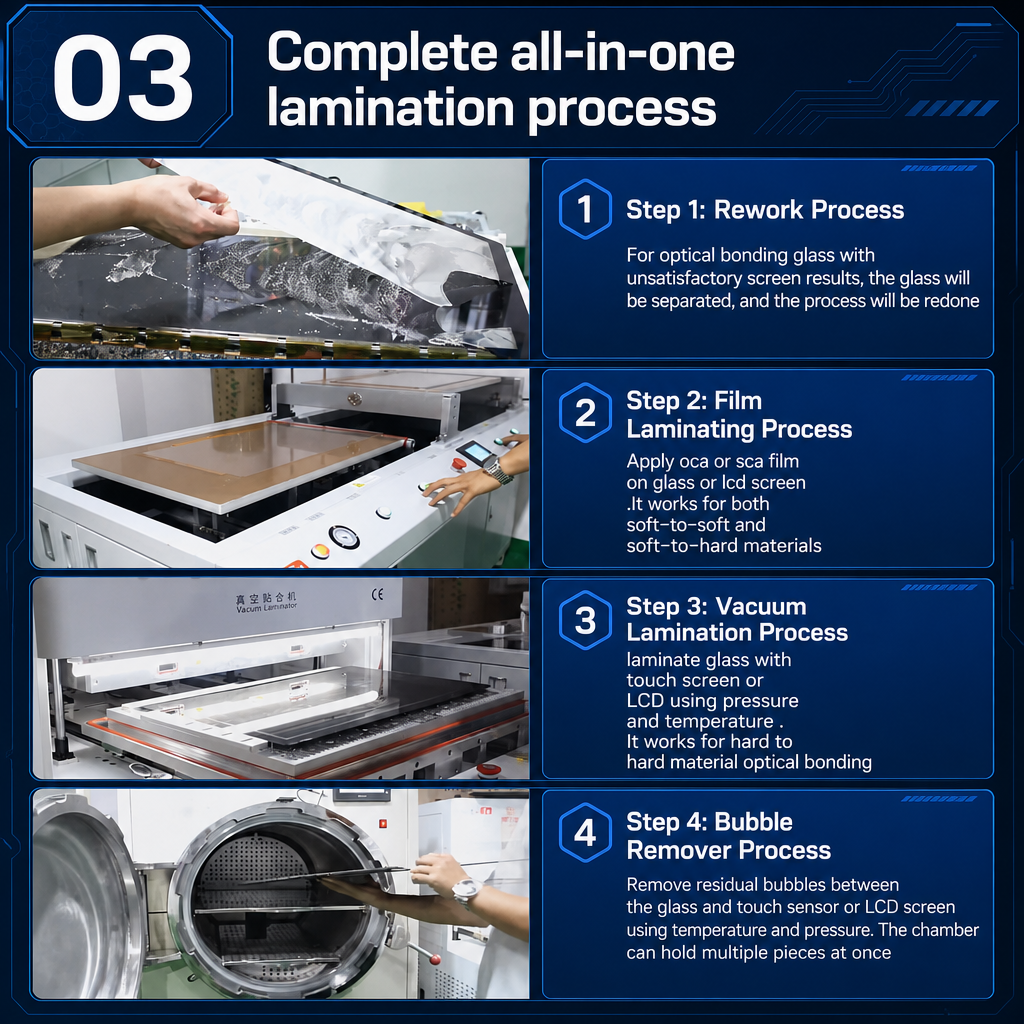
Position in a Complete Production Process
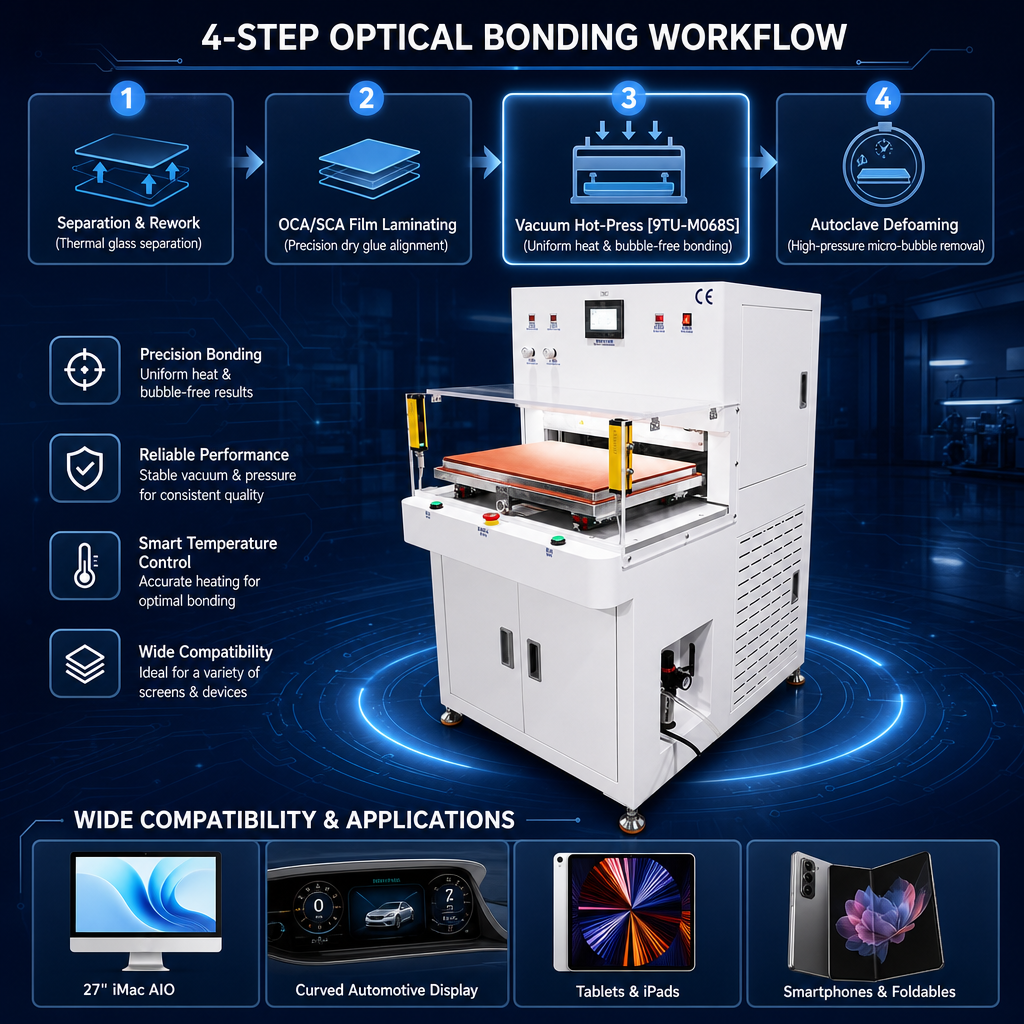
The 9TU-M068S performs the vacuum hot-press stage. Film application and high-pressure debubbling require separate process equipment unless otherwise specified in a custom project.
Stage 1: Film Application
Apply compatible OCA or SCA material to the cover glass, touch component or display module using suitable film application equipment.
Stage 2: Vacuum Hot Press
Load the prepared assembly and fixture onto the 550 x 380 mm platform. The 9TU-M068S then performs the configured vacuum, pressure and heating sequence.
Stage 3: Autoclave Debubbling
Transfer the bonded assembly to a separate pressure-and-temperature debubbling unit when residual micro-bubble removal is required by the product process.
A coordinated film application, vacuum lamination and debubbling equipment package can be discussed according to component dimensions, adhesive system and production targets.
OEM/ODM Project Workflow
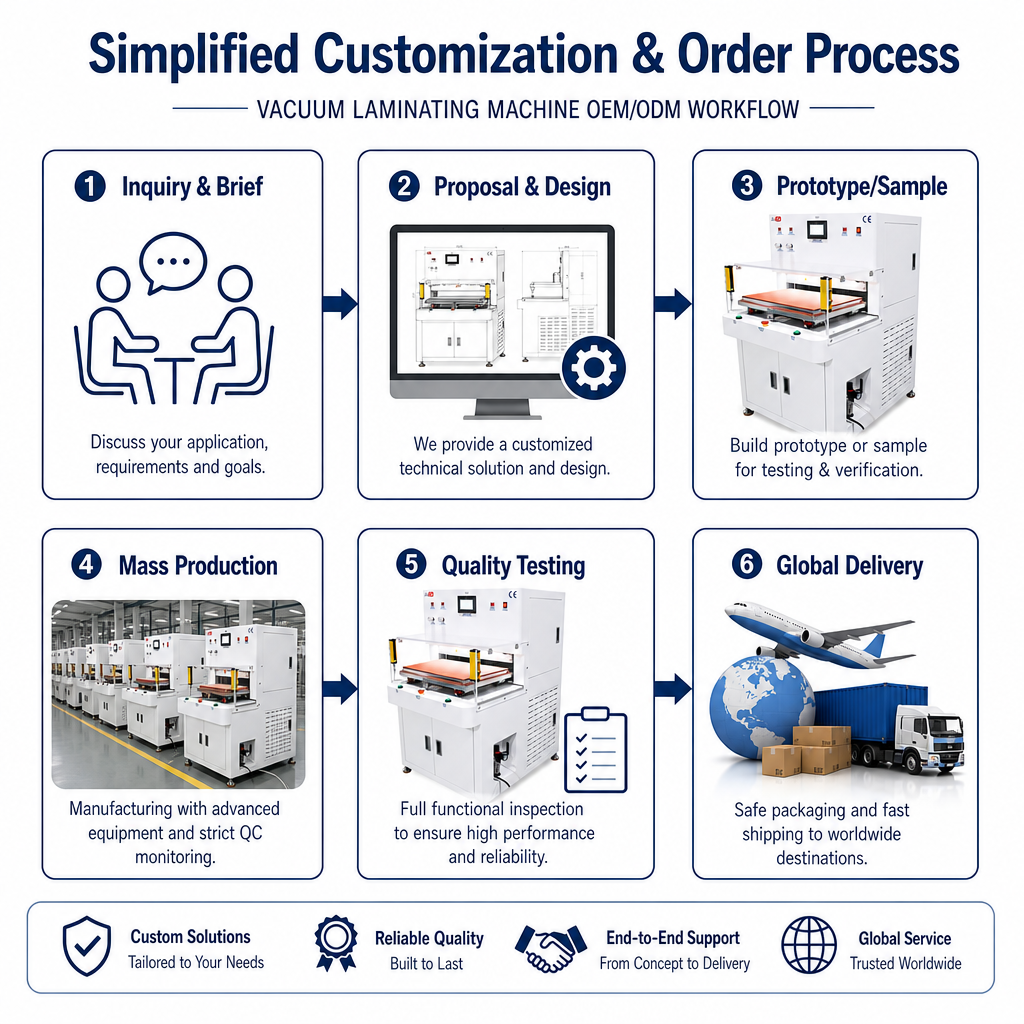
Step 1: Inquiry and Brief
Provide the application, component drawings, materials, process requirements and production goals.
Step 2: Proposal and Design
The technical team reviews platform compatibility, fixture requirements, utilities and process configuration.
Step 3: Prototype or Sample
A sample process or project prototype can be prepared for testing and verification when required.
Step 4: Production
The confirmed configuration enters manufacturing with production-stage quality monitoring.
Step 5: Quality Testing
Machine functions and the agreed configuration are inspected before shipment.
Step 6: Global Delivery
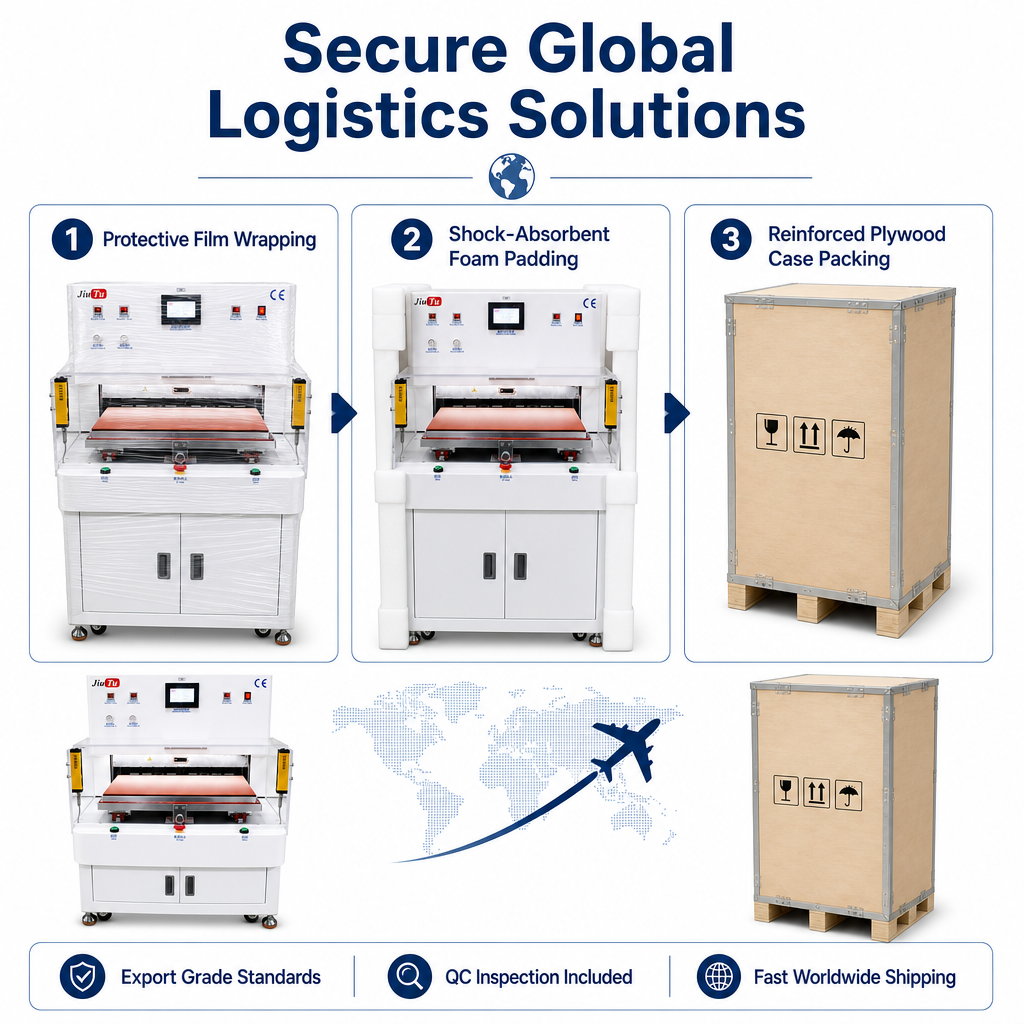
The machine is packed for international transport and delivered according to the agreed shipping terms.
Key Features
Product Details
FAQ
Q1. What is the effective lamination area?
Q2. Can the machine process 27-inch displays?
Q3. Which industrial customers is this model designed for?
Q4. Which adhesive processes are supported?
Q5. Does it support curved display assemblies?
Q6. Does it support G+G structures?
Q7. Can it process soft-to-hard structures?
Q8. What does the safety light curtain do?
Q9. What is the purpose of the dust cover?
Q10. What controls are available?
Q11. Can related process equipment be supplied?
Q12. Can the machine be customized?
Q13. What information is needed for a quotation?
Q14. How is the machine packed for shipment?
Q15. What technical support is available?
Interested in This Product?
Tell us your project details and our team will prepare a customized quotation.
GET QUOTE NOW