
An all-in-one OCA system can make sense when lamination and bubble removal fit a shared production rhythm and available space is tight. Separate stations become more attractive when a laminator needs to keep working while a bubble removal batch is running—or when future capacity must be added to one process without replacing the other.
The distinction matters because compact screen-repair workshops and industrial display lines face different constraints. A small workshop may prioritize bench space and straightforward setup, while an industrial line must pay closer attention to batch loading, scheduling and independent process capacity.
The equipment count is not the deciding factor. What matters is how often one process waits for the other, how assemblies move between them, and whether the proposed layout can accommodate real production rather than a demonstration cycle. A dedicated OCA bubble remover machine may offer valuable independence, but only if the loading plan and material-specific process have been verified.
This comparison focuses on equipment configuration and operating trade-offs, rather than a performance test between specific all-in-one and separate machine models.
Compare the Workload Before the Footprint
A machine layout can look efficient on a drawing and still leave the production team with an avoidable queue. This tends to happen when one-piece lamination is compared with batch bubble removal as though the two steps had the same cycle structure.
Consider a factory producing a recurring industrial display assembly alongside shorter runs of a second panel design. The laminator may be ready for the next assembly while completed panels are still waiting to form a compatible bubble removal load. On another shift, the batch chamber may be available but upstream preparation is late. Neither situation is explained by the advertised footprint.
The useful comparison begins with the release target for each shift, the mix of display stacks, and how many assemblies can actually be processed together. A batch capacity estimate should reflect complete panel-and-fixture dimensions, permissible loading orientation, and process conditions supported by the material supplier—not just a chamber measurement.
That is also the right point to examine bubble removal autoclaves. The category is relevant as a range of dedicated downstream machines, but its listed sizes cannot replace a verified loading pattern or a representative sample trial.
For the wider sequence—from film preparation to post-lamination inspection—see the complete display bonding workflow. The decision here is narrower: whether those already-defined operations should share equipment or run as independent stations.
When Does an Integrated System Make Operational Sense?
Integration has a clear attraction: less travel between functions, potentially fewer handling steps and a simpler-looking installation. For a consistent product mix and a limited output requirement, those advantages may matter more than the freedom to operate each station separately.
But “all-in-one” describes an equipment arrangement, not a guaranteed operating schedule. One model may require the lamination step to finish before bubble removal can begin; another may have distinct internal stations with some concurrent capability. Until the supplier confirms the actual sequence, the phrase integrated OCA system tells very little about effective capacity.
The question behind the smaller footprint
Suppose two display designs require different fixtures and process settings. If changing the lamination setup interrupts the bubble removal operation, the time saved on internal transfer may disappear during the changeover. If the functions are independently controlled and accessible, that limitation may not arise.
Ask to see a complete operating demonstration using the intended product family: loading, the transition between functions, unloading and the next start. In particular, establish whether one side can continue running when the other needs a recipe change, attention from an operator or maintenance.
Integration is a credible choice when this demonstrated sequence meets the real shift demand without accumulating work in progress. It should not be chosen on the assumption that one enclosure automatically means lower operating cost or higher throughput.
When Do Separate Stations Remove a Constraint?
Separate lamination and bubble removal equipment can uncouple the two schedules. A laminator may prepare the next acceptable assembly while a different batch runs in the chamber; the chamber, in turn, can be scheduled around verified loads rather than every individual lamination event.
That flexibility matters most in mixed production. Some assemblies may need their own validated recipe or fixture arrangement, while others can be grouped into a compatible load. Keeping the stations separate gives the production team more freedom to organize those batches, provided the waiting assemblies remain properly identified and handled.
The trade-off is visible on the factory floor. Separate stations introduce a handoff, potential waiting space and another loading operation. A queue that keeps growing in front of the chamber is evidence of a capacity mismatch, not a reason to assume that adding another laminator will solve the problem.
Two real equipment references—two different jobs
JiuTu lists an industrial lamination machine and a separate large-chamber bubble remover that illustrate the two-station decision. They are not a confirmed matched pair, and neither is being presented as an all-in-one model.
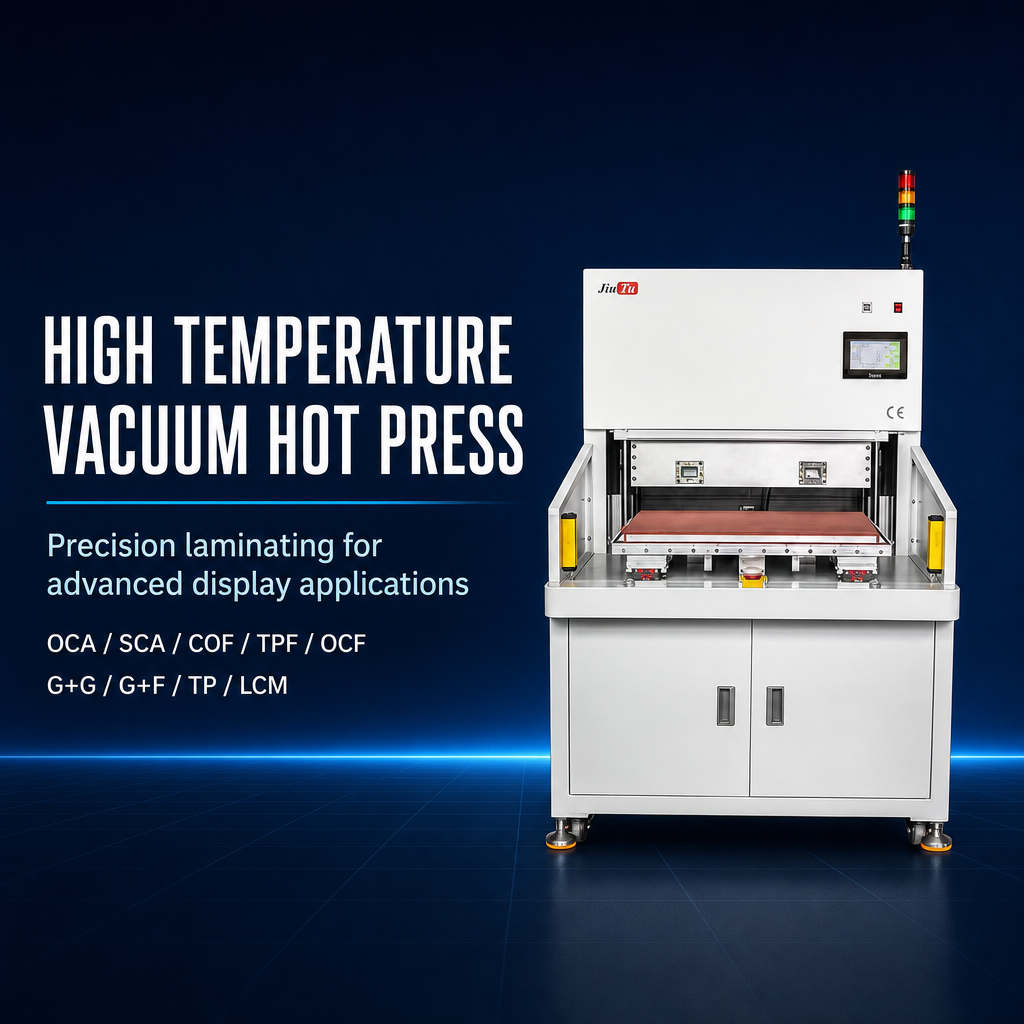
9TU-M040D Industrial Vacuum Laminating Machine
Its documented staged pneumatic control and configurable recipes make it relevant to a review of industrial lamination duties. Suitability for a particular OCA stack and fixture must be checked separately.
Review lamination equipment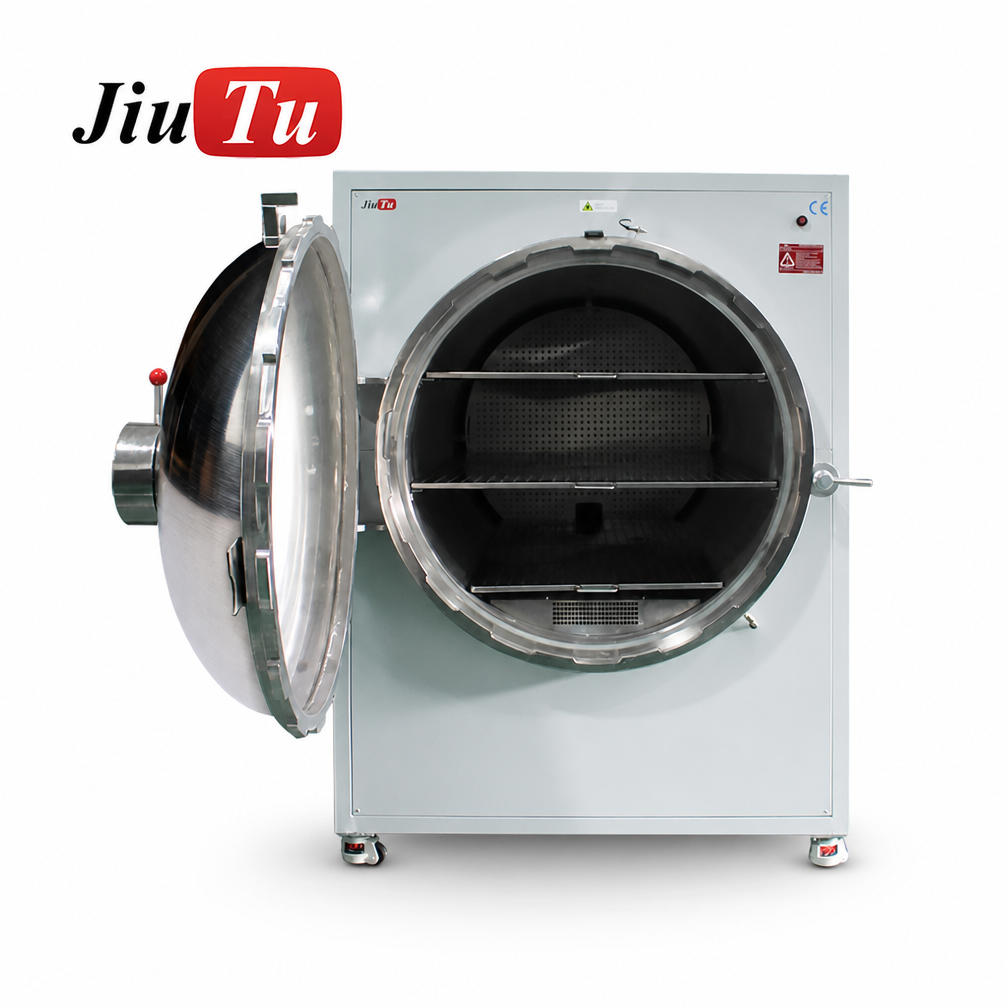
1000 × 1600 Stainless Steel Bubble Remover Machine
The chamber’s shelf arrangement makes it a useful reference for evaluating load organization and batch scheduling. Actual panel, tooling and material compatibility require verification.
Review bubble removal equipmentProduct photographs are from the linked JiuTu product pages. These machines represent separate process functions, not an approved combination or a verified integrated system.
The right upstream choice may be different for another panel size or lamination method. Compare the relevant industrial bonding machine options against the required stack and fixture before sizing a downstream autoclave around them.
What Utilities and Handoffs Change the Investment?
An integrated system may save visible floor area, but an equipment quotation rarely shows every square metre the process will occupy. The usable layout also needs access for opening the machine, moving fixtures, servicing components and holding work between operations.
With separate stations, the distance between the laminator and chamber has a direct operating consequence. Every transfer needs a suitable carrier or handling method, and a defined location for assemblies waiting for the next validated batch. Shortening that distance can be valuable; placing the machines so close that loading paths interfere is not.
Utilities are equally specific to the proposed model. Electrical demand, compressed air, vacuum provisions, heating requirements and any auxiliary equipment must be confirmed from the actual quotation. An integrated enclosure should not be assumed to contain all auxiliary systems, and separate machines should not be assumed to require wholly separate facility infrastructure.
Look at the handoff, not only the machine cycle
A useful site review follows one assembly from the end of lamination to the start of its bubble removal load. Where does it rest? Who identifies its material and recipe? Can another product enter the same batch? What happens if the next chamber load must wait?
Those questions are especially important for optical stacks with handling, exposure or cleanliness restrictions. Any waiting allowance should come from the relevant material documentation and a validated process, not an informal assumption that an assembly can remain in a queue indefinitely.
At this stage, a preliminary layout and the expected product mix are often more useful than a request for a generic machine price. They let the equipment supplier compare post-lamination configurations against the actual site constraints rather than proposing capacity in isolation.
Which Questions Should Both Quotations Answer?
The fairest comparison is not an integrated machine against the combined catalogue prices of two separate machines. It is one proposed production arrangement against another, each responsible for the same accepted output and product mix.
That means asking both suppliers to show what happens during a normal mixed shift, including fixture changes and batch waiting. A promised cycle time without loading, unloading, transfer and changeover is too narrow to support an investment decision.
The quotation review can stay focused on three pieces of evidence:
- A credible operating schedule. It should distinguish individual lamination cycles from complete bubble removal batches and show where concurrent operation is actually possible.
- A complete installed scope. Equipment, tooling, utilities, access clearances, transfer arrangements and any excluded auxiliaries should be apparent.
- A defined path to acceptance. The proposed equipment must be assessed using representative display stacks and documented material limits, with criteria agreed before sample validation.
Expansion deserves its own discussion. An integrated configuration may be entirely sufficient for a stable line, yet difficult to scale if its two functions share a limiting resource. Separate equipment may permit additional upstream or downstream capacity to be considered independently—but only after identifying the real bottleneck.
There is no verified integrated model in this comparison, so the investment case for one must be evaluated against a specific supplier proposal. A lower sticker price or a smaller exterior footprint is not enough to establish the better option.
Frequently Asked Questions
Can a separate autoclave serve multiple laminators?
Potentially. A shared autoclave makes sense only when its validated loading capacity and batch schedule can keep up with the combined lamination workload. Product-family compatibility, queue size and protected handling space must also be checked.
Does an integrated unit always cost less overall?
No. It may reduce equipment count and transfer distance, but shared-cycle delays, utility requirements, maintenance access and later expansion can change the total investment. Compare complete operating arrangements, not machine prices alone.
How should changeovers enter the comparison?
Include the time to exchange fixtures, confirm recipes and restart the relevant station. For an integrated model, establish whether a changeover interrupts both functions; for separate stations, account for any resulting waiting batches and handling work.
Choose the Arrangement That Protects the Production Schedule
For a steady workload in a constrained space, integrated equipment may offer a sensible balance of footprint and handling. When product families vary, batches need their own schedule or expansion is likely, the flexibility of separate stations can justify the extra space and transfer planning.
The decisive comparison is between installed footprint, independent cycle capacity and future growth. A separate OCA bubble remover machine belongs in that conversation because it can be evaluated as its own production resource—not because a larger chamber is automatically the right investment.
Whatever the arrangement, material limits must follow supplier documentation and the proposed process must be validated with representative assemblies. The exact integrated model and any pairing of separate equipment remain subject to configuration review.