
Two quotations for optical bonding equipment can look similar at first: a machine model and a price. The difference often lies in what that price covers. One offer may include the fixture and a sample trial; another may cover the machine alone. Without looking at those details, the cheaper quote could lead to a more expensive project.
A useful comparison starts with the same display assembly, bonding process and acceptance target. From there, you can see what each supplier has included, what your factory would still need and which offer is better suited to the actual work.
Normalize the Scope Before Comparing the Price
Before comparing totals, find out whether both suppliers have priced the same job.
A request for ‘an optical bonding machine’ leaves plenty open to interpretation. One supplier might picture a single panel size with a standard fixture. Another might quote a different pressing arrangement or equipment intended for several products. Neither offer is necessarily wrong; they are simply based on different assumptions.
The display assembly gives both suppliers a common starting point. Panel width and height, total stack thickness, substrate type, adhesive and layer arrangement can all affect the machine configuration. The fixture matters just as much: a panel might fit the working platform on its own but take up more space once it is mounted in a carrier.
Then consider how the equipment will be used. A setup for occasional trials on one panel size may be quite different from one that handles several display families and regular changeovers. Sharing the expected product mix and production pattern gives suppliers a more realistic basis than a single optimistic output figure.
Even matching panel dimensions do not guarantee comparable machines. Vacuum lamination, heated pressing and other bonding operations have different roles in the process. A quotation makes more sense when the supplier knows which operation is required, which conditions matter and what result the finished assembly needs to meet.
For an overview of the available optical bonding and LCD equipment, start with the equipment range and identify the relevant process category. If the requirement is specifically for OCA vacuum lamination, the dedicated OCA vacuum laminating machine range provides a narrower reference for that equipment type.
This process-first approach also helps avoid buying individual machines that do not fit the wider production sequence. The guide to the complete display bonding workflow provides additional context for understanding how the equipment stages connect.
The basis of a fair comparison: Both quotations should describe the same product, the same production operation and the same expected acceptance result. If one of these changes, the price difference needs a technical explanation before it can be used to make a purchasing decision.
Which Included and Excluded Items Change the Decision?
A machine price is only part of the cost of getting a bonding process running. A fixture, an optional control function or help with the first production trial may seem like a small detail in a quotation, but each can change what the factory needs to spend later.
The model name alone rarely tells the whole story. Two offers for the same machine family may differ in the working platform, pressing arrangement, heating or vacuum options, controls and accessories. The meaningful comparison is between the functions actually included in each quoted build, not every function shown in a brochure.
Fixtures are an easy place for costs to diverge. One supplier may allow for a single reference panel, while another includes fixtures for several variants or the design work behind them. The important difference is not simply the number of fixtures, but which products they support and whether more tooling will be needed.
Site preparation can add another gap between the quotations. Electrical supply, compressed air and vacuum connections depend on the selected configuration, and some services may have to be provided by the factory. For example, a pneumatic machine may require an external compressed-air source even when that source is not part of the quoted equipment.
The difference continues after delivery. Having a machine arrive at the factory is not the same as having it installed, set up and ready for the first trial. Some offers include commissioning and operator training; others price these separately. Training in basic operation may also be quite different from support with recipe adjustment or maintenance.
Transport has its own costs and responsibilities. One quotation might cover freight and insurance to an agreed destination, while another leaves the buyer to arrange them. Keeping delivery separate from installation helps make those differences visible.
The last difference may be what happens when the equipment is tested or needs support. Sample evaluation and documented process acceptance can be part of one offer but absent from another. Warranty terms, technical assistance and any paid follow-up work also affect the value of the proposal, even though they do not change the machine itself.
These differences become easier to judge when the quotations are reviewed side by side. For example, Supplier A may quote a machine with one standard fixture, while Supplier B includes fixtures for two display variants and a sample trial. If both fixtures and the trial are required, their costs need to be added to Supplier A’s evaluated total before the prices can be compared fairly.
If the second fixture is unnecessary, it should not make Supplier B’s quotation appear more valuable simply because more items are included. The aim is to compare the cost of meeting the same production requirement, not to reward the longest equipment list. Any item that remains unconfirmed should be marked as pending rather than assumed to be free.
How Should Tooling and Acceptance Be Costed?
A line saying ‘fixture included’ tells you little about whether that fixture is useful. During display bonding, it locates and supports the assembly. Panel dimensions, contact areas, reference positions and loading access all affect how well that support works.
A fixture that suits one display family may not locate another correctly. Different cover-glass outlines, substrate thicknesses and product sizes can change where the assembly needs support, even if the panels all fit within the machine’s working area. That becomes especially relevant when one machine is intended for several models.
For custom tooling, the scope may stop at the initial design or extend through drawing approval, manufacture and adjustment. Those are different deliverables. A useful quotation makes clear how the fixture will become ready for the actual assembly, rather than treating a preliminary concept as finished tooling.
Two equipment configurations show why the details matter
The two JiuTu machines below show how much can sit behind a model name. Both relate to display bonding applications, but they have different working areas and pressing arrangements. They are examples of what to examine in a quotation, not two models to rank by price alone.
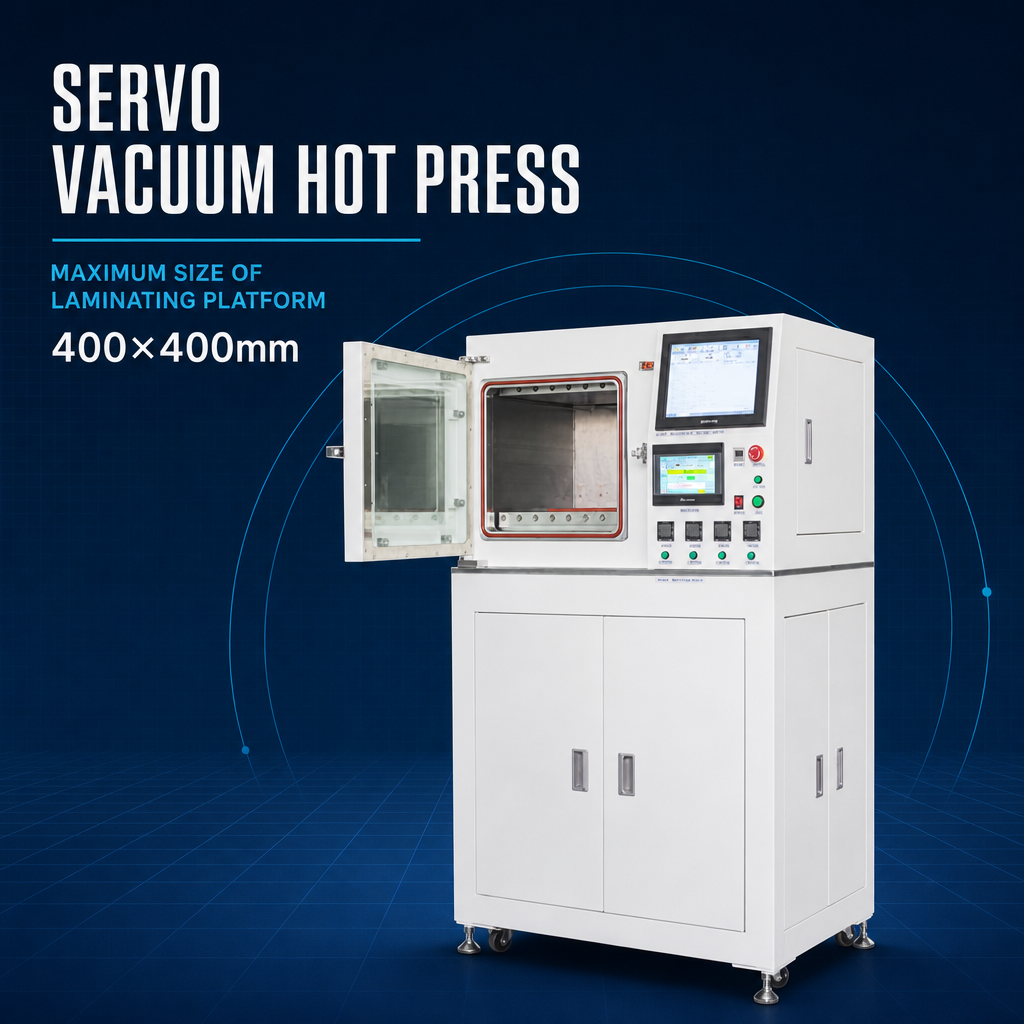
Servo pressing configuration
400×400-2T Servo Laminating Machine
The 9TU-M040E configuration has a 400 × 400 mm working platform and a servo pressing system with pressure and displacement modes. Its published configuration also describes adjustable pressing movement, independent upper and lower heating, and vacuum or non-vacuum operation.
For a project considering this configuration, the useful questions are which control modes and process options are part of the quoted build, and whether the assembly still fits once its fixture is taken into account.
View Machine Details →
Pneumatic staged pressing
9TU-M040D Industrial Vacuum Laminating Machine
The 9TU-M040D has a published 710 × 510 mm working platform and a three-stage process recipe. Pressure, processing time and vacuum state can be configured independently for each stage.
Here, the staged controls and fixture arrangement are part of the buying decision, alongside the factory’s air supply. The published utility requirement is 4–6 bar of compressed air. That is the supply pressure needed for the machine, not the pressing pressure applied to the display assembly.
View Machine Details →The two configurations have different working areas and pressing arrangements. Final suitability for a particular display stack requires sample and tooling evaluation.
These examples show why a quotation needs more than a model name. A larger working platform may offer little additional value when the existing workpiece and fixture already fit comfortably. On the other hand, staged pressure control or additional tooling space can matter when the process specifically calls for them. The better quotation is the one that covers the required application and acceptance conditions—not necessarily the machine with more features.
Machine acceptance is not the same as process acceptance
Even a machine delivered exactly as ordered has one more question to answer: will it produce the agreed result with your materials?
Machine acceptance checks whether the delivered equipment matches the agreed configuration, accessories, controls and documentation. Process acceptance goes further: it asks whether the actual display assembly, adhesive and fixture can achieve the agreed result under the validated conditions.
A demonstration on a different sample can show that the machine operates, but it says less about how your own display stack will behave. A meaningful process trial uses representative materials and a suitable fixture, with inspection criteria and records agreed in advance.
If the first trial falls short, fixture positioning, process conditions or even the proposed configuration may need another look. Knowing whether that work is included in the offer helps avoid an argument over cost after the equipment arrives.
What Evidence Supports a Supplier Comparison?
Once the scope is clearer, the supporting documents tell you how firm the offer really is. A product brochure may describe what a machine family can do; the quotation and its drawings need to show what the supplier is actually offering for this project.
The revised quotation. This should identify the exact model, configuration, included accessories, optional items and exclusions. If technical discussions change the scope, the latest quotation should reflect those changes rather than relying on an earlier price sheet.
The machine and tooling drawings. A general arrangement drawing helps the factory check the equipment footprint, loading access and installation space. A fixture drawing shows whether the actual assembly can be located and supported as intended. Both documents should refer to the quoted configuration.
The utility and installation information. This should distinguish between equipment supplied by the manufacturer and external services prepared by the factory. It is particularly important where electrical supply, compressed air or vacuum connections affect the installation plan.
The sample and acceptance proposal. The supplier should explain what material will be evaluated, how the trial will be carried out and which results will be recorded. A useful acceptance record relates the sample, fixture and process conditions to the agreed inspection result.
The commercial terms. Delivery destination, packing, freight, installation responsibilities, training, warranty and payment conditions should be available in writing. These details make the final project cost easier to understand.
Watch for documents that describe different versions of the machine. A quotation might name one configuration, while a drawing shows another and a brochure includes optional functions. Each document can be genuine without proving that all those features are included in the offer.
Using one reference specification for both offers keeps these gaps visible. Where a supplier has made an assumption, record it. If a function, accessory or acceptance condition is still unclear, leave it pending rather than counting it as included.
It also gives each team something concrete to assess: engineering can review the configuration, production can judge loading and changeovers, and procurement can compare cost and delivery responsibilities without losing sight of the same application.
What Must Be Clarified Before Purchase?
By the time the quotations reach a purchase decision, the remaining differences should be understandable. Some affect the machine you buy, such as platform clearance, controls and tooling. Others affect what it will cost to put that machine to work, such as site utilities, freight and commissioning.
For the technical side, the deciding question is whether the proposed setup fits the full workpiece and fixture and provides the controls the process calls for. On the factory side, the remaining utilities and preparation work need to be understood in the same practical terms.
Acceptance is where those promises become measurable. The parties need a shared understanding of the trial samples, acceptable results, records and any follow-up adjustments. If compatibility with the real material stack is still unproven, sample validation remains an open part of the decision—not a result to assume.
With the scope aligned, compare what each required setup will actually cost: the machine, necessary tooling, external equipment or utilities, freight, installation, training and agreed acceptance work. You can then see whether a price difference reflects real value or simply a different set of inclusions.
A short application pack makes that discussion easier for the supplier. The most useful details are:
- The panel dimensions and display layer structure.
- The adhesive or bonding material and its relevant supplier specifications.
- The required process, expected output and product variations.
- Available fixture drawings, factory utilities and acceptance requirements.
Together, these details make it easier to identify what belongs in the quotation, what may need custom tooling and what still calls for a sample trial.
Frequently Asked Questions
Should freight and installation be compared separately?
Yes. Freight covers the agreed transportation and delivery arrangement, while installation concerns the work required at the destination. Keeping them separate makes it easier to identify factory responsibilities and calculate the complete project cost.
How can optional items distort a quotation?
Fixtures, accessories, process options, installation assistance and training may be priced separately. If these items are necessary for the intended production setup, their costs should be considered before comparing the suppliers’ total offers.
What if two suppliers assume different sample stacks?
Provide both suppliers with the same panel dimensions, layer drawings, adhesive information and representative samples. Different material assumptions can change tooling, machine configuration and acceptance conditions, so the quotations should not be treated as equivalent until the sample requirements are aligned.
Equipment Configuration Review
Make Sure the Quotation Covers the Actual Production Requirement
The most useful quotation is not necessarily the one with the lowest headline price or the longest feature list. It is the one that makes clear what your display process needs, what is included and what remains to be arranged.
For a focused configuration discussion, share your display dimensions, material stack, intended process, production expectations and any existing fixture information. An RFQ or technical specification can also help JiuTu review the proposed equipment setup and clarify any open scope items for your application.